Summary
- ChatGPT Search now captures 17-18% of global queries (January 2026), down from Google's former 90%+ dominance
- The algorithm shifted 46 days before ads launched, increasing commercial intent visibility by 4.9 percentage points
- ChatGPT is building its own authority system similar to Google's E-E-A-T, prioritizing expert sources over self-published content
- Real-time signals (freshness, video, sentiment) are reshaping how ChatGPT decides which sources to cite
- Brands need "source pages" optimized for citation, not just keyword rankings
The search landscape changed overnight
For two decades, Google owned search. Then ChatGPT launched search capabilities in October 2024, and the rules rewrote themselves.
By January 2026, ChatGPT Search handles 17-18% of all global queries. Google's share dropped to 78-80%, down from 90%+ just two years ago. This isn't a minor shift -- it's the first genuine challenge to Google's monopoly since the search engine wars of the early 2000s.
But here's what most marketers miss: ChatGPT Search doesn't work like Google. The algorithm operates on different principles, prioritizes different signals, and rewards different content strategies. If you're still optimizing for ten blue links, you're already behind.
This guide explains how ChatGPT's search algorithm actually works in 2026, based on forensic analysis, market data, and real-world testing from brands tracking AI visibility.
How ChatGPT Search is fundamentally different
Traditional search engines crawl, index, and rank pages based on keywords and backlinks. You type a query, Google matches it to billions of indexed pages, and returns a ranked list.
ChatGPT Search works differently:
Query understanding: ChatGPT uses GPT-5.2 (the "Instant" version for search) to understand intent, not just keywords. It interprets what you're actually asking, not what words you typed.
Real-time synthesis: Instead of returning links, ChatGPT reads multiple sources, synthesizes information, and delivers a direct answer with citations.
Conversational context: ChatGPT remembers your previous questions in a session. Follow-up queries build on earlier context, making search feel like a conversation with a research assistant.
Source transparency: Every claim includes clickable citations. You can verify where information came from and explore sources yourself.
The result: you get answers, not links. The algorithm's job isn't to rank pages -- it's to decide which sources to cite when constructing an answer.
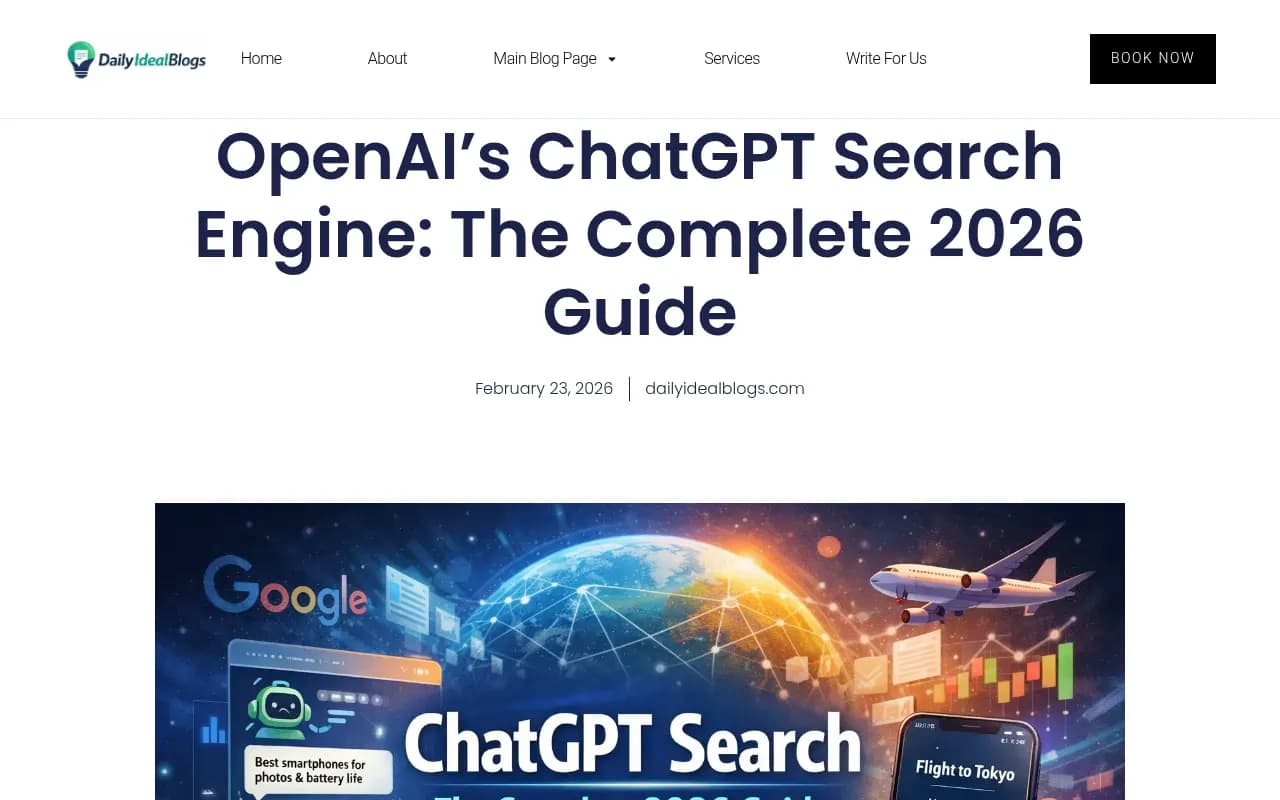
The algorithm shift nobody saw coming
In December 2025, 46 days before OpenAI announced ads, ChatGPT's algorithm changed.
Forensic analysis from Seer Interactive revealed visibility increased to 46.2% (+4.9 percentage points) throughout December. Stage distribution shifted toward commercial intent. Brands in transactional categories (software, e-commerce, services) saw citation rates climb.
This wasn't random. OpenAI was preparing the algorithm to support advertising. The shift prioritized:
- Commercial queries over informational ones
- Brands with clear product positioning over generic content
- Sources that could convert users, not just inform them
The takeaway: ChatGPT's algorithm is evolving fast, and changes happen without announcement. What worked in October 2025 doesn't work the same way in February 2026.
ChatGPT is building its own authority system
Right now, you can publish a listicle on your site, cite yourself dozens of times, and ChatGPT might reference you. That window is closing.
ChatGPT is building its own version of domain authority, similar to Google's E-E-A-T framework (Experience, Expertise, Authoritativeness, Trustworthiness). The algorithm is shifting away from pure citation volume toward industry-relevant sources.
What's happening:
- Self-published content with no external validation is losing weight
- Sources cited by other authoritative sites gain credibility
- Industry-specific expertise matters more than generic content farms
- Author credentials and publication history influence citation likelihood
This mirrors Google's 2018 Medic Update, which prioritized expert-driven content in YMYL (Your Money, Your Life) categories. ChatGPT is applying similar logic across all topics.
What this means for brands: Publishing volume alone won't work. You need credibility signals -- expert authors, citations from trusted sources, and content that demonstrates genuine expertise.
Promptwatch helps brands track which sources ChatGPT cites for specific prompts, revealing exactly which competitors are winning authority in your space.

The signals ChatGPT prioritizes in 2026
Based on analysis of 880M+ citations and prompt behavior, ChatGPT's algorithm weighs these signals when deciding which sources to cite:
Freshness
Recency matters more in ChatGPT Search than traditional SEO. The algorithm prioritizes sources published or updated recently, especially for time-sensitive queries.
Example: A query about "best project management tools" in February 2026 will favor sources updated in 2026 over comprehensive guides from 2024.
Why this matters: Content decay happens faster in AI search. Articles lose citation value within months if not refreshed.
Video and multimedia
ChatGPT is increasingly citing YouTube videos, podcasts, and visual content. Video transcripts provide rich, conversational data that matches how users prompt AI.
Data point: YouTube citations increased 34% between Q3 2025 and Q1 2026 across tracked prompts.
Strategy: Repurpose written content into video format. Transcripts give ChatGPT more citation opportunities.
Sentiment and user signals
ChatGPT monitors Reddit discussions, reviews, and community sentiment. If users consistently recommend a brand in organic conversations, the algorithm notices.
Example: A SaaS tool mentioned positively across 50+ Reddit threads has higher citation likelihood than a competitor with zero community presence.
Why this works: Reddit and community discussions reflect real user experience, not marketing copy. ChatGPT treats these as trust signals.
Source diversity
ChatGPT avoids citing the same domain repeatedly in a single response. If your brand owns multiple relevant pages, the algorithm will typically cite one, not all.
Strategy: Focus on creating one strong "source page" per topic that's easy to quote, then support it with smaller pages that link back. This matches the approach working in 2026 GEO strategies.
Structured data and clarity
ChatGPT favors content that's easy to parse -- clear headings, bulleted lists, comparison tables, and structured markup. Dense paragraphs with no visual hierarchy get skipped.
Technical detail: Schema markup (especially FAQ, HowTo, and Product schemas) increases citation likelihood by making content machine-readable.
How ChatGPT decides what to cite
When ChatGPT constructs an answer, it follows a multi-step process:
- Understand the query: GPT-5.2 interprets intent, context, and user needs
- Retrieve candidate sources: The algorithm searches its index for relevant, recent content
- Evaluate authority: Sources are scored based on credibility signals (domain authority, author expertise, external citations)
- Synthesize information: ChatGPT reads multiple sources, extracts key facts, and constructs a coherent answer
- Attribute citations: The algorithm selects which sources to cite based on contribution to the answer and trustworthiness
The critical insight: ChatGPT doesn't rank pages. It evaluates sources based on how well they answer the specific query and whether they're trustworthy enough to cite.
The "answer gap" problem
Most brands focus on keywords they already rank for in Google. That's the wrong approach for ChatGPT.
The real opportunity is the answer gap -- prompts where competitors are cited but you're not. These represent content your site is missing: topics, angles, and questions AI models want answers to but can't find on your pages.
Example: A competitor gets cited for "how to choose project management software for remote teams" but you don't. Your site has a general "project management guide" but nothing specific to remote teams. That's an answer gap.
Closing answer gaps requires:
- Identifying prompts where competitors appear
- Analyzing what content they have that you don't
- Creating targeted pages that fill those gaps
- Optimizing for citation, not just ranking
This is the core of Generative Engine Optimization (GEO) -- understanding what AI models need and building content to match.
Comparison: ChatGPT vs Google algorithm priorities
| Signal | Google SEO | ChatGPT Search |
|---|---|---|
| Backlinks | Critical for ranking | Less important; authority comes from citations by other cited sources |
| Keywords | Exact match and semantic variants matter | Intent understanding; keywords less critical |
| Freshness | Important for news/trending topics | Critical across all topics; content decays faster |
| Content length | Longer = often better | Clarity and structure > length |
| Domain authority | Strong signal for ranking | Building its own authority system based on expertise |
| User engagement | Bounce rate, dwell time influence ranking | Sentiment in Reddit/community discussions matters |
| Multimedia | Helpful but not required | Video/transcripts increasingly cited |
The shift: Google rewards pages that attract clicks and engagement. ChatGPT rewards sources that provide clear, trustworthy answers it can cite.
Tools for tracking ChatGPT algorithm performance
You can't optimize what you don't measure. These platforms help brands track AI visibility and citation performance:
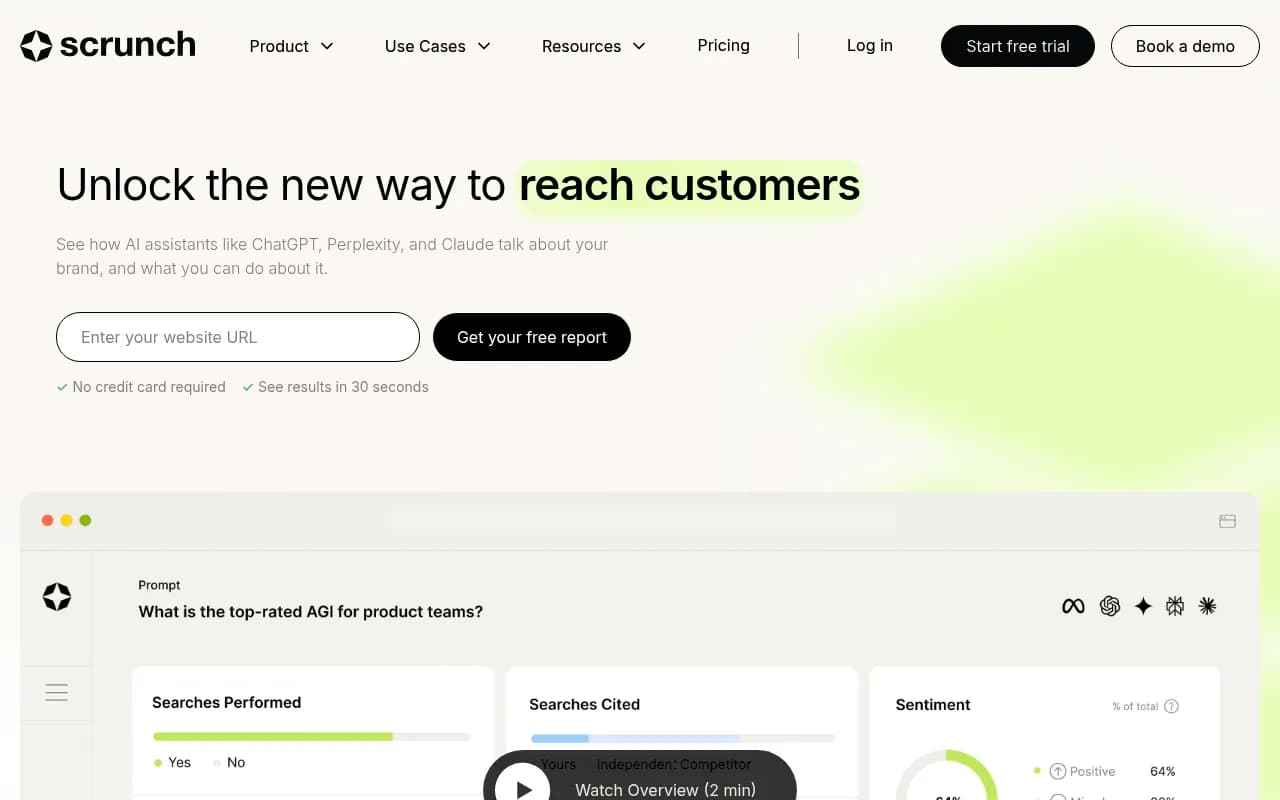
Each platform monitors how often your brand appears in ChatGPT responses, which prompts trigger citations, and how you compare to competitors. Promptwatch goes further by showing answer gaps and generating content optimized for AI citation.
What brands should do right now
If you want to compete in ChatGPT Search in 2026, here's the action plan:
1. Audit your AI visibility: Use a tracking platform to see which prompts you're cited for and which you're missing. Identify answer gaps where competitors appear but you don't.
2. Create source pages: Build one strong, citation-friendly page per topic. Use clear structure, comparison tables, and bullet points. Make it easy for ChatGPT to extract and cite.
3. Refresh content regularly: Update existing pages every 3-6 months. Add new data, examples, and insights. Freshness is a ranking signal.
4. Build community presence: Participate in Reddit discussions, answer questions, and provide value. Community sentiment influences citation likelihood.
5. Optimize for clarity, not keywords: Write for humans and AI. Use headings, lists, and structured data. Avoid dense paragraphs.
6. Monitor algorithm changes: ChatGPT's algorithm evolves without announcement. Track citation rates monthly and adjust strategy when you see shifts.
The future of search is conversational
ChatGPT's 17-18% query share in January 2026 is just the beginning. As AI search improves, more users will skip Google entirely.
The brands that win will be those that understand the algorithm, close answer gaps, and optimize for citation instead of ranking. Traditional SEO still matters, but it's no longer the only game.
The question isn't whether to adapt -- it's how fast you can move before competitors lock in AI visibility in your category.