Key takeaways
- The AI visibility tools category shifted dramatically between 2025 and 2026, moving from simple brand mention trackers to platforms that can identify content gaps and generate content to fill them.
- Monitoring alone is no longer enough. The platforms that gained the most traction in 2026 are those that close the loop between "you're invisible here" and "here's what to do about it."
- Profound built the deepest analytics layer for enterprise teams; Peec AI focused on flexibility and team access; Promptwatch went furthest on the action side with built-in content generation and crawler logs.
- Traditional SEO tools like Semrush and Ahrefs added AI tracking features, but their fixed-prompt architectures and lack of traffic attribution leave meaningful gaps.
- The metric that matters most in 2026 is no longer click-through rate -- it's whether your brand appears in the AI-generated answer at all.
The world that made this category necessary
Two years ago, most marketing teams treated AI search as a curiosity. Something to watch. By mid-2025, that posture became genuinely risky.
When Pew Research Center analyzed 68,879 Google searches in March 2025, they found that users who encountered an AI-generated summary clicked on a traditional search link only 8% of the time -- roughly half the rate for searches without one. Even sources cited inside those summaries barely got touched; just 1% of visits resulted in a click on a cited link. A quarter of users who saw an AI summary ended their browsing session entirely.
By March 2026, BrightEdge's data shows AI Overviews appearing on 48% of all tracked queries, up 58% from a year earlier. Google's AI Mode has grown to 75 million daily active users processing more than a billion queries a month. ChatGPT pulls in roughly 5.35 billion monthly visits and processes over 2.5 billion prompts per day (DemandSage, March 2026).
The implication is uncomfortable but clear: the click, the metric twenty years of digital marketing was built on, is becoming a secondary signal. The primary signal is whether your brand shows up in the AI-generated answer at all. And that requires a fundamentally different approach to visibility -- one that the tools built in 2024 and early 2025 were not designed to handle.
What "generation one" tools looked like in 2025
The first wave of AI visibility tools, which emerged mostly in late 2024 and early 2025, were essentially dashboards. You'd enter your brand name and a set of prompts, the tool would query ChatGPT and Perplexity and maybe Gemini, and it would tell you how often your brand appeared in the responses.
That was genuinely useful. For the first time, marketing teams had some quantitative handle on a question that had previously been unanswerable: "Does ChatGPT recommend us?"
But the limitations showed up fast. Most of these tools:
- Used fixed or manually entered prompts with no guidance on which prompts actually matter
- Tracked 3-5 LLMs at most, missing newer models like Grok, DeepSeek, and Meta AI
- Showed you your brand mention rate but offered no explanation for why you were or weren't appearing
- Had no connection to your website's actual content -- they couldn't tell you which pages were being cited or why
- Provided no path from "you're invisible here" to "here's how to fix it"
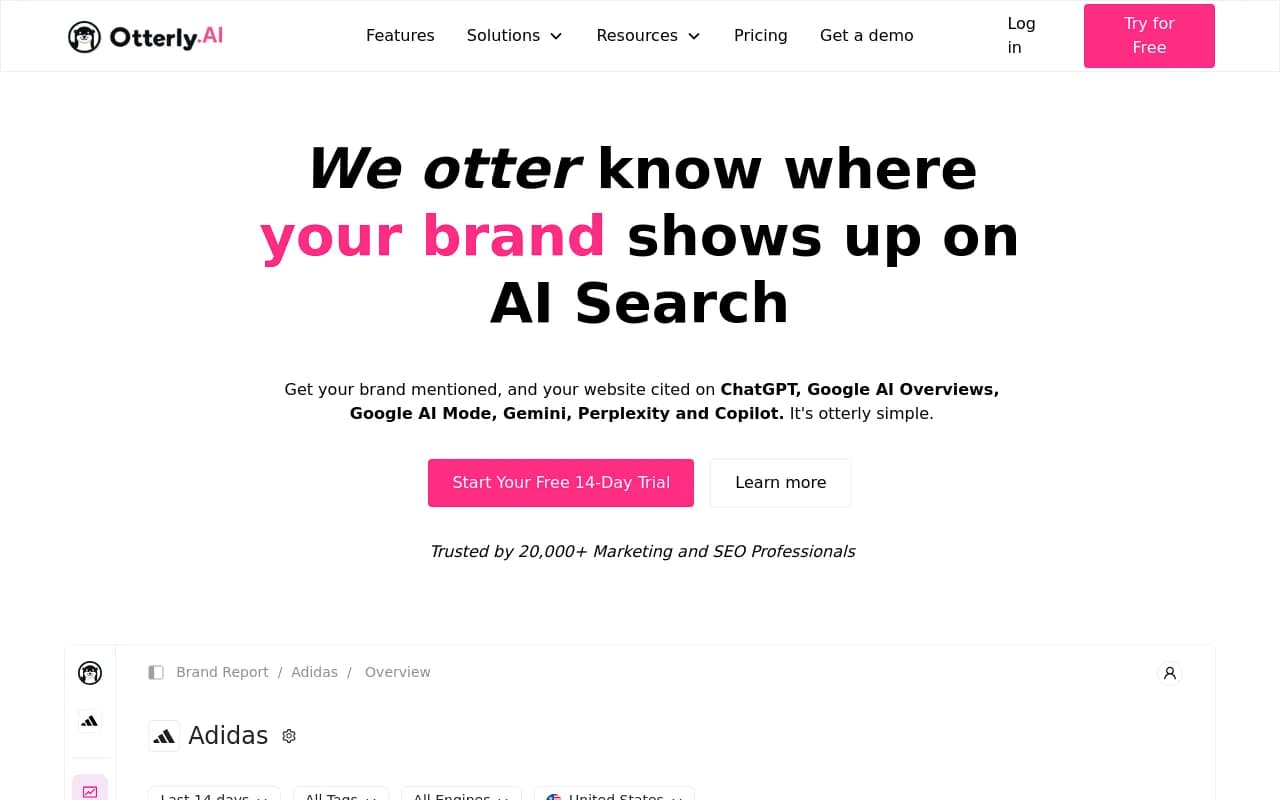
Otterly.AI was a good example of this generation. Affordable, easy to use, and genuinely helpful for basic monitoring. But it stopped at the data layer.
The same was largely true of early Peec AI, early Profound, and most of the tools that launched in 2024. They were monitors, not optimizers.
How Profound evolved: the enterprise analytics bet
Profound took a different path than most of its peers. Rather than expanding into content generation or optimization workflows, it doubled down on the research and analytics layer -- and that turned out to be the right call for a specific type of customer.
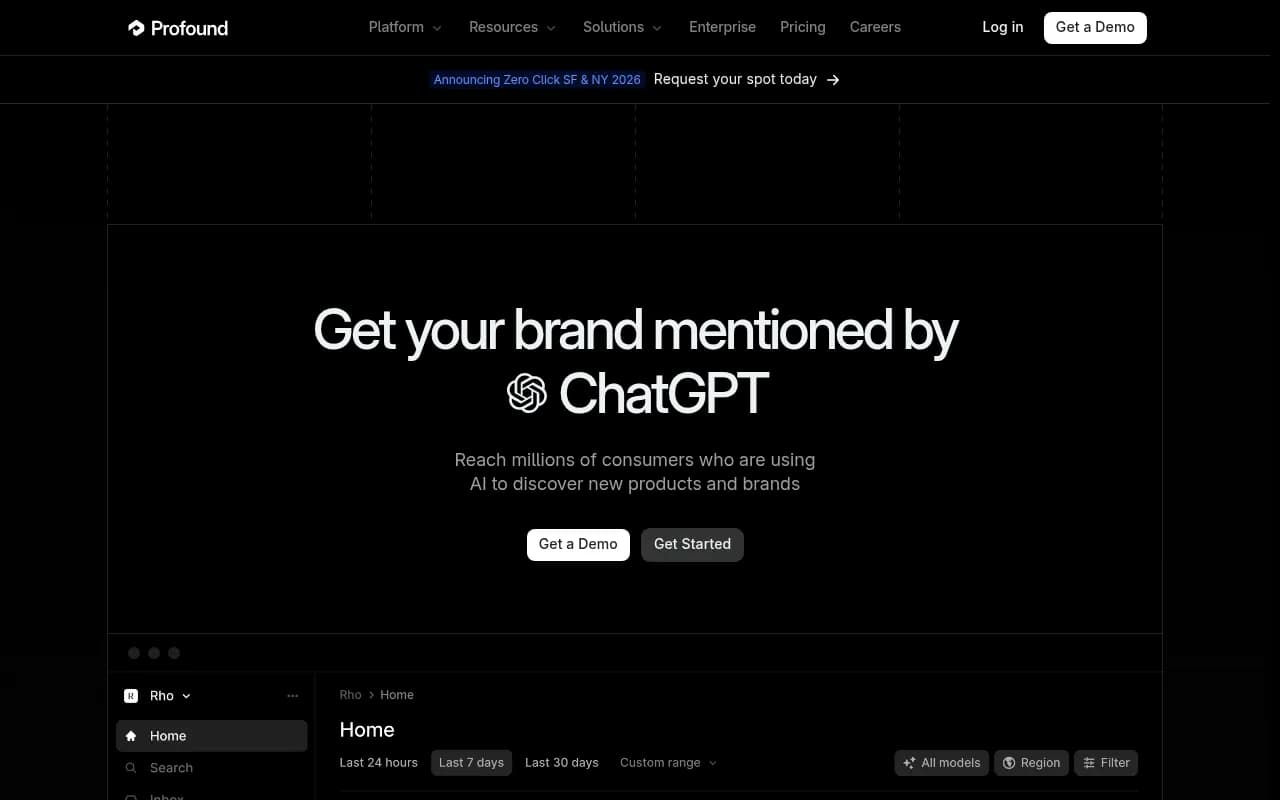
By 2026, Profound's strength is its depth of prompt intelligence. It tracks up to 10 LLMs, provides prompt volume data (so you can see how often real users are asking a given question), and has built a research layer that enterprise teams use to understand the competitive landscape across AI search. Its pricing starts at $99/month, which positions it as accessible for mid-market teams while its feature depth appeals to larger organizations.
What Profound doesn't do -- and this is a real gap -- is help you act on what you find. It will show you that a competitor is appearing in responses to a high-volume prompt that you're missing. It won't help you create the content that would change that.
For teams that already have strong content operations and just need the intelligence layer, that's fine. For teams that need the full loop from insight to execution, it leaves work on the table.
How Peec AI evolved: flexibility and team access
Peec AI's 2025-to-2026 evolution was less about adding new analytical depth and more about removing friction. The platform introduced unlimited seats, which sounds like a minor pricing decision but has real strategic implications: it means entire marketing, SEO, and content teams can work from the same visibility data without per-user costs creating a bottleneck.
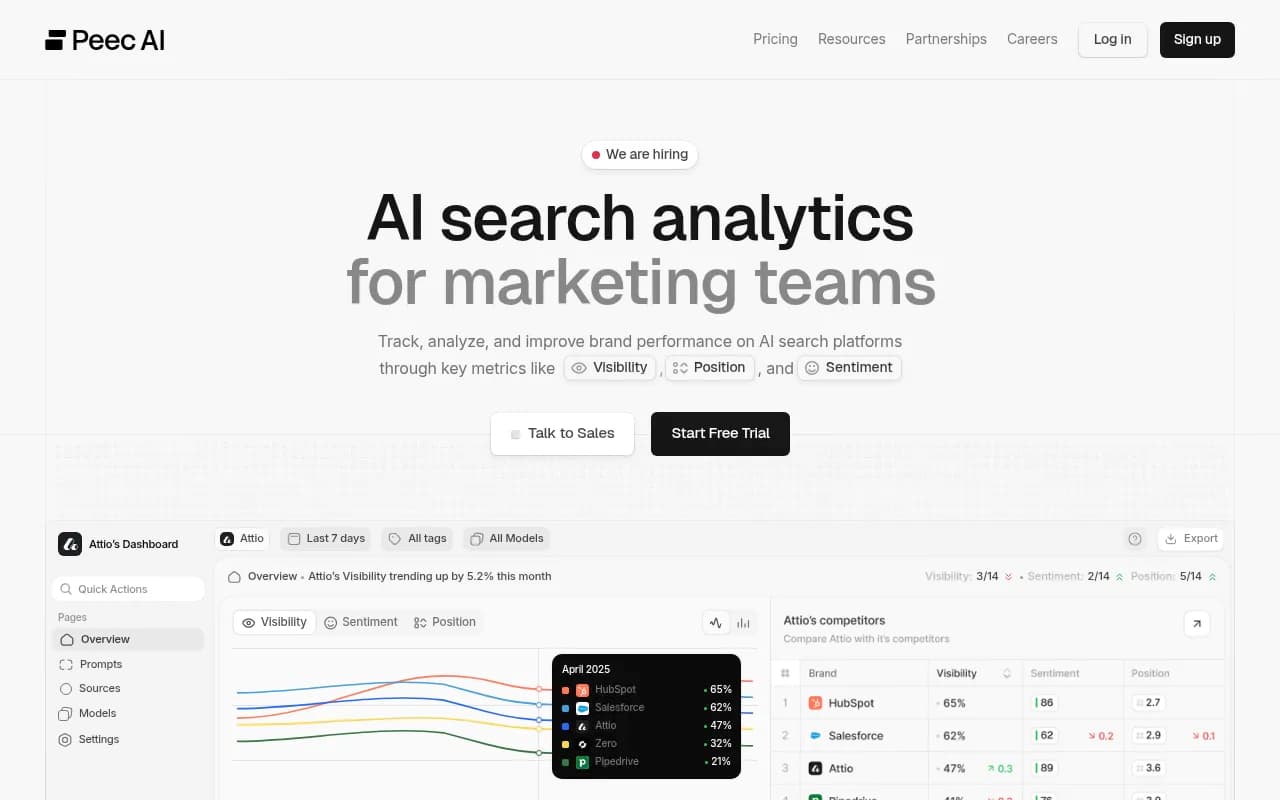
Peec AI also built out its competitive intelligence framework more aggressively than most competitors. Where other platforms show whether your brand appears in AI responses, Peec AI goes further into showing how your brand is positioned relative to competitors -- the sentiment, the context, the framing. That's genuinely useful for brand teams who care about not just presence but perception.
The platform supports up to 10 LLMs on higher plans and has multi-language support, which matters for brands operating across multiple markets.
The honest limitation: Peec AI, like Profound, is still primarily a monitoring and intelligence platform. The content generation and optimization capabilities that would complete the loop aren't there in the same way.
How Promptwatch evolved: closing the loop
The most significant shift in the category between 2025 and 2026 was the move from monitoring to optimization. And Promptwatch is where that shift is most visible.

Promptwatch started with the same monitoring foundation as its peers -- track brand mentions across LLMs, measure share of voice, compare against competitors. But the platform's 2025-2026 development went in a direction most competitors didn't follow: it built the tools to actually fix what the monitoring reveals.
The core of this is what Promptwatch calls the action loop:
- Answer Gap Analysis shows you exactly which prompts competitors are visible for that you're not -- not just that a gap exists, but the specific topics and questions AI models want answers to that your site doesn't address.
- A built-in AI writing agent generates articles, listicles, and comparisons grounded in real citation data from 880M+ citations analyzed. This isn't generic content -- it's engineered to match what AI models actually cite.
- Page-level tracking shows which specific pages are being cited, by which models, and how often. Traffic attribution (via code snippet, GSC integration, or server log analysis) connects visibility to actual revenue.
Two features that set Promptwatch apart from the rest of the field in 2026:
AI Crawler Logs give you real-time visibility into when ChatGPT, Claude, Perplexity, and other AI crawlers visit your site -- which pages they read, errors they encounter, how often they return. Most competitors don't have this at all. It's the difference between guessing whether AI models can access your content and actually knowing.
Prompt Intelligence goes beyond simple volume estimates. It includes difficulty scores and query fan-outs -- showing how one prompt branches into sub-queries -- so you can prioritize high-value, winnable prompts instead of spreading effort across everything.
A Reddit thread from the r/DigitalMarketing community in early 2026 captured the data quality gap well: "The difference in data we saw between Ahrefs Brandradar and Profound/Promptwatch was crazy. They were really under reporting on citations."
Promptwatch also tracks Reddit and YouTube discussions that influence AI recommendations -- a channel most competitors ignore entirely -- and monitors ChatGPT Shopping carousels for brands in product categories.
The traditional SEO tools tried to catch up
Semrush and Ahrefs both added AI visibility features in 2025, and both made meaningful progress. But the architecture of traditional SEO tools creates constraints that are hard to work around.
Semrush's AI Toolkit tracks 5 LLMs and integrates AI visibility data with its existing SEO data, which is genuinely useful for teams that already live in Semrush. The limitation is fixed prompts -- you're working with Semrush's prompt set, not your own, which means you may be measuring visibility for questions your customers aren't actually asking.
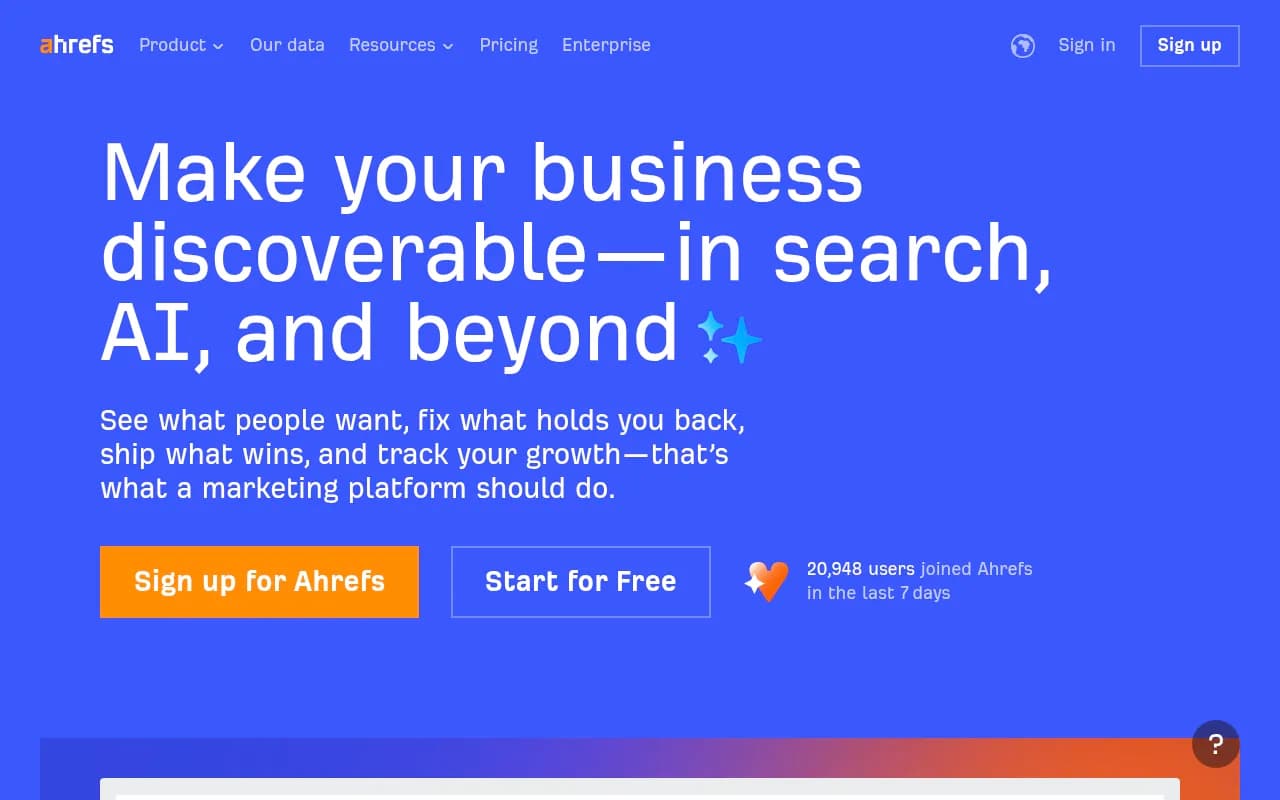
Ahrefs Brand Radar has the same fixed-prompt problem, and adds another gap: no AI traffic attribution. You can see that you're being cited, but you can't connect that to actual visits or revenue.
For teams that need AI visibility as one signal among many in a broader SEO workflow, these tools are reasonable. For teams where AI search visibility is a primary concern, the gaps are significant.
The category landscape in 2026: a comparison
Here's how the major platforms stack up across the dimensions that matter most in 2026:
| Platform | LLMs tracked | Prompt intelligence | Content generation | Crawler logs | Traffic attribution | Starting price |
|---|---|---|---|---|---|---|
| Promptwatch | 10+ | Yes (volume + difficulty + fan-outs) | Yes (built-in AI writing agent) | Yes | Yes (GSC, snippet, server logs) | $99/mo |
| Profound | Up to 10 | Yes (volume data) | No | No | No | $99/mo |
| Peec AI | Up to 10 | Limited | No | No | No | ~€85/mo |
| Otterly.AI | 4-6 | No | No | No | No | $29/mo |
| Semrush AI Toolkit | 5 | No (fixed prompts) | No | No | No | $99/mo |
| Ahrefs Brand Radar | Limited | No (fixed prompts) | No | No | No | Included in Ahrefs |
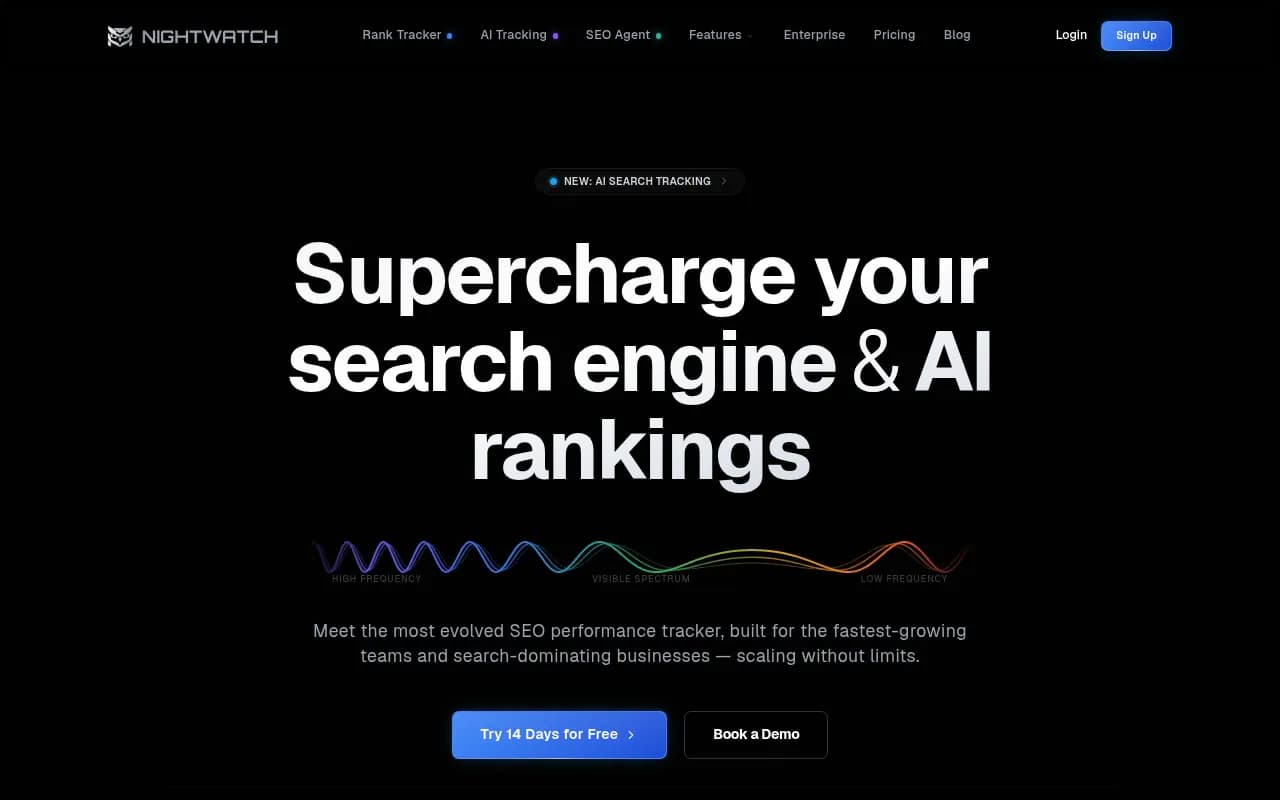
| Nightwatch | 4 | No | No | No | No | $32/mo + add-on |
The pattern is clear. Most platforms are strong on monitoring, weak on action. Promptwatch is the outlier that built the full stack.
What actually changed in the market between 2025 and 2026
A few things shifted in how teams use these tools, beyond the feature evolution:
Prompts became a strategic asset. In 2025, most teams were tracking a handful of branded queries. By 2026, the sophisticated teams are tracking hundreds of prompts across the full customer journey -- awareness, consideration, comparison, purchase. The tools that support large prompt sets and provide guidance on which prompts to prioritize became significantly more valuable.
Content gap analysis replaced guesswork. The question "why isn't our brand appearing here?" used to be unanswerable. Now, with tools that analyze citation patterns across hundreds of millions of responses, you can identify specific content gaps with reasonable confidence. That changed how content teams prioritize their work.
AI crawler behavior became a technical SEO concern. Discovering that AI crawlers were hitting certain pages but not others -- or encountering errors -- opened up a new category of technical optimization. Teams that had crawler log data could fix indexing issues proactively. Teams without it were flying blind.
Attribution became the credibility question. In 2025, AI visibility was often a "nice to have" that marketing teams tracked without being able to connect it to business outcomes. The platforms that built traffic attribution in 2026 changed that conversation. When you can show that AI visibility improvements drove a measurable increase in organic traffic, the budget conversation changes.
Which platform makes sense for your situation
There's no single right answer, but the decision usually comes down to what you're trying to do:
If you need monitoring only and have a tight budget, Otterly.AI or Nightwatch are reasonable starting points. You'll get basic brand tracking without a large commitment.
If you need deep competitive intelligence and have an enterprise analytics team, Profound's research layer is genuinely strong. It's best suited to teams that will do their own analysis and content work separately.
If you need the full loop -- find gaps, create content, track results, attribute revenue -- Promptwatch is the only platform in 2026 that has all of those pieces in one place. The crawler logs and prompt intelligence features alone justify the step up from basic monitoring tools, and the content generation capability means you're not just collecting data but acting on it.
The honest reality is that most teams in 2025 were asking "are we visible in AI search?" By 2026, the better question is "what specific content do we need to create to improve our AI visibility, and how do we know when it's working?" The platforms that can answer that second question are the ones worth investing in.
Where the category goes next
The monitoring-only platforms face a real strategic problem. As the action-oriented tools get better, the value of pure monitoring shrinks. Why pay for a dashboard that tells you there's a problem if another platform at a similar price point tells you there's a problem and helps you fix it?
The platforms that will matter in 2027 are the ones building tighter feedback loops between AI crawler behavior, content performance, and citation outcomes. The data is there -- 880M+ citations analyzed in Promptwatch's case -- and the question is which platforms can turn that data into reliable content recommendations.
The category went from zero to genuinely useful in about 18 months. The next 18 months will sort out which platforms are building something durable and which ones are monitoring dashboards waiting to be acquired or deprecated.
For now, the teams winning in AI search are the ones that stopped watching and started acting.