Key takeaways
- Goodie AI is a solid entry point for AI visibility tracking with an integrated content writer, but it lacks prompt volume data, AI crawler analytics, and enterprise-grade compliance features.
- Most GEO platforms in 2026 fall into two camps: monitoring-only dashboards and full optimization platforms. Goodie AI sits closer to the monitoring side.
- The platforms that deliver the most value are those that close the loop between finding visibility gaps and actually fixing them with content.
- Pricing across the category ranges from free tiers to $1,000+/month for enterprise plans, so matching your budget to your actual needs matters more than chasing the most feature-rich option.
- If you need to go beyond tracking and start generating content that earns AI citations, tools like Promptwatch are worth a serious look.
What Goodie AI actually does
Goodie AI markets itself as a GEO platform built for brands that want to track and improve their visibility inside AI-generated answers. The core pitch is straightforward: monitor how often your brand appears in responses from ChatGPT, Perplexity, Gemini, and similar engines, then use the built-in content writer to create material that improves those numbers.
That combination, monitoring plus content creation in one interface, is genuinely useful. A lot of teams end up stitching together separate tools for tracking and writing, so having both in one place reduces friction. Goodie's dashboard shows brand mention rates, competitor comparisons, and some sentiment data.
Where it starts to show cracks is when teams try to scale. The platform doesn't expose real prompt volume data, so you can't prioritize which queries are actually worth targeting. There's no AI crawler log functionality, meaning you can't see whether AI engines are actually reading your pages or hitting errors. And for larger organizations, the compliance and SSO features that enterprise procurement teams require are largely absent.
That doesn't make Goodie AI a bad tool. It makes it a tool with a specific ceiling.
The GEO platform landscape in 2026
The market has split pretty clearly into three tiers.
The first tier is basic monitoring tools. These show you brand mentions across AI engines, maybe some competitor data, and not much else. They're cheap and easy to set up, but they leave you with data and no direction.
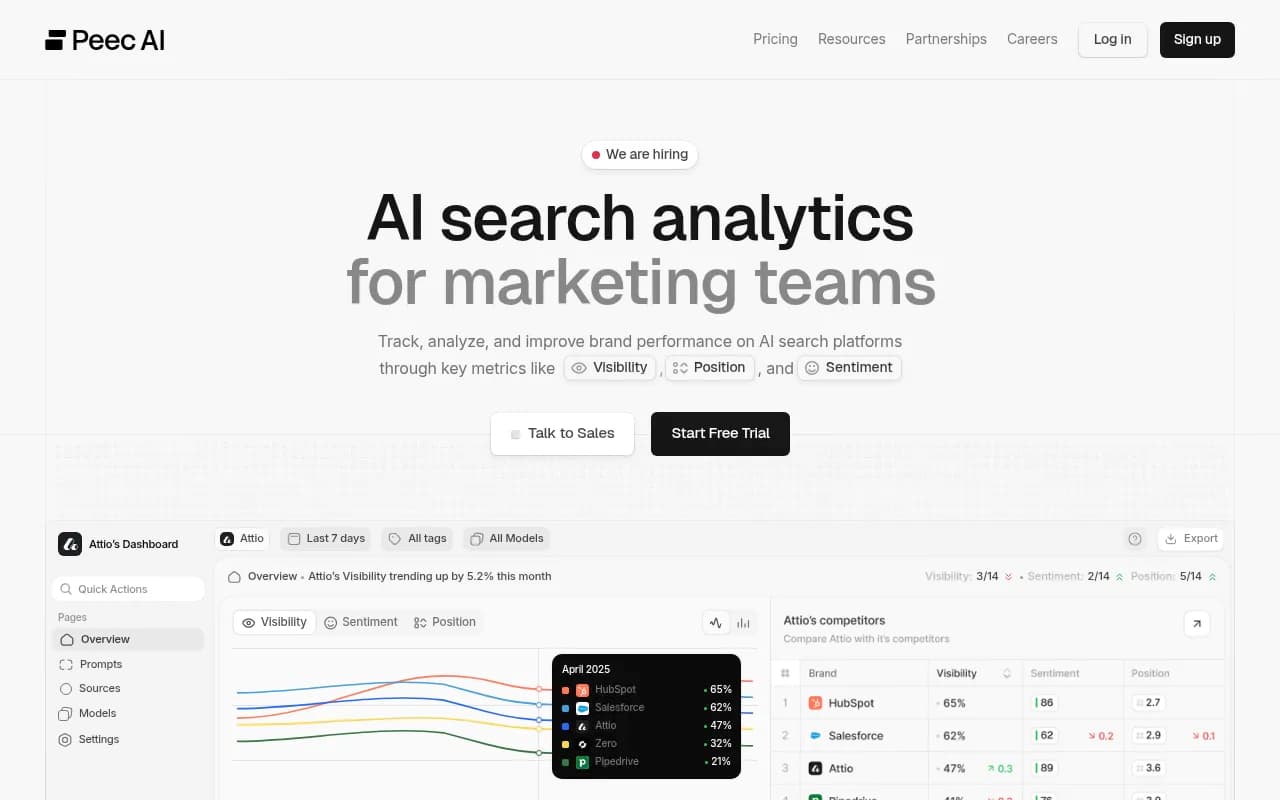
The second tier is what most people think of as "GEO platforms." These include prompt tracking, share-of-voice metrics, content gap analysis, and some form of content recommendations. Goodie AI sits here, alongside tools like Otterly.AI and Peec AI.
The third tier is full optimization platforms. These don't just show you what's happening, they help you fix it. They include AI crawler logs, content generation grounded in real prompt data, page-level citation tracking, and revenue attribution. This is where the category is heading, and it's where the real ROI lives.
Head-to-head comparison: Goodie AI vs top alternatives
Here's how Goodie AI stacks up against the most commonly evaluated platforms in 2026:
| Platform | AI models tracked | Prompt volume data | Content generation | Crawler logs | Citation tracking | Starting price |
|---|---|---|---|---|---|---|
| Goodie AI | 5+ | No | Yes (basic) | No | Yes | ~$49/mo |
| Promptwatch | 10+ | Yes | Yes (AI agents) | Yes | Yes | $99/mo |
| Profound | 6+ | Limited | No | No | Yes | ~$500/mo |
| Otterly.AI | 4 | No | No | No | Yes | ~$29/mo |
| Peec AI | 4 | No | No | No | Yes | ~$39/mo |
| SE Ranking | 5+ | Limited | No | No | Yes | ~$65/mo |
| Scrunch AI | 5+ | No | No | No | Yes | Custom |
| AthenaHQ | 8+ | No | No | No | Yes | Custom |
| Ahrefs Brand Radar | 3 | No | No | No | Limited | Add-on |
| Semrush AI Toolkit | 4 | No | No | No | Limited | Add-on |
A few things stand out from this table. Almost every tool in the monitoring-only camp lacks prompt volume data, which is a significant gap. Without knowing how often real users are asking a given question, you're optimizing blind. You might spend weeks creating content for a prompt that barely anyone types.
The content generation column is also telling. Goodie AI does offer a content writer, but it's not grounded in prompt data or citation analysis the way more advanced platforms are. There's a difference between "AI writes an article" and "AI writes an article specifically designed to fill the gap between what users are asking and what your site currently answers."

Where Goodie AI genuinely works well
To be fair to Goodie AI, there are real use cases where it's a good fit.
Small marketing teams that are just starting to think about AI visibility will find the interface approachable. You don't need a dedicated SEO analyst to get value from it. The combined tracking and writing workflow means you can go from "we need to show up in ChatGPT" to "here's a draft article" without switching tools.
It's also reasonably priced for what it offers. If your organization is in the early stages of building an AI visibility strategy and you're not yet ready to invest in a full-stack platform, Goodie AI is a reasonable starting point.
The brand sentiment tracking is a genuine differentiator at its price point. Knowing not just whether you're mentioned but how you're described in AI responses is useful data that some pricier tools don't surface clearly.
Where Goodie AI falls short
The gaps become more obvious as teams mature their GEO programs.
No prompt volume or difficulty data. This is the biggest practical limitation. When you're deciding which content to create next, you need to know which prompts are high-volume and which ones you have a realistic chance of winning. Without this, prioritization is guesswork.
No AI crawler analytics. If Perplexity or ChatGPT's crawler is hitting your site and bouncing because of a technical issue, you won't know. This is the kind of problem that silently kills your AI visibility and is invisible in a monitoring-only dashboard.
Content generation isn't grounded in citation data. The writing tool is helpful, but it doesn't pull from real data about which sources AI engines currently cite, which Reddit threads are influencing recommendations, or what specific angles are missing from your site's coverage.
Limited enterprise features. SSO, audit logs, role-based permissions, and compliance documentation are table stakes for larger organizations. Goodie AI's current offering is better suited to SMB and mid-market teams.
The case for a full-stack optimization platform
The fundamental question when evaluating any GEO tool is: what happens after you see the data?
Most platforms, including Goodie AI, answer this question with "you figure it out." You get a dashboard showing your brand mention rate is 12% while your main competitor sits at 34%. Now what? The data is real, but the path forward is unclear.
Full-stack platforms close this loop. They show you the specific prompts where you're invisible, generate content designed to fill those gaps, track whether that content gets crawled and cited, and connect the whole thing back to traffic and revenue.
Promptwatch is the clearest example of this approach in 2026. It tracks 10 AI models, including ChatGPT, Perplexity, Google AI Overviews, Claude, Gemini, Grok, DeepSeek, and others, and pairs that monitoring with Answer Gap Analysis that shows exactly which prompts competitors rank for that you don't. The Content Agents then generate articles, comparisons, and briefs grounded in that real prompt data, not generic AI writing.

The AI Crawler Logs feature is particularly useful for diagnosing why content isn't getting cited. You can see which pages AI crawlers are reading, how often they return, and whether they're hitting errors. Most platforms in this comparison don't offer anything like this.
Alternatives worth considering by use case
For enterprise teams with compliance requirements
Profound has strong enterprise credentials and solid citation tracking across major AI engines. It's more expensive than Goodie AI (typically $500+/month), but the data depth and account support justify the cost for larger organizations. The main limitation is that it's still primarily a monitoring platform, so you'll need a separate content workflow.
Scrunch AI is another enterprise-oriented option with good multi-model coverage. Like Profound, it focuses on monitoring and analysis rather than content generation.
For teams that want monitoring without the cost
Otterly.AI is the most affordable serious option in the category. It tracks brand mentions across four AI engines and gives you basic competitor comparisons. There's no content generation and no crawler analytics, but if you just need to know whether you're being mentioned, it does that job at a price that's hard to argue with.
Peec AI is similar, with a slight edge for European teams given its GDPR-forward approach and EU-based infrastructure.
For SEO teams that want AI visibility added to an existing workflow
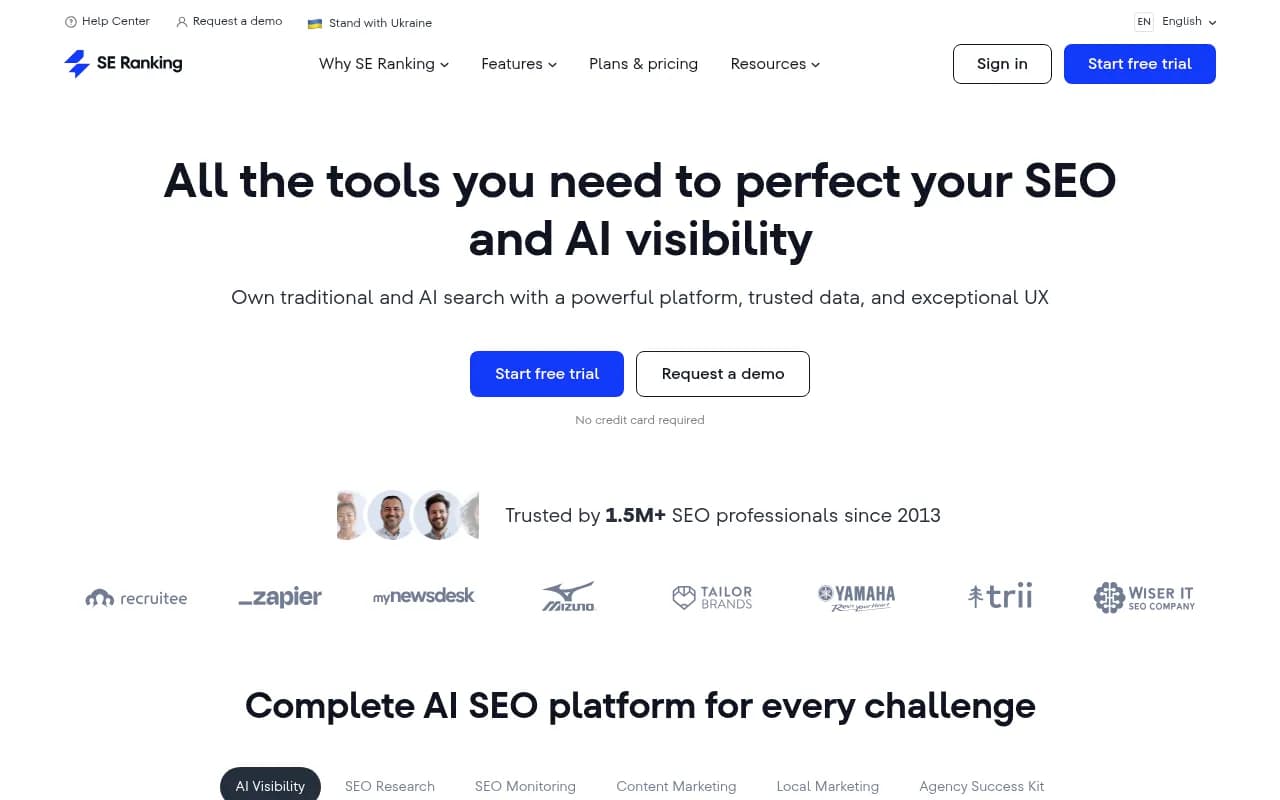
SE Ranking has built AI visibility tracking into its broader SEO platform. If your team already lives in an SEO tool and wants AI monitoring without switching platforms, this is a natural fit. The AI-specific features aren't as deep as dedicated GEO platforms, but the integration with traditional rank tracking and keyword research is genuinely useful.
Ahrefs Brand Radar is worth mentioning here, though it has real limitations: fixed prompts, no AI traffic attribution, and relatively shallow coverage compared to dedicated GEO tools. It's best treated as a supplementary signal rather than a primary AI visibility strategy.
For teams that want to act on data, not just collect it
This is where Promptwatch pulls ahead of the field. The combination of real prompt volume data, content gap analysis, AI content generation, crawler logs, and page-level citation tracking creates a feedback loop that monitoring-only tools simply can't replicate. It's priced at $99/month for the Essential plan (1 site, 50 prompts, 5 articles), which is competitive given the depth of what's included.
How to choose: a practical framework
Before picking a platform, answer these four questions honestly.
What's your current AI visibility maturity? If you've never tracked AI mentions before, starting with a simpler tool makes sense. Goodie AI or Otterly.AI will give you a baseline without overwhelming your team.
Do you have a content production workflow? If yes, a monitoring-only tool might be enough, since you can feed the data into your existing content process. If no, you need a platform that helps you create content, not just identify gaps.
How many AI engines matter to your audience? If your customers are primarily using ChatGPT and Perplexity, four-engine coverage is probably fine. If you're in a market where Google AI Overviews or regional models like DeepSeek matter, you need broader coverage.
What's your budget for the full stack? A $49/month monitoring tool sounds cheap until you add the cost of the content tools, the analyst time to interpret the data, and the developer time to fix technical issues. Sometimes a $249/month platform that handles all of this is actually cheaper when you account for the full workflow.
The bottom line on Goodie AI
Goodie AI is a reasonable tool for teams that are just getting started with AI visibility and want a single interface for tracking and basic content creation. It's not the right choice for teams that need prompt volume data, AI crawler analytics, or enterprise compliance features.
The GEO category has matured enough in 2026 that the gap between monitoring-only tools and full optimization platforms is significant and growing. If you're building a serious AI visibility program, the platforms that help you act on data, not just collect it, will deliver substantially better results over a 6-12 month horizon.
Goodie AI can get you started. Whether it can take you where you need to go depends on how ambitious your AI visibility goals actually are.