Key takeaways
- Goodie AI is a solid GEO monitoring platform that tracks brand visibility across 6 AI engines, but it stops at monitoring -- there's no built-in content creation, no crawler analytics, and no prompt volume data
- The Pro plan starts at $495/month (billed annually), which is steep for what you get compared to alternatives that offer more action-oriented features at similar or lower prices
- GEO measurement itself is inherently noisy -- citation drift of 40-60% monthly means any monitoring tool, Goodie included, gives you directional data rather than precise rankings
- If your team needs to not just track but also fix AI visibility gaps, you'll need to pair Goodie with other tools or switch to a platform that closes the loop
Goodie AI gets a lot of favorable press in the GEO space. Reviewers tend to lead with what it does well -- clean dashboards, multi-engine coverage, solid optimization guidance -- and then quietly mention the limitations in a bullet list at the bottom. This review flips that. The limitations are what you actually need to understand before signing a contract at $495/month.
That said, this isn't a hit piece. Goodie is a real product with genuine strengths. But the category it operates in is young, the pricing is high, and several of its gaps are the kind that only surface after you've been using the platform for a few months and start asking harder questions.
Let's get into it.
What Goodie AI actually is
Goodie AI is a generative engine optimization (GEO) platform. The core idea: as AI assistants like ChatGPT, Gemini, and Perplexity increasingly mediate how people discover brands and products, you need a way to track and improve how your brand appears in those AI-generated answers.
Goodie monitors your brand's presence across ChatGPT, Gemini, Perplexity, Claude, Copilot, and DeepSeek. It shows you where you're cited, how often, what sentiment the AI expresses about you, and where competitors are appearing instead. It also provides optimization guidance -- content recommendations, schema suggestions, and topic gap analysis.
The platform is headquartered in New York and targets brands and agencies that are taking AI search visibility seriously as a channel. AI Agent Square gave it a 7.9/10 overall, with AI features scoring 8.2 and pricing scoring 6.9.
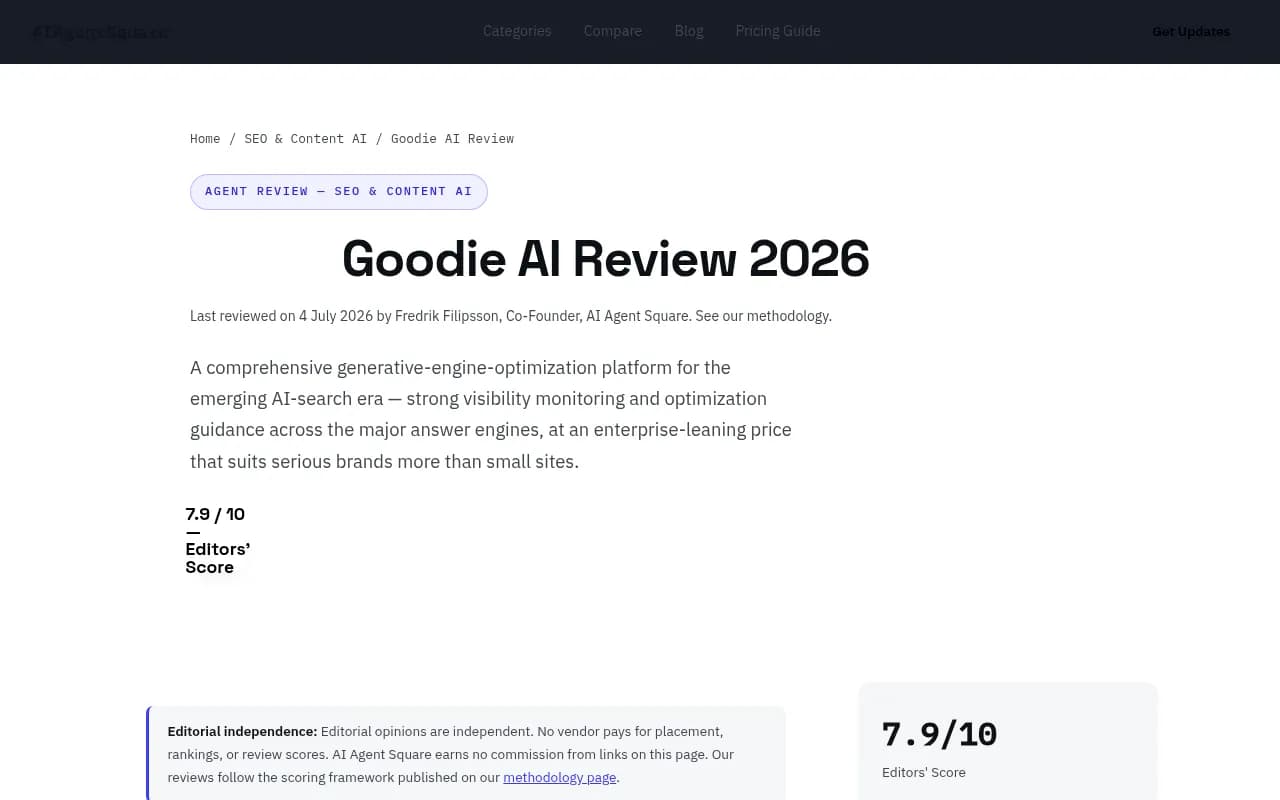
That 6.9 on pricing is doing a lot of work. Let's start there.
The pricing problem
Goodie's Pro plan starts at $495/month on annual billing -- roughly $645/month if you pay quarterly. Team and Enterprise tiers are quoted, meaning you need to talk to sales to find out what they cost.
For context, this is enterprise pricing for what is, in 2026, still a relatively early-stage category. You're paying a premium to be an early adopter of GEO tooling, and the platform's feature set doesn't always justify that premium compared to alternatives.
The free option is a one-time audit -- useful for getting a snapshot of your AI visibility, but it's essentially a lead magnet rather than a meaningful trial. You can't really evaluate whether the platform works for your use case from a single audit.
For smaller brands or agencies managing multiple clients, the math gets uncomfortable fast. $495/month buys you a lot of content production, traditional SEO tooling, or even a partial headcount. The question isn't whether Goodie is good -- it's whether it's $495/month good for your specific situation.
The monitoring-only ceiling
Here's the limitation that matters most and gets discussed least: Goodie AI is primarily an analytics platform. It shows you data. It doesn't help you act on it.
There's no built-in content creation. No direct publishing tools. No way to go from "we're missing visibility for this topic cluster" to "here's a draft article that addresses the gap" without leaving the platform and working in a separate tool.
This is a meaningful gap. The whole point of GEO is to improve your visibility, not just measure it. If the platform can tell you where you're invisible but can't help you fix it, you're doing half the job and paying full price.
Fonzy.ai's review puts it plainly: Goodie is "primarily an analytics platform; lacks built-in content creation or direct publishing tools." That's accurate. The optimization guidance it provides is more like a brief than an execution layer -- you still need to write the content, publish it, and wait to see if it moves the needle.
For teams with dedicated content resources, this might be fine. For leaner teams that need a more complete workflow, it's a real constraint.
No prompt volume data
This one is subtle but important. Goodie AI doesn't show you prompt volume data -- meaning you can't see how many users are actually asking the questions where you're visible or invisible.
Why does this matter? Because not all prompts are equal. Being cited in an AI response to a question that 50 people ask per month is very different from being cited in a response to a question that 50,000 people ask. Without volume data, you're optimizing blind -- you don't know whether the gaps you're closing are high-value or marginal.
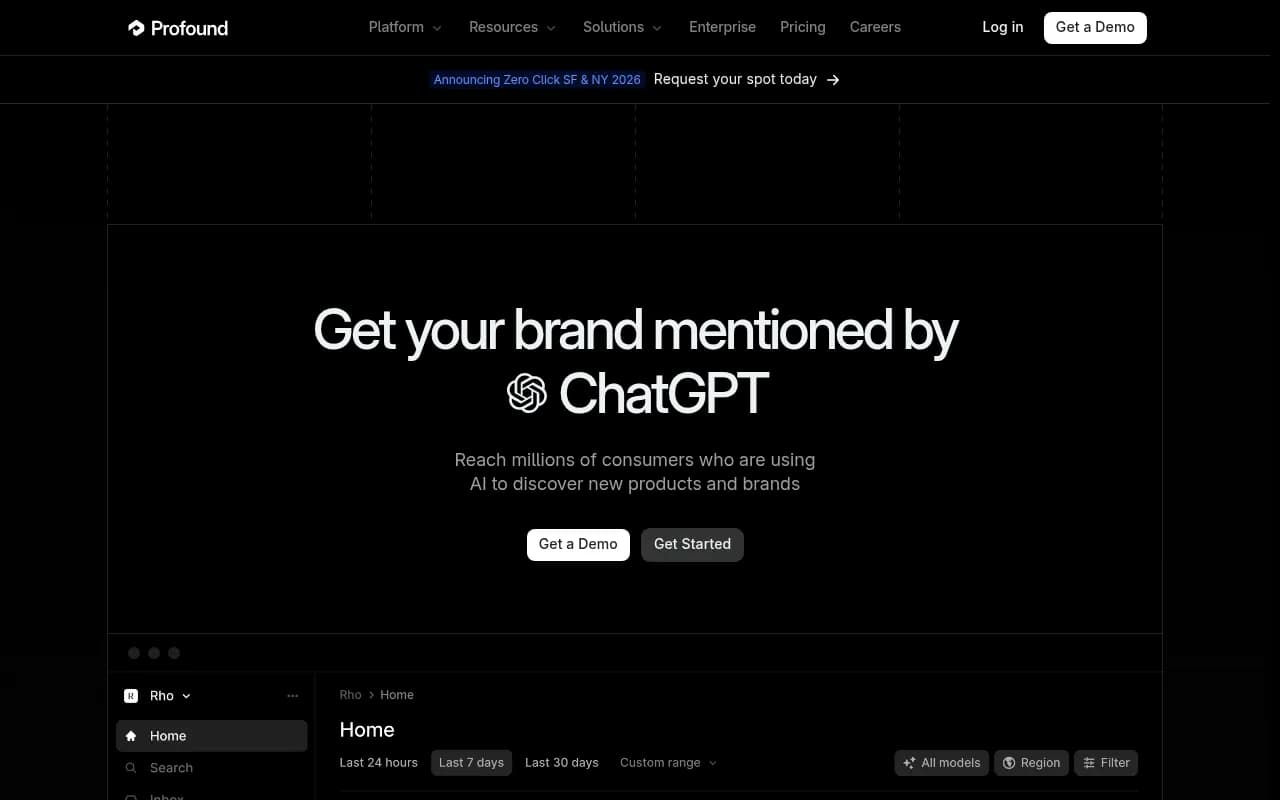
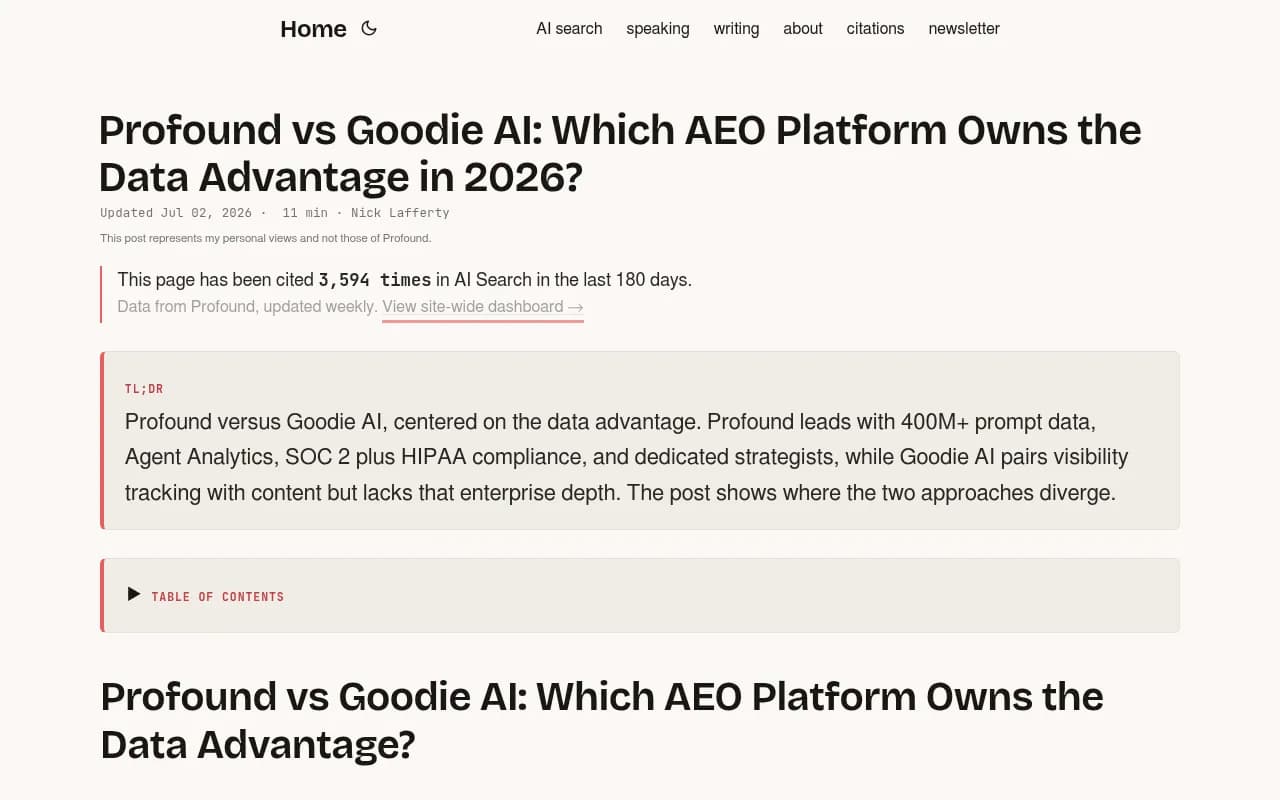
Platforms like Profound have built their data advantage partly on this. Profound's Conversation Explorer taps into 1.5 billion real user conversations, giving teams actual volume estimates to prioritize against. Goodie doesn't offer this.
The comparison between the two platforms makes the gap visible:
| Capability | Goodie AI | Profound |
|---|---|---|
| AI engine coverage | 6 engines | 10+ engines |
| Prompt volume data | None | 1.5B+ conversations |
| Crawler analytics | None | Full agent analytics with GA4 integration |
| Content creation | None | Workflow automation platform |
| Security certifications | None published | SOC 2 Type II + HIPAA |
| Dedicated strategist | No | Yes (weekly/monthly syncs) |
| Pricing | From $495/mo | Enterprise, quoted |
No crawler analytics
AI crawler logs are one of the more underrated features in the GEO space, and Goodie doesn't have them.
What are crawler logs? When AI engines like ChatGPT or Perplexity crawl your website to gather information for their responses, they leave traces -- which pages they read, how often they return, what errors they encounter, when a page moves from "crawled" to "cited." Crawler analytics let you see this in real time.
Without this data, you're working from the output side only. You can see that you're being cited (or not), but you can't see why. You don't know if AI crawlers are hitting your site and bouncing because of technical errors, or if they're reading your content but finding it insufficient to cite, or if they're not crawling certain pages at all.
This matters for diagnosing problems. If your visibility is low, is it a content quality issue? A technical crawlability issue? A topic coverage issue? Without crawler logs, you're guessing.
The attribution problem (and it's not just Goodie's fault)
Here's where I want to be fair to Goodie, because this limitation applies to the entire category: GEO measurement is inherently noisy.
AI Overviews shows 59.3% citation drift month-over-month. ChatGPT shows 54.1%. Copilot 53.4%. Perplexity 40.5%. What this means is that 40-60% of the domains being cited in AI responses change every month, not because brands are doing anything differently, but because AI models update, prompts get reinterpreted, and the underlying retrieval systems shift.
In that environment, any visibility metric is directional rather than precise. You can see trends, but you can't attribute a specific visibility change to a specific content action with confidence. This is true for Goodie, and it's true for every other GEO platform.
The difference is that platforms with more data -- prompt volumes, crawler logs, page-level citation tracking -- give you more signal to work with even in a noisy environment. Goodie's thinner data layer means you're working with less signal than some alternatives.
Engine coverage gaps
Goodie tracks 6 AI engines: ChatGPT, Gemini, Perplexity, Claude, Copilot, and DeepSeek. That's a reasonable set, but it misses some that are increasingly relevant -- Meta AI, Grok, Mistral, and Google AI Mode, for instance.
For most brands in 2026, the 6 engines Goodie covers probably account for the majority of AI search traffic. But if you're in a market where Meta AI or Grok has meaningful penetration, or if you want to track Google AI Mode separately from standard AI Overviews, you'll hit coverage limits.
What Goodie does well
It would be dishonest to only talk about the gaps. Goodie has real strengths.
The monitoring interface is clean and well-designed. For teams that are new to GEO and want to understand where they stand across the major AI engines, Goodie provides a clear picture without requiring significant technical setup. The optimization guidance -- while not actionable in the sense of generating content -- does help teams understand what topics and angles to prioritize.
The sentiment analysis is genuinely useful. Knowing not just whether you're cited but how AI engines characterize your brand is something that matters for reputation management, and Goodie handles this well.
For enterprise brands that have dedicated content teams and just need a monitoring layer, Goodie fits reasonably well. The problem is that the $495/month price point implies a more complete solution than it actually is.
Who should actually use Goodie AI
Goodie makes sense for:
- Enterprise brands with existing content teams who need a monitoring dashboard and can execute on optimization guidance independently
- Organizations where the primary need is understanding competitive AI visibility rather than fixing their own
- Teams that have already solved the "how do we create content" problem and just need the data layer
Goodie is probably not the right fit for:
- Smaller brands or agencies where $495/month needs to justify a more complete workflow
- Teams that need to go from insight to content creation within a single platform
- Organizations that need prompt volume data to prioritize their GEO efforts
- Anyone who needs crawler analytics to diagnose technical AI visibility issues
Alternatives worth considering
If Goodie's limitations are dealbreakers for your use case, here are a few directions worth exploring.
For teams that want the full loop -- monitoring, gap analysis, and content generation -- Promptwatch is worth a close look. It tracks 10 AI models, includes crawler logs, generates content grounded in real prompt data, and connects visibility to traffic attribution. The Professional plan starts at $249/month, which is meaningfully cheaper than Goodie's entry point.

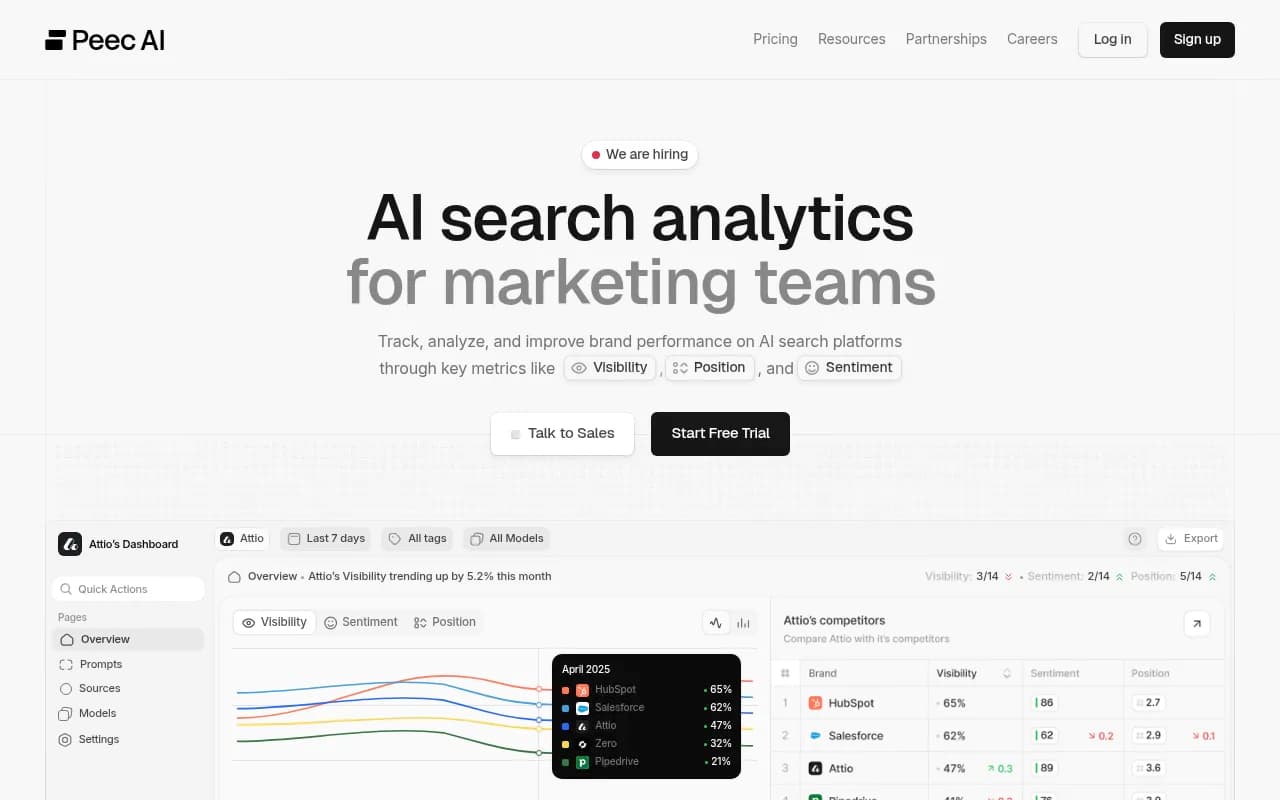
For pure monitoring at a lower price point, tools like Otterly.AI or Peec AI cover the basics without the enterprise price tag.

For teams that need the data depth Goodie lacks -- particularly prompt volume data and dedicated strategic support -- Profound is the main alternative, though it's also enterprise-priced and quoted.
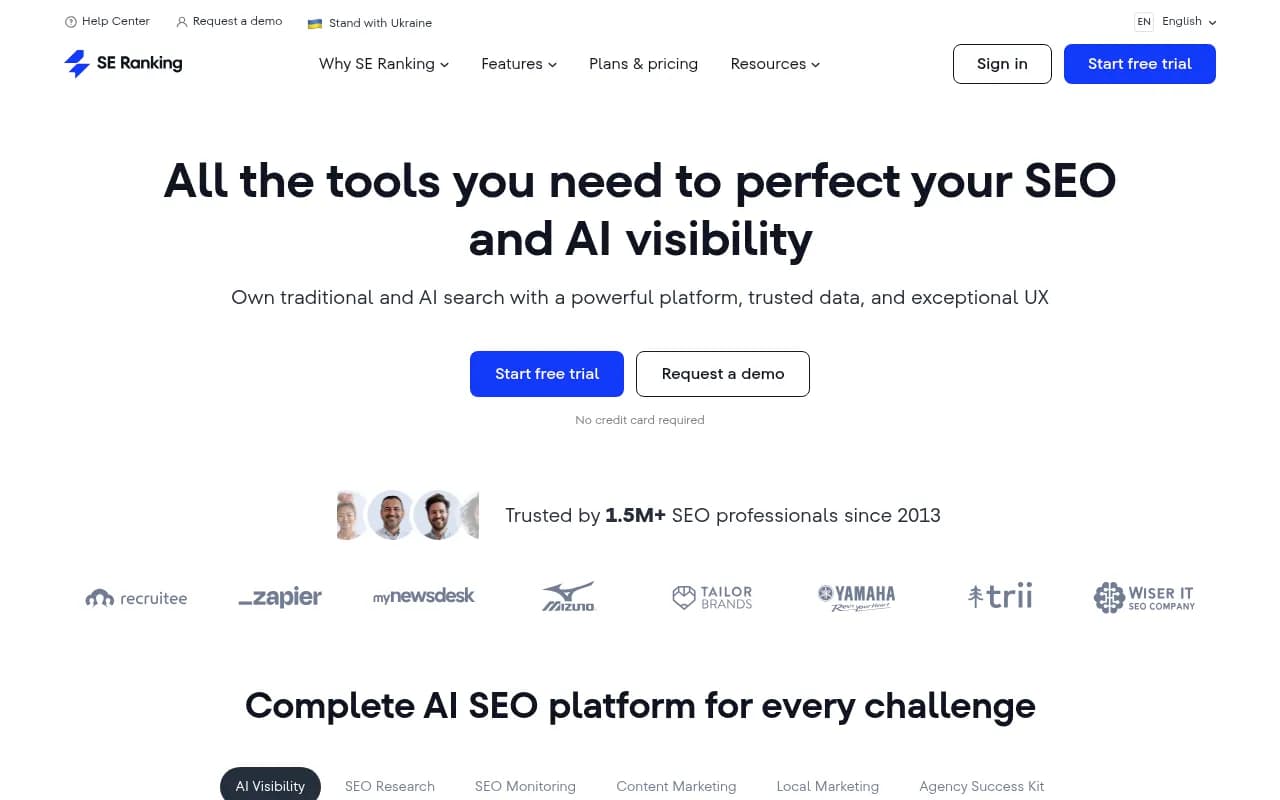
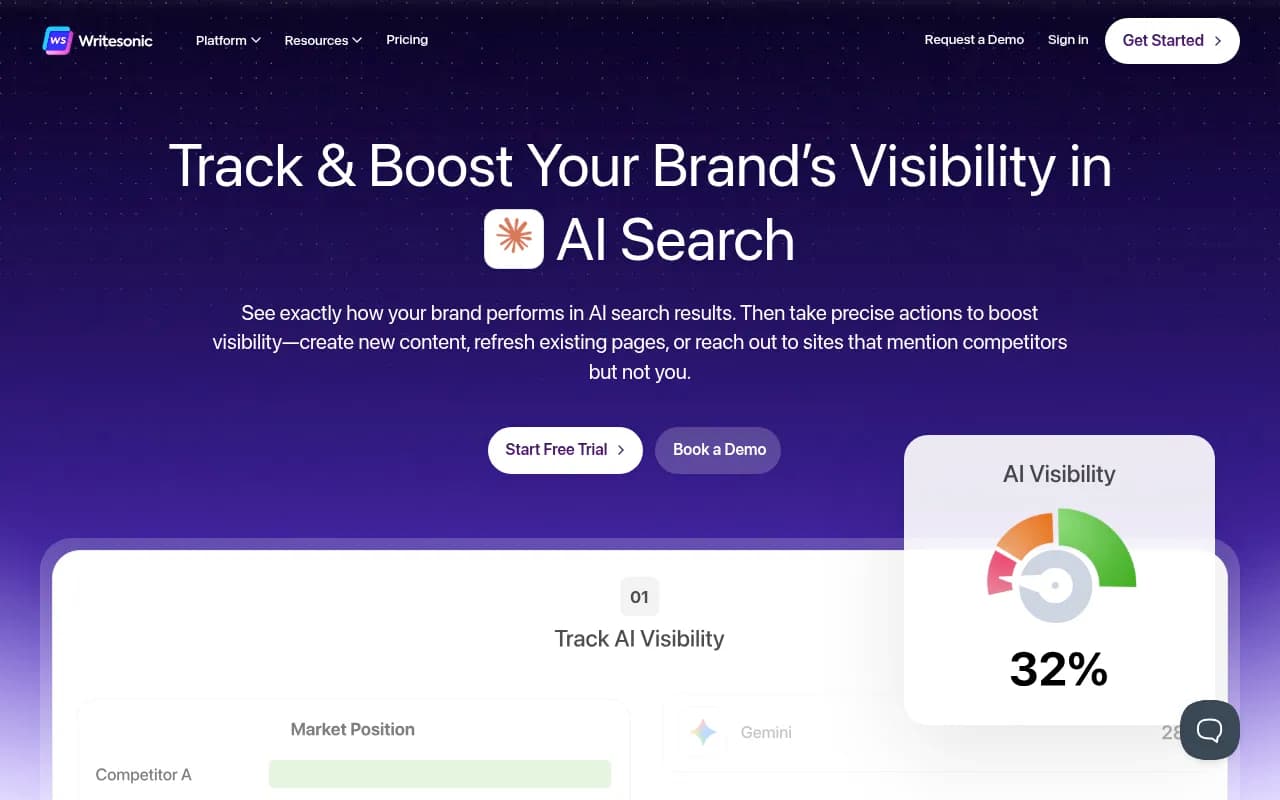
For agencies managing multiple clients who need AI visibility tracking as part of a broader reporting stack, SE Ranking's AI visibility module or Writesonic's GEO features might offer better value.
A note on the category itself
One thing worth saying plainly: GEO is a young discipline, and every platform in this space is selling you something that's still being figured out. The measurement methodologies are evolving, the AI engines themselves are changing rapidly, and what counts as "good" AI visibility is still being defined.
That's not a reason to avoid GEO tools -- it's a reason to be skeptical of any platform that presents its data as more precise or actionable than it actually is. The honest platforms in this space will tell you that their metrics are directional, that attribution is hard, and that the goal is to identify trends rather than pinpoint causation.
Goodie's reviewers at AI Agent Square put it well: "The honest limitations are the category's, not just the product's. GEO measurement is inherently noisy, attribution is directional rather than precise."
That's true. But within those category-level constraints, the platforms that give you more data, more actionability, and better value for money are worth choosing over the ones that give you less.
The bottom line
Goodie AI is a legitimate GEO platform with a clean interface, reasonable engine coverage, and solid monitoring capabilities. It's not a scam or a bad product. But at $495/month, it's priced like a complete solution while functioning more like a monitoring dashboard.
The missing pieces -- prompt volume data, crawler analytics, content generation -- aren't minor omissions. They're the difference between knowing you have a problem and being able to fix it. If your team can fill those gaps independently, Goodie might work. If you need a platform that closes the loop from visibility gap to published content to measurable improvement, you'll want to look at alternatives that were built with that full workflow in mind.
The GEO space in 2026 has enough mature options that you don't need to pay enterprise prices for half the functionality. Shop accordingly.