Key takeaways
- Gauge is a genuine closed-loop platform, but its Growth plan costs $599/mo for 18 articles, and its Starter tier appears to have been quietly retired from the public pricing page.
- The platforms that truly close the loop in 2026 are Promptwatch, FogTrail, Profound, Relixir, Dageno AI, Trakkr, and Gauge itself.
- "Closing the loop" means the platform tracks visibility, identifies gaps, generates content, publishes it, and verifies whether citations actually changed. Most AI visibility tools stop after step two.
- Pricing models in this category are wildly inconsistent. Some charge per prompt, some per article, some flat-rate. Normalize everything to cost per tracked answer and cost per published article before comparing sticker prices.
- Auto-publishing without human review is the category's biggest hidden risk. Several cheaper platforms publish content with no reviewer in the loop, which is a brand-voice gamble.
Why "content generation built in" is the real dividing line in 2026
Most AI visibility tools are dashboards. They tell you where you're visible, where competitors get cited, and which prompts you're missing. Then they stop. You export a spreadsheet, hand it to a writer, wait two weeks, and hope the content lands before the AI answers shift again.
The platforms in this guide are different. They connect monitoring to content production, so the gap you find on Monday is a published article by Friday. That matters because AI citation slots are scarce. Promptwatch's data on average sources per response shows ChatGPT cites roughly five sources per web-search answer, while Google AI Overviews and Perplexity cite around ten. Five slots per prompt, across your entire category. "Pretty relevant" content misses the cut.
It also matters because the content types that win citations are specific. Per Promptwatch's ChatGPT citation data for July 2026, product pages made up about a third of all ChatGPT citations that month, nearly double their share from March. Listicles, how-tos, and comparison pages were the fastest-growing formats. A platform that only writes generic blog posts isn't closing any loop. A platform that generates the exact content type the gap calls for, whether that's a structured product page, an "X vs Y" comparison, or a how-to, is.
What Gauge does well (and where it falls short)
Gauge is a technically substantial GEO platform, and any alternatives list should acknowledge that. Its Growth plan ($599/mo) tracks 600 prompts daily across six platforms including ChatGPT, Google AI Overviews, AI Mode, Gemini, Perplexity, and Microsoft Copilot, with Claude and Grok available via your own API key. Its Ask Gauge agent connects GA4, Search Console, and DataForSEO data into one conversational interface that can analyze gaps, recommend strategy, and draft full articles. CMS publishing covers Webflow, Framer, Sanity, and GitHub.
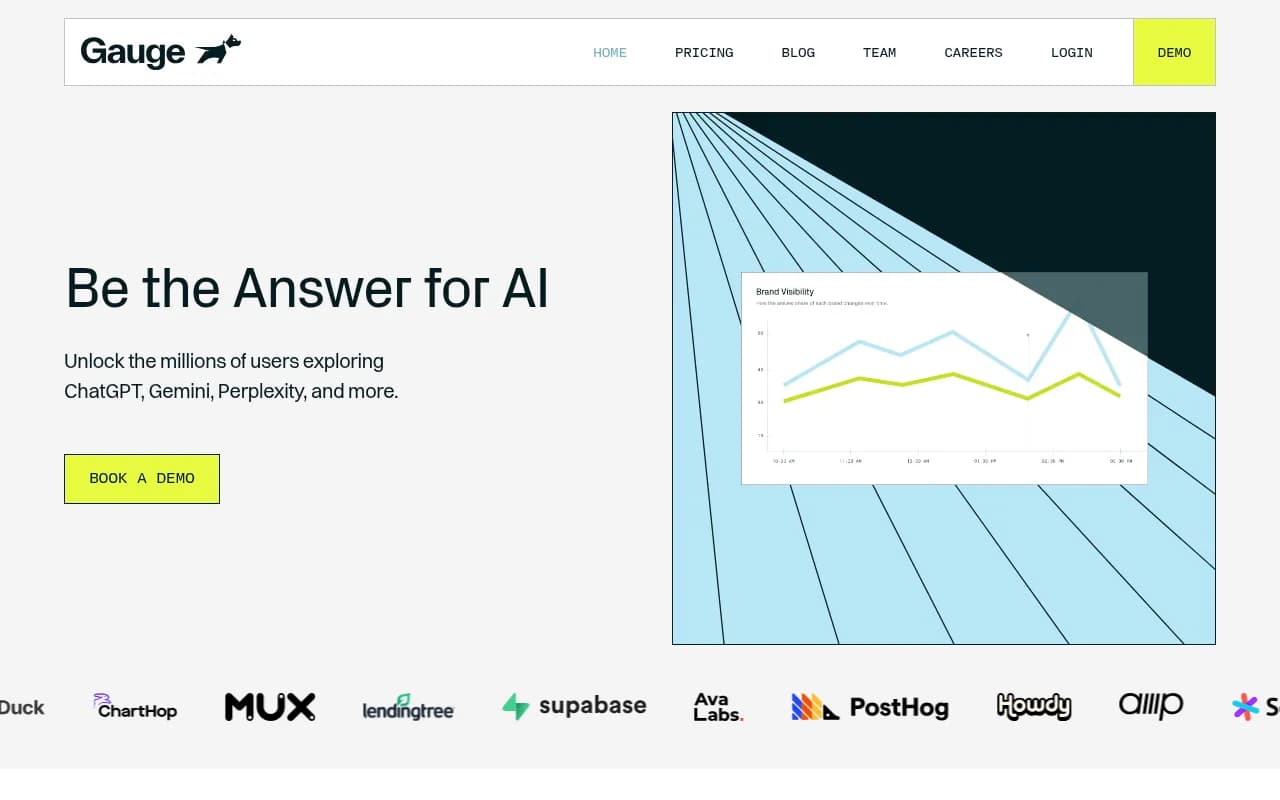
The friction points depend on your situation:
- Content ceiling. 18 publish-ready articles per month on Growth. Teams running serious AEO campaigns across multiple query categories will ration those.
- Pricing opacity. Gauge's live pricing page now shows only Growth ($599/mo) and Enterprise (custom). The $99/mo ChatGPT-only Starter tier that third-party reviews still reference doesn't appear on the current page, so verify before you budget.
- Reactive intelligence. Gauge's recommendations surface from monitoring data. There's no proactive layer mining competitor narratives on an automated cycle and feeding them into content strategy.
- Uplift claims depend on you. Gauge's "3-5x visibility uplift" is explicitly contingent on your team executing the recommendations. The platform measures monitoring quality, not execution outcomes.
None of these are disqualifying. They're just the reasons teams shop around.
The 7 platforms that close the loop
1. Promptwatch
Promptwatch is the most complete end-to-end stack in this comparison, and the only one that covers every stage from monitoring through automated publishing to verification. Its agents don't just report on visibility, they plan, write, and publish GEO-optimized content to your CMS (Webflow, Framer, WordPress) on a schedule you control, with either a review inbox or full automation.

What separates it from the monitoring-heavy tools here:
- AI crawler logs (Agent Analytics) show when ChatGPTBot, ClaudeBot, PerplexityBot, and 400+ other crawlers hit your site, which pages they read, and whether they hit errors, plus a citation rate per page. This explains why you're visible or not, which most competitors can't. Dageno's BotSight module is the closest equivalent.
- Visitor analytics attribute actual traffic and conversions from AI platforms, not just mentions.
- Content Agents close the loop: gap analysis feeds briefs, briefs feed drafts, drafts publish to your CMS, and citation trends confirm whether it worked.
- Unified Actions turns visibility, citation, and crawler data into a prioritized GEO to-do list, so you're not guessing what to fix first.
- Reddit and YouTube citation tracking, plus ChatGPT Shopping and an Ads Radar showing which competitors bid on your prompts.
Pricing runs from a free tier (10 prompts, ChatGPT only) through Essential at $95/mo, Professional at $245/mo, and Business at $579/mo, with agency plans from $199/mo. Professional includes 15 automated articles per month; Business includes 30. At 18,000 monthly responses on Professional, the cost per tracked answer is among the lowest in the category.
The trade-off: Promptwatch's strength is depth of data and automated execution, not hand-holding. Teams that want a managed service layered on top should look at FogTrail or an agency.
2. FogTrail
FogTrail is the strongest pick if you want proactive intelligence rather than reactive recommendations. Every 48 hours it runs a full intelligence cycle, extracting what each AI engine says about your category and competitors, surfacing narrative shifts as executive briefings that feed directly into content generation. Gauge's Action Center tells you what happened; FogTrail tells you what's shifting and writes the response.
Its pipeline runs monitor, extract, analyze, propose, execute, verify, with human review at every stage and post-publication citation verification that rescans all engines to confirm whether citations actually changed. That last step is rare. Most platforms publish and move on.
Pricing is modular by channel: Starter $99/mo (blog only), Pro $299/mo (blog + Reddit), Max $599/mo (blog + Reddit + YouTube), agency white-label from $1,299/mo. Note that a March 2026 figure of $499/mo for 100 articles circulates in older reviews, so confirm current tiers. FogTrail covers five engines (ChatGPT, Perplexity, Gemini, Grok, Claude), slightly fewer than Gauge or Promptwatch.
Best for: teams that want strategic intelligence with a human in the loop, and are willing to pay for it.
3. Profound
Profound is the enterprise heavyweight, with $155M+ raised, a ~$1B valuation, and customers like Target, Walmart, Figma, and Ramp. Its analytics are the deepest in the category, and its Agents feature lets you build autonomous workers for content generation and optimization.
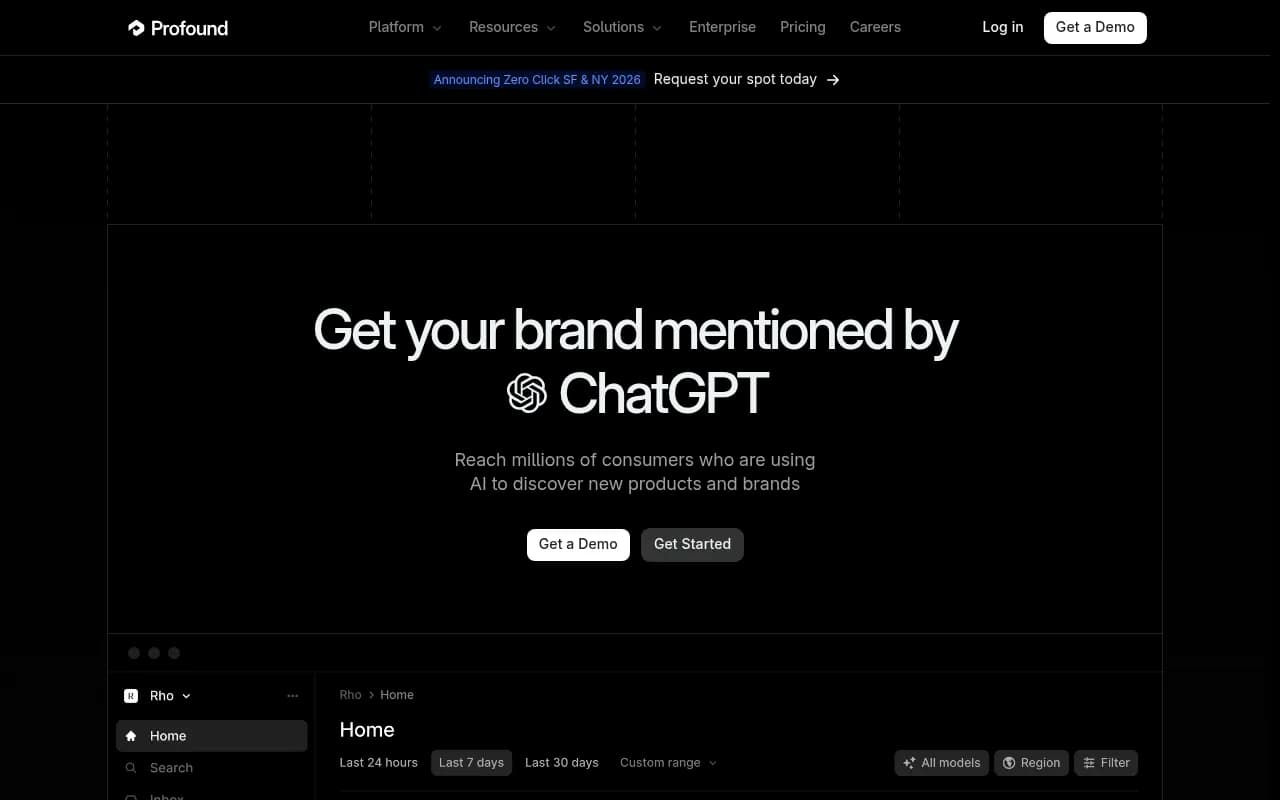
The catch for smaller teams: content generation arrives via Agents credits, and the self-serve Growth tier ships around 400 credits per month, which FogTrail's competitive breakdown estimates at roughly six articles. Real content volume lives at Enterprise, which runs $2,000-5,000+/mo with custom procurement. Profound is built for brand teams at large companies, not founders watching runway.
Best for: enterprises that need rigorous analytics across many engines and brands, with content execution as a secondary need.
4. Relixir
Relixir (YC X25) is the most aggressive price-to-feature ratio in the category, at $199-499/mo, down from an original $2,500/mo in 2025. Its "Rex" agent monitors ChatGPT, Perplexity, Claude, and Google AI Overviews, then auto-generates and deploys GEO-optimized content with JSON-LD schema, semantic chunking, automated citations, and FAQ structures.
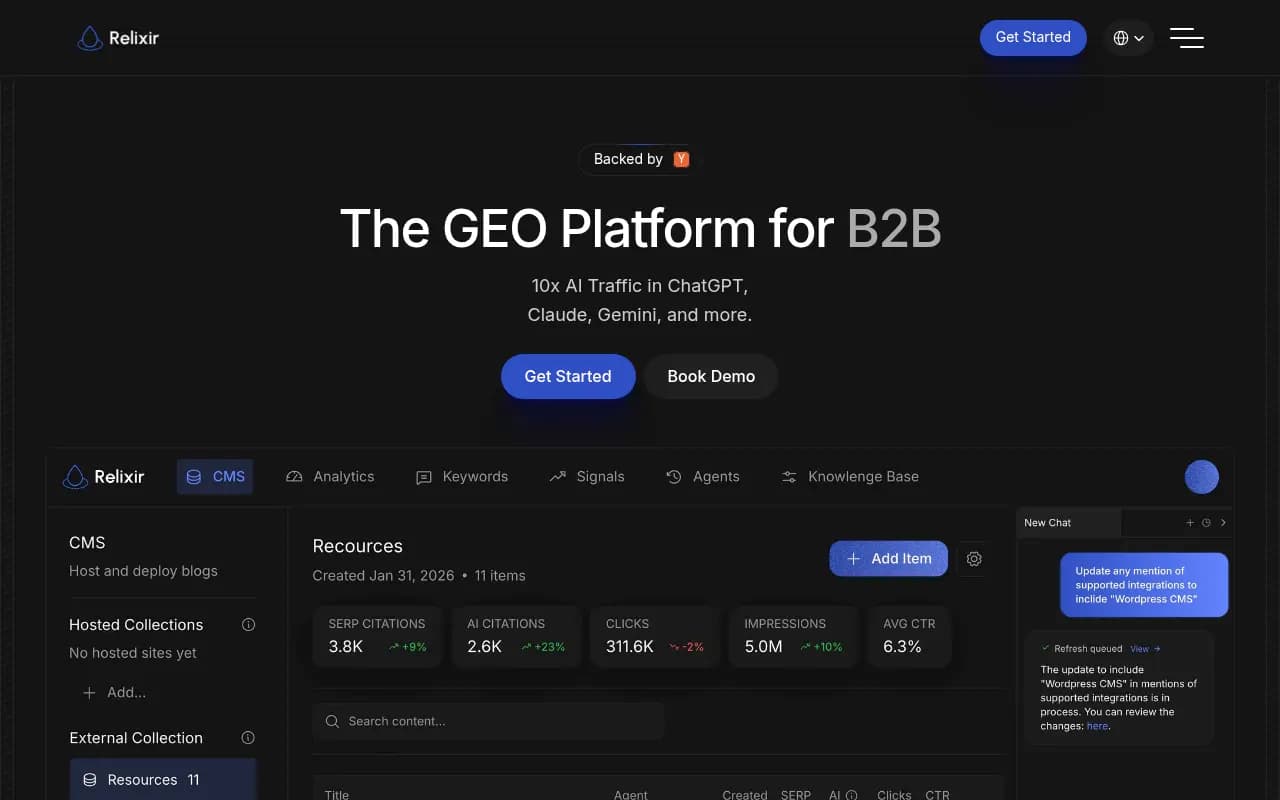
It also runs autonomous content refresh on 30-60 day cycles, detecting stale content and republishing with updated data, plus automated backlink outreach and technical site audits. Trusted by 400+ B2B teams including Rippling, Airwallex, and HackerRank.
The caveat is serious: human review is reserved for Pro and Enterprise tiers only. Basic and Standard plans auto-publish without a reviewer. For a funded startup, that's a brand-voice risk. If you go with Relixir, budget for a tier with review, or plan to edit everything manually.
Best for: lean teams that want maximum automation per dollar and accept the review trade-off.
5. Dageno AI
Dageno AI starts at $79/mo for 50 daily-tracked prompts across three selected platforms, with Growth and Scale tiers raising capacity to 150 and 500 prompts. Standard plans include unlimited countries and languages, up to ten competitors, and agent credits. There's also a free tier with one brand and 100 prompts per month.

Its differentiator is strategic prioritization: rather than just generating more content, Dageno's positioning argues the harder question is choosing which GEO opportunity deserves investment. Its Content Engine supports programmatic content production tied to GEO and SEO opportunities, including gap analysis, on-page auditing, internal linking, and content refresh. A BotSight module detects AI crawler visits, similar to Promptwatch's Agent Analytics.
Pricing isn't fully self-serve; the site routes larger plans toward sales conversations with SOC2, SSO, and white-label options.
Best for: teams that want visibility data, SEO data, and content production in one dashboard at a lower entry price.
6. Trakkr
Trakkr is the simplest pricing in the category: flat-rate, every model included. Growth at $100/mo, Scale at $500/mo (including 100 articles per month), Enterprise from $1,000/mo. A 14-day trial precedes billing.
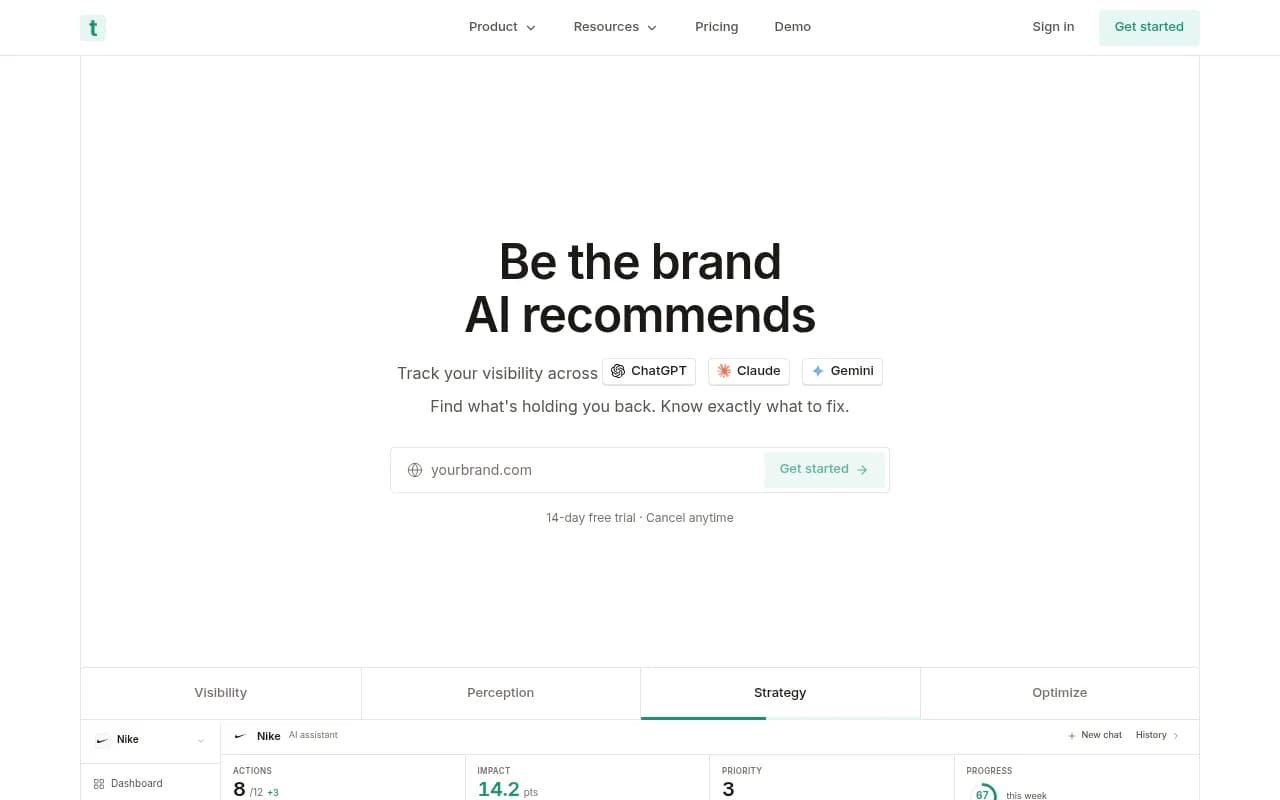
The founder's positioning is blunt: most competitors charge $100-400/mo or go enterprise-only, so Trakkr offers daily visibility tracking across the five biggest AI models at a flat price. The 100 articles per month on Scale is the highest content volume per dollar in this list, though the platform is younger and less battle-tested than Gauge or Promptwatch.
Best for: teams that hate pricing gymnastics and want predictable flat costs with serious content volume.
7. Gauge itself
Sometimes the best alternative is the incumbent. If you're already on Gauge and your complaints are minor (a few more engines, a few more articles), Gauge's Enterprise tier offers custom prompts, seats, articles, and locations, plus recurring implementation sessions with the Gauge team. A Compt VP of Marketing calls it "the most expensive tool we have, but we happily pay them every month."
If your needs exceed what Enterprise offers, or the price-to-volume ratio doesn't work, the six platforms above are your shortlist.
Comparison table
| Platform | Entry price | Content generation | Engines tracked | Human review | Standout capability |
|---|---|---|---|---|---|
| Promptwatch | $95/mo | Yes, automated Content Agents with CMS publishing | 11+ including AI Overviews, AI Mode, Grok, DeepSeek | Review inbox or full automation | Crawler logs + visitor analytics + Reddit/YouTube tracking |
| FogTrail | $99/mo | Yes, tied to intelligence briefings | 5 | Yes, at every stage | 48-hour intelligence cycles + post-publication citation verification |
| Profound | ~$99/mo self-serve | Yes, via Agents credits (~6 articles on Growth) | Up to 9 at Enterprise | Enterprise only | Deepest enterprise analytics; $155M+ raised |
| Relixir | $199/mo | Yes, autonomous with auto-publish | 4 | Pro/Enterprise tiers only | Autonomous refresh cycles + backlink outreach |
| Dageno AI | $79/mo | Yes, programmatic | 10+ | Yes | Bundles GEO + SEO data; BotSight crawler detection |
| Trakkr | $100/mo | Yes, 100 articles/mo on Scale | 5 | Yes | Flat pricing, every model included |
| Gauge | $599/mo (Growth) | Yes, 18 articles/mo | 6-7 | Yes | Ask Gauge agent; GA4/GSC integration |
How to choose between them
Normalize the pricing first
This category prices inconsistently on purpose. Some platforms charge per prompt, some per article, some per engine, some flat. Gauge's own pricing page argues that cheaper-looking tools often work out to 2-15x more per answer once you do the math. Before comparing sticker prices, calculate two numbers for each platform: cost per tracked answer and cost per published article. A $99/mo tool tracking 50 prompts monthly is more expensive per answer than a $245/mo tool tracking 18,000 responses.
Decide where you stand on auto-publishing
The category's central trade-off is speed versus brand safety. Relixir's lower tiers auto-publish without a reviewer. Promptwatch lets you choose per-project between a review inbox and full automation. FogTrail puts a human at every stage. There's no right answer, but there is a wrong one: assuming all automation is equal. Ask every vendor specifically who reviews content before it goes live, and at which tier that review is included.
Match content types to citation data
Don't evaluate content generation in the abstract. Check what each platform actually produces against what AI engines cite. Promptwatch's July 2026 citation data shows product pages, listicles, how-tos, and comparisons winning ChatGPT citations, while generic blog content and markdown files barely register (markdown files make up just 0.05% of AI search citations, per Promptwatch's markdown research). A platform that generates structured product pages and comparison content is worth more than one that generates volume.
Verify before you commit
Two cautionary notes from this research:
- Goodie AI, once a promising full GEO platform covering 11 engines, appears to have shut down or pivoted; its domain was listed for sale at $80,000 in a 2026 review. A platform's engine count matters less than whether it'll exist in a year.
- Third-party pricing data goes stale fast. Multiple reviews still cite Gauge's $99/mo Starter tier, which no longer appears on Gauge's live pricing page. FogTrail's pricing was restructured between March and mid-2026. Always confirm current pricing on the vendor's own site before budgeting.
The bottom line
Gauge is a solid closed-loop platform, and its biggest weakness is price-to-volume at the Growth tier. If you want more content for less, Promptwatch Professional ($245/mo, 15 automated articles, 18,000 responses) and Trakkr Scale ($500/mo, 100 articles) are the strongest value plays. If you want proactive competitive intelligence with human review, FogTrail. If you're an enterprise brand team, Profound. If you want maximum automation per dollar and accept the review trade-off, Relixir.
Whichever you pick, the point of closing the loop is verification: content goes out, citations get re-checked, and the next round of content targets what actually moved. Any platform that skips that last step is just a dashboard with a writing tool bolted on.