Key takeaways
- GA4 got a native AI Assistant channel on May 13, 2026, which auto-tags sessions from ChatGPT, Gemini, Deepseek, Copilot, and Grok. It's a real improvement — but Perplexity still lands in Referral, Google's own AI Overviews and AI Mode clicks count as Organic Search, and an estimated 60–70% of AI traffic arrives with no referrer at all, ending up in Direct.
- HockeyStack attacks the problem from the attribution side: it merges visitors across devices, tracks multi-touch journeys, and uses self-reported attribution ("how did you hear about us?") to catch AI-influenced conversions that never carry a referrer.
- Usermaven puts attribution at the center of the product rather than bolting it onto a general analytics suite, with automatic channel detection and privacy-friendly, cookieless tracking that survives the referrer stripping that breaks GA4.
- None of the three tells you whether AI assistants are actually citing your brand. Attribution tools measure clicks; they don't measure the visibility that happens before the click. For that, you need an AI visibility layer alongside your analytics stack.
The attribution problem nobody fully solved
Here's the uncomfortable situation in 2026: someone asks ChatGPT for a recommendation, your product gets mentioned, the person opens a new tab, types your URL or searches your brand name, and lands on your site. What does your analytics tool see?
Usually nothing useful. The click came from a desktop app or an in-app browser that strips referrer data, so it lands in Direct. Or it came through chatgpt.com and shows up as a generic referral. Either way, the AI's role in the journey is invisible.

Ahrefs covered this well in their AEO course, and their framing is worth repeating: training bots like GPTBot don't drive clicks, but citation bots like ChatGPT-User and OAI-SearchBot do — and if your analytics setup lumps those visits into "Unknown" or "Direct," you'll keep optimizing in the dark.
So which of the three tools — GA4, HockeyStack, or Usermaven — actually handles this? The honest answer: each handles a different slice of it, and all three have gaps.
GA4 in 2026: better than it was, still leaky
What shipped on May 13, 2026
Google added a new "ai-assistant" medium that gets assigned automatically when the referrer matches a recognized AI assistant. Qualifying sessions now show up in a dedicated AI Assistant channel in your Default Channel Group reports, with zero configuration.
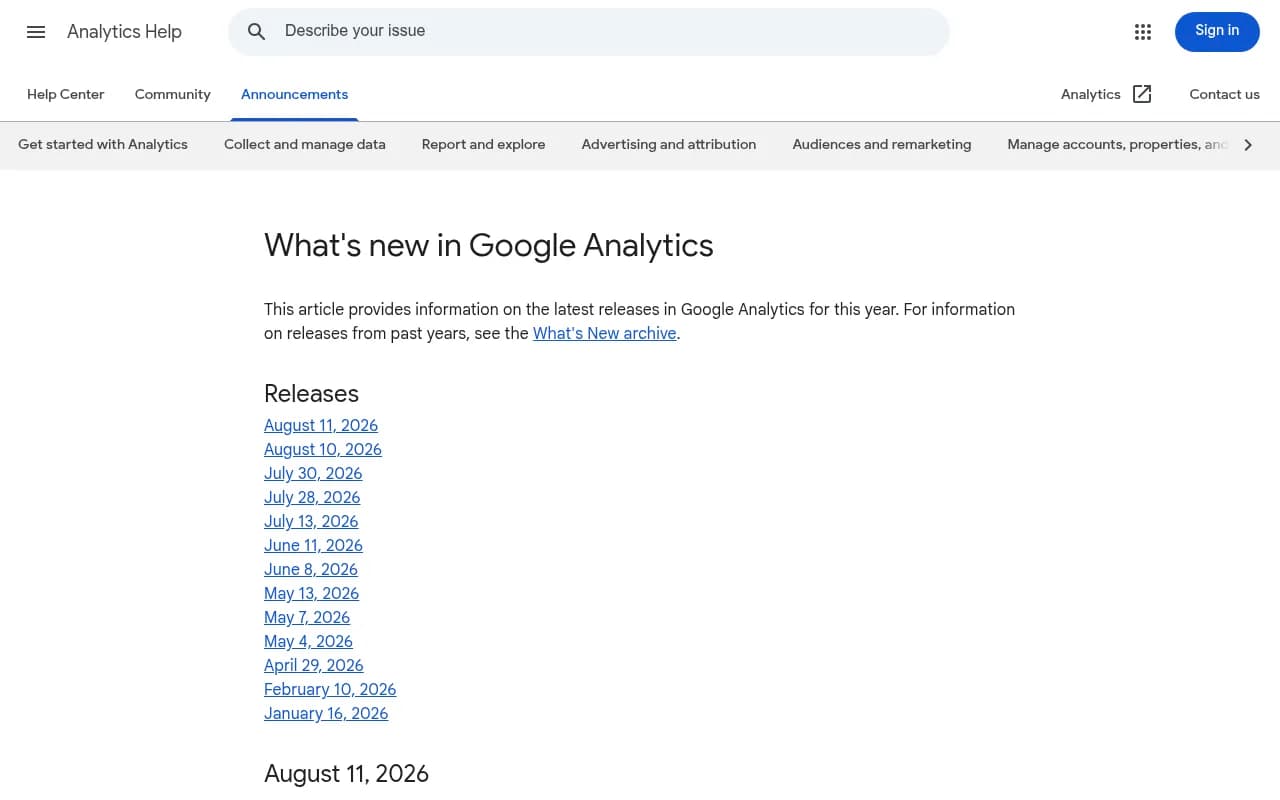
If you spent 2025 wiring up custom regex to catch AI referrals, this is a genuine relief. The live documentation now names five platforms — ChatGPT, Gemini, Deepseek, Copilot, and Grok — which is more than the three Google announced at launch.
Where GA4 still breaks
Three problems, in order of how much they'll annoy you:
- Perplexity isn't in the channel. One of the highest-intent AI traffic sources still lands in Referral. Some secondary sources claim it's included; Google's own documentation doesn't list it. Verify against the help page before you report anything to a client.
- Google's own AI features count as Organic Search. AI Overviews and AI Mode clicks route to Organic, so the AI portion of your Google traffic is structurally invisible in GA4. You need Search Console, which in 2026 exposes AI Overview and AI Mode impressions under Performance → Search appearance, to see that side.
- Most AI traffic has no referrer. Estimates from industry analyses put the no-referrer share of AI traffic at 60–70%. That all lands in Direct, and no channel definition can fix it, because there's nothing to define.
Here's the default attribution picture if you rely on GA4 out of the box:
| AI source | Default GA4 attribution | What it should be |
|---|---|---|
| ChatGPT web (chatgpt.com) | Referral / chatgpt.com | AI search |
| ChatGPT desktop app | Direct / (none) | AI search |
| Perplexity web | Referral / perplexity.ai | AI search |
| Google AI Overviews | Organic / google | AI search |
| Google AI Mode | Organic / google | AI search |
| Microsoft Copilot | Referral / copilot.microsoft.com | AI search |
| Gemini | Referral / gemini.google.com | AI search |
| Claude.ai | Referral / claude.ai | AI search |
| Brave Leo, Arc Search | Direct / (none) | AI search |
The fix: custom channel groups (and a caveat about the native channel)
You can still build a custom channel group with a regex covering the major AI referrers — the Analytics Mania approach takes 5–10 minutes and persists across your standard reports. Keep it running in parallel with the native AI Assistant channel, because the native channel only applies to data from May 13, 2026 forward, and the overlap is worth seeing.
One reporting hygiene tip from Digital Applied's playbook that I'd echo: annotate the launch date, run both views side by side, and wait for a 90-day trend before drawing strategic conclusions. The native channel is a floor, not a ceiling.
HockeyStack: attribution as the actual job
HockeyStack takes a fundamentally different starting point than GA4. GA4 is built for broad website and app measurement, with attribution as one feature among many. HockeyStack puts attribution first and builds the analytics around it.
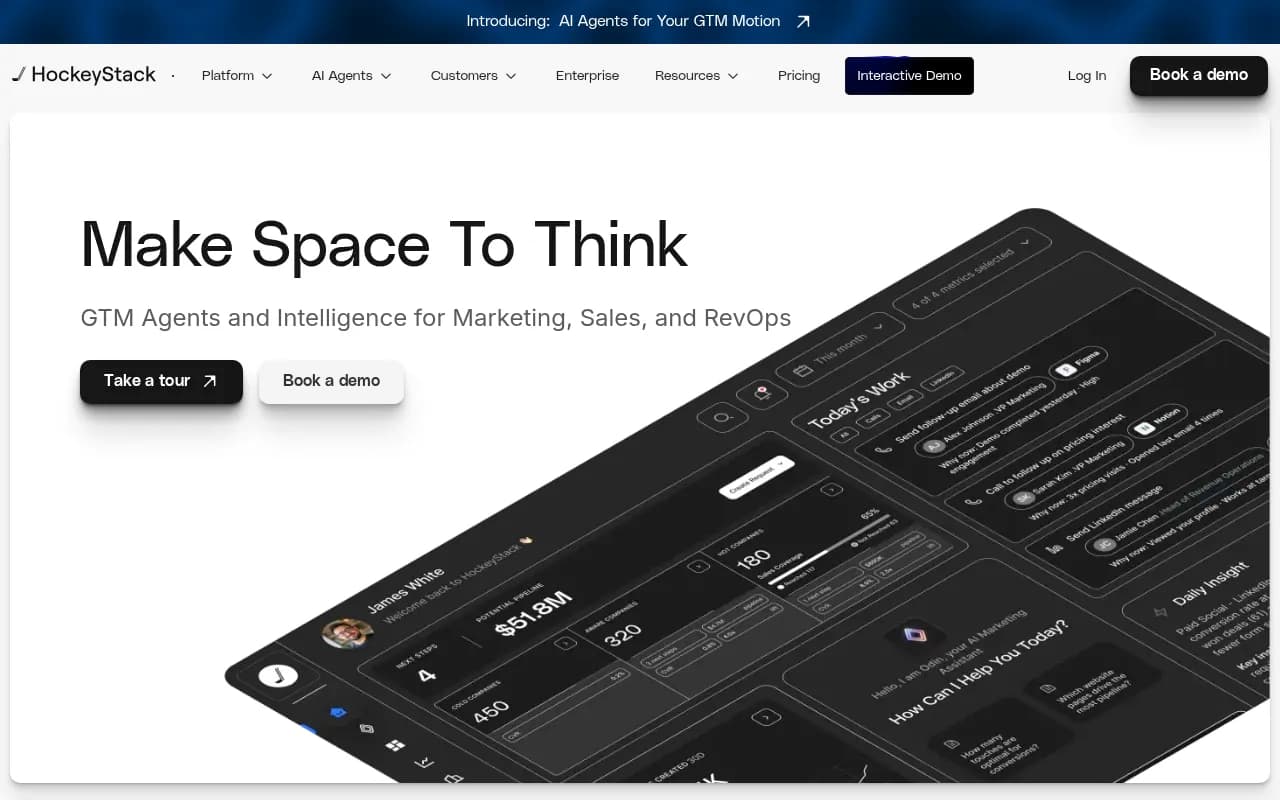
A few things matter specifically for AI traffic:
- Cross-device identity merging. Per HockeyStack's own docs, it merges traffic from different devices, which GA4 does not. This matters more than it sounds for AI attribution, because the typical AI journey is messy: research in ChatGPT on your phone, visit the site later on a laptop. GA4 sees two unconnected sessions. HockeyStack sees one person.
- Multi-touch journeys. Because it stitches the full path, an AI referral that starts a journey which converts through a branded search two weeks later still gets credit at the touchpoint level. GA4's models tend to hand the conversion to the last click, which almost never comes from the AI assistant.
- Self-reported attribution. This is the piece I find most underrated. A "How did you hear about us?" field on your forms catches the conversions where someone found you in ChatGPT, thought about it for a week, and arrived via direct URL. Referrer data can't capture that; the customer's own words can. HockeyStack ties those survey answers back into the attribution model.
The tradeoff: HockeyStack is a paid platform aimed at marketing teams that care about revenue attribution, and it's more opinionated than GA4. You're buying focus, not breadth. It also won't tell you anything about impressions or citations in AI answers — it measures what happens on your site, not what happens inside ChatGPT.
Usermaven: attribution-first, privacy-friendly, simpler
Usermaven sits closer to GA4 in scope — website and product analytics — but its positioning is explicit: GA4 includes attribution as part of a broad platform, while Usermaven puts attribution at the center.
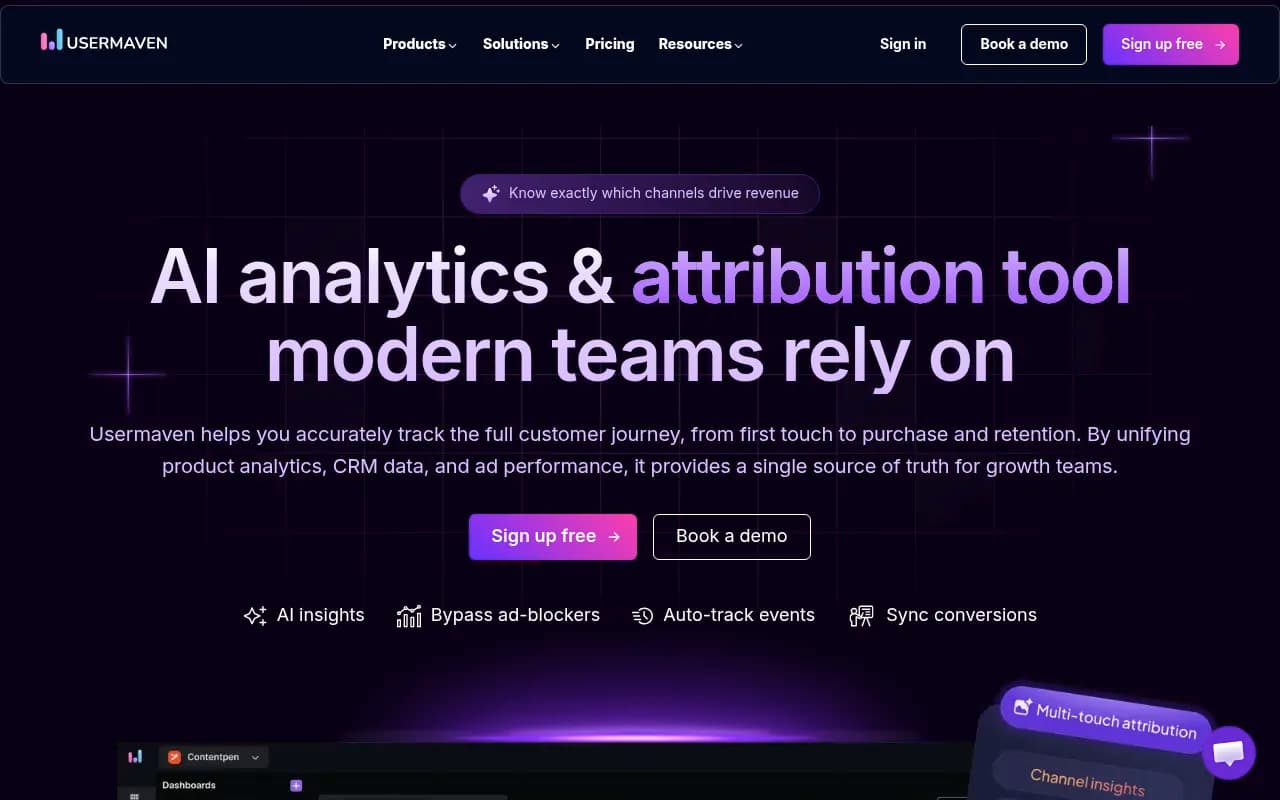
For AI traffic specifically, the practical advantages are:
- Cookieless, privacy-friendly tracking. Referrer stripping and privacy restrictions are what break AI attribution in the first place. Usermaven's tracking approach is more resilient to the browser-level changes that send GA4 data into the Direct bucket.
- Automatic channel detection with less configuration debt. Rather than maintaining a 90-line regex of AI domains in a custom channel group, Usermaven's channel logic is handled for you and updated as new AI tools appear. Given that new AI assistants launch roughly monthly, that maintenance burden is real. The giant regex you paste into GA4 today is already outdated.
- Product analytics alongside marketing attribution. If you want to see what AI-referred visitors actually do on your site — activation, feature usage, retention — Usermaven connects that journey without a separate product analytics tool.
The tradeoff is the mirror image of GA4's strength: Usermaven has a smaller ecosystem, fewer integrations, and less of the enterprise reporting machinery. If your org already lives in BigQuery exports and Looker Studio, migrating that stack is a project.
Head-to-head: the three tools compared
| GA4 | HockeyStack | Usermaven | |
|---|---|---|---|
| Native AI traffic detection | Partial (AI Assistant channel, 5 platforms, forward-only from May 2026) | Via attribution logic + self-reported attribution | Automatic channel detection, no regex maintenance |
| Handles no-referrer AI traffic | No — lands in Direct | Partially — cross-device merging and surveys help | Better than GA4, still imperfect |
| Multi-touch attribution | Limited, last-click-biased | Yes, core strength | Yes, attribution-centered design |
| Cross-device journey stitching | No | Yes | Partial |
| Self-reported attribution | Manual (forms + manual analysis) | Built in | Supported via contact-level attribution |
| AI Overviews / AI Mode visibility | No — use Search Console | No | No |
| Price | Free (paid tier for enterprise) | Paid, quote-based | Paid, generally lower cost than HockeyStack |
| Best for | Teams already on Google's stack who need a baseline | B2B teams proving marketing's revenue impact | Teams wanting attribution without GA4's complexity |
The part none of them solve: visibility before the click
Here's the thing about all three tools, and honestly about every analytics platform: they measure what arrives at your site. They don't measure whether AI assistants are recommending you at all.
That distinction matters more every quarter. A large share of AI-influenced conversions never produce a trackable click — the person gets their answer, remembers your brand, and shows up days later through a channel your attribution model happily takes credit for. Your analytics can look flat while your AI visibility is quietly doubling, or the reverse.
This is why the Digital Applied playbook frames AI measurement as a layered stack rather than a single tool, and I agree with that framing:
- On-site analytics (GA4, HockeyStack, or Usermaven) measures clicks and conversions.
- Search Console with AI filters measures AI Overviews and AI Mode impressions inside Google.
- AI visibility monitoring measures whether you're cited in AI answers at all — the visibility that precedes any click.
For that third layer, a platform like Promptwatch does the job: it tracks how your brand appears across ChatGPT, Claude, Gemini, Perplexity, and Google's AI features, shows which of your pages AI systems actually cite, and measures the real traffic and conversions driven from AI platforms — plus the AI crawler logs that explain why you are or aren't visible. It's the piece that answers the question your analytics tool can't: what happened inside the AI answer before anyone clicked.

Run alongside GA4's AI Assistant channel, that combination gets you the full picture — citations upstream, clicks downstream.
Which one should you actually use?
Stick with GA4 if…
You're already on Google's stack, you have reporting built around it, and you need a free baseline. Do these three things this week: create the custom channel group with an AI regex, annotate the May 13, 2026 native-channel launch, and pull Search Console's AI Overviews and AI Mode data into a Looker Studio dashboard. Just know that the number you report is a floor — most AI traffic is still invisible to you.
Choose HockeyStack if…
You're a B2B marketing team whose job is to prove pipeline and revenue attribution, and the cross-device, multi-touch nature of AI journeys is exactly what's breaking your current reporting. The self-reported attribution feature alone justifies it for teams with meaningful form volume, because it captures the AI conversions that referrer-based tools structurally miss.
Choose Usermaven if…
You want attribution taken seriously without GA4's configuration burden or HockeyStack's price point. If you're a smaller team that doesn't have someone whose side job is maintaining regex channel groups, the automatic channel detection is worth real money, even if it doesn't feel like a feature.
Whatever you pick, add the visibility layer
None of these tools will tell you that Perplexity started citing your competitor three times more often this month, or that a Reddit thread is now the source AI assistants use to answer questions in your category. Attribution tools measure outcomes on your site. AI search visibility happens off it. In 2026, you need both, because the gap between what your analytics shows and what's actually driving your growth is exactly where AI search lives.