Key takeaways
- For most local businesses, start with Google AI Overviews. Google is where a search becomes a phone call, and AI Overviews cite social and profile content far more than ChatGPT does.
- Add ChatGPT second, especially if you sell something with a considered purchase (home services, legal, healthcare, high-ticket repairs) where people ask long, comparison-style questions.
- Promptwatch Data for Sep 28 to Oct 4, 2026 shows social platforms make up 12.2% of AI Overview citations but only 0.46% of ChatGPT's. That gap changes what you should publish and where.
- Nobody has clean public data on local-query citations yet. Treat any claim, including the ones here, as a hypothesis to test with your own prompts.
- Track many prompts, across several locations, and log position and description in the answer, not just whether you were mentioned.
The short answer
If you have to pick one: Google AI Overviews first. If you can pick two: add ChatGPT within the first month.
I want to be upfront about something. I could not find a study that isolates local queries ('best plumber near me', 'dentist open Saturday') and measures what ChatGPT or AI Overviews cite for them. None of Promptwatch's published reports is local-specific, and the third-party material I reviewed is mostly vendor opinion. So this guide combines the data that does exist with some reasoning about how local intent works. Where I'm inferring, I'll say so.
How the two engines differ for local intent
Google AI Overviews sit inside the local journey
A person searching for an emergency plumber on Google is already one tap away from calling. The AI Overview, the map pack, and your Business Profile all appear in the same session. 321 Web Marketing makes this argument directly: a local service firm gets more immediate return from Google, where a search turns into a phone call. Their suggested first investment is the Business Profile and a local SEO plan, with comparison content and GEO work after that.
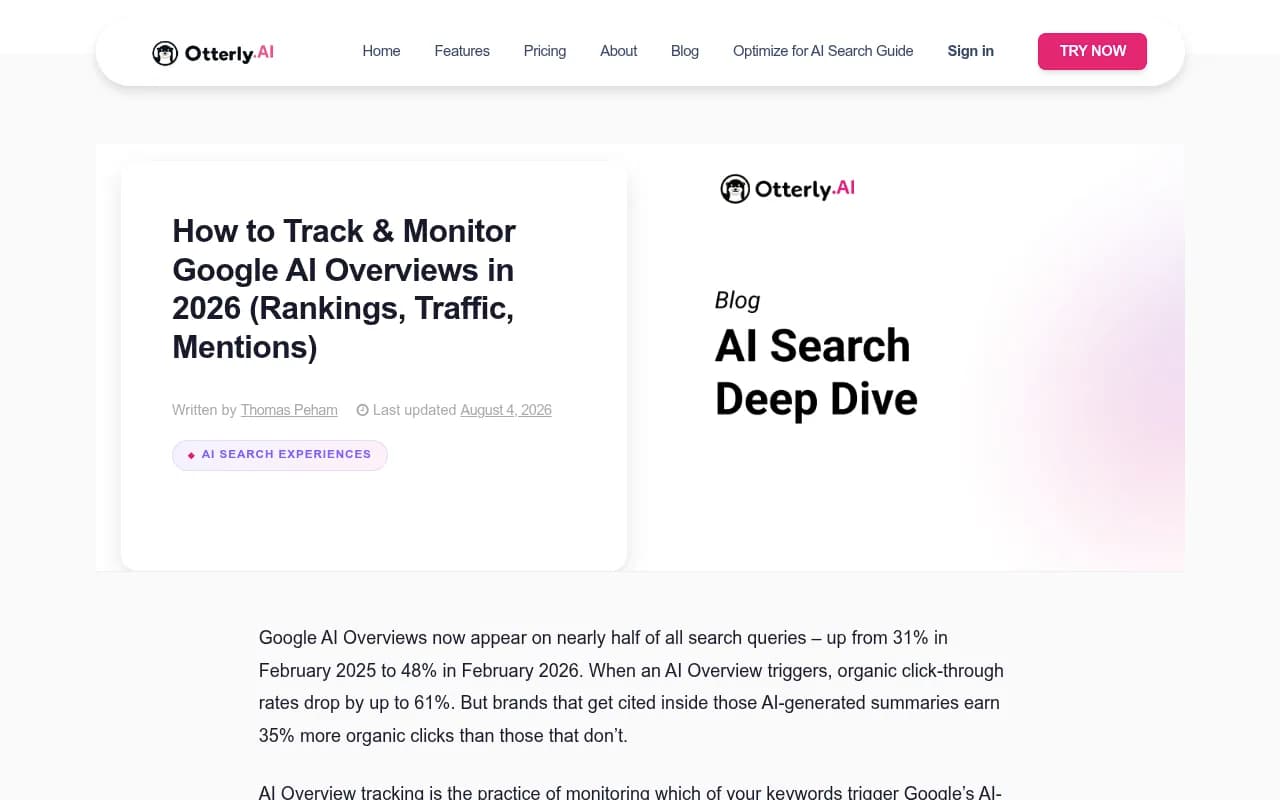
Scale matters too. Otterly.AI reports AI Overviews appeared on 31% of queries in February 2025 and 48% in February 2026. That is a vendor figure, and PingPrime repeats it, so treat it as directional. Even if the real number for local queries is lower, Google is where your existing demand already lives.
ChatGPT answers the longer, fuzzier question
People use ChatGPT to think out loud: 'I have a leaking water heater in a 1960s house, who should I call and what should it cost?' Layer3Labs puts it as 'AI Overviews delivers volume, ChatGPT delivers intent.' I think that's a fair shorthand, though it's a claim, not a measurement.
ChatGPT also cites widely. In Promptwatch's data for Sep 28 to Oct 4, 2026, 47.6% of ChatGPT responses with citations cite 10 or more unique domains, and only about 6% cite three or fewer. For a local business that means you are competing with a crowd of directories, aggregators, and review sites for a slot, not just with the plumber down the road.
What the citation data suggests
Social and profile content: AI Overviews lean on it, ChatGPT barely does
This is the clearest data point I have. From Sep 28 to Oct 4, 2026, social platforms were 12.2% of Google AI Overview citations and 0.46% of ChatGPT citations. Details from the same report:
- In AI Overviews, YouTube leads at 4.28%, Facebook is at 2.38% (more than doubled from the previous report), Reddit at 2.15%, Instagram at 1.61%, and LinkedIn at 1.55%.
- ChatGPT's Reddit share fell from 5.19% to 0.09% between reports. Separately, Promptwatch Data shows reddit.com's share of ChatGPT citations dropped from roughly 4% to 0.5% on August 14, 2026.
- Perplexity sits in between at 2.7%.
For local businesses, public Facebook pages, Instagram profiles, and YouTube videos (a walkthrough of a typical install, a team intro) are things you may already have or can make cheaply. My inference, not a finding in the report: this makes AI Overviews the more reachable engine for a small local brand. Promptwatch's own advice from the report is similar, if your buyers search on Google, invest in YouTube first and keep Facebook and Instagram profiles complete.
What ChatGPT cites instead
ChatGPT leans toward commercial-style pages. In Promptwatch's content type data (Sep 28 to Oct 4, 2026), product pages were 22.4% of all citations and landing pages 16.8%. For commercial prompts, product pages, landing pages, listicles, and comparisons together made up almost 70% of citations. The report doesn't classify local prompts, but 'best plumber near me' is plausibly a commercial prompt, so this is a reasonable guide.
Translated for a local business: a clear service page with prices, service area, and proof beats a blog post. A 'best X in [city]' listicle, whether yours or someone else's, is a common citation type. If a third-party roundup ranks above you, getting included in it may matter more than your own page.
Aggregators win in location-adjacent categories
Look at three verticals Promptwatch has studied. In travel, Skyscanner, Going, and Tripadvisor lead, and booking and search sites take more than half of citations. In automotive, marketplaces like Autotrader and Cars.com outrank every car brand. In healthcare, government and public health sites earn almost half. Pattern: third parties dominate ChatGPT answers wherever people choose a provider. I'd expect the same for local services, but again, nobody has published that for local.
One more detail. Sites with domain rank 46-75 earned almost half of ChatGPT citations in August 2026, while DR 91-100 fell to about 3%. A mid-authority local site is not locked out.
Freshness
Promptwatch's content half-life study found landing pages and docs stay cited longest, while news loses half its cited pages within about 36 days. So don't build your local ChatGPT presence on news-style posts. Evergreen service pages last.
Comparison: ChatGPT vs AI Overviews for a local business
| Factor | Google AI Overviews | ChatGPT |
|---|---|---|
| Proximity to a booking or call | Very close (same session as map pack and Business Profile) | Further away, user often searches again |
| Social citation share (Sep 28 to Oct 4, 2026) | 12.2% | 0.46% |
| Most useful content types | Business Profile, YouTube, Facebook/Instagram, service pages | Product/service pages, landing pages, listicles, comparisons |
| Citations per answer | Roughly 3 to 8 per Otterly.AI | Often 10+ unique domains |
| Best for | Urgent, high-intent local searches | Research-heavy, comparison-driven purchases |
| Local-specific public data | Little | Little |
| First investment | Business Profile, local SEO, video | Comparison content, third-party listicle inclusion |
Decision framework: which to track first
Track AI Overviews first if
- Customers call you after a Google search (plumbers, locksmiths, dentists, restaurants, salons).
- You have a Business Profile, Facebook, and YouTube presence you can improve quickly.
- Your sales cycle is hours or days.
Track ChatGPT first if
- Customers research before contacting anyone: wedding venues, immigration lawyers, home remodeling, financial advisors.
- You serve a region where ChatGPT use is high among your audience and you've seen leads say 'ChatGPT recommended you'.
- Your competitors are aggregators and you need to understand which listicles and directories get cited.
Track both from day one if
- You're a multi-location brand or an agency managing local clients. The cost of one tool covering both is small compared to the cost of guessing.
How to set up local tracking
Build a prompt set that reflects real local searches
Start with 30 to 50 prompts, not five. Include:
- Service plus city: 'emergency plumber in Leeds'
- Service plus neighborhood: 'dentist near Kreuzberg'
- Qualifier prompts: 'cheap', 'open Sunday', 'family-owned', 'licensed'
- Comparison prompts: 'X vs Y roofing company'
- Branded prompts: 'is [your business] any good'
Promptwatch's own advice on ChatGPT is to measure across many prompts rather than one, and to track your position and description in the answer, not just whether you were cited. That applies doubly to local, where answers change by phrasing.
Track location properly
AI answers vary by location. Pick a tool that lets you set country, and ideally state or city, per prompt. Without that, you are measuring a generic answer that no customer actually sees.
Use the free baseline first
Google Search Console doesn't separate AI Overview impressions from normal results, as Otterly.AI points out, but it still shows you which local queries drive clicks. Use it to seed your prompt list.
Otterly.AI's guide on tracking AI Overviews is a decent walkthrough of trigger rate, citation presence, and traffic impact.
Tools worth considering
No single tool is right for every local business. Here is how I'd sort the options.
| Need | Tools to look at |
|---|---|
| Tracking both engines with location control, crawler data, and content actions | Promptwatch |
| Low-cost monitoring | Otterly.AI, Peec AI, Airefs |
| Local-business focus | Tibly, BrightLocal |
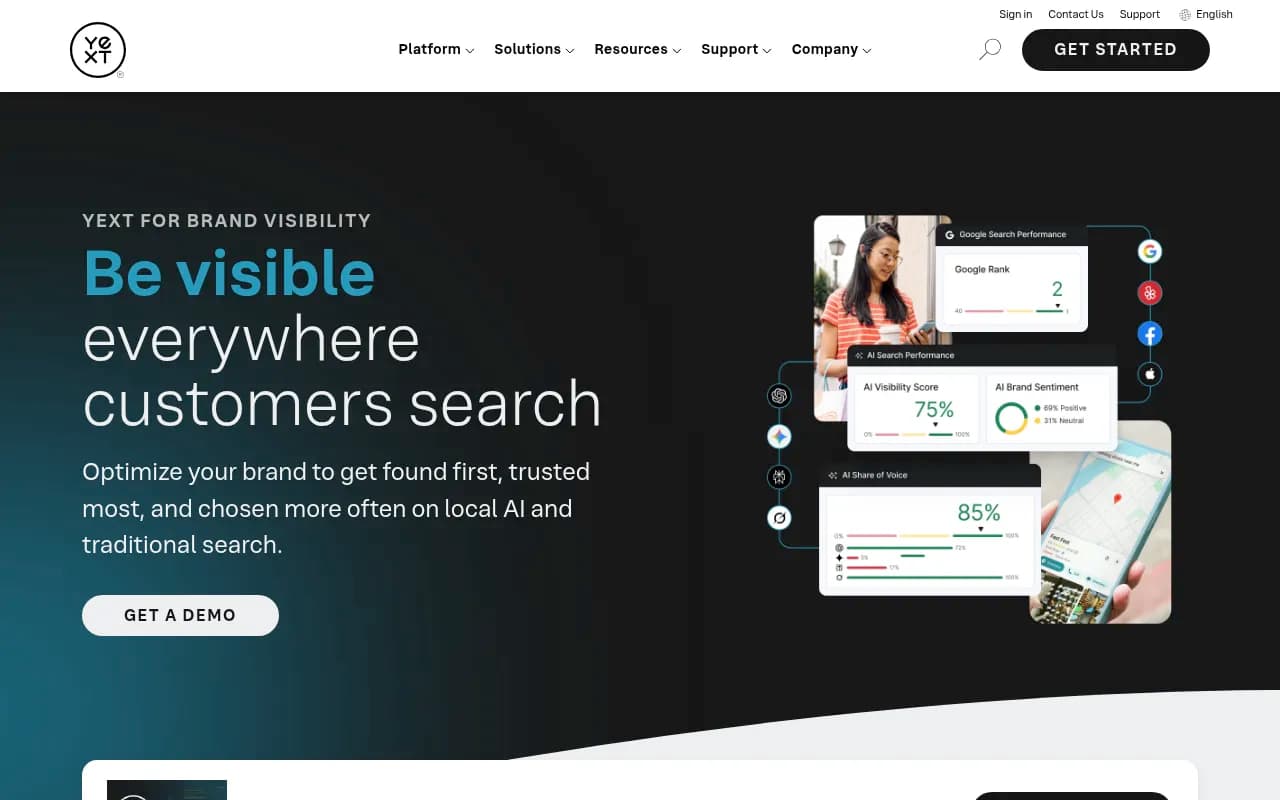
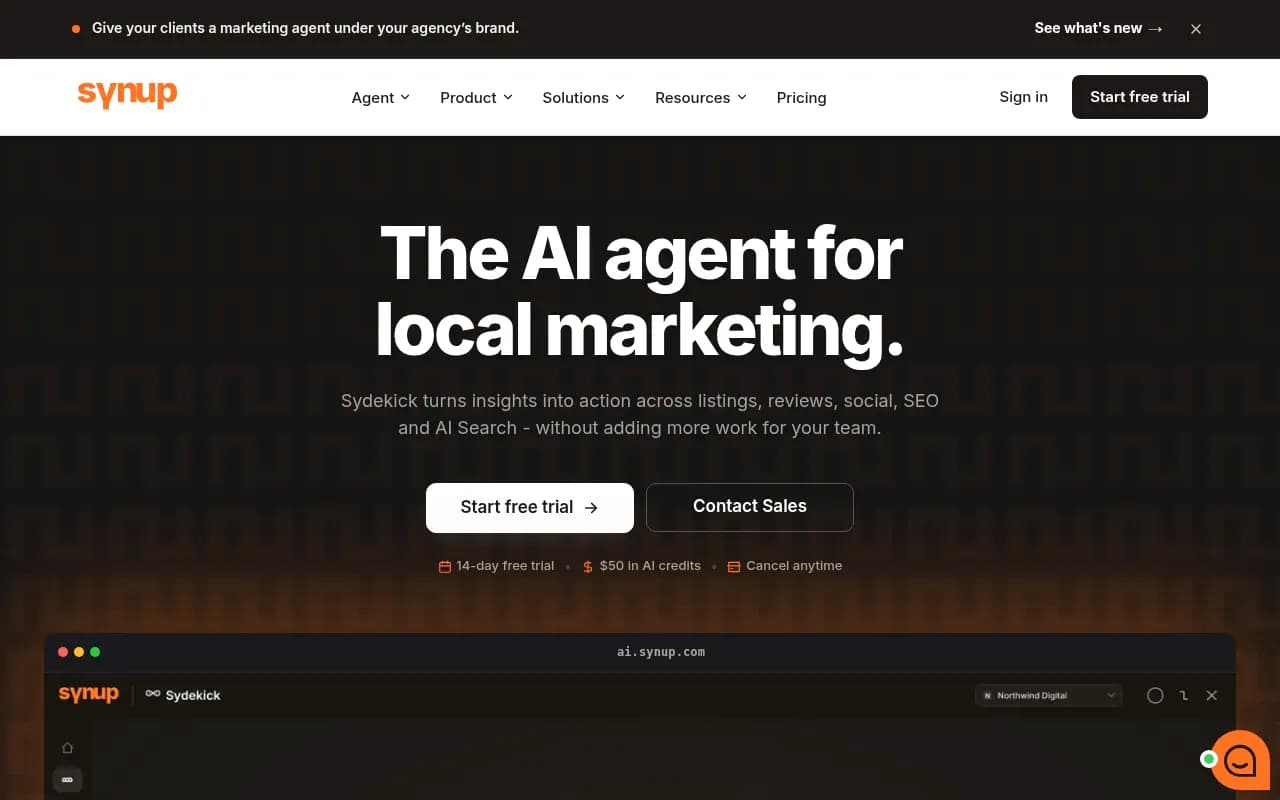
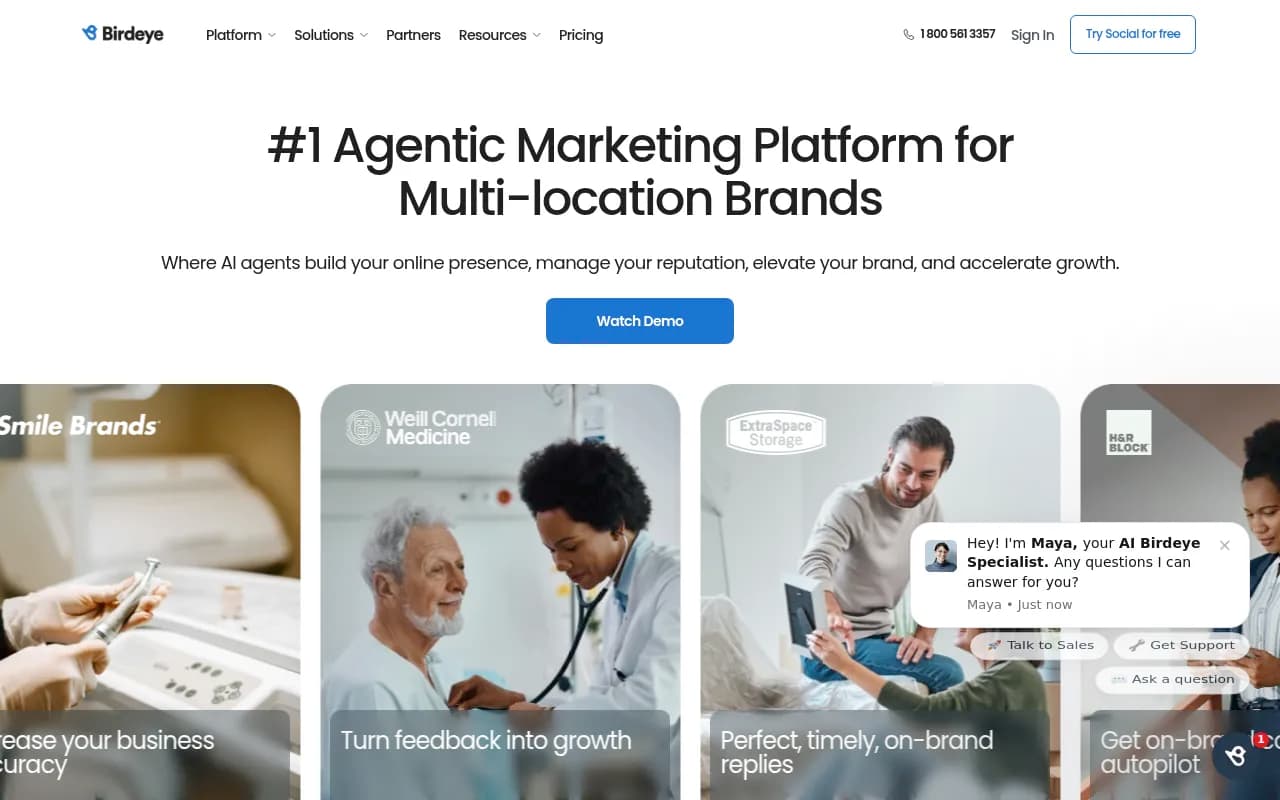
| Listings, reviews, and multi-location management | Yext, Synup, Birdeye |
| Free baseline | Google Search Console |
Promptwatch tracks the real interfaces of ChatGPT and Google AI Overviews, with country tracking on every paid plan and state/city tracking from the Business plan. It also adds crawler logs and page-level citation data, which is useful when you need to know why a page isn't cited. Check promptwatch.com/pricing for current plans.

Otterly.AI is a simpler, cheaper monitor, and its blog is where the AI Overview figures cited above come from.

For local-specific needs, Tibly is aimed at local businesses, and BrightLocal covers the local SEO side (citations, listings, map rankings) that still feeds Google.

For multi-location brands, listings and reputation platforms keep your data consistent, which matters because AI engines pull from many directories.
If you want to browse more options, the GEO software directory at bestgeosoftware.com lists tools by category.
A 30-day plan
Week 1: baseline
Build the prompt set. Run it in both engines for your main city and two neighboring ones. Record whether you are mentioned, where in the answer, what the description says, and which domains are cited. Screenshot a few answers, because they will change.
Week 2: fix the Google side
Complete your Business Profile. Make Facebook and Instagram pages public and current. Publish one short YouTube video per core service. Check that your service pages state area, prices or ranges, hours, and proof (reviews, licenses).
Week 3: study who beats you
In the ChatGPT results, list which domains get cited instead of you. Are they listicles, directories, or comparison pages? Pitch inclusion in the two or three that recur. Reddit threads are no longer a reliable path into ChatGPT, per Promptwatch's data above.
Week 4: re-run and compare
Repeat the same prompts. Don't judge on a single change. Compare Share of Voice or mention rate across all prompts, and note which engine moved more. That tells you where to keep investing.
Mistakes to avoid
- Tracking five prompts and calling it a strategy. Answers vary too much.
- Ignoring the technical layer. If AI crawlers can't read your pages, no amount of content helps. Check your robots.txt and crawler access.
- Treating vendor statistics as settled. The 35% click uplift and 48% AIO prevalence figures come from Otterly.AI, which sells tracking software.
- Optimizing for ChatGPT with Reddit seeding. That worked earlier in 2026. The data says it no longer does.
- Forgetting that the same answer-first page can often be cited in both engines, as Layer3Labs notes. You don't need two content strategies.
Where an agency helps
If you manage many locations or don't have time to run this, an SEO and GEO agency can set up the prompt tracking and local foundations for you. 1001 SEO Media works on local SEO and AI search visibility, and it publishes this site.
Bottom line
Start with Google AI Overviews because that's where local searches convert fastest and where social and profile content you can control gets cited. Add ChatGPT within a month to see which third-party pages are beating you. Then re-run the same prompt set every few weeks and let your own numbers overrule anything in this guide, mine included.