Summary
- AI search is not replacing Google, but it's creating a new visibility channel where being cited matters more than ranking. Gartner predicts traditional search volume will drop 25% by 2026, but 75% remains -- requiring a dual strategy.
- Getting cited by ChatGPT, Claude, and Perplexity requires specific technical and content optimizations that differ from traditional SEO. Sites with strong authority (32,000+ referring domains) are 3.5x more likely to be cited.
- This checklist covers 12 concrete actions: fast site speed, clear structure, answer-focused content, author credentials, schema markup, AI-specific files, backlink building, Reddit/YouTube presence, reviews, mobile optimization, crawler access, and visibility tracking.
- Tools like Promptwatch help you track which AI models cite your content, identify gaps where competitors appear but you don't, and generate content engineered for AI visibility.

AI search is not a future trend. It's happening now. When someone asks ChatGPT, Claude, or Perplexity for a recommendation, they don't see ten blue links -- they get a direct answer with a short list of cited sources. If your brand isn't in that answer, you're invisible.
The numbers tell the story: AI traffic converts at 4.4x the rate of traditional organic search, and 87.4% of AI referral traffic comes from ChatGPT alone. Google still delivers 345x more traffic than AI platforms combined, so this isn't about abandoning SEO. It's about adding a new layer of visibility while the window is still open.
Most businesses are still debating whether AI search matters. Meanwhile, their competitors are getting cited by name. Here's exactly what your website needs to show up in AI answers in 2026.
1. Fast site speed (especially mobile)
Slow websites are expensive for AI crawlers to visit. If your site takes 5+ seconds to load, AI models will crawl it less frequently or skip pages entirely. Speed directly impacts discoverability.
Use GT Metrix or Google PageSpeed Insights to test your load times. Aim for under 2 seconds on mobile. Compress images, enable browser caching, use a CDN, and minimize JavaScript. AI crawlers behave like impatient users -- if the page doesn't load fast, they move on.
This isn't just about AI. Fast sites rank better in Google, convert better, and cost less to crawl. Speed is the foundation.
2. Clear content structure with proper headings
AI models extract meaning from your page by reading heading hierarchies (H1, H2, H3). If your content is a wall of text with no structure, AI can't parse it efficiently.
Every page should have:
- One H1 (the main topic)
- H2s for major sections
- H3s for subsections under each H2
- Short paragraphs (2-4 sentences max)
- Bullet points and lists where appropriate
Don't bury the answer. Put the most important information at the top of each section. AI models scan for direct answers, not narrative buildup. If you make them work to find the answer, they'll cite a competitor who stated it clearly in the first paragraph.
3. Lead with summaries on key pages
Start important pages (service pages, product pages, pillar content) with a 40-60 word summary that answers: who you help, what you do, where you operate, and why it matters.
This "answer block" is what AI models pull when constructing responses. If your homepage opens with a vague tagline and a hero image, AI has nothing to cite. If it opens with "We help [audience] achieve [outcome] through [method] in [location]", you've given AI a quotable statement.
For blog posts, add a "Key Takeaways" section at the top with 3-5 bullet points. This serves both human readers (who skim) and AI models (who prioritize structured data).
4. Show real expertise with author credentials
AI models are risk-averse. They prefer citing sources with visible authority. That means:
- Named authors with bylines
- Author bios that include credentials, experience, and links to LinkedIn or personal sites
- "About the Author" sections on key articles
- Team pages that show who works at your company and what they know
Anonymous content or generic "Admin" bylines signal low trust. If you're writing about legal advice, healthcare, finance, or any YMYL (Your Money or Your Life) topic, author expertise is non-negotiable. AI models will skip you in favor of a source with a named expert.
5. Implement schema markup for key content types
Schema markup is structured data that tells AI (and search engines) exactly what your content represents. It's machine-readable metadata that makes your pages easier to parse.
Prioritize these schema types:
- Organization schema: Your company name, logo, contact info, social profiles
- Article schema: For blog posts and guides
- Product schema: For e-commerce pages
- FAQ schema: For Q&A content
- Review schema: For customer testimonials and ratings
- LocalBusiness schema: If you have a physical location
Use Google's Structured Data Testing Tool to validate your markup. Schema doesn't guarantee citations, but it removes friction. AI models can extract facts faster from structured data than from unstructured prose.
6. Create an llms.txt file (AI-specific sitemap)
The llms.txt file is a new standard that tells AI crawlers which pages on your site are most important. It's like a sitemap, but designed specifically for large language models.
Create a plain text file at yoursite.com/llms.txt with this format:
# Most Important Pages
https://yoursite.com/about
https://yoursite.com/services
https://yoursite.com/blog/best-guide

# Product Pages
https://yoursite.com/product-1
https://yoursite.com/product-2
List your 10-20 most valuable pages. This signals to AI crawlers where to focus their attention. Not all models respect llms.txt yet, but adoption is growing. It's a small effort with potential upside.
7. Build backlinks from high-authority domains
AI models trust sites that other sites trust. Research from SE Ranking shows that sites with over 32,000 referring domains are roughly 3.5x more likely to be cited by ChatGPT than lower-authority sites.
You don't need 32,000 backlinks to compete, but you do need a credible link profile. Focus on:
- Guest posts on industry publications
- Mentions in news articles (use HARO or similar services)
- Partnerships with complementary brands
- Directory listings on authoritative sites
- Citations from .edu and .gov domains where relevant
Quality beats quantity. One link from a trusted domain (TechCrunch, Forbes, Harvard.edu) carries more weight than 100 links from low-quality blogs.
8. Build presence on Reddit and YouTube
AI models cite Reddit threads and YouTube videos more often than most brands realize. These platforms are rich sources of real user opinions, which AI models value when answering "what do people recommend?" queries.
For Reddit:
- Find subreddits where your audience asks questions
- Participate authentically (no spam, no self-promotion in every comment)
- Answer questions thoroughly and link to your content when it's genuinely helpful
- Build karma and credibility over time
For YouTube:
- Create tutorial videos, product demos, and how-to guides
- Optimize titles and descriptions with clear, question-based phrasing
- Add timestamps to help AI (and viewers) jump to specific sections
- Embed transcripts so AI can parse the content
AI models scan these platforms for social proof. If people on Reddit recommend your product in multiple threads, ChatGPT is more likely to cite you.
9. Collect and display customer reviews
Reviews signal trust. AI models cite brands with strong review profiles more frequently because reviews provide third-party validation.
Prioritize:
- Google Business Profile reviews: These show up in Google AI Overviews and influence local recommendations
- Trustpilot or G2 reviews: Industry-standard platforms that AI models recognize
- On-site testimonials with schema markup: Use Review schema so AI can extract star ratings and quotes
Don't hide reviews on a separate page. Display them prominently on product pages, service pages, and your homepage. The more visible your reviews, the more likely AI will reference them when answering "is [your brand] good?" queries.
10. Optimize for mobile (AI crawlers prioritize mobile)
Most AI crawlers use mobile user agents when accessing your site. If your mobile experience is broken, AI sees a broken site.
Check:
- Mobile-friendly test: Use Google's Mobile-Friendly Test tool
- Responsive design: Content should adapt to any screen size
- No intrusive popups: AI crawlers can't dismiss popups, so they may abandon the page
- Readable font sizes: Text should be legible without zooming
- Touch-friendly buttons: Links and CTAs should be easy to tap
If your desktop site is perfect but your mobile site is a mess, you're invisible to AI. Mobile-first indexing applies to AI search just as it does to Google.
11. Allow AI crawler access in robots.txt
Some websites accidentally block AI crawlers in their robots.txt file. Check your file at yoursite.com/robots.txt and make sure you're not blocking these user agents:
GPTBot(OpenAI/ChatGPT)Claude-Web(Anthropic/Claude)PerplexityBot(Perplexity)Google-Extended(Google Gemini and AI Overviews)Applebot-Extended(Apple Intelligence)anthropic-ai(Anthropic)Amazonbot(Amazon/Alexa)
If you see Disallow: / for any of these bots, you're telling them not to crawl your site. Remove those lines unless you intentionally want to opt out of AI search.
You can also check your server logs to see which AI crawlers are visiting your site and how often. Tools like Promptwatch provide real-time AI crawler logs so you know exactly which models are reading your content.
12. Track your AI visibility and close the gaps
You can't optimize what you don't measure. Traditional SEO tools (Google Search Console, Ahrefs, Semrush) don't show you whether ChatGPT or Claude are citing your brand. You need AI-specific tracking.
This is where platforms like Promptwatch become essential. Promptwatch tracks your brand's visibility across ChatGPT, Claude, Perplexity, Gemini, and other AI models. It shows you:
- Which prompts your competitors rank for but you don't (Answer Gap Analysis)
- Which pages on your site are being cited by AI models
- How often each AI model mentions your brand
- Where you're losing to competitors and why
The platform also includes an AI writing agent that generates content specifically engineered to get cited by AI models -- grounded in real citation data from 880M+ analyzed citations, prompt volumes, and competitor analysis. This closes the loop: find the gaps, create content that fills them, track the results.
Other tools worth considering:
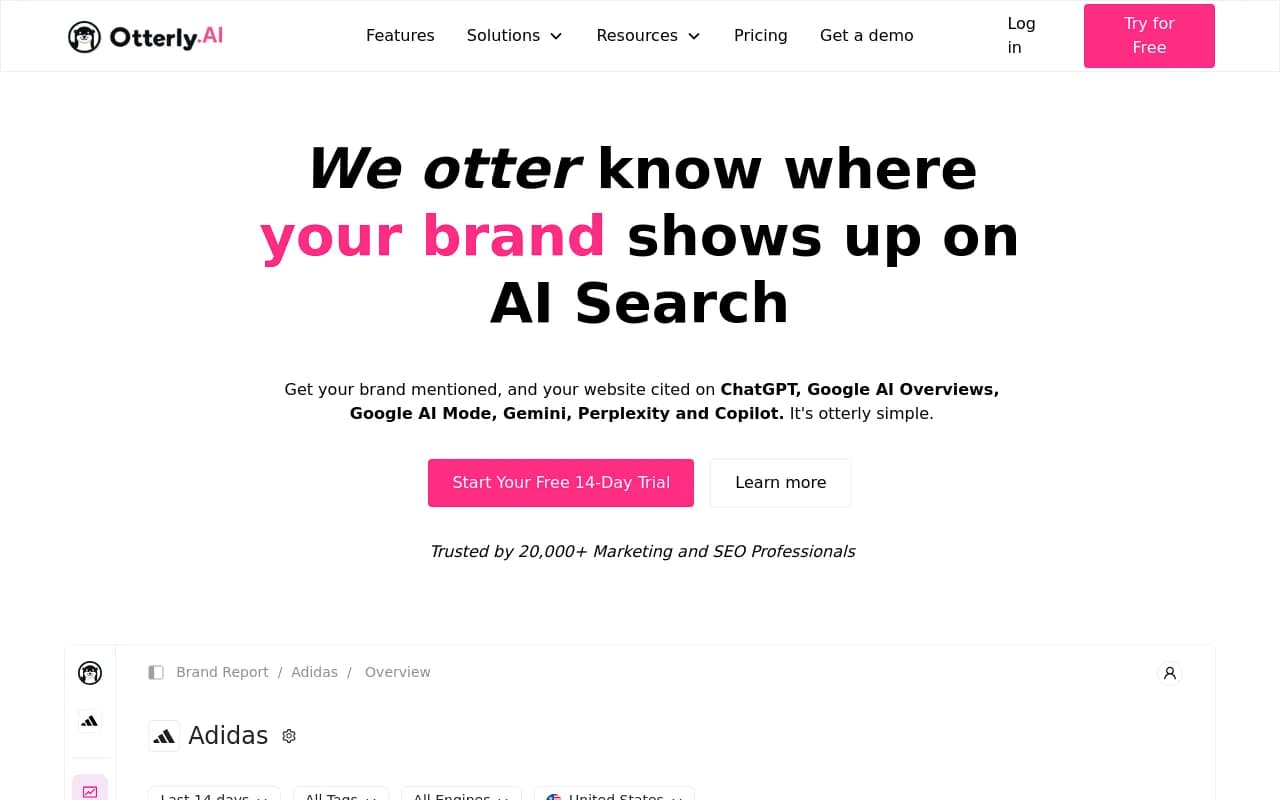
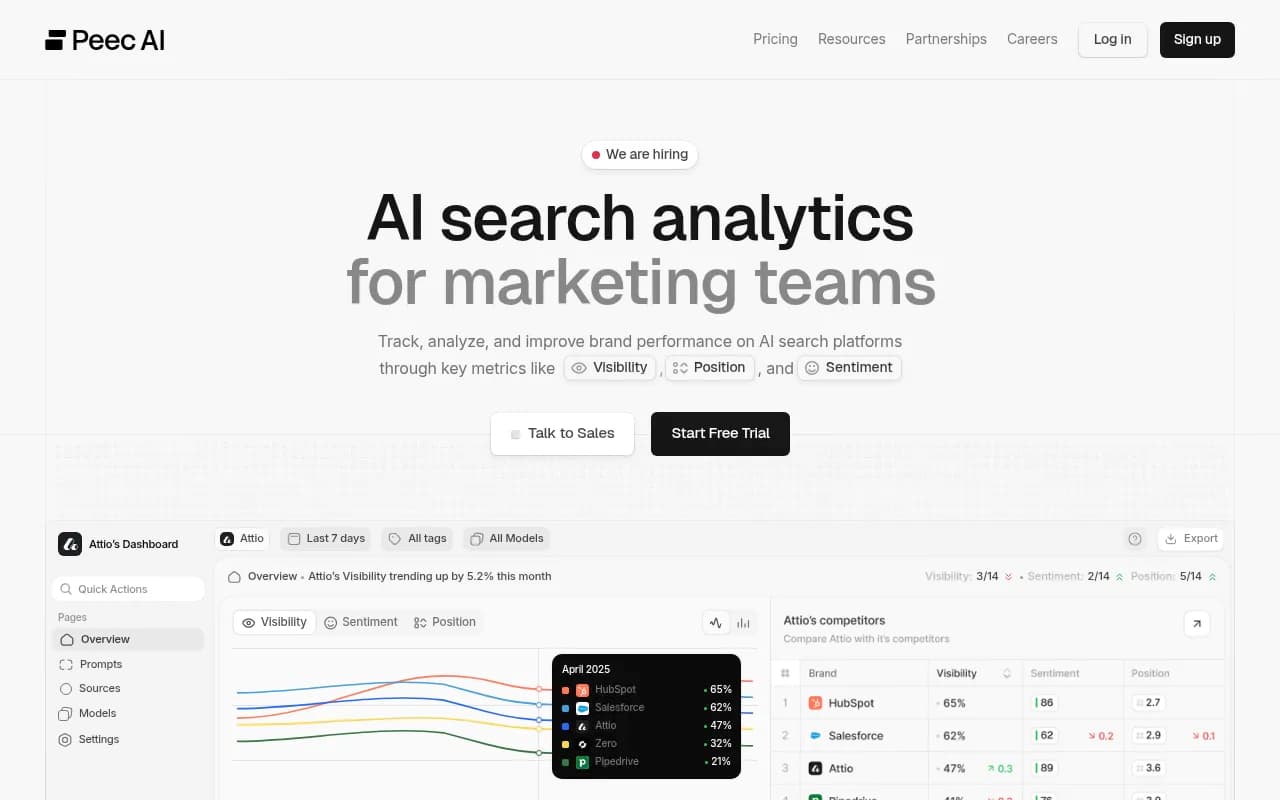
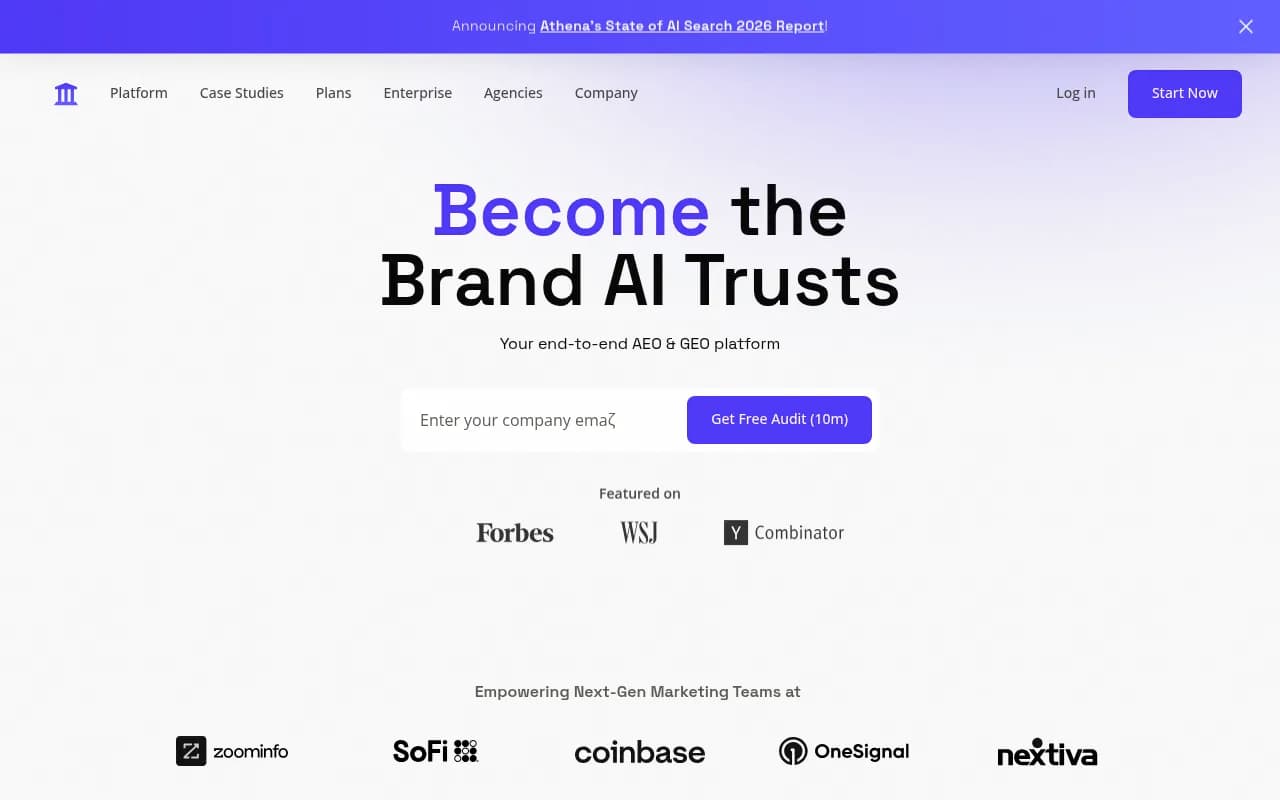
Most competitors (Otterly.AI, Peec.ai, AthenaHQ) stop at monitoring. Promptwatch is built around the action loop: identify gaps, generate optimized content, measure impact. That's the difference between a dashboard and an optimization platform.
Comparison: Traditional SEO vs AI search optimization
| Factor | Traditional SEO | AI Search (GEO) |
|---|---|---|
| Goal | Rank on page one | Get cited in AI answers |
| Success metric | Click-through rate (CTR) | Citation rate |
| Content style | Long-form, keyword-optimized | Answer-focused, structured |
| Authority signals | Backlinks, domain age | Backlinks + reviews + Reddit mentions |
| Technical setup | Sitemap, robots.txt, schema | llms.txt, AI crawler access, schema |
| Tracking tools | Google Search Console, Ahrefs | Promptwatch, Otterly.AI, Peec.ai |
| Timeframe | 3-6 months to see results | 1-3 months (AI indexes faster) |
The future: agentic commerce and machine customers
By 2028, Forrester forecasts that "Machine Customers" -- AI agents acting on behalf of humans -- will autonomously negotiate purchases. This means AI won't just recommend your brand; it will evaluate pricing, compare alternatives, and complete transactions without human intervention.
Technical legibility will matter as much as human UX. If an AI agent can't parse your product specs, pricing, or availability, it will buy from a competitor whose site is machine-readable.
This is why the checklist above isn't optional. The brands that optimize for AI visibility now will own the citations (and the sales) in 2026 and beyond. The brands that wait will be invisible.
Start with the gaps
Most businesses don't know where they're losing to competitors in AI search. They assume their SEO strategy will carry over. It won't.
The first step is visibility: run your brand through an AI search tracking tool and see where you show up (and where you don't). Promptwatch offers a free trial that shows you exactly which prompts competitors rank for but you're missing. That's your starting point.
From there, work through this checklist systematically. Fix site speed. Add schema markup. Build backlinks. Create answer-focused content. Track the results. Close the loop.
AI search is not replacing Google, but it's creating a new channel where being cited matters more than ranking. The window is open. The question is whether you'll act while your competitors are still debating.