Key takeaways
- ByDefault positions itself as a content-generation layer for GEO: it drafts and ships pages aimed at getting cited in AI answers, but it doesn't track crawler behavior, citation lifecycles, or AI-referred traffic the way a full visibility platform does.
- Promptwatch covers the entire loop: prompt tracking, citation trends, AI crawler logs, visitor analytics, content gap analysis, and automated content generation with CMS publishing, all from one account.
- If your team's biggest problem is "we don't know why we're invisible," a monitoring-first platform like Promptwatch gives you the diagnostic data a content tool like ByDefault can't.
- If your biggest problem is "we know the gaps, we just need pages written fast," a content-execution tool earns its keep, but you'll still want a separate (or integrated) way to confirm the pages actually got crawled and cited.
- Content-driven GEO teams tend to get the best results pairing the two: use visibility data to decide what to write, then let a content agent (or Promptwatch's own Content Agents) publish it.
Why this comparison matters right now
I've looked at enough GEO stacks this year to notice a pattern: teams buy a content tool first, because writing pages feels like "doing something," and only later realize they have no idea which pages are actually getting crawled by ChatGPT or cited in Google AI Overviews. Then they buy a second tool to answer that question. ByDefault and Promptwatch sit on opposite ends of that buying sequence, and it's worth being honest about what each one is actually built to do before you commit budget to either.
ByDefault is a content-first tool. Its pitch is straightforward: tell it what you want to rank for in AI answers, and it generates and ships pages meant to earn citations. That's a real need. Promptwatch's data on ChatGPT citations in July 2026 shows product pages led the month at roughly a third of all citations, with listicles the fastest-growing format, so there's a clear content-format target to write toward. But knowing the target format and actually hitting it in AI answers are two different problems, and that's where the gap between a pure content tool and a full visibility platform shows up.
What ByDefault actually does
ByDefault's workflow centers on content production for AI search: research a topic, draft a page optimized for how LLMs tend to extract and cite information, and publish it. For teams that need volume (lots of comparison pages, product pages, or how-tos published on a schedule) this kind of tool removes a lot of manual writing and formatting work. The tradeoff is that content generation alone doesn't tell you whether the pages you shipped last month are being crawled by GPTBot, ClaudeBot, or PerplexityBot, whether they're showing up in actual ChatGPT or AI Overview responses, or whether visitors from those citations convert. You're writing into a void until you plug in a separate measurement layer.
What Promptwatch does differently
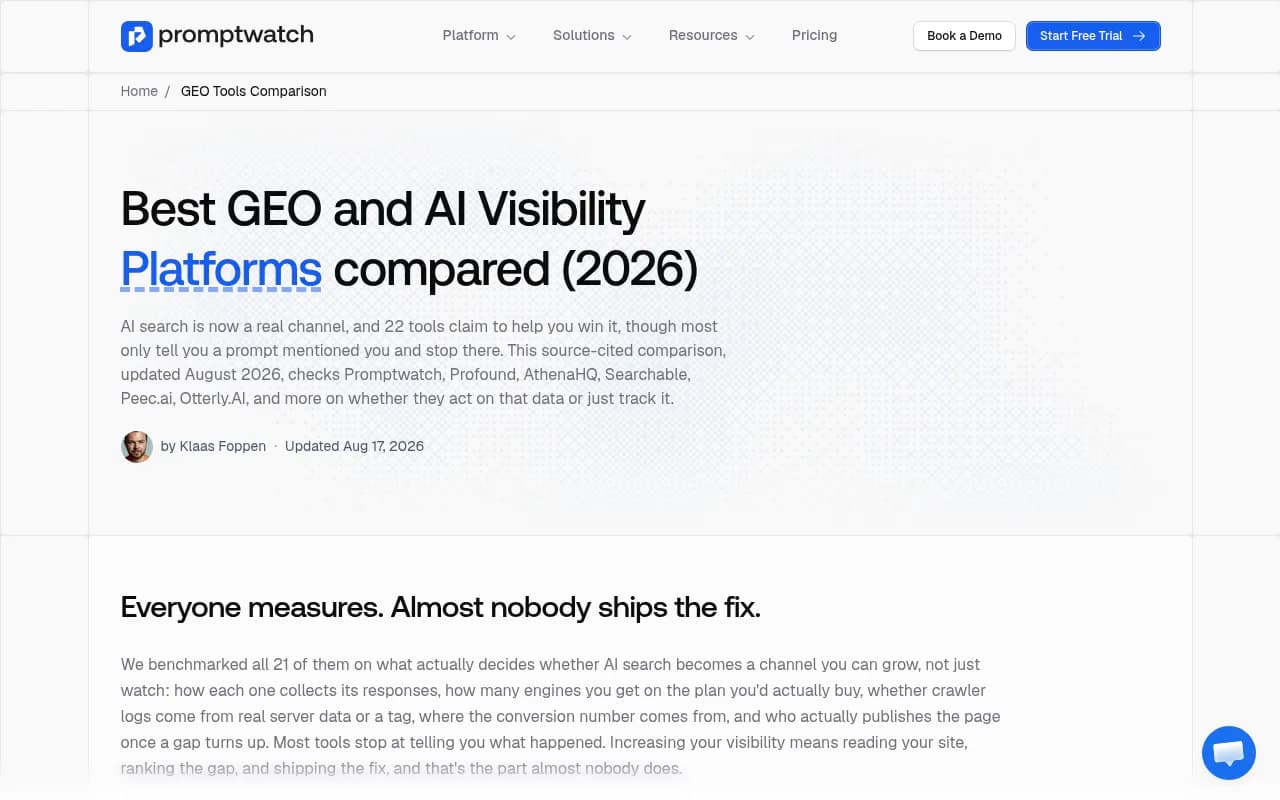
Promptwatch starts from the other direction: it measures first, then acts. The platform tracks prompts across ChatGPT, Gemini, Claude, Perplexity, Grok, Meta Llama, DeepSeek, Mistral, Microsoft Copilot, Google AI Overviews, and Google AI Mode, with monthly search volumes and difficulty scores per prompt. It reads your server or CDN logs (Cloudflare, AWS CloudFront, Fastly, Vercel, Netlify, Akamai, Google Cloud CDN) to show exactly when AI crawlers hit your pages and whether they error out before ever reaching the content you wrote. It runs a content gap index against your own crawled pages, so a visibility drop turns into "this specific page needs this specific fix" instead of a vague chart.
Then it closes the loop with Content Agents that draft and publish pages directly to Webflow, Framer, or WordPress, on a schedule you set, with either a review inbox or full automation. Unified Actions turns all of that visibility, citation, and crawler data into a prioritized to-do list, and Agent Chat lets you ask plain-language questions about your own data ("which of our pages got cited by Perplexity last week and which ones dropped off") instead of digging through dashboards by hand.

Side-by-side feature breakdown
| Capability | ByDefault | Promptwatch |
|---|---|---|
| Prompt tracking across AI models | Not a core function | ChatGPT, Gemini, Claude, Perplexity, Grok, Meta Llama, DeepSeek, Mistral, Copilot, AI Overviews, AI Mode |
| AI crawler log analysis | No | Yes, from server/CDN logs, with crawl-to-citation path per page |
| Citation trend tracking | No | Yes, 22 content types, 20 source types, ramp-up/peak/decay per page |
| Visitor analytics from AI platforms | Not built-in | Built-in first-party script, tracks real AI-referred traffic and conversions |
| Content gap analysis | Not applicable (it generates, doesn't diagnose gaps) | Own-site index compares your pages against tracked prompts and coverage scores |
| Content generation | Core feature, focused on drafting and shipping | Content Agents with brand book, content briefs, and CMS publishing |
| Reddit / YouTube citation tracking | No | Dedicated reports for both channels |
| Agent Chat / conversational analyst | No | Yes, also available in Slack |
| Pricing transparency | Varies by plan, check vendor | Published tiers from $95/mo (Essential) to $579/mo (Business), plus agency and enterprise plans |
Where content-driven GEO teams actually get stuck
Talk to anyone running content for AI search long enough and the same complaint surfaces: they're shipping pages but can't tell which ones are working. Promptwatch's data on ChatGPT citation share by domain rank for August 2026 shows citation share doesn't track neatly with domain authority the way classic SEO rankings do, which means a brand-new page from a smaller site can out-cite an established competitor's page if the content structure and crawl access are right. That's exactly the kind of signal a content-only tool can't surface, because it has no visibility into what happened after publish.
This is also why Reddit tracking matters more than people expect. Promptwatch's research shows ChatGPT's citation share of reddit.com collapsed from roughly 4% to 0.5% in a single day in August 2026 (see Reddit citations are dropping in ChatGPT). If your content strategy assumed Reddit threads were a reliable citation source, that assumption just broke, and you'd only know if something was actually watching the citation mix day to day.
When ByDefault-style content tools make sense
I'm not going to pretend content generation is a solved problem that visibility platforms handle perfectly. If your team already has a clear content gap list (maybe from an SEO audit, a competitor teardown, or manual prompt testing) and you just need pages written and published fast, a dedicated content tool can move faster than configuring a full GEO platform's content module. Teams with a lean content function sometimes prefer a tool that does one thing: generate pages aimed at AI citation formats, without the overhead of prompt tracking dashboards they won't look at daily.
The risk is flying blind afterward. Without crawler logs or citation tracking, you won't know if GPTBot ever read the page you published, whether it got cited, or whether the citation drove any traffic. You'll be judging success by publish volume instead of outcomes, which is a hard habit to break once it sets in.
When you need the full stack
If your organization is accountable for AI search as a channel (not just as a side experiment) you need the measurement layer non-negotiably. That means crawler logs to catch technical blockers before they cost you citations, visitor analytics to prove AI traffic converts, and content gap analysis grounded in your own crawled pages rather than guesswork. Crisp, for example, used this kind of closed-loop setup to scale to 5-10 published articles a day while seeing roughly 2x higher conversion rates from AI traffic compared to traditional channels, because the content roadmap was built from actual visibility and citation data rather than intuition.
Agencies face a similar calculus multiplied across clients. Monks uses Promptwatch's Answer Gap Report and Visibility Score to build content roadmaps for enterprise accounts, which only works because the underlying data ties specific prompts and citations back to specific client pages.
A practical way to decide
Ask three questions before you commit to either category of tool:
- Do you already know, with data, which prompts and pages matter? If not, you need monitoring before you need more content.
- Can you tell whether your last 10 published pages got crawled by AI bots? If you can't answer this today, a content-only tool will leave you just as blind after the next 10.
- Does anyone on your team look at AI-referred traffic weekly? If the answer is no, visitor analytics (built into Promptwatch on a first-party script) closes that blind spot without extra GA4 wrangling.
For teams that answer "no" to most of these, Promptwatch's combination of monitoring and execution removes the need to stitch two vendors together. For teams with a mature measurement setup already and a narrow content bottleneck, a focused content tool like ByDefault can supplement that stack without replacing it.
Other tools worth a look
If you're still shopping around, a few adjacent options worth comparing alongside Promptwatch and ByDefault:
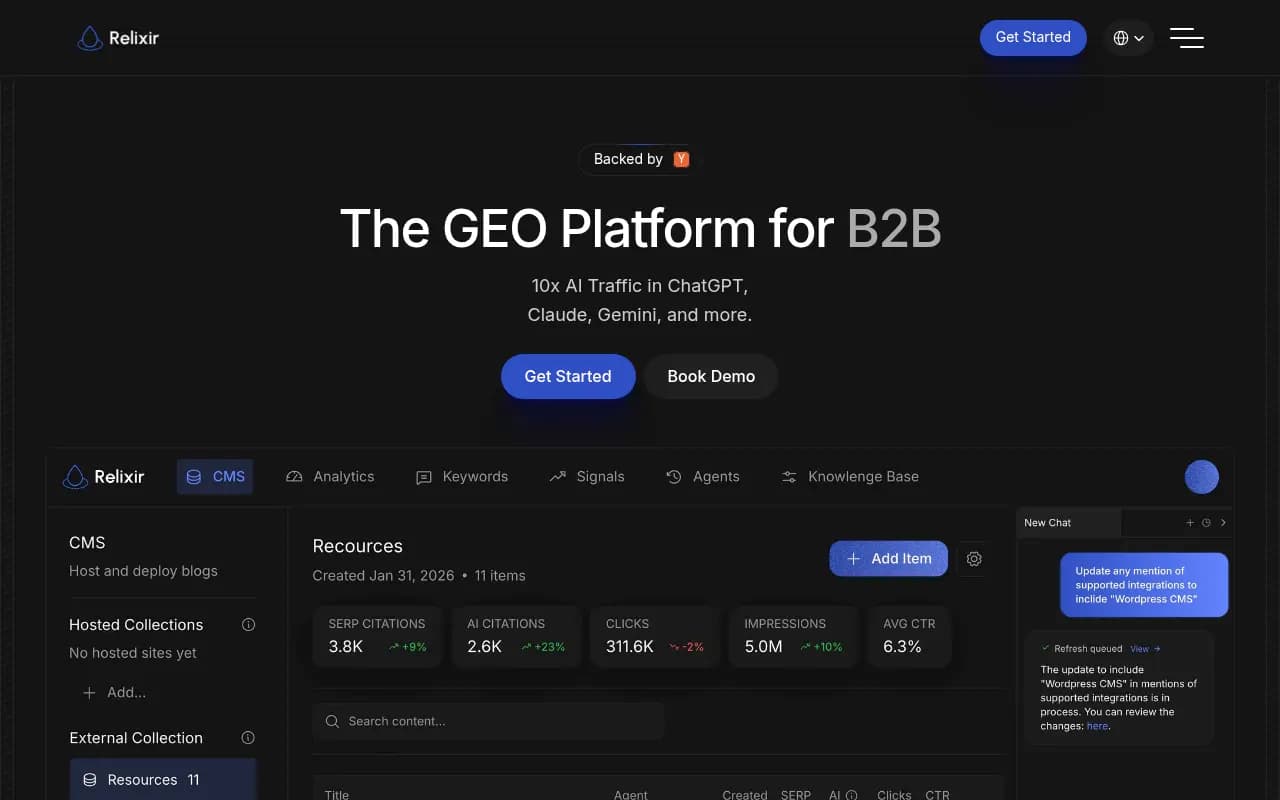
Gushwork
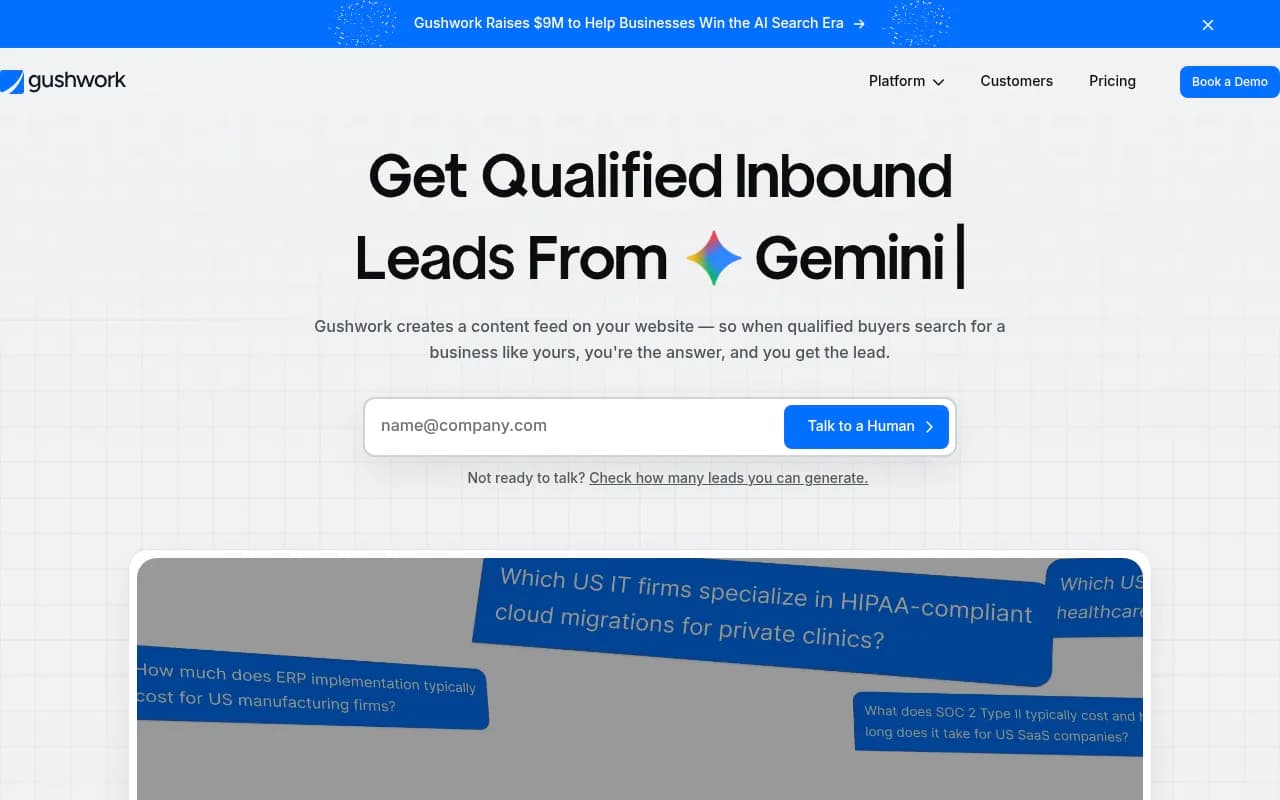
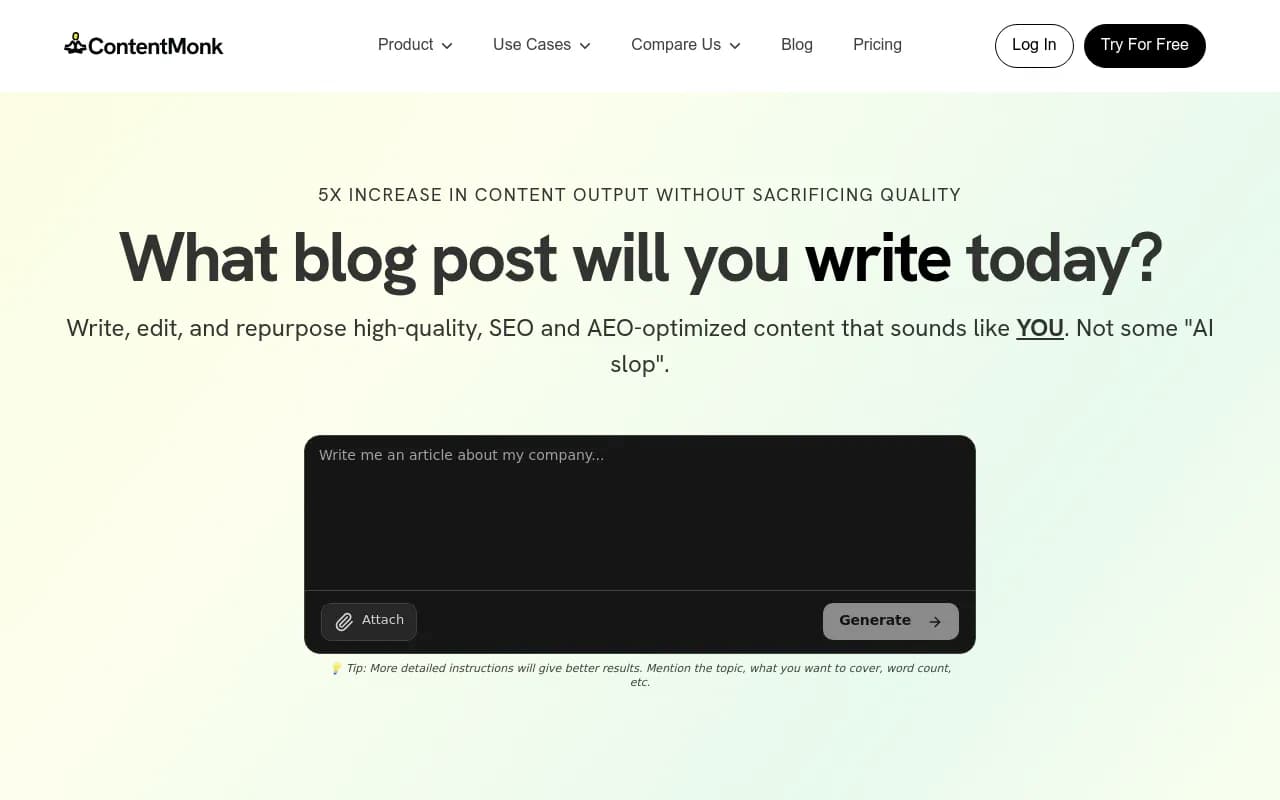
For a broader rundown of GEO software options beyond this single comparison, the directory at bestgeosoftware.com tracks a wider set of platforms by category, and agenticseotools.com is worth a look if you specifically want tools that take action (publish, fix, optimize) rather than just report.
Frequently asked questions
Does ByDefault track AI crawler activity like GPTBot or ClaudeBot?
No. ByDefault is built around generating and publishing content, not reading server or CDN logs for crawler behavior. If you need that visibility, you'll need a dedicated monitoring platform alongside it.
Can Promptwatch generate content the way ByDefault does?
Yes, through Content Agents, which draft and publish GEO-optimized articles to Webflow, Framer, or WordPress on a schedule, with a review inbox or full automation. Plans include a set number of AEO articles per month (5 on Essential, 15 on Professional, 30 on Business).
Which one is cheaper?
Promptwatch's pricing is published and starts at $95/mo for Essential, which includes all LLM tracking, crawler-adjacent features at higher tiers, and content gap analysis. ByDefault's pricing should be confirmed directly with the vendor, since published tiers vary and may not include the monitoring features Promptwatch bundles in.
Can I use both tools together?
Yes, and some teams do exactly that: use a focused content tool for drafting volume and a visibility platform like Promptwatch to confirm what actually gets crawled, cited, and visited. The redundancy costs more, but it removes the blind spot either tool has on its own.