Key takeaways
- BrightEdge is a mature, well-regarded enterprise SEO platform with genuine AI search monitoring features (AI Overviews, ChatGPT, Perplexity tracking), but its AI visibility capabilities are newer additions bolted onto a traditional SEO core.
- Pricing is custom and credit-based, which makes it expensive for large global deployments -- some enterprise users report costs spiraling quickly when monitoring keywords across many regions.
- The platform is best suited for large organizations already invested in traditional SEO who want a single vendor. Teams focused primarily on AI search optimization will find it lacks depth in areas like content gap analysis, AI crawler logs, and actionable optimization workflows.
- For pure AI visibility and GEO work, purpose-built platforms offer more targeted functionality at lower price points.
- No free trial is publicly available; you need to request a demo to even see pricing.
What BrightEdge actually is
BrightEdge launched in 2007, founded by Jim Yu and Lemuel Park to help large enterprises measure ROI from content and understand what customers were searching for. That's a long time in SEO -- long enough to accumulate 1,700+ enterprise clients including Meta and Teradata, a Gartner recognition in the Enterprise SEO Platforms market, and a reputation as the platform Fortune 100 marketing teams default to when they need something serious.
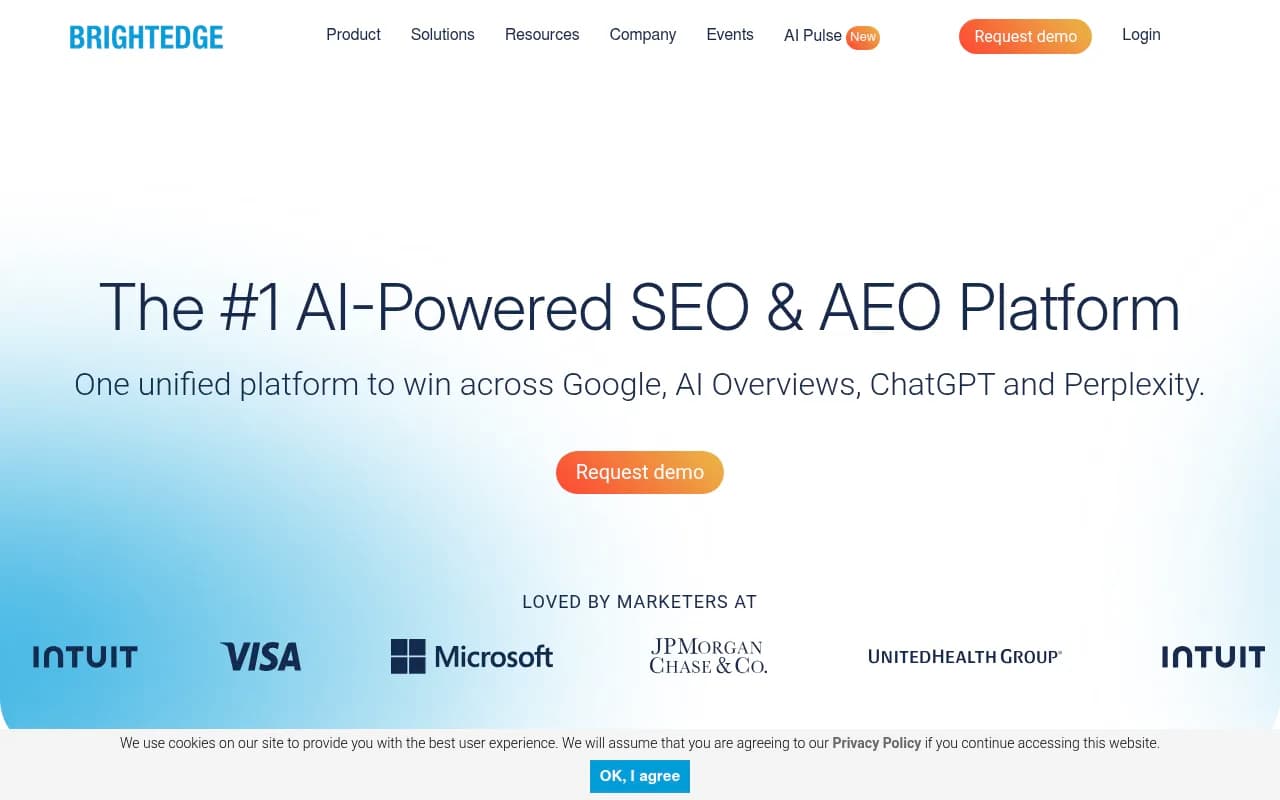
The pitch in 2026 has evolved. BrightEdge now calls itself "the #1 AI-Powered SEO & AEO Platform" and claims to help you "win across Google, AI Overviews, ChatGPT and Perplexity." That's a meaningful shift from its roots as a keyword tracking and content performance tool. The question worth asking honestly: is this a genuine transformation, or is it traditional SEO software with an AI search layer painted on top?
The answer is somewhere in between -- and the specifics matter a lot depending on what you need.
The core platform: what it does well
BrightEdge's traditional SEO capabilities are genuinely strong. After 18 years of development, the platform covers a lot of ground:
- Keyword research and rank tracking at scale, including geolocation-specific visibility
- Site audits and technical SEO analysis
- Content performance measurement and optimization recommendations
- Competitive intelligence across organic search
- DataCube X, which gives access to a large proprietary database of search data
- Reporting dashboards and workflow management for large teams
- Integration with analytics platforms and marketing systems
One Gartner Peer Insights reviewer -- a marketing manager at a $10-30B energy company -- described BrightEdge as providing "deep insights into both SEO performance and geolocation-specific visibility" with "excellent, hands-on customer service." That tracks with BrightEdge's positioning: it's not a self-serve tool. You get account management, onboarding support, and a dedicated team. For an enterprise that wants a vendor relationship rather than a software subscription, that matters.
The platform's AI-driven features within traditional SEO -- automated recommendations, content scoring, competitive gap analysis for organic search -- are mature and well-developed. This is where BrightEdge genuinely earns its reputation.
AI search visibility: what's actually there
BrightEdge has added AI search monitoring capabilities, and they're real. The platform tracks visibility in AI Overviews, ChatGPT, and Perplexity. Their AI Catalyst feature is designed to surface AI-specific insights and automate some optimization recommendations.
BrightEdge has also published research on AI search trends -- their data projects that AI agent activity will surpass human-driven search by end of 2026, which shows they're paying attention to where search is heading.
But "paying attention" and "being purpose-built for it" are different things. Here's what I'd flag from the research:
The AI visibility features appear to be extensions of the existing platform rather than a ground-up rethink. BrightEdge monitors AI search responses and tracks where your brand appears, but the depth of tooling for AI-specific optimization -- things like prompt-level analysis, query fan-outs, AI crawler log monitoring, content gap analysis tied to specific AI model citations -- isn't as developed as what you'd find in platforms built specifically for this problem.
One senior SEO director at a media company gave BrightEdge a 3/5 on Gartner, noting it was "good SEO performance platform, missing some of the more advanced features" and calling it "expensive and occasionally outdated." That review is from 2024, so some things may have improved, but the pattern of being strong on fundamentals while lagging on newer capabilities is worth noting.
Pricing: the elephant in the room
BrightEdge does not publish pricing. You need to request a demo to get a quote. What's known from user reports and third-party sources:
- Pricing is subscription-based with custom quotes depending on features, user seats, and keyword volume
- The platform uses a credit-based model where each keyword tracked in each SERP (country/search engine combination) consumes one credit
- For large global enterprises monitoring keywords across many regions, costs can escalate significantly
The Gartner reviewer from the energy company put it plainly: "BrightEdge's credit-based pricing model can become expensive quickly. Because the system uses one credit per keyword per SERP, monitoring keywords across 170 countries and all major search engines adds up fast."
This is a real consideration. If you're a mid-sized company or a team focused specifically on AI search visibility, the cost structure may not make sense. BrightEdge is designed for large enterprises with large budgets. That's not a criticism -- it's just who the product is built for.
Where BrightEdge falls short for AI-first teams
If your primary goal in 2026 is understanding and improving how your brand appears in AI search engines -- ChatGPT, Claude, Perplexity, Gemini, Grok, and others -- BrightEdge has some meaningful gaps compared to purpose-built platforms:
No AI crawler log monitoring. Knowing which pages AI crawlers are actually visiting, how often, and what errors they're encountering is increasingly important for AI search optimization. BrightEdge doesn't offer this.
Limited prompt intelligence. Understanding which specific prompts drive AI citations, their volume and difficulty, and how they fan out into sub-queries is core to prioritizing AI search work. BrightEdge's AI tracking is more at the brand/keyword level than the prompt level.
No Reddit or YouTube citation tracking. A significant portion of AI model citations come from Reddit threads and YouTube content. Platforms that surface these sources give you a clearer picture of where AI models are actually pulling information from. BrightEdge doesn't cover this.
No ChatGPT Shopping tracking. For e-commerce brands, appearing in ChatGPT's product recommendations is a growing channel. This isn't something BrightEdge monitors.
Content generation tied to AI citation data. BrightEdge has content optimization features, but they're oriented toward traditional SEO. Generating content specifically engineered to get cited by AI models -- based on real citation data and prompt analysis -- requires a different approach.
The action gap. BrightEdge shows you data. What it doesn't do as well is close the loop from "here's where you're invisible in AI search" to "here's the specific content you need to create, and here's a draft." That full cycle -- find gaps, generate content, track results -- is where purpose-built AI visibility platforms have an edge.
How it compares to alternatives
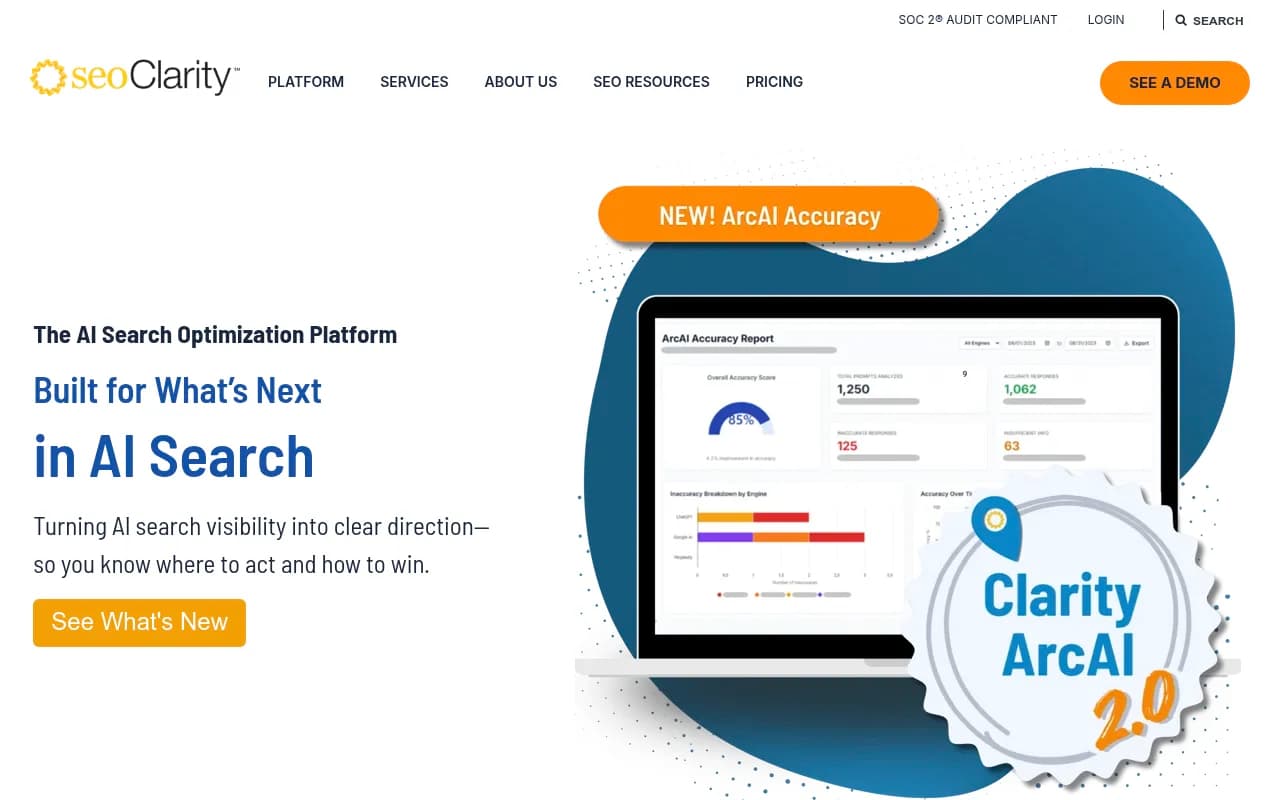
| Feature | BrightEdge | Promptwatch | Profound | seoClarity |
|---|---|---|---|---|
| Traditional SEO tracking | Excellent | Limited | Limited | Strong |
| AI search monitoring | Yes (basic) | Yes (10 models) | Yes | Yes |
| Prompt-level analysis | No | Yes | Yes | Partial |
| AI crawler logs | No | Yes | No | No |
| Content gap analysis (AI) | No | Yes | Partial | No |
| AI content generation | No | Yes | No | No |
| Reddit/YouTube tracking | No | Yes | No | No |
| ChatGPT Shopping tracking | No | Yes | No | No |
| Pricing transparency | No (custom) | Yes ($99-$579/mo) | No (custom) | No (custom) |
| Free trial | No | Yes | No | No |
| Best for | Enterprise SEO teams | AI-first marketing teams | Enterprise AI visibility | Enterprise SEO + AI |

For teams that need traditional enterprise SEO with some AI search visibility layered in, BrightEdge is a defensible choice -- especially if you're already a customer. For teams whose primary focus is AI search optimization and GEO, the platform's gaps are significant enough that you'd want to evaluate purpose-built alternatives.
Promptwatch is worth looking at specifically if you want the full loop: tracking where you're invisible in AI search, generating content to fill those gaps, and measuring the impact. It monitors 10 AI models, offers prompt-level analysis with volume and difficulty scoring, and includes AI crawler logs that BrightEdge doesn't have.
Who BrightEdge is actually right for
BrightEdge makes the most sense if:
- You're a large enterprise (Fortune 500 scale) with an existing SEO program that needs to add AI search monitoring without switching platforms
- You want a vendor relationship with dedicated account management, not just software
- Your primary search channel is still Google organic, with AI search as a secondary concern
- You have the budget for enterprise pricing and the team to use a complex platform effectively
- You're already a BrightEdge customer and want to extend into AI visibility without migrating
It's probably not the right fit if:
- AI search visibility is your primary focus in 2026
- You're a mid-market company or agency where cost efficiency matters
- You need actionable content optimization for AI search, not just monitoring
- You want transparent pricing before committing to a demo process
- You need to track Reddit, YouTube, or ChatGPT Shopping
The honest verdict
BrightEdge is a serious platform built by serious people over nearly two decades. The traditional SEO capabilities are deep, the customer support is genuinely good by enterprise standards, and the AI search monitoring features are real -- not vaporware.
But "real" and "best-in-class for AI visibility" are different things. The platform was built for a world where Google organic search was the primary battleground, and it's adapting to a world where ChatGPT, Perplexity, and Gemini are increasingly where buying decisions get made. That adaptation is ongoing, and the gaps are visible.
If you're evaluating BrightEdge specifically for its AI visibility capabilities, go in with clear questions: Which AI models do you track? What prompt-level data do you provide? Can I see AI crawler logs? What does the content optimization workflow look like for AI search? The answers will tell you whether the platform has caught up to where AI search actually is in 2026.
For teams that need a complete AI search visibility and optimization platform today, the purpose-built options have moved fast. BrightEdge is worth considering as part of a broader enterprise SEO stack -- just not necessarily as your primary AI visibility tool.