Key takeaways
- Brandlight.ai is built for enterprise brands that want deep sentiment analysis and brand narrative tracking inside AI responses -- it's not designed for agencies managing multiple clients.
- Search Party positions itself as an agency-oriented AI implementation partner, but its prompt metrics and content gap analysis are limited compared to more complete platforms.
- Neither tool offers a full optimization loop: both are primarily monitoring-focused, meaning they show you data but leave the "what to do about it" question largely unanswered.
- If you're an agency that needs to track, analyze, and actually improve AI visibility for clients, you'll likely need to supplement either tool -- or look at platforms that close the loop from monitoring to content creation.
The AI visibility space has fragmented fast. Two years ago there were maybe a dozen tools. Now there are dozens, each carving out a slightly different niche. Brandlight.ai and Search Party are two of the more interesting cases because they're targeting adjacent but distinct audiences -- and the differences matter a lot depending on what you actually need.
This comparison breaks down both platforms honestly: what they do well, where they fall short, and who they're genuinely suited for in 2026.
What each platform is trying to do
Before getting into features, it helps to understand the underlying philosophy of each tool.
Brandlight.ai is built around the idea that AI search isn't just a traffic channel -- it's a brand perception channel. When someone asks ChatGPT or Perplexity about your industry, the AI's response shapes how they think about your brand, even if they never click through to your site. Brandlight focuses on measuring and influencing that narrative: sentiment analysis, how your brand is described, what attributes AI models associate with you, and whether those associations match what you want.
Search Party takes a different angle. It's positioned as an AI implementation partner for agencies, focused on building automation workflows and helping agencies operationalize AI search as a service offering. The pitch is less about deep analytics and more about helping agencies move fast and scale their AI visibility work across multiple clients.
These are genuinely different value propositions. One is about brand depth; the other is about operational scale. Neither is wrong -- but you need to know which problem you're actually trying to solve.
Brandlight.ai: enterprise brand narrative at scale
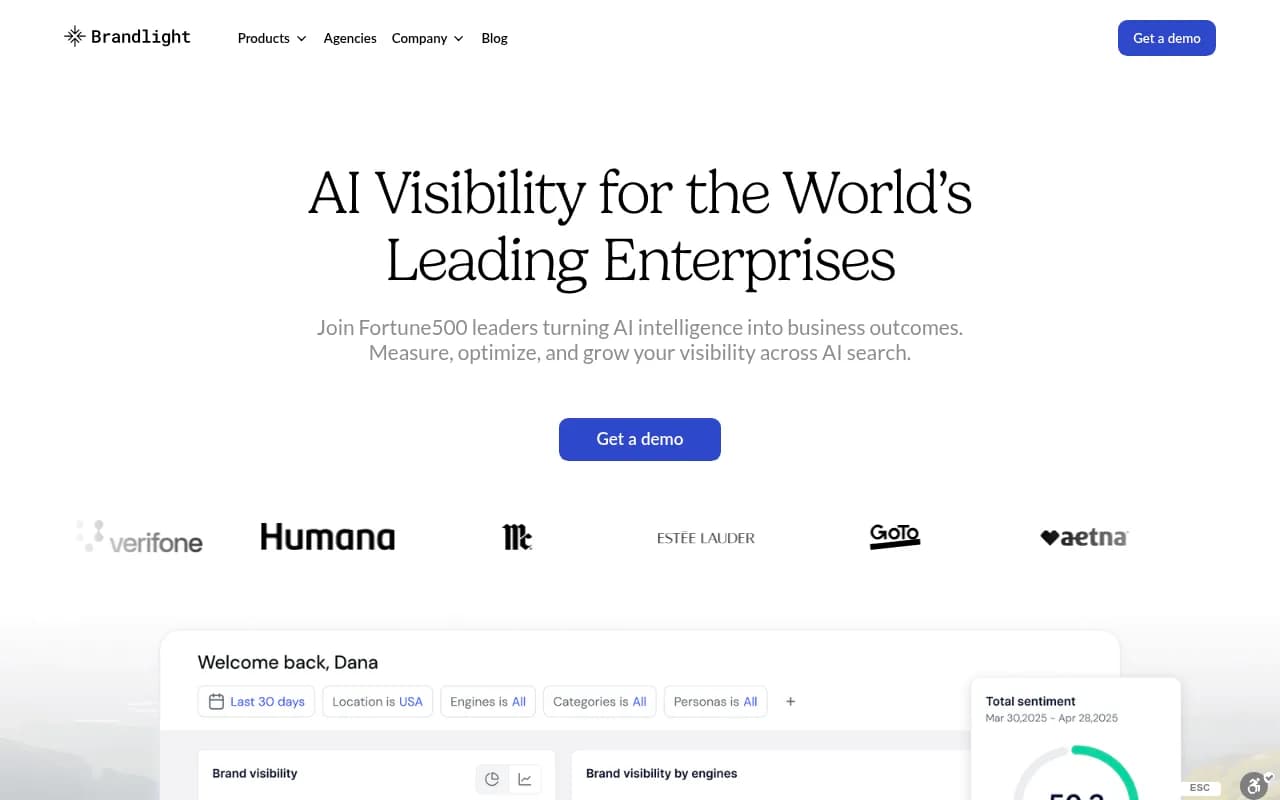
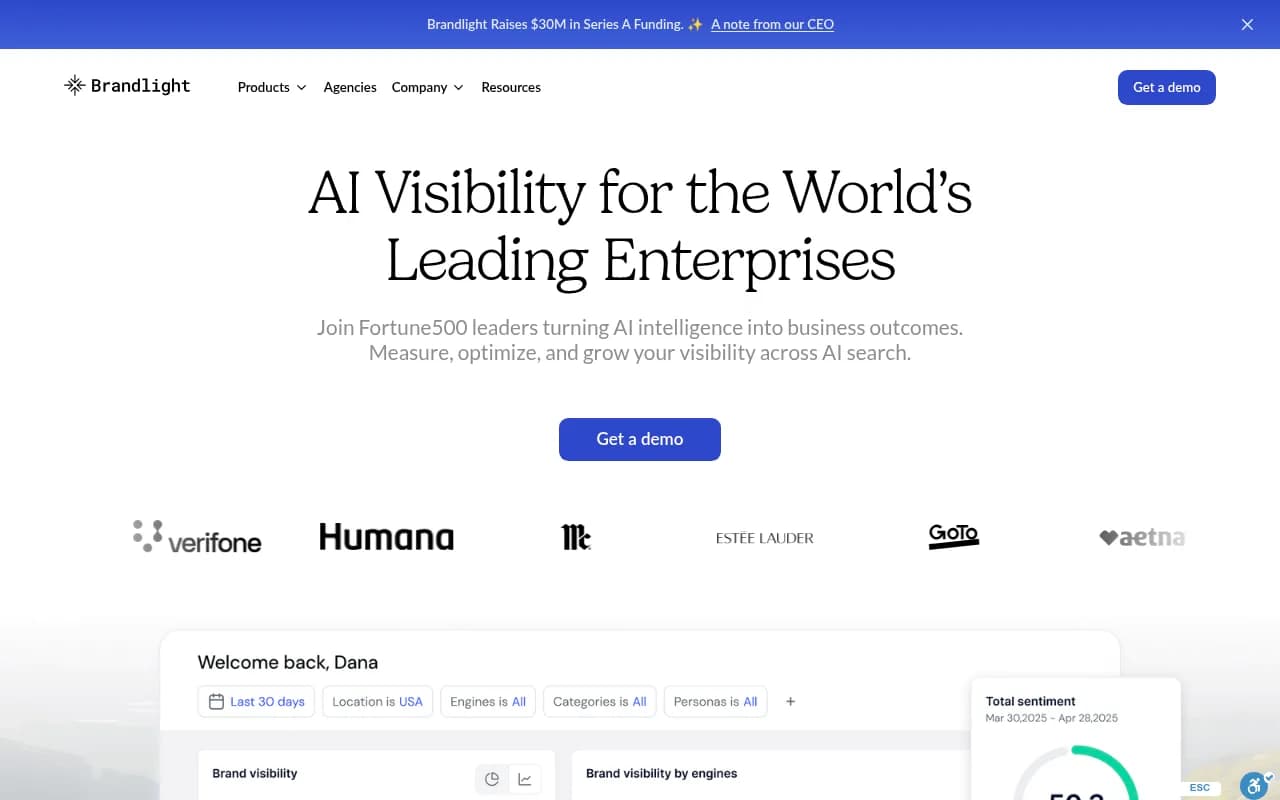
Brandlight targets Fortune 500 companies and large enterprise brands. Their customer list includes names like Humana, Aetna, and Estée Lauder -- organizations where brand perception is a board-level concern, not just a marketing metric.
What Brandlight does well
The platform's strongest capability is sentiment and narrative tracking. It monitors how AI models describe your brand across responses -- not just whether you're mentioned, but how you're mentioned. Are you described as "affordable" or "premium"? "Innovative" or "established"? This kind of qualitative tracking is genuinely useful for brand teams that care about positioning, not just visibility counts.
Brandlight also covers a reasonable range of AI models and tracks citation sources, so you can see which external content is shaping AI responses about your brand. For enterprise PR and brand teams, that's valuable intelligence.
Where Brandlight falls short
The honest limitation is that Brandlight is primarily a monitoring and measurement tool. It tells you what's happening, but the path from "here's your brand sentiment score" to "here's what you should publish to change it" isn't well-defined in the platform.
It's also not built for agencies. There's no multi-client management layer, no white-label reporting, and no agency partnership program to speak of. If you're running an agency and want to offer AI visibility as a service, Brandlight's structure makes that operationally awkward.
Pricing is enterprise-tier and not publicly listed -- you need a demo to get numbers. That's fine for a Fortune 500 procurement process, but it's a barrier for smaller agencies or brands that want to evaluate quickly.
One Reddit thread from the r/DigitalMarketing community put it plainly: Brandlight is "best for teams focused on brand narrative and sentiment inside AI answers. Not great if you only care about content optimization." That's a fair summary.
Search Party: agency operations and AI implementation
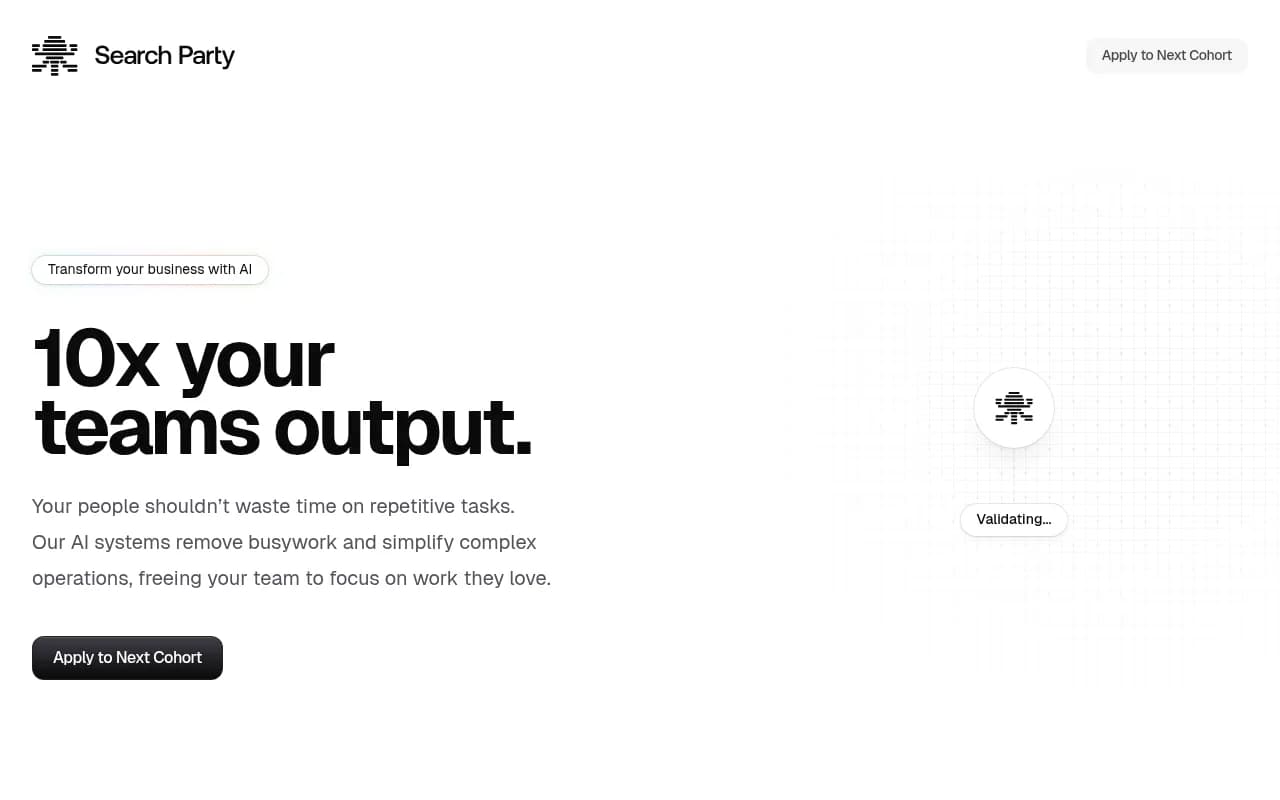
Search Party takes a more operational approach. Rather than deep brand analytics, it focuses on helping agencies build AI visibility as a repeatable service -- workflow automation, client reporting, and implementation support.
Search Party
What Search Party does well
For agencies that are still figuring out how to package and deliver AI visibility work, Search Party's implementation-partner model is genuinely useful. It's less of a pure SaaS tool and more of a structured methodology with software support. If your agency needs help defining what "AI visibility optimization" actually means as a deliverable, that framing can be valuable.
The platform has some client management features that make it more practical for agencies than Brandlight -- you can handle multiple brands under one account without the awkward workarounds you'd need elsewhere.
Where Search Party falls short
The core weakness is depth. Search Party's prompt metrics are limited -- you don't get granular volume estimates, difficulty scoring, or query fan-outs that tell you how a single prompt branches into sub-queries. Without that, prioritization becomes guesswork. Which prompts should you focus on first? Which ones are actually driving AI traffic? Search Party doesn't give you great answers to those questions.
Content gap analysis is also thin. The platform can tell you that competitors appear in AI responses where you don't, but it doesn't generate the briefs or content recommendations to close those gaps. You're left to figure out the "what to do" part yourself.
There's also no crawler log functionality -- meaning you can't see which AI crawlers are hitting your clients' sites, what errors they're encountering, or when pages move from crawled to cited. That's a meaningful blind spot for technical optimization work.
Feature comparison
Here's how the two platforms stack up across the dimensions that matter most for agency and brand use cases:
| Feature | Brandlight.ai | Search Party |
|---|---|---|
| Target audience | Enterprise brands | Marketing agencies |
| Brand sentiment analysis | Strong | Basic |
| Multi-client management | No | Yes |
| Prompt volume/difficulty scoring | Limited | Limited |
| Content gap analysis | No | Limited |
| Content generation | No | No |
| AI crawler logs | No | No |
| Citation source tracking | Yes | Limited |
| Reddit/YouTube insights | No | No |
| ChatGPT Shopping tracking | No | No |
| White-label reporting | No | Partial |
| Pricing transparency | Demo required | Limited public info |
| Agency partnership program | No | Yes |
The pattern that emerges: both tools are monitoring-first platforms that stop short of helping you actually fix what they find. Brandlight goes deeper on brand narrative; Search Party goes broader on agency operations. Neither closes the loop from insight to action.
The monitoring-only problem
This is worth dwelling on because it's the central limitation of both platforms.
AI visibility optimization isn't just about knowing your share of voice in ChatGPT responses. The real work is figuring out why you're invisible for certain prompts, what content would change that, and whether your new content is actually getting crawled and cited. That's a workflow, not just a dashboard.
Both Brandlight and Search Party give you the first piece (you're invisible here) but not the subsequent ones (here's why, here's what to write, here's whether it worked). For agencies trying to show clients measurable ROI from AI visibility work, that gap is a real problem.
Platforms that have built out a more complete loop -- answer gap analysis feeding into content generation feeding into citation tracking -- are becoming the standard that agencies are measured against. When a client asks "what did you do about our AI visibility this month?", a monitoring dashboard isn't a satisfying answer.
Who should use Brandlight.ai
Brandlight makes sense if:
- You're an in-house brand or PR team at a large enterprise
- Your primary concern is brand narrative and sentiment, not traffic or content gaps
- You have budget for an enterprise contract and a dedicated team to act on the insights
- You're not managing multiple client accounts
It's a genuinely good tool for a specific use case. Just don't expect it to tell you what to write or help you build a content strategy around AI search.
Who should use Search Party
Search Party makes sense if:
- You're an agency that's early in building out an AI visibility service offering
- You want implementation support and a structured methodology more than deep analytics
- You're managing multiple clients and need some basic multi-account structure
- You're okay with limited prompt intelligence and doing the content strategy work manually
The caveat is that as your agency's AI visibility practice matures, you'll likely outgrow Search Party's analytics depth fairly quickly.
What agencies actually need in 2026
The agencies doing the best work in AI visibility right now are the ones that can answer three questions for every client: Where are you invisible? Why? And what are we doing about it?
That requires prompt intelligence (volume, difficulty, competitor visibility), content gap analysis that maps those gaps to specific missing pages or topics, and citation tracking that closes the loop after you publish. It also requires crawler log data so you can diagnose technical issues -- if an AI crawler is hitting a page and getting a 404, you need to know that.
Most monitoring-only tools, including Brandlight and Search Party, handle the first question reasonably well. The second and third questions are where the gaps show up.
Promptwatch is one of the platforms that's built specifically around this full loop -- answer gap analysis, AI content generation grounded in real prompt data, and page-level citation tracking with crawler logs. Worth looking at if the monitoring-only limitation of Brandlight or Search Party is the sticking point for your agency.

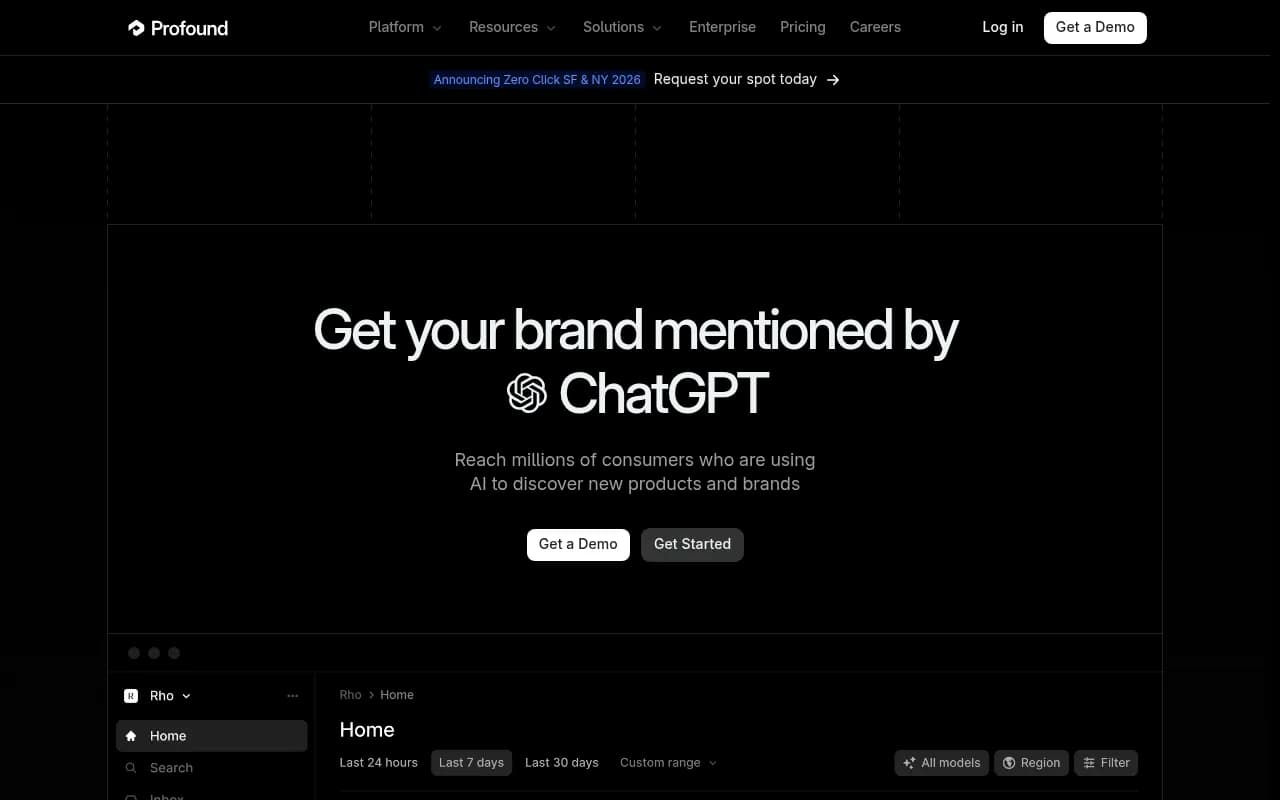
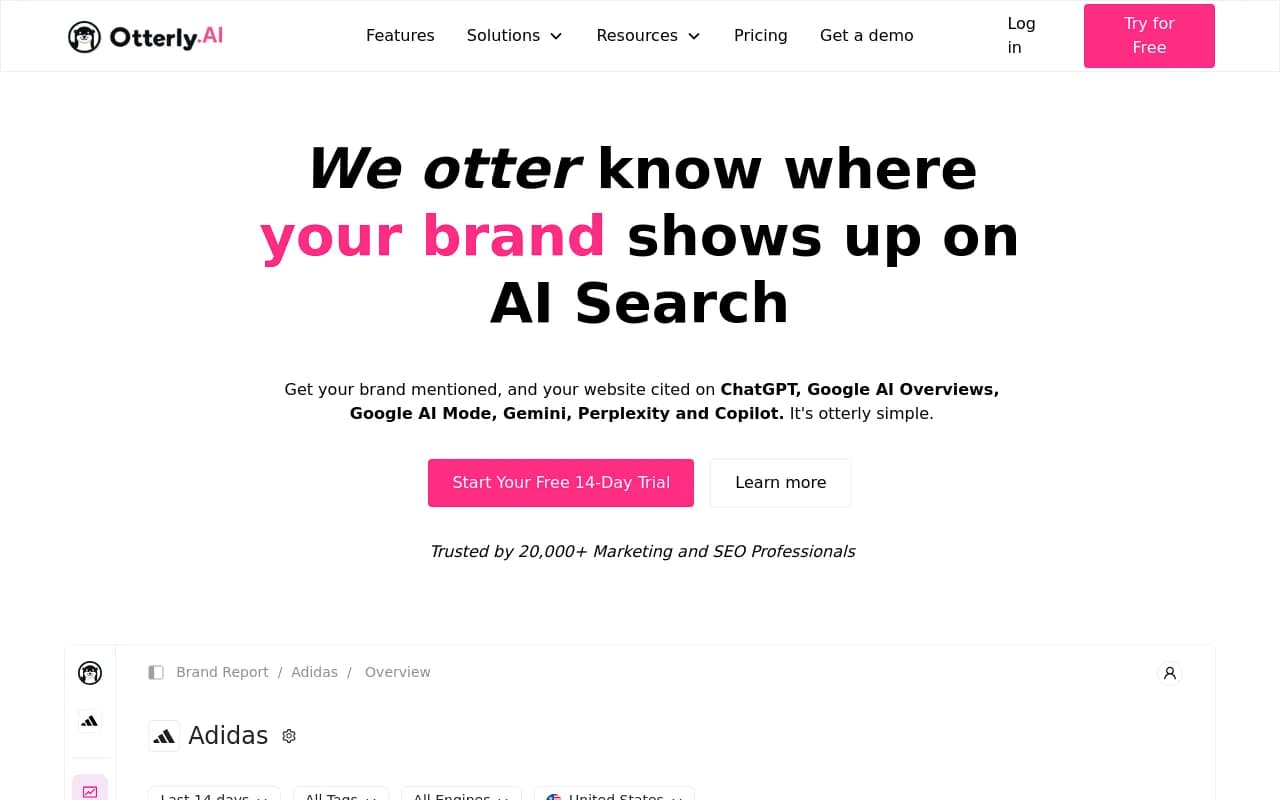
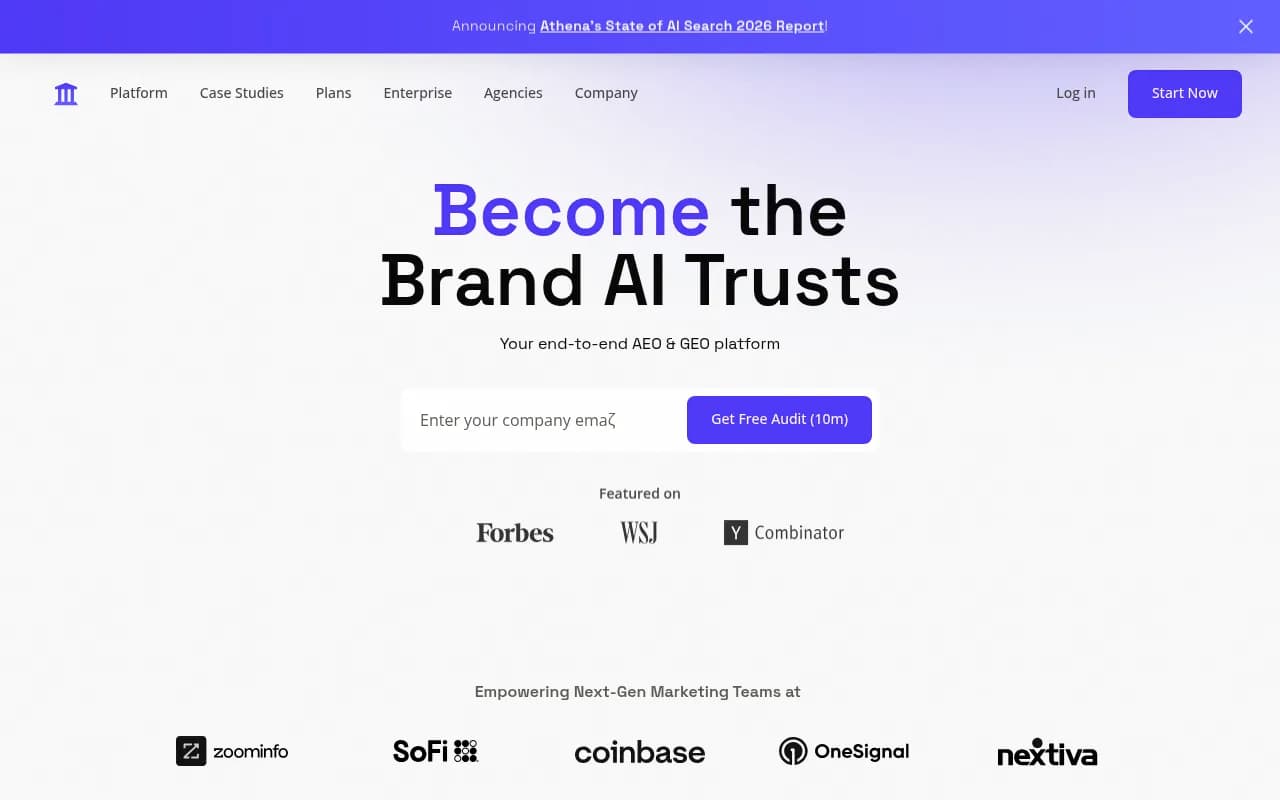
Other platforms worth evaluating alongside these two:
Making the decision
If you're comparing Brandlight.ai and Search Party specifically, the decision mostly comes down to your role and what you're optimizing for:
- Brand/PR team at an enterprise? Brandlight's sentiment depth is probably more useful.
- Agency building out an AI visibility practice? Search Party's multi-client structure is more practical, even if the analytics are thin.
- Agency that needs to show measurable results and close the gap from monitoring to action? Neither platform fully gets you there -- you'll want to look at tools that include content generation and crawler analytics.
The AI visibility space is still maturing, and both Brandlight and Search Party are reasonable choices within their specific niches. The honest assessment is that both are better at telling you where you stand than at helping you change it. For agencies where "we tracked your AI visibility" isn't a sufficient deliverable, that's the limitation worth taking seriously before committing to either platform.