Key takeaways
- Brandlight.ai and AthenaHQ are both monitoring-first platforms -- they show you where your brand appears (or doesn't) in AI search, but stop short of helping you act on that data.
- AthenaHQ starts at $295/month and targets enterprise teams with multi-LLM tracking and AI crawler control features; Brandlight.ai is positioned more broadly with a focus on brand sentiment and citation monitoring.
- Neither platform offers content generation, answer gap analysis, or crawler log analytics -- the features that actually move the needle on AI visibility.
- If you need to monitor and optimize, you'll want to look at platforms that close the loop between data and action.
The AI search category has exploded in 2026. Every week there's a new tool promising to show you how your brand appears in ChatGPT, Perplexity, Gemini, and the rest. Most of them do roughly the same thing: run a batch of prompts, count how often your brand shows up, and hand you a dashboard.
Brandlight.ai and AthenaHQ are two of the more established names in this space. Both have real customers, real data, and real use cases. But they also share a common limitation that's worth being honest about before you spend money on either.
This guide breaks down what each platform actually does, where they differ, and what you should consider if you need more than a monitoring dashboard.
What Brandlight.ai does
Brandlight.ai focuses on tracking how your brand is mentioned and cited across AI-generated responses. The core pitch is brand visibility monitoring: you set up your brand, your competitors, and a set of relevant prompts, and the platform tracks how often each brand appears across models like ChatGPT, Perplexity, and Gemini.
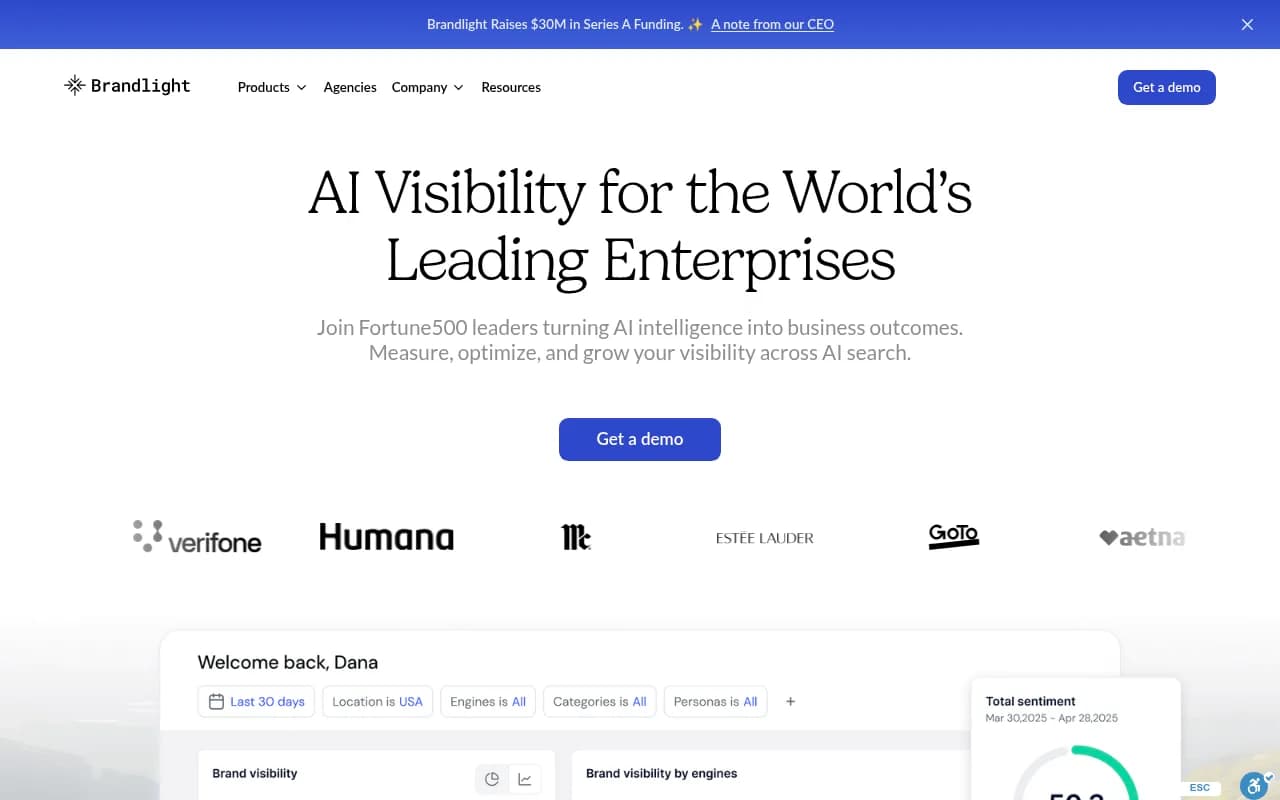
The platform's strengths are in sentiment analysis and citation tracking. It surfaces not just whether your brand appears, but how it's framed -- positive, neutral, or negative. For PR and brand teams, that framing context matters. If an AI model is consistently describing your product in a way that's subtly unfavorable, you want to know.
Brandlight.ai also tracks competitor mentions alongside your own, so you can see share-of-voice comparisons across AI models. That's useful for benchmarking, especially if you're reporting AI visibility metrics to leadership.
Where it gets thin: there's no content gap analysis, no content generation, and no crawler log data. The platform tells you what's happening but doesn't tell you why, and it definitely doesn't help you fix it. For a team that just needs a visibility scorecard, that might be fine. For a team that wants to actually improve their AI search presence, it's a starting point at best.
What AthenaHQ does
AthenaHQ takes a slightly more technical angle. It's built for enterprise teams that want multi-LLM tracking with some control over how AI crawlers interact with their site. The platform tracks visibility across 8+ AI search engines and includes features around AI crawler management -- essentially giving you visibility into which AI bots are hitting your pages.
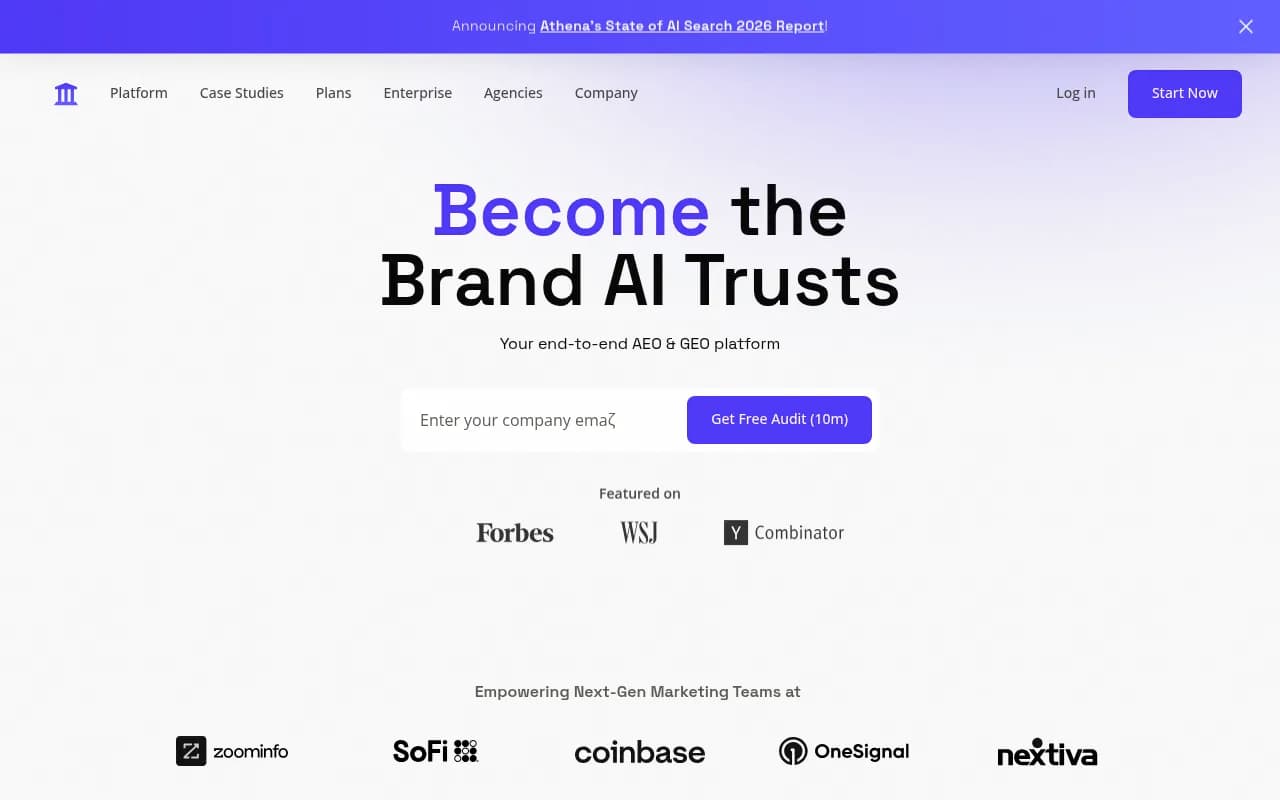
At $295/month, it's priced for teams with budget. The enterprise positioning means the feature set is more robust than many lightweight trackers, and the multi-LLM coverage is genuinely useful if you're trying to understand how your brand performs across ChatGPT versus Perplexity versus Google AI Overviews simultaneously.
AthenaHQ's crawler control angle is interesting and somewhat differentiated. Being able to see which AI crawlers are visiting your site, and potentially influencing how they index your content, is a real capability gap in most monitoring tools. That said, the depth of this feature varies depending on your plan and technical setup.
The limitation is similar to Brandlight.ai: AthenaHQ is fundamentally a monitoring platform. It gives you a solid surface-level view of how your brand is performing across AI platforms -- visibility scores, citation tracking, competitive benchmarks -- but the action layer is mostly absent. You see the data, then you're on your own to figure out what to do with it.
As Profound's own comparison noted, AthenaHQ "gives you a solid surface-level view... visibility scores, citation tracking" but stops there. That's a fair characterization.
Head-to-head comparison
Here's how the two platforms stack up across the dimensions that matter most for AI visibility work:
| Feature | Brandlight.ai | AthenaHQ |
|---|---|---|
| Brand mention tracking | Yes | Yes |
| Competitor monitoring | Yes | Yes |
| Sentiment analysis | Yes | Limited |
| Multi-LLM coverage | Yes | Yes (8+ models) |
| AI crawler logs | No | Partial |
| Content gap analysis | No | No |
| Content generation | No | No |
| Answer gap analysis | No | No |
| Prompt volume data | No | No |
| Reddit/YouTube tracking | No | No |
| ChatGPT Shopping tracking | No | No |
| Traffic attribution | No | No |
| Free trial | Limited | No |
| Starting price | Not publicly listed | $295/month |
The pattern is clear: both platforms cover the monitoring basics well, and AthenaHQ adds some technical depth around crawler management. But neither takes you from "here's what's happening" to "here's what to do about it."
Where both platforms fall short
The honest critique of monitoring-only platforms isn't that they're bad -- it's that they solve half the problem and leave you to figure out the other half yourself.
Knowing your brand appears in 12% of relevant AI responses while a competitor appears in 34% is useful information. But it doesn't tell you which specific prompts you're missing, what content you'd need to create to close that gap, or whether the pages on your site are even being crawled by AI engines in the first place.
That's the gap. And it's a significant one.
For most marketing teams, the workflow after getting monitoring data looks something like: export the data, bring it into a spreadsheet, try to figure out which topics you're underrepresented on, brief a writer, publish something, and then wait weeks to see if it moved the needle. That's slow and largely guesswork.
The more capable platforms in this category -- the ones that have moved beyond pure monitoring -- close this loop inside the product itself.
The broader competitive landscape
It's worth zooming out to understand where Brandlight.ai and AthenaHQ sit in the wider market.
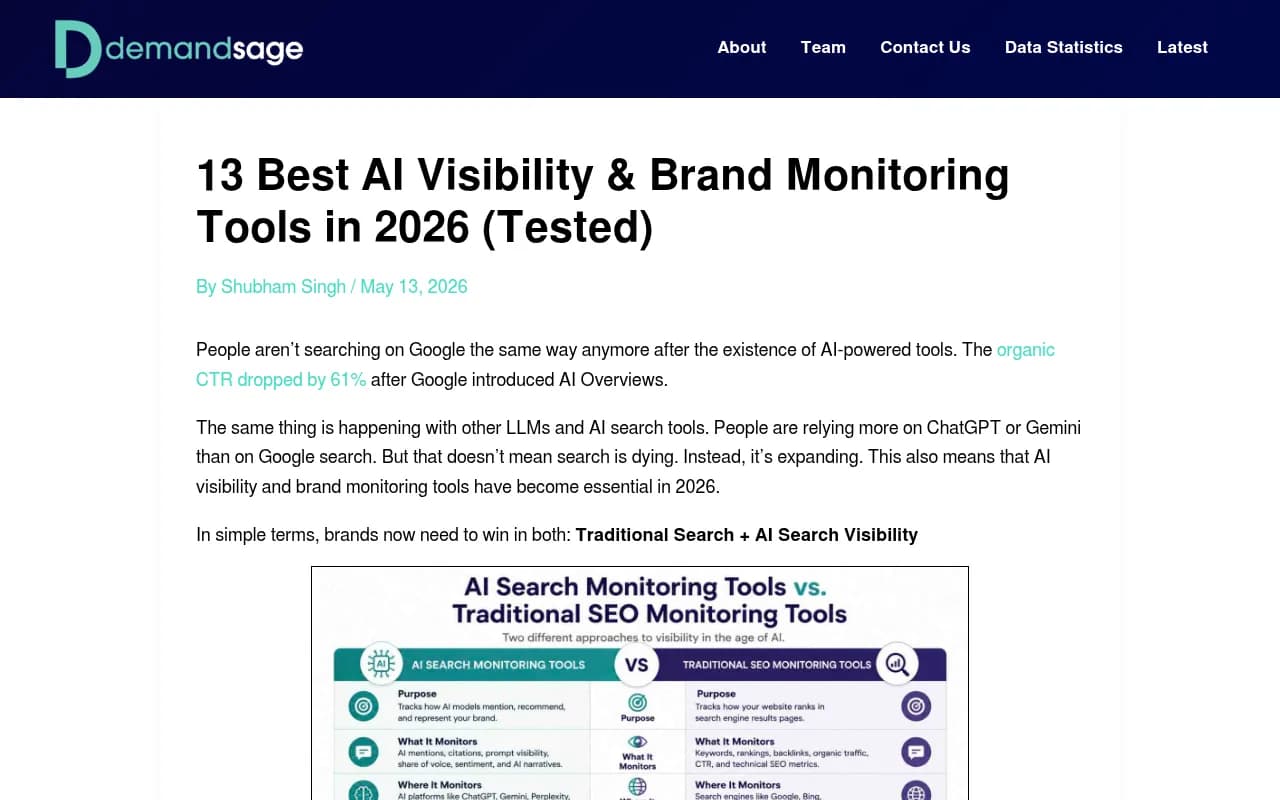
The AI visibility tool market in 2026 has roughly three tiers:
Lightweight trackers (Otterly.AI, Peec AI, Trakkr AI): Low cost, basic prompt monitoring, good for teams that just need a simple visibility check. Limited depth.


Mid-tier monitoring platforms (Brandlight.ai, AthenaHQ, Scrunch): More robust tracking, multi-LLM coverage, some competitive benchmarking. Better dashboards, but still monitoring-only.
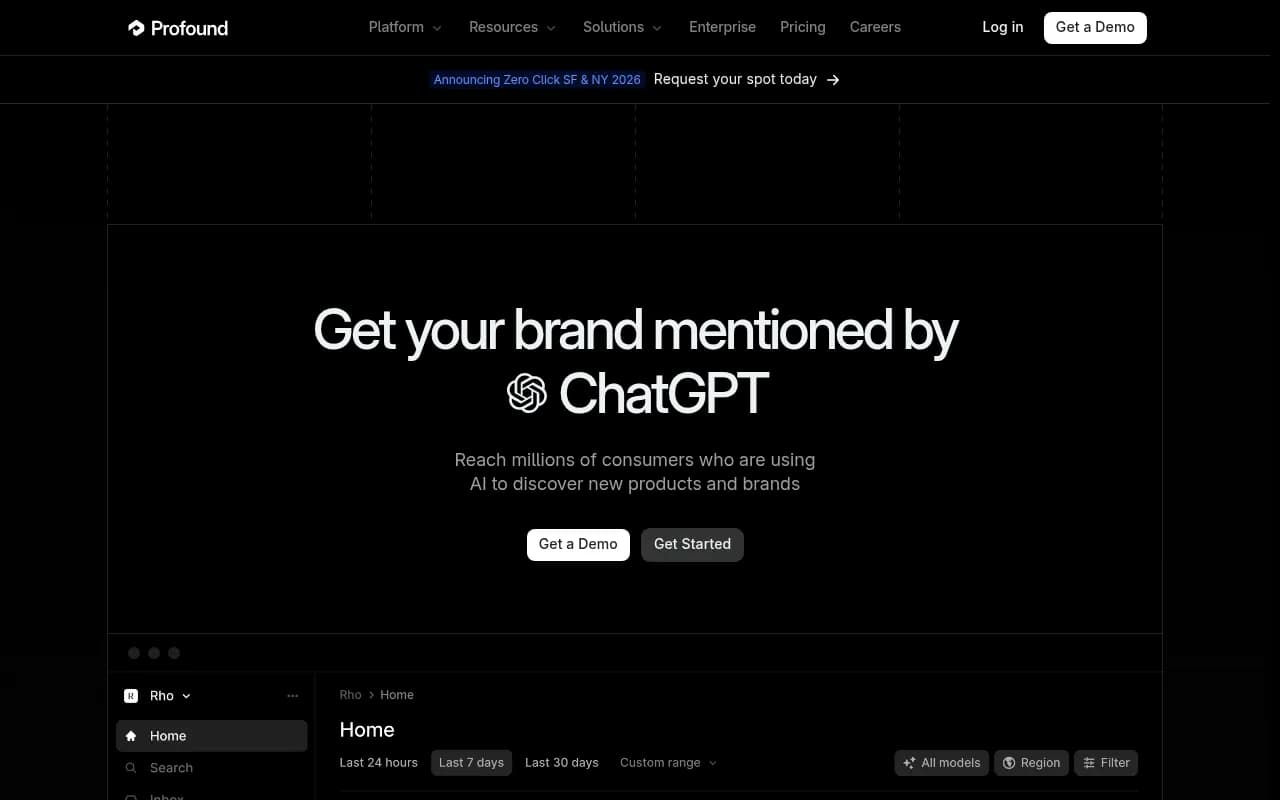
Full optimization platforms (Profound, Promptwatch): Track visibility AND help you act on it -- content gap analysis, content generation, crawler logs, prompt intelligence, traffic attribution.
Brandlight.ai and AthenaHQ sit firmly in that middle tier. They're more capable than the lightweight trackers, but they don't cross into optimization territory.
What an optimization platform looks like in practice
To understand what's missing from monitoring-only tools, it helps to see what a full-loop platform actually does.
Promptwatch is a good example. It tracks brand visibility across 10 AI models (ChatGPT, Perplexity, Claude, Gemini, Grok, DeepSeek, Copilot, Meta AI, Google AI Overviews, Google AI Mode), but the tracking is the starting point, not the destination.

The answer gap analysis shows you exactly which prompts your competitors are visible for that you're not -- with prompt volume estimates and difficulty scores so you can prioritize. Then content agents generate articles, listicles, and comparisons grounded in that real prompt data. And AI crawler logs show you which pages AI engines are actually reading, how often they return, and when a page moves from crawled to cited.
That cycle -- find gaps, create content, track results -- is what separates an optimization platform from a monitoring dashboard. Most teams using monitoring-only tools are doing the middle step (creating content) manually and slowly, without the data to know if they're targeting the right topics.
For a team that's serious about improving AI visibility rather than just reporting on it, the difference in workflow is substantial.
Who should use Brandlight.ai
Brandlight.ai makes sense if:
- You're a PR or brand team that needs sentiment context alongside citation tracking
- You want a relatively straightforward dashboard for reporting AI visibility to stakeholders
- You're in an early stage of AI visibility tracking and need to establish a baseline before investing in optimization
- Budget is a consideration and you don't yet need the full optimization stack
It's a reasonable starting point. Just go in knowing that you'll eventually hit a ceiling when you want to start improving the numbers, not just measuring them.
Who should use AthenaHQ
AthenaHQ makes sense if:
- You're an enterprise team with technical resources who can act on crawler data
- You need multi-LLM tracking at scale with competitive benchmarking
- AI crawler management is a specific priority for your technical SEO team
- You have $295+/month to spend and want more depth than the lightweight trackers offer
The crawler management angle is genuinely useful for technical teams. If your site has indexing issues with AI crawlers -- pages not being read, errors being returned -- AthenaHQ gives you more visibility into that than most monitoring tools.
Making the decision
If you're choosing between these two specifically, the deciding factor is probably your team's focus. Brand and PR teams tend to find Brandlight.ai's sentiment framing more useful. Technical SEO and marketing engineering teams tend to prefer AthenaHQ's crawler-level data.
But if your goal is to actually improve your AI search visibility -- not just measure it -- neither platform is the complete answer. You'll either need to pair one of these with a content strategy workflow built outside the tool, or move to a platform that handles both sides of the equation.
The market has moved fast enough in 2026 that "monitoring only" is increasingly a limitation, not a feature. The brands winning in AI search aren't just tracking their visibility scores -- they're systematically identifying gaps and filling them with content that AI models actually cite.
That's the bar worth measuring yourself against, whatever tool you use to get there.
Quick comparison summary
| Brandlight.ai | AthenaHQ | Full optimization platform | |
|---|---|---|---|
| Best for | Brand/PR teams | Enterprise technical teams | Teams that want to improve, not just track |
| Monitoring | Strong | Strong | Strong |
| Optimization | None | None | Core feature |
| Content generation | No | No | Yes |
| Crawler logs | No | Partial | Yes (detailed) |
| Prompt intelligence | No | No | Yes |
| Price range | Not public | From $295/mo | From $99/mo (Promptwatch) |
The monitoring tools in this space are genuinely useful. They're just not the finish line.