Key takeaways
- Peec AI is useful for basic AI visibility monitoring, but it hits limits fast: prompt ceilings, no content optimization, and gaps in engine coverage.
- The best alternatives don't just show you where you're invisible — they help you fix it with content gap analysis, AI writing tools, and actionable recommendations.
- Engine coverage varies a lot. Some tools track only ChatGPT and Perplexity; others cover Claude, Gemini, Google AI Overviews, DeepSeek, and more.
- Pricing models differ widely — from $24/mo budget tools to enterprise platforms at $500+/mo. Match the tool to your actual use case.
- Promptwatch is the only platform in this comparison rated as a "Leader" across all GEO categories, combining monitoring, content gap analysis, and AI content generation in one loop.
Peec AI had a good run as an early mover. When AI search visibility was a new problem and most SEO teams were still figuring out what "being cited by ChatGPT" even meant, Peec gave people a clean dashboard and a quick way to see where their brand showed up. For a lot of teams, that was enough.
It isn't anymore.
The complaints that keep surfacing in SEO Slack groups and Reddit threads are consistent: prompt limits that get expensive fast, results that vary by industry, and a platform that tells you what's happening but not what to do about it. Meanwhile, AI search has expanded well beyond ChatGPT and Google AI Overviews. Claude, Perplexity, Gemini, DeepSeek, Grok — your customers are using all of them, and your visibility across those engines is a real business problem now.
This guide covers 9 alternatives worth considering in 2026, what each one actually does well, and where each one falls short.
What to look for before switching
Before jumping to a new tool, it's worth being clear about what you actually need. A few things that separate the good options from the mediocre ones:
- Engine coverage. Some tools track two or three AI models. Others cover eight or more. If you care about Claude, Gemini, or DeepSeek, check the list before signing up.
- Monitoring vs. optimization. This is the big one. Most tools show you a visibility score and leave you to figure out the rest. A smaller number actually help you identify what content to create and then help you create it. That difference is worth paying for.
- Prompt intelligence. Can you see which prompts drive the most traffic? Do you get difficulty scores? Can you prioritize high-value queries instead of guessing?
- Agency and team features. White-label reports, client workspaces, and multi-site support matter if you're running accounts for others.
- Traffic attribution. Visibility scores are nice. Connecting visibility to actual revenue is better. Look for GSC integration, code snippet tracking, or server log analysis.
With those in mind, here's what the market looks like right now.
The 9 best Peec AI alternatives in 2026
1. Promptwatch — best for the full optimization loop
Most AI visibility tools are dashboards. They show you data and expect you to know what to do with it. Promptwatch is built differently: it's designed around a cycle of finding gaps, creating content, and tracking results.
The Answer Gap Analysis is the most useful feature for teams that want to actually move the needle. It shows you which prompts your competitors rank for in AI responses that you don't — the specific topics, questions, and angles that AI models want to answer but can't find on your site. That's not a generic content audit; it's a direct list of what to write next.
From there, the built-in AI writing agent generates articles, listicles, and comparisons grounded in real citation data. Over 880 million citations analyzed means the content recommendations aren't guesswork — they're based on what AI models actually cite. Once content is published, page-level tracking shows exactly which pages are being cited, by which models, and how often. Traffic attribution closes the loop by connecting visibility to actual revenue through a code snippet, GSC integration, or server log analysis.
A few things Promptwatch has that most competitors don't: AI crawler logs that show you when ChatGPT, Claude, or Perplexity crawl your site and which pages they read; Reddit and YouTube insights that surface discussions influencing AI recommendations; ChatGPT Shopping tracking; and prompt volume estimates with difficulty scores so you can prioritize the right queries.
It covers 10 AI models: ChatGPT, Perplexity, Google AI Overviews, Google AI Mode, Claude, Gemini, Meta/Llama, DeepSeek, Grok, Mistral, and Copilot. In a 2026 comparison of 12 GEO platforms, it was the only one rated as a "Leader" across all categories.
Pricing starts at $99/mo for the Essential plan (1 site, 50 prompts, 5 articles), $249/mo for Professional (2 sites, 150 prompts, 15 articles, crawler logs), and $579/mo for Business (5 sites, 350 prompts, 30 articles). A free trial is available.

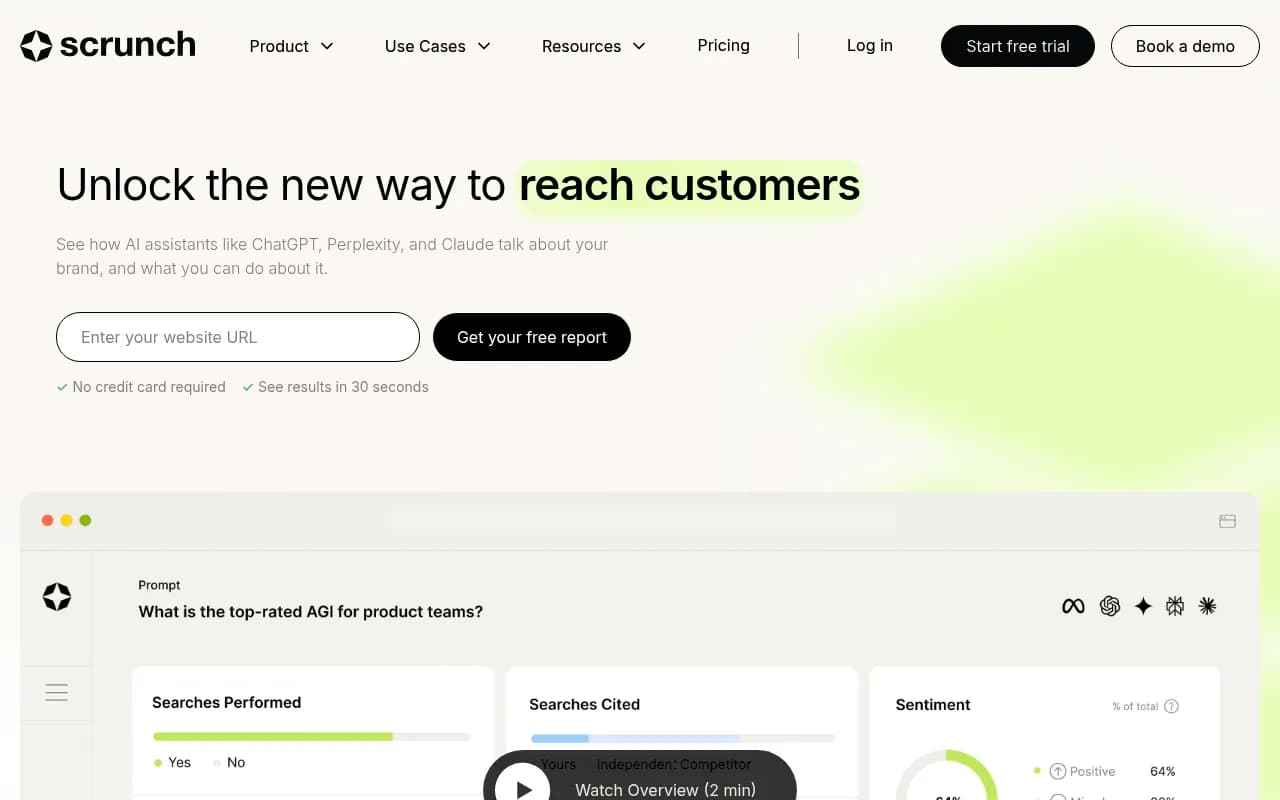
2. Scrunch — best for brand safety and enterprise monitoring
Scrunch sits at the premium end of the market and earns it with the broadest engine coverage available. The platform tracks ChatGPT, Claude, Perplexity, Gemini, Google AI Overviews, AI Mode, and Meta AI from one dashboard.
What makes Scrunch different from lighter tools is its focus on brand safety. It detects hallucinations — cases where AI models make false claims about your brand — and maps customer journeys through AI interactions. For enterprise teams worried about misinformation, that's a real differentiator. It also connects to GA4, so you can see actual traffic from AI referrals rather than just visibility scores.
The downside is price. Scrunch is built for enterprise budgets, and smaller teams will find it hard to justify. It also doesn't have the content generation capabilities that Promptwatch offers, so you're still on your own when it comes to acting on the data.
3. Profound — best for entity-driven SEO teams
Profound focuses on AI Overview tracking with a level of precision that most tools don't match. Its entity extraction and attribution mapping make it useful for teams that think in terms of topical authority and knowledge graph optimization rather than just keyword rankings.
The platform is strong for monitoring competitor presence in AI responses and understanding which entities drive visibility. Starting at $99/mo, it's reasonably priced for what it offers.
The gap is on the optimization side. Profound tells you what's happening with good accuracy, but it doesn't generate content or walk you through what to fix. It's a solid monitoring tool for teams that already have a content production process in place.
4. SE Visible — best for strategic marketing decisions
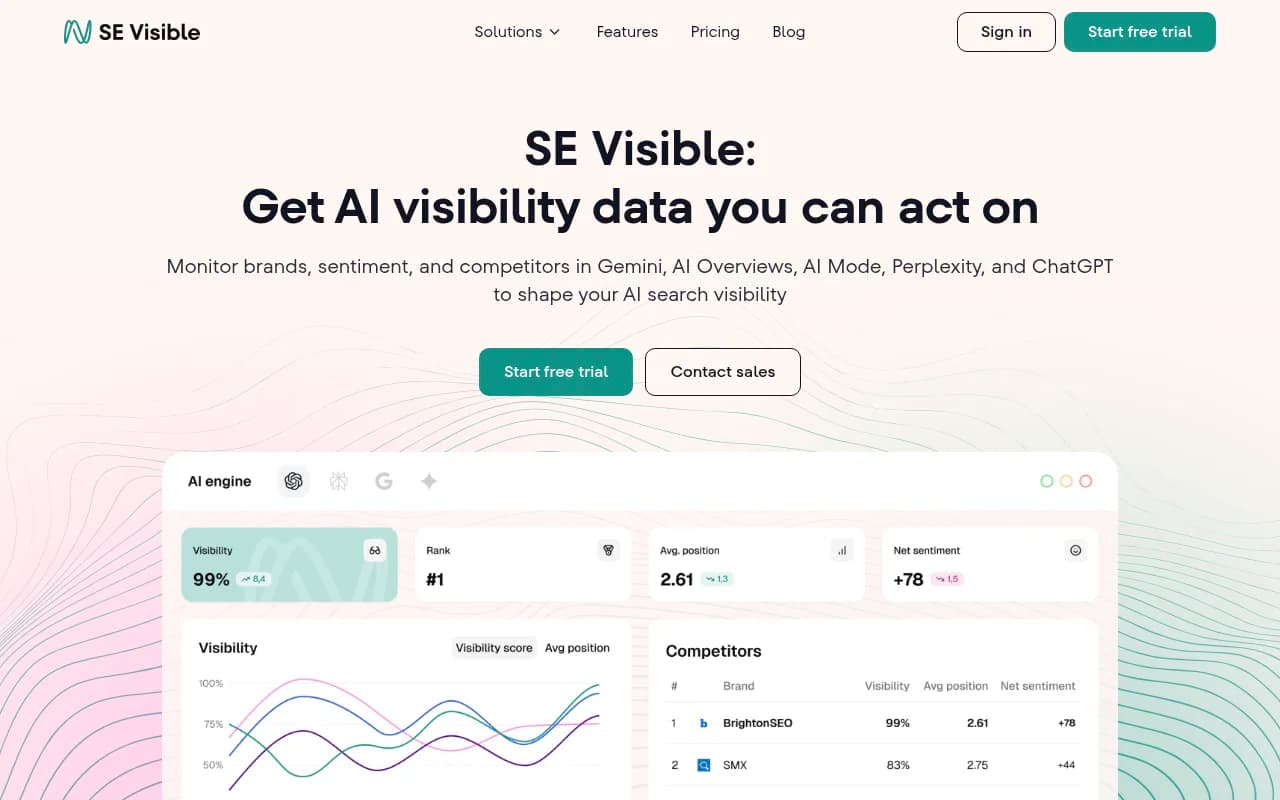
SE Visible (from SE Ranking) takes a different angle than most AI visibility tools. It's built for CMOs and marketing leaders who need to understand AI visibility in the context of brand strategy — sentiment analysis, competitor benchmarking, and share-of-voice reporting rather than granular prompt-level data.
The platform covers multiple AI engines and does a good job of translating visibility data into business-relevant insights. Starting at $189/mo, it's priced for teams that need strategic reporting rather than technical SEO depth.
If you're a technical SEO practitioner who wants prompt-level granularity, SE Visible might feel too high-level. But for brand marketers who need to explain AI visibility to a CMO, it's one of the cleaner options.
5. AthenaHQ — best for multi-engine competitive intelligence
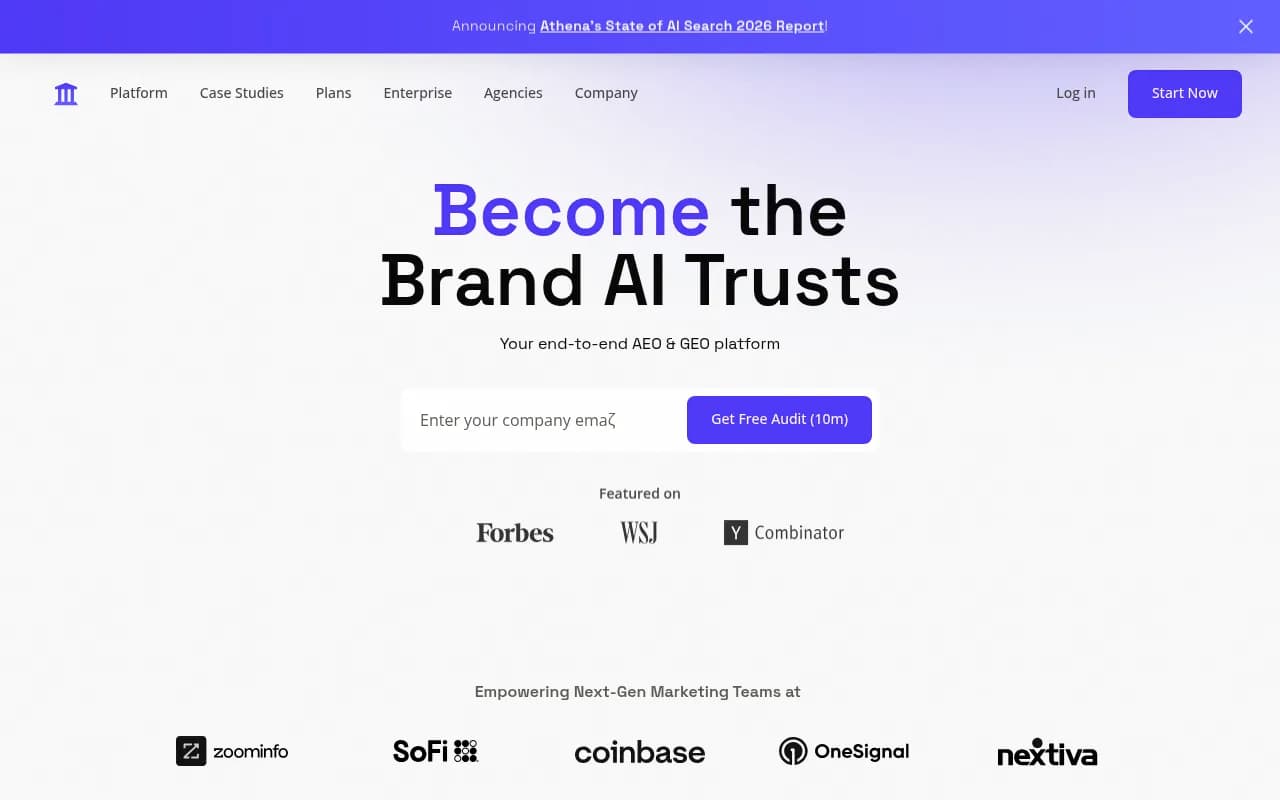
AthenaHQ covers Google AI Overviews, Perplexity, ChatGPT, and Claude with a focus on competitive intelligence. It's well-suited for teams that want to understand how they stack up against specific competitors across different AI engines.
The platform is monitoring-focused, which is both its strength and its limitation. The competitive data is detailed and well-presented. But like most tools in this space, it stops at showing you the problem rather than helping you solve it. At $295/mo, it's priced toward teams that have the resources to act on the data independently.
6. Writesonic — best for teams that want GEO built into content creation
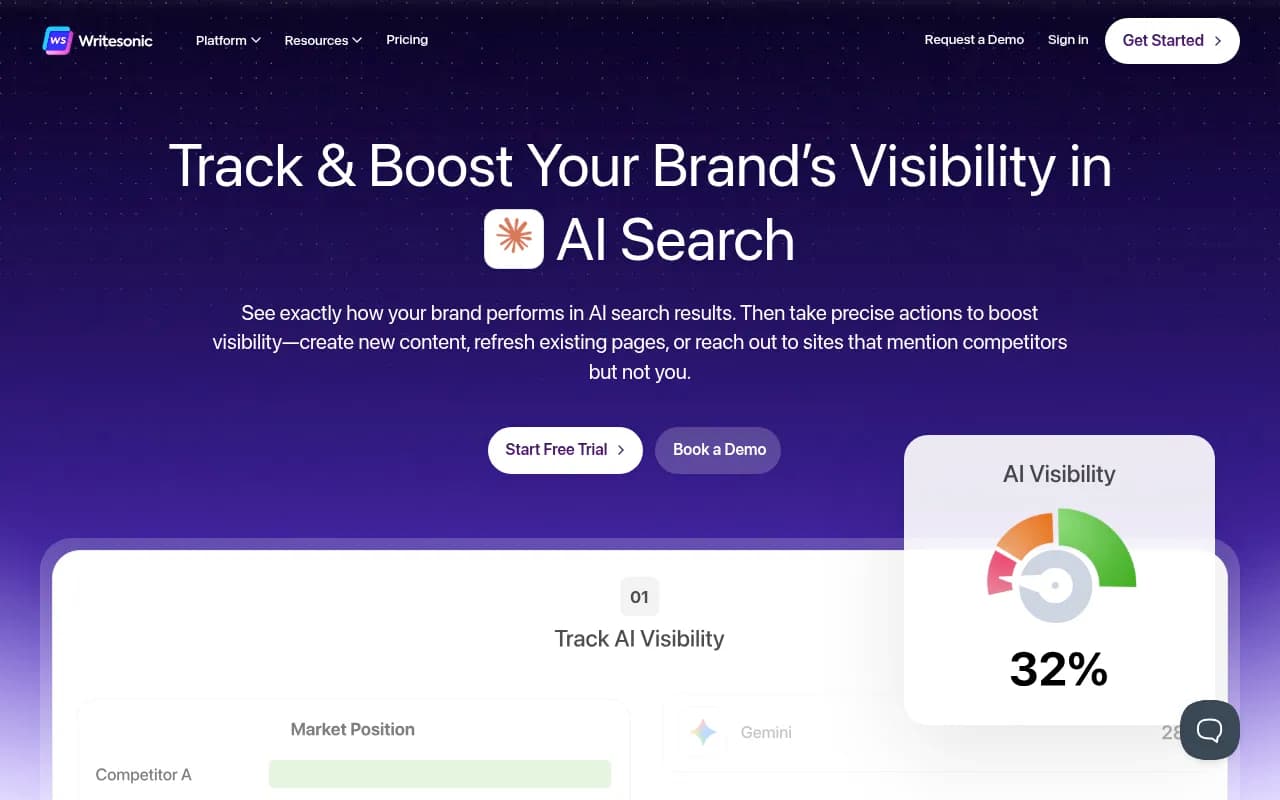
Writesonic started as an AI writing tool and has expanded into Generative Engine Optimization. The platform tracks AI visibility across ChatGPT, Google AI Mode, Gemini, Perplexity, and Claude, and it connects that tracking to content creation workflows.
For teams that want to write content optimized for AI citation without switching between multiple tools, Writesonic's integrated approach makes sense. The GEO features are newer than the writing tools, so the depth of visibility analytics isn't quite at the level of dedicated platforms. But if content production is your primary workflow and you want AI visibility baked in, it's worth evaluating.
Starting at $199/mo for the relevant tiers.
7. Otterly.AI — best for small teams on a budget
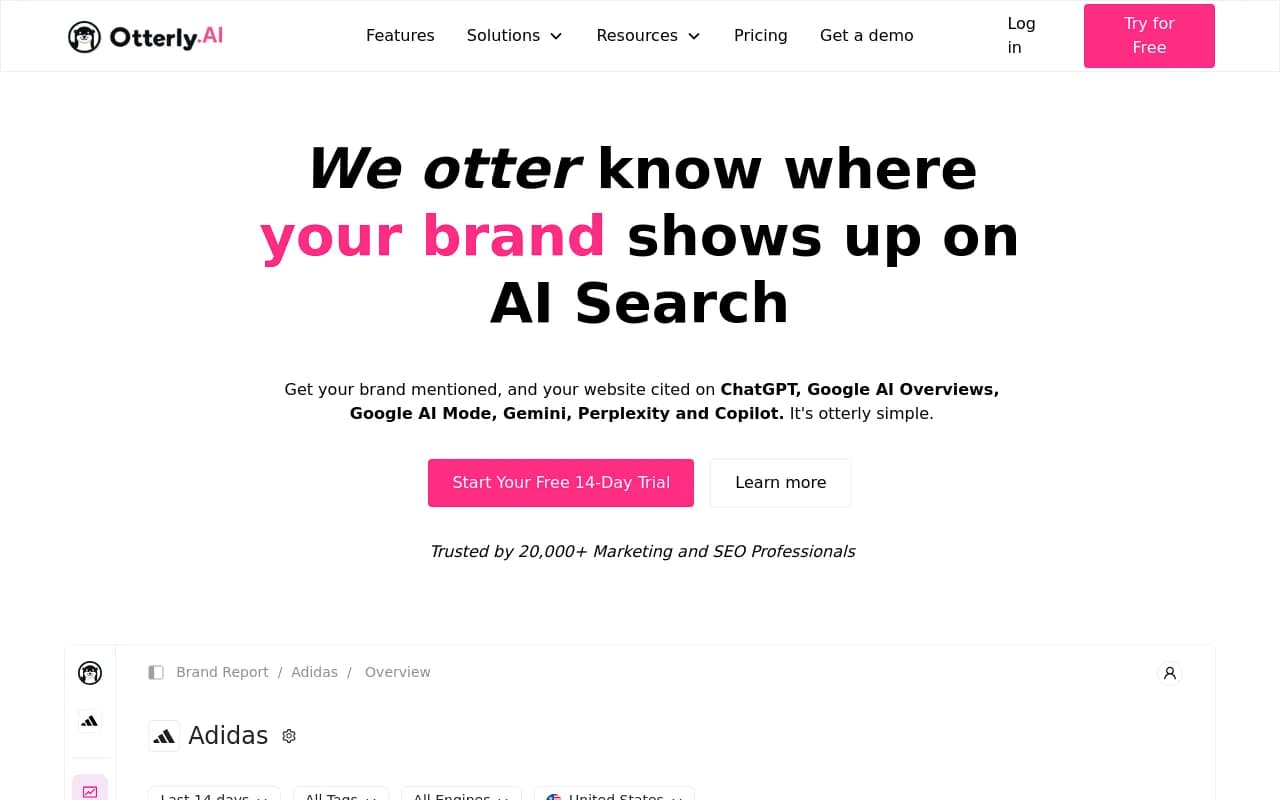
Otterly.AI is one of the more affordable options in this space, and it covers the basics well: brand monitoring across ChatGPT, Perplexity, and a few other engines, with a clean interface that doesn't require much setup.
The honest assessment: it's a monitoring-only tool. There's no content gap analysis, no AI writing features, no crawler logs, and no traffic attribution. For a small team or solo marketer who just wants to know whether they're showing up in AI responses, it gets the job done. For anyone who wants to act on that data, you'll quickly outgrow it.
8. Ahrefs Brand Radar — best for teams already in the Ahrefs ecosystem
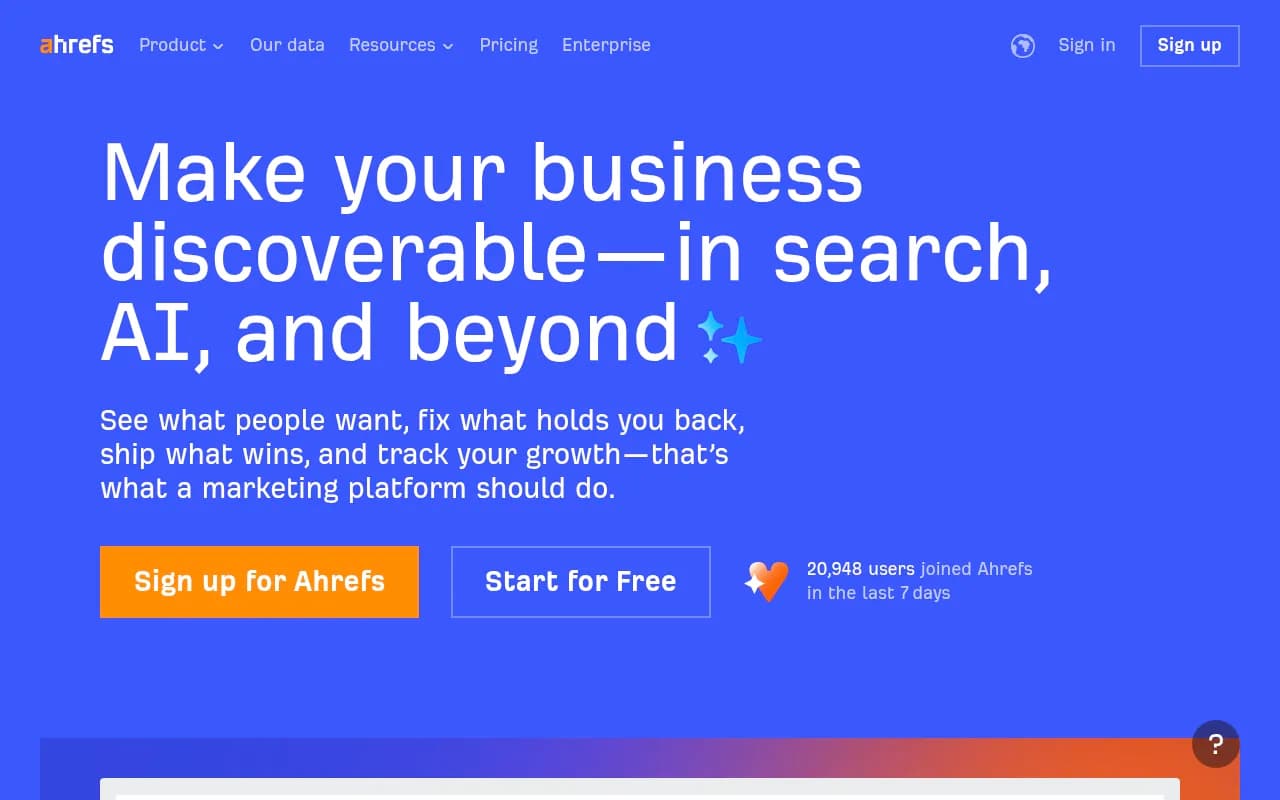
Ahrefs added Brand Radar as part of its broader push into AI search visibility. If you're already paying for Ahrefs, it's a reasonable way to get basic AI visibility data without adding another subscription.
The limitations are real though. Brand Radar uses fixed prompts rather than custom ones, which means you're tracking what Ahrefs decides to track rather than the specific queries your customers actually use. There's no AI traffic attribution, and the optimization features are minimal. It's a starting point, not a complete solution.
9. Airefs — best for budget-conscious teams focused on ChatGPT
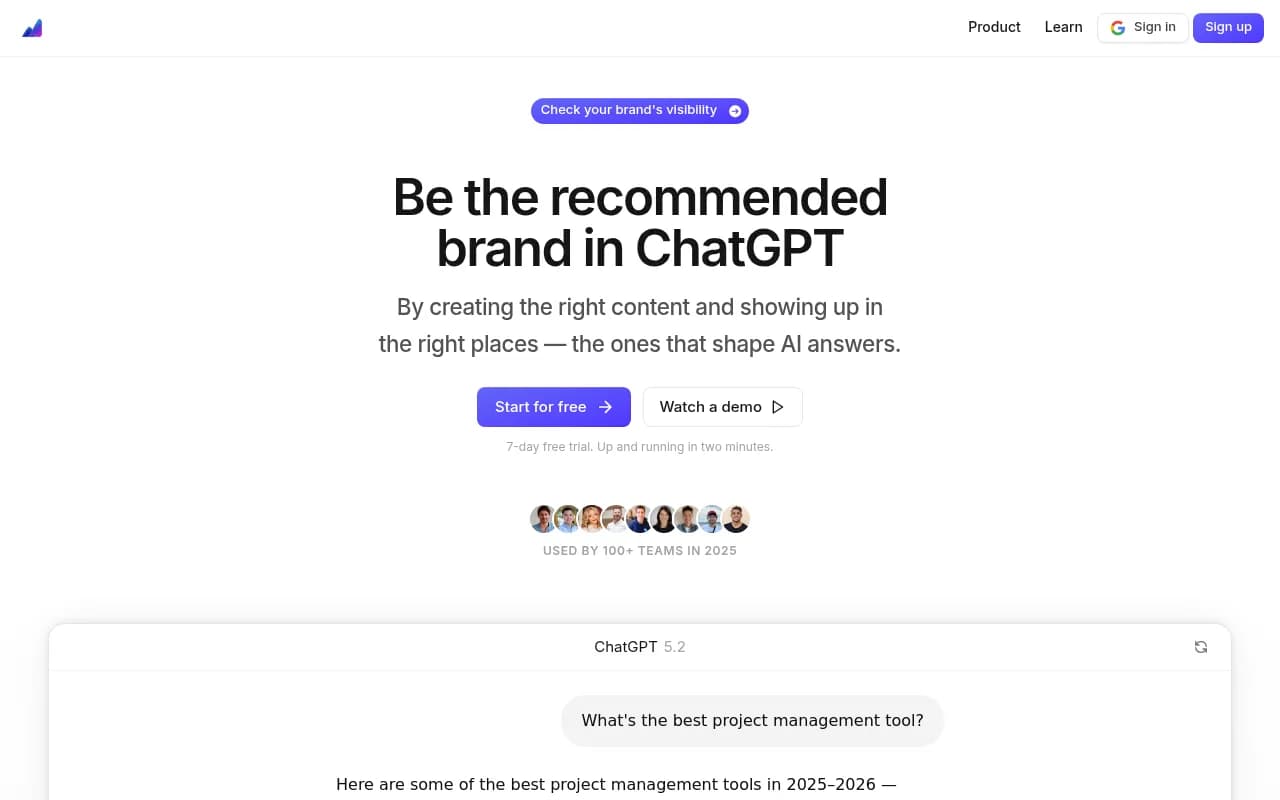
Airefs is one of the most affordable options in this space, starting at $24/mo. It's focused primarily on ChatGPT visibility, which makes it a reasonable entry point for teams that want to start tracking AI search without a significant budget commitment.
The trade-off is obvious: ChatGPT-first means you're missing Perplexity, Claude, Gemini, and everything else. For a small business that primarily cares about ChatGPT recommendations, that might be fine. For anyone with broader AI search ambitions, the limited engine coverage will become a problem quickly.
Side-by-side comparison
| Tool | Engine coverage | Content optimization | Starting price | Best for |
|---|---|---|---|---|
| Promptwatch | 10 engines | Yes (AI writing + gap analysis) | $99/mo | Full optimization loop |
| Scrunch | 7+ engines | No | Enterprise | Brand safety, hallucination detection |
| Profound | Google AIO + others | No | $99/mo | Entity-driven SEO |
| SE Visible | Multiple | No | $189/mo | CMOs, brand strategy |
| AthenaHQ | 4 engines | No | $295/mo | Competitive intelligence |
| Writesonic | 5 engines | Yes (content creation) | $199/mo | GEO + content teams |
| Otterly.AI | 3-4 engines | No | Low | Small teams, basic monitoring |
| Ahrefs Brand Radar | Multiple (fixed prompts) | No | Included with Ahrefs | Existing Ahrefs users |
| Airefs | ChatGPT-focused | No | $24/mo | Budget, ChatGPT-only |
How to choose
The honest answer is that the right tool depends on where you are in your AI visibility journey.
If you're just starting out and want to understand whether your brand shows up in AI responses at all, something like Otterly.AI or Airefs gets you there without a big commitment. You'll outgrow them, but they're fine for a first look.
If you're past the "do we show up?" question and want to understand why you're not showing up for certain queries — and what to do about it — you need a platform with content gap analysis and optimization tools. That's where Promptwatch separates itself from the pack. Most tools in this space are still monitoring dashboards. The ability to identify gaps, generate content engineered for AI citation, and then track whether that content actually improves your visibility is a different category of tool.
If you're an enterprise team with brand safety concerns, Scrunch's hallucination detection is worth the premium. If you're already deep in the Ahrefs ecosystem, Brand Radar is a reasonable add-on. If you're a CMO who needs board-level reporting on AI visibility, SE Visible's strategic framing is useful.
But if you want to actually move the needle on AI search visibility rather than just measure it, the action loop matters. Find the gaps, create the content, track the results. That's the difference between a monitoring tool and an optimization platform.
The bottom line
Peec AI was a useful early tool. In 2026, the bar is higher. AI search is now a primary discovery channel for many categories, and "we track whether you show up" isn't enough of a value proposition anymore.
The tools that will matter going forward are the ones that help you act on the data — not just collect it. Most of the alternatives in this list are still monitoring-only. A few, Promptwatch most clearly, have built the full loop from gap identification to content creation to results tracking.
That's the direction the market is moving. The question is whether your current tool is moving with it.