Key takeaways
- Several MIT-licensed trackers can monitor your brand in ChatGPT for the cost of API calls and a small server. Elmo, GEO/AEO Tracker, Oneglanse, Ansvisor and a handful of smaller repos are the ones worth a look.
- Self-hosted ChatGPT chatbots (Open WebUI, LibreChat) and self-hosted LLM leaderboards are a different topic. They run a model for you. They do not tell you whether ChatGPT recommends your brand.
- Bring-your-own-key trackers query APIs. What real users see in the ChatGPT interface can differ, so treat the numbers as directional until you spot-check them.
- One-off runs are not enough. ChatGPT's search behavior changed overnight on August 8, 2026, so schedule repeated runs.
- Managed platforms cost more but collect from real interfaces, read crawler logs and help you fix gaps. Most teams end up mixing both approaches.
First, a quick clarification: two meanings of self-hosted ChatGPT
Search for "self-hosted ChatGPT" and you get two unrelated piles of results. The first is about running a ChatGPT-style assistant on your own hardware. That is where the Onyx self-hosted LLM leaderboard and the BenchLM open-source ChatGPT alternatives page belong. They rank models like GPT-oss 120B, DeepSeek-V4-Pro and Qwen by benchmarks and VRAM needs.
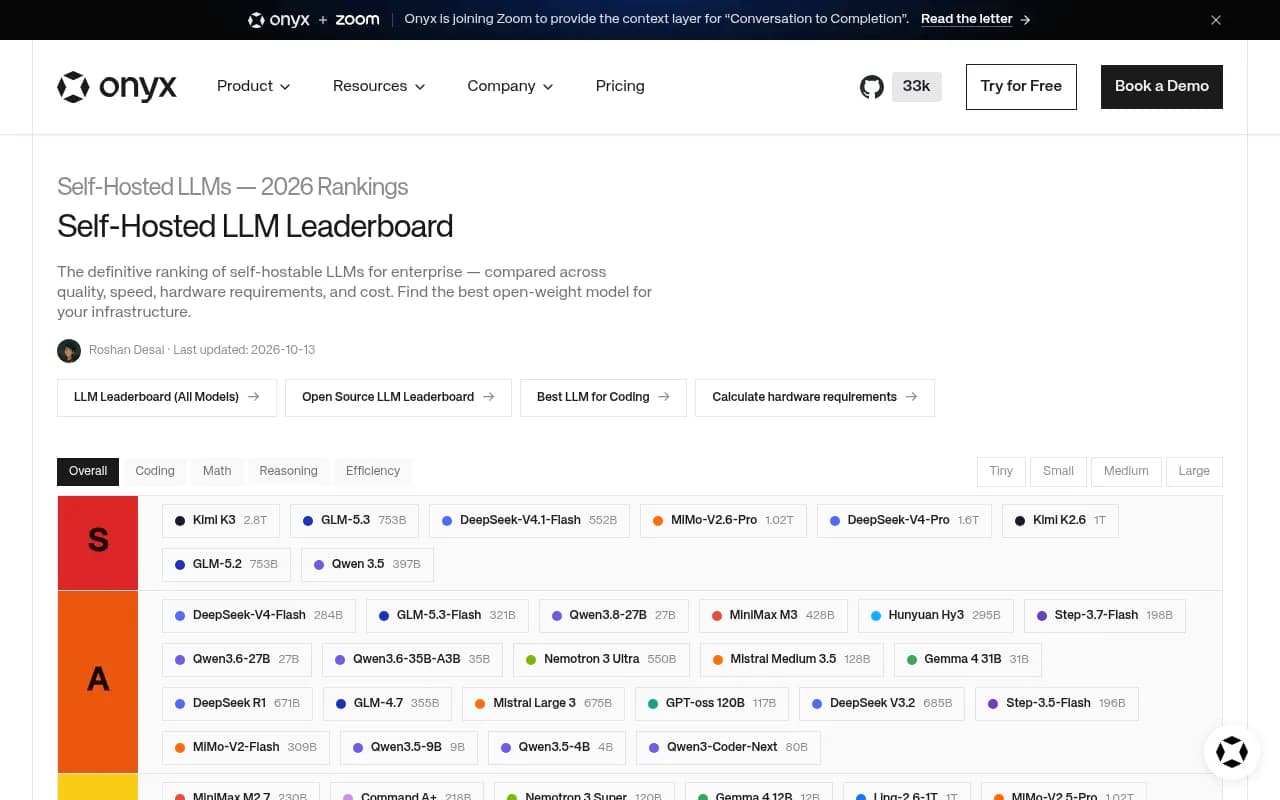
Useful if you want to host a model. Not useful here.
This guide is about the second meaning: software you run yourself that asks ChatGPT (and other AI engines) questions about your category and records whether your brand shows up, where, and with which sources. Think of it as a rank tracker for AI answers. If you want the wider market, the directories at bestgeosoftware.com and ai-rank-tools.com list far more of them.
One caveat before the list. I could not verify star counts, last-commit dates or setup steps for most of these projects. What follows comes from their GitHub pages, READMEs and search listings. Check the repository activity yourself before you commit.
What an open-source ChatGPT tracker actually does
The core loop is simple. You define a list of prompts and a list of brands. The tool sends each prompt to one or more AI engines on a schedule, parses the answers for brand mentions, position and cited URLs, then stores the results so you can chart them over time.
Good ones add sentiment, competitor comparison, and a share-of-voice number. The better ones also log the sources ChatGPT cites, because citations tell you which pages you need to influence.
What open-source tools generally do not do is the rest of the job: IP-verified AI crawler logs, AI referral analytics, content generation, publishing. You will bolt those on separately or go without.
The open-source and self-hosted options
Elmo
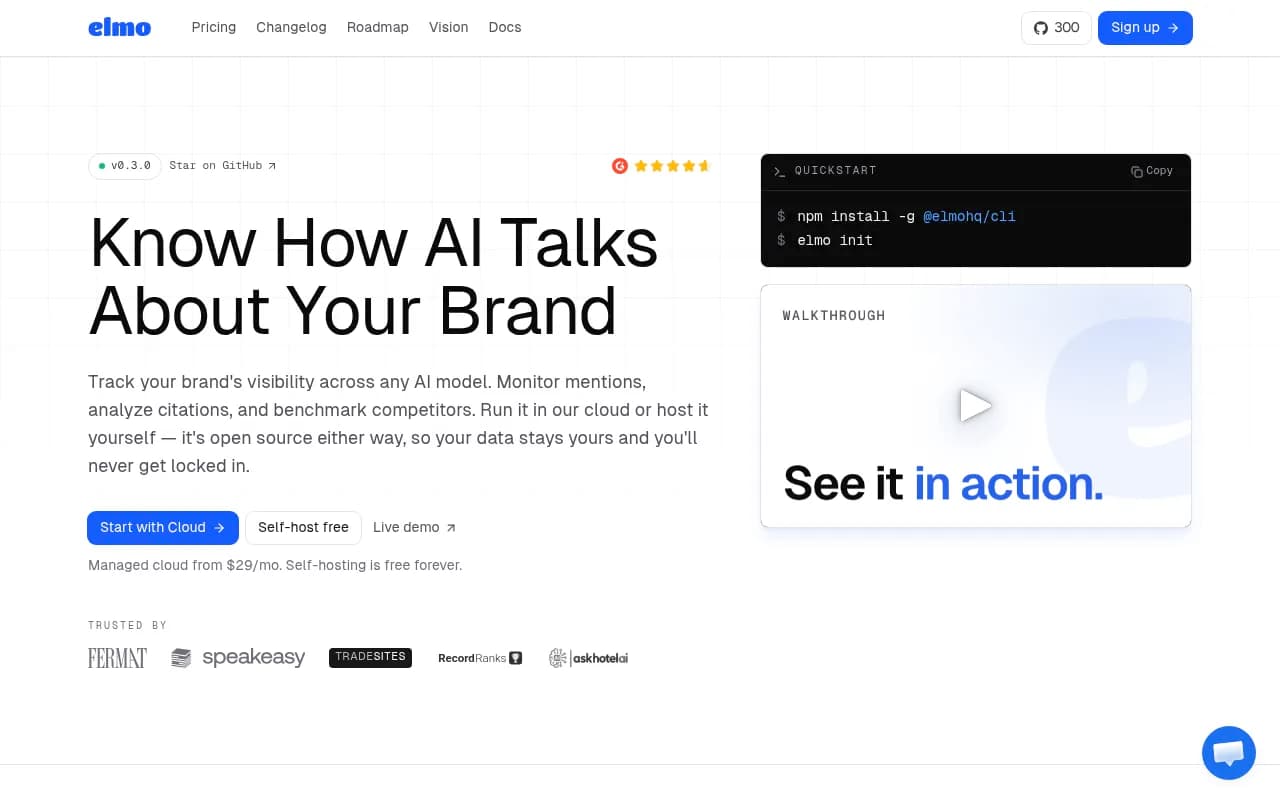
Elmo (elmohq/elmo) is MIT-licensed and self-hostable, and its pitch is that every metric is auditable in code. It covers ChatGPT, Claude, Perplexity, Gemini, Copilot, Grok and Google AI Overviews. The project positions itself as an open-source alternative to Profound.
You can self-host for free. If you would rather not run infrastructure, Elmo Cloud starts at $29/mo on the Starter plan, with ChatGPT included on every Cloud plan, and there is white-label reselling for agencies. That cloud option is a nice escape hatch: you can start hosted and move to your own server later, or the reverse.
GEO/AEO Tracker
GEO/AEO Tracker (danishashko/geo-aeo-tracker) is MIT-licensed and self-hosted. It tracks five engines: ChatGPT, Perplexity, Gemini, Microsoft Copilot and Google AI Mode. It uses a bring-your-own-API-keys model, so you pay the providers per call and there is no plan cap. Data lives in your browser, with an optional Supabase instance of your own.
It scores visibility from 0 to 100 and shows citations plus competitor battlecards. Its README compares itself with paid tools: Semrush's AI Search Starter at $199/mo monthly (50 prompts tracked daily) and AthenaHQ Starter at $295/mo. That comparison is written by the project author, so take the framing with salt, but the pricing contrast is the real appeal. Heavy tracking costs you API spend instead of a subscription.
Oneglanse
Oneglanse (oneglanse/oneglanse) is MIT-licensed and self-hostable. Its description says it monitors brands "through real product UIs". My read is that this means interface-based collection rather than API calls, though that is an inference from a snippet, not something I confirmed in the code. If true, it matters, because UI answers and API answers do not always match (more on that below).
Ansvisor
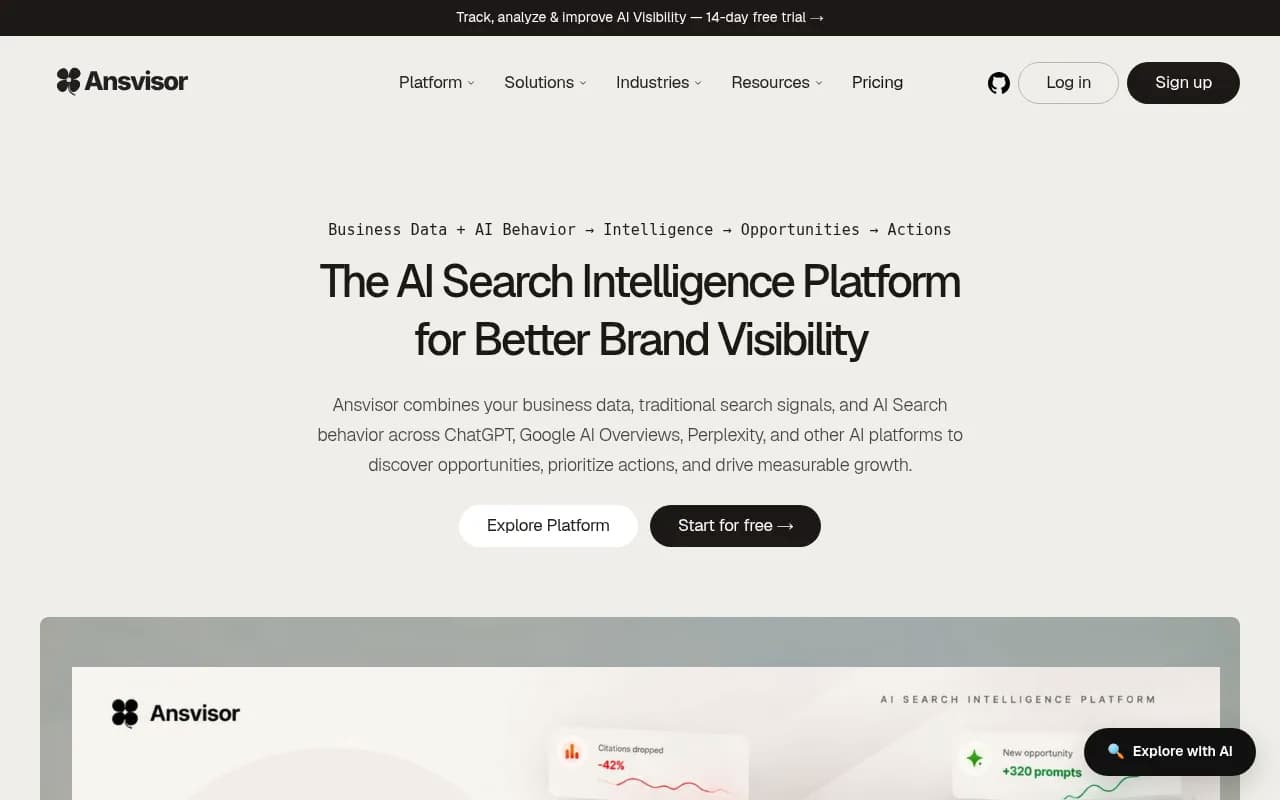
Ansvisor has an MIT-licensed open-source side and offers cloud or self-hosted deployment. It shows exact cited URLs, and Claude tracking is on its Enterprise plans. It also publishes an open-source AEO and GEO tools roundup with a section on analyzing query fan-out. Keep in mind it is a vendor, so its roundup is not neutral.
Smaller repositories worth watching
The GitHub topic page ai-visibility-tracker lists 14 public repositories. A few that surfaced:
- Limelit open (limelit-co/open): self-hosted, written in Go, with MCP topics. Tracks ChatGPT, Claude, Perplexity, Gemini and AI Overviews.
- CiteLadder (abhij1306): self-hosted, with MCP and DataForSEO topics. Tracks ChatGPT, Gemini, Claude and AI Overviews.
- rastmob/ai-visibility-tracker: TypeScript and Next.js, covering ChatGPT, Gemini, Perplexity, Claude and Google AI results.
- vigie-ai-visibility-tracker: free, Node.js, tracking mentions and share of voice across ChatGPT, Claude, Gemini and Perplexity.
- Cituna cituna-mcp: an MCP server that combines AI mention tracking with Google Search Console data. It is not clearly self-hosted.
- Genwolf AI: a free open-source tracker shared on r/buildinpublic. I only saw the post snippet.
Treat these as starting points for a weekend of testing, not as vetted choices.
Comparison table
| Tool | License / hosting | ChatGPT coverage | Data approach | Best for |
|---|---|---|---|---|
| Elmo | MIT, self-host or Cloud from $29/mo | Yes, plus 6 other engines | Not verified | Teams that want auditable code with a hosted fallback |
| GEO/AEO Tracker | MIT, self-hosted | Yes, 5 engines | Your own API keys | Cost-conscious solo SEOs |
| Oneglanse | MIT, self-hosted | Not verified | Appears UI-based (inferred) | People who care about real-interface answers |
| Ansvisor | MIT open-source side, cloud or self-hosted | Yes | Not verified | Exact cited URLs |
| Limelit open | Self-hosted, Go | Yes | Not verified | Developers who like Go and MCP |
| CiteLadder | Self-hosted | Yes | Not verified | DataForSEO and MCP workflows |
The accuracy question nobody puts on the README
Bring-your-own-key trackers call model APIs. That is cheap and easy to automate. It is also not what your customers see. The ChatGPT interface runs web search, shopping modules and system prompts that raw API calls may not reproduce, so citations and recommendations can differ. I found no source that measures the gap, so I cannot give you a number. What I can say is that you should spot-check. Pick ten prompts, run them by hand in ChatGPT, and compare against your tracker's output before you trust any trend line.
Platforms that collect from the real interfaces avoid this problem, which is one reason managed tools charge more. Promptwatch, for example, collects from the actual UIs of ChatGPT, Gemini, Perplexity, Claude and AI Overviews rather than relying only on APIs.

Why scheduled runs beat one-off audits
ChatGPT's behavior moves under you. According to Promptwatch Data on the site: operator, the share of fanout queries using site: jumped from 0.37% to 16.8% on August 8, 2026, roughly 46x in a day. Average searches per response went from about 1.08 to about 1.83 the same day. The extra site: searches were added on top of the generic ones, not swapped in.
For anyone running their own tracker, two things follow. First, schedule runs daily or at least weekly so you catch a change like this when it happens. Second, any keyword or fanout mapping you built before that date is stale.
The ChatGPT query fanouts report adds a second lesson about your prompt list. Average fanout query length fell from about 117 characters in early December to the high 80s in February and March, and to about 53 characters from April. The report also measured average fanouts per response falling from 2.15 in early December to about 1.84 by early March. In practice that means ChatGPT often runs short, keyword-like searches behind a long conversational question. If your tracker's prompt list is all long, chatty questions, add short queries like "best CRM for small agencies 2026" too.
Setting up a self-hosted tracker the sensible way
Start with a small, honest prompt set
Twenty to fifty prompts is plenty to start. Mix branded prompts ("is X good for Y"), category prompts ("best X for Y"), and competitor comparisons. Add the short keyword-style variants described above. Skip the temptation to track 500 prompts on day one, because with your own API keys every run costs money.
Estimate your API bill before you schedule anything
Prompts times engines times runs per day times cost per call. A 50-prompt set across 5 engines once a day is 250 calls a day, around 7,500 a month. Do the math with current provider pricing before you flip the cron job on.
Run repeated samples
AI answers vary between runs. One response tells you almost nothing. Run each prompt multiple times and look at the rate of mention, not a single yes or no.
Log the cited URLs
Mentions are nice. Citations are actionable. If your tracker does not store the sources ChatGPT used, you will know you are missing without knowing why. Cross-check with your own server logs where you can, and use free helpers such as the AI crawler URL inspector to see whether AI bots can read the pages you care about.
Plan for maintenance
Open-source projects break when engines change their interfaces or APIs. Before adopting one, look at recent commits, open issues and whether releases are tagged. A tracker abandoned for six months is a liability, not a bargain.
What open-source trackers leave out
The gap shows up after you have the data. A visibility chart tells you where you are invisible. It does not tell you whether GPTBot or OAI-SearchBot can reach your pages, whether the traffic from AI answers converts, or what to write next.
A few free and low-cost pieces can fill some of it:
- Google Search Console for the queries and pages that already earn impressions.
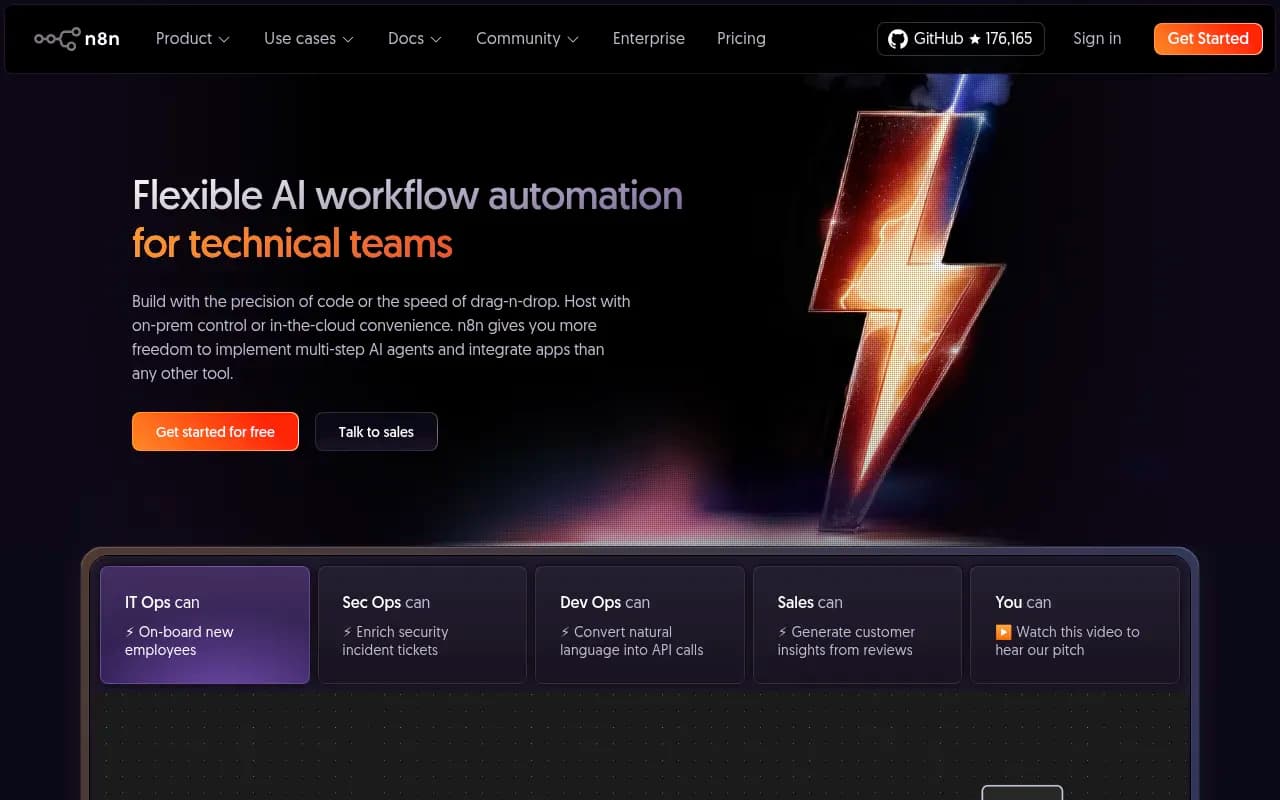
- n8n if you want to schedule runs, pipe results into a spreadsheet and send alerts. It is open-source workflow automation and pairs naturally with a self-hosted tracker.
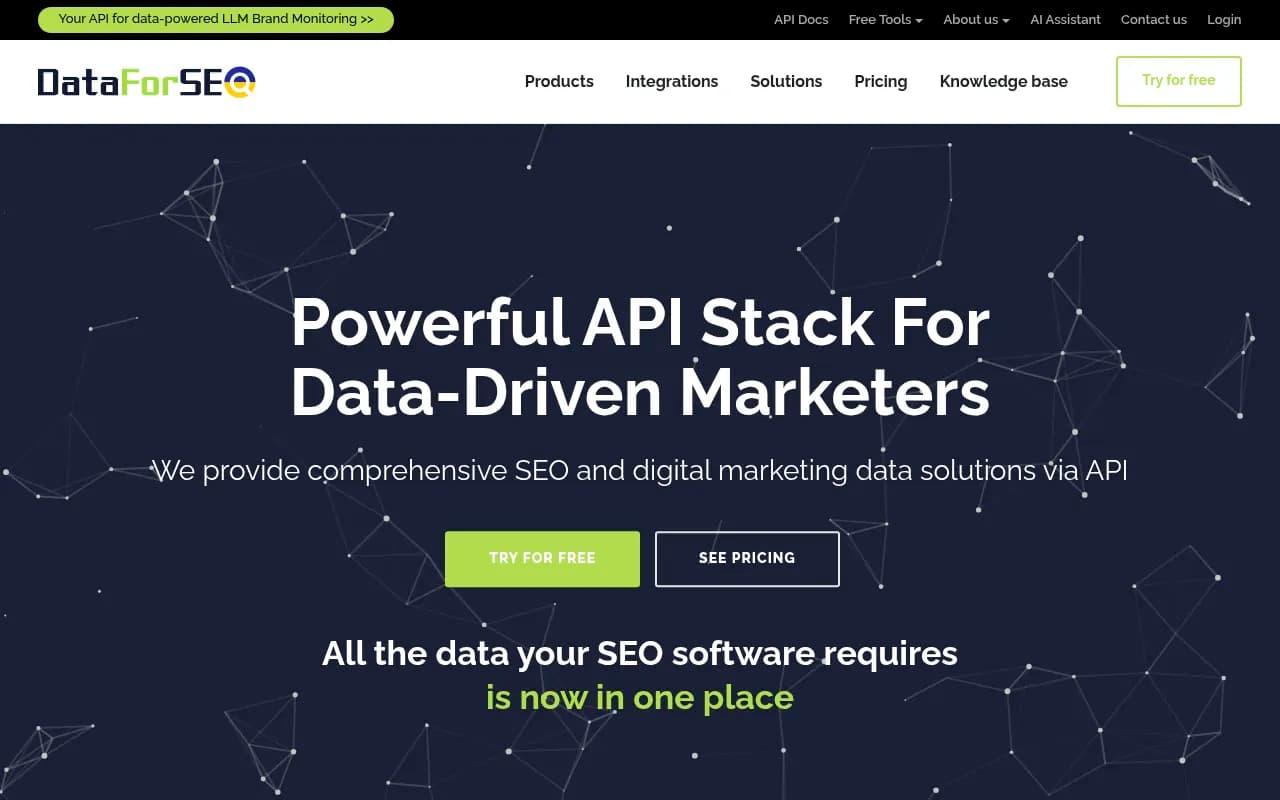
- DataForSEO or similar APIs if you want to build on SERP and AI-search data.
For everything else you either build it or buy it.
When a managed platform is the better call
Self-hosting makes sense when you have an engineer, a small prompt set, and a strong reason to keep data in-house. It makes less sense when the tracking has to feed a content program, a client report or an executive dashboard.
Promptwatch is the end-to-end option I would point to. Beyond monitoring, it traces which pages get cited, logs IP-verified AI crawler hits on your site, measures AI-referred visitors, and then acts on the gaps with an Action Board and a Content Agent that can publish to WordPress, Webflow or Framer. Pricing starts at $95/mo for Essential, with a 7-day free trial; confirm current plans at promptwatch.com/pricing. If you only want to see where you stand first, the free AI visibility report needs no login. For agencies, there are dedicated agency plans starting at $199/mo.
There are other hosted trackers in the middle, too. Otterly.AI and Peec AI are lighter monitoring tools, and Profound is the enterprise name Elmo positions itself against.



Quick decision table
| Your situation | Likely fit |
|---|---|
| Solo SEO, tight budget, comfortable with API keys | GEO/AEO Tracker |
| Want open code but a hosted option as backup | Elmo |
| Need exact cited URLs and cloud or self-hosted flexibility | Ansvisor |
| Developer wanting to extend with MCP | Limelit open or CiteLadder |
| Need crawler logs, traffic attribution and content execution | A managed platform like Promptwatch |
A final checklist before you deploy
- Confirm the license (MIT in the cases above) and the last commit date.
- Find out whether it uses APIs or interface collection.
- Estimate the monthly API bill for your prompt set.
- Run ten prompts manually and compare to the tool's output.
- Schedule repeated runs, not a single audit.
- Decide now who owns upgrades when an engine changes.
The cheap route is real and it works for monitoring. Just be clear that you are buying a measurement instrument, not a strategy. The strategy still needs your content, your crawl access and a way to tell whether any of it worked.