Key takeaways
- GetMint.ai covers basic AI brand monitoring, but most teams outgrow it quickly -- especially if they need content gap analysis, AI crawler logs, or traffic attribution
- The best alternatives split into two camps: full-stack platforms that monitor and help you fix visibility gaps, and lighter monitoring-only tools that show you data but leave the action to you
- Promptwatch is the strongest all-around option in 2026, rated "Leader" across all categories in a comparison of 12 GEO platforms -- the only platform to close the loop from gap identification to content creation to traffic attribution
- Budget-conscious teams have solid options in Otterly.AI and Peec AI, though both are monitoring-only
- Enterprise teams with complex needs should look at Profound or Scrunch, keeping in mind their higher price points
Why teams look beyond GetMint.ai
GetMint.ai is a reasonable starting point for tracking how your brand appears in AI search results. It monitors mentions across a handful of LLMs and gives you a basic visibility score. For teams just getting started with GEO (Generative Engine Optimization), that's often enough.
But "enough to start" and "enough to grow" are different things.
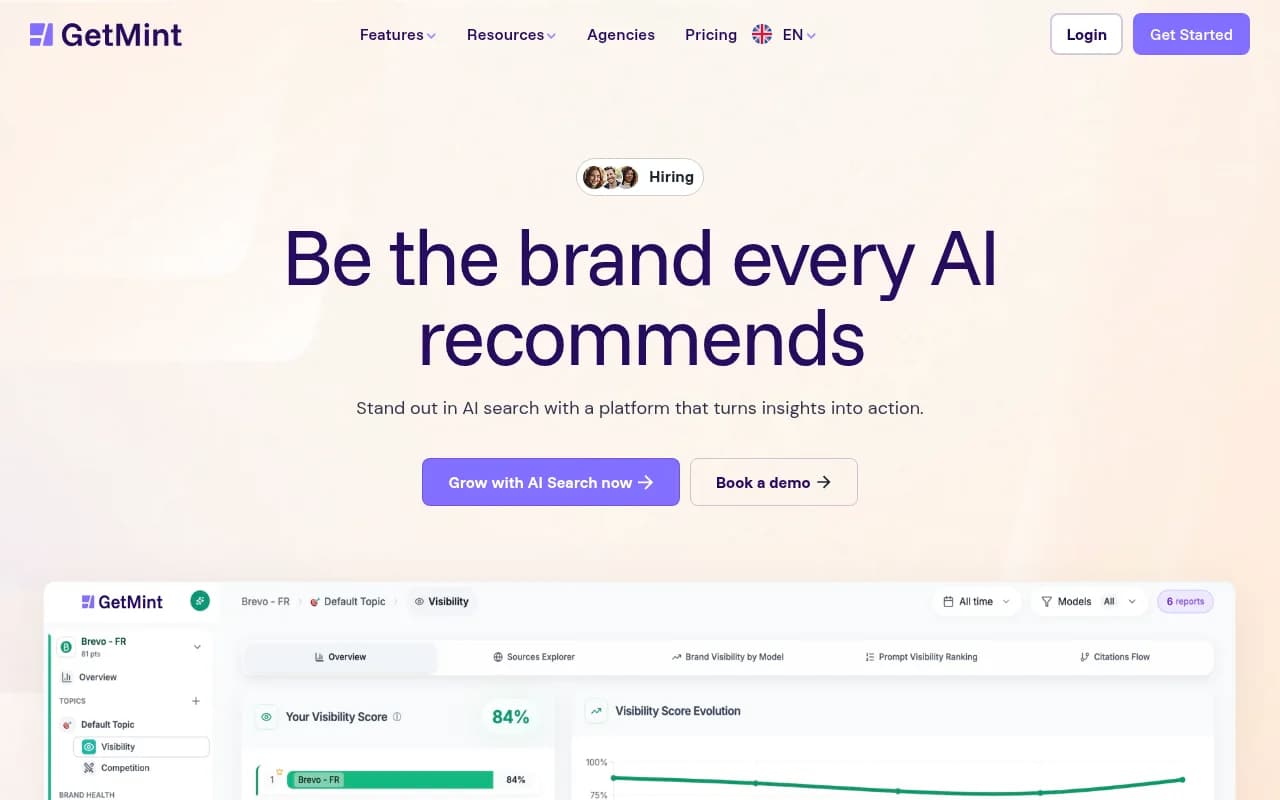
The problems teams run into with GetMint.ai tend to follow a pattern. You get the monitoring dashboard, you see that competitors are appearing in ChatGPT responses and you're not, and then... you're stuck. The tool shows you the gap but doesn't help you close it. There's no content generation, no crawler log analysis to understand why AI models aren't citing your pages, and limited prompt intelligence to help you prioritize which gaps actually matter.
That's not a knock on GetMint specifically -- it's a structural problem with most monitoring-only tools in this space. The AI visibility market in 2026 has split into two distinct categories: dashboards that show you data, and platforms that help you act on it.
This guide covers the best alternatives across both categories, with honest assessments of what each actually does well.
The full-stack alternatives (monitor + optimize)
These platforms go beyond tracking. They help you understand why you're invisible in AI responses and give you tools to fix it.
Promptwatch
Promptwatch is the most complete AI visibility platform available right now. It monitors 10 AI models (ChatGPT, Claude, Perplexity, Gemini, Grok, DeepSeek, Copilot, Meta AI, Mistral, and Google AI Overviews), but the monitoring is almost the least interesting part.
What makes it different is the action loop it's built around:
- Answer Gap Analysis shows you exactly which prompts competitors rank for that you don't -- not as a vague category, but as specific questions and topics your site isn't answering
- A built-in AI writing agent generates articles, listicles, and comparisons grounded in citation data from 880M+ analyzed citations, prompt volumes, and competitor analysis
- Page-level tracking shows which of your pages are being cited, by which models, and how often -- so you can see visibility scores improve as new content gets picked up
It also has features most competitors don't touch: real-time AI crawler logs (so you can see when ChatGPT or Claude visits your site and what errors they hit), Reddit and YouTube citation tracking, ChatGPT Shopping monitoring, and traffic attribution via GSC integration or server log analysis.
Pricing starts at $99/month for the Essential plan (1 site, 50 prompts, 5 articles), with Professional at $249/month and Business at $579/month. A free trial is available.
Promptwatch was rated "Leader" across all categories in a 2026 comparison of 12 GEO platforms -- the only platform to earn that designation across the board.

Profound
Profound is the other serious full-stack option, particularly for enterprise teams. It covers AI narrative monitoring, reputation tracking, and has solid reporting capabilities. The 7-day free trial makes it easy to evaluate, and it starts at $99/month.
Where Profound falls short compared to Promptwatch: no Reddit tracking, no ChatGPT Shopping monitoring, and the content optimization layer isn't as developed. It's a strong choice for teams that need deep narrative analysis and have someone dedicated to interpreting the data.
Scrunch AI
Scrunch focuses on AI discoverability optimization and has a more structured approach to content recommendations than most tools. Starting from $250/month, it's priced for teams that are serious about GEO as a channel.
The tradeoff is that it's heavier to set up and the interface takes time to learn. Good for teams with dedicated SEO resources; less ideal for lean marketing teams that need quick wins.
Relixir
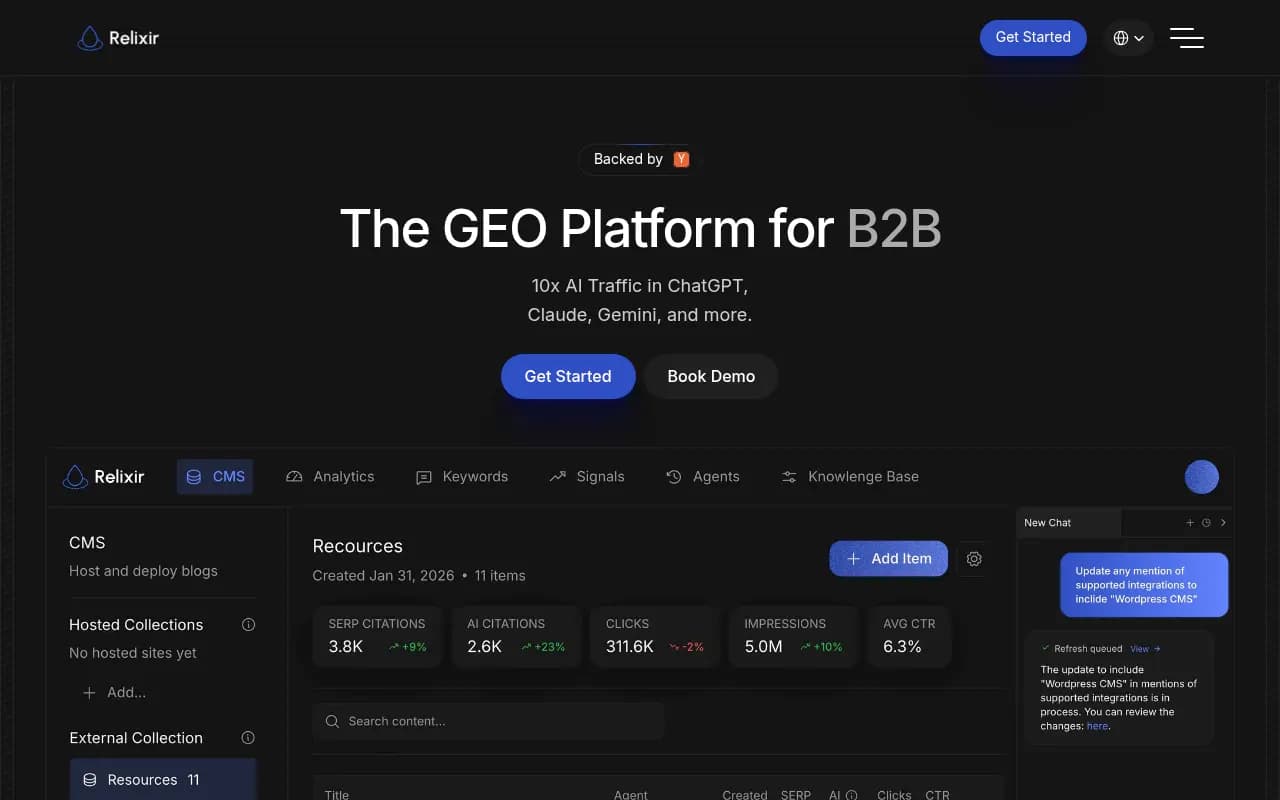
Relixir positions itself as an all-in-one GEO platform with AI content generation and analysis built in. It's a newer entrant but worth evaluating if you want a Promptwatch alternative with content generation capabilities.
The monitoring-only alternatives
These tools do one thing: show you where your brand appears (or doesn't) in AI responses. They're useful for teams that just need visibility data and handle content creation elsewhere.
Otterly.AI
Otterly is the budget pick in this category. At $29/month, it's the most affordable serious AI visibility tracker available. You get multi-LLM monitoring, brand mention tracking, and basic competitor comparisons.
What you don't get: crawler logs, content generation, traffic attribution, or prompt volume data. It's a monitoring dashboard, nothing more. But for small teams or agencies that just need to show clients their AI visibility score, it does that job well.

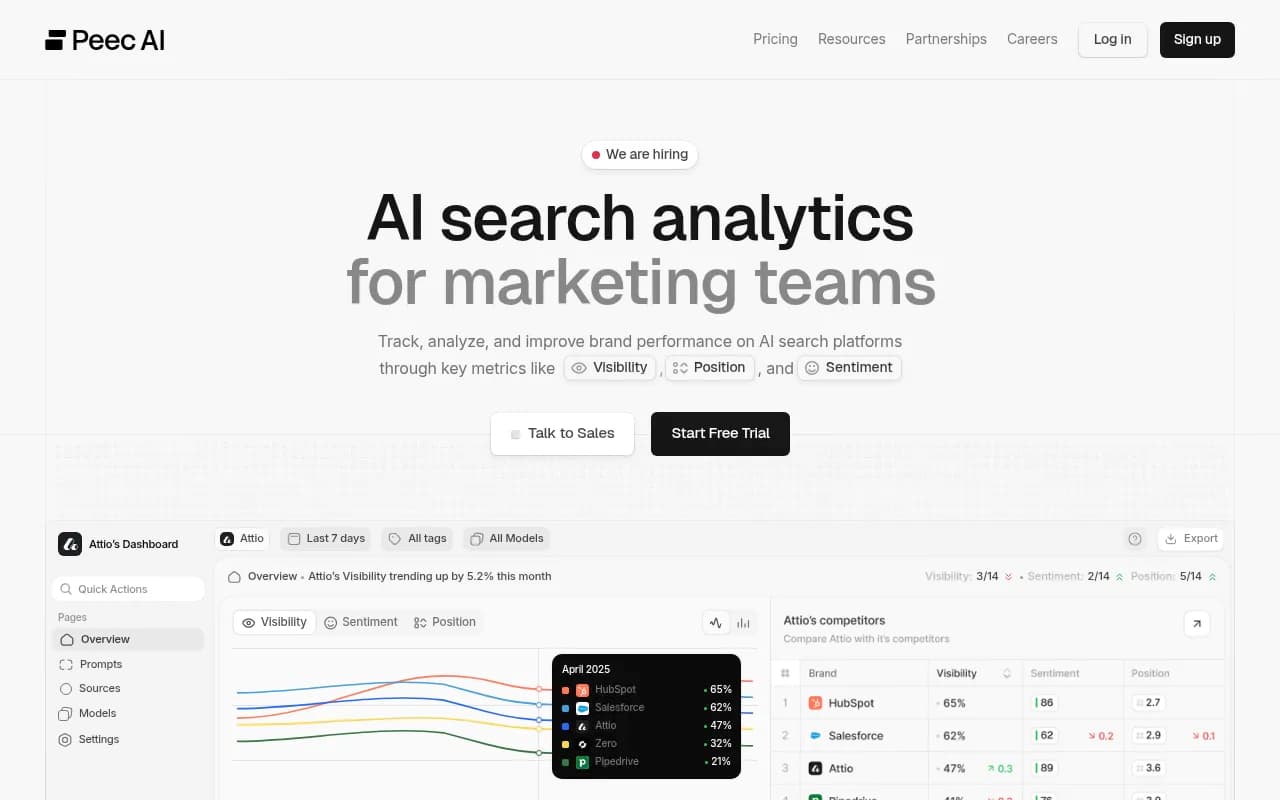
Peec AI
Peec AI sits in a similar position to Otterly -- lightweight monitoring with some smart suggestions for which prompts to target. The interface is clean and the onboarding is fast. At $95/month, it's priced between Otterly and the full-stack options.
The "smart suggestions" feature is genuinely useful for prioritization, but the suggestions don't come with the content tools to act on them. You'll still need to create the content yourself.
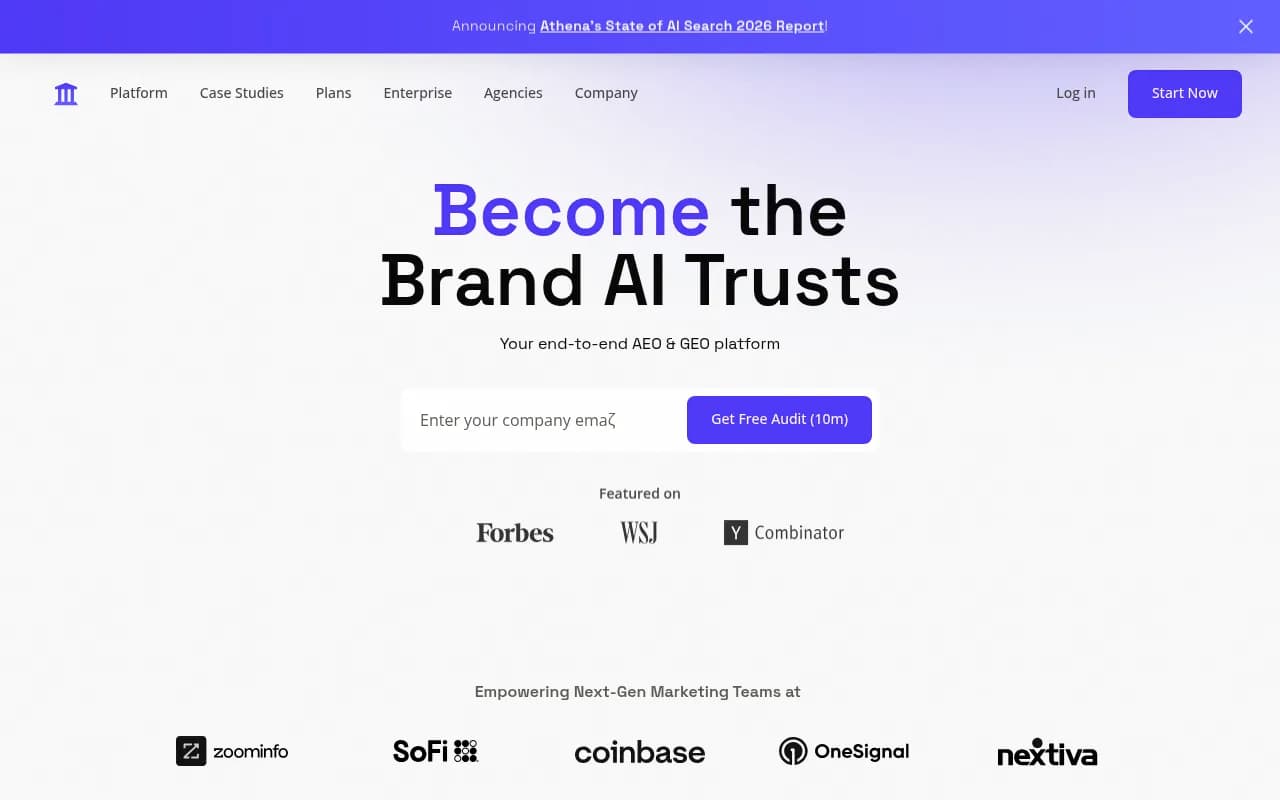
Athena HQ
AthenaHQ targets enterprise teams with multi-LLM visibility tracking across 8+ AI search engines. At $295/month, it's priced for larger organizations. The monitoring is solid and the reporting is clean.
The gap: it's monitoring-focused. No content generation, no crawler logs, no traffic attribution. For the price, you'd expect more of an action layer.
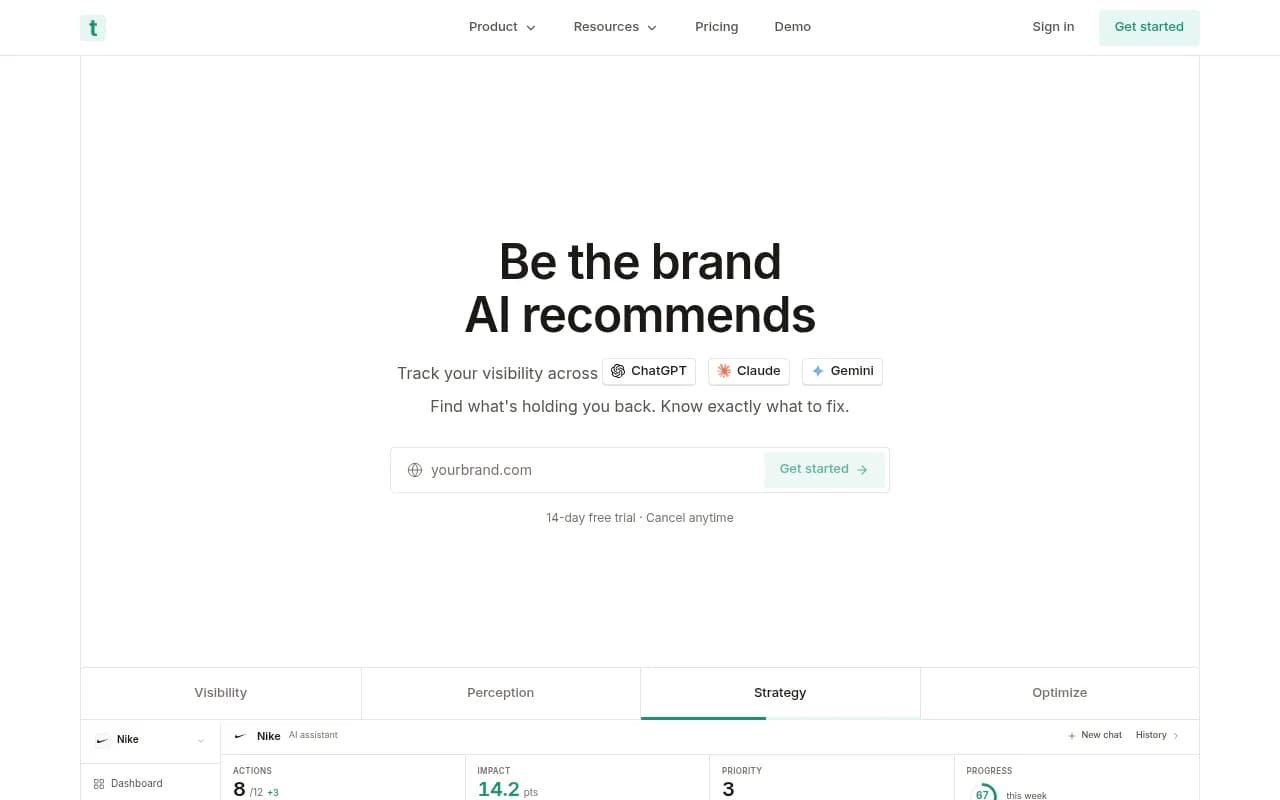
Trakkr.ai
Trakkr.ai is a solid option for SMBs that want prompt tracking without enterprise complexity. At $79/month with a 14-day free trial, it's accessible. Coverage spans ChatGPT, Claude, Perplexity, and a few others.
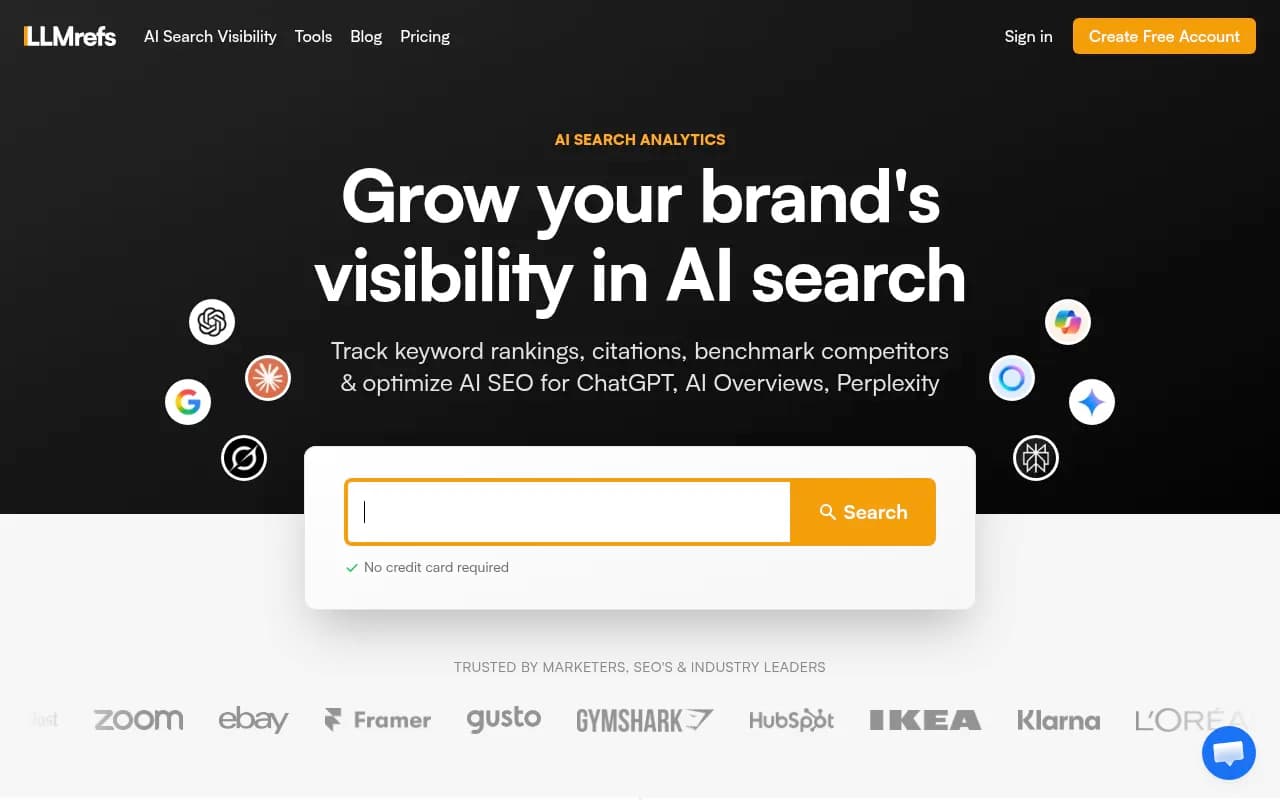
LLMrefs
LLMrefs focuses specifically on tracking brand visibility and rankings across major LLMs. It's a narrower tool -- good for teams that want clean, focused data without a lot of extra features.
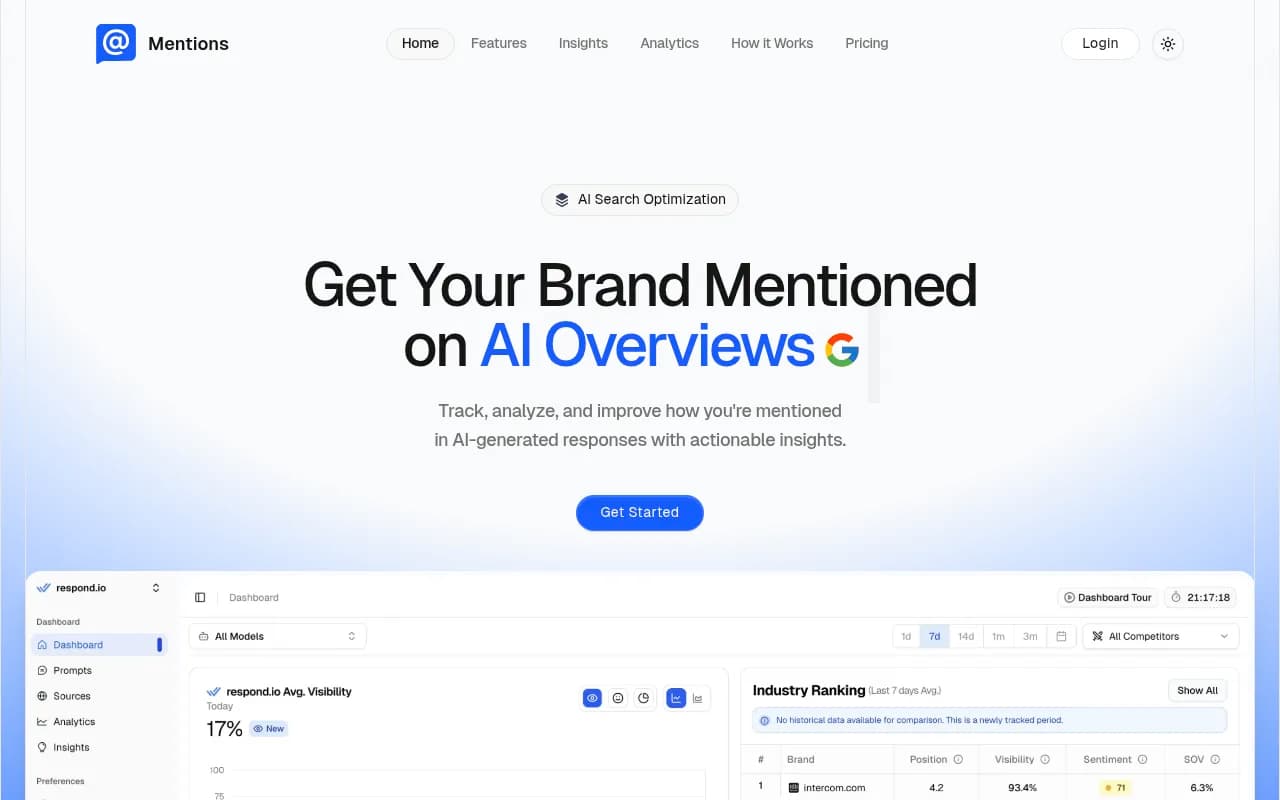
Mentions.so
Mentions.so does exactly what the name suggests: tracks when your brand gets mentioned in AI search responses. Simple, focused, and useful as a complement to a broader SEO stack.
Hybrid options (traditional SEO + AI visibility)
If you're already paying for a major SEO platform, some of them have added AI visibility features worth knowing about.
Semrush
Semrush added AI visibility tracking to its platform and it integrates well with everything else Semrush does. The downside: it uses fixed prompts rather than letting you define your own, and there's no AI traffic attribution. If you're already a Semrush user, the AI visibility module is worth exploring. If you're not, it's probably not worth subscribing just for GEO.
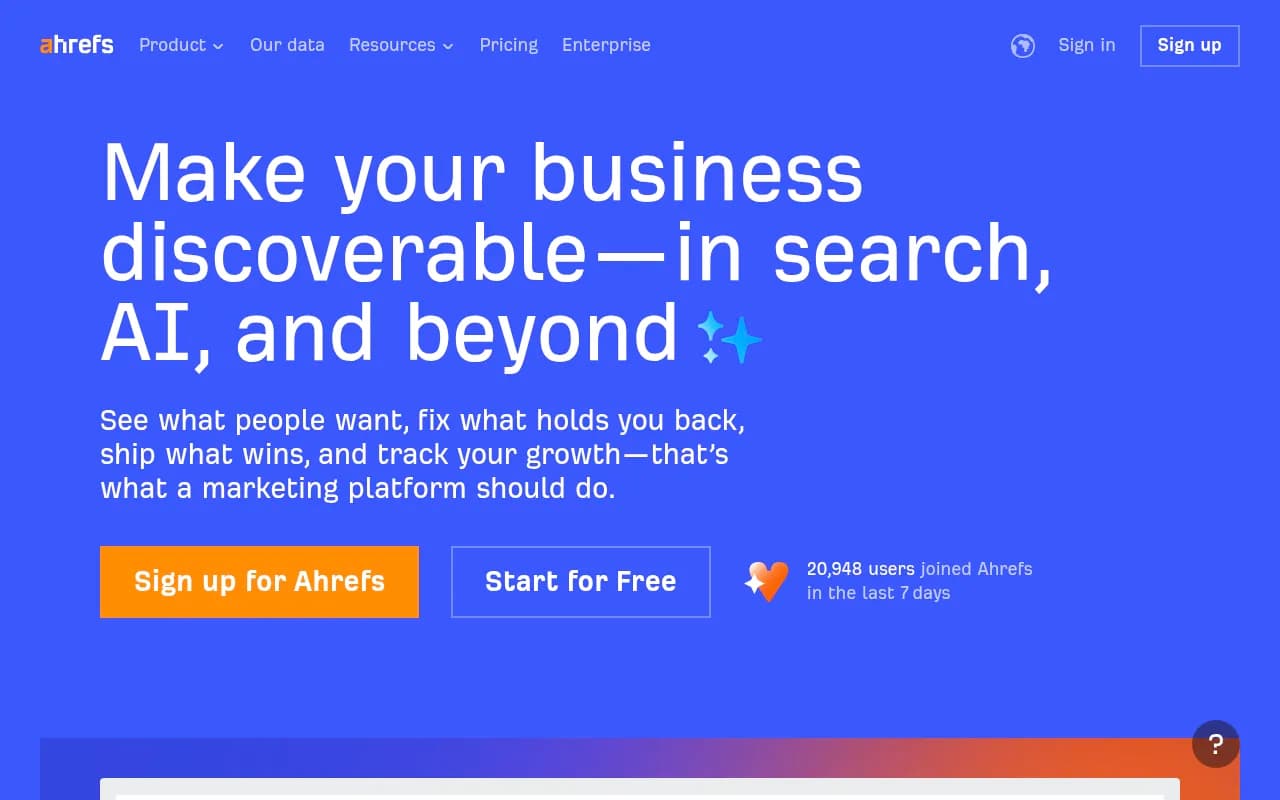
Ahrefs Brand Radar
Ahrefs Brand Radar tracks AI Share of Voice and integrates with Ahrefs' existing keyword and backlink data. Like Semrush, it uses fixed prompts and has no AI traffic attribution. Best for existing Ahrefs users who want a quick read on their AI visibility without switching tools.
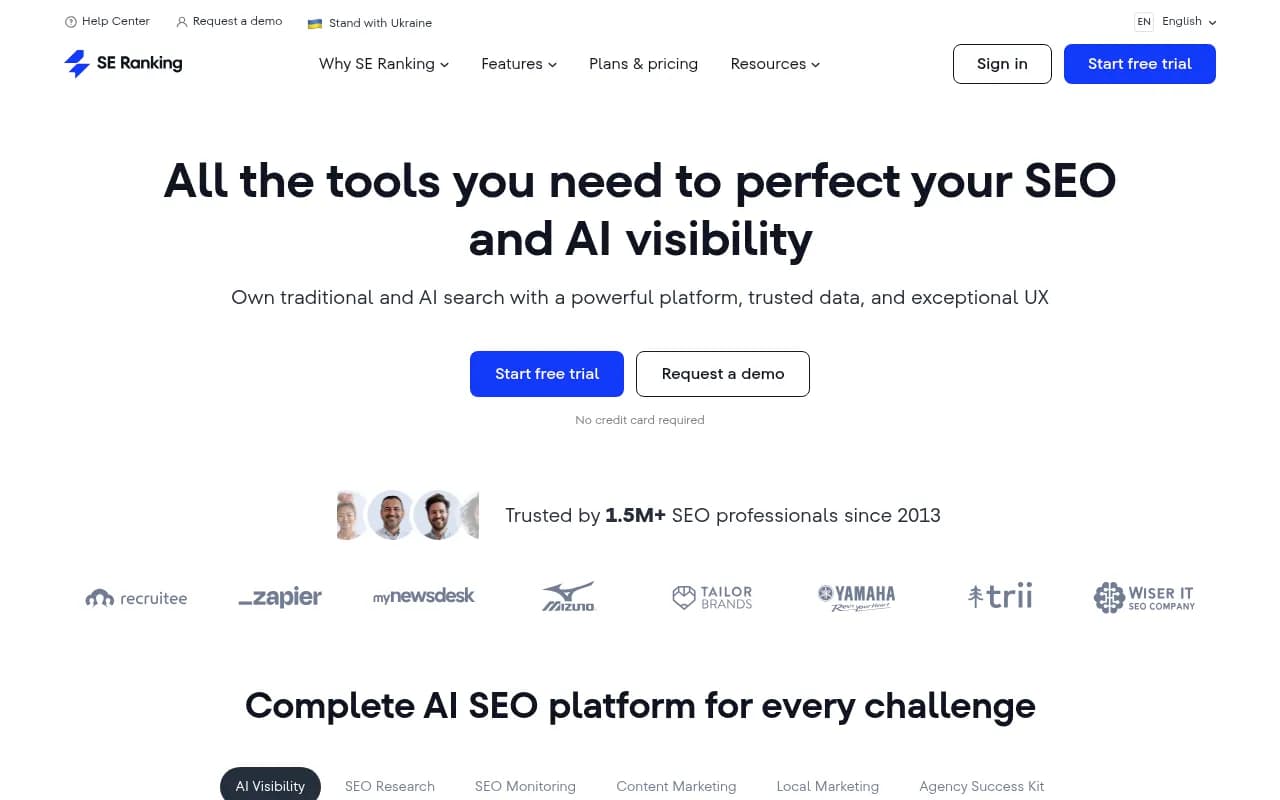
SE Ranking
SE Ranking's AI Visibility Tracker is a hybrid SEO + AI visibility tool at $129/month. It's a reasonable option for teams that want one platform for both traditional and AI search tracking.
Comparison table
Here's how the main alternatives stack up on the features that matter most:
| Platform | Starts at | AI models tracked | Content generation | Crawler logs | Traffic attribution | Reddit/YouTube tracking | Free trial |
|---|---|---|---|---|---|---|---|
| Promptwatch | $99/mo | 10 | Yes | Yes | Yes | Yes | Yes |
| Profound | $99/mo | Not disclosed | Limited | No | No | No | 7 days |
| Scrunch AI | $250/mo | Not disclosed | Limited | No | No | No | 7 days |
| Otterly.AI | $29/mo | Multiple | No | No | No | No | 7 days |
| Peec AI | $95/mo | Multiple | No | No | No | No | 7 days |
| AthenaHQ | $295/mo | 8+ | No | No | No | No | No |
| Trakkr.ai | $79/mo | Multiple | No | No | No | No | 14 days |
| Semrush | $199/mo | Multiple | No | No | No | No | 14 days |
| Ahrefs Brand Radar | $199/mo add-on | Multiple | No | No | No | No | No |
| GetMint.ai | Not disclosed | Multiple | No | No | No | No | Varies |
How to choose the right platform
The honest answer is that it depends on what you're trying to accomplish.
If you want to understand and improve your AI visibility -- not just measure it -- Promptwatch is the clear choice. The content gap analysis and AI writing agent mean you're not just watching competitors outrank you; you're doing something about it. The crawler logs are particularly valuable if you're trying to diagnose why AI models aren't citing your pages despite good content.
If you're on a tight budget and just need monitoring, Otterly.AI at $29/month is hard to argue with. You won't get any optimization capabilities, but you'll know where you stand.
If you're an enterprise team with deep pockets and complex reporting needs, Profound or AthenaHQ are worth evaluating alongside Promptwatch. Both have strong monitoring capabilities, though neither matches Promptwatch's full action loop.
If you're already invested in Semrush or Ahrefs, check their AI visibility features before adding another tool. They're not best-in-class for GEO, but they're good enough for a first pass if you're already paying for the platform.
One thing worth being clear about: the AI visibility space is moving fast. Tools that were monitoring-only six months ago are adding optimization features. Pricing is shifting. The comparison table above reflects the state of things in mid-2026, but it's worth doing your own trial before committing.
What to look for in a GetMint.ai alternative
When evaluating any platform in this category, these are the questions worth asking:
Does it cover the AI models your customers actually use? ChatGPT and Perplexity get most of the attention, but Google AI Overviews drives significant traffic for many industries. Make sure the platform monitors the models relevant to your audience.
Does it show you why you're invisible, not just that you're invisible? Monitoring tells you the score. Gap analysis tells you what to do about it. Most tools only do the former.
Can it connect AI visibility to actual revenue? Visibility scores are vanity metrics unless you can tie them to traffic and conversions. Look for platforms with GSC integration, server log analysis, or a tracking pixel.
Does it track at the page level? Brand-level visibility scores are useful for reporting. Page-level tracking is useful for optimization -- it tells you which specific content is being cited and which isn't.
What does the prompt intelligence look like? Knowing that you're invisible for a prompt is one thing. Knowing that the prompt gets 50,000 queries a month and has low competition is what lets you prioritize intelligently.
The platforms that do all of this well are rare. Promptwatch does all of them. Most alternatives do some of them. GetMint.ai does a few.
That's the core of why teams look for alternatives -- and why the gap between monitoring tools and optimization platforms keeps widening.