Key takeaways
- Game discovery increasingly starts with a question to an AI assistant ("games like Hades", "best co-op games on Switch"), and the answer names a handful of games. If yours is not named, you are invisible at the moment of choice.
- Promptwatch's data (Sep 28 to Oct 4, 2026) shows product pages are 22.4% of ChatGPT citations and landing pages 16.8%. For games, that makes your store pages and official site the main citation surface.
- Reddit is no longer a reliable route into ChatGPT, while YouTube matters most for Google AI Overviews. Gaming marketing plans built on community threads need a rethink.
- The best GEO tool for a studio is the one that tracks the real AI interfaces, shows which pages get cited, and helps you fix gaps. Dashboards that only report a score leave the work to you.
- Start with a free visibility check, pick one tool, track 30 to 50 prompts that match how players actually ask, and fix the biggest gaps first.
Why gaming studios need GEO now
I have watched game marketing change a lot over the last few years, and the newest shift is the quietest. Players used to find games through Steam's front page, YouTube thumbnails, a streamer, or a friend. Now a growing share just ask a chatbot. "What's a good roguelike if I loved Slay the Spire?" gets an answer with four or five titles, a couple of sentences each, and some source links.
That is a tiny shortlist, and it is very hard to buy your way onto it. Generative engine optimization (GEO) is the practice of earning a place there: making sure the AI models know your game exists, describe it accurately, and cite your pages when they recommend it.
It also matters for studios and publishers beyond individual games. Investors, partners, and job candidates ask AI about your company. Publishers get asked which studios are worth pitching. Accuracy matters there too, and a model repeating an outdated claim (a cancelled game, an old layoff story) is a real reputation problem.
Unity's 2026 Game Development Report found that 82% of studios use collaborations and partnerships as a growth strategy, and that competition is the biggest hurdle for mobile developers. Both point the same way: attention is scarce, and any new channel that puts a few titles in front of players is worth understanding.
What the citation data says about games
I could not find a Promptwatch report specific to gaming, so what follows is general AI-search behavior applied to games. The applications are my inference, and the numbers come from the linked reports.
Product and landing pages dominate
In Promptwatch Data's report on ChatGPT citations by content type (Sep 28 to Oct 4, 2026), product pages made up 22.4% of citations and landing pages 16.8%. Listicles were 13.6%, how-to guides 8.7%, documentation 7.5%, and comparisons 5.9%. For commercial prompts like "best X", product pages rose to 26.0% and landing pages to 20.6%.
For a game, your Steam, PlayStation, Xbox, Nintendo eShop, and Epic pages are product pages. So is your official site. They need to be accurate, specific, and readable by crawlers. A vague store description or a landing page that is a single trailer embed gives AI very little to work with.
Listicles and comparisons are the shortlist makers
Listicles, how-tos, and comparisons together add up to 28% of ChatGPT citations. The "best roguelikes of 2026" and "games like Stardew Valley" articles are exactly what AI quotes when it builds a recommendation. Getting included in them (through press outreach, review copies, and honest comparison pages on your own site) is a GEO tactic, not just PR.
Social and community: the picture changed
This is the part many gaming marketers will not like. In Promptwatch's social citations report (Sep 28 to Oct 4, 2026), ChatGPT drew only 0.46% of its citations from social platforms. Reddit fell to 0.09% in that engine after the August collapse, when reddit.com's share of ChatGPT citations dropped from about 4% to 0.5% on August 14, 2026.
Google AI Overviews is different: 12.2% of its citations came from social platforms, with YouTube at 4.28%, Facebook at 2.38%, and Reddit at 2.15%. Perplexity sat at 2.7%.
My read for games: trailers and gameplay videos on YouTube matter most for Google's AI surfaces, while community-led discovery on Reddit now does much less for ChatGPT. Keep your community presence, because players still use it, but do not count on it as an AI visibility strategy.
Evergreen beats news
Promptwatch's content half-life report tracked pages ChatGPT cited on July 6, 2026 for 90 days. After 60 days, ChatGPT still cited 69% of landing pages and 67% of docs, but news pages lost half of their citations within 36 days.
That should change how a launch is planned. A launch-week press blast gives a short burst. A solid landing page, a wiki or docs hub, a comparison page, and a "games like X" article keep getting cited. Product pages and reviews had a half-life of roughly 74 to 77 days, so keep prices, platforms, DLC, and sale information current.
What to look for in a GEO tool
Most GEO tools can tell you whether your brand was mentioned. Fewer can tell you why, and fewer still help you fix it. For a game studio, I would score tools on these points:
- Real interface tracking. Answers in ChatGPT, AI Overviews, and AI Mode can differ from API output. Check whether the tool collects from the actual user interfaces.
- Prompt volume and persona support. "Cozy farming sim for kids" and "hardcore tactical shooter" are different audiences. Being able to prompt like different player types is useful.
- Citation analysis. You want to see which of your pages get cited, and which third-party pages (IGN-style reviews, listicles, wikis, YouTube videos) are cited for your competitors instead.
- Crawler visibility. Some game sites are heavy on JavaScript, behind age gates, or block bots by accident. Crawler logs tell you whether AI bots can read the page at all.
- Multi-region and multi-language tracking. Games sell globally, and answers in German or Japanese can look nothing like the English ones.
- Action, not just reporting. Content gap analysis, content generation, and publishing close the loop.
- Cost per tracked response, since game portfolios mean lots of titles and prompts.
See also the GEO software directory at bestgeosoftware.com for a wider list of options.
The best GEO tools for gaming studios and publishers
Promptwatch: best end-to-end option
Promptwatch is the one I would put first for studios and publishers that want more than a score. It tracks ChatGPT, Google AI Overviews, Google AI Mode, Gemini, Perplexity, Copilot, Meta AI, and others from the real interfaces, in whatever countries and languages you pick, which suits games with global audiences.

For games specifically, a few features stand out. Prompt tracking with personas lets you ask as a casual mobile player versus a hardcore PC player. Citation Trends classify cited pages by content type and source type, so you can see whether AI leans on store pages, listicles, or video for your genre. YouTube, Reddit, LinkedIn, and Instagram citation reports show which videos and channels AI cites for your competitors, which maps neatly onto trailers and creator coverage. AI crawler logs show whether bots can read your site, and Brand Narrative shows the claims AI makes about your studio or title ("buggy at launch", "great co-op"), so you can see which ones need correcting.
On the fixing side, the Content Agent plans, writes, and publishes pages against your visibility gaps and can push to WordPress, Webflow, or Framer. That matters for the evergreen assets above: comparison pages, "games like X" guides, FAQ pages. Local GEO targeting is available for studios with physical venues or events.
Pricing (confirm at promptwatch.com/pricing): Essential is $95/mo for 50 prompts, Professional is $245/mo for 150 prompts, and Business is $579/mo for 350 prompts, with the Content Agent, faster tracking, and Fact Check on Business. Agency plans start at $199/mo for publishers' agencies managing several studios. There is a 7-day free trial on monthly plans, and a free AI visibility report if you want a first look. For a multi-title publisher, the head-to-head comparison page is a useful reference.
Profound: enterprise monitoring
Profound is a strong monitoring product aimed at large brands, and is priced accordingly. It suits a big publisher with a dedicated analytics team that mainly needs reporting. It does not include Reddit tracking, ChatGPT Shopping, or agentic content execution, so you would still need other tools to act on the findings. See Promptwatch vs Profound.

Scrunch
Scrunch monitors and optimizes how assistants like ChatGPT and Claude describe your brand. It fits teams that care about brand consistency across AI answers. Like Profound, it is weighted toward monitoring.

Otterly.AI and Peec AI: lightweight trackers
Both are affordable prompt trackers. If you are a two-person indie team that only wants to know whether your game is mentioned and how that changes week to week, they are fine. They lack crawler logs, visitor analytics, and content generation, so they are a starting point rather than a system.


Semrush and Ahrefs Brand Radar
If your marketing team already lives in Semrush or Ahrefs, their AI add-ons are convenient. The tradeoff is fixed prompt sets and shallower AI-specific data compared with dedicated platforms.

AthenaHQ, Qwairy, LLM Pulse
These are monitoring-focused GEO platforms. They report visibility across several engines but leave content optimization and publishing to you.
Free first checks
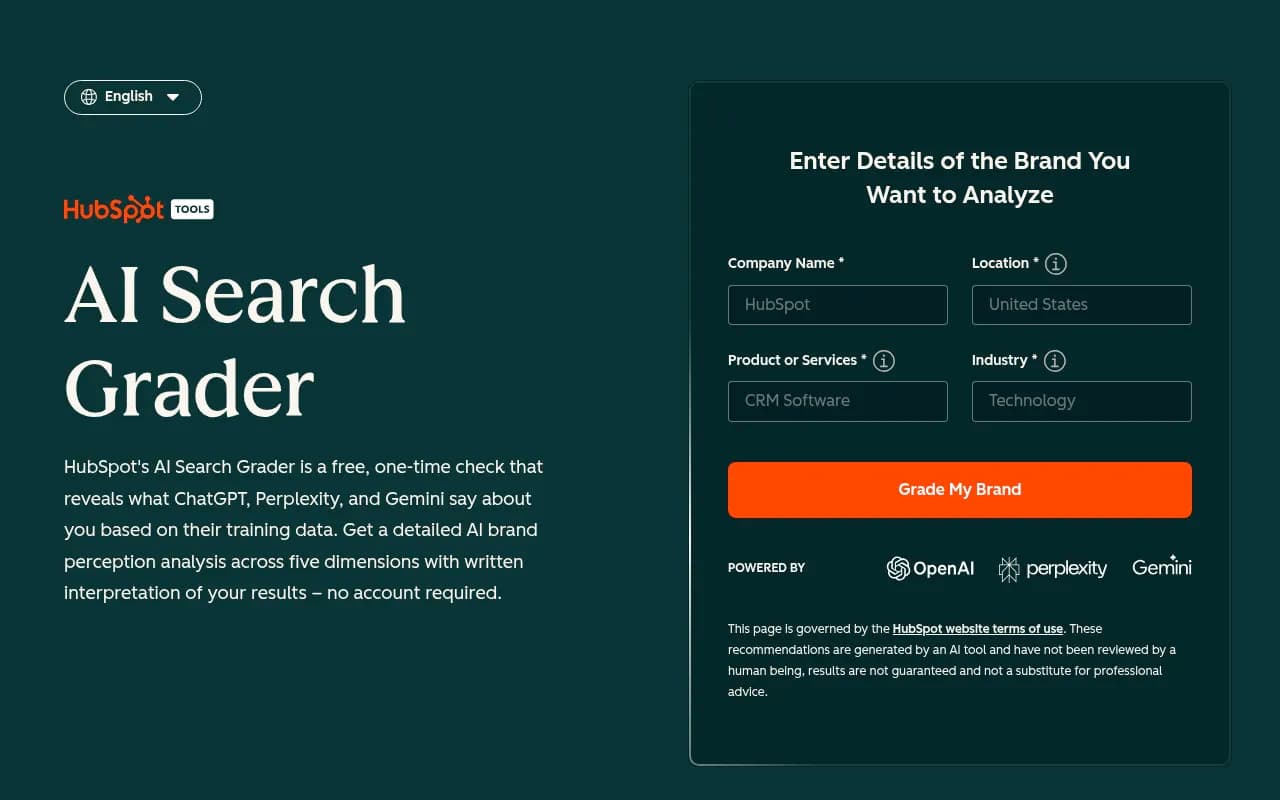
Before paying for anything, run a few free scans. Promptwatch's free report, HubSpot's AI Search Grader, and AnswerGist's free audit all give a quick snapshot.

Comparison table
| Tool | Real-UI tracking | Crawler logs | Content creation and publishing | Best for |
|---|---|---|---|---|
| Promptwatch | Yes | Yes (IP-verified) | Yes (Content Agent, CMS publishing) | Studios and publishers that want to fix gaps, not just see them |
| Profound | Yes | Limited | No agentic execution | Large publishers with analytics teams |
| Scrunch | Yes | Limited | Limited | Brand-consistency monitoring |
| Otterly.AI | Basic | No | No | Indie teams wanting a cheap tracker |
| Peec AI | Basic | No | No | Simple monitoring |
| Semrush / Ahrefs Brand Radar | Partial | No | Limited | Teams already in those suites |
| AthenaHQ / Qwairy / LLM Pulse | Yes | No | Limited | Monitoring-only needs |
How to set up GEO for a game, step by step
1. Build prompts around real player questions
Skip "best game" and think like players. Examples: "games like [competitor]", "best [genre] games on [platform]", "is [your game] worth it", "[your game] vs [competitor]", "co-op games for two players", "cozy games for anxiety". Include branded, competitor, and category prompts. Thirty to fifty is plenty to start. Promptwatch's prompt tracking and query fan-out features show the web searches the AI actually runs behind each answer, which is a good source of prompt ideas. The free ChatGPT query fan-out generator can help if you are not ready to buy anything.
2. Check that AI can read your pages
Games sites are often heavy on animation, video, and scripts. If bots get a blank page, nothing else matters. Use the Agentic Readiness Check to see which AI crawlers can read the site, and review robots.txt, which is easy to misconfigure. The AI crawler directory lists the major bots.
3. Fix the product page first
Because product and landing pages are the biggest citation surface, give each title a page with plain text: genre, platforms, release date, price, player count, features, systems requirements, and a clear one-line description. Add an FAQ. Keep it current when a sale starts or a DLC ships. Dynamic prices and platform availability are the sort of thing models quote wrongly if the source is stale.
4. Publish evergreen comparison content
Write honest "[Your game] vs [competitor]" and "games like [competitor]" pages. These are listicle and comparison formats, 28% of ChatGPT citations combined, and they last longer than news. Then pitch your game to the roundups AI already cites, which a citation report will show you.
5. Invest in YouTube for Google, not Reddit for ChatGPT
Google AI Overviews cites YouTube at 4.28% in the data above. Trailers, devlogs, and gameplay walkthroughs with descriptive titles and transcripts are worth more than they were. Keep Reddit active for community reasons, but measure it before you count on AI payoff. The research in Promptwatch's YouTube citation report gives more detail on which channels get cited.
6. Track sentiment and claims
Look at what AI says about your game. "Buggy launch" from a patched-out issue two years ago is the kind of claim that quietly sticks. Brand Narrative and sentiment tools help you spot it, then you can update the pages that feed it.
7. Measure traffic, not just mentions
A mention is nice. A wishlist is better. Set up analytics to catch AI-referred visits and conversions. Note that ChatGPT stopped sending a referrer on October 8, 2026, so tagging links with utm_source=chatgpt.com is now the practical way to attribute those visits. The Academy guide on attributing AI traffic explains this.
Which tool for which type of studio
- Solo or very small indie team: start with free checks, then a lightweight tracker or Promptwatch Essential at $95/mo. Spend most of your time on the store page and a couple of comparison articles.
- Mid-size studio with a marketing person: Promptwatch Professional or Business. The Content Agent saves real writing time, and crawler logs find access problems early.
- Multi-title publisher: Business or Enterprise, since you need many prompts, several markets, and faster tracking around launches. Monitoring-only tools will tell you where you are weak but not help you fix it across a catalog.
- Agency serving studios: look at the agency plans and the agencies page.
Common mistakes
- Treating launch press as the whole strategy. News fades in weeks.
- Ignoring non-English markets. A game that is huge in Brazil or Korea may be invisible in local-language AI answers.
- Buying a tracker and doing nothing with it. A score does not move on its own.
- Letting store pages go stale after sales and DLC.
- Over-relying on Reddit seeding for ChatGPT.
If you would rather hand the work to specialists, an SEO and GEO agency such as 1001 SEO Media can run the program, and the team uses Promptwatch for AI visibility work. For more tools by category, ai-rank-tools.com lists AI rank trackers.
Bottom line
Pick one platform, track a modest set of player-style prompts, and fix your store pages and comparison content before anything else. The data says those pages are what AI cites and keeps citing. If you want the track-and-fix loop in one place, start a Promptwatch trial or run the free visibility report first and see where your game actually stands.