Key takeaways
- Patients now ask ChatGPT and Google AI Overviews for a dentist and get one or two names back, not ten blue links. A GEO tool shows you whether yours is one of them.
- Most GEO software is built for SaaS brands. Dental practices need local tracking, review and listing signals, and something that tells you what to fix, not just a score.
- ChatGPT cites product and landing pages most (22.4% of citations, Sep 28 to Oct 4, 2026), so your service pages matter more than your blog.
- A small single-location practice can start with a free audit and a cheap tracker. Multi-location groups should look at local targeting, listings and reputation tools alongside GEO tracking.
- Software does not replace the basics: a clean Google Business Profile, real reviews, clear service pages and consistent directory listings.
What GEO means for a dental practice
GEO (generative engine optimization) is the work of making AI systems understand, trust and recommend your practice. When a patient types "best dentist near me" or "how much does Invisalign cost in Denver" into ChatGPT, Gemini, Perplexity or Google AI Mode, the answer is assembled from sources the model retrieved. If your practice is not in those sources, you are not in the answer.
The agencies writing about this are fairly consistent on one point. David Hunt at Elevate DDS put it plainly: dentists don't need a ChatGPT ranking hack, they need to make the practice easier for AI systems to find, understand, trust and recommend. I agree with that. AI search runs on the same trust signals as classic local SEO. It just packages them differently.
That said, dental has a quirk. It is a local, high-trust, health-adjacent category, and AI engines treat health queries carefully. Promptwatch's healthcare citation report (organic prompts, Sep 9 to Oct 8, 2026) shows government and public health sites earn almost half of ChatGPT's healthcare citations. NIH leads at 5.46%, then the FDA at 1.76% and the NHS at 1.1%. Dental sources like the ADA do not appear in the top 20. The report has no dental-specific breakdown, so treat it as a signal about the broader category, not a verdict on dentistry.
What dental practices should look for in a GEO tool
Before comparing products, decide what job you need done. Dental practices tend to have one of three problems.
- You do not know whether AI mentions you at all.
- AI mentions competitors in your city and not you.
- AI mentions you but says something wrong, like old pricing, a service you no longer offer, or a closed location.
The features that matter for those problems:
- Local and city-level tracking. A national visibility score is useless if you serve one metro area.
- Real AI interface data. Answers in the actual ChatGPT or AI Overviews interface can differ from API outputs.
- Citation tracking, so you see which pages and directories the AI actually pulls from.
- Claim and sentiment monitoring, to catch wrong information.
- Some path to action: content recommendations, audits or publishing, not only a dashboard.
- A price that makes sense for a practice, not an enterprise brand.
One caution on the research I looked at. Several of the top-ranking articles on this topic are published by dental marketing agencies or by the tool vendors themselves. A Frizerly post calling Frizerly "the most complete" tool is self-promotion, and First Page Sage's list ranks agencies, not software. Useful for context, not for neutral comparison.
The best GEO tools for dental practices
Promptwatch
Promptwatch is the most complete option here if you want more than a score. It tracks how ChatGPT, Gemini, Claude, Perplexity, Google AI Overviews, Google AI Mode and Copilot mention and cite your practice, then helps you fix the gaps. The pieces that matter most for dentists:
- Local GEO/SEO targeting at exact coordinates, so ChatGPT and Google's AI surfaces answer as if asked from your street. This is on the Business plan and above, and it is the closest thing to a purpose-built "near me" feature in this category.
- Brand Narrative, which pulls out the individual claims AI makes about you (pricing, quality, wait times) so you can spot wrong ones.
- Citation tracking, including which directories and review sites AI pulls from.
- Content gap analysis and a Content Agent that writes and publishes service pages to WordPress, Webflow or Framer. Most dental sites run on WordPress, so the plugin is a practical fit.
- IP-verified AI crawler logs, which show whether GPTBot or ClaudeBot can actually read your site. Plenty of dental sites built on heavy page builders fail here.
Pricing starts at $95/month (Essential), with Professional at $245 and Business at $579. Local targeting, Fact Check and the Content Agent start on Business, so a single-location practice should check what it really needs at promptwatch.com/pricing. There is a 7-day free trial, and a free AI visibility report that scans how ChatGPT, Gemini and Perplexity talk about your brand with no login.
It is more tool than a one-chair practice may need. For a DSO or a group with several offices, it makes more sense.

If you are also comparing it with the bigger names, there are head-to-head pages for Promptwatch vs Profound and Promptwatch vs Peec.
Tibly
Tibly is listed as an AI visibility tool for local businesses, which is the right framing for a dental office. I have not tested it against dental queries, so check the feature set against your market before paying. If the local focus holds up, it is worth a look for a single-location practice that finds enterprise platforms overbuilt.

Otterly.AI
Otterly.AI is an affordable tracker. It answers "is my practice mentioned?" without much else. That can be enough if you plan to do the fixes yourself or through an agency and just want a monthly check. It does not offer crawler logs or content generation.

Peec AI
Peec AI is another monitoring-focused option with clean reporting. It tracks, it does not optimize. Good for a marketing manager who wants a dashboard to hand to the practice owner.

Scrunch
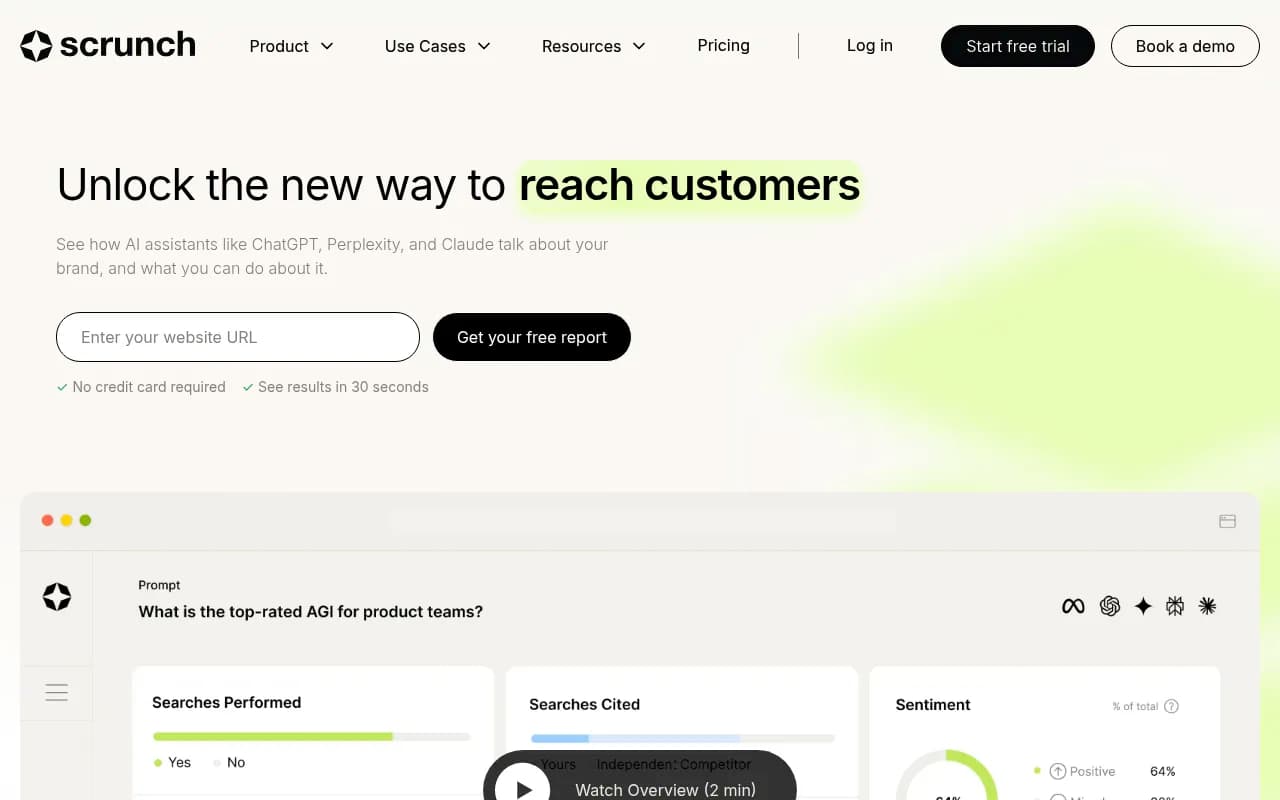
Scrunch monitors and optimizes how assistants like ChatGPT and Claude describe a brand. Its price point leans toward larger organizations, so it fits multi-location groups better than solo dentists.
Profound
Profound is an enterprise AI visibility product. For a dental service organization with dozens of locations and a budget to match, it belongs on the shortlist. For a single clinic, it is too much.

Semrush and Ahrefs Brand Radar
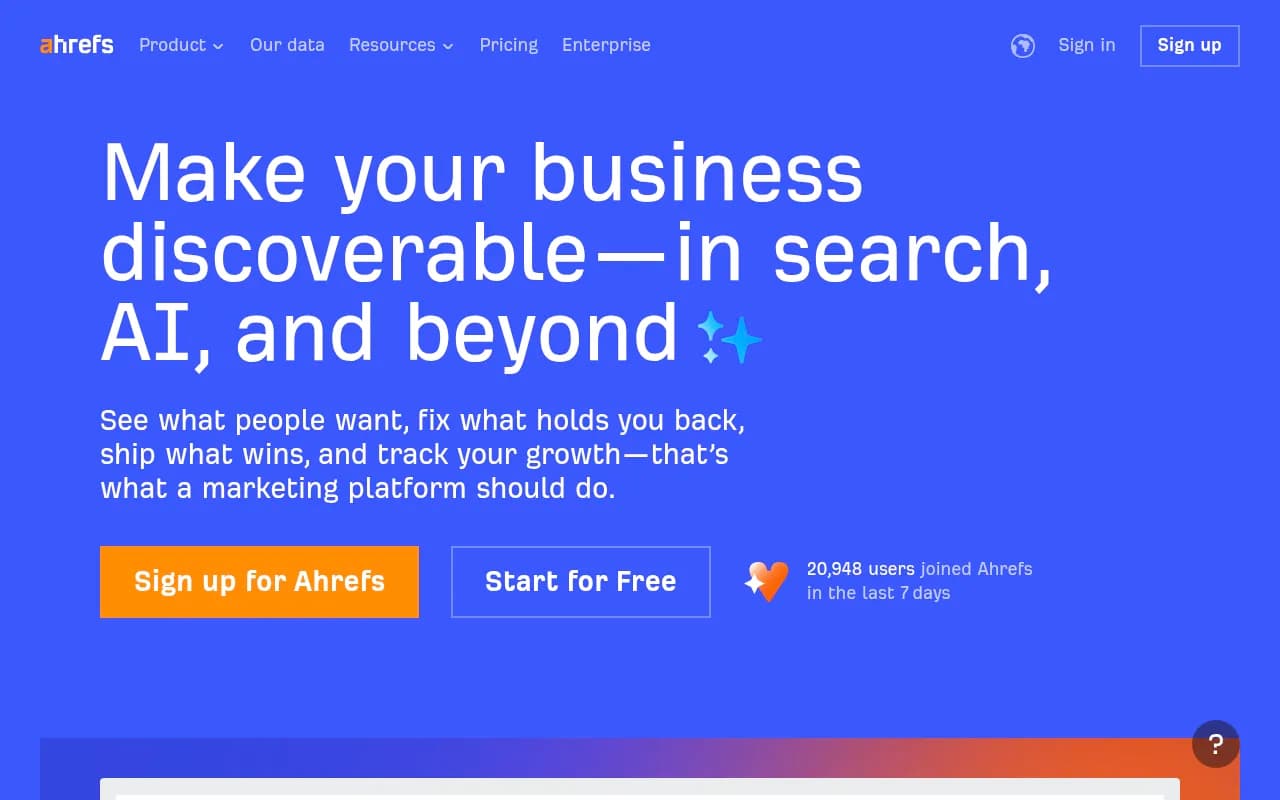
If your agency already pays for Semrush or Ahrefs, the AI tracking add-ons are the zero-friction way to start. Expect shallower AI-specific data than a dedicated platform, and fixed prompt sets.
Free audits to start with
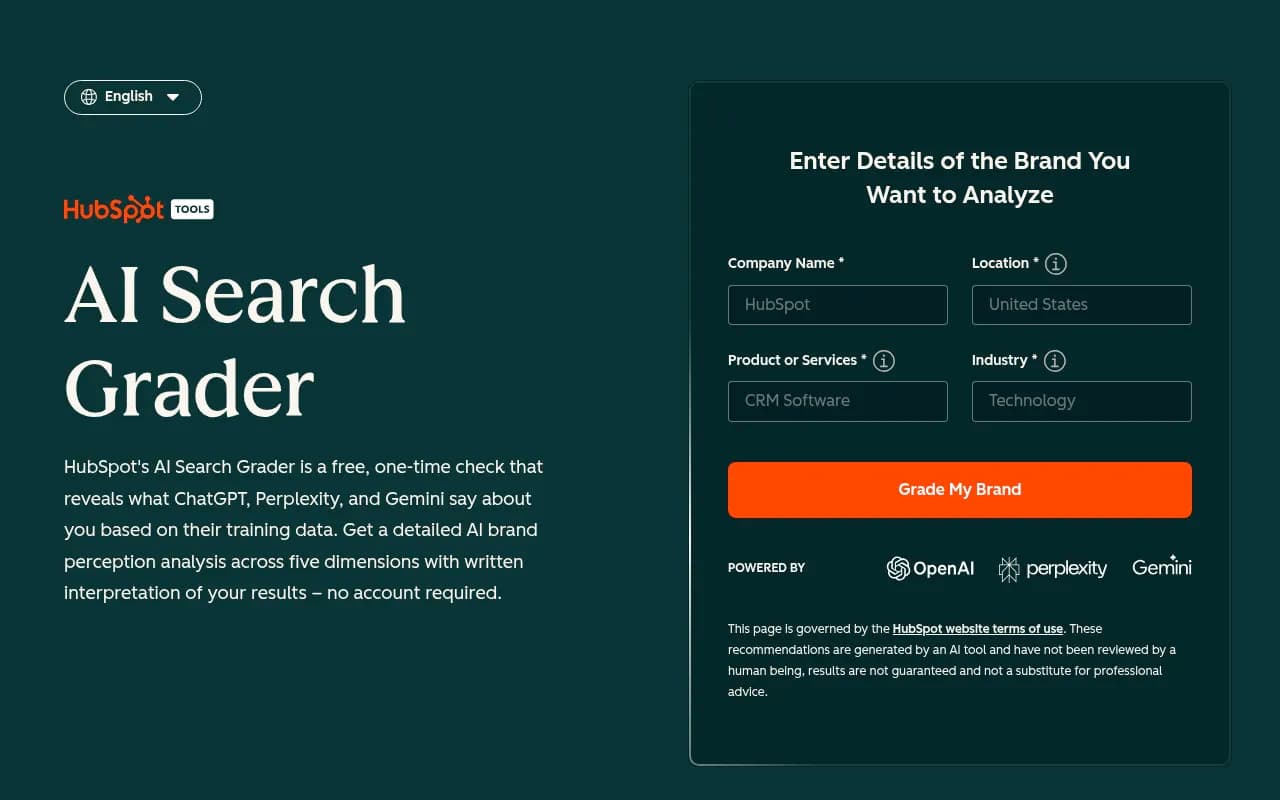
Before you pay for anything, run a free check. Promptwatch's free report is one. Others in the catalog include [tool:hubspot-ai-search-grader] and [tool:answergist], which give a one-off look at your AI presence with prioritized fixes. They are snapshots, not monitoring, but a snapshot is often all you need to find out whether you have a problem.

Comparison table
| Tool | Best for | Local targeting | Helps you fix issues | Starting point |
|---|---|---|---|---|
| Promptwatch | Practices and groups that want tracking plus action | Exact-coordinate targeting (Business plan and up) | Content gap analysis, Content Agent, crawler logs, Action Board | $95/mo, 7-day free trial |
| Tibly | Single-location local businesses | Local focus (verify details) | Check with vendor | See vendor |
| Otterly.AI | Budget monitoring | Limited | No | Low cost |
| Peec AI | Simple dashboards and reporting | Country and prompt-level | No | See vendor |
| Scrunch | Larger multi-location organizations | Yes | Some optimization | Higher price point |
| Profound | DSOs and enterprise groups | Yes | Some | Enterprise pricing |
| Semrush / Ahrefs Brand Radar | Teams already on those suites | Limited | Limited | Add-on to existing plan |
Local listings and reputation tools that feed GEO
A GEO tracker tells you what AI says. These tools change the inputs AI reads. For dentists, the inputs that matter are reviews, listings and your Google Business Profile.
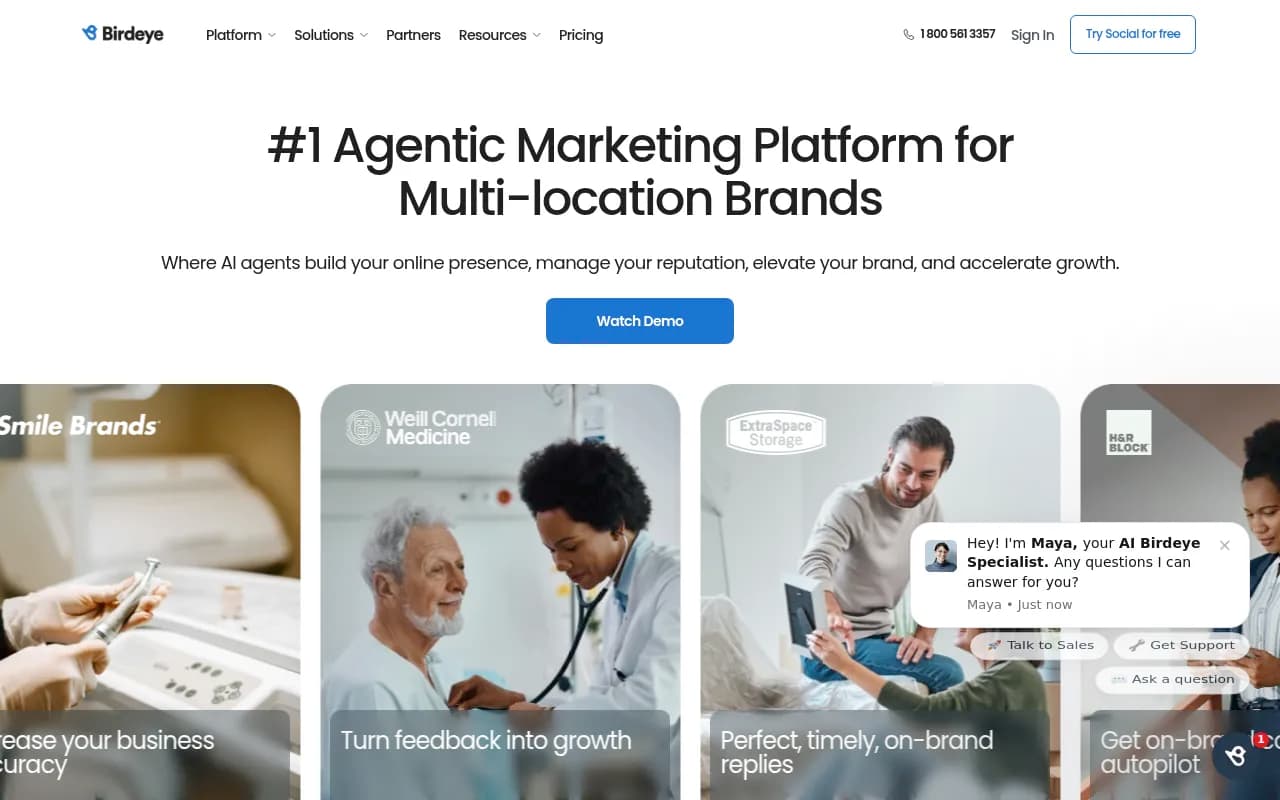
- [tool:birdeye] handles reviews and reputation for multi-location businesses.
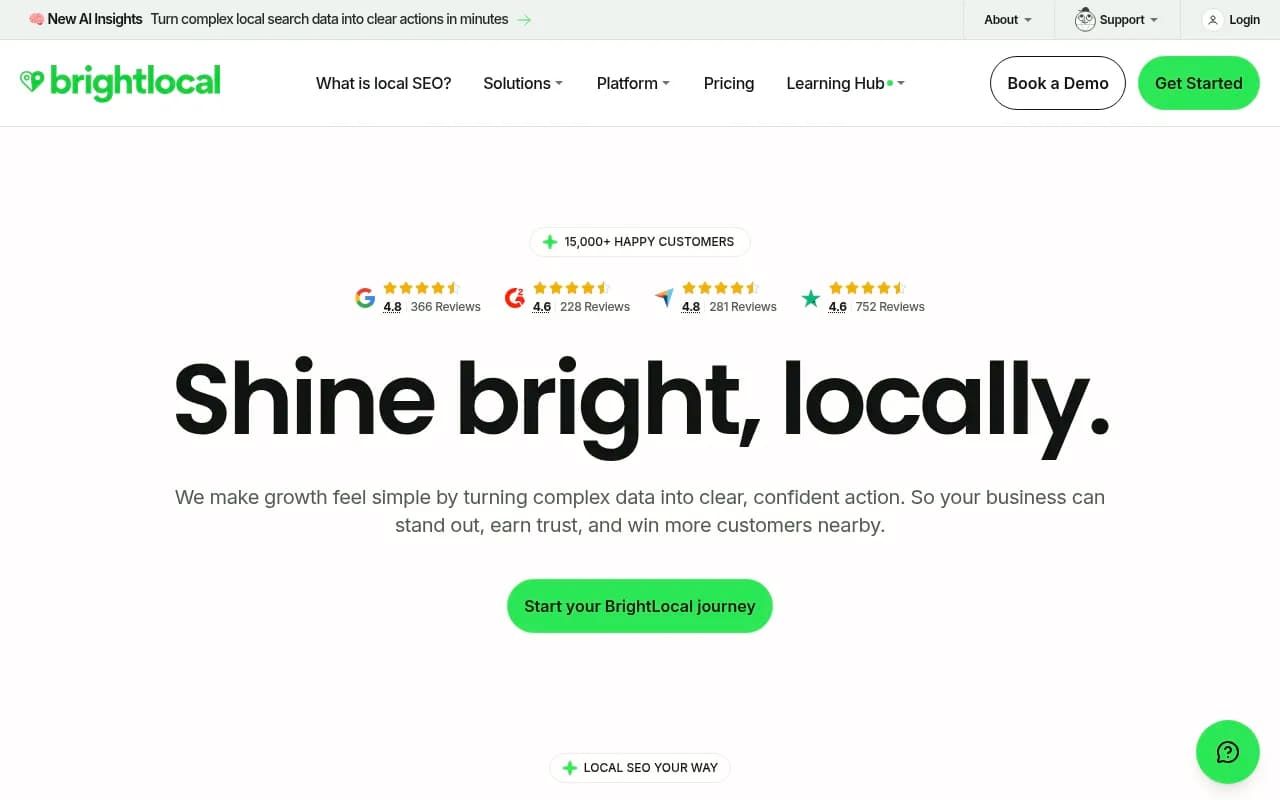
- [tool:brightlocal] covers local SEO, citations and rank tracking by location.
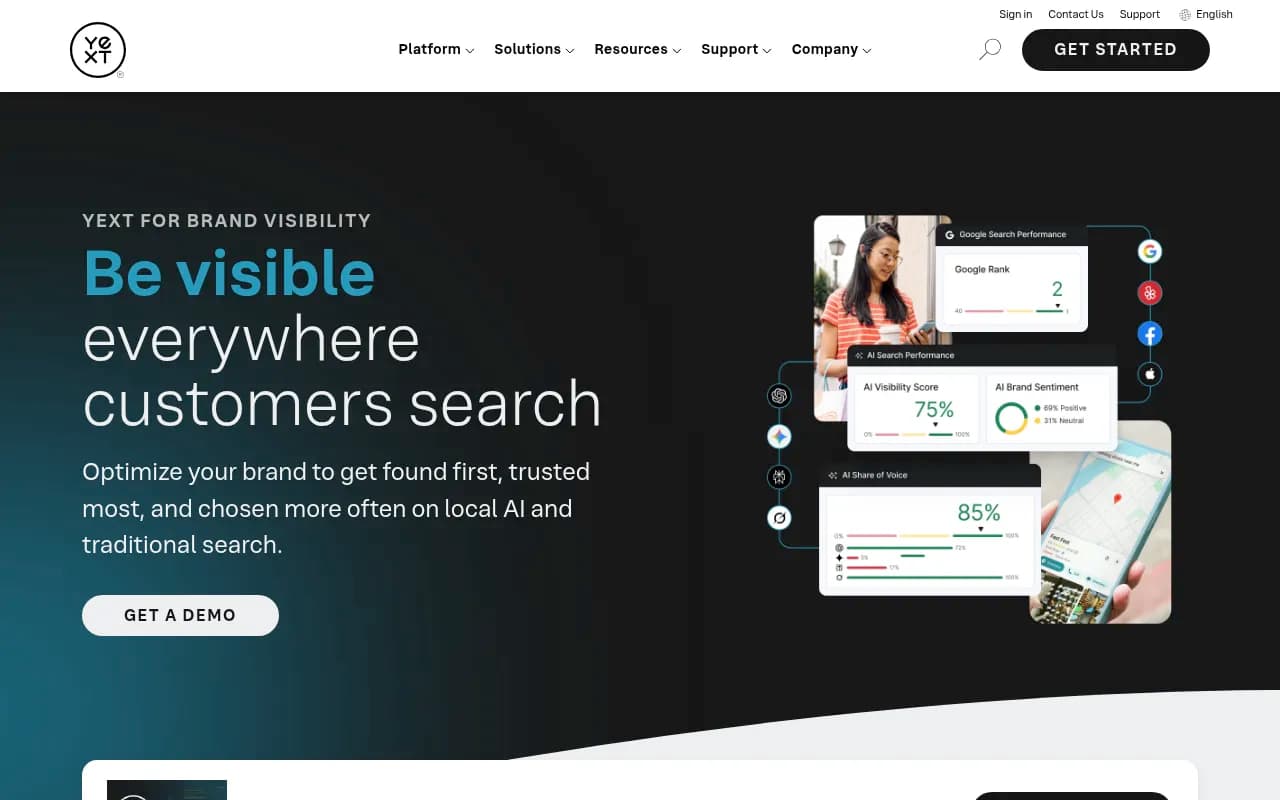
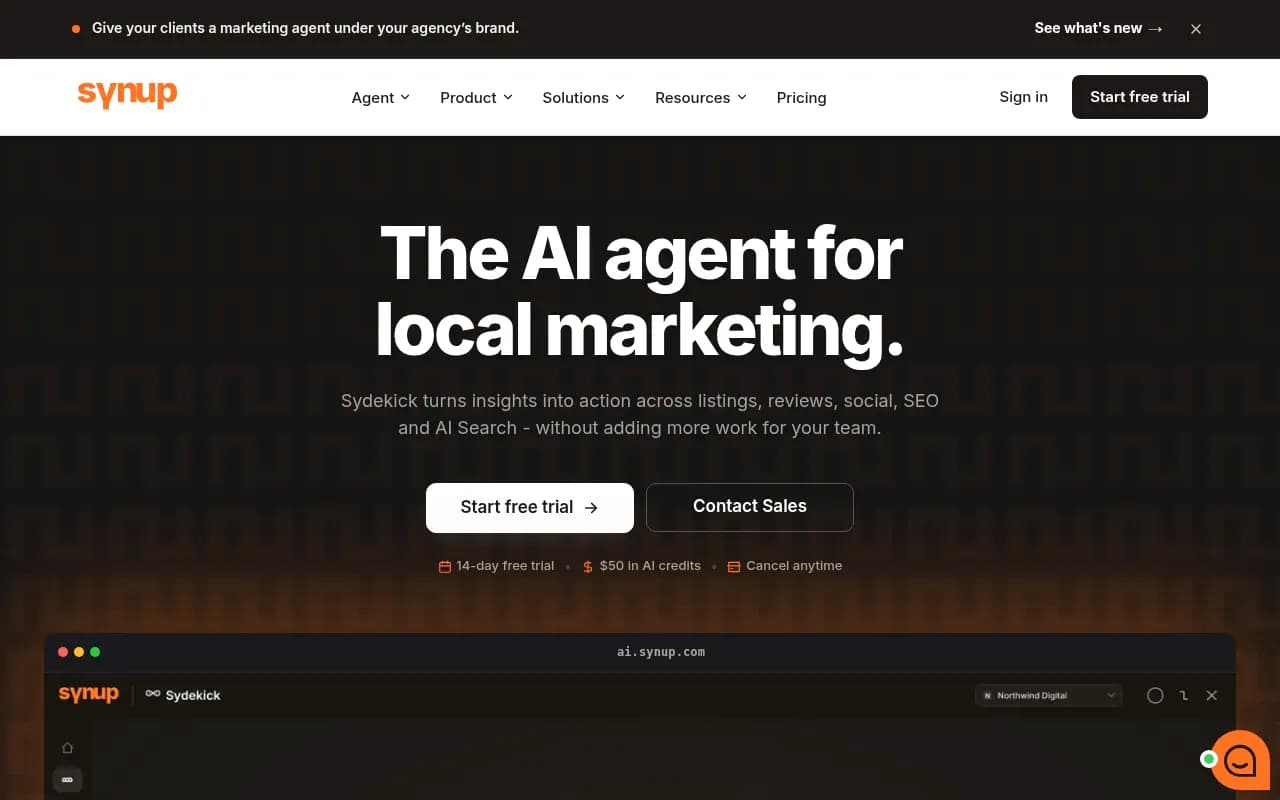
- [tool:yext] and [tool:synup] manage listings across directories so your name, address and phone stay consistent.
- [tool:nicejob] automates review requests, which suits a small practice with no marketing staff.
Promptwatch's own data shows why this matters. In its ChatGPT content-type report (Sep 28 to Oct 4, 2026), reviews made up 5.6% of citations for branded prompts, more than three times their share across all prompts. Someone asking about your practice by name is likely to see review content. Doctify and WebMD doctor profiles are the only review and directory sites in the healthcare top 20, at 0.23% each, so keep any doctor-directory profiles complete.
What AI actually cites, and what to do about it
The data gives you a short to-do list.
Treat service pages as your main asset
In the content-type report, product pages account for 22.4% of ChatGPT citations and landing pages 16.8%. For a practice, those are your service pages: implants, Invisalign, emergency dentistry, pediatric care. Each should state what you do, who it is for, where you do it, typical price ranges if you can share them, and who the dentist is. A single "Services" page with a bullet list will not compete.
Add a real FAQ page
FAQ pages are 3.3% of citations overall and 4.8% for branded prompts. Answer what patients actually ask: does insurance cover this, how long does it take, is it painful, do you take emergency walk-ins.
Get into "best of" roundups
Listicles are 13.6% of all ChatGPT citations, and 15.0% of commercial prompts like "best dentist in [city]." Local roundups, city magazines and association directories are worth pursuing.
Do not bet on Reddit for ChatGPT
Reddit's share of ChatGPT citations fell from roughly 4% to 0.5% on August 14, 2026. In the Sep 28 to Oct 4 data, social platforms were just 0.46% of ChatGPT's citations but 12.2% of Google AI Overviews', with YouTube the biggest at 4.28%. So for Google's AI surfaces, short patient-education videos on YouTube and complete public Facebook and Instagram profiles are worth the effort. For ChatGPT, they are not.
Back clinical claims with authoritative sources
Government and public-health sites dominate healthcare citations. If your page says something about whitening safety or fluoride, link to the guidance (FDA, CDC, NHS, ADA) and keep your wording consistent with it.
A simple setup for a single-location practice
This is the stack I would start with if I were running one office.
- Run a free AI visibility report and note which engines mention you and which competitors they pick instead.
- Fix the foundation: Google Business Profile categories, services, hours and photos; consistent listings; a steady stream of real reviews.
- Rewrite your top five service pages and add an FAQ page.
- Check that AI crawlers can read your site. Promptwatch has a free Agentic Readiness Check and a Robots.txt generator for AI for this.
- Start tracking 20 to 50 prompts that patients really use, with your city in them. Run them monthly at minimum, daily if you can afford it.
- Review monthly, change one or two pages, then see what moved.
A setup for a multi-location group or DSO
A group has a different problem: dozens of locations, inconsistent pages and no single owner. Here the order changes.
- Use a platform with location-level targeting so each office is tracked from its own area.
- Centralize listings and reviews with a tool like Yext, Birdeye or Synup.
- Build templated but genuinely distinct location pages. Copy-paste pages with only the city swapped tend to be the weakest.
- Report visibility by location so office managers can see their own numbers.
For wider comparisons of platforms in this category, the directory at bestgeosoftware.com is a decent place to browse.
Should you hire an agency instead?
Possibly. Plenty of practices have no time to run prompt tracking and rewrite pages. Dental-specific agencies like Titan Web Agency, Elevate DDS, DentalScapes and Rosemont Media all publish GEO services, and First Page Sage ranks several of them. They are also selling to you, so ask any agency for specific before-and-after examples, which AI engines they track, and how they measure whether anything worked.
If you want a general SEO and GEO partner rather than a dental specialist, 1001 SEO Media covers technical SEO, content, local SEO and AI search optimization with no long-term contracts. Either way, make the agency show you the data from a tracking tool, not a screenshot of one lucky ChatGPT answer.
Mistakes to avoid
- Judging results from a single prompt. AI answers vary by run, by location and by model.
- Tracking only a national or country-level view when you serve one city.
- Ignoring wrong claims. If AI says you do not take your patients' insurance and you do, that costs real appointments.
- Buying an enterprise platform for a one-dentist practice.
- Skipping the basics because the new tool looks exciting.
FAQ
Do dentists really need to show up in ChatGPT?
It is not replacing Google, but it is layering on top. A recent AP-NORC poll cited by Titan Web Agency found about 60% of U.S. adults use AI tools to search for information, rising to 74% among adults under 30. If your practice is invisible there, you lose some of those patients before they ever see your website.
How much should a practice spend on a GEO tool?
Start free. A paid tracker in the $95 to $250 per month range is reasonable for most single practices. Go higher only if you need local targeting at exact coordinates, multiple locations or automated content.
How long until I see results?
Tracking shows up immediately. Changes to citations and mentions take weeks, and ChatGPT's own data shows how fast things move: news pages lost half their citations within 36 days in Promptwatch's content half-life report, while landing pages and docs stayed cited longest. Evergreen service pages are the better investment.
Bottom line
Pick the tool by the problem. If you only need to know whether you exist in AI answers, a free audit and a cheap tracker are enough. If you need to find out why competitors win and then fix it, choose a platform that connects tracking to content and crawler data, like Promptwatch. If you run many locations, add listings and reputation software on top. Whatever you choose, get the Google Business Profile, reviews and service pages right first, because every AI tool reads those.