Key takeaways
- Google AI Overviews now appear for a significant share of searches, making AI visibility tracking a core marketing function -- not a nice-to-have.
- Most AI visibility tools only monitor where you appear; few help you actually improve your rankings in AI-generated answers.
- Promptwatch is the only platform in this comparison rated as a "Leader" across all categories, combining tracking, content gap analysis, and AI content generation in one loop.
- Profound is the strongest choice for large enterprise teams that need deep analytics and can absorb premium pricing.
- Otterly.AI works well for smaller teams and freelancers who want basic monitoring at a low monthly cost.
- The right tool depends on whether you need to just watch the data or actually act on it.
Google AI Overviews didn't arrive quietly. When Google started surfacing AI-generated summaries at the top of search results, it immediately changed which brands get seen -- and which ones disappear before a user ever scrolls to the traditional blue links. If your brand isn't being cited in those AI answers, you're effectively invisible for a growing share of searches.
That's why AI visibility tracking has gone from a niche concern to something marketing and SEO teams genuinely need to figure out in 2026. The problem is that the market for these tools has exploded, and the quality varies wildly. Some platforms are sophisticated optimization engines. Others are dashboards that show you a number and leave you wondering what to do next.
This guide focuses on three platforms that come up most often in this conversation: Promptwatch, Profound, and Otterly.AI. They represent three very different philosophies about what an AI visibility tool should actually do.
Why Google AI Overviews require a different tracking approach
Traditional rank tracking tools measure where your pages appear in the ten blue links. Google AI Overviews don't work that way. The AI synthesizes information from multiple sources, sometimes citing them, sometimes not. Your page could rank #2 organically and still be completely absent from the AI Overview that sits above it.
To track AI Overview presence, a tool needs to:
- Run real queries against Google's AI-powered results (not just scrape traditional SERPs)
- Detect whether your brand or URLs appear in the generated answer
- Track which sources the AI cites and how often
- Monitor changes over time, since AI Overviews are notoriously inconsistent
Most traditional SEO platforms weren't built for this. Even tools like Semrush and Ahrefs have added AI tracking features, but they tend to use fixed prompt sets and lack the depth needed for serious optimization work.
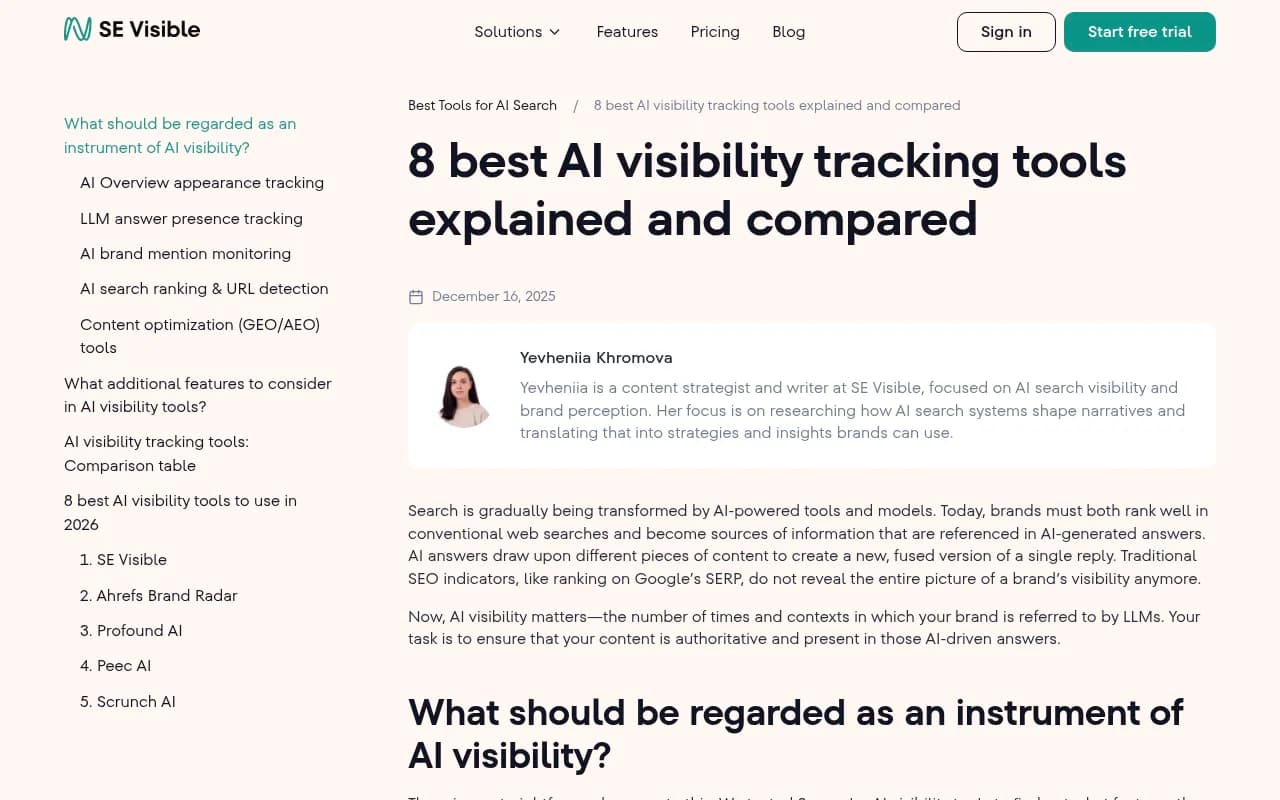
The three platforms compared
Promptwatch
Promptwatch monitors 10 AI models simultaneously: ChatGPT, Perplexity, Google AI Overviews, Google AI Mode, Claude, Gemini, Meta/Llama, DeepSeek, Grok, and Mistral. That's a broader coverage set than most competitors.
What separates Promptwatch from the other two tools in this comparison is what happens after you see the data. Most platforms stop at monitoring -- they show you where you're visible and where you're not. Promptwatch is built around a three-step loop: find the gaps, create content that fills them, then track whether that content gets cited.
The Answer Gap Analysis feature shows you exactly which prompts competitors are appearing for that you're not. You see the specific topics and questions AI models are being asked where your content isn't showing up. Then the built-in AI writing agent generates articles, listicles, and comparisons grounded in actual citation data -- not generic SEO filler. The content is engineered to get cited by AI models, based on analysis of 880M+ citations.
For Google AI Overviews specifically, Promptwatch tracks page-level citations, so you can see which of your pages are being pulled into AI answers and how often. The AI Crawler Logs feature shows real-time logs of AI crawlers hitting your site -- which pages they read, errors they encounter, how often they return. This is genuinely useful for diagnosing why certain pages aren't getting cited even when you'd expect them to be.
Pricing runs from $99/month (Essential: 1 site, 50 prompts, 5 articles) to $579/month (Business: 5 sites, 350 prompts, 30 articles). Agency and enterprise pricing is available separately. A free trial is available.

Profound
Profound (also marketed as Profound AI) targets enterprise marketing teams. The platform has strong analytics depth, particularly for brands that need to track AI visibility across large product catalogs or multiple markets simultaneously.
Where Profound shines is in the reporting layer. The dashboards are detailed, the data export options are solid, and the platform handles complex organizational structures well -- useful for large brands with multiple product lines or regional teams. It's also strong on competitive benchmarking, letting you see how your AI visibility compares to specific competitors across different query categories.
The tradeoff is price. Profound sits at the higher end of the market, which makes it harder to justify for smaller teams or agencies managing multiple clients on tight margins. It also doesn't have the content generation capabilities that Promptwatch offers, so you're still left figuring out what to do with the data yourself.
Otterly.AI
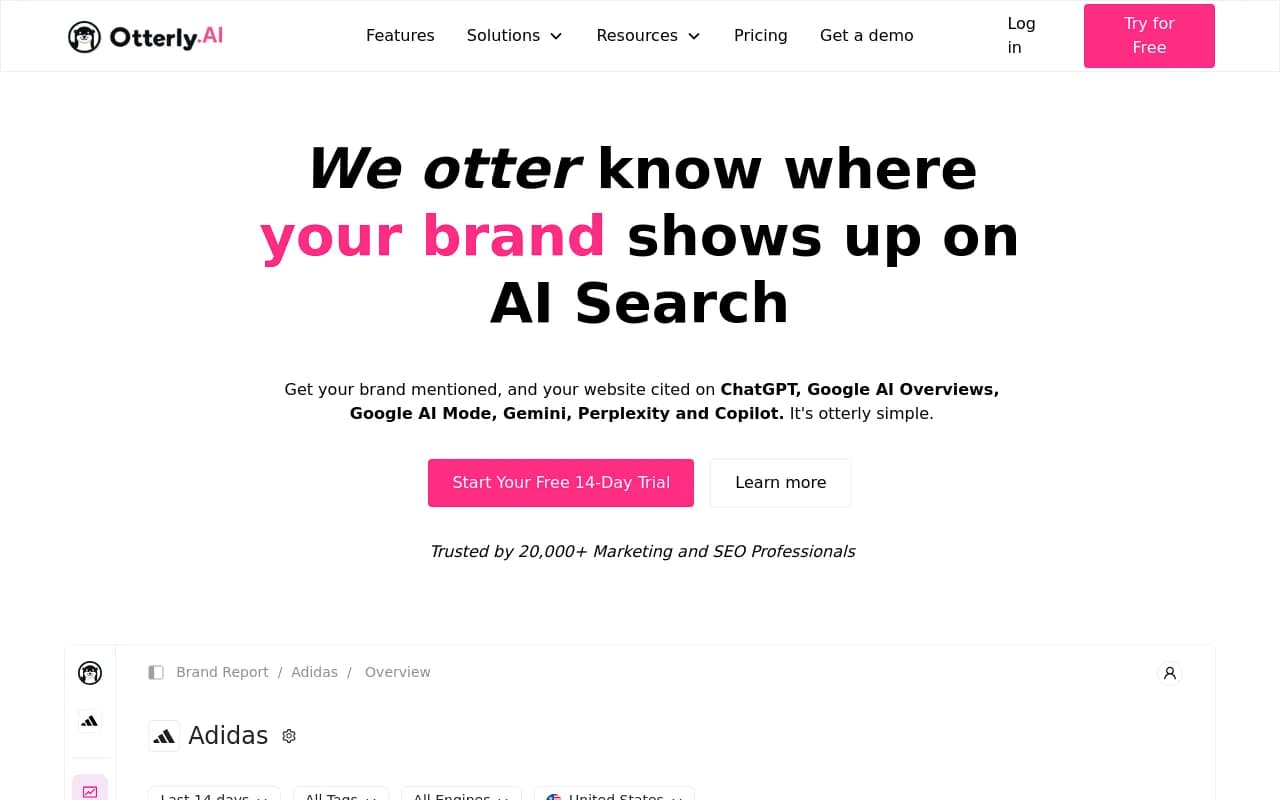
Otterly.AI takes a different approach entirely. It's positioned as the affordable entry point for AI visibility tracking, with plans starting around $29/month. For freelancers, small agencies, or teams that just want to dip their toes into AI monitoring without a major budget commitment, it's a reasonable starting point.
The GEO Audit feature is genuinely useful -- it gives you a structured assessment of how "AI-ready" your website is, which is a good diagnostic tool for identifying obvious gaps. The monitoring covers the major LLMs and includes brand mention tracking with sentiment context.
Where Otterly.AI falls short is depth. There's no content generation, no crawler logs, no prompt volume data, and limited competitive intelligence compared to the other two platforms. You'll see where you're not appearing, but the path from "I'm invisible" to "now I'm cited" requires you to figure that out yourself.
Feature comparison
| Feature | Promptwatch | Profound | Otterly.AI |
|---|---|---|---|
| Google AI Overviews tracking | Yes | Yes | Yes |
| LLMs monitored | 10 | Multiple | Major LLMs |
| Answer gap analysis | Yes | Limited | No |
| AI content generation | Yes (built-in) | No | No |
| AI crawler logs | Yes | No | No |
| Prompt volume & difficulty scores | Yes | No | No |
| Reddit & YouTube insights | Yes | No | No |
| ChatGPT Shopping tracking | Yes | No | No |
| Competitor heatmaps | Yes | Yes | Limited |
| Page-level citation tracking | Yes | Yes | Basic |
| Multi-language support | Yes | Yes | Limited |
| Traffic attribution | Yes (GSC, logs, snippet) | Limited | No |
| Starting price | $99/mo | Higher (enterprise) | ~$29/mo |
| Free trial | Yes | Yes | Yes |
| Best for | Teams that want to track AND fix | Large enterprise teams | Budget-conscious beginners |
Which tool should you actually use?
The honest answer depends on what you're trying to accomplish.
If you're a marketing or SEO team that wants to understand your AI visibility and then do something about it, Promptwatch is the strongest option. The monitoring is comprehensive, but the real value is in the action loop -- gap analysis, content generation, and tracking whether that content gets cited. Most competitors stop at step one. Promptwatch is built around all three steps.
If you're at a large enterprise with a dedicated analytics team, a big budget, and complex reporting needs, Profound is worth evaluating seriously. The depth of its analytics layer is real, and for organizations that need to track AI visibility across many product lines or geographies, it handles that complexity well. Just be prepared to build your own content strategy on top of it.
If you're a freelancer, a small business owner, or a team that just wants basic monitoring without a significant financial commitment, Otterly.AI gets you started. It won't give you the data to run a sophisticated optimization program, but it will tell you whether you're showing up in AI answers for your key queries -- and that's a reasonable starting point.
One thing worth noting: the gap between "monitoring" and "optimization" tools is widening fast. In 2026, just knowing you're invisible in AI search isn't enough. The teams getting results are the ones that can identify gaps, create content that fills them, and verify that the content is actually getting cited. That full loop is what separates a tracking dashboard from a growth tool.
Other tools worth knowing about
Beyond the three platforms above, a few others are worth mentioning depending on your specific needs.
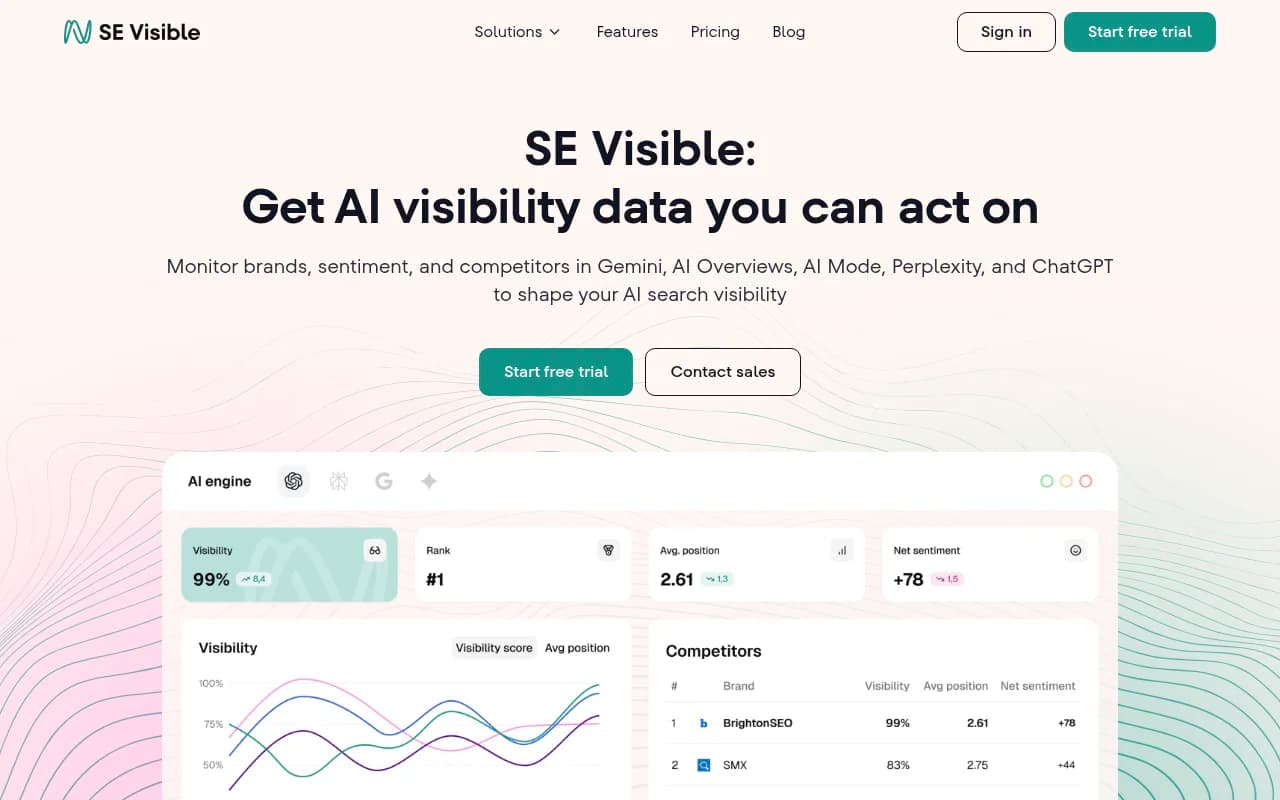
SE Ranking has built out a solid AI visibility module (SE Visible) that integrates with its broader SEO platform -- useful if you're already in the SE Ranking ecosystem.
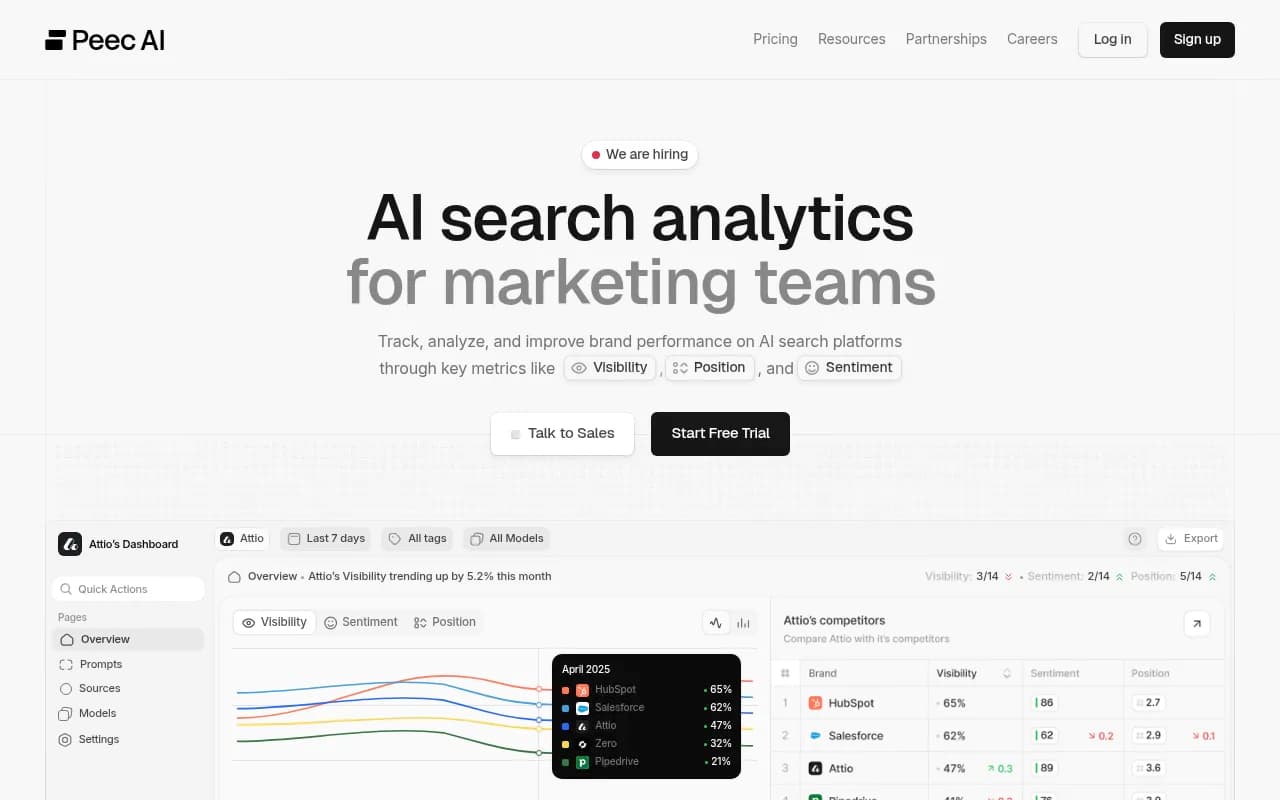
Peec AI stands out for multi-language support, covering 115+ languages, which matters if you're tracking AI visibility across international markets.
Nightwatch has added AI search monitoring to its rank tracking platform, making it a reasonable option for teams that want traditional SEO tracking and basic AI monitoring in one place.
Scrunch AI focuses on brand monitoring in AI responses with strong sentiment analysis, which is useful for brand teams more than SEO teams.
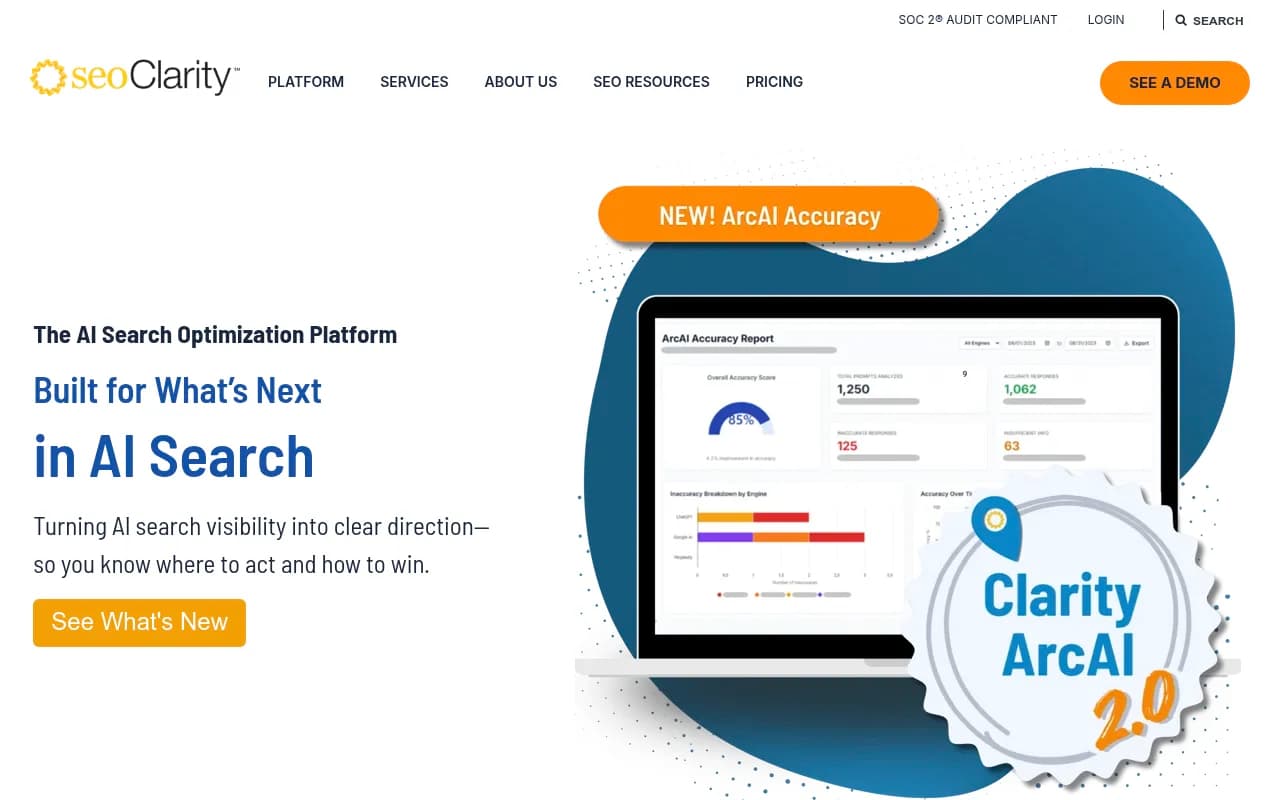
For enterprise teams with very specific needs around AI search and content optimization at scale, seoClarity has built out Google AI Overview tracking as part of its broader enterprise platform.
What to look for when evaluating any AI visibility tool
Before committing to any platform, run through these questions:
Does it actually track Google AI Overviews, or just LLM chatbots? These are different. Many tools monitor ChatGPT and Perplexity but don't have real Google AI Overview tracking. If Google is your primary concern, verify this explicitly.
How fresh is the data? AI Overviews change frequently. A tool that runs queries weekly will miss a lot of the volatility. Look for platforms that run queries at least daily for your tracked prompts.
Can you customize the prompts? Fixed prompt sets are a significant limitation. Your customers ask questions in specific ways. You need to track those specific questions, not a generic set the tool vendor decided on.
What happens after you see the data? This is the question most people forget to ask. If the tool shows you a gap, what do you do next? Platforms that include content guidance or generation save you a significant amount of time and guesswork.
Does it show you which pages are being cited? Brand-level visibility is useful, but page-level tracking tells you which specific content is working and which isn't. That's the data you need to make decisions.
Can you connect visibility to traffic? Ultimately, AI visibility should drive real visitors to your site. Tools that can attribute traffic from AI search -- through a code snippet, Google Search Console integration, or server log analysis -- let you close the loop between visibility and revenue.
The bottom line
Google AI Overviews aren't going away, and the brands that figure out how to appear in them consistently will have a real advantage. The tools to do that exist -- the question is whether you want a monitoring dashboard or an optimization platform.
For most marketing teams in 2026, the monitoring-only approach is already falling behind. Knowing you're invisible is only useful if you can do something about it.