Key takeaways
- Mention tracking and attribution are different jobs. A tool that reports Visibility Score does not necessarily tell you which citations sent visitors or what those visitors were worth.
- Real attribution needs at least four layers: prompt-level visibility, citation data, AI crawler activity, and on-site visitor analytics tied to conversions.
- Segment by engine. Social and community citations behave very differently in ChatGPT, Perplexity and Google AI Overviews, so one blended number misleads.
- ChatGPT ads now muddy the water. Ad clicks and organic citation clicks have to be separated before you report anything to finance.
- Vendor claims about revenue lift (several are self-reported) should be treated as leads to verify, not benchmarks.
Why attribution is the real dividing line
Most buying guides for AI visibility tools sort platforms by how many engines they cover and how pretty the dashboard is. That is the wrong first question if you have to defend the budget to a CFO. The question that matters is: can this tool show me that a citation led to a visit, and that visit led to money?
The gap is real. Most AI answers carry no clickable link, so your Visibility Score (the share of tracked prompts where you appear) will always be a bigger number than AI-referred sessions in GA4. Cognizo makes this point in its own comparison of tracking tools, and it holds up regardless of vendor. You need both figures, and you need something that bridges them.
The stakes are not small. Adobe reports that generative AI referral traffic to US retail sites grew more than 1,200% year over year, which is why roundups like Finseo's now list revenue attribution as a core signal. Treat the source with some caution though: Finseo is a vendor ranking itself first.

The four layers of AI attribution
Before comparing products, it helps to have a model of what a complete chain looks like. I think of it as four layers, and most tools cover one or two.
Layer 1: prompt and answer tracking
This is the table-stakes part. You run a set of prompts across engines and record whether your brand appears, where, and with what sentiment. Tools that scrape the real user interface capture what a person actually sees, including citation order. API-only tools can miss that. Every tool on the market does some version of this, so it does not differentiate anyone.
Layer 2: citation analytics
Which of your pages get cited, and which third-party pages name you? Owned and earned citations need to be tracked separately, because they call for different fixes. A mention without a self-citation usually means a content or crawlability problem, not a reputation problem.
Layer 3: crawler and server-side evidence
Before an AI engine can cite you, its bots have to read you. Server-log or CDN-level data shows which AI crawlers hit which pages and where they hit errors. This is the layer that explains why you are or are not cited, and it is rare. Finseo claims deep bot traffic analytics in its standard plan; Promptwatch offers IP-verified crawler logs. Many pure trackers have nothing here.
Layer 4: visitor and revenue analytics
This is the actual attribution layer: sessions from ChatGPT, Perplexity, Gemini, Claude and others, joined to conversions. It can come from the visibility platform itself (a tracking script, a GTM template, a WordPress plugin) or from your existing analytics and marketing attribution stack.
Segment by engine or your numbers will lie
One of the easiest ways to produce a misleading attribution report is to blend all AI engines together. Promptwatch Data's social media citations by AI model report for Sep 28 to Oct 4, 2026 shows how different they are:
| Engine | Share of citations from social platforms | Notable detail |
|---|---|---|
| ChatGPT | 0.46% | LinkedIn is the top social source at 0.3%; Reddit fell to 0.09% |
| Google AI Overviews | 12.2% | YouTube 4.28%, Facebook 2.38%, Reddit 2.15% |
| Perplexity | 2.7% | LinkedIn and Reddit tie at 0.86% |
The practical consequence: if your strategy leans on Reddit or YouTube, do not expect it to show up in ChatGPT-driven sessions. It may show up in AI Overviews instead. This also follows the broader pattern in Promptwatch's data on Reddit citations dropping in ChatGPT, where reddit.com's share fell from roughly 4% to 0.5% on August 14, 2026. A tool that cannot slice attribution per engine will make that shift look like a mystery.
The ChatGPT ads complication
ChatGPT now shows ads, and that changes how you read referral traffic. According to Promptwatch Data on ChatGPT ads, ads appeared in an average of 20.1% of web-search responses between May 20 and Aug 17, 2026. None ran until May 27, and the past-7-day average at the end of that window was 32.4%, with daily peaks of 43.9%.
For attribution, three things follow:
- Ad clicks and organic citation clicks must be separated, or you will credit your content for paid traffic (or the reverse).
- Check ad visibility over several days before concluding anything. A single run can land on an outlier day.
- Track which advertisers and landing pages show up on your prompts, since they are competing for the same click.
Cognizo is notable here because it pairs organic tracking with ChatGPT Ads management, and says that share of clicks drove 20x growth in AI-driven sales. That is self-reported, so verify it, but the pairing is a sensible design for the ad-versus-organic problem.
How the main platforms stack up on attribution
A caution on the table below. Our research did not verify vendor-specific details such as GA4 integrations or current pricing for every tool, so I have limited the table to what sources support and to what each vendor says it is built for. Always confirm on the vendor's pricing and docs pages.
| Tool | Attribution-relevant strength | Evidence level |
|---|---|---|
| Promptwatch | Visitor analytics for AI-referred traffic and conversions, crawler logs, per-page crawl-to-citation path, Search Console and Bing data alongside AI data | First-party platform details |
| Finseo | Mentions, citations, bot traffic and revenue attribution in one product | Vendor roundup, self-ranked |
| Cognizo | Visibility Score plus ChatGPT Ads management | Vendor claims |
| Profound | Enterprise-grade monitoring; topped one AEO-score ranking at 92/100 | Third-party ranking |
| Goodie | Positioned around attribution from AI visibility to revenue | Slate roundup |
| XFunnel | Answer engine optimization with funnel attribution | Catalog description |
| AIVO | AI visibility intelligence tied to revenue | Catalog description |
| HockeyStack | General marketing attribution that can sit under any visibility tool | Catalog description |
| Otterly.AI, Peec AI | Affordable monitoring, little on the traffic side | Positioning |
Promptwatch
Promptwatch is the one I would put at the top of a shortlist if the brief is "connect citations to traffic." It tracks real UI responses across ChatGPT, AI Overviews, AI Mode, Gemini, Perplexity, Copilot and others, then adds the layers most trackers skip: IP-verified AI crawler logs, visitor analytics for AI-referred sessions and conversions (installed via script, Google Tag Manager or the WordPress plugin), and 360 Insights that join crawls, citations, clicks and Search Console or Bing data per page. That lets you ask the useful question: which pages rank in Google but never get cited, and which cited pages actually send visitors?
It also closes the loop. The Action Board and Content Agent turn gaps into published pages, which are then tracked through crawls, citations and AI traffic. Crisp reported 2x higher conversion rates from AI traffic than from traditional channels, and TreeHouse (Pararius) got AI search to about 25% of organic conversions after fixing crawler access. Those are customer results, not guarantees. Pricing starts at $95 per month for Essential, with a free tier limited to ChatGPT; confirm on promptwatch.com/pricing.

Cognizo
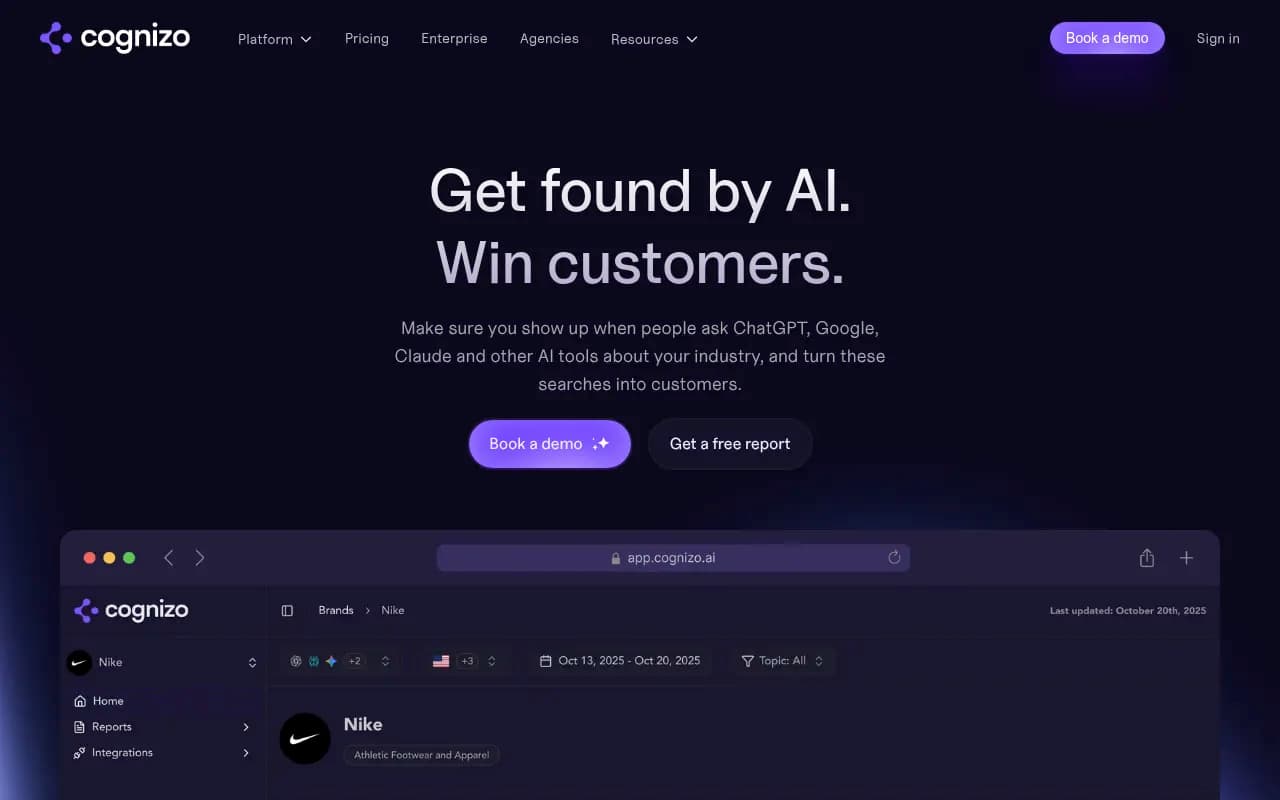
Cognizo's pitch is the combination of organic tracking and ChatGPT Ads in one workflow, across ten engines including Claude, Grok, Meta AI and DeepSeek. It separates owned from earned citations, and it is upfront that Visibility Score and GA4 sessions are different numbers. The revenue claim is the vendor's own.
Profound
Profound is usually the benchmark in enterprise comparisons, and one 2026 ranking gave it a 92/100 AEO score. AEO score measures how often and prominently AI systems cite a brand, which is a visibility measure rather than an attribution one. Ask any vendor, Profound included, exactly how sessions and conversions get tied back.

Goodie, XFunnel and AIVO
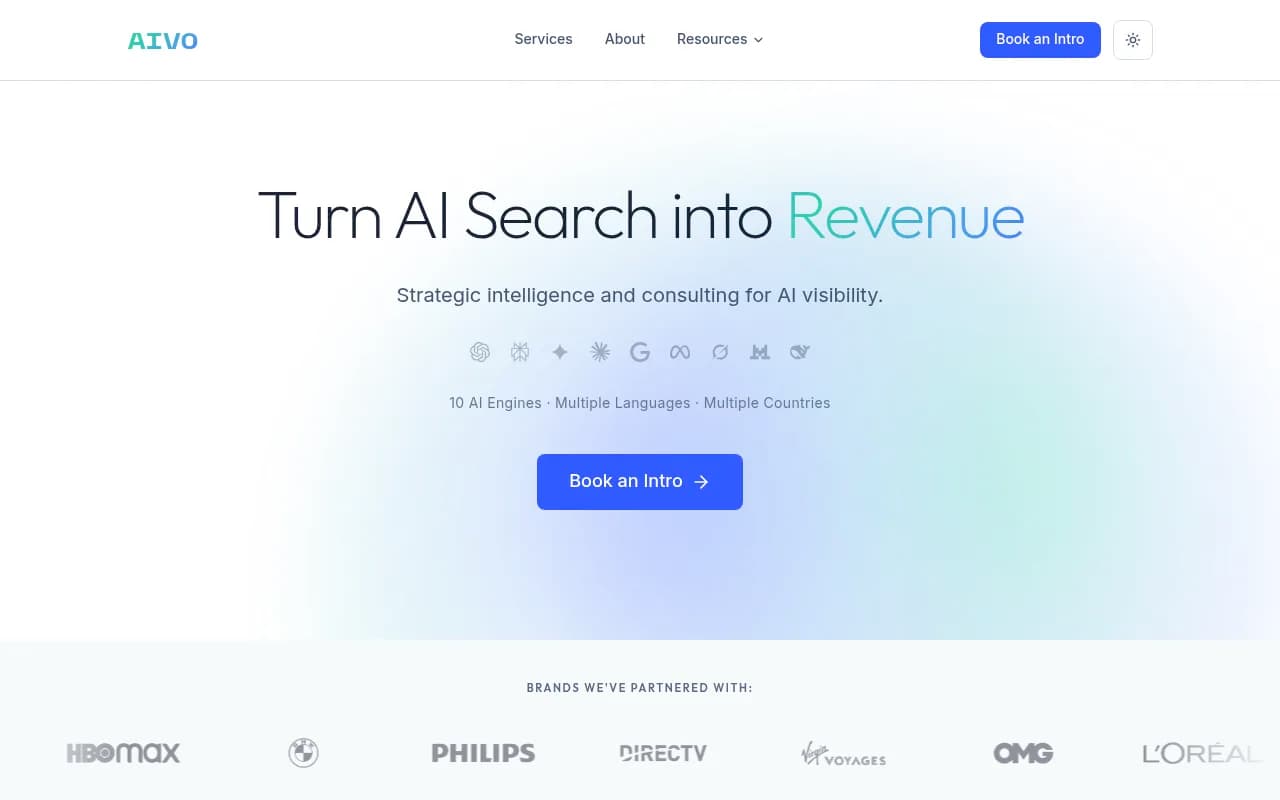
These three are the ones whose positioning leans toward revenue. Slate's roundup calls Goodie a solid choice when attribution from AI visibility to revenue is the priority, XFunnel advertises funnel attribution, and AIVO describes visibility intelligence tied to revenue. I could not verify the depth of any of them, so run a proof of concept against your own analytics before committing.

Monitoring-first tools
Otterly.AI, Peec AI and ZipTie are popular for affordability, suggestions and analysis. They answer "were we mentioned?" well. Do not expect crawler logs or conversion data from them, and plan to pair them with your own analytics.


Suites with AI add-ons
Semrush and Ahrefs Brand Radar bolt AI tracking onto established SEO suites. Cognizo's table lists Semrush AI Visibility at $99 per month without unlimited seats or UI scraping, but that is a competitor's claim and may be stale. These are convenient if you already live in the suite, though they typically work from fixed prompt sets.
Building attribution when your tool does not do it
If you pick a monitoring tool, you can still assemble a workable chain.
- Create a GA4 channel group for AI referrers (chatgpt.com, perplexity.ai, gemini.google.com, claude.ai, copilot.microsoft.com) and keep it separate from organic search.
- Tag conversions as key events and report AI sessions by landing page, not just in total.
- Pull the cited-pages list from your visibility tool and join it to those landing pages in a spreadsheet or HockeyStack-style attribution product.
- Check Google Search Console in parallel, since AI Overviews clicks are blended into search data.
Expect direct and dark traffic to hide some AI influence. Someone sees your brand in an answer, then types your URL later. That is why Visibility Score and share of voice remain leading indicators even when click counts look small.
Questions to ask every vendor
- Do you scrape the real UI or call APIs, and can I see both?
- Can you show AI-referred sessions and conversions, or only mentions?
- Do you provide server-side crawler data, and are bots IP-verified so spoofed ones are filtered out?
- Can attribution be segmented per engine and per country?
- How do you separate ChatGPT ad clicks from organic citation clicks?
- Can I export raw data or reach it by API or MCP into my own warehouse?
- Which revenue results are customer-verified rather than marketing claims?
Which one should you choose?
| If you need | Start with |
|---|---|
| One platform from crawl to citation to conversion, with content actions | Promptwatch |
| Organic tracking plus ChatGPT Ads management | Cognizo |
| Enterprise monitoring with a strong ranking track record | Profound |
| Revenue-first positioning to test | Goodie, XFunnel, AIVO |
| Cheap monitoring plus your own analytics | Otterly.AI, Peec AI |
For wider browsing, the GEO software directory at bestgeosoftware.com and the rank-tracking list at ai-rank-tools.com cover many more options than fit here.
The bottom line
Pick based on the chain you can prove, not the engines you can list. Run a two-week trial with a fixed prompt set, install the visitor tracking, and see whether the tool can show you one cited page that produced one session that produced one conversion. If it cannot, you have bought a mention counter.