Key takeaways
- AI assistants repeat wrong prices, specs, and positioning for months. Promptwatch Data shows landing and docs pages stay cited at 67-69% after 60 days, so a bad fact does not fix itself.
- A quarterly audit works if you test the same prompt set on every engine and log what each answer claims, not only whether you are mentioned.
- Most misinformation traces back to a few sources: your own product and pricing pages, stale third-party listings, reviews, and social posts that AI Overviews pulls in.
- Citation mixes shift fast. Reddit nearly vanished from ChatGPT in August 2026, so weight your checks per engine.
- Fix the source page first, then re-test. Correcting the answer without correcting the source only lasts until the next crawl.
Why a misinformation audit is different from a visibility audit
Most AI audits ask one question: does the answer name you? That matters, but it misses a nastier failure. You can show up, and the answer can say you cost $49 when you cost $99, that you lack an integration you shipped last year, or that you serve a market you left.
A visibility audit counts mentions. A misinformation audit reads the claims. It treats each sentence an AI engine writes about you as something to verify against a source of truth, then traces the false ones back to the page that taught the model.
The cadence is quarterly because of how long pages keep getting cited. In Promptwatch Data's content half-life study, which tracked every page ChatGPT cited on July 6, 2026 for 90 days, 78% of landing pages were still cited after 30 days and 69% after 60. Docs sat at 76% and 67%. Product pages, reviews, and how-to guides reached their half-life after 74 to 77 days. A wrong price on a pricing page can sit in answers for a full quarter. News is the exception: half of news pages dropped out after 36 days, so press content needs a faster check.
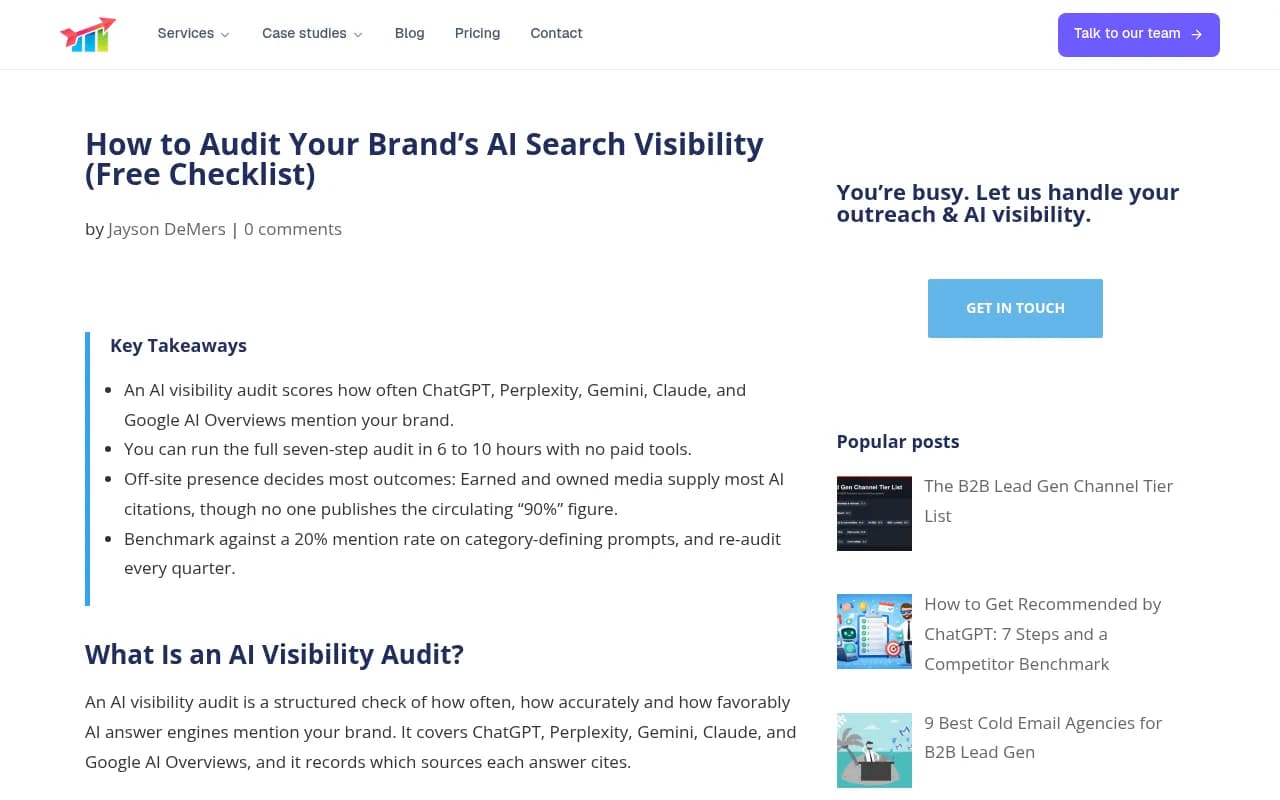
The checklist above from Outreach Bloom is a good model for the structure: audit area, what to check, pass criteria, red flag. The 15 items below follow the same shape but aim at accuracy instead of presence.
Before you start: set up the audit
Spend an hour on setup and the rest goes faster.
- Write a one-page source of truth: current pricing, plans, features, integrations, locations, leadership, founding facts, and positioning. Every claim you check gets compared to this.
- Build a prompt library of 20 to 50 prompts. Cover branded prompts ("is [brand] good for startups"), commercial prompts ("best [category] for small teams"), comparison prompts ("[brand] vs [competitor]"), and informational prompts.
- Pick your engines. At minimum ChatGPT, Google AI Overviews, Perplexity, Gemini, and Claude.
- Make a log with columns for prompt, engine, date, claim made, accurate or not, cited source, and fix owner.
For a few dozen prompts, a spreadsheet is fine. Past that, running everything by hand each quarter gets old. Tools like Promptwatch can collect responses from the real interfaces of these engines on a schedule and break out the individual claims AI makes about you, which is what you actually need here.

The 15-point quarterly checklist
Part 1: What the AI says (checks 1-5)
1. Pricing claims. Ask every engine what your product costs, what plans exist, and whether there is a free tier. Pricing is the most common place for drift. Log every figure and compare it to your live pricing page.
2. Feature and integration claims. Ask what you can and cannot do. Wrong "it lacks X" claims are as damaging as wrong prices, and they usually come from an old comparison page or review.
3. Audience and positioning. Who is the product for, according to the answer? If AI keeps calling your enterprise platform a tool for freelancers, your positioning on product and landing pages is not landing.
4. Company facts. Founding date, headquarters, leadership, funding, headcount, acquisitions. Models love to merge companies with similar names, so check the boring facts too.
5. Competitor comparisons. Run "[brand] vs [competitor]" prompts. Check whether the comparison table the AI builds is accurate in both directions. Note who it recommends and why.
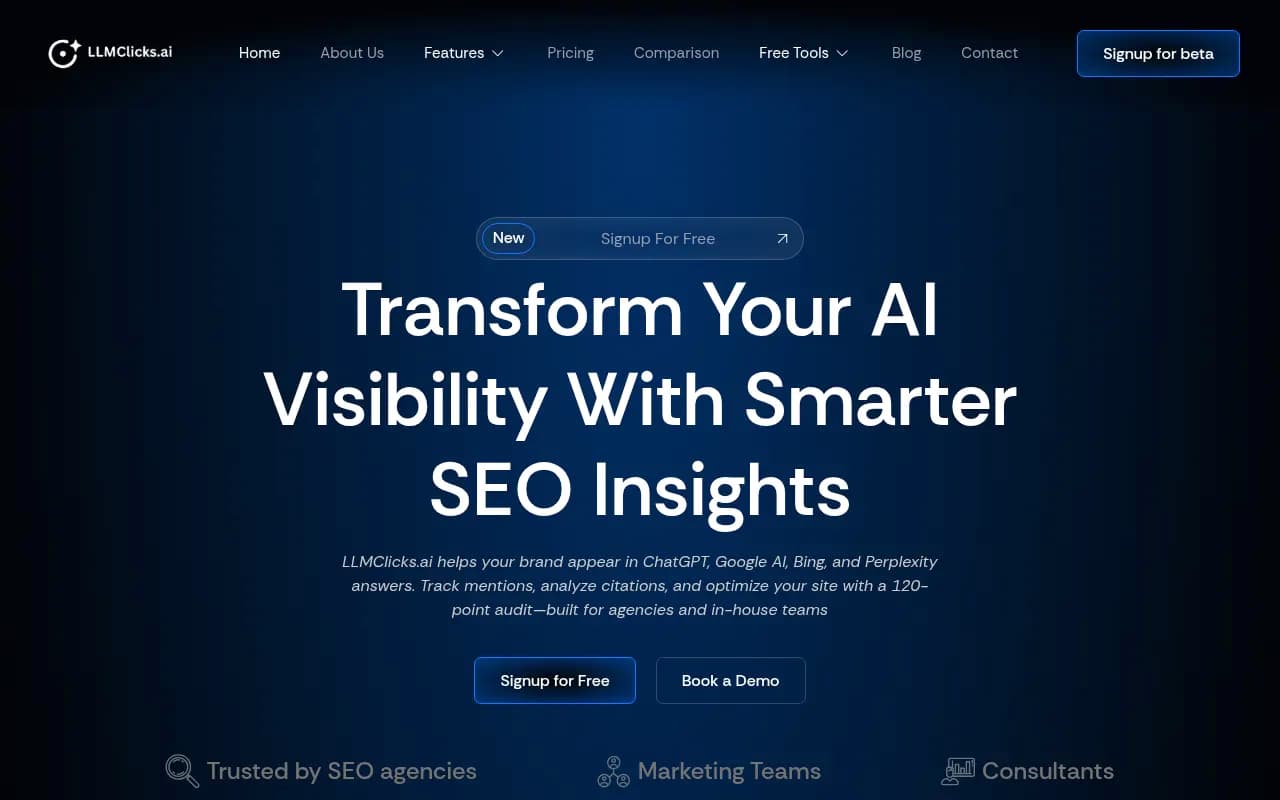
The Promptwatch approach to this is called Brand Narrative: it pulls the individual claims out of responses (like "affordable for small teams" or "its mobile app lacks features"), groups repeats, and shows which models say each one. Business-tier plans add Fact Check, where you mark a claim inaccurate and the tool finds the pages on your site that state it or its opposite. If you want a cheaper start, hallucination-focused trackers like LLMClicks exist too.
Part 2: Where it learned it (checks 6-10)
6. Your product and landing pages. In Promptwatch's ChatGPT content type data for Sep 28 to Oct 4, 2026, product pages were 22.4% of all citations and landing pages 16.8%. Together that is 39% of what ChatGPT cites. For branded prompts, those two types were almost half. So start here: are specs, prices, and positioning complete, current, and stated plainly? ChatGPT quotes them directly.
7. Documentation and help center. Docs were cited again after day 0 for 93% of pages in the half-life study. If your docs are public and crawlable, they are a primary source. Outdated docs mean outdated answers. Check version numbers, deprecated features, and old screenshots.
8. Review sites. Reviews are 1.7% of citations overall but 5.6% on branded prompts, more than three times their overall share. Check G2, Capterra, and Trustpilot profiles for stale descriptions, wrong pricing in the listing, and unanswered complaints that AI may paraphrase. If you track reviews at scale, Trustpilot and ReviewTrackers help on the collection side.
9. Third-party listicles and comparisons. Listicles are 13.6% of ChatGPT citations and comparisons 5.9%, and listicles stayed cited at 60% after 60 days. Search the "best [category]" articles that AI cites for you and your competitors. Wrong facts in someone else's roundup are the hardest to fix, so catalogue them and email the editors with a correction and a link to your source of truth.
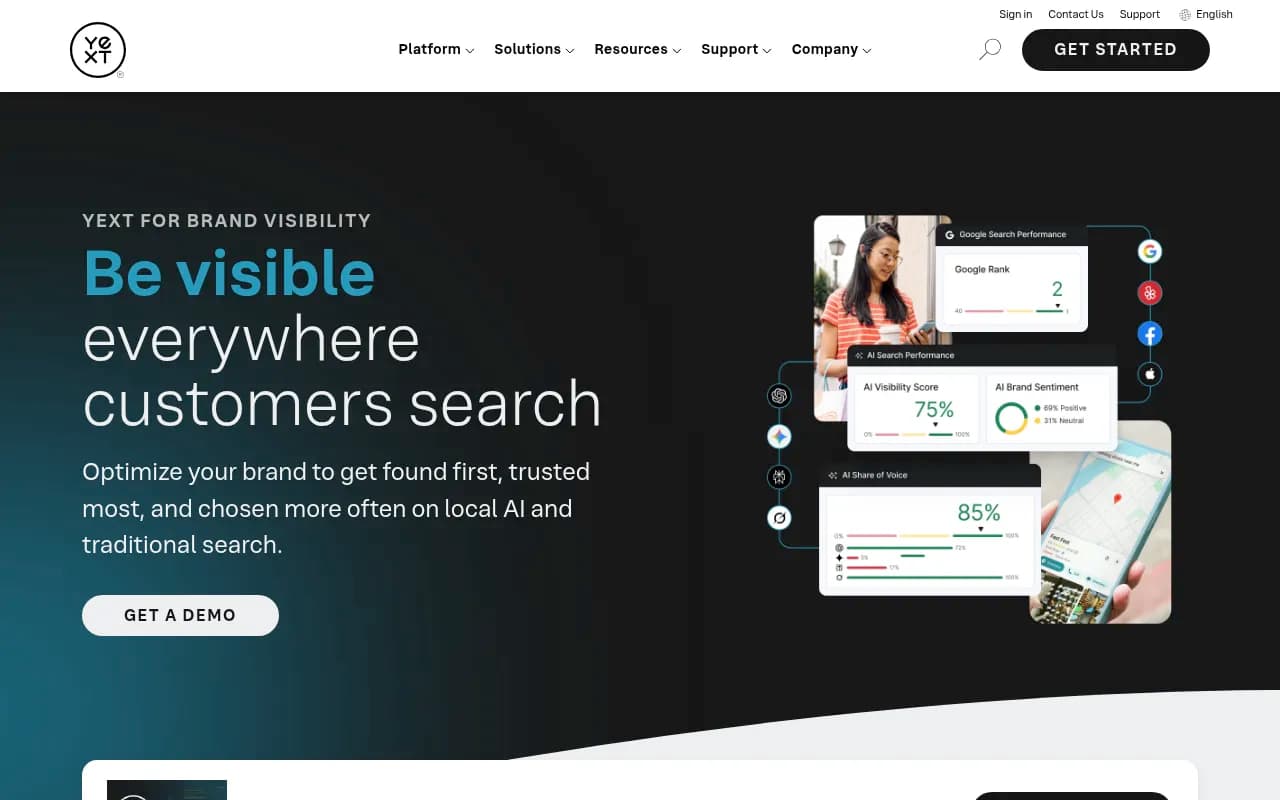
10. Directories and business listings. Old addresses, phone numbers, and descriptions on directories still feed answers, especially for local and multi-location brands. Yext and Synup can push corrections across listings.
Part 3: Social and forum sources, weighted per engine (checks 11-12)
11. Social citations on AI Overviews. Promptwatch's October 2026 social citation report found that social platforms made up 12.2% of Google AI Overviews citations in the week of Sep 28 to Oct 4, versus 0.46% for ChatGPT. On AI Overviews that was YouTube at 4.28%, Facebook at 2.38%, Reddit at 2.15%, Instagram at 1.61%, and LinkedIn at 1.55%. Check old videos, Facebook pages, and Instagram bios for outdated claims.
12. Reddit and forum threads, with a reality check. Many older checklists, including the Outreach Bloom one above, tell you to seed Reddit. For ChatGPT that advice went stale: reddit.com's share of ChatGPT citations fell from about 4% to 0.5% on August 14, 2026. Reddit still shows up in AI Overviews and Perplexity, so keep scanning threads for false claims about you there, but do not spend a quarter on Reddit to fix ChatGPT answers. If you need to monitor mentions, Brand24 covers social listening.
Part 4: Can the engines read the truth? (checks 13-15)
13. Crawler access. If AI bots cannot read your pricing page, they will rely on whatever third party they can read. Check robots.txt, CDN and WAF rules, and JavaScript-only rendering on key pages. Promptwatch's free Agentic Readiness Check and its crawler logs show which bots reach which pages.
14. Freshness signals. Check dateModified, visible last-updated dates, and sitemaps on your top 20 pages. One checklist cites SE Ranking for the claim that pages updated within two months earn 28% more citations; that figure comes from a source that held up in Outreach Bloom's source check, though I have not verified it myself. Treat it as directional.
15. Structured data and brand facts. Validate Organization, Product, and FAQ schema against your source of truth. Add a public brand FAQ page that states pricing, features, and who the product is for in short answer-first paragraphs. Schema App handles structured data at scale.
Putting it together: the audit table
| # | Check | Source of truth | Red flag |
|---|---|---|---|
| 1 | Pricing claims | Live pricing page | Any figure that differs |
| 2 | Feature claims | Product and docs pages | "Lacks X" when you ship X |
| 3 | Audience | Positioning docs | Wrong segment named repeatedly |
| 4 | Company facts | About page, press kit | Merged or confused entities |
| 5 | Competitor comparisons | Your own comparison pages | One-sided or outdated tables |
| 6 | Product and landing pages | CMS | Missing specs, stale prices |
| 7 | Docs | Docs site | Deprecated features still listed |
| 8 | Review sites | G2, Capterra, Trustpilot | Wrong listing details |
| 9 | Listicles | Third-party roundups | Errors in widely cited lists |
| 10 | Directories | Listings | Old address or description |
| 11 | Social on AI Overviews | YouTube, Facebook, Instagram | Outdated videos and bios |
| 12 | Reddit and forums | Threads | Uncorrected false claims |
| 13 | Crawler access | robots.txt, logs | Blocked or JS-only pages |
| 14 | Freshness | Page metadata | Key pages untouched for a year |
| 15 | Structured data | JSON-LD | Missing or invalid schema |
How to run the audit in practice
Week 1: collect and log
Run every prompt on every engine and paste the answers into your log. Mark each factual claim accurate, inaccurate, or unverifiable. Do not skip the cited sources column. A wrong answer without a source is a training-data problem; a wrong answer with a source is fixable.
Week 2: trace and triage
For each inaccurate claim, find the page it came from. Sort by how often the claim appears and how damaging it is. A wrong price in six answers beats a wrong founding year in one.
Weeks 3-4: fix and re-test
Fix owned pages first, since you control them and they carry the most weight. Then send corrections to third parties. After a fix, wait for a recrawl and re-run the affected prompts. Log the result either way.
A note on honesty: there is no official correction form for most AI platforms, and I would not build a process around feedback buttons. Fix the sources.
Mind the statistics you cite internally
When you write your audit report, source your own numbers. Outreach Bloom's check of popular claims found several circulating figures with no traceable origin, including a "2.8x more likely" multiplier attributed to a report that does not exist. Cite first-party data like Promptwatch Data or the original study, and drop anything you cannot trace.
Tools that help at each stage
| Job | Option | Notes |
|---|---|---|
| Collect responses and claims across engines | Promptwatch | Real-interface data, Brand Narrative, Fact Check on Business plans |
| Hallucination detection | LLMClicks | Narrower, focused on false claims |
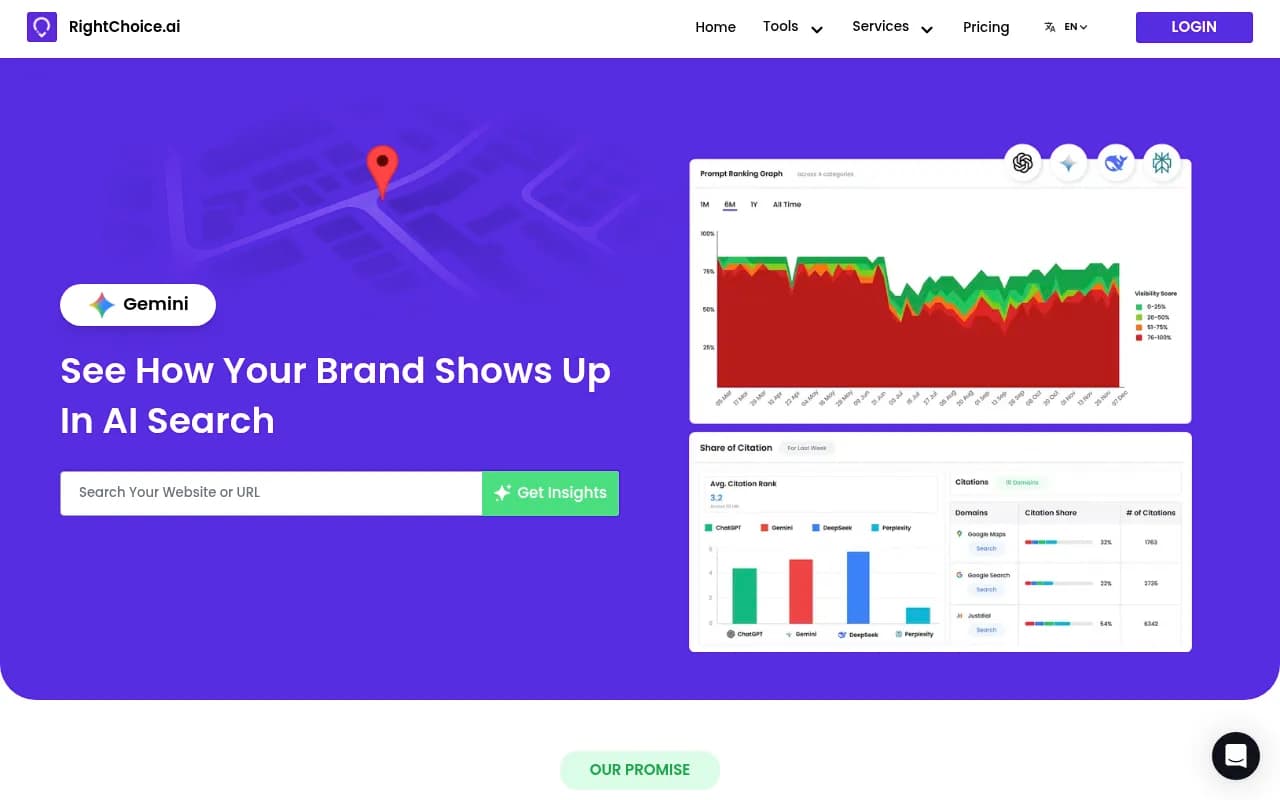
| Free one-off check | RightChoice.Ai, AnswerGist | Good for a baseline before you pay for anything |
| Brand mention listening | Brand24, Meltwater | Catches social and news mentions |
| Listings correction | Yext, Synup | Multi-location brands |
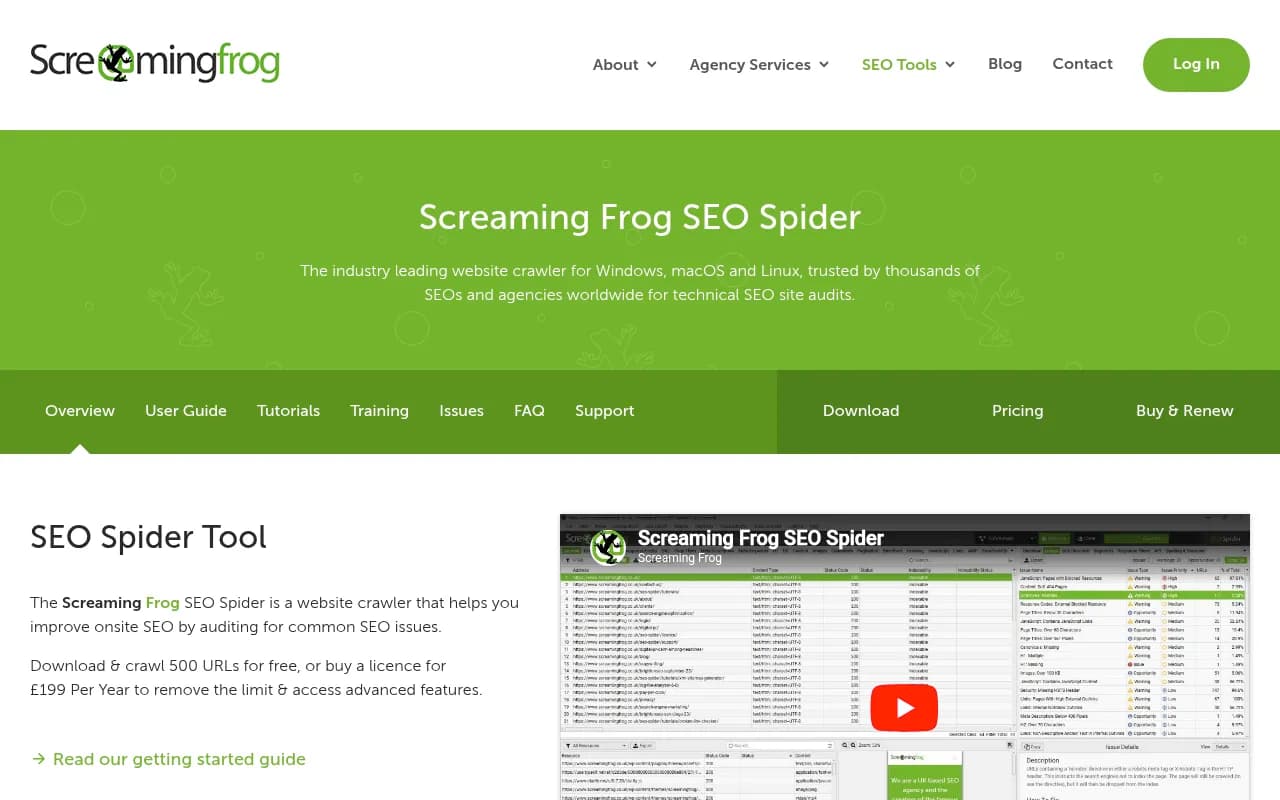
| Crawl and technical checks | Screaming Frog SEO Spider | Verify rendering and metadata |

If you want a wider list of monitoring platforms, the directory at bestgeosoftware.com is a decent starting point.
Promptwatch is the one I would pick when the audit needs to turn into action, because it connects the claim to the page, the page to crawler logs, and the fix to a re-test. Its pricing starts at $95/month with a 7-day free trial, and the free AI visibility report gives a baseline without signing in.
Prioritising when you have limited time
If you can only do a few checks this quarter, do these in order: pricing claims (1), product and landing pages (6), docs (7), and crawler access (13). They cover the sources ChatGPT leans on most and the fixes you fully control.
Then add AI Overviews social checks (11) if Google is a big channel for you, and review sites (8) if you sell something people research via reviews.
A plain note on process: put one person in charge of the log and assign every inaccurate claim an owner. Audits that end in a PDF nobody acts on are the usual failure, not a lack of data.
Frequently asked questions
Why quarterly and not monthly?
Citation lifetimes run from about 36 days for news to beyond 90 days for landing pages and docs. Quarterly catches most drift. Run monthly spot checks on pricing and any page you just changed, and weekly checks around launches.
Which engine matters most?
It depends on your audience. ChatGPT drives most citation volume, but AI Overviews reaches searchers inside Google and leans more on social sources. Audit both.
Can I get a wrong answer removed?
Not reliably. Update the page that taught the model, strengthen the correct version with clear product, FAQ, and docs content, and re-test after the next crawl.
Do I need a paid tool?
No for a first pass. A spreadsheet and 20 prompts will surface the worst problems. Pay for tooling when the prompt count, markets, or languages make manual collection a time sink.
Final word
The first audit is the ugly one. You will find claims you did not know existed, and some will trace to pages you forgot you owned. Fix the high-frequency ones, log the rest, and run it again in 90 days with the same prompts so you can see whether the fixes held.
If you would rather hand the whole programme to specialists, 1001 SEO Media runs AI search and GEO audits for brands as part of its services.