Key takeaways
- AI models don't store verified facts about your company. They pattern-match across everything they've seen, so "frequently mentioned" often beats "official."
- Most brand errors fall into seven buckets: missing info, wrong data, stale info, conflicting sources, wrong tone, wrong category or competitor framing, and thin or generic reviews.
- Each bucket has a different fix. Treating them all as "hallucination" sends you to the wrong team.
- Check each AI engine separately. Reddit's share of ChatGPT citations collapsed in August 2026 while Google's AI surfaces declined only gradually, so the source of a wrong claim depends on the platform.
- Manual spot-checks catch the first few errors. After that you need systematic tracking.
Why AI gets brands wrong in the first place
A language model doesn't look up your company in a database. It generates an answer from patterns, and it can't tell "official" from "mentioned a lot." If your site states one price but twelve outdated comparison posts, three old reviews, and a scraped listicle state another, the wrong number wins by volume.
One practitioner put it bluntly in a thread on the ziptie.ai blog: LLMs don't know what's official, they know what's frequently mentioned. That matches what I see in practice. The fix is rarely "tell the AI the truth." It's "change what the AI finds."
There's a second layer too. Live-search assistants like ChatGPT, Perplexity, and Google AI Overviews retrieve pages and then summarize them. So an error can come from the model's training memory or from a page it fetched five seconds ago. Those are different problems with different cures.
Here is what the branded-prompt data says about where answers come from. In Promptwatch Data's analysis of ChatGPT citations by content type (Sep 28 to Oct 4, 2026), product pages took 23.3% of citations on branded prompts and landing pages 22.8%, almost half combined. Reviews rose to 5.6%, more than three times their overall share, and social posts to 3.0%. So when someone asks ChatGPT about your brand by name, your own commercial pages and third-party opinion do most of the talking.
| Failure mode | What it looks like | Usual root cause |
|---|---|---|
| 1. Missing information | Vague or generic answer, or a competitor's details borrowed | Thin product and FAQ pages |
| 2. Incorrect data | Wrong prices, specs, dates, features | Conflicting or invented figures |
| 3. Stale information | Old pricing, discontinued plans, former CEO | Long-lived outdated pages |
| 4. Conflicting sources | Claims you never made, repeated across engines | Old reviews, forums, scraped lists |
| 5. Wrong tone | Luxury brand described as cheap, or the reverse | Review language and third-party framing |
| 6. Wrong category or competitors | You're grouped with the wrong rivals | Weak positioning signals |
| 7. Generic reviews | AI can't say anything specific about you | Reviews with no detail, wrong platforms |
1. Missing information: the AI is guessing
When your site doesn't state something clearly, the model fills the gap. It will say you don't offer an integration you do offer, or describe a vague "all-in-one platform" because that's all it could extract.
How to spot it
Ask the assistants the dull questions your buyers ask. Do you integrate with X? Is there a free trial? Where are you based? What does the cheapest plan include? If answers come back hedged, generic, or borrowed from a competitor, the information is missing or buried.
How to fix it
Put the facts in plain language on pages that are easy to crawl. Branded-prompt data points the same way: keep specs, prices, and positioning complete on product and landing pages, because ChatGPT quotes them directly. Add an FAQ page that answers common brand questions in plain sentences. FAQ pages take 4.8% of branded citations, which is small but real.
2. Incorrect data: invented prices, dates, specs
This is the one that gets people's attention. A prospect quotes a price you've never charged, or a feature you've never built. One marketer described a prospect mentioning something from ChatGPT about their product that was completely false, and the sales call started with damage control.
How to spot it
Build a short fact sheet: pricing, plan limits, founding year, headquarters, integrations, certifications. Run each fact as a question across ChatGPT, Gemini, Perplexity, Claude, and Google AI Overviews. Screenshot every miss with a timestamp, the engine, and a severity label. Without that log you'll argue from memory.
How to fix it
First work out whether the error was retrieved or recalled. Perplexity and AI Overviews show their sources, so you can often find the page the wrong number came from. For ChatGPT, check which pages match the wrong claim. If it's retrieved, fix or remove the source. If it's recalled from training, you can only shift it over time by making the correct fact the most repeated one.
Promptwatch has a Fact Check feature built for this: you mark a claim as accurate or inaccurate, and it looks through the pages crawled from your site to find which ones state the claim or its opposite. That tells you which of your own pages the AI may be learning the wrong thing from.

3. Stale information: the right answer, two years ago
Stale data is the most underestimated failure. Your pricing changed last spring, but the old figure keeps coming back.
Promptwatch Data's content half-life study tracked every page ChatGPT cited on July 6, 2026 through Oct 4, 2026. After 30 days, ChatGPT still cited 78% of landing pages and 76% of docs. Product pages, reviews, and how-tos were each still cited at 55% after 60 days, reaching half-life at 74 to 77 days. News decayed fastest, with half its pages gone after 36 days.
The practical reading: pricing pages are classified as landing or product pages, which means an outdated one can keep getting repeated for months.
How to spot it
Search for your old numbers and old plan names. Look at the dates on the comparison articles that rank for "[your brand] pricing" and "[your brand] alternatives." If AI answers match a page that's a year old, you've found the source.
How to fix it
Update the pages you control first, and put a visible "last updated" date on them. Then contact the owners of third-party posts and directories with the correction. It's tedious. It also works more often than people expect, because most publishers don't want wrong prices on their pages.
4. Conflicting sources: someone else's version of you
This is the stale-data problem with a twist. The wrong claim isn't old, it's just someone else's. A forum thread, a scraped listicle, a competitor's comparison page.
Forums are where this gets platform-specific. In Promptwatch's data, reddit.com held a steady 3.83% of ChatGPT citations from July 18 to Aug 7, 2026, then fell to a 0.52% average from Aug 14 to 17 (see Reddit citations are dropping in ChatGPT). Promptwatch flags that the size of that drop is provisional because a data-collection issue can't be ruled out. Google's surfaces moved far less: AI Overviews went from about 2.5% to 2.1%, and AI Mode from 2.22% to 1.54%.
So a wrong claim sourced from a Reddit thread might show up in Google's AI answers and barely appear in ChatGPT. If you only test one engine, you'll misjudge how bad it is. The wider social picture differs by engine too: from Sep 28 to Oct 4, 2026, ChatGPT drew 0.46% of its citations from social platforms against 12.2% for Google AI Overviews (Promptwatch Data).
How to spot it
For every wrong claim, record the cited sources per engine. A claim that appears in one engine and cites a forum is a different problem from one that appears everywhere and cites ten comparison blogs.
How to fix it
For forums, answer honestly and transparently in the thread as the company. Don't astroturf. For listicles and directories, ask for corrections. For competitor pages, publish your own clear comparison page so there's a better source to retrieve.
5. Wrong tone: the vibe is off
Tone errors don't show up in a fact check. The AI gets your price right and still describes a premium service as "budget-friendly," or calls an enterprise product "great for hobbyists."
How to spot it
Read the full answers, not just the mention. Look at adjectives and framing. Sentiment scoring helps at scale, but I'd still read twenty responses by hand first, because a number won't tell you the model is describing you as the cheap option.
Promptwatch's Brand Narrative is built around this: it pulls individual claims like "affordable for small teams" or "its mobile app lacks features" out of every tracked response, groups the repeated ones, and files them under themes like Pricing, Features, Support, and Reputation. It's the fastest way I know to see which adjectives have stuck to you.
How to fix it
Tone comes from the language around you. Review text, press coverage, and your own copy all feed it. Rewrite thin or off-brand pages, keep a short brand book of how you describe yourself, and use that same language consistently on your site, profiles, and partner pages.
6. Wrong category or wrong competitors
Sometimes the facts are right and the frame is wrong. You're a project management tool listed among CRM tools, or compared with a rival two sizes bigger or smaller.
How to spot it
Run competitor-comparison and "best X for Y" prompts for your category and watch who shows up next to you and in what order. Also run them as different buyer personas, since an assistant may frame a startup founder's question differently from a procurement lead's.
How to fix it
State your category and your closest alternatives explicitly on your landing pages. Publish honest comparison pages. Comparisons take 5.9% of ChatGPT citations overall and 7.9% on commercial prompts, so they're a real input. Where review sites and directories describe you, correct the category fields there too.
7. Generic reviews: AI has nothing specific to say
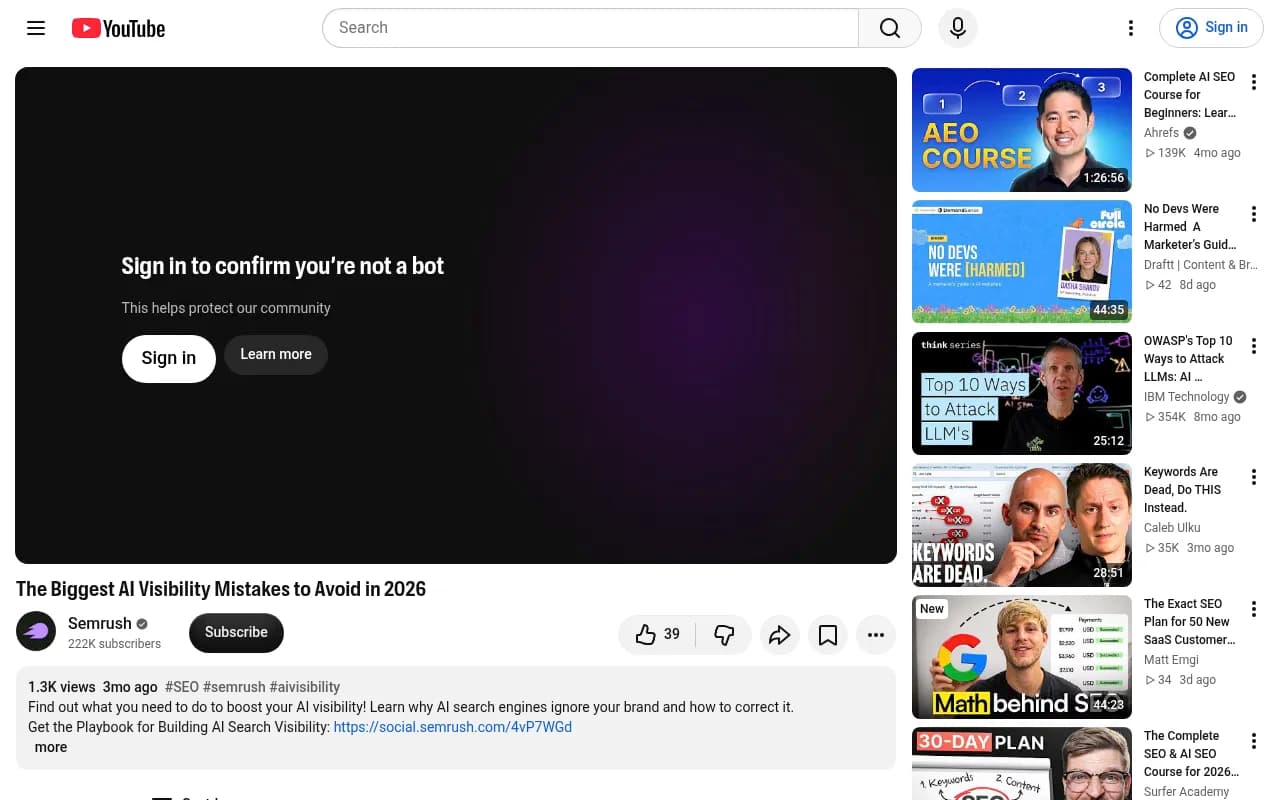
The Semrush video on AI visibility mistakes makes a point I agree with: your reviews might be plentiful and still useless. AI engines read the text of reviews across platforms and synthesize what users said. If every review says "great product, would recommend," there's nothing to extract. It can't say your onboarding is fast, your API is flexible, or support replies within an hour.
How to spot it
Skim your last fifty reviews on the platforms your category uses. Count how many mention a specific feature, use case, or outcome. If it's under a third, you have a specificity problem.
How to fix it
When you ask for reviews, ask a better question: what were you trying to do, and what happened? Point people to the review sites buyers in your category actually trust. Tools like Trustpilot and review-management platforms help with collection, but the prompt you give customers matters more than the tool.
How to run a brand accuracy audit
Here's a workable monthly routine.
- Write 20 to 40 prompts across branded, comparison, and category questions. Include your fact sheet items.
- Run them on ChatGPT, Gemini, Perplexity, Claude, and Google AI Overviews and AI Mode.
- Log every wrong, stale, or off-tone statement with engine, date, and cited sources.
- Tag each one with one of the seven failure modes above.
- Fix the source, not the symptom: your page, a third-party page, or a missing page.
- Re-run the same prompts after two to four weeks and compare.
Prompt sets drift if you rewrite them each time, so keep them fixed. Also keep location and language fixed per prompt set, since answers change by market.
The optional extra: add an llms.txt file with a plain summary of your authoritative pages. It's cheap, and a free LLMs.txt generator exists. Treat it as a small hint, not a cure. Promptwatch's own data found markdown files make up just 0.05% of AI search citations (Markdown in AI search), so it serves AI agents more than AI search.
Tools that help you catch errors
Manual checks don't scale past a handful of prompts. The tools below cover different parts of the job.
| Tool | Strength for this job | Watch out for |
|---|---|---|
| Promptwatch | Tracks real AI interfaces, Brand Narrative and Fact Check, citation tracing, crawler logs, and content tools to fix gaps | Fact Check is on Business and above |
| ZipTie | Flags answers that contradict facts you register, shows cited sources | An AI does the comparison, so flags can be wrong |
| LLMClicks | Hallucination detection built into tracking | Narrower on content fixes |
| Otterly.AI | Affordable monitoring | Monitoring only |
| Peec AI | Simple prompt and mention tracking | No optimization layer |
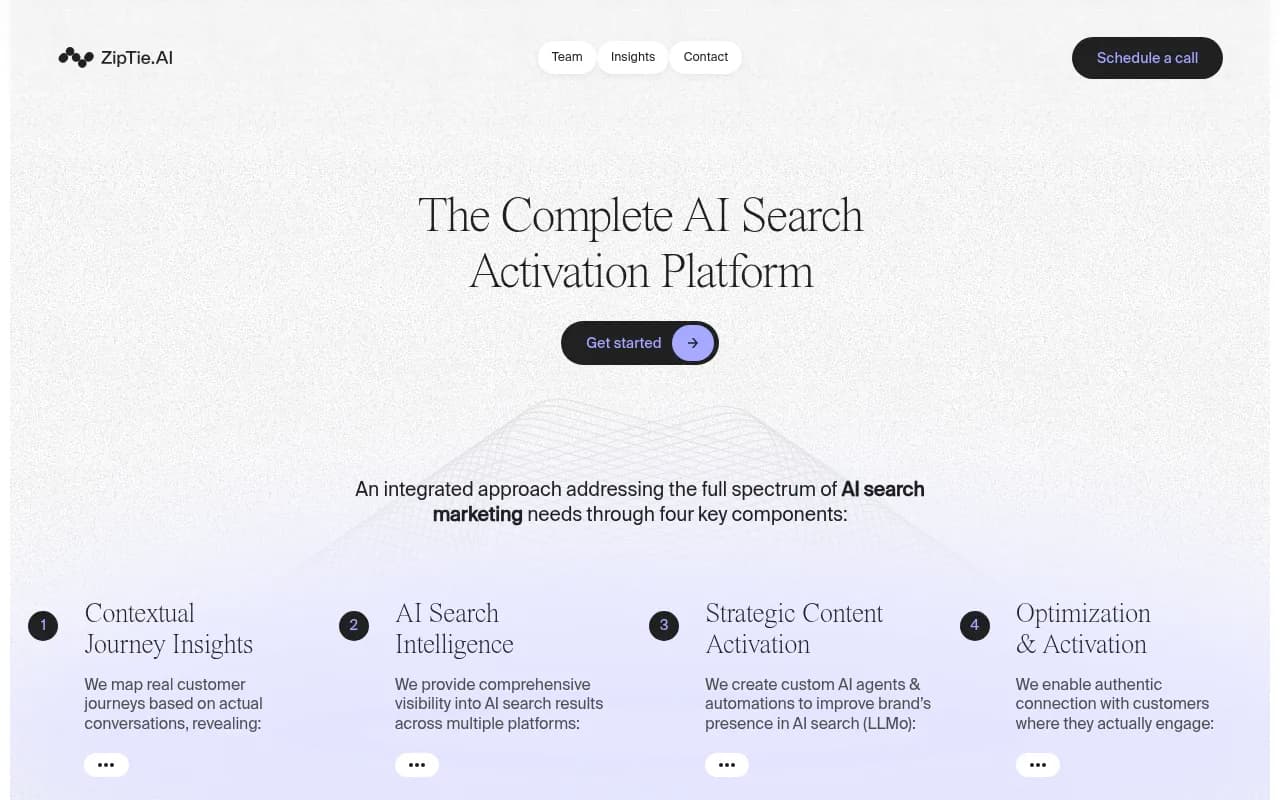
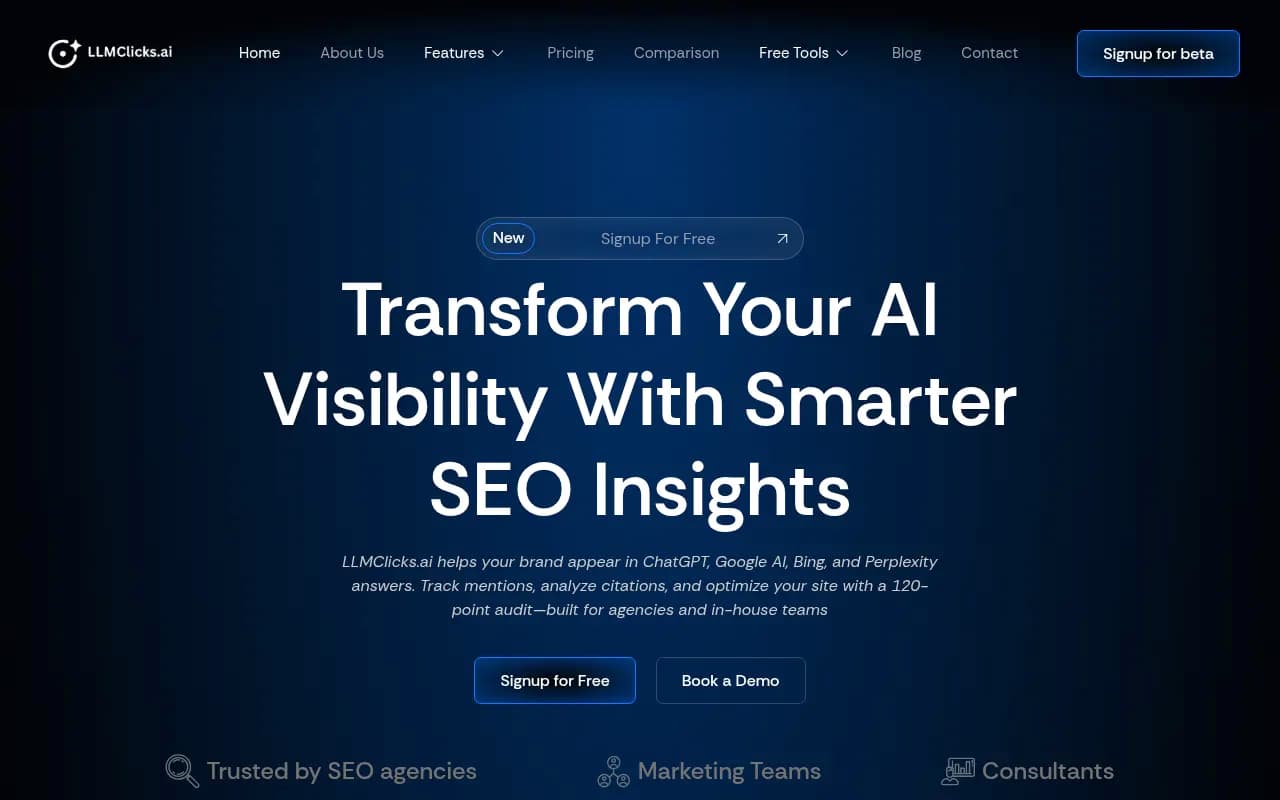

Most cheaper trackers answer "was I mentioned?" Wrong-information problems need more: which source is feeding the claim, which of your own pages might be teaching it, and whether a fix worked. That's the practical reason I'd lean toward a platform that covers citations and crawler access too. The directory at bestgeosoftware.com lists more options if you want to compare.
If you'd rather hand the work off, an agency that handles GEO can run this audit for you. 1001 SEO Media is one example, and it uses Promptwatch for AI visibility tracking.
What to fix first
Don't try all seven at once. Triage by damage.
- Fix wrong prices, specs, and policies first. Prospects act on them.
- Fix stale pages on your own site next. It's the cheapest win and you control it entirely.
- Then tackle third-party sources, starting with the ones cited most often.
- Leave tone and review quality for the ongoing program, because they move slowly.
AI will keep getting some things about your brand wrong. The goal is to shrink the gap between what you know to be true and what the most-cited pages say, one source at a time.