Key takeaways
- Peec AI is solid for multi-engine AI visibility monitoring, but it doesn't track the external sources (Reddit, YouTube, forums) that increasingly influence what LLMs recommend.
- Several alternatives go beyond monitoring to include content gap analysis, AI content generation, and source-level citation tracking.
- The tools below vary significantly in price and depth -- some are lightweight trackers, others are full optimization platforms.
- If you want to understand why an AI model recommends a competitor, you need to see the sources it's pulling from, not just the mention count.
- Most monitoring-only tools leave you with data but no clear path to improving your visibility.
Here's a pattern that keeps coming up in SEO communities in 2026: a brand tracks its AI visibility, sees a competitor consistently getting recommended by ChatGPT and Perplexity, and has no idea why. They check their own content. It looks fine. The competitor's content doesn't look dramatically better either.
The answer is usually somewhere else entirely -- a Reddit thread from eight months ago, a YouTube video that got cited in a forum, a comparison post on a niche blog. These are the sources AI models actually pull from when forming recommendations. And Peec AI, for all its strengths in prompt-level analytics and multi-engine monitoring, doesn't surface them.
That's the gap this guide addresses. The alternatives below were chosen specifically because they either track external sources directly, analyze citation patterns at a deeper level, or help you take action on what you find -- rather than just showing you a dashboard full of numbers.
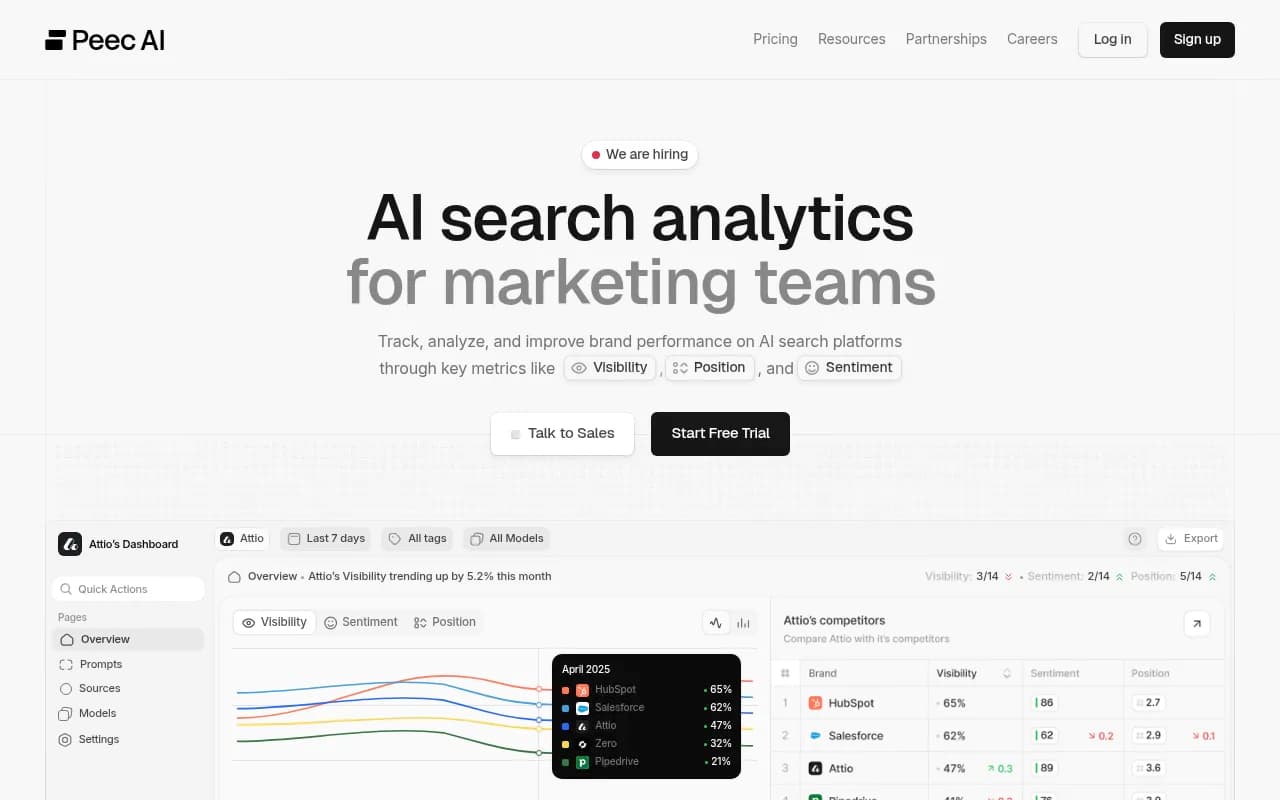
What Peec AI does well (and where it falls short)
Peec AI built a strong reputation early in 2025 for tracking Google AI Overview visibility, brand presence in LLM-generated summaries, and prompt-level analytics across ChatGPT-style engines. For teams that needed a quick answer to "are we showing up in AI search?", it was one of the better options available.
The gaps that kept surfacing in user feedback:
- No visibility into which external sources (Reddit, YouTube, forums) AI models were citing when recommending competitors
- Limited content optimization features -- it tells you where you're missing, not what to do about it
- Costs scale quickly for large prompt sets
- No crawler logs to understand how AI bots are actually reading your site
For teams that just need a monitoring dashboard, Peec AI still works. But if you want to understand the full picture of why AI models recommend what they recommend, you need something that goes further.
The 6 best Peec AI alternatives for tracking external sources
1. Promptwatch
Promptwatch is the most complete option on this list, and the one most directly built around the problem of external source influence. It tracks Reddit discussions and YouTube content that AI models cite when forming recommendations -- a capability most competitors don't have at all.

The core difference from Peec AI is that Promptwatch isn't just a monitoring tool. It runs a full loop: find the gaps (Answer Gap Analysis shows exactly which prompts competitors rank for that you don't), generate content to fill them (a built-in AI writing agent creates articles grounded in real citation data), and track whether that content actually gets cited by AI models.
The Reddit and YouTube tracking is particularly useful for understanding why a competitor is winning. If ChatGPT keeps recommending a rival, Promptwatch can show you whether it's because of a specific Reddit thread, a YouTube video, or a piece of content on their site -- which tells you exactly where to focus.
Other things worth knowing: it logs AI crawler activity in real time (which pages ChatGPT, Claude, and Perplexity are actually reading on your site), tracks prompt volumes and difficulty scores so you can prioritize, and supports 10 AI models including Google AI Overviews, Grok, DeepSeek, and Mistral.
Pricing starts at $99/month for the Essential plan (1 site, 50 prompts, 5 articles). The Professional plan at $249/month adds crawler logs, city/state tracking, and 150 prompts. A free trial is available.
2. Scrunch AI
Scrunch focuses on brand narrative analysis -- how AI models describe your brand, what language they use, and how that compares to competitors. It's a different angle than pure visibility tracking, and a useful one.
Where it helps with the external source problem: Scrunch analyzes the descriptors and framing AI models use when mentioning your brand, which often reflects the language used in external sources like Reddit discussions or review sites. If your brand is consistently described in a way that doesn't match how you want to be positioned, Scrunch helps you identify that drift.
It's not a direct Reddit/YouTube tracker, but it's better than Peec AI at understanding the qualitative side of AI visibility -- not just whether you appear, but how you appear.
3. Otterly.AI
Otterly is one of the more affordable options in this space, and it covers the basics well: tracking brand mentions across ChatGPT, Google AI Overviews, Perplexity, and a few other engines.

It includes GEO audit features that analyze on-page factors affecting AI search visibility, which gives it a slight edge over pure monitoring tools. The trade-off is depth -- it doesn't track Reddit or YouTube, and it doesn't have content generation built in.
For smaller teams or agencies that need to monitor multiple clients without a large budget, Otterly is worth considering. For teams that want to understand the external source ecosystem influencing AI recommendations, it's not the right fit.
4. SE Visible
SE Visible is the AI visibility layer built on top of SE Ranking's existing SEO infrastructure. It's aimed at marketing leaders who need strategic visibility data -- competitor benchmarking, sentiment analysis, share of voice across AI engines.
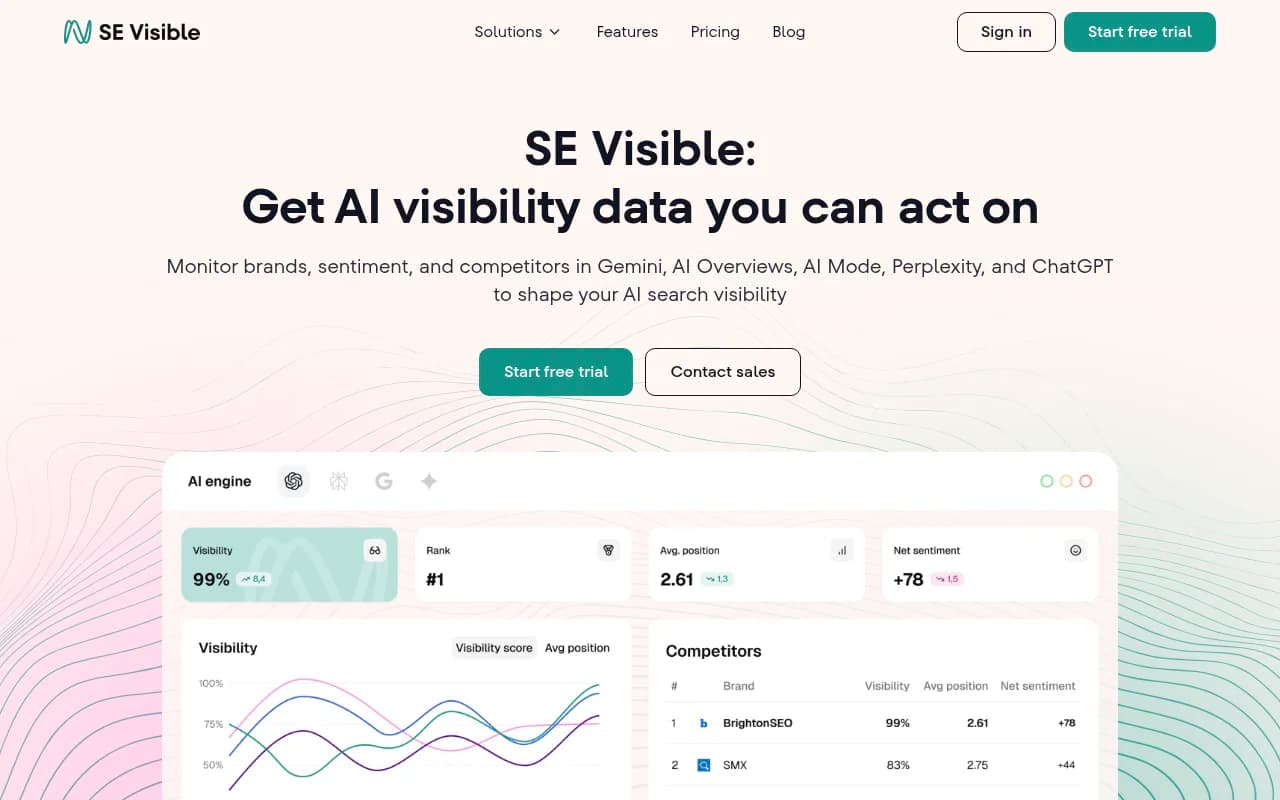
The research from SE Ranking's own team found it effective for identifying content gaps and tracking AI Overview visibility. It starts at $189/month, which puts it in a mid-range price bracket.
What makes it relevant here: SE Visible pulls in a broader set of signals than Peec AI, and its integration with SE Ranking's keyword and content tools means you can act on what you find more easily. It doesn't have dedicated Reddit/YouTube tracking, but its source analysis goes deeper than Peec AI's.
5. Profound AI
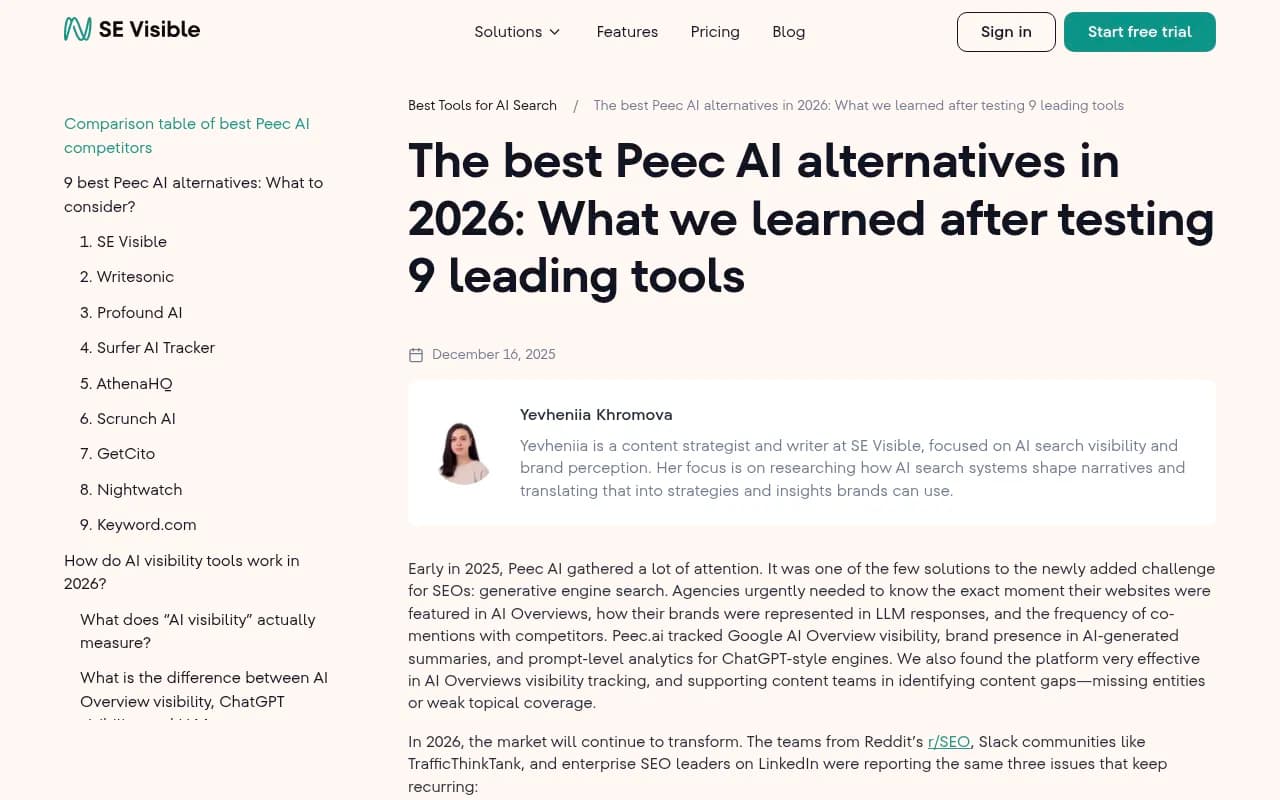
Profound is the enterprise-grade option on this list, built for teams that need precise AI Overview tracking, entity extraction, and attribution mapping.
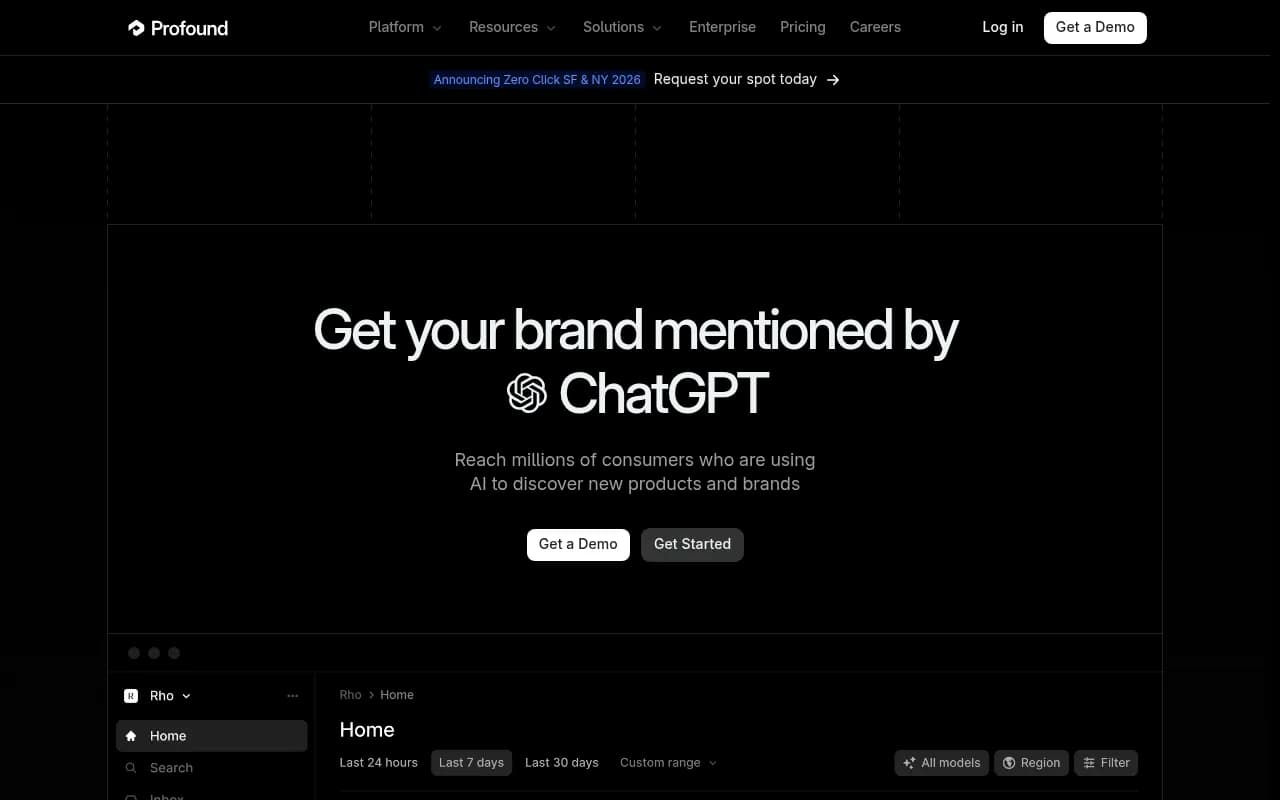
It starts at $99/month, which is competitive for what it offers, though enterprise features push the price up significantly. The entity extraction capability is genuinely useful -- it shows you which concepts and entities AI models associate with your brand versus competitors, which is a proxy for understanding what sources they're drawing from.
Where Profound falls short relative to Promptwatch: it doesn't have built-in content generation, and it doesn't track Reddit or YouTube directly. But for teams that need deep entity-level analysis and precise citation attribution, it's one of the stronger options available.
6. Ahrefs Brand Radar
Ahrefs Brand Radar is worth including because it comes from a team with deep experience in link and citation analysis, and that background shows in how it approaches AI visibility.
The argument for it (made by Ahrefs' own CMO Tim Soulo) is that Ahrefs already has one of the largest web crawl databases in existence, which means its understanding of which sources AI models are likely drawing from is grounded in real data rather than just querying AI engines directly.
The honest limitation: it uses fixed prompts, which means you can't customize the questions you're tracking. And there's no AI traffic attribution -- you can see visibility data but can't connect it directly to revenue. For teams already deep in the Ahrefs ecosystem, it's a natural add-on. For teams starting fresh, the fixed prompt limitation is a real constraint.
How these tools compare
| Tool | Reddit/YouTube tracking | Content generation | Crawler logs | AI models covered | Starting price |
|---|---|---|---|---|---|
| Promptwatch | Yes (both) | Yes | Yes | 10 | $99/mo |
| Scrunch AI | No (narrative analysis) | No | No | 6+ | Custom |
| Otterly.AI | No | No | No | 5+ | ~$49/mo |
| SE Visible | No | No | No | 5+ | $189/mo |
| Profound AI | No | No | No | 6+ | $99/mo |
| Ahrefs Brand Radar | No | No | No | 4+ | Bundled with Ahrefs |
The table makes something clear: if tracking Reddit, YouTube, and external sources is your primary requirement, Promptwatch is the only tool on this list that does it directly. The others have their own strengths, but they don't solve that specific problem.
Which tool should you actually use?
It depends on what you're trying to accomplish.
If you want to understand why AI models recommend competitors -- and fix it -- Promptwatch is the most complete option. The Reddit and YouTube tracking, combined with content gap analysis and built-in content generation, means you can go from "we're not showing up" to "we published content that addresses the gap" in a single workflow. Most other tools stop at the first step.
If you're primarily concerned with brand narrative and how AI describes your company, Scrunch AI is worth a look. It's a different lens than visibility tracking, but a useful one.
If budget is the main constraint and you just need basic monitoring across a few AI engines, Otterly.AI covers the fundamentals at a lower price point.
If you're an enterprise team that needs entity-level analysis and precise attribution, Profound AI is the stronger choice -- though you'll need to supplement it with other tools for content creation.
If you're already paying for Ahrefs and want AI visibility data without adding another subscription, Brand Radar is a reasonable starting point, with the understanding that the fixed prompts limit how much you can customize your tracking.
The broader point: the AI search landscape has moved past the question of "are we visible?" Most teams have answered that. The harder question is "why are competitors visible and we're not?" -- and that requires looking at the sources AI models actually use, not just the outputs they produce. Tools that track Reddit threads, YouTube videos, and external citations are the ones that can actually answer that question.
What to look for when evaluating any GEO tool
A few things worth checking before committing to any of these platforms:
- Does it track the AI engines your customers actually use? Coverage varies significantly -- some tools focus on ChatGPT and Google AI Overviews while ignoring Perplexity, Claude, or Grok.
- Can you customize the prompts you track? Fixed prompt sets limit how useful the data is for your specific category.
- Does it show you why you're visible or invisible, or just whether you are? Source-level citation data is what separates useful insights from vanity metrics.
- Is there a path from data to action? Monitoring dashboards are only useful if they tell you what to do next.
- How does it handle multi-language and multi-region tracking? If your customers are in multiple markets, this matters more than most tools acknowledge.
The tools that answer "yes" to most of these questions are the ones worth paying for. The ones that answer "yes" to the last two -- showing you why and giving you a path to action -- are the ones that will actually move the needle.