Key Takeaways
- LLMrefs is 73% cheaper: $79/mo for 500 prompts vs AthenaHQ's $295/mo self-serve plan, making it the budget winner for small teams
- AthenaHQ offers deeper optimization features: Built-in content recommendations, citation source analysis, and executive dashboards -- LLMrefs is primarily a monitoring tool
- LLMrefs covers more AI platforms: Tracks 8+ LLMs including Meta AI and xAI Grok, while AthenaHQ focuses on 8 core engines
- Team access differs dramatically: LLMrefs includes unlimited team seats at all tiers, AthenaHQ charges per user on enterprise plans
- Free trial availability: LLMrefs offers a 7-day trial with no credit card required, AthenaHQ requires booking a demo for access
- Target audience split: AthenaHQ is built for enterprise teams with dedicated GEO managers, LLMrefs serves marketers and SEO teams who need quick visibility insights
Overview
AthenaHQ: The enterprise GEO platform
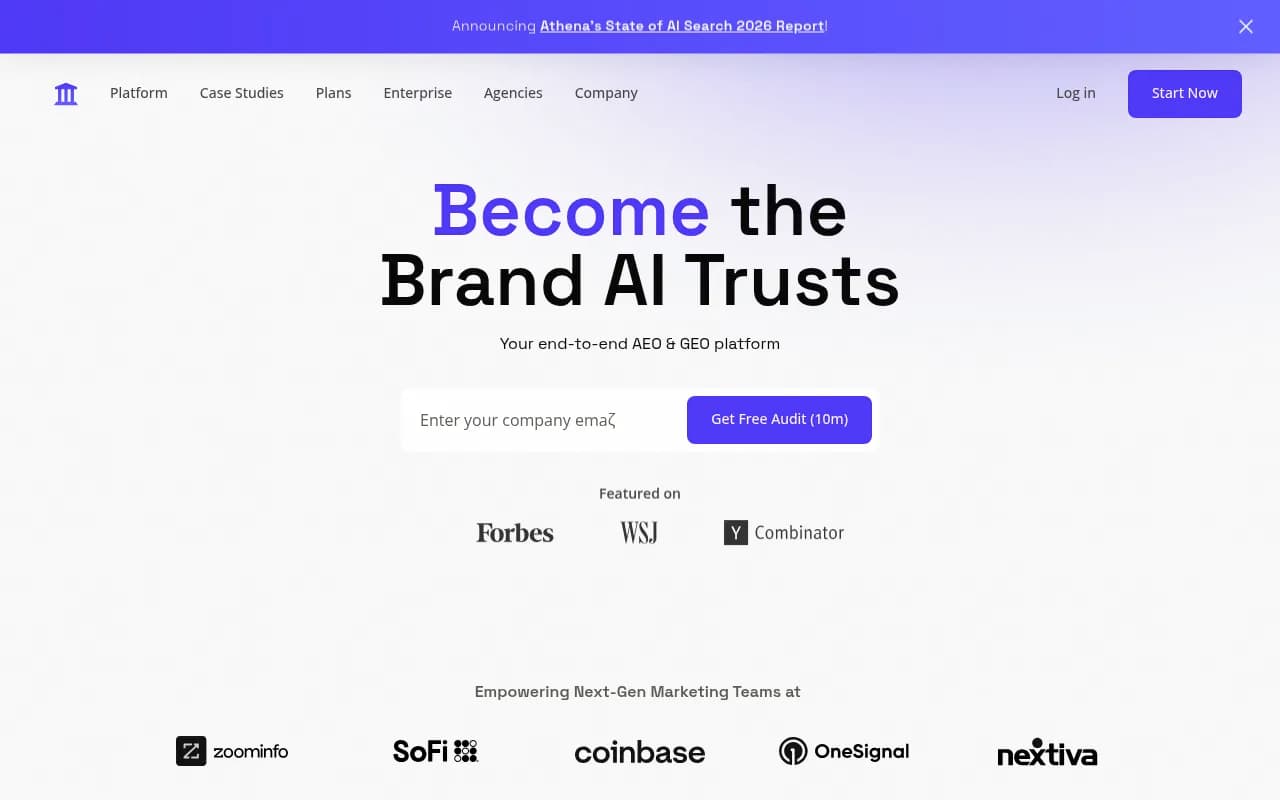
AthenaHQ positions itself as an "end-to-end AEO & GEO platform" built by ex-Google and DeepMind engineers. It's used by ZoomInfo, Coinbase, and SoFi -- brands with serious budgets and dedicated teams managing AI search presence. The platform tracks visibility across ChatGPT, Perplexity, Google AI Overviews, Claude, Gemini, and other major LLMs. What sets it apart is the focus on optimization workflows: automated content recommendations, citation source analysis, and executive-level ROI dashboards. It's designed for teams that want to actively improve their AI visibility, not just watch numbers go up and down.
Pricing starts at $295/month for the self-serve plan (annual billing drops it to $95/mo, but that's still $1,140/year upfront). No free trial -- you book a demo to get access. Enterprise pricing is custom, which usually means "expensive."
LLMrefs: The accessible AI search tracker
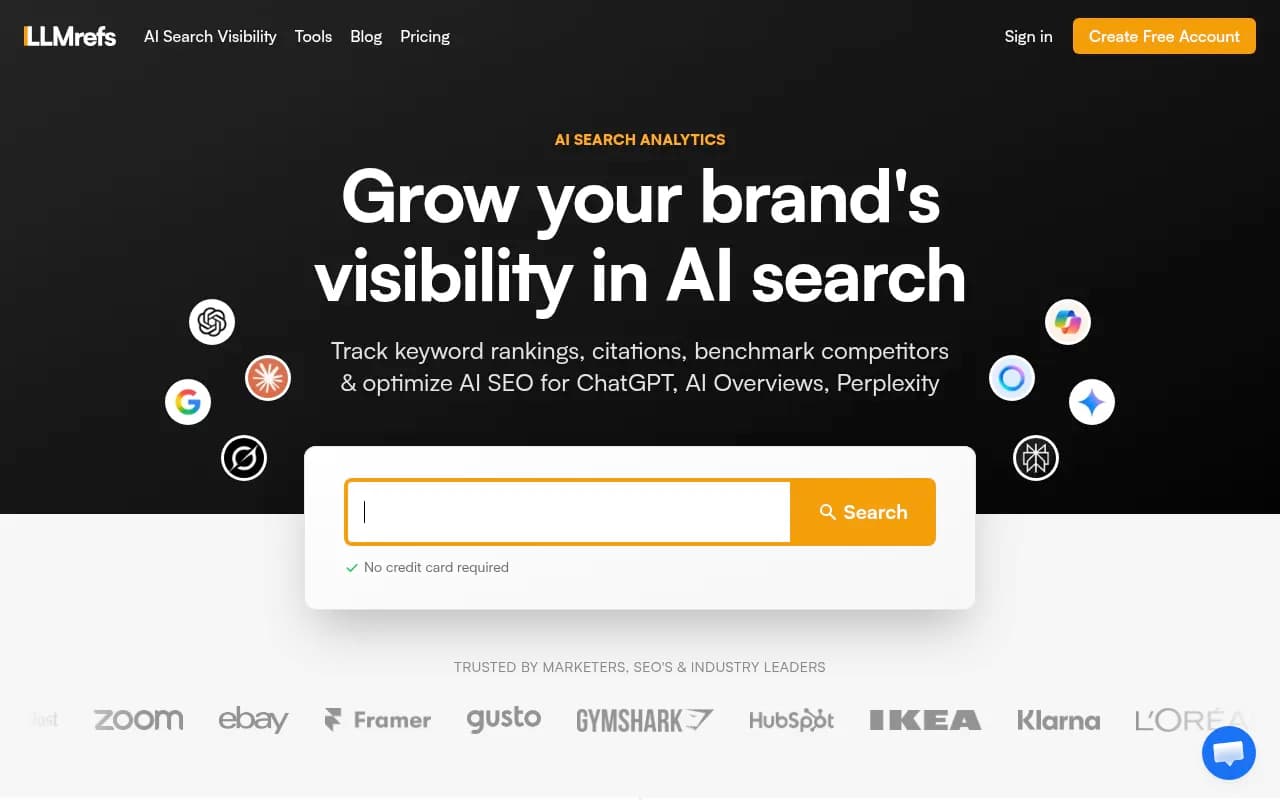
LLMrefs takes a different approach. It's a straightforward AI search analytics platform that tracks keyword rankings, citations, and competitor visibility across ChatGPT, Google AI Overviews, Perplexity, Claude, Gemini, Meta AI, xAI Grok, and Microsoft Copilot. The client list includes eBay, HubSpot, Shopify, and over 10,000 marketers -- a much broader user base than AthenaHQ's enterprise focus.
The value proposition is simplicity and price. At $79/month for 500 prompts (covering 20-25 keywords), you get unlimited projects and unlimited team seats. That's a massive difference from AthenaHQ's per-user enterprise model. LLMrefs also offers a 7-day free trial with no credit card required, so you can test it before committing. The platform covers 50+ countries for multi-region tracking.
What LLMrefs doesn't do: deep optimization recommendations, content gap analysis, or executive dashboards. It shows you where you rank and how competitors are doing. That's it. For many teams, that's exactly what they need.
Side-by-Side Comparison
| Feature | AthenaHQ | LLMrefs |
|---|---|---|
| Starting price | $295/mo ($95/mo annual) | $79/mo |
| Free trial | No (demo required) | 7 days, no credit card |
| AI platforms tracked | 8 (ChatGPT, Perplexity, Google AI Overviews, Claude, Gemini, etc.) | 8+ (includes Meta AI, xAI Grok, Microsoft Copilot) |
| Prompts included | Not disclosed | 500 prompts (~20-25 keywords) |
| Team seats | Limited (enterprise pricing) | Unlimited |
| Projects | Not disclosed | Unlimited |
| Multi-region tracking | Yes | Yes (50+ countries) |
| Content optimization | Yes (automated recommendations) | No |
| Citation source analysis | Yes | Basic |
| Competitor benchmarking | Yes | Yes |
| Executive dashboards | Yes (ROI tracking) | No |
| API access | Enterprise only | Not disclosed |
| Target audience | Enterprise teams, GEO managers | Marketers, SEO teams, agencies |
Pricing comparison
| Plan | AthenaHQ | LLMrefs |
|---|---|---|
| Entry tier | $295/mo self-serve ($95/mo annual) | $79/mo |
| Mid-tier | Enterprise (custom) | $79/mo (single tier) |
| Enterprise | Custom pricing | Custom (for high-volume needs) |
| Free trial | No | 7 days |
| Annual discount | 68% off ($95/mo vs $295/mo) | Not disclosed |
The pricing gap is stark. AthenaHQ's annual plan at $95/month still costs $1,140 upfront. LLMrefs is $79/month with no annual commitment required. For a small team or solo marketer, that's the difference between affordable and "maybe next quarter."
Platform coverage and tracking depth
Both tools track the major AI search engines -- ChatGPT, Perplexity, Google AI Overviews, Claude, Gemini. LLMrefs adds Meta AI, xAI Grok, and Microsoft Copilot to the mix, giving it slightly broader coverage. AthenaHQ focuses on 8 core platforms but doesn't specify which ones beyond the big names.
Where they differ is tracking depth. AthenaHQ provides "citation source analysis" -- you can see which specific pages, domains, or sources the AI models are pulling from when they mention (or don't mention) your brand. This is useful for link building and understanding why you're not showing up. LLMrefs tracks citations too, but the emphasis is on keyword rankings and competitor benchmarking rather than deep source analysis.
LLMrefs supports 50+ countries for multi-region tracking, which is critical if you're operating globally. AthenaHQ mentions multi-region support but doesn't specify how many countries. Both tools let you track competitors, but AthenaHQ's competitor analysis is tied into its optimization workflows -- you see what competitors are doing and get recommendations on how to beat them. LLMrefs shows you competitor rankings but leaves the strategy to you.
Content optimization and recommendations
This is where AthenaHQ pulls ahead. The platform includes "automated content optimization recommendations" -- it analyzes where you're not showing up and suggests specific changes to improve visibility. There's also a workflow for managing your entire GEO strategy: tracking, optimization, execution. It's built for teams that want to actively improve their AI search presence, not just monitor it.
LLMrefs doesn't offer content recommendations. It's a tracking tool. You see the data, you figure out what to do with it. For some teams, that's a feature -- they don't want the platform telling them what to write. For others, especially teams without dedicated GEO expertise, it's a gap.
If you're also looking to track how your brand shows up in AI search results and need help closing content gaps, Promptwatch covers that angle with Answer Gap Analysis and an AI writing agent that generates content grounded in citation data.

User interface and ease of use
AthenaHQ markets itself as a "command center" for GEO managers. The interface is built for power users -- executive dashboards, ROI tracking, cross-platform visibility reports. It's comprehensive but comes with a learning curve. The target user is someone who spends hours per week managing AI search strategy.
LLMrefs is simpler. You add keywords, it tracks rankings, you see where you stand. The interface is clean and focused on the core use case: monitoring AI search visibility. There's less to learn, which means you can get value faster. The trade-off is fewer advanced features.
Both platforms require some setup time to configure tracking, add competitors, and define your keyword set. Neither is plug-and-play, but LLMrefs has a shorter ramp-up.
Team collaboration and access
LLMrefs includes unlimited team seats at all pricing tiers. This is huge for agencies or marketing teams where multiple people need access. You pay $79/month and everyone on the team can log in.
AthenaHQ's self-serve plan doesn't specify team seat limits, but enterprise plans charge per user. This is standard for enterprise software but gets expensive fast. If you have a 5-person marketing team, you're looking at significantly higher costs than LLMrefs.
LLMrefs also offers unlimited projects, so you can track multiple brands or clients from one account. AthenaHQ doesn't disclose project limits on the self-serve tier.
Enterprise features and support
AthenaHQ is built for enterprise buyers. You get dedicated account management, custom integrations, API access (on enterprise plans), and white-glove onboarding. The platform is designed for companies with complex needs and budgets to match.
LLMrefs doesn't emphasize enterprise features on its website. It's a self-serve product with standard support. For high-volume needs, they offer custom pricing, but the core product is aimed at teams that want to get started quickly without a sales process.
If you need API access, custom reporting, or dedicated support, AthenaHQ is the better fit. If you want to sign up, add your keywords, and start tracking today, LLMrefs wins.
Data accuracy and refresh rates
Neither platform discloses exact refresh rates for AI search data. This is a common issue in the GEO space -- AI models update frequently, and tracking them in real-time is expensive. Both tools likely refresh data daily or every few days.
AthenaHQ's focus on citation source analysis suggests they're doing deeper crawls to understand where AI models are pulling information from. LLMrefs emphasizes speed and breadth -- tracking more platforms with simpler data points (rankings, citations, visibility scores).
For most use cases, daily or near-daily updates are sufficient. If you need real-time monitoring (e.g., tracking a PR crisis or product launch), neither tool is built for that.
Pros and cons
AthenaHQ pros
- Deep optimization features with automated content recommendations
- Citation source analysis helps you understand why you're not ranking
- Executive dashboards and ROI tracking for leadership buy-in
- Built by ex-Google/DeepMind engineers with strong technical foundation
- Used by major brands (ZoomInfo, Coinbase, SoFi)
AthenaHQ cons
- Expensive: $295/mo self-serve, $1,140/year upfront for annual plan
- No free trial -- requires booking a demo
- Per-user pricing on enterprise plans gets costly for teams
- Steeper learning curve due to feature depth
- Overkill for small teams or solo marketers
LLMrefs pros
- Affordable: $79/mo with no annual commitment required
- 7-day free trial, no credit card needed
- Unlimited team seats and projects at all tiers
- Broader platform coverage (includes Meta AI, xAI Grok)
- Simple interface with fast onboarding
- Used by 10,000+ marketers including eBay, HubSpot, Shopify
LLMrefs cons
- No content optimization or recommendations -- monitoring only
- Lacks executive dashboards and ROI tracking features
- Limited to 500 prompts (~20-25 keywords) on base plan
- No API access or advanced integrations disclosed
- Less depth on citation source analysis
Who should pick which tool
Choose AthenaHQ if:
- You have a dedicated GEO manager or team managing AI search strategy
- You need automated content recommendations and optimization workflows
- Executive buy-in requires ROI dashboards and detailed reporting
- Budget isn't a constraint ($295+/mo is reasonable)
- You want deep citation source analysis for link building
- You're managing AI visibility for a large brand or enterprise
Choose LLMrefs if:
- You're a marketer, SEO, or agency tracking AI search visibility on a budget
- You need to monitor 20-25 keywords across major AI platforms
- Unlimited team access is important (agencies, marketing teams)
- You want to test the tool before committing (7-day free trial)
- You prefer a simple, focused tool over a feature-heavy platform
- You're tracking multiple brands or clients (unlimited projects)
Consider alternatives if:
- You need both monitoring and content generation in one platform (Promptwatch offers Answer Gap Analysis + AI writing agent)
- You're tracking 50+ keywords and need higher prompt limits
- You require real-time monitoring for time-sensitive campaigns
- You need API access for custom integrations (AthenaHQ enterprise or other platforms)
Final verdict
LLMrefs wins on price, accessibility, and team collaboration. At $79/month with unlimited seats and a free trial, it's the obvious choice for small teams, agencies, and marketers who need AI search visibility tracking without enterprise budgets. The platform does what it promises: shows you where you rank in ChatGPT, Perplexity, and other AI engines. Nothing more, nothing less.
AthenaHQ is the better tool if you have the budget and need optimization features. The automated content recommendations, citation source analysis, and executive dashboards justify the higher price for enterprise teams actively managing AI search strategy. But at $295/month (or $1,140/year upfront), it's out of reach for most small teams.
For most readers deciding between these two: start with LLMrefs. The 7-day free trial lets you test it risk-free. If you outgrow it or need deeper optimization features, then consider upgrading to AthenaHQ or exploring platforms like Promptwatch that combine monitoring with content gap analysis and generation.