Key takeaways
- Teams that left Ceyo.ai in 2025 most commonly cited limited actionability -- the platform showed data but didn't help them do anything with it
- The broader AI tool churn trend is real: a February 2026 NBER paper found 80% of companies using AI reported no measurable impact, pushing teams to scrutinize every tool in their stack
- Most Ceyo.ai switchers landed on platforms that combine monitoring with content creation and optimization, not just dashboards
- The GEO/AI visibility space matured fast in 2025, and tools that couldn't close the loop between "you're invisible" and "here's how to fix it" lost users quickly
- Several strong alternatives now exist across different price points and use cases
What was Ceyo.ai, and why were teams using it?
Ceyo.ai entered the AI visibility space during a period when every marketing team suddenly needed an answer to the same question: "Does our brand show up when people ask ChatGPT about us?"
That question sounds simple. The tooling to answer it was, for a while, genuinely scarce. Ceyo.ai offered brand monitoring across AI models -- the basic idea being that you could track mentions, see sentiment, and understand whether your company was appearing in AI-generated responses. For teams that had nothing, that was enough to get started.
The problem is that "getting started" is not the same as "getting results."
Why teams started leaving in 2025
The monitoring-only ceiling
The most consistent complaint from teams that switched away from Ceyo.ai was a version of the same thing: "We could see the problem. We just couldn't fix it."
Knowing you're invisible in Perplexity or Claude is useful for about five minutes. After that, you need to know why you're invisible and what content you'd need to create to change it. Ceyo.ai, like many early-generation AI visibility tools, was built around the monitoring layer. It told you what was happening. It didn't help you do anything about it.
This is a broader pattern in the space. Tools that launched in 2023 and 2024 were mostly dashboards. The teams that built them were solving the measurement problem, not the optimization problem. By mid-2025, the market had moved on.
AI tool fatigue was real
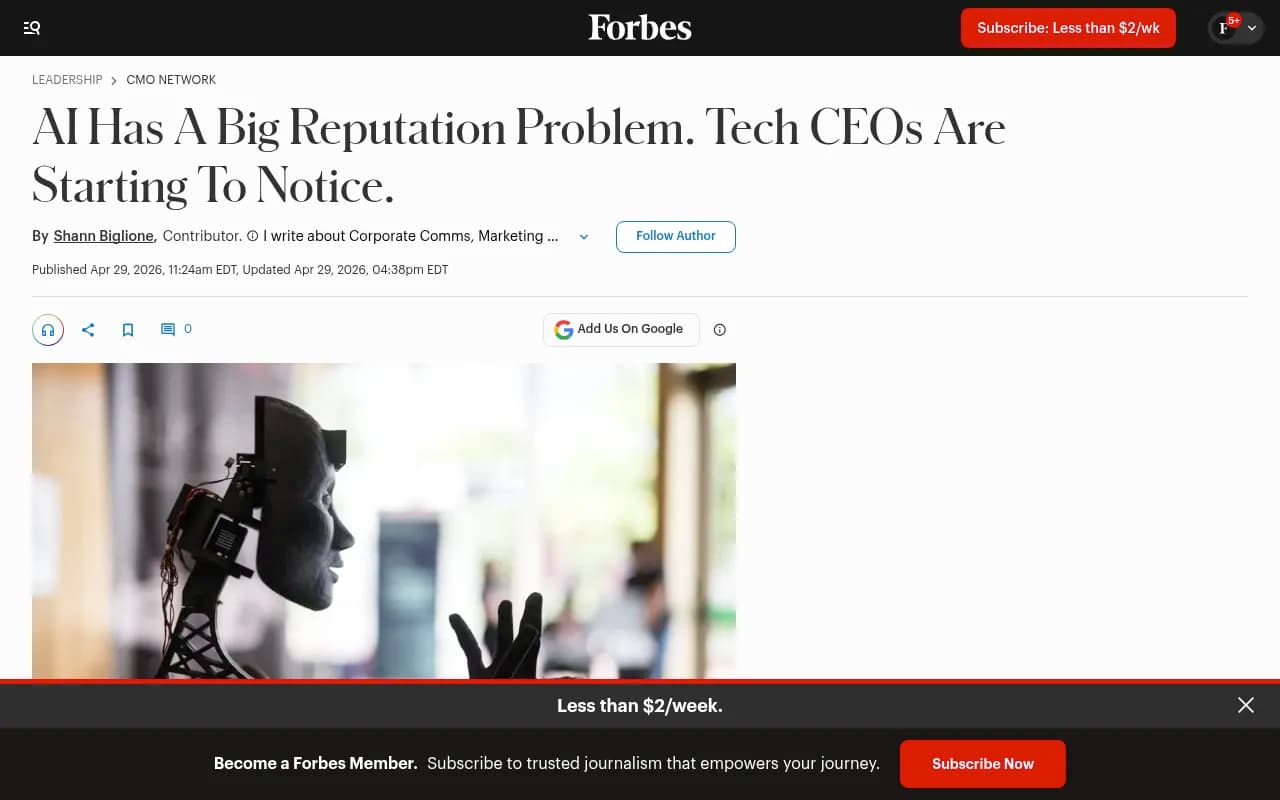
It's worth putting this in context. A February 2026 paper from the National Bureau of Economic Research found that 80% of companies actively using AI reported no measurable impact from their AI investments. That number got a lot of attention, and it changed how marketing and SEO teams evaluated their tool stacks.
Teams started asking harder questions. Not "does this tool show me data?" but "can I point to a revenue outcome this tool contributed to?" Tools that couldn't answer the second question got cut.
Ceyo.ai sat in an awkward position here. It was easy to demo -- the dashboard looked clean, the brand mention counts were visible -- but harder to justify at renewal time when the question was "what did this actually change?"
Data quality and model coverage gaps
Several teams reported that Ceyo.ai's coverage of AI models was uneven. Getting accurate data on how ChatGPT responds is one thing. Getting reliable, comparable data across Claude, Perplexity, Gemini, Grok, DeepSeek, and Google AI Overviews simultaneously is a much harder engineering problem. Teams that needed multi-model coverage found gaps.
This mattered more than it sounds. If you're optimizing for AI search visibility, you need to know which models are citing you and which aren't -- and why the gap exists. Partial coverage means partial decisions.
No content generation or gap analysis
The teams that stayed longest with Ceyo.ai were ones that had separate content teams who could take monitoring data and manually figure out what to write. When those teams got smaller (a common story in 2025), the workflow broke. Without built-in content tools or answer gap analysis, Ceyo.ai required too much manual work to connect insights to action.
Pricing relative to value
This one is harder to pin down precisely, but it came up consistently. As the GEO tool market matured, more capable platforms became available at competitive prices. When a team can get monitoring plus content generation plus crawler logs plus traffic attribution for a similar or only slightly higher price, a monitoring-only tool starts looking expensive for what it delivers.
Where teams went instead
The migration patterns from Ceyo.ai weren't random. Teams generally landed in one of three categories depending on their size, budget, and what they actually needed.
Teams that needed a full optimization loop
The teams most frustrated with Ceyo.ai's limitations -- usually mid-size marketing teams or agencies managing multiple brands -- moved to platforms that could close the loop between visibility data and content action.
Promptwatch came up repeatedly in this category. The core reason: it doesn't stop at showing you where you're invisible. The Answer Gap Analysis shows exactly which prompts competitors are getting cited for that you're not, and the built-in AI writing agent generates content specifically engineered to get cited by ChatGPT, Claude, Perplexity, and other models. For teams that were tired of having data without direction, that combination was the main draw.

The other thing that mattered for this group was traffic attribution. Knowing your AI visibility score went up is nice. Knowing it drove actual traffic and revenue is what justifies the tool at budget review. Promptwatch's GSC integration and server log analysis gave teams that connection.
Teams that wanted simpler, cheaper monitoring
Not every team needed the full stack. Some teams -- particularly smaller ones or those just starting to think about AI visibility -- moved to lighter tools.
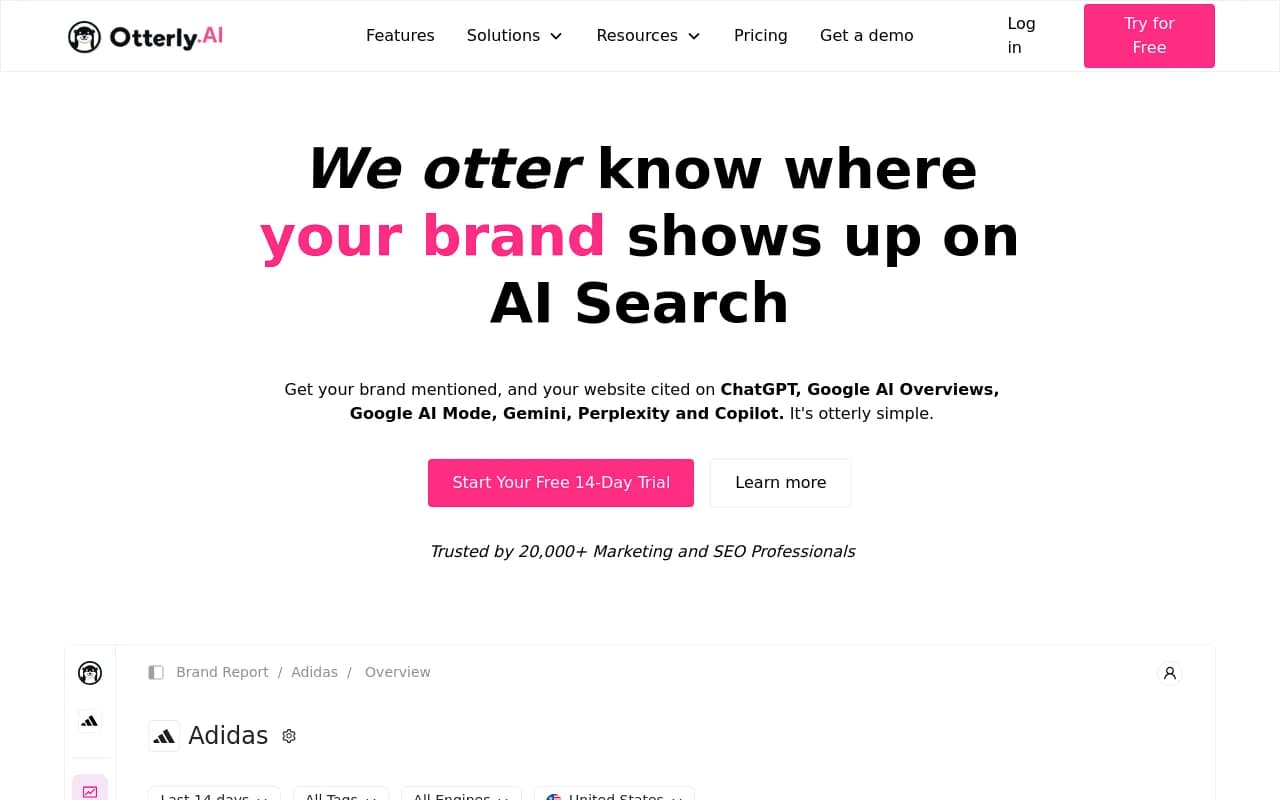
Otterly.AI picked up some of this segment. It's genuinely affordable and covers the basic monitoring use case without a lot of complexity.
Peec AI was another landing spot for teams that wanted clean, straightforward tracking without committing to a more expensive platform.
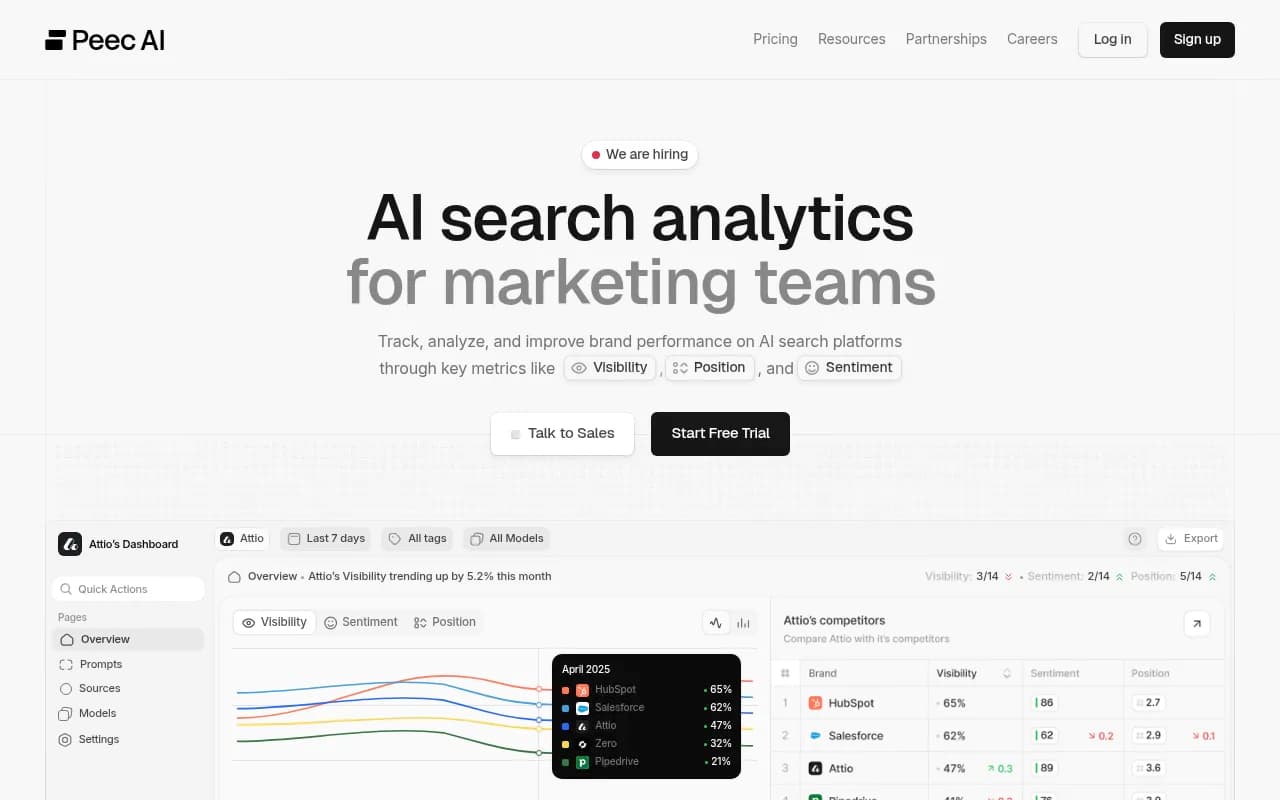
The trade-off is real, though. These tools have the same fundamental limitation that frustrated Ceyo.ai users in the first place: they show you data, but the optimization work is still on you.
Teams that moved to enterprise-grade platforms
Larger brands and agencies with bigger budgets moved toward platforms with deeper data, more model coverage, and better integrations.
Profound attracted enterprise teams that needed rigorous data and were willing to pay for it.
Scrunch AI was another option in this tier, particularly for teams that wanted strong brand monitoring across multiple AI assistants.
AthenaHQ picked up teams that prioritized monitoring depth, though it's worth noting it's still primarily a tracking platform rather than an optimization one.

Comparing the main alternatives
Here's a straightforward comparison of where teams landed after leaving Ceyo.ai:
| Platform | Monitoring | Content generation | Answer gap analysis | Crawler logs | Starting price |
|---|---|---|---|---|---|
| Promptwatch | Yes (10 models) | Yes (built-in AI writer) | Yes | Yes | $99/mo |
| Otterly.AI | Yes | No | No | No | Lower tier |
| Peec AI | Yes | No | No | No | Lower tier |
| Profound | Yes | No | Limited | No | Higher tier |
| Scrunch AI | Yes | No | No | No | Mid tier |
| AthenaHQ | Yes (8+ models) | No | No | No | Mid tier |
The pattern is pretty clear. If you want to go beyond tracking, the options narrow quickly. Most tools in this space are still monitoring dashboards. The ones that help you actually improve your visibility are fewer.
What the broader market shift tells us
The Ceyo.ai churn story isn't really about Ceyo.ai specifically. It's about a market that moved faster than most tools anticipated.
In 2023 and early 2024, just knowing whether your brand appeared in AI responses was genuinely novel and valuable. By 2025, that baseline had become table stakes. Teams had absorbed the monitoring data, understood they had visibility gaps, and were asking the next question: "So what do we do about it?"
Tools that couldn't answer that question lost users. This is the same dynamic that played out in traditional SEO -- rank trackers that couldn't help you improve rankings eventually lost to platforms that combined tracking with content optimization and technical recommendations.
The AI visibility space is running through that same maturation cycle, just faster.
There's also a broader skepticism at play. The gap between AI hype and measurable results has made teams more demanding about every AI tool they pay for. If a platform can't show a clear line between its data and a business outcome, it's vulnerable at renewal time. That's not a Ceyo.ai-specific problem -- it's a problem for any monitoring-only tool in a market that's increasingly asking for proof.
What to look for if you're evaluating alternatives now
If you're in the process of switching, a few things worth checking before you commit:
Model coverage. How many AI models does the platform actually monitor, and how fresh is the data? Some tools claim broad coverage but have significant gaps in how often they query each model.
Prompt intelligence. Can you see volume estimates and difficulty scores for the prompts you're tracking? Knowing you're invisible for a prompt is less useful if you don't know whether that prompt gets asked 100 times a month or 100,000 times.
Content tools. Does the platform help you create content that's likely to get cited, or does it just show you that you're not being cited? This is the biggest differentiator in the current market.
Traffic attribution. Can you connect AI visibility to actual website traffic and conversions? Without this, you're optimizing for a metric that may or may not connect to revenue.
Crawler logs. Do you know which AI crawlers are visiting your site, which pages they're reading, and whether they're hitting errors? This is surprisingly rare in the market and genuinely useful for understanding how AI models discover your content.
Tools like Promptwatch cover all of these. Most alternatives cover one or two. That gap is worth understanding before you sign up for something that'll leave you in the same position you were in with Ceyo.ai -- lots of data, not much to do with it.
The bottom line
Teams switched away from Ceyo.ai because the market grew up around them. What was sufficient in 2023 wasn't sufficient by 2025, and teams that needed to show results couldn't justify a monitoring-only tool when more capable alternatives existed.
Where they landed depended on what they needed. Teams that wanted to actually improve their AI visibility -- not just measure it -- moved to platforms with content generation and gap analysis built in. Teams that just needed cheaper monitoring found lighter alternatives. Enterprise teams with bigger budgets moved to more robust platforms.
If you're evaluating the space now, the question to ask isn't "which tool shows me the most data?" It's "which tool helps me do something with that data?" Those are different tools, and the answer matters.