Key takeaways
- Most AI visibility tools, including Ceyo.ai, stop at monitoring -- they show you where you're invisible but don't help you fix it.
- The best alternatives in 2026 combine prompt tracking, content gap analysis, and content generation in one workflow.
- Promptwatch is the only platform rated "Leader" across all GEO categories in a 2026 comparison of 12 platforms, and it's the strongest pick if you want to close the loop from tracking to traffic.
- Tools like Otterly.AI and Peec AI are solid entry points for small teams on a budget, but they're monitoring-only.
- Enterprise teams should look at Profound AI, Writesonic, or Scrunch AI for deeper analysis and integrations.
If you've been using Ceyo.ai for AI search visibility tracking, you've probably hit the same wall most users do: the dashboard shows you data, maybe some brand mention counts and share-of-voice charts, and then... nothing. No clear path to actually improving what you're seeing.
That's the core problem with a lot of first-generation AI visibility tools. They were built when "tracking" was the novel thing. In 2026, tracking is table stakes. The question is what happens after you see the gap.
This guide covers 10 alternatives that are worth your time, ranging from budget-friendly monitors to full optimization platforms. I've organized them by what they actually do, not just what they claim.
Why "monitoring only" isn't enough anymore
A year ago, knowing that ChatGPT mentioned your competitor three times more than you was interesting. Now it's just frustrating if you can't do anything about it.
The AI search landscape has matured fast. Brands aren't just asking "are we visible?" -- they're asking "which prompts are we missing, what content do we need to create, and is that content actually getting cited?" That's a fundamentally different workflow, and most tools weren't built for it.
The tools below are split roughly into two camps: those that help you understand your visibility (monitoring), and those that help you change it (optimization). Both have their place, but if you're switching away from Ceyo.ai, you probably want the second camp.
The 10 best Ceyo.ai alternatives in 2026
1. Promptwatch -- best overall for end-to-end GEO
Promptwatch is the most complete option on this list. Where most tools show you a visibility score and leave you to figure out the rest, Promptwatch runs a full loop: find the gaps, generate content to fill them, track whether that content gets cited.

The Answer Gap Analysis is the standout feature. It shows you exactly which prompts your competitors are appearing for that you're not -- not just that a gap exists, but the specific topics and angles AI models want to answer but can't find on your site. From there, the built-in AI writing agent generates articles grounded in real citation data (880M+ citations analyzed), so the output is engineered to get picked up by ChatGPT, Claude, Perplexity, and others -- not just generic SEO content.
It also has AI crawler logs, which almost no competitor offers. You can see exactly which pages ChatGPT or Perplexity's crawlers are reading, how often they return, and where they're hitting errors. That's the kind of technical visibility that actually explains why your content isn't getting cited.
Pricing starts at $99/month for one site and 50 prompts. The Professional plan at $249/month adds crawler logs, state/city tracking, and 15 AI-generated articles per month.
2. Profound AI -- best for enterprise teams
Profound is a serious platform built for brands that need depth. It covers a wide range of AI models, offers strong competitive benchmarking, and has the kind of reporting infrastructure that enterprise marketing teams expect.
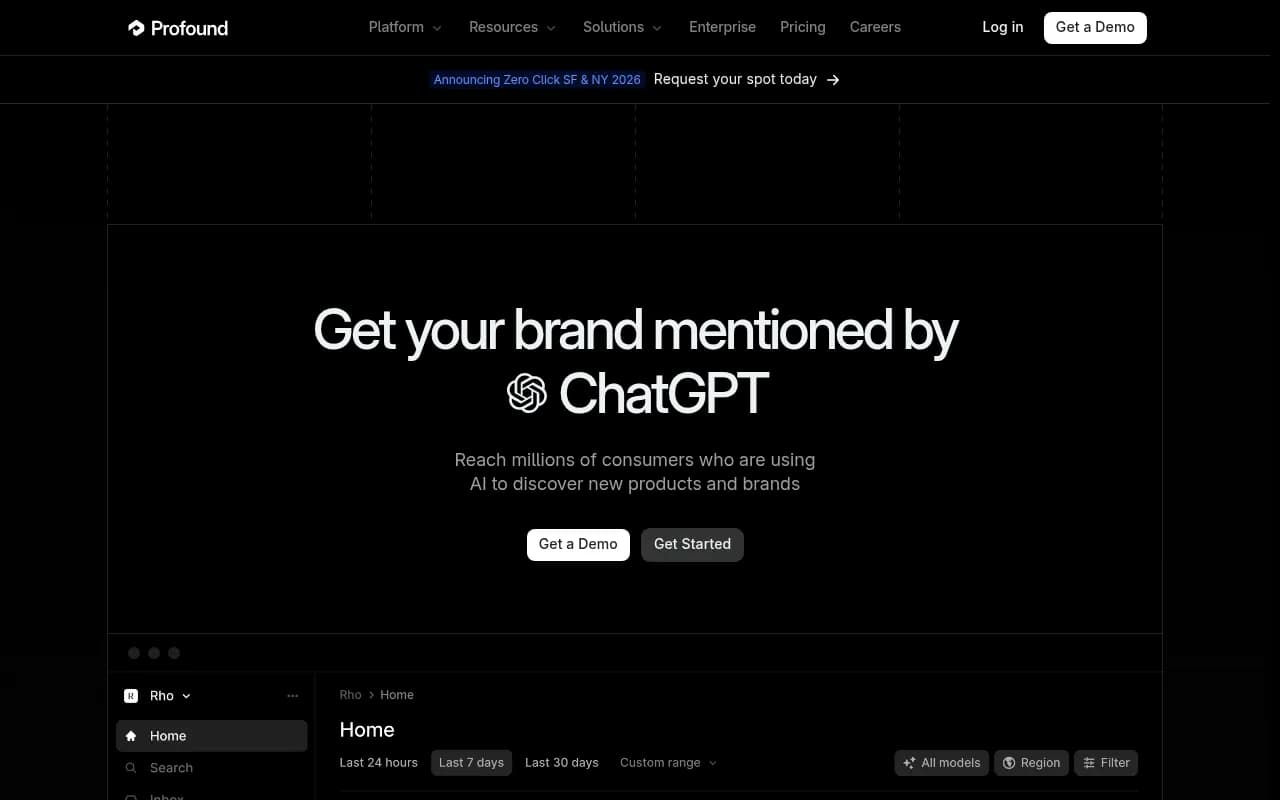
The main trade-off is price -- Profound sits at the higher end of the market. It's a strong fit for Fortune 500-type teams where the budget exists and the use case is complex. If you're a mid-market team or agency, the cost-to-value ratio gets harder to justify compared to Promptwatch or Writesonic.
3. Writesonic -- best for teams that want monitoring and content creation together
Writesonic has evolved well beyond its roots as an AI writing tool. The platform now includes brand monitoring across major AI models, share-of-voice tracking, and content optimization features. It's one of the few tools that genuinely bridges the gap between "what are AI models saying about us" and "here's content that might change that."
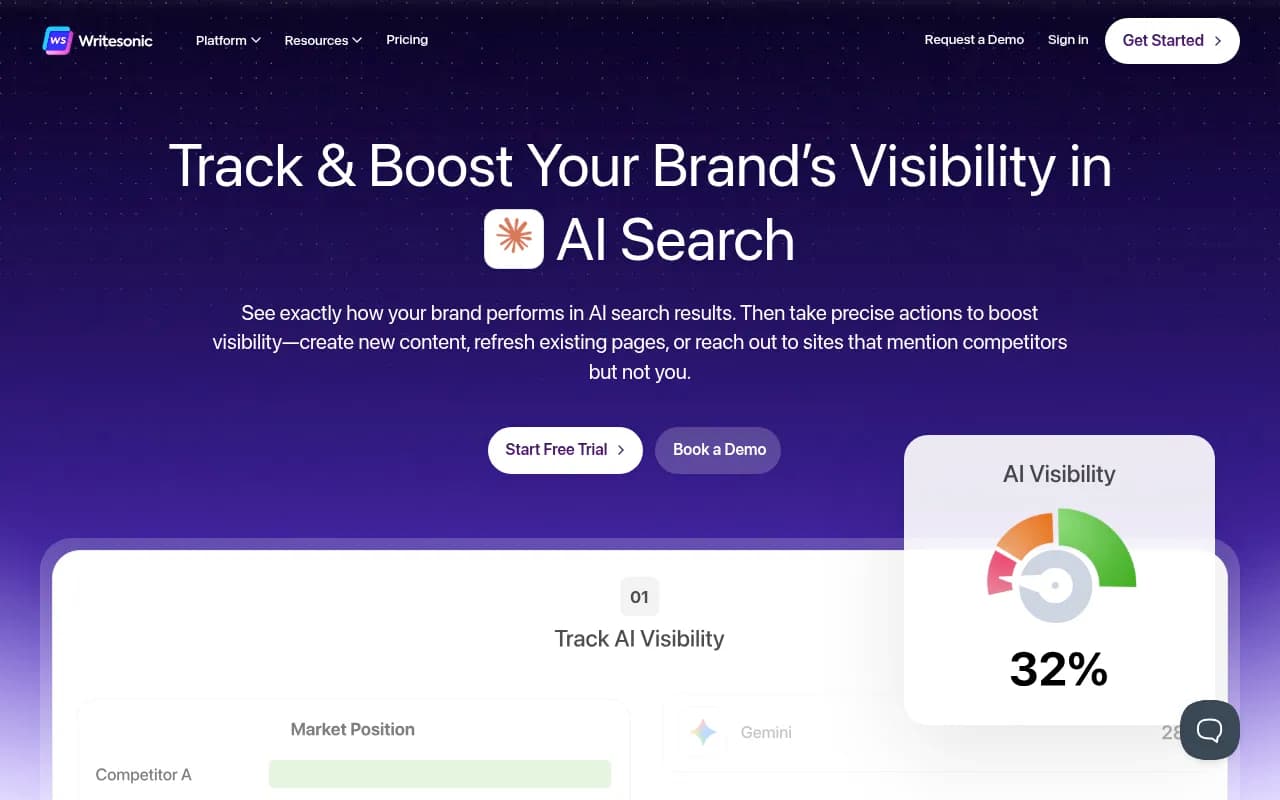
It's not as deep as Promptwatch on the technical side -- no crawler logs, no query fan-outs -- but for teams that want a single tool for both tracking and content, it's a practical choice.
4. Otterly.AI -- best budget option for getting started
Otterly.AI is consistently recommended in SEO circles as one of the most affordable ways to start tracking AI visibility. It monitors brand mentions across ChatGPT, Perplexity, and Google AI Overviews, and the interface is clean and easy to use.

The honest limitation: it's monitoring only. There's no content gap analysis, no generation tools, no crawler logs. If you're switching from Ceyo.ai because you want to do more than monitor, Otterly.AI won't solve that problem. But if you just want a cleaner, more reliable monitor at a lower price point, it's worth a look.
5. Peec AI -- best for share-of-voice tracking
Peec AI does one thing well: it tracks how often your brand appears in AI responses relative to competitors, across a solid range of models. The share-of-voice framing is intuitive for marketing teams, and the reporting is clean.
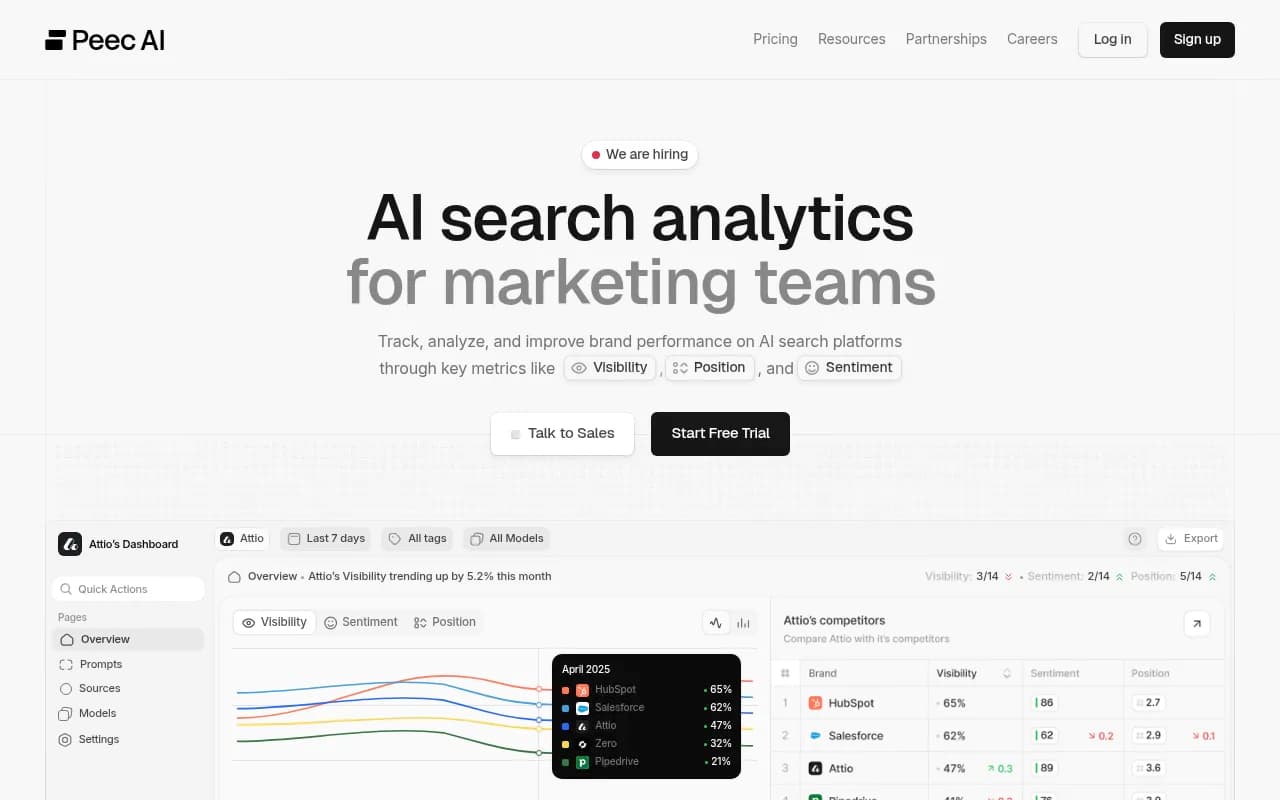
Like Otterly.AI, it doesn't go beyond monitoring. No content tools, no citation analysis, no traffic attribution. But if share-of-voice is the specific metric your team cares about, Peec AI presents it clearly.
6. Scrunch AI -- best for mid-market brands that want structured optimization
Scrunch AI sits in an interesting middle ground. It has stronger analysis features than basic monitors like Otterly or Peec, including some content recommendations, but it doesn't go as far as Promptwatch on the optimization side.
It's a good fit for mid-market brands that want more than a dashboard but aren't ready to invest in a full optimization platform. The interface is polished and the onboarding is straightforward.
7. AthenaHQ -- best for tracking across a wide range of AI models
AthenaHQ covers 8+ AI search engines, which is one of the broader model coverages in the market. If your concern is making sure you're not invisible on a specific model -- say, Grok or DeepSeek -- AthenaHQ gives you that visibility.

The gap is on the optimization side. AthenaHQ is monitoring-focused, and the content improvement workflow is largely manual. You'll know where you're missing; you'll need another tool (or a lot of time) to fix it.
8. Relixir -- best for teams that want AI content generation built in
Relixir is an all-in-one GEO platform that includes both tracking and AI content generation. It's newer than some of the established players, but it's built with the full optimization loop in mind from the start.
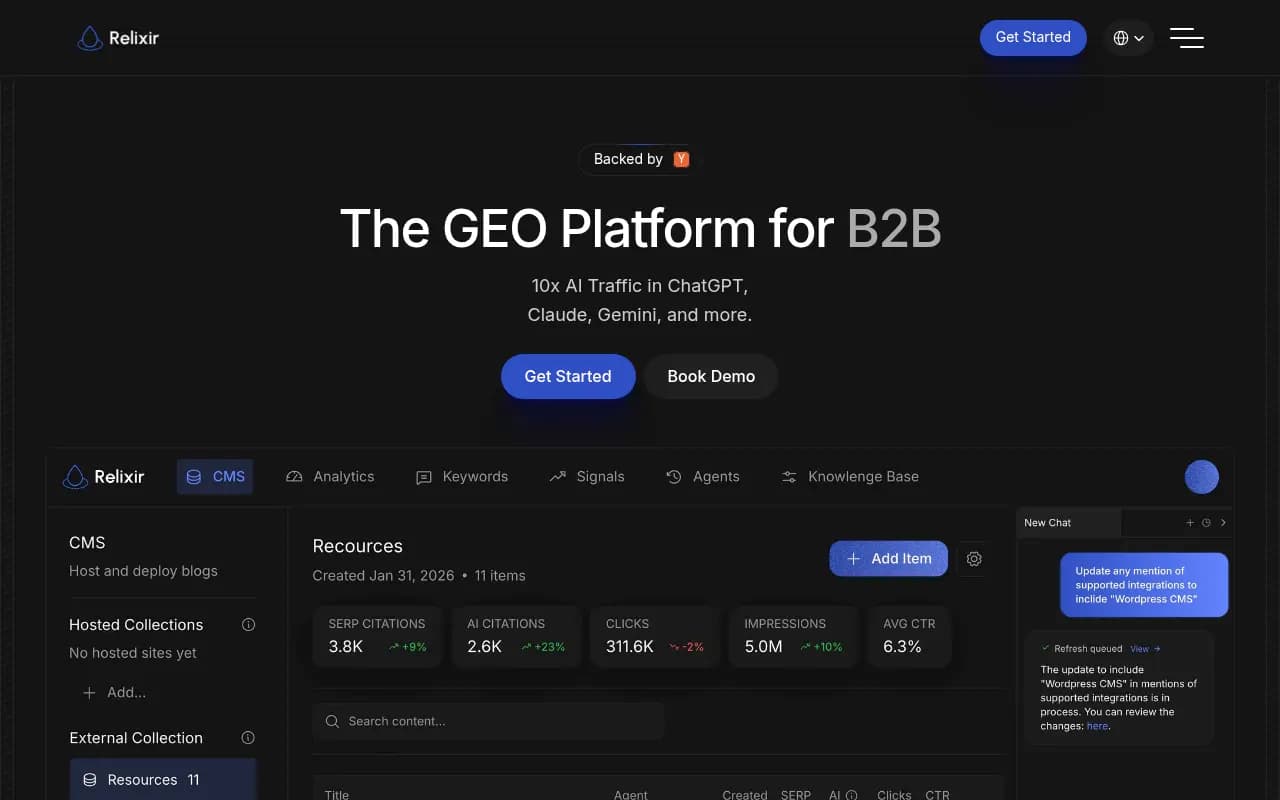
The content generation is solid, though the citation data it draws on isn't as deep as Promptwatch's 880M+ citation database. Worth evaluating if you want a Promptwatch alternative with a slightly different UX.
9. SE Ranking -- best for teams that already use SE Ranking for traditional SEO
If your team is already in the SE Ranking ecosystem for keyword tracking and site audits, their AI visibility module is a natural extension. It adds AI search monitoring on top of the traditional SEO data you're already working with.
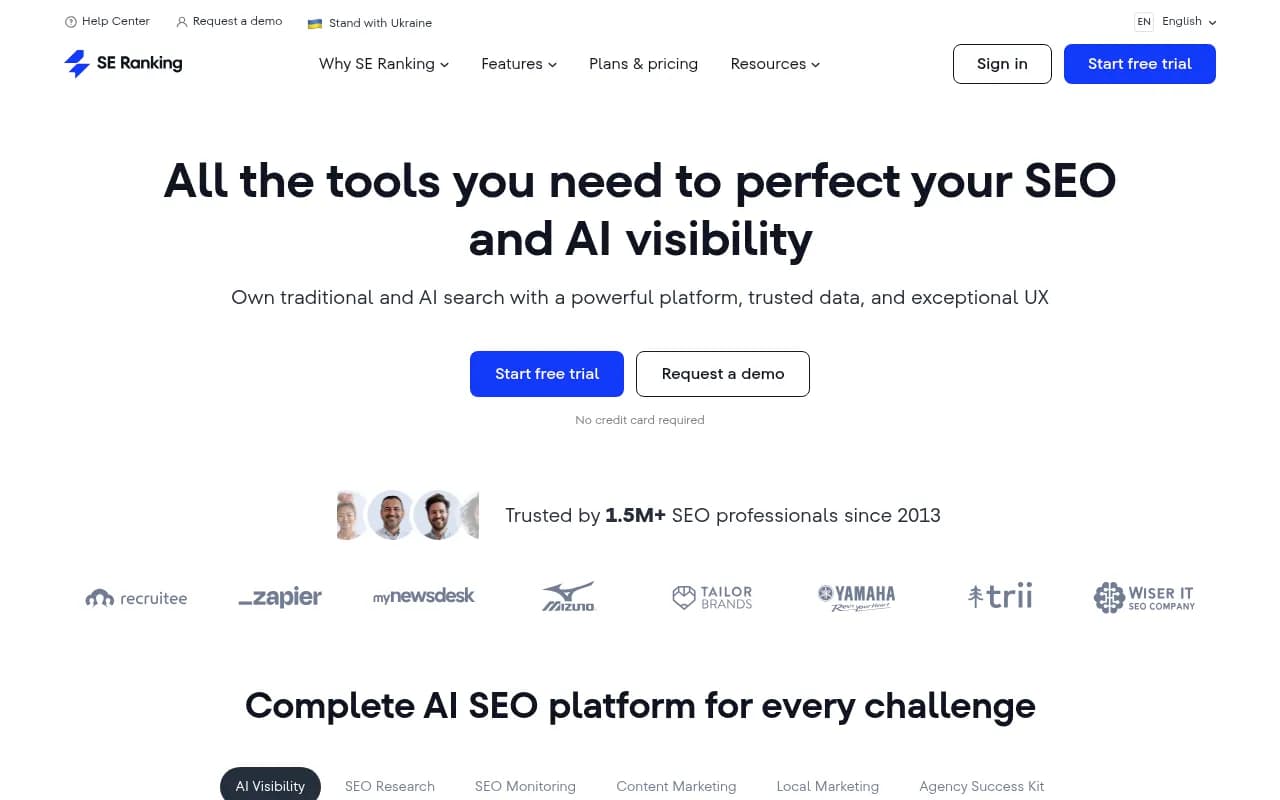
The integration is the main selling point here. As a standalone AI visibility tool, it's not as deep as the dedicated platforms. But if you want one dashboard for both traditional and AI search, it's a practical choice.
10. Vismore -- best for turning insights into next steps
Vismore takes a slightly different approach: it's explicitly designed around the "turn gaps into next steps" workflow. The monitoring is solid, and the platform pushes you toward action rather than just surfacing data.
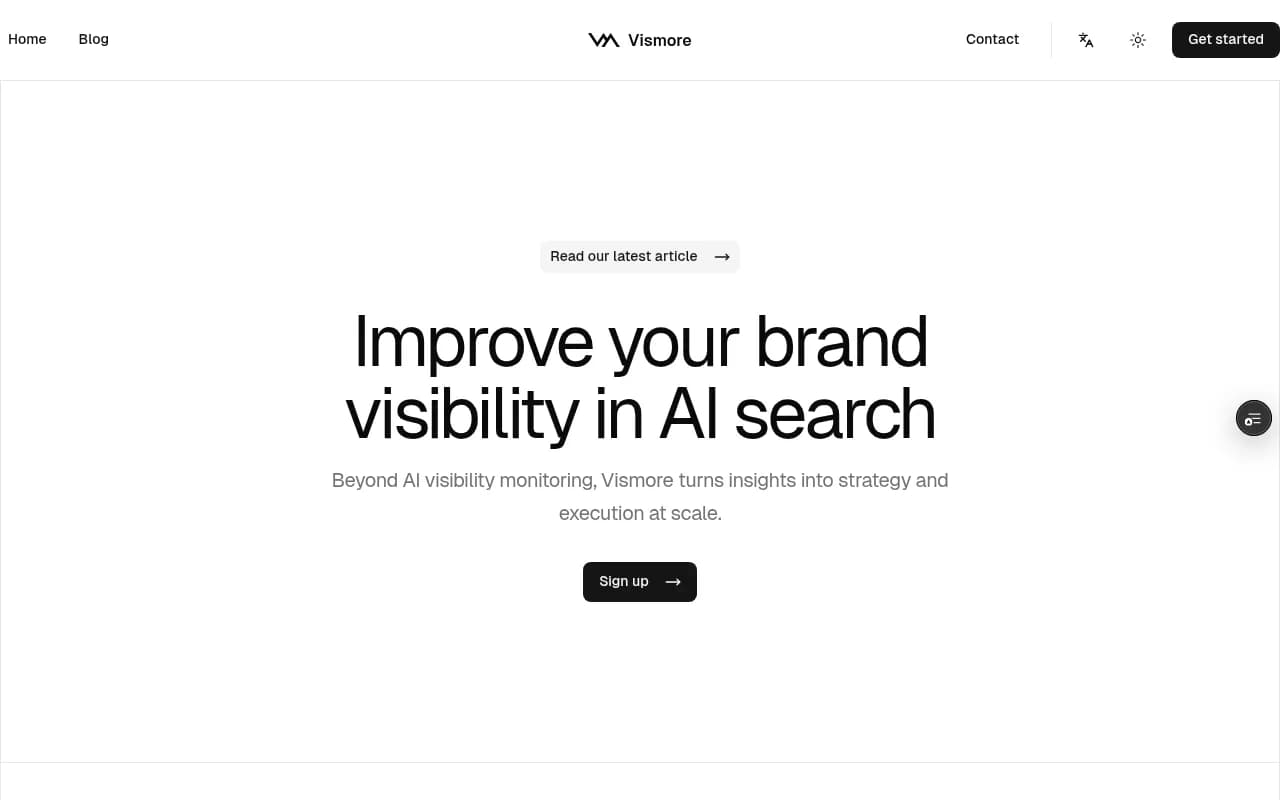
It's a newer platform, so the feature set isn't as mature as Promptwatch or Profound. But the philosophy is right, and it's worth watching. Several users on Reddit's r/DigitalMarketing have flagged it as a tool that "leans more toward turning gaps into next steps," which is exactly the direction the market is moving.
Feature comparison
| Tool | Prompt monitoring | Content gap analysis | AI content generation | Crawler logs | Traffic attribution | Starting price |
|---|---|---|---|---|---|---|
| Promptwatch | Yes (10 models) | Yes | Yes | Yes | Yes | $99/mo |
| Profound AI | Yes | Limited | No | No | No | Custom |
| Writesonic | Yes | Limited | Yes | No | No | ~$99/mo |
| Otterly.AI | Yes | No | No | No | No | ~$29/mo |
| Peec AI | Yes | No | No | No | No | ~$49/mo |
| Scrunch AI | Yes | Partial | No | No | No | Custom |
| AthenaHQ | Yes (8+ models) | No | No | No | No | Custom |
| Relixir | Yes | Yes | Yes | No | No | Custom |
| SE Ranking | Yes | No | No | No | No | ~$65/mo |
| Vismore | Yes | Partial | No | No | No | ~$49/mo |
How to choose
The right tool depends on what you're actually trying to accomplish.
If you're just getting started and want to understand where your brand stands across AI models, Otterly.AI or Peec AI will get you there cheaply. They're honest about what they are: monitors. No frills, no optimization.
If you're past the "what's happening" stage and want to actually improve your AI visibility, you need a tool with content gap analysis and some form of content optimization. Promptwatch is the most complete option here -- the combination of Answer Gap Analysis, AI content generation grounded in citation data, and crawler logs is genuinely differentiated. Writesonic and Relixir are worth considering if you want alternatives with slightly different workflows.
If you're at an enterprise with complex needs and a budget to match, Profound AI is worth a serious evaluation. Just go in knowing that optimization is still largely a manual process on that platform.
One thing I'd push back on: don't pick a tool based on the number of AI models it monitors. Coverage matters, but what you do with the data matters more. A tool that monitors 12 models but gives you no path to improvement is less useful than one that monitors 5 models and helps you actually rank in them.
The monitoring trap
There's a pattern worth naming directly. A lot of teams switch from one monitoring tool to another, get a slightly better dashboard, and then wonder why their AI visibility scores aren't moving. The dashboard wasn't the problem.
The gap between "we know we're not being cited" and "we're now being cited" is a content problem. AI models cite sources because those sources have clear, authoritative answers to the questions people are asking. If your site doesn't have that content, no amount of monitoring will change your visibility score.
That's why the tools that are pulling ahead in 2026 are the ones that close the loop -- find the prompt gaps, generate content that addresses them, track whether that content gets picked up. Tools like Promptwatch were built around that workflow. Most of the market is still catching up.
If you're switching away from Ceyo.ai, use that switch as an opportunity to ask a harder question: do you want a better monitor, or do you want to actually move the needle? The answer should shape which tool you pick.