Key takeaways
- Agentic traffic is no longer hypothetical: AI crawlers, agentic browsers, and shopping assistants now visit, read, and compare your site without a human looking at a single page.
- Optimizing for agents means two things: making your site machine-readable (structured data, clean crawling, llms.txt) and making your brand machine-recommendable (citations in AI answers, offsite mentions, sentiment).
- BCG's analysis found only an 8-12% overlap between traditional search results and AI-generated answers, so your classic SEO rankings tell you almost nothing about your AI visibility.
- Most teams fail at measurement: you need AI crawler logs, citation tracking, and AI-attributed traffic analytics, not just rank trackers.
- Tools like Promptwatch can track crawler visits, citations, and AI-driven conversions in one place.
For a decade, SEO meant optimizing for a human typing a query into a box. In 2026, that's only half the job. Your next visitor might be ChatGPT browsing your product pages on a shopper's behalf, Claude reading your documentation to answer a developer's question, or an autonomous agent reordering supplies without anyone opening your site at all.
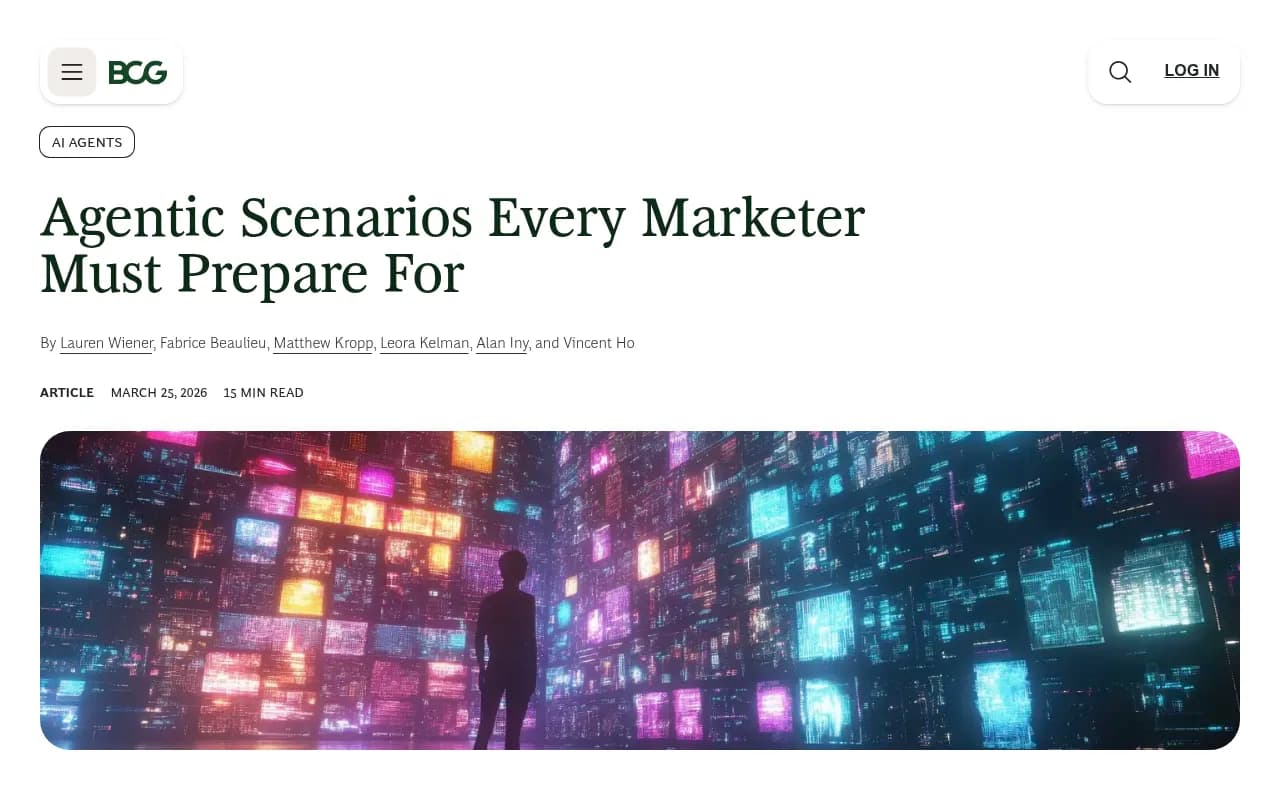
BCG calls this the agentic era, and its advice is blunt: nobody knows exactly which scenario will dominate, but discoverability and desirability hold in all of them. The no-regret moves are the same regardless of which future wins.
What agentic search actually is
Agentic search is when an AI system doesn't just answer a question but takes actions: it searches, reads multiple sources, compares options, and sometimes completes a purchase or booking. Think of ChatGPT browsing and comparing five SaaS pricing pages, then recommending one. Or an agent booking a flight. The "search" happens across many queries and many sites, and the human only sees the conclusion.
This changes what optimization means in a few concrete ways:
- The reader is a machine first, a human second. Your beautiful design matters less than your structured data, clean HTML, and factual clarity.
- Decisions happen off your site. If an agent compares four vendors and recommends one, three of them never got a pageview from the buyer.
- Speed and completeness of information matter more than persuasion. An agent wants prices, specs, availability, and comparisons in a format it can parse and verify.
Why your SEO rankings don't protect you here
The uncomfortable finding from BCG's research: only 8-12% overlap between traditional search results and AI-generated answers. A page can rank #1 in Google and never appear in ChatGPT's answer for the same question, because AI engines evaluate content differently. They favor content that directly answers questions, is well-structured, comes from domains they already trust, and appears in sources they already cite.
This is why answer engine optimization (AEO) and generative engine optimization (GGEO) exist as disciplines. You still need SEO for bottom-funnel intent, but AI discovery at the top and middle of the funnel follows different rules.
The agentic optimization checklist
1. Make your site readable to agents
AI agents and crawlers need to be able to reach and parse your content:
- Allow AI crawlers in robots.txt (ChatGPT-User, ClaudeBot, PerplexityBot, Google-Extended, Meta's crawler, and many more).
- Serve clean, server-rendered HTML. Heavy client-side JavaScript can leave agents with an empty page.
- Add structured data (schema.org markup for products, FAQs, prices, availability, reviews) so agents get facts without guessing.
- Publish an llms.txt file that gives agents a curated map of your best content.
- Keep pricing, specs, and policies on crawlable pages, not locked behind interactive widgets.
2. Make your brand recommendable
Agents don't just read your site, they read what others say about you:
- Get mentioned in the sources AI already cites: industry publications, comparison pages, Reddit threads, YouTube reviews.
- Keep third-party review profiles accurate and current, since agents aggregate them.
- Write content that answers real questions in your category, so you become a citation source, not just a seller.
3. Measure what agents do on your site
You can't optimize what you don't measure. AI crawler logs show which of your pages agents actually read, how often, and whether they hit errors. Citation tracking shows where your brand appears in AI answers across ChatGPT, Claude, Gemini, Perplexity, and Google AI Overviews. And AI-attributed analytics show whether AI-driven visitors convert.
Platforms built for this include:
Promptwatch is the most complete option: it tracks AI crawler logs, citations across major models, AI-driven traffic and conversions, and even automates content fixes.

Profound focuses on enterprise AI visibility monitoring.
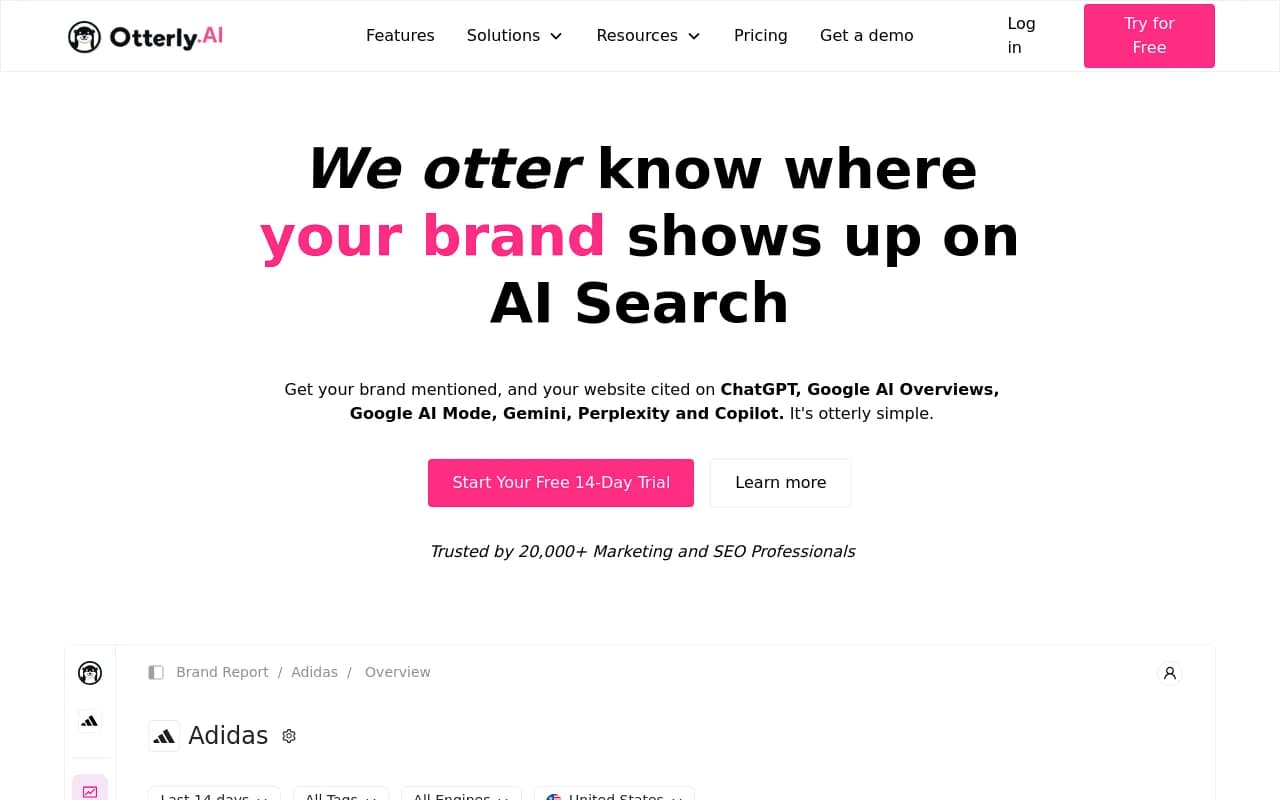
Otterly.AI offers affordable prompt tracking for smaller teams.
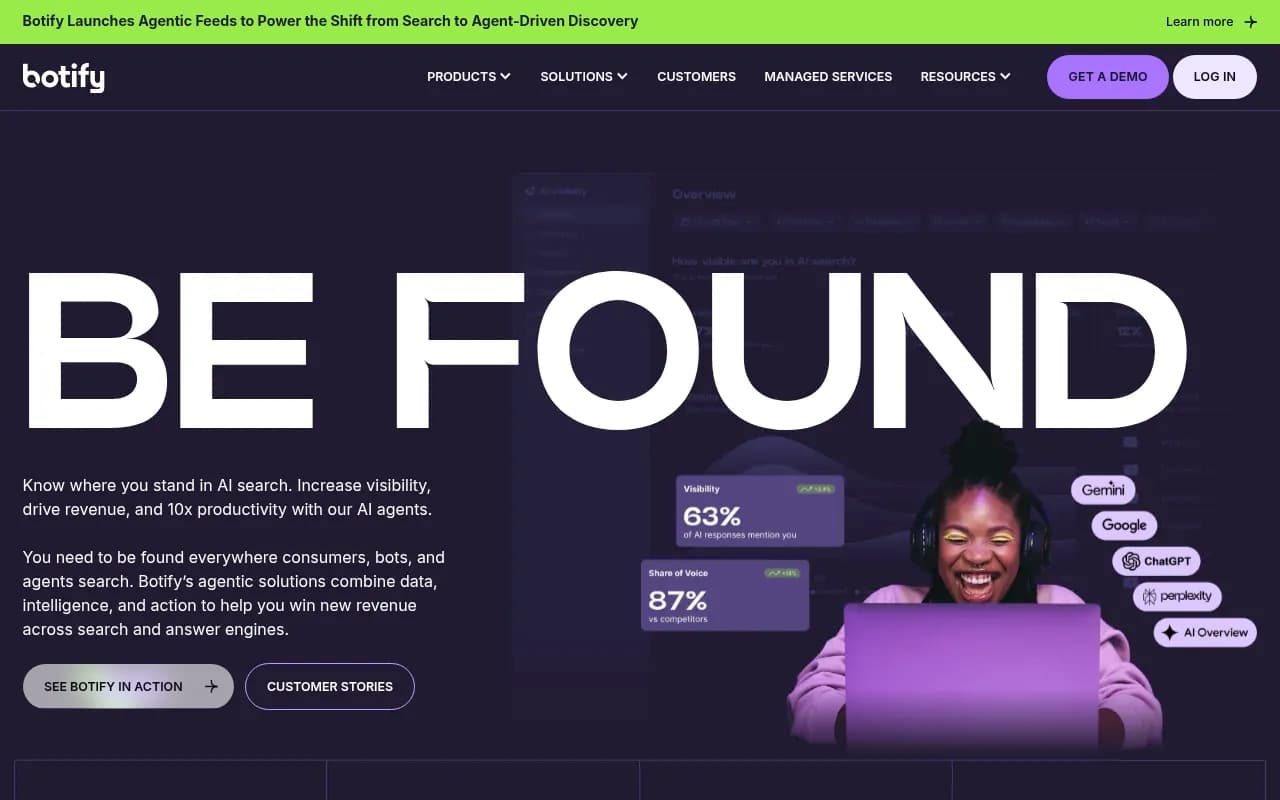
Botify combines enterprise SEO with AI search visibility.
| Tool | Best for | Crawler logs | Citation tracking | Content automation |
|---|---|---|---|---|
| Promptwatch | Full-stack GEO, all sizes | Yes | Yes | Yes |
| Profound | Enterprise monitoring | No | Yes | No |
| Otterly.AI | Budget prompt tracking | No | Yes | No |
| Botify | Enterprise SEO + AI | Partial | Yes | Limited |
Common mistakes
- Blocking AI crawlers out of fear of scraped content, then wondering why ChatGPT never mentions you.
- Optimizing only the homepage when agents deep-crawl product and comparison pages.
- Treating AI traffic as a rounding error in analytics and missing that it converts at 2x the rate of social traffic.
- Publishing content without structure: walls of prose that humans skim and machines can't parse.
Where to start
Run a free AI visibility audit to see where you stand today. Promptwatch offers a free AI Brand Visibility Report, and Frase has an agent readiness checker. Then fix the technical basics (robots.txt, structured data, llms.txt), and set up ongoing tracking for citations and AI-attributed traffic. Agentic search is moving fast, but the teams that start with measurement and machine-readability will be the ones agents recommend when it matters.