Summary
- AI crawlers (ChatGPT, Claude, Perplexity, etc.) are now visiting websites as frequently as traditional search engine bots, but most analytics tools don't surface this activity
- Tracking AI crawler logs reveals which pages AI models read, how often they return, and what errors they encounter -- critical data for optimizing your content for AI search visibility
- Most AI visibility platforms focus on tracking citations and rankings in AI responses, but only a handful offer real-time crawler log monitoring
- The platforms below represent the best options for monitoring AI crawler activity in 2026, ranging from specialized crawler-only tools to full-featured AI visibility suites
- Understanding crawler behavior is the first step in the optimization loop: if AI models aren't reading your pages, they can't cite them
AI search engines like ChatGPT, Perplexity, and Claude are crawling the web constantly. They're reading your product pages, your blog posts, your documentation -- and they're deciding whether your content is worth citing when users ask questions. But here's the problem: most website owners have no idea this is happening. Traditional analytics tools like Google Analytics don't break out AI crawler traffic. Server logs are a mess of user agents you don't recognize. You're flying blind.
Tracking AI crawler activity isn't just a curiosity. It's the foundation of AI search optimization. If ChatGPT's crawler hits an error on your pricing page, that page won't show up in ChatGPT's answers. If Perplexity's bot only visits your homepage once a month, your newer content is invisible. Crawler logs tell you what AI models are actually seeing -- and what they're missing.
This guide covers the five best platforms for monitoring AI crawler activity on your website in 2026. Some are standalone crawler monitoring tools. Others are full AI visibility platforms that include crawler logs as one feature among many. All of them solve the same core problem: making AI crawler behavior visible so you can optimize for it.
What are AI crawlers and why track them?
AI crawlers are bots sent by large language models (LLMs) and AI search engines to read and index web content. When a user asks ChatGPT "What are the best project management tools?", ChatGPT doesn't generate an answer from thin air. It references content it previously crawled and indexed from websites across the internet. Same goes for Claude, Perplexity, Gemini, and every other AI model with web access.
Each AI platform runs its own crawler with a distinct user agent string:
- ChatGPT: GPTBot, ChatGPT-User
- Claude: ClaudeBot
- Perplexity: PerplexityBot
- Google Gemini: Google-Extended (shares infrastructure with Googlebot but used for AI training)
- Meta AI: Meta-ExternalAgent, FacebookBot
These crawlers behave differently from traditional search engine bots. They may visit pages more or less frequently. They may respect or ignore robots.txt rules. They may focus on specific content types (documentation, comparisons, tutorials) that align with how users prompt AI models.
Tracking AI crawler activity gives you three critical insights:
- Discovery: Which pages are AI models actually reading? If your best content isn't being crawled, it won't be cited.
- Frequency: How often do AI crawlers return? Infrequent visits mean your latest updates aren't reflected in AI responses.
- Errors: Are AI crawlers hitting 404s, timeouts, or access blocks? These issues prevent your content from being indexed.
Without this data, you're optimizing in the dark. You might be creating great content that AI models never see.
How AI crawler tracking differs from traditional analytics
Google Analytics and similar tools track human visitors and traditional search engine bots. They don't break out AI crawler traffic by default. You see a generic "bot" category or nothing at all. Server logs contain the raw data, but parsing them manually is tedious and error-prone.
AI crawler tracking platforms solve this by:
- Identifying AI-specific user agents in your server logs or via a tracking snippet
- Aggregating crawler activity by bot type (ChatGPT, Claude, Perplexity, etc.)
- Surfacing errors, response codes, and crawl patterns in a dashboard
- Alerting you when crawler behavior changes (e.g. a bot stops visiting your site)
Some platforms also correlate crawler activity with citation performance. If ChatGPT's bot visits your pricing page 50 times in a week, you'd expect to see citations from that page in ChatGPT's responses. If you don't, something's wrong -- maybe the content isn't structured well, or the page is being crawled but not indexed.
The platforms below represent the best options for tracking AI crawler activity in 2026. They range from crawler-only monitoring tools to full-featured AI visibility suites that include crawler logs as one component.
1. Promptwatch: AI visibility platform with real-time crawler logs
Promptwatch is an end-to-end AI search visibility platform used by 6,700+ brands including Booking.com and Center Parcs. It tracks how your brand appears in AI search results across ChatGPT, Claude, Perplexity, Gemini, and other models. Crawler log monitoring is one of its core features.

What makes Promptwatch's crawler tracking different
Most AI visibility platforms focus on the output side: they track citations, rankings, and sentiment in AI responses. Promptwatch does that too, but it also tracks the input side -- which pages AI crawlers are actually reading. This closes the loop. If you're not getting cited for a topic, you can check whether AI models are even crawling the relevant pages.
Promptwatch's crawler logs show:
- Real-time activity: See which AI bots (ChatGPT, Claude, Perplexity, etc.) are hitting your site right now
- Page-level detail: Which specific URLs each bot visits, how often, and what response codes they receive
- Error tracking: Spot 404s, timeouts, and access blocks that prevent AI models from indexing your content
- Crawl frequency trends: Understand whether AI bots are visiting more or less often over time
The platform also correlates crawler activity with citation performance. If a page is being crawled frequently but never cited, that's a signal the content needs optimization.
How it fits into the optimization workflow
Promptwatch is built around an action loop:
- Find the gaps: Answer Gap Analysis shows which prompts competitors rank for but you don't. You see the specific content your site is missing.
- Create content that ranks: The built-in AI writing agent generates articles grounded in real citation data (880M+ citations analyzed), prompt volumes, and competitor analysis.
- Track the results: Crawler logs show whether AI models are discovering your new content. Citation tracking shows whether they're actually using it in responses.
This cycle -- find gaps, generate content, track crawler activity, measure citations -- is what makes Promptwatch an optimization platform, not just a monitoring dashboard.
Pricing and availability
Promptwatch offers three plans:
- Essential: $99/mo (1 site, 50 prompts, 5 articles, basic crawler logs)
- Professional: $249/mo (2 sites, 150 prompts, 15 articles, full crawler logs, state/city tracking)
- Business: $579/mo (5 sites, 350 prompts, 30 articles, advanced crawler analytics)
Agency and enterprise plans with custom pricing are available. Free trial included.
Best for
Brands and agencies that want the full picture: crawler activity, citation tracking, content gap analysis, and AI content generation in one platform. If you're serious about AI search optimization and want a tool that helps you take action (not just monitor), Promptwatch is the top choice.
2. SE Visible: AI Mode tracking with crawler insights
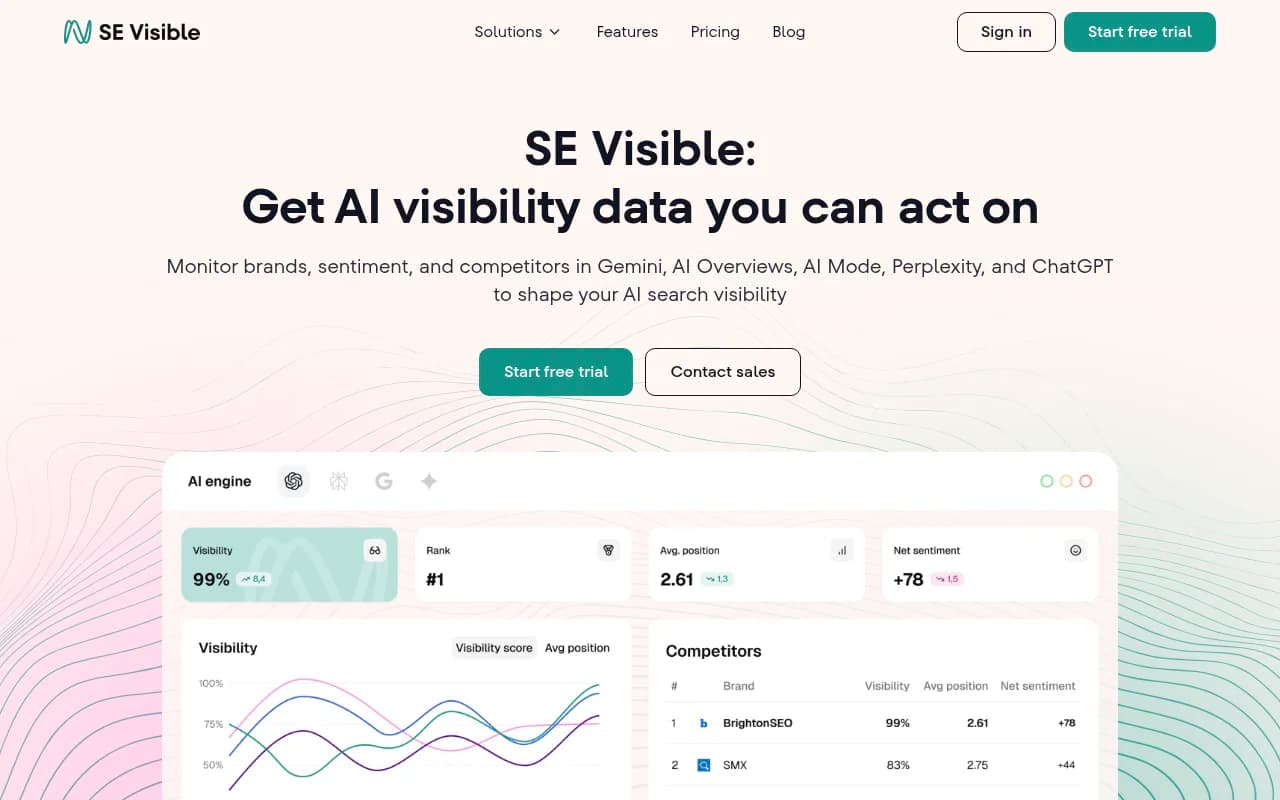
SE Visible is an AI visibility platform from the team behind SE Ranking, one of the most established SEO tools in the market. It tracks brand mentions and rankings across Google AI Overviews, ChatGPT, Perplexity, and other AI models. Crawler monitoring is included as part of the platform.
Crawler tracking features
SE Visible's crawler logs show which AI bots are visiting your site, how often, and which pages they're reading. The platform identifies crawlers by user agent and aggregates activity by bot type (ChatGPT, Claude, Perplexity, etc.). You can filter by date range, page, and response code to spot patterns or issues.
The crawler data integrates with SE Visible's citation tracking. If a page is being crawled but not cited, the platform flags it as an optimization opportunity. You can drill down to see what competitors are doing differently on similar pages.
How it compares to other platforms
SE Visible is strong on traditional SEO integration. If you're already using SE Ranking for keyword tracking and site audits, SE Visible is a natural extension. The crawler logs are solid but not as detailed as Promptwatch's. You get the basics -- which bots visited, when, and what they saw -- but less granularity on crawl frequency trends or error analysis.
The platform's main strength is its focus on Google AI Overviews (formerly AI Mode). If your priority is ranking in Google's AI-generated answers, SE Visible gives you more data on that specific channel than most competitors.
Pricing
SE Visible starts at $189/mo. No free trial, but SE Ranking users get a discount.
Best for
SEO teams already using SE Ranking who want to extend their tracking into AI search. Good for brands focused on Google AI Overviews and traditional SEO metrics alongside AI visibility.
3. Profound AI: Enterprise crawler monitoring with automation
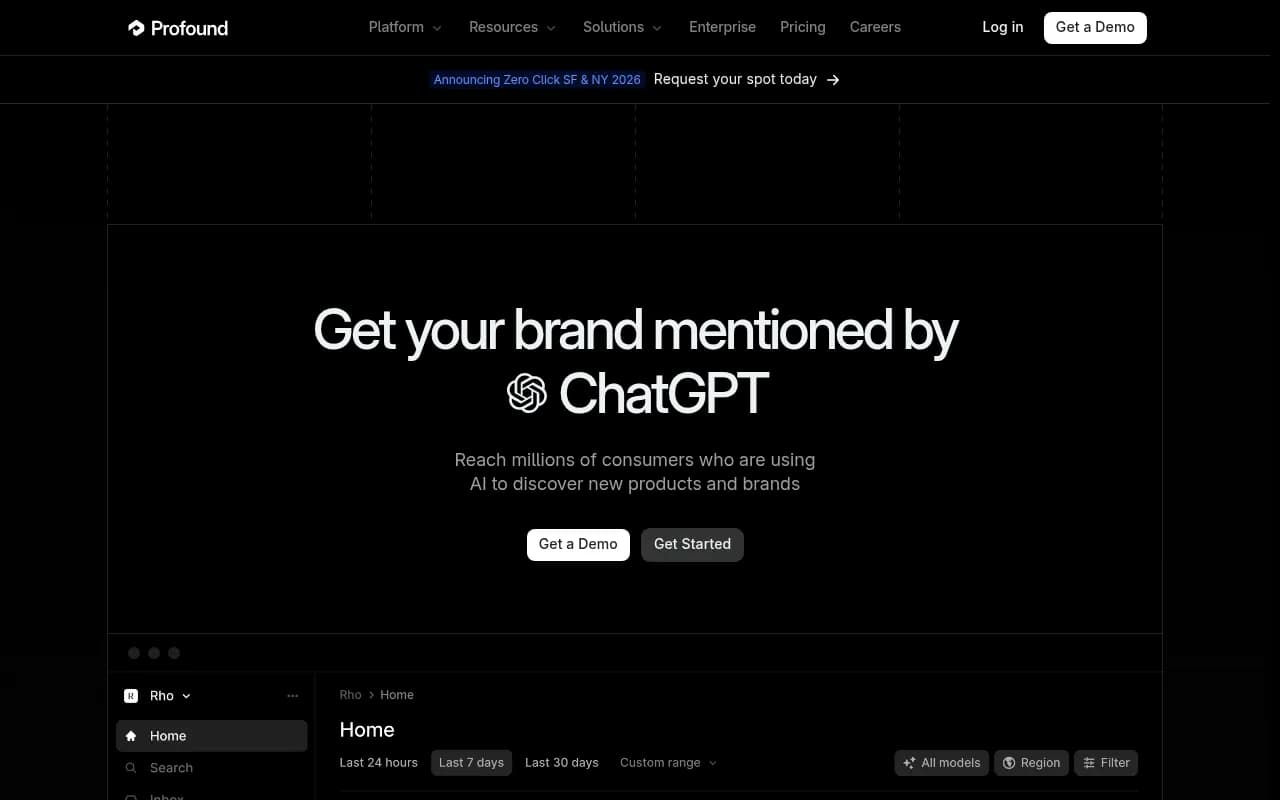
Profound AI is an enterprise-focused platform that combines AI visibility tracking with content operations and automation. It monitors brand mentions across ChatGPT, Claude, Perplexity, Gemini, and other models. Crawler log monitoring is included in all plans.
What Profound does differently
Profound positions itself as a "read/write" platform. Most AI visibility tools are read-only: they show you data but leave you to act on it manually. Profound includes automation features that let you trigger workflows based on crawler activity or citation changes.
For example:
- Alert your team when a specific AI bot stops crawling a high-value page
- Automatically update content when a competitor starts getting cited for a prompt you're targeting
- Trigger a content refresh when crawler frequency drops below a threshold
The crawler logs themselves are detailed. You see which bots visited, which pages, response codes, crawl frequency, and error patterns. The platform also correlates crawler activity with citation performance and sentiment analysis.
Enterprise features
Profound is built for large brands and agencies managing multiple sites. It includes:
- Multi-site tracking with unified reporting
- Role-based access controls and white-label reporting
- API access for custom integrations
- Dedicated account management and onboarding
The automation features are the main differentiator. If you're managing AI visibility at scale and want to reduce manual work, Profound's workflows are valuable.
Pricing
Profound starts at $99/mo for basic plans, but enterprise pricing (which includes full crawler logs and automation) is custom. Expect $500+/mo for teams managing multiple sites.
Best for
Large brands and agencies that need enterprise-grade crawler monitoring with automation. If you're managing AI visibility for 5+ sites and want to trigger workflows based on crawler behavior, Profound is worth the investment.
4. Nightwatch: Precise AI rankings with geo-level crawler data
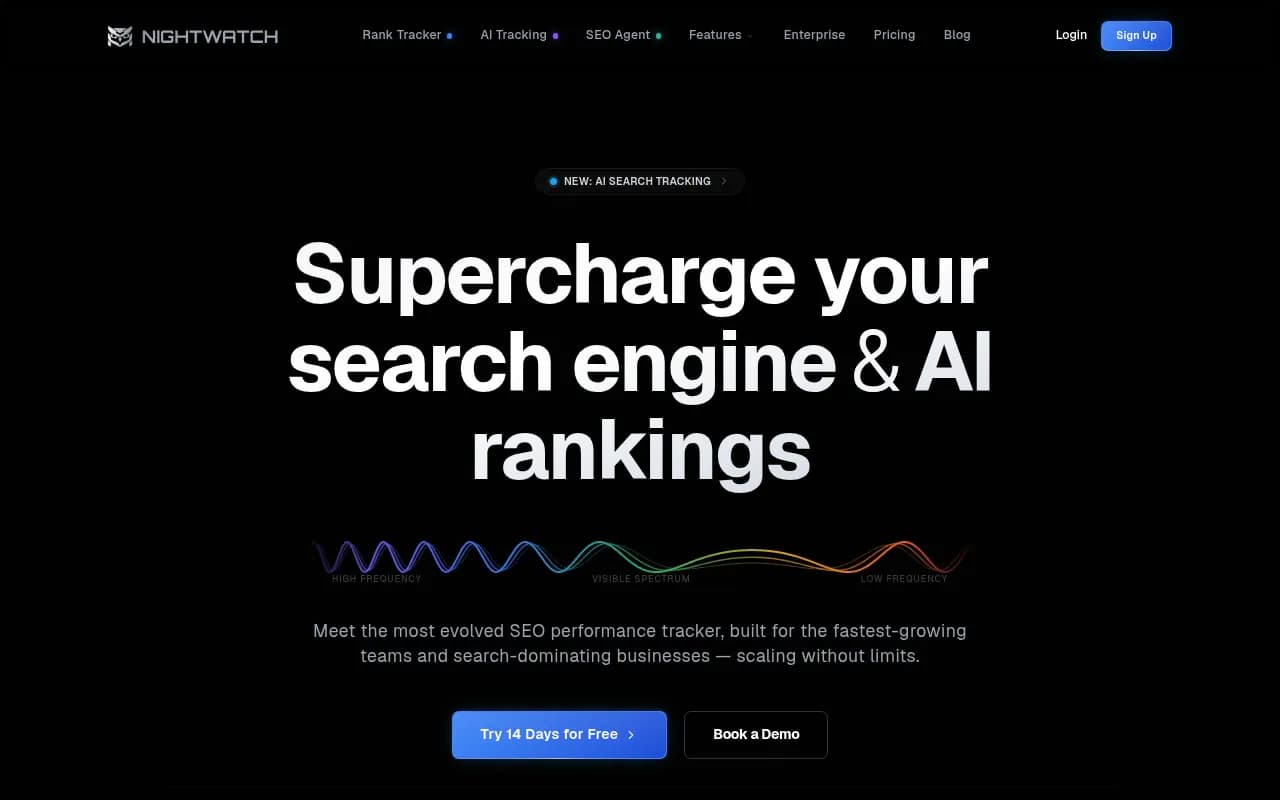
Nightwatch is a rank tracking platform that added AI search monitoring in 2025. It tracks rankings in Google AI Overviews, ChatGPT, and Perplexity alongside traditional SEO rankings. Crawler log monitoring is available as an add-on.
Crawler tracking at the geo level
Nightwatch's standout feature is geo-level crawler tracking. Most platforms show you aggregate crawler activity across your entire site. Nightwatch breaks it down by city and state, so you can see whether AI bots are crawling your location-specific pages.
This matters for local businesses and multi-location brands. If you run a chain of restaurants, you want to know whether ChatGPT's bot is crawling your Austin location page as often as your Dallas page. Nightwatch shows you that.
The crawler logs include:
- Bot type (ChatGPT, Claude, Perplexity, etc.)
- Page visited
- Geo-location of the crawl (city/state)
- Response code
- Crawl frequency
You can filter by location to see crawler activity for specific markets.
Pricing
Nightwatch's base plan starts at $39/mo, but AI search tracking (including crawler logs) is a paid add-on. Expect $100-150/mo total for full AI visibility features.
Best for
Local SEO teams and multi-location brands that need geo-level crawler tracking. If you're optimizing for AI search in specific cities or regions, Nightwatch's location-based crawler data is valuable.
5. Otterly.AI: Affordable prompt-based crawler monitoring
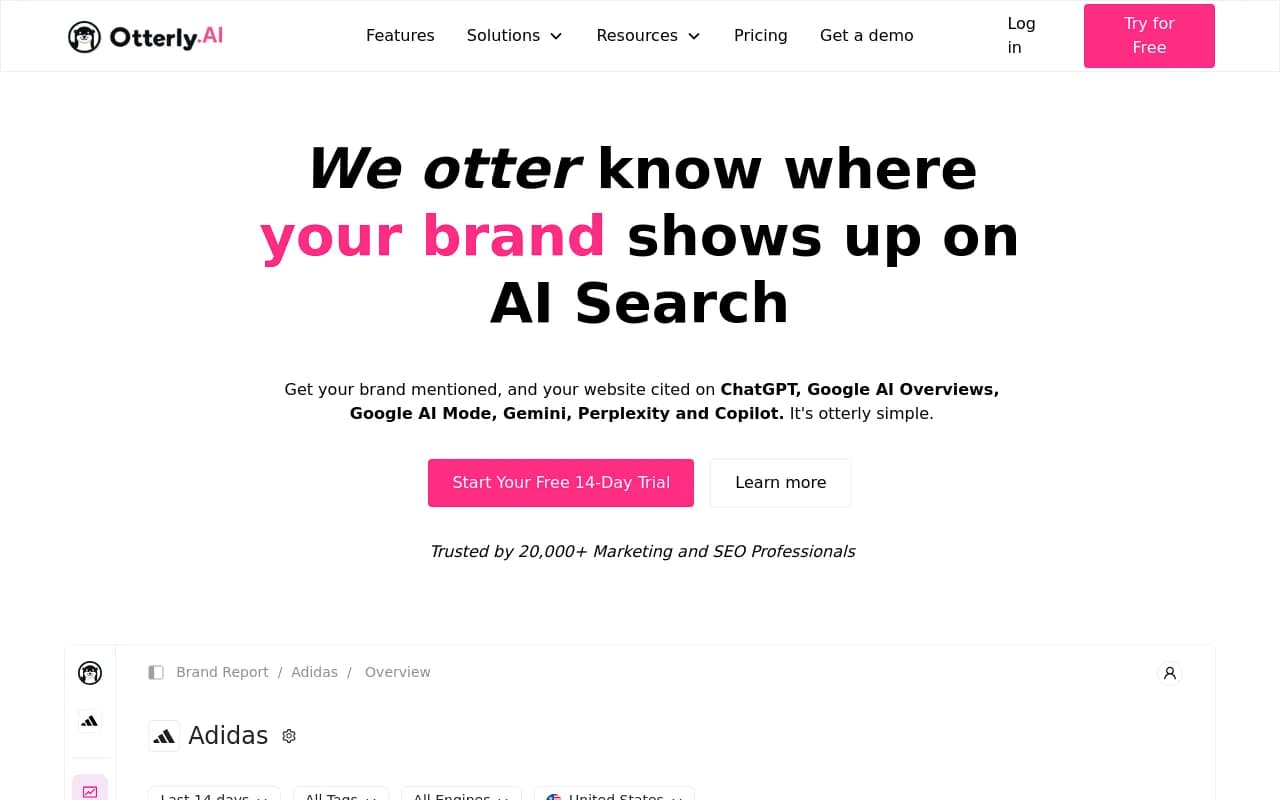
Otterly.AI is a budget-friendly AI visibility platform focused on prompt testing and GEO audits. It tracks brand mentions across ChatGPT, Perplexity, and Claude. Crawler log monitoring is included in all plans.
What you get for $29/mo
Otterly.AI is the most affordable platform on this list. For $29/mo, you get:
- Basic crawler logs showing which AI bots visited your site and when
- Prompt-based tracking: monitor how your brand appears in AI responses to specific queries
- Automated GEO audits that identify optimization opportunities
- Competitor benchmarking
The crawler logs are less detailed than Promptwatch or Profound. You see which bots visited and which pages, but not crawl frequency trends, error analysis, or geo-level data. For many small businesses, that's enough.
Limitations
Otterly.AI is a monitoring tool, not an optimization platform. It shows you data but doesn't help you act on it. There's no content gap analysis, no AI writing agent, no automation. You're on your own for creating content and fixing issues.
The platform also lacks some advanced features like Reddit tracking, YouTube insights, or ChatGPT Shopping monitoring.
Best for
Small businesses and solo marketers who want basic AI crawler monitoring without spending $200+/mo. If you just need to know which AI bots are visiting your site and whether they're encountering errors, Otterly.AI is a solid budget option.
Comparison table: AI crawler tracking platforms
| Platform | Crawler logs | Real-time monitoring | Error tracking | Geo-level data | Content optimization | Starting price |
|---|---|---|---|---|---|---|
| Promptwatch | Yes | Yes | Yes | Yes (state/city) | Yes (AI writing agent) | $99/mo |
| SE Visible | Yes | No | Basic | No | No | $189/mo |
| Profound AI | Yes | Yes | Yes | No | Yes (automation) | $99/mo (enterprise custom) |
| Nightwatch | Yes (add-on) | No | Basic | Yes (city/state) | No | $39/mo + add-on |
| Otterly.AI | Yes | No | Basic | No | No | $29/mo |
How to choose the right platform
Picking the right AI crawler tracking platform depends on what you're trying to accomplish and how much you're willing to spend.
If you want the full optimization loop (crawler logs, citation tracking, content gap analysis, and AI content generation), Promptwatch is the clear choice. It's the only platform that closes the loop from discovery to action.
If you're already using SE Ranking and want to extend into AI search, SE Visible is a natural fit. The crawler logs are solid and the integration with traditional SEO metrics is seamless.
If you're managing multiple sites at enterprise scale and want automation, Profound AI is worth the investment. The ability to trigger workflows based on crawler activity saves time and reduces manual work.
If you're a local business or multi-location brand, Nightwatch's geo-level crawler tracking is valuable. You can see whether AI bots are crawling your location-specific pages and optimize accordingly.
If you're on a tight budget and just need basic crawler monitoring, Otterly.AI gets the job done for $29/mo. You won't get advanced features, but you'll know which AI bots are visiting your site and whether they're hitting errors.
What to do with crawler log data
Tracking AI crawler activity is the first step. Acting on it is what matters. Here's how to use crawler log data to improve your AI search visibility:
1. Fix crawl errors
If AI bots are hitting 404s, timeouts, or access blocks, fix them immediately. A page that can't be crawled won't be cited. Check your robots.txt file to make sure you're not accidentally blocking AI crawlers. Some sites block GPTBot or ClaudeBot by default, which prevents those models from indexing your content.
2. Prioritize high-value pages
If AI bots are crawling your homepage but ignoring your product pages, that's a problem. Use internal linking, sitemaps, and content updates to guide crawlers toward your most important pages. If a page isn't being crawled, AI models don't know it exists.
3. Monitor crawl frequency
If AI bots visit your site once a month, your latest content won't be reflected in AI responses for weeks. Increase crawl frequency by publishing fresh content regularly, updating existing pages, and building backlinks from sites that AI models trust.
4. Correlate crawler activity with citations
If a page is being crawled frequently but never cited, the content needs work. Use tools like Promptwatch's Answer Gap Analysis to see what competitors are doing differently. Maybe they're covering the topic in more depth, or structuring the content in a way that's easier for AI models to parse.
5. Track changes over time
Crawler behavior changes. ChatGPT might start crawling your site more often after you publish a high-authority piece of content. Perplexity might stop visiting if you block its bot in robots.txt. Monitor trends over time to understand what's working and what's not.
The future of AI crawler tracking
AI crawler activity is still a new frontier. Most website owners don't track it at all. The platforms covered in this guide are early movers, but the space is evolving fast.
Expect to see:
- More granular data: Platforms will start showing not just which pages AI bots visit, but what content they extract and how they use it in responses.
- Predictive analytics: Tools will predict which pages are likely to be cited based on crawler behavior and content quality.
- Automated optimization: Platforms will automatically fix crawl errors, update content, and adjust internal linking to improve AI visibility.
For now, the platforms above represent the best options for tracking AI crawler activity in 2026. Pick the one that fits your budget and optimization goals, then start monitoring. The sooner you understand how AI models are discovering your content, the sooner you can optimize for it.