Key takeaways
- Peec.ai is a monitoring-only platform: it shows you where you're invisible in AI search but doesn't help you do anything about it.
- Platforms with built-in content agents close the loop -- they identify gaps and generate content designed to fill them.
- The distinction matters more in 2026 than it did a year ago, because AI search is now a commercial channel, not just a reporting metric.
- If your team has the bandwidth to turn data into content independently, Peec.ai works fine. If you want the whole cycle handled in one place, you'll hit its ceiling fast.
- Several platforms now combine monitoring with content generation -- they vary significantly in how well those two halves actually connect.
There's a version of this comparison that's simple: Peec.ai tracks your brand in AI search, and some other platforms track your brand and write content for you. Done.
But that framing undersells what's actually different. The gap between monitoring and optimization isn't just a feature gap -- it's a workflow gap. And in 2026, with AI search engines actively pulling revenue away from brands that aren't cited, that workflow gap has real consequences.
So let's go through what Peec.ai actually does well, where it runs out of road, and what "built-in content agents" means in practice versus in marketing copy.
What Peec.ai actually does
Peec.ai is a clean, well-designed AI search monitoring platform. It tracks your brand's visibility across ChatGPT, Perplexity, and Gemini, lets you benchmark against competitors, and surfaces an "Actions" module that flags optimization opportunities. The pricing is competitive -- entry plans start around €89/month -- and it gives you unlimited team seats and country coverage even on basic tiers, which is genuinely useful for international teams.
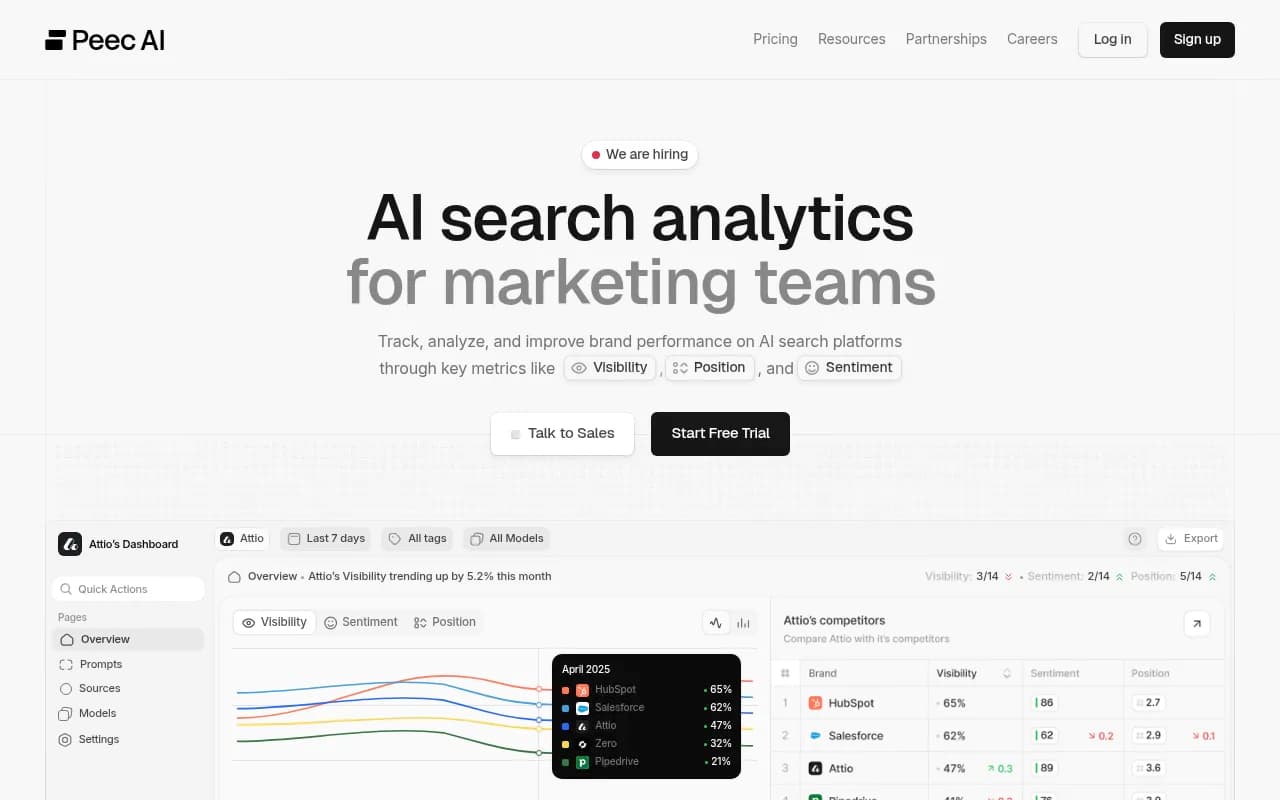
The interface is fast to learn. You can export data on every plan, which isn't a given in this category. And the MCP access (letting you query your visibility data in natural language and pipe it into other workflows) is a nice touch for teams that want to connect it to existing tooling.
What Peec.ai doesn't do: generate content. It tells you that competitors appear in 62% of buyer prompts while you appear in 18%. It does not help you write the article, FAQ, or comparison page that would change that number. One review from Discovered Labs put it bluntly: "Peec AI excels at diagnosis but offers no treatment."
That's not a knock on the product -- it's a description of what it's designed to be. The question is whether that's enough for your team.
The monitoring-only ceiling
Here's the practical problem. You run Peec.ai for a month. You see that a competitor is getting cited for "best project management software for remote teams" and you're not. You see the gap. Now what?
You take that insight to your content team. They need to understand the prompt context, figure out what angle to take, research what the AI models are actually saying in those responses, write a brief, draft the article, get it reviewed, publish it, and then wait to see if it moves the needle. That's a 2-4 week cycle, minimum, and it assumes your content team has capacity and knows how to write for AI citation rather than traditional SEO.
Most teams don't have that capacity. And even the ones that do lose time translating monitoring data into content action. That translation step -- from "here's a gap" to "here's the content that fills it" -- is exactly what built-in content agents are supposed to eliminate.
What "built-in content agents" actually means
The phrase gets used loosely, so it's worth being specific. A genuine content agent in this context does at least three things:
- Identifies which prompts and topics competitors are being cited for that you're not (gap analysis grounded in real prompt data, not keyword guesswork)
- Generates content -- articles, listicles, comparisons, FAQs -- that's specifically structured to answer those gaps in the way AI models want to cite
- Connects the output back to visibility tracking so you can see whether the content actually moved your citation rate
If a platform does step one and calls it "content optimization," that's not a content agent. That's a brief generator at best. The real test is whether the content output is grounded in actual prompt data and citation patterns, and whether the platform closes the loop by showing you what happened after you published.
Promptwatch is the clearest example of a platform built around this full cycle. Its Content Agents generate articles and briefs grounded in real prompt volumes, citation data, competitor analysis, and brand guidance -- not generic SEO filler. And the loop closes: page-level tracking shows which pages are being cited, by which models, and agent analytics shows the timeline from publish to crawl to citation.

That's a meaningfully different product than a monitoring dashboard with a "generate brief" button bolted on.
A direct comparison across the main options
Here's how the major platforms in this space actually stack up on the dimensions that matter:
| Platform | Monitoring | Gap analysis | Content generation | Crawler logs | Prompt volume data | Closes the loop |
|---|---|---|---|---|---|---|
| Peec.ai | Yes | Basic (Actions module) | No | No | No | No |
| Profound | Yes | Yes | Yes (limited) | No | Yes | Partial |
| Otterly.AI | Yes | No | No | No | No | No |
| AthenaHQ | Yes | Yes | No | No | Yes | No |
| Promptwatch | Yes | Yes (Answer Gap Analysis) | Yes (Content Agents) | Yes | Yes | Yes |
| Scrunch | Yes | Partial | No | No | No | No |
| Ahrefs Brand Radar | Yes | No | No | No | No | No |
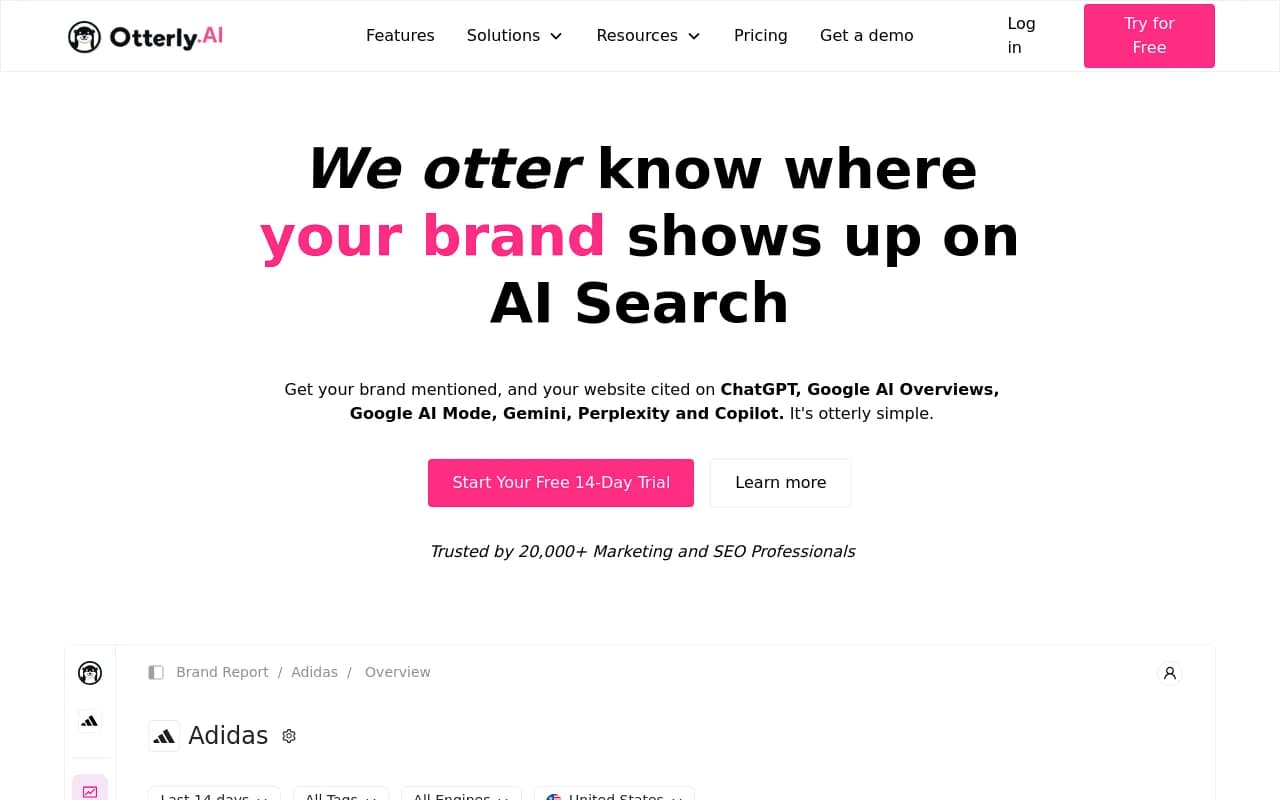

A few things stand out in that table. Otterly.AI and Ahrefs Brand Radar are pure monitoring plays -- useful for tracking, not for fixing. Profound has content generation but it's limited and the loop doesn't fully close. AthenaHQ has strong monitoring and gap analysis but stops before content creation.
Promptwatch is the only one where all six columns are checked, which is why it consistently comes out as the "Leader" category in head-to-head comparisons of GEO platforms.
The Profound comparison is instructive
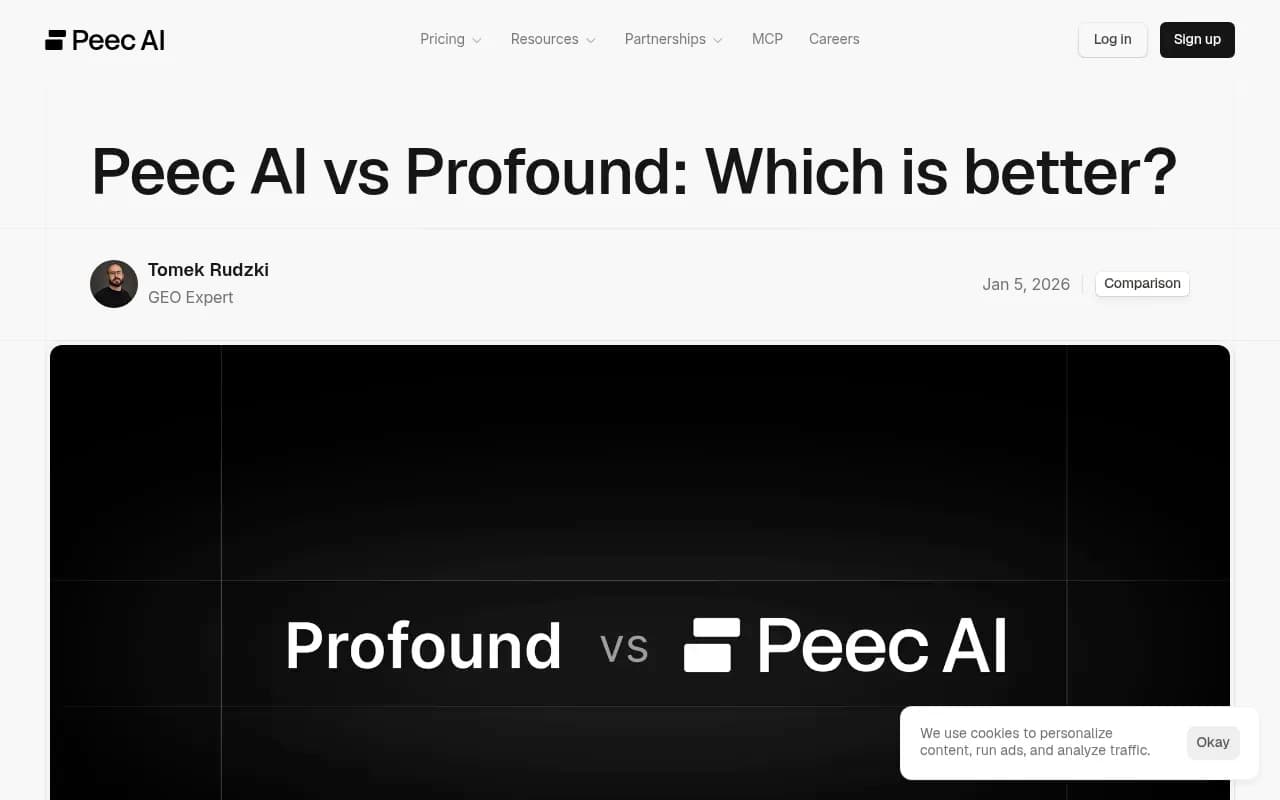
Profound is probably the closest competitor to Peec.ai that also has content generation. It's venture-backed, well-regarded, and has a stronger enterprise feature set. But it's significantly more expensive -- Peec.ai's own comparison page makes the pricing gap clear, and it's not small.
More importantly, Profound's content generation is more of a supplement to its monitoring than a core workflow. You get content suggestions and some generation capability, but the tight feedback loop between "content published" and "citation rate changed" isn't as developed as platforms built around that cycle from the start.
That matters because the value of content agents isn't just the content -- it's knowing whether the content worked. Without that feedback, you're still guessing.
When Peec.ai is the right choice
To be fair: Peec.ai is genuinely good at what it does, and there are teams for whom it's the right tool.
If you have a capable content team that just needs clean visibility data to inform their work, Peec.ai gives you that at a lower price point than most alternatives. The interface is fast, the competitor benchmarking is solid, and the MCP integration means you can pipe the data into whatever workflow you've already built.
It also makes sense as a secondary tool -- if you're already using a platform with strong content generation and you want a lightweight, affordable monitoring layer for a specific market or brand, Peec.ai fits that role.
Where it doesn't fit: teams that need the full cycle in one place, teams without dedicated content capacity, and teams that need to show a direct line from AI visibility investment to traffic and revenue.
What to look for if you want the full cycle
If you're evaluating platforms with built-in content agents, here are the questions worth asking before you commit:
Is the content grounded in real prompt data? Some platforms generate content based on keyword research or generic topic clusters. That's not the same as content built around the specific prompts AI models are already fielding and the gaps in your current coverage.
Does the platform track what happens after you publish? A content agent that generates an article and then has no idea whether it got cited is only half useful. You want page-level tracking that connects publication to citation rate change.
Does it show you crawler activity? AI models crawl your site before they cite it. Knowing which pages they're reading, how often they return, and where they're hitting errors is critical context for understanding why some content gets cited and some doesn't. Most platforms don't have this.
Can it handle your actual scale? Prompt volume and difficulty scoring matters here. You want to prioritize gaps that are winnable and high-value, not just gaps that exist.
The broader shift this reflects
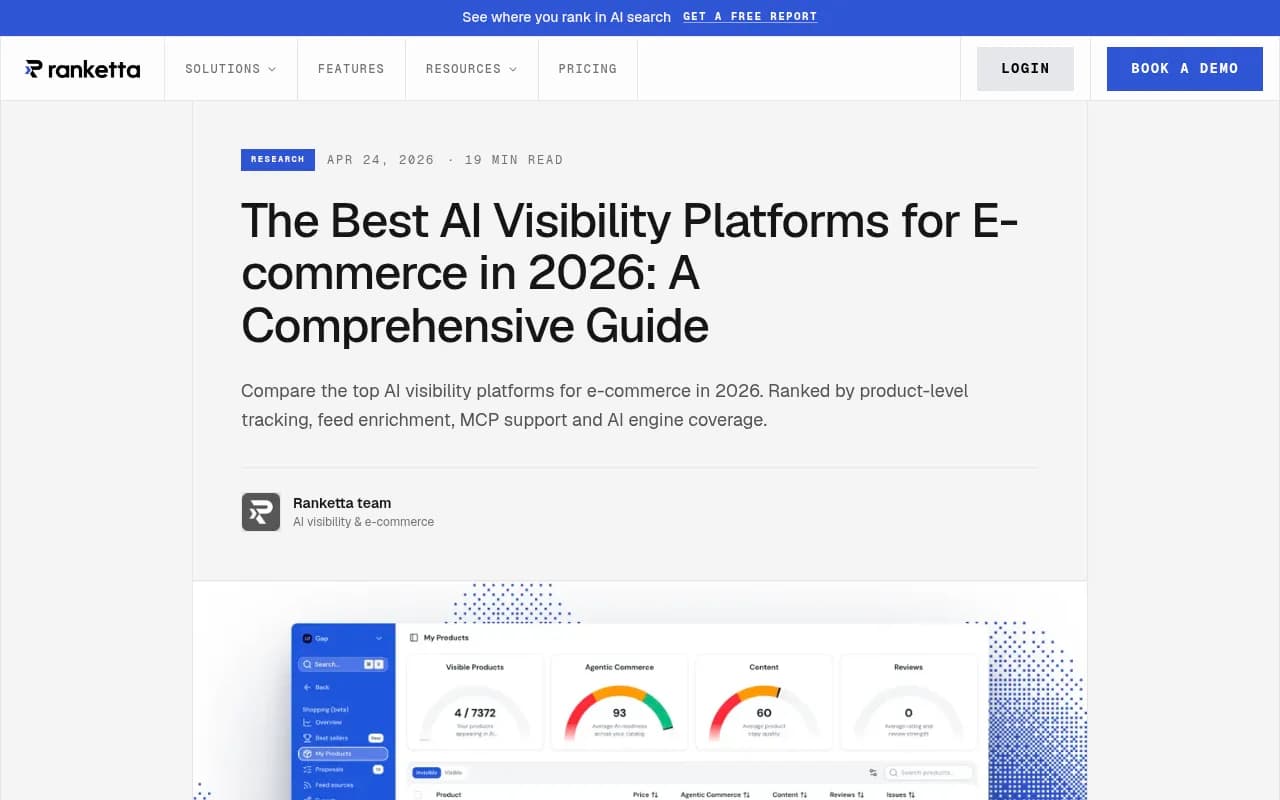
The e-commerce research from Ranketta frames it well: "Tracking matters, but tracking alone is half a product." That's true beyond e-commerce. In any category where AI search is driving discovery -- software, services, B2B, consumer -- the brands showing up in AI answers are pulling real intent away from the ones that aren't.
Monitoring tells you you're losing. Content agents help you stop losing. Those are different products, and the gap between them is widening as AI search matures from a novelty metric into a revenue channel.
Peec.ai is a solid tool for the first job. If you need the second job done too, you'll need something else -- or you'll need to build the bridge yourself, which costs more in time than most teams realize.
The platforms worth evaluating for the full cycle are the ones where gap analysis and content generation aren't separate modules but a connected workflow. That's a short list in 2026, but it's getting longer.