Key takeaways
- Scrunch and Brandlight.ai are solid monitoring tools -- they show you where your brand stands in AI search results, but neither helps you act on what you find.
- Promptwatch is the only one of the three that closes the full loop: find gaps, generate content, track results, and attribute traffic to revenue.
- For teams that just want a dashboard to check brand mentions across ChatGPT and Perplexity, Scrunch works fine. For teams that want to actually move the needle, Promptwatch is the stronger choice.
- Pricing matters: Promptwatch's Essential plan ($99/mo) covers 10 AI models and comes in cheaper than Scrunch's Core plan while including platforms Scrunch doesn't track.
- If you're an agency or enterprise team managing multiple brands, the gap between monitoring-only tools and a full optimization platform becomes very expensive very fast.
The AI search monitoring space has grown fast -- maybe too fast. There are now dozens of platforms claiming to track your brand across ChatGPT, Perplexity, Claude, and the rest. Most of them do roughly the same thing: run your prompts, show you a visibility score, send you a weekly report.
Scrunch, Brandlight.ai, and Promptwatch are three of the more talked-about options right now. They're not the same product, though. The differences matter a lot depending on what you actually need.
This guide goes deep on each one -- what they track, how they handle content optimization (or don't), what the data quality looks like, and where each tool falls short. No fluff.
What "AI brand monitoring" actually means in 2026
Before comparing tools, it's worth being clear on what you're comparing. AI brand monitoring can mean several different things:
- Tracking whether your brand name appears in AI-generated responses
- Measuring your "share of voice" vs competitors across different LLMs
- Identifying which specific prompts trigger mentions (or don't)
- Understanding which pages on your site AI models are actually reading
- Figuring out what content you need to create to appear in more responses
Most tools cover the first two. Fewer cover the third. Almost none cover the fourth and fifth -- and those are the ones that actually move revenue.
Keep that framework in mind as we go through each platform.
Scrunch: clean interface, monitoring-first
Scrunch launched in 2024 and has built a reputation as a clean, focused AI visibility tracker. It monitors how your brand appears across AI answer engines and gives you a structured view of your share of voice over time.
What Scrunch does well
The interface is genuinely good. Scrunch makes it easy to set up prompts, see how your brand performs across different AI models, and track changes week over week. For teams that are new to AI visibility monitoring, the onboarding is straightforward.
Scrunch also does competitor benchmarking reasonably well -- you can see how your brand stacks up against named competitors for specific queries, which is useful for reporting.
Where Scrunch falls short
The core limitation is that Scrunch is a monitoring dashboard. It shows you data. What it doesn't do is tell you why you're invisible for certain prompts, which content is missing from your site, or what to do about it.
There's no content gap analysis. No built-in content generation. No AI crawler logs showing which of your pages AI models are actually visiting. If you discover you're invisible for 40 prompts your competitors are winning, Scrunch's job is done -- the rest is on you.
Coverage is another issue. According to data from Airefs, Promptwatch covers 10 AI platforms while Scrunch's Core plan includes fewer, at a higher price point. For teams tracking across ChatGPT, Claude, Perplexity, Gemini, Grok, DeepSeek, and others simultaneously, that gap adds up.
Who Scrunch is right for
Teams that want a clean monitoring dashboard and don't need optimization capabilities. If your goal is to report on AI visibility to stakeholders rather than actively improve it, Scrunch gets the job done.
Brandlight.ai: brand sentiment with a broader lens
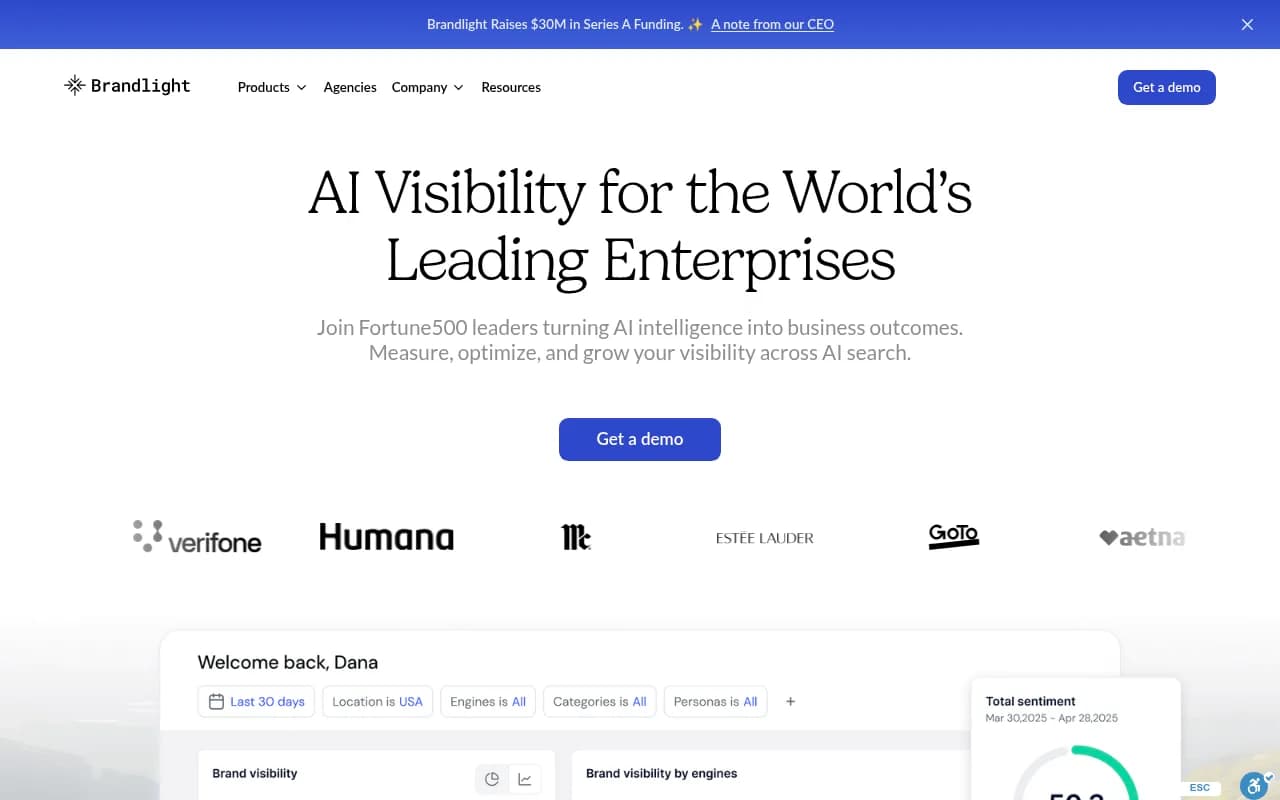
Brandlight.ai takes a slightly different angle. It positions itself around brand sentiment and reputation in AI responses -- not just whether you appear, but how you're described when you do.
What Brandlight.ai does well
The sentiment analysis is the differentiator here. Brandlight.ai tries to surface not just citation frequency but the tone and framing of how AI models describe your brand. That's genuinely useful for PR teams and brand managers who care about narrative, not just presence.
It also covers a reasonable spread of AI models and gives you historical trend data, so you can see if your brand sentiment is improving or degrading over time.
Where Brandlight.ai falls short
Like Scrunch, Brandlight.ai is fundamentally a monitoring tool. The sentiment angle is interesting, but it doesn't translate into action. Knowing that Claude describes your brand as "mid-tier" is useful context -- but Brandlight.ai won't help you figure out what content to publish to change that perception.
There's no prompt intelligence (volume estimates, difficulty scores), no content generation, no crawler logs, and no traffic attribution. The platform also lacks Reddit and YouTube tracking, which matters because those sources directly influence what AI models recommend.
For agencies managing multiple clients, Brandlight.ai's feature set is thin relative to what you'd need to actually deliver results.
Who Brandlight.ai is right for
Brand and PR teams who want to understand how AI models frame their company, and who have a separate content team to act on those insights. It's a good listening tool. It's not an optimization platform.
Promptwatch: monitoring plus the full action loop
Promptwatch takes a different approach to the problem. The platform is built around what it calls the "action loop" -- find gaps, create content, track results. Monitoring is step one, not the whole product.

What Promptwatch does well
The depth here is genuinely different from the other two. A few specifics:
Answer Gap Analysis shows you exactly which prompts your competitors are visible for that you're not -- and what content your site is missing that would make AI models cite you. This is the feature that makes Promptwatch an optimization tool rather than a tracker. You're not just seeing a problem; you're seeing the specific fix.
AI content generation is built directly into the platform. The writing agent generates articles, listicles, and comparisons grounded in real citation data (880M+ citations analyzed), prompt volumes, and competitor analysis. This isn't generic content -- it's written to get cited by ChatGPT, Claude, Perplexity, and others.
AI Crawler Logs show you in real time which AI crawlers (ChatGPT, Claude, Perplexity, etc.) are hitting your website, which pages they're reading, and any errors they encounter. Most competitors don't offer this at all. It's the difference between guessing why you're not being cited and actually knowing.
Prompt Intelligence gives you volume estimates and difficulty scores for each prompt, plus query fan-outs that show how one prompt branches into sub-queries. That lets you prioritize high-value, winnable prompts instead of spreading effort thin.
Traffic attribution closes the loop with revenue. You can connect AI visibility to actual traffic via a code snippet, Google Search Console integration, or server log analysis. Scrunch and Brandlight.ai don't offer this.
Reddit and YouTube tracking surfaces discussions that directly influence AI recommendations -- a channel both competitors ignore entirely.
ChatGPT Shopping tracking monitors when your brand appears in ChatGPT's product recommendations and shopping carousels, which is increasingly important for e-commerce brands.
The platform covers 10 AI models: ChatGPT, Perplexity, Google AI Overviews, Google AI Mode, Claude, Gemini, Meta/Llama, DeepSeek, Grok, and Mistral. That's the broadest coverage of the three tools here.
Promptwatch is used by 6,700+ brands and agencies including Booking.com and Center Parcs, and its data has been cited in the Wall Street Journal.
Where Promptwatch has trade-offs
The platform has more depth, which means a steeper learning curve. Teams that just want a simple visibility score without the optimization layer may find the feature set overwhelming at first.
The sentiment-specific framing that Brandlight.ai offers isn't Promptwatch's primary focus -- it's more about citation presence and content optimization than narrative tone analysis.
Who Promptwatch is right for
Marketing and SEO teams that want to actually improve their AI visibility, not just report on it. Agencies managing multiple brands. Any team that needs to connect AI monitoring to content strategy and revenue.
Feature comparison
| Feature | Scrunch | Brandlight.ai | Promptwatch |
|---|---|---|---|
| AI model coverage | Limited | Moderate | 10 models |
| Brand mention tracking | Yes | Yes | Yes |
| Competitor benchmarking | Yes | Yes | Yes |
| Sentiment analysis | Basic | Strong | Basic |
| Answer Gap Analysis | No | No | Yes |
| AI content generation | No | No | Yes |
| AI Crawler Logs | No | No | Yes |
| Prompt volume/difficulty | No | No | Yes |
| Reddit & YouTube tracking | No | No | Yes |
| ChatGPT Shopping tracking | No | No | Yes |
| Traffic attribution | No | No | Yes |
| Multi-language/region | Limited | Limited | Yes |
| Agency/multi-brand support | Limited | Limited | Yes |
| Starting price | Higher than Promptwatch | Not publicly listed | $99/mo |
| Free trial | Yes | Yes | Yes |
Pricing reality check
Promptwatch's Essential plan is $99/mo and covers 1 site, 50 prompts, and 5 articles per month across 10 AI models. The Professional plan ($249/mo) adds crawler logs, state/city tracking, and 150 prompts across 2 sites. Business is $579/mo for 5 sites and 350 prompts.
Scrunch's pricing is higher at the comparable tier while covering fewer AI platforms. Brandlight.ai doesn't publish pricing publicly, which typically signals enterprise-only positioning.
For agencies, Promptwatch offers custom agency and enterprise pricing. The math gets interesting quickly: if you're paying more for Scrunch and getting monitoring-only, you're also paying separately for whatever content workflow you use to act on the data. Promptwatch bundles the action layer in.
The monitoring-only trap
This is worth naming directly. A lot of teams buy an AI visibility tool, get a dashboard showing they're invisible for 60% of their target prompts, and then... sit with that information. The tool has done its job. The team hasn't moved.
That's not a criticism of Scrunch or Brandlight.ai specifically -- it's a structural problem with monitoring-only tools. They create awareness without creating a path to action.
The teams that are actually improving their AI visibility in 2026 are the ones treating it like a content problem. They're identifying which prompts they're losing, figuring out what content would make AI models cite them, publishing that content, and tracking whether it works. That loop requires more than a dashboard.
Which tool should you pick?
Here's the honest breakdown:
Pick Scrunch if you need a clean, simple monitoring dashboard and your team's primary goal is reporting AI visibility to stakeholders. You'll need a separate content workflow to act on the data.
Pick Brandlight.ai if brand sentiment and narrative framing in AI responses is your primary concern -- particularly if you're in PR or brand management and have a content team that can act on what you find.
Pick Promptwatch if you want to actually improve your AI visibility, not just track it. The combination of Answer Gap Analysis, built-in content generation, AI Crawler Logs, and traffic attribution makes it the only one of the three that takes you from "here's the problem" to "here's the fix" to "here's the result."
For most marketing and SEO teams, the choice is fairly clear. Monitoring your AI visibility without a path to improving it is like checking your blood pressure without changing anything about your diet. The data is interesting. The outcome isn't.
Other tools worth knowing about
If none of the three above feel like the right fit, a few others are worth a look depending on your specific situation:
Otterly.AI is a lightweight, affordable option for teams that want basic AI mention tracking without the complexity.

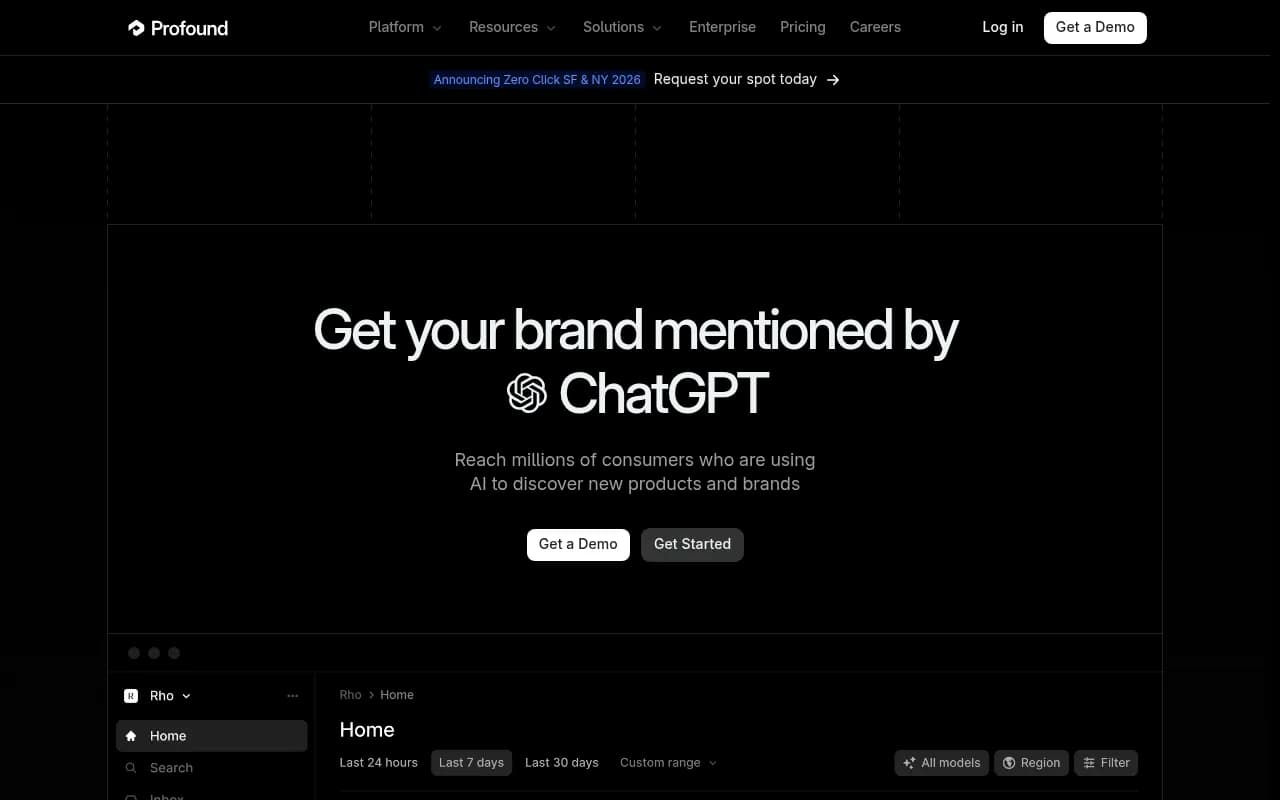
Profound has strong enterprise features and agency-specific modes, though it sits at a higher price point.
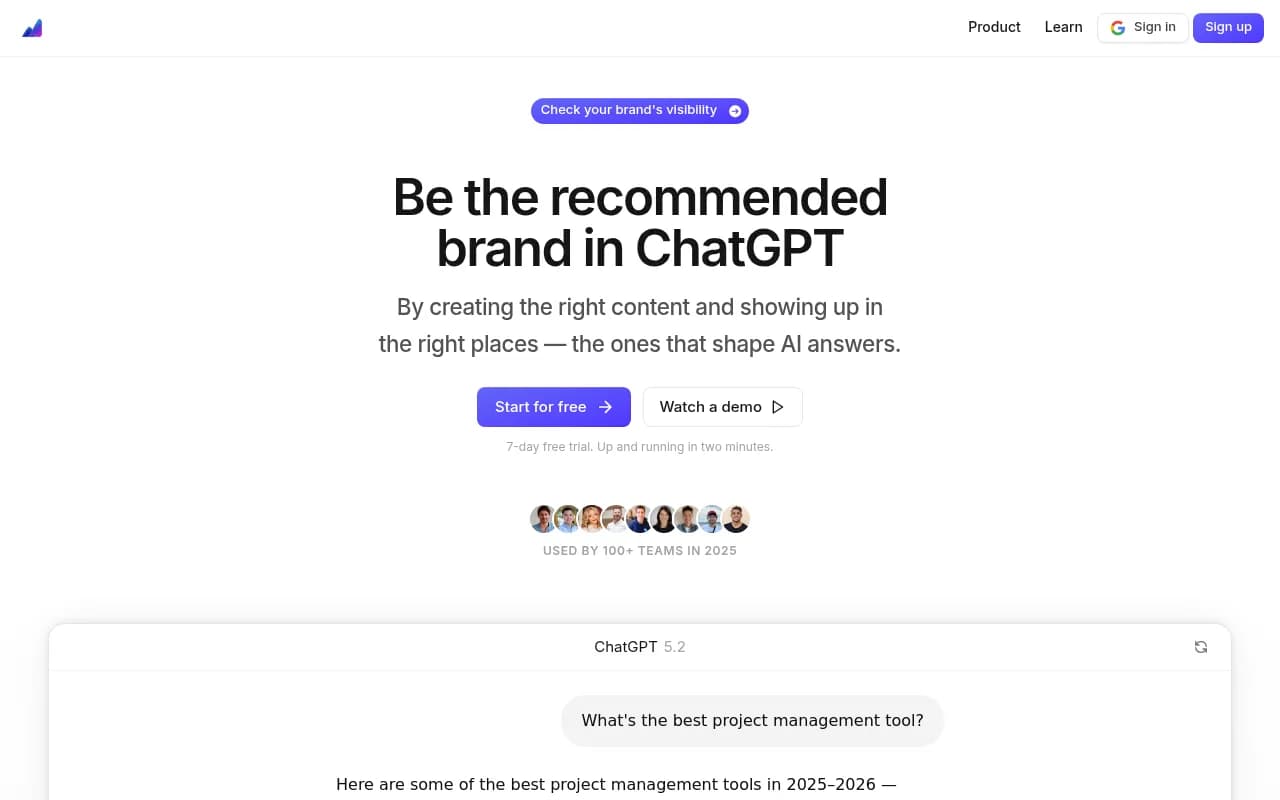
Peec AI is another monitoring-focused tool that's popular with smaller teams.

Airefs offers affordable AI search monitoring and publishes useful comparison data across the space.
The market is moving fast. Tools that were monitoring-only six months ago are adding optimization features. But right now, in mid-2026, the gap between a tracker and a full optimization platform is still significant -- and that gap is where most teams are leaving results on the table.