Key takeaways
- Peec AI is a strong monitoring platform with clean UX, unlimited team seats, and solid multi-language coverage -- but it stops at telling you what's happening, not how to fix it.
- ZipTie positions itself as an actionable GEO platform and scores well for teams that want optimization guidance alongside tracking.
- Promptwatch is the only one of the three built around a full action loop: find gaps, generate content, track results -- with crawler logs, 880M+ citations analyzed, and built-in AI content creation.
- If you just need a monitoring dashboard, Peec AI is the most accessible entry point. If you need to actually improve your AI search visibility, Promptwatch is the more complete tool.
- Pricing is close across all three at the entry level, which makes the feature gap between monitoring-only and optimization-capable tools even more significant.
AI search visibility has gone from a niche concern to a genuine business problem in about 18 months. Similarweb's 2025 Generative AI Report put the scale of it plainly: AI platforms generated over 1.1 billion referral visits in June 2025, up 357% year-over-year. Meanwhile, AI Overviews now trigger for over 13% of Google queries and have pushed click-through rates down by more than a third for top organic results.
So the question isn't whether you need to track your brand's presence in ChatGPT, Perplexity, Claude, and Google AI anymore. The question is which tool actually helps you do something about it.
This comparison looks at three platforms that come up constantly in this space: Peec AI, ZipTie, and Promptwatch. They're all credible. They're all actively developed. But they make very different bets about what "AI search visibility" actually means -- and those bets have real consequences for what you can accomplish with each one.
What each platform is actually trying to do
Before getting into features and pricing, it's worth being clear about the fundamental philosophy behind each tool. These aren't just different implementations of the same idea.
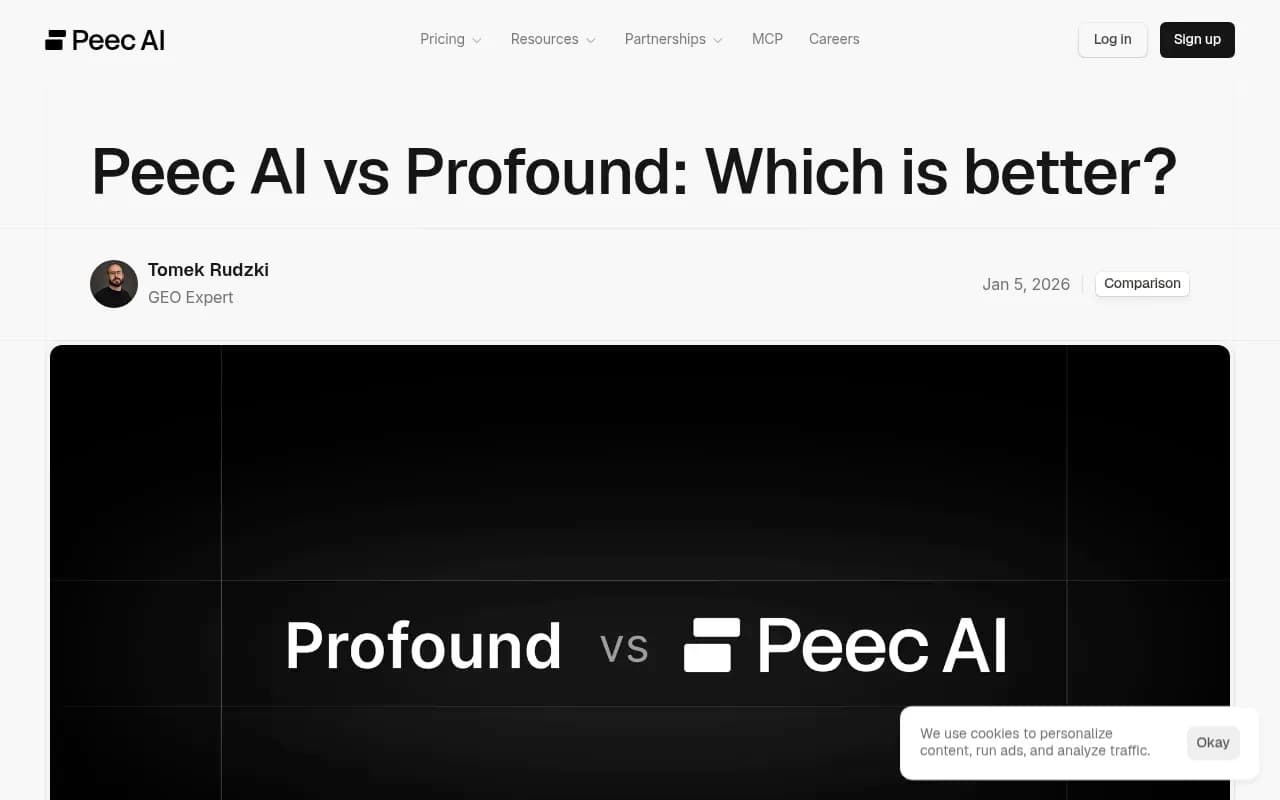
Peec AI is a monitoring platform. It's built around giving marketing teams a clean, accurate view of how their brand appears across AI search engines. The Berlin-based team has invested heavily in UI scraping technology that interacts with AI models the way real users do, which gives their data a certain authenticity. Their interface is polished, their multi-language support is genuinely good, and they've kept pricing accessible. The trade-off is that Peec AI tells you what's happening -- it doesn't tell you what to do about it.

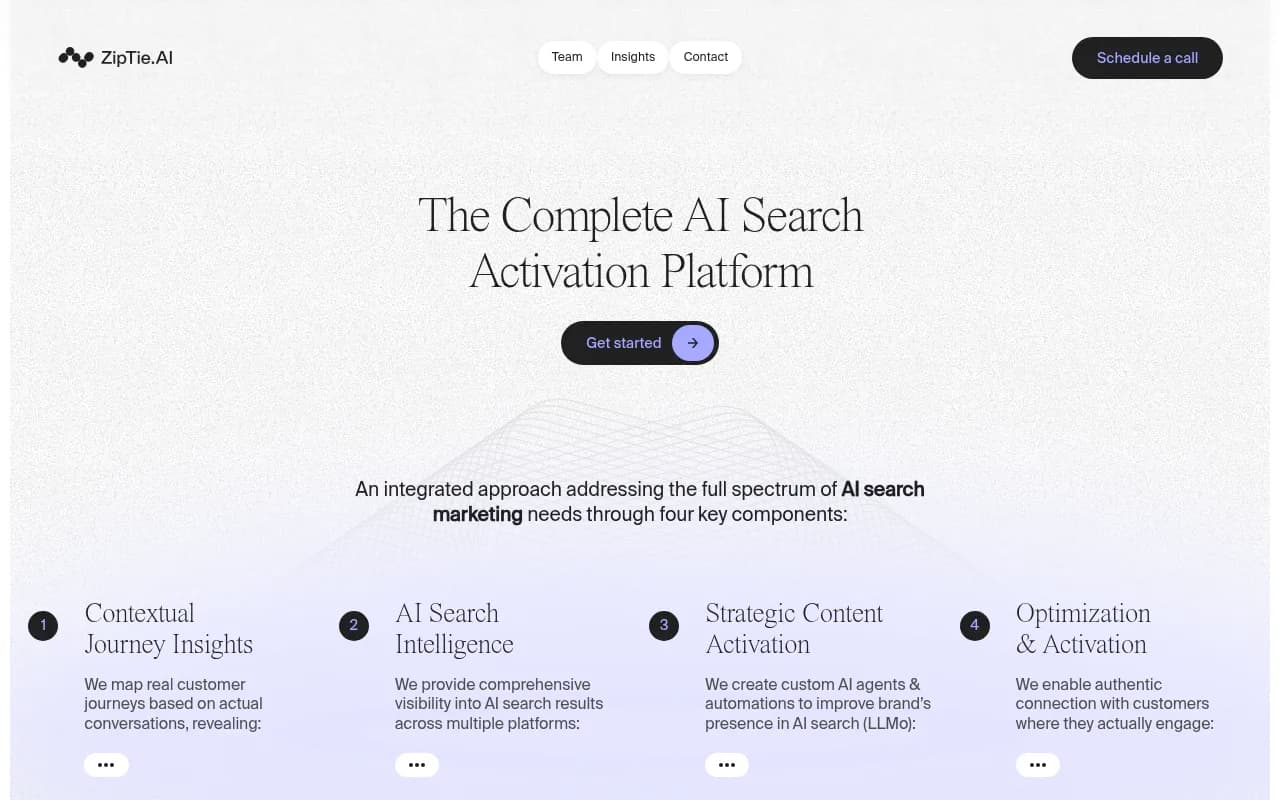
ZipTie takes a step further toward actionability. It's positioned as a GEO platform rather than just a monitoring tool, and it surfaces optimization recommendations alongside visibility data. For teams that want more than a dashboard but aren't ready to invest in a full optimization workflow, ZipTie sits in an interesting middle ground.
Promptwatch is built around a different premise entirely: that monitoring without action is just expensive anxiety. The platform is designed around what they call an action loop -- find the gaps where competitors are visible and you're not, generate content engineered to get cited by AI models, then track whether it worked. That's a meaningfully different product than a monitoring dashboard, even a good one.

Feature comparison
Here's how the three platforms stack up across the capabilities that actually matter for AI search visibility work:
| Feature | Peec AI | ZipTie | Promptwatch |
|---|---|---|---|
| AI models monitored | ChatGPT, Perplexity, Google AI | Multiple LLMs | 10+ (ChatGPT, Claude, Perplexity, Gemini, Grok, DeepSeek, Copilot, Meta AI, Mistral, Google AI Overviews) |
| Starting price | ~$95/mo | Varies | $99/mo |
| Free trial | 7-day | Yes | 7-day |
| Team seats | Unlimited on all plans | Limited | Limited by plan tier |
| Countries/regions | Unlimited on all plans | Limited | Multi-region, customizable personas |
| Content generation | No | Limited | Built-in AI writing agent |
| Answer gap analysis | Basic | Yes | Full competitor gap analysis |
| AI crawler logs | No | No | Real-time (Professional+) |
| Reddit/YouTube tracking | No | No | Yes |
| ChatGPT Shopping tracking | No | No | Yes |
| Prompt volume/difficulty | No | Partial | Yes, with query fan-outs |
| Page-level citation tracking | Limited | Limited | Yes |
| Traffic attribution | No | No | GSC integration, server logs, code snippet |
| Looker Studio / API | No | No | Yes |
| G2 rating | 5.0/5 | N/A | 4.9/5 |
The pattern is pretty clear. Peec AI and ZipTie both do monitoring well. Promptwatch does monitoring and then keeps going.
Monitoring depth: where Peec AI genuinely shines
Peec AI's core strength is data quality and accessibility. Their UI scraping approach -- actually interacting with AI interfaces the way a user would -- produces results that feel authentic rather than synthetic. For multi-language and multi-region monitoring, they've built something genuinely solid: unlimited countries on every plan, which is unusual and valuable for international brands.
The interface is clean. Onboarding is fast. And the unlimited team seats policy means you're not paying more just because your marketing team grows. For a mid-market team that needs reliable visibility data across regions without a lot of setup friction, Peec AI is a reasonable choice.
The "Actions module" they've added is worth noting -- it surfaces optimization opportunities even on basic plans. But in practice, this is more of a suggestions list than a full optimization workflow. It points in a direction; it doesn't take you there.
What Peec AI doesn't have: crawler logs (so you can't see how AI bots are actually crawling your site), no content generation, no traffic attribution, and no Reddit or YouTube tracking. These aren't minor gaps -- they're the difference between knowing you have a problem and being able to fix it.
ZipTie: the middle ground option
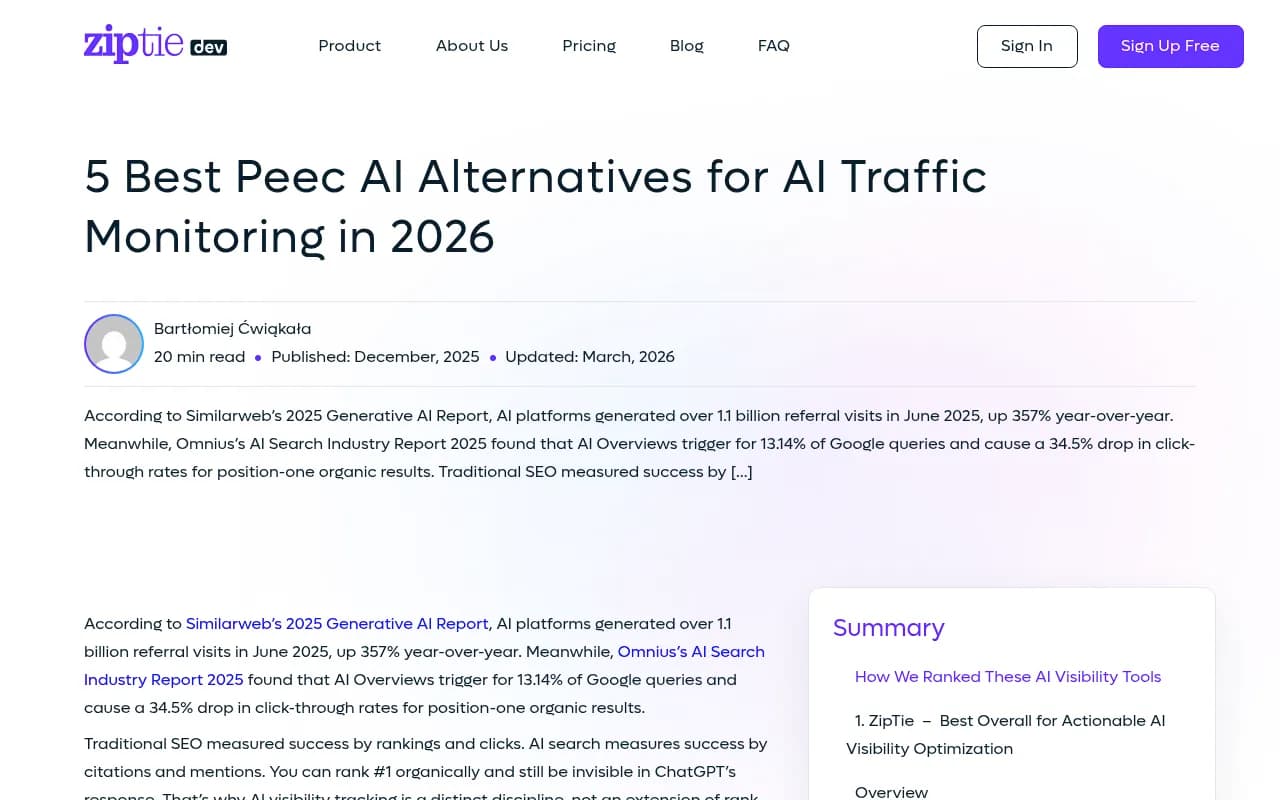
ZipTie has positioned itself as the "best overall for actionable AI visibility optimization" in several roundups, and that framing is partly earned. It goes further than pure monitoring tools by surfacing recommendations alongside data, and the interface is designed with optimization workflows in mind.
For teams that find Peec AI too passive but aren't ready to commit to a full platform like Promptwatch, ZipTie is worth evaluating. The pricing structure is less transparent publicly, which makes direct comparison harder, but it generally sits in a similar range to the other two at entry level.
The honest limitation: ZipTie still doesn't have crawler logs, Reddit/YouTube tracking, ChatGPT Shopping monitoring, or built-in content generation. It's a step up from monitoring-only, but it's not a complete optimization platform.
Promptwatch: the optimization platform
The thing that separates Promptwatch from the other two isn't any single feature -- it's the architecture of the whole product. Most AI visibility tools are built to show you data. Promptwatch is built to change your data.
The answer gap analysis is the clearest example. It doesn't just show you where you're invisible -- it shows you exactly which prompts competitors are getting cited for that you're not, and what content your site is missing to compete for those prompts. That's actionable in a way that a visibility score isn't.
The built-in AI writing agent takes it further. It generates articles, listicles, and comparisons grounded in citation data from over 880 million citations analyzed. This isn't generic content -- it's content designed to get cited by specific AI models for specific prompts. You can see the gap, generate the content to fill it, publish it, and then track whether your visibility scores actually move. That full loop is what makes Promptwatch different.
A few other capabilities that don't get enough attention:
The AI crawler logs (available on Professional and above) show you in real time which AI crawlers are hitting your site, which pages they're reading, and what errors they're encountering. This is genuinely useful for diagnosing why certain pages aren't getting cited -- and it's something most competitors don't offer at all.
The Reddit and YouTube tracking surfaces discussions that directly influence AI recommendations. When Perplexity cites a Reddit thread about your product category, you want to know about it. Most platforms ignore this channel entirely.
The traffic attribution closes the loop between visibility and revenue. You can connect AI visibility to actual site traffic through a code snippet, Google Search Console integration, or server log analysis -- so you're not just tracking citations in the abstract, you're seeing whether they drive results.
Pricing breakdown
All three platforms are in a similar range at entry level, which makes the feature gap more striking.
| Plan tier | Peec AI | ZipTie | Promptwatch |
|---|---|---|---|
| Entry | ~$95/mo | Contact for pricing | $99/mo (Essential: 1 site, 50 prompts, 5 articles) |
| Mid | ~$200+/mo | Varies | $249/mo (Professional: 2 sites, 150 prompts, 15 articles, crawler logs) |
| Business | Custom | Custom | $579/mo (5 sites, 350 prompts, 30 articles) |
| Agency/Enterprise | Custom | Custom | Custom |
| Free trial | 7-day | Yes | 7-day |
| Annual discount | Yes | Yes | Yes |
Peec AI's unlimited team seats and unlimited countries on every plan are genuine advantages at the entry level. If you have a large team doing basic monitoring across many markets, that structure works in your favor.
Promptwatch's pricing reflects what you're getting: not just monitoring credits but article generation, crawler log access, and the full optimization workflow. The $99 Essential plan is a reasonable starting point for a single site with 50 prompts and 5 articles per month. The Professional tier at $249 is where the platform really opens up -- crawler logs, state/city tracking, and 15 articles per month.
Who should use which tool
The right choice depends on what you're actually trying to accomplish.
Use Peec AI if: You need clean, reliable monitoring across multiple regions and languages, you have a large team that needs access without per-seat costs, and your primary goal is understanding the competitive landscape rather than actively improving your position. It's a good monitoring tool with a low barrier to entry.
Use ZipTie if: You want more optimization guidance than Peec AI provides but aren't ready to commit to a full platform. It's a reasonable middle-ground option for teams that are early in their GEO journey and want recommendations alongside data.
Use Promptwatch if: You need to actually move the needle on AI search visibility, not just measure it. If you're running content programs, managing multiple sites, or accountable for AI-driven traffic growth, the combination of gap analysis, content generation, crawler logs, and traffic attribution is hard to replicate with monitoring-only tools. The 6,700+ brands using it -- including Booking.com and Center Parcs -- suggest it's not just a niche product.
A few other tools worth knowing about
These three aren't the only options in the space. Depending on your needs, a few others are worth a look:
Otterly.AI is the budget entry point for basic monitoring -- $29/month gets you started, though the feature set is limited.

Profound is the enterprise-grade option with strong AI content generation capabilities, though it comes at a higher price point and lacks some of the tracking features Promptwatch offers.
AthenaHQ sits in the monitoring-focused camp, similar to Peec AI, with good data but limited optimization capabilities.
For teams that want to explore the space before committing to a paid platform, Airefs offers an affordable entry point for AI search monitoring.
The honest summary
Peec AI is a well-built monitoring tool. If you need visibility data across many regions with a large team and a clean interface, it's a solid choice. ZipTie adds a layer of optimization guidance that makes it more actionable. But neither platform is designed to help you systematically improve your AI search visibility -- they're designed to help you measure it.
Promptwatch is built differently. The gap analysis, content generation, crawler logs, Reddit tracking, and traffic attribution aren't separate features -- they're parts of a workflow designed to move your visibility scores, not just report on them. For teams that are accountable for results rather than just insights, that distinction matters.
The AI search visibility space is moving fast, and all three platforms are actively developing. But the fundamental question -- do you need a monitoring tool or an optimization platform -- is worth answering before you commit to any of them.