Key takeaways
- Peec AI is a solid monitoring tool for tracking brand visibility across ChatGPT, Perplexity, and Google AI -- but it stops at data and doesn't help you act on it.
- Ranksmith focuses on surfacing actionable AI search insights and is worth considering for teams that want clear recommendations without a steep learning curve.
- Promptwatch is the only platform of the three that closes the full loop: find visibility gaps, generate content to fill them, and track the results -- making it the strongest choice for teams that want to actually improve their AI search presence, not just measure it.
- If your team is purely in "understand the landscape" mode, Peec AI or Ranksmith may be enough. If you want to move the needle, you need Promptwatch.
The GEO tool market has exploded. Eighteen months ago, there were maybe a handful of platforms tracking brand visibility in AI search engines. Now there are dozens, and the differences between them are getting harder to spot from a landing page alone.
Three names that come up regularly in 2026 are Peec AI, Ranksmith, and Promptwatch. They're all positioned around "AI search visibility," but they solve meaningfully different problems. One is a monitoring dashboard. One is an insights layer. One is a full optimization platform. Choosing the wrong one means paying for data you can't act on -- or missing the features that would actually move your rankings.
This guide breaks down each tool honestly, compares them on the dimensions that matter, and tells you which one makes sense for your situation.
What each tool actually does
Peec AI
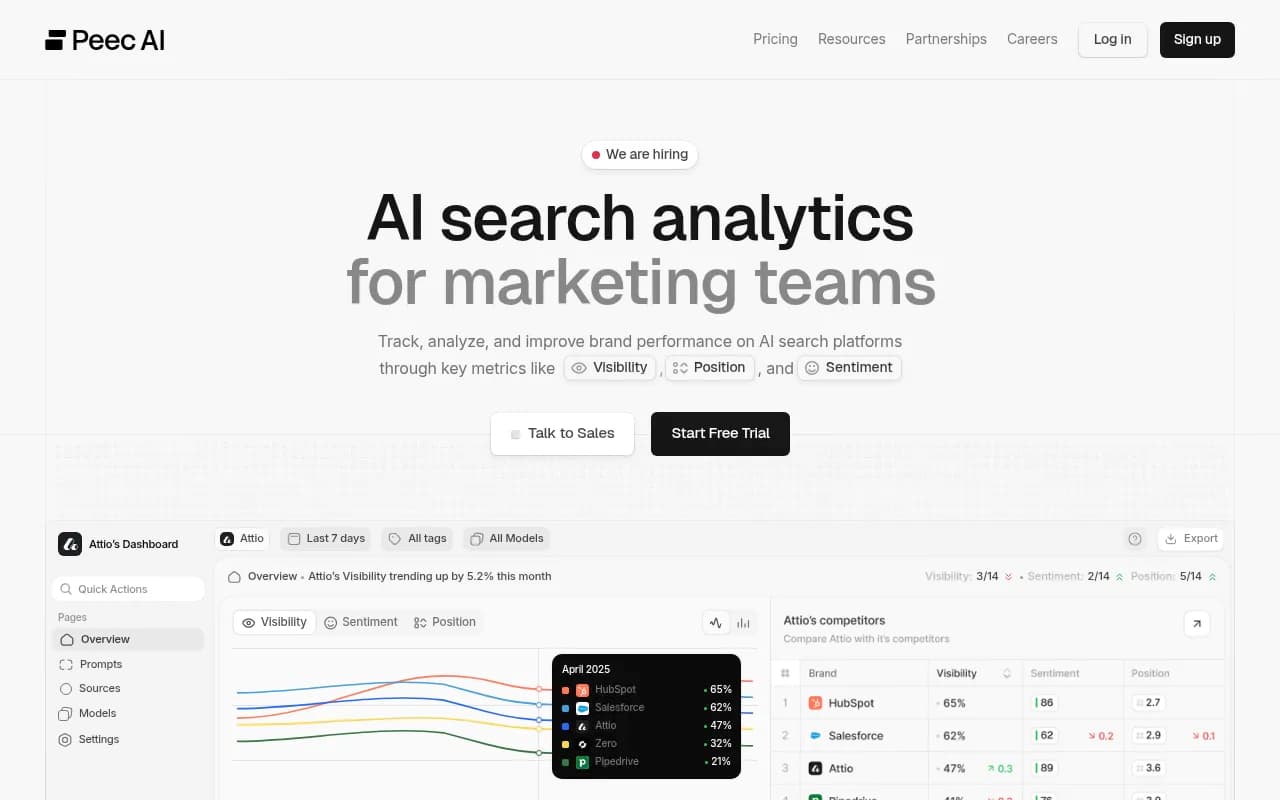
Peec AI is a purpose-built AI search analytics platform. It tracks how your brand appears in responses from ChatGPT, Perplexity, Google AI Overviews, and a few other models. The core value is visibility monitoring: you set up prompts, Peec AI runs them against AI engines, and you get data on how often your brand is mentioned, what competitors are showing up, and which sources AI models are citing.
The Berlin-based team built the platform around UI scraping -- meaning it interacts with AI models the way a real user would, which gives it reasonably authentic data. The interface is clean and intuitive, and there's direct Slack access to the founders on paid plans, which is genuinely useful when you're trying to figure out why a metric moved.
What Peec AI doesn't do: it won't tell you what content to create, it won't generate that content for you, and it won't show you AI crawler logs. You get the data. What you do with it is up to you.
Ranksmith
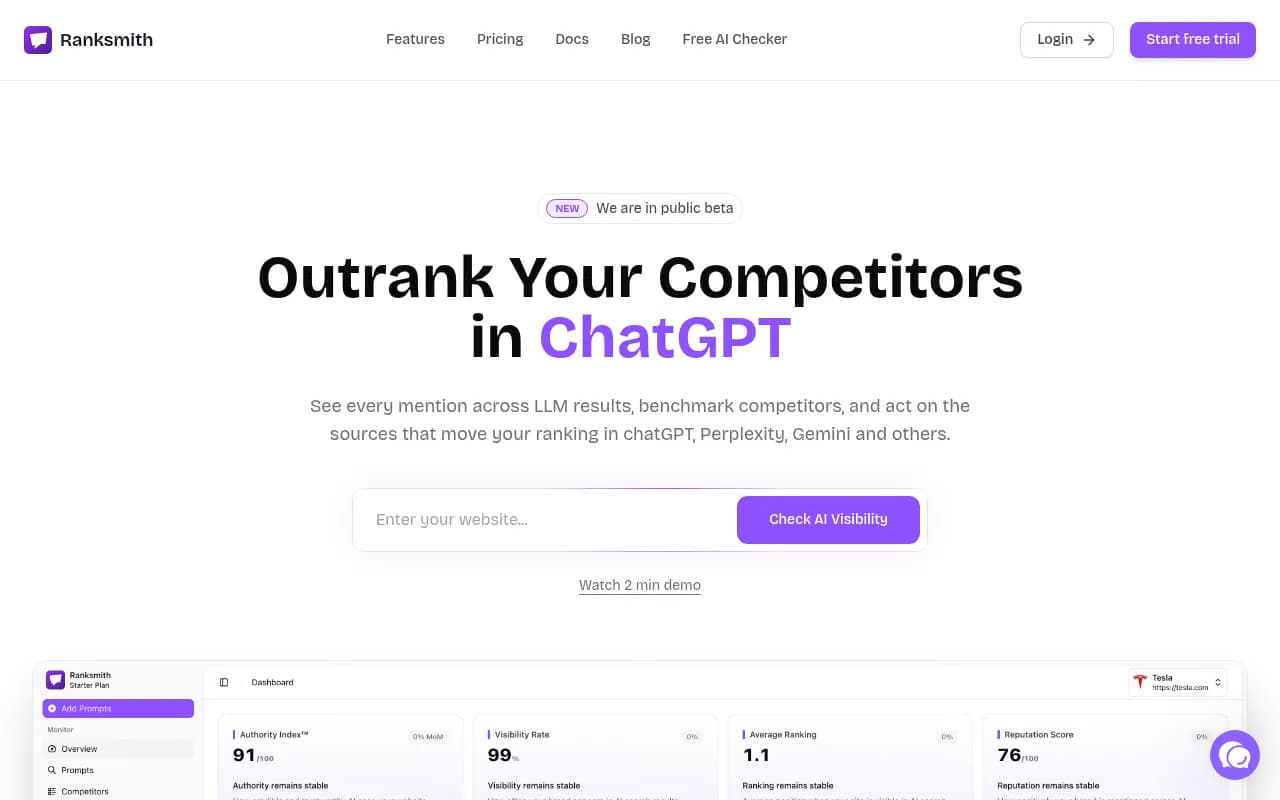
Ranksmith is positioned around actionable AI search insights -- the emphasis being on "actionable." Where a pure monitoring tool gives you raw visibility data, Ranksmith tries to surface recommendations: which prompts to target, where you're losing ground to competitors, and what changes might improve your standing.
It's a lighter-weight tool compared to the other two, which makes it faster to get started with and easier to explain to a non-technical stakeholder. For smaller teams or agencies that need a clear "here's what to do next" output without a lot of configuration overhead, it has real appeal.
Promptwatch
Promptwatch is the most complete platform of the three. It monitors AI search visibility across 10 models (ChatGPT, Claude, Perplexity, Gemini, Grok, DeepSeek, Copilot, Meta AI, Google AI Overviews, and Mistral), but the monitoring is really just the starting point.
The platform is built around what it calls an action loop: find the gaps, create content to fill them, track the results. The Answer Gap Analysis shows you exactly which prompts competitors rank for that you don't. The built-in AI writing agent generates articles, listicles, and comparisons grounded in real citation data. And page-level tracking shows you which pages are getting cited, by which models, and how often.
It also has features the other two simply don't: real-time AI crawler logs (so you can see when ChatGPT or Perplexity actually crawls your site), Reddit and YouTube citation tracking, ChatGPT Shopping monitoring, and traffic attribution via GSC integration or server log analysis.
Promptwatch is used by 6,700+ brands and agencies, including Booking.com and Center Parcs, and has processed over 1.1 billion citations, clicks, and prompts.

Feature comparison
| Feature | Peec AI | Ranksmith | Promptwatch |
|---|---|---|---|
| AI models tracked | ChatGPT, Perplexity, Google AI | Select LLMs | 10 models incl. Claude, Grok, DeepSeek |
| Brand visibility monitoring | Yes | Yes | Yes |
| Competitor benchmarking | Yes | Yes | Yes |
| Answer gap analysis | No | Partial | Yes (full) |
| Content generation | No | No | Yes (built-in AI writing agent) |
| AI crawler logs | No | No | Yes (real-time) |
| Reddit/YouTube citation tracking | No | No | Yes |
| ChatGPT Shopping tracking | No | No | Yes |
| Prompt volume + difficulty scores | No | Partial | Yes |
| Traffic attribution | No | No | Yes (GSC, server logs, snippet) |
| Page-level citation tracking | No | No | Yes |
| Multi-language/region | Limited | Limited | Yes |
| Starting price | ~$95/mo | Lower tier | $99/mo |
| Free trial | 7 days | Yes | Yes |
| G2 rating | 5.0/5 | N/A | 4.9/5 |
Where Peec AI shines (and where it doesn't)
Peec AI is genuinely good at what it does. The interface is one of the cleaner ones in this category -- you're not fighting the UI to get to the data you need. The competitor benchmarking is solid, and the source citation analysis (which URLs are AI models pulling from in your industry) is useful for understanding the competitive landscape.
The Slack access to founders is a nice touch that you don't get from larger platforms. If you're an early adopter who wants to influence product direction and get fast answers, that matters.
The limitation is structural. Peec AI is a monitoring tool. It shows you the scoreboard but doesn't coach you on how to improve your score. Reddit discussions about Peec AI alternatives consistently mention this: users who started there eventually hit a ceiling where they had good data but no clear path to acting on it. That's not a criticism of the product -- it's just what the product is designed to do.
Where Ranksmith fits
Ranksmith occupies an interesting middle ground. It's not purely a monitoring dashboard, and it's not a full optimization platform. The "actionable insights" framing is real -- the tool does try to surface recommendations rather than just raw numbers.
For a small marketing team that wants to understand AI search without a big investment of time or money, Ranksmith is worth evaluating. The onboarding is faster, and the outputs are easier to hand to someone who doesn't live in GEO data all day.
The tradeoff is depth. Ranksmith doesn't have the citation database, the content generation capabilities, or the crawler log infrastructure that a platform like Promptwatch has built. If you're running a serious AI search optimization program across multiple brands or markets, you'll likely outgrow it.
Where Promptwatch pulls ahead
The honest answer is that Promptwatch is in a different category from the other two -- not because it monitors more models (though it does), but because it's built around a different goal.
Most GEO tools are built to answer "how visible are we?" Promptwatch is built to answer "how do we become more visible?" That sounds like marketing copy, but the feature set backs it up.
The Answer Gap Analysis is the clearest example. It doesn't just show you that a competitor appears in responses you don't -- it shows you the specific prompts, the content those competitors have that you're missing, and what topics AI models want to answer but can't find on your site. That's a content brief, not just a data point.
The built-in writing agent then generates content based on that analysis, grounded in 880M+ citations analyzed. This isn't generic SEO content -- it's engineered to match the patterns that AI models actually cite. You can track whether that content starts getting cited after you publish it, and connect those citations to actual traffic through GSC integration or server log analysis.
The AI crawler logs are another feature that's hard to overstate. Knowing that Perplexity crawled your pricing page three times last week but keeps hitting a 404 on your comparison page is the kind of operational insight that can directly fix an indexing problem. Neither Peec AI nor Ranksmith offers this.
Pricing reality check
Peec AI starts around $95/month. Promptwatch's Essential plan is $99/month (1 site, 50 prompts, 5 articles). Ranksmith sits at a lower entry point.
On raw price, they're close at the entry level. But the value equation shifts quickly when you factor in what you're actually getting. Peec AI at $95/month gives you monitoring. Promptwatch at $99/month gives you monitoring plus content gap analysis plus AI content generation plus crawler logs (on the Professional plan at $249/month).
If your team would otherwise pay separately for a content strategy tool, a crawler monitoring tool, and a visibility tracker, the math on Promptwatch gets more favorable fast.
For agencies managing multiple clients, Promptwatch's Business plan ($579/month for 5 sites) and custom Agency/Enterprise pricing are worth a direct conversation. The Looker Studio integration and API also make it easier to build client-facing reporting without manual exports.
Which tool is right for you?
The honest answer depends on where you are in your AI search journey.
If you're just starting to understand how your brand appears in AI search and want clean, reliable data without a lot of setup complexity, Peec AI is a reasonable starting point. The interface is good, the data is trustworthy, and the founder access is a real perk at this stage.
If you want a lighter-weight tool that tries to surface recommendations rather than just raw metrics, Ranksmith is worth a look -- especially for smaller teams or agencies that need something they can explain to a client in five minutes.
If you're past the "understand the landscape" phase and want to actually improve your AI search visibility, Promptwatch is the clear choice. It's the only platform of the three that takes you from "here's where you're invisible" to "here's what to publish" to "here's proof it's working." That full loop is what separates an optimization platform from a monitoring dashboard.
The GEO space is moving fast, and the tools that will matter in 12 months are the ones that help teams take action, not just accumulate data. On that measure, Promptwatch is ahead.
Other tools worth knowing about
If you're evaluating this space more broadly, a few other platforms are worth a look depending on your needs.
For enterprise-scale monitoring with strong data infrastructure, Profound is worth considering.
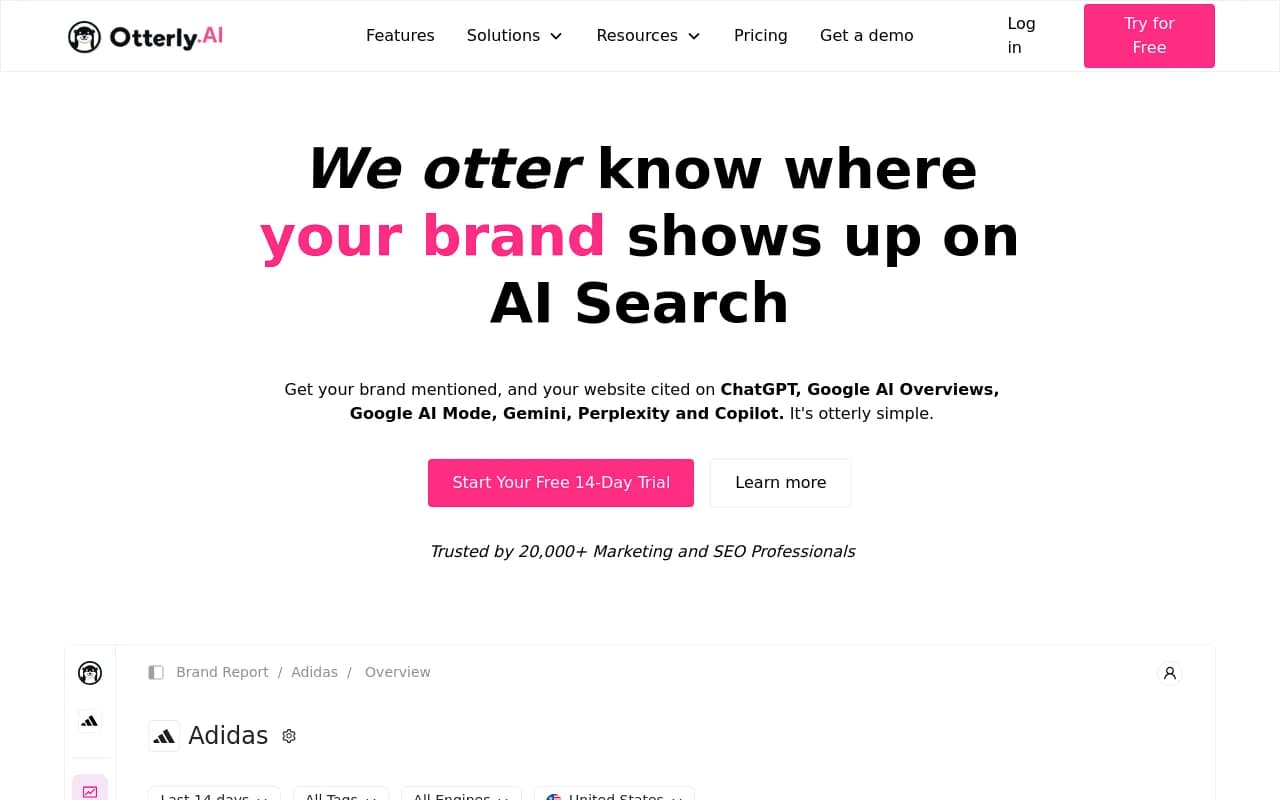
For agencies that want a clean client-reporting layer, Otterly.AI is a popular lightweight option.
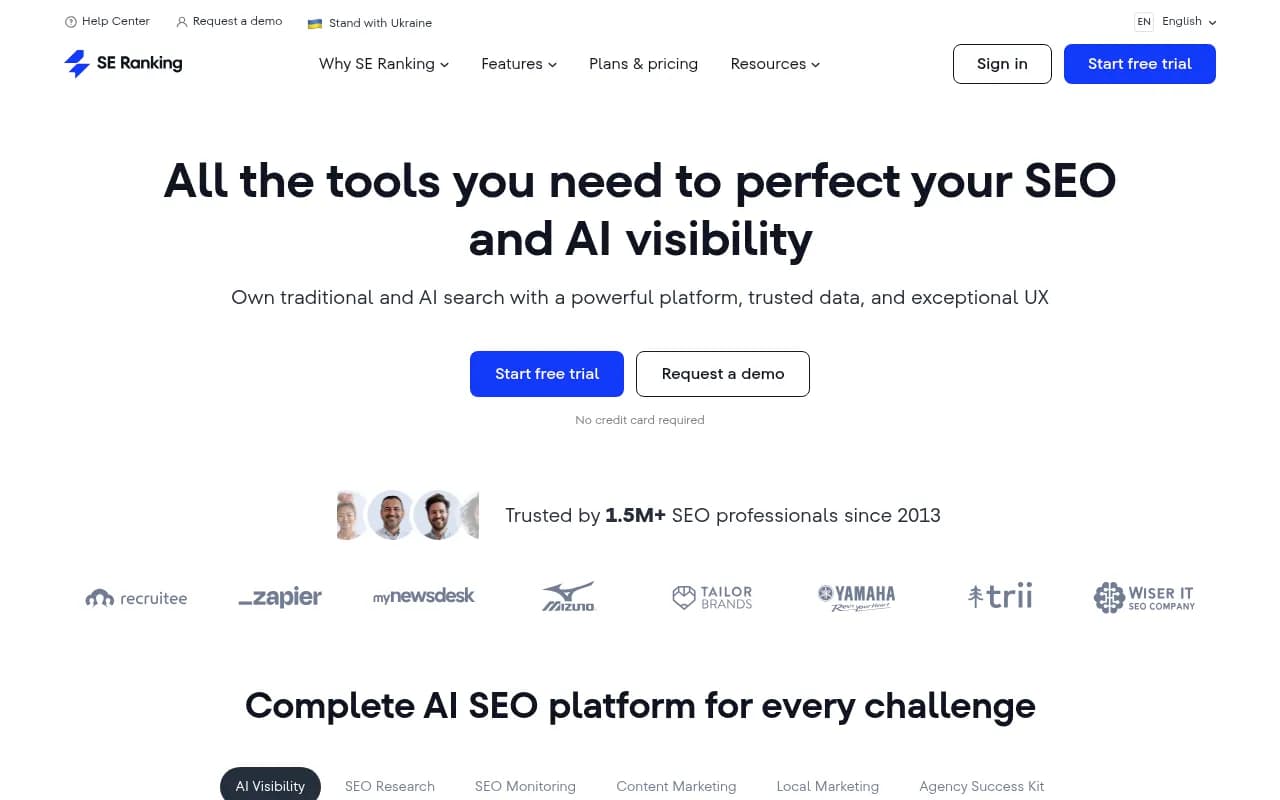
For teams that want AI visibility tracking bundled with traditional SEO data, SE Ranking has been building out its AI visibility features steadily.
And if you're specifically interested in tracking Reddit and forum discussions that influence AI recommendations -- a channel that most tools ignore -- that's one area where Promptwatch's Reddit Insights feature is currently unique among the platforms in this comparison.