Key Takeaways
- Most AI visibility tools are monitoring-only dashboards that show you where you're invisible in ChatGPT, Perplexity, and other AI search engines but provide no path to fix it
- The action gap is the real problem: seeing that competitors rank for 200 prompts you don't appear in is useless without knowing what content to create or how to optimize
- Executable GEO platforms close the loop by combining gap analysis, content generation grounded in citation data, and page-level tracking to connect visibility improvements to revenue
- Three capabilities separate optimization from monitoring: Answer Gap Analysis (showing exactly what's missing), AI content generation (creating what AI models want to cite), and traffic attribution (proving ROI)
- Early movers in 2026 are gaining compounding advantages as AI models learn which sources to trust -- waiting means fighting uphill against competitors who already own the citations
You log into your AI visibility dashboard. ChatGPT mentions your competitor 47 times this month. You show up twice. Perplexity cites them in 15 high-value prompts. You're invisible.
You see the problem. Now what?
This is where most AI visibility tools leave you stuck. They're built to show you the damage, not help you repair it. In 2026, the gap between monitoring and optimization has become the defining line between platforms that matter and expensive dashboards that don't.
The Monitoring Trap: Why Seeing the Problem Doesn't Solve It
A Reddit thread from early 2026 nailed the issue: "Most GEO tools stop at monitoring and what 'executable GEO' looks like." The post described a common pattern -- brands pay for visibility tracking, get depressing reports about how often competitors appear in AI responses, then... nothing. The tool showed the gap but provided no bridge to close it.
Here's what monitoring-only platforms typically give you:
- Mention counts: "Your brand was mentioned 12 times this week" (down from 18 last week)
- Competitor comparisons: "Competitor A appears 4x more often than you"
- Prompt coverage: "You're visible for 23% of tracked prompts"
- Citation sources: "AI models are citing these domains instead of yours"
All useful data. None of it actionable.
The problem isn't the metrics -- it's what happens next. You know you're losing. You know competitors are winning. But the platform doesn't tell you:
- Which specific content gaps are costing you visibility
- What topics, angles, or questions AI models want answers to but can't find on your site
- How to structure content so AI models actually cite it
- Whether your optimization efforts are working or wasting time
You're paying for a diagnosis with no treatment plan.
What Optimization Actually Looks Like: The Action Loop
Real optimization platforms don't stop at showing you the problem. They help you fix it. The difference comes down to three capabilities most monitoring tools lack entirely.
1. Answer Gap Analysis: Finding What's Missing
Monitoring tools show you aggregate scores. Optimization platforms show you the specific prompts competitors rank for that you don't. More importantly, they surface the content angles and information types AI models are looking for but can't find on your site.
Example: A monitoring tool tells you "Competitor X has 40% higher visibility." An optimization platform tells you "Competitor X ranks for 87 prompts you're invisible in, specifically around [topic cluster], because they have comparison content and you only have product pages. Here are the 12 highest-volume prompts to target first."
One is a vague problem. The other is a specific roadmap.
Promptwatch built its platform around this gap analysis. Instead of just tracking mentions, it identifies the exact content your site is missing -- the topics, formats, and angles AI models want but can't cite because you haven't published them yet. This is grounded in analysis of over 880 million citations across ChatGPT, Claude, Perplexity, and other AI models.

2. AI Content Generation: Creating What AI Models Want to Cite
Once you know what's missing, you need to create it. But not just any content -- content structured and written in ways AI models prefer to cite.
This is where most teams get stuck. They know they need a comparison article or a how-to guide, but they don't know:
- What specific questions the content needs to answer
- How to structure it for maximum AI citability
- Which data points and examples AI models prioritize
- What depth and format work best for each AI engine
Optimization platforms solve this with AI writing agents trained on real citation data. They generate articles, listicles, comparisons, and guides that aren't generic SEO filler -- they're engineered based on what actually gets cited.
The output isn't perfect. You'll edit it. But it gives you a starting point grounded in 880M+ citations analyzed, not guesswork.
3. Traffic Attribution: Proving It Works
Monitoring tools show visibility scores going up. Optimization platforms connect those scores to actual traffic and revenue.
This matters for two reasons:
- You need to know what's working: If you publish 10 new articles, which ones are actually driving AI traffic? Which formats and topics convert?
- You need to prove ROI: Marketing budgets in 2026 are tight. "Our visibility score increased 15%" doesn't justify spend. "We generated $47K in attributed revenue from AI search traffic" does.
Real attribution requires either a code snippet, Google Search Console integration, or server log analysis to track when visitors arrive from ChatGPT, Perplexity, or other AI sources. Most monitoring tools don't offer this. They show you the visibility trend and leave you guessing whether it matters.
The Platforms That Get It Right (and Wrong)
Not all AI visibility tools are created equal. Here's how the landscape breaks down in 2026:
| Platform Type | What They Do | What They Don't Do | Example Tools |
|---|---|---|---|
| Monitoring-Only | Track mentions, show competitor gaps, surface citation sources | No content gap analysis, no generation, no traffic attribution | Otterly.AI, Peec.ai, AthenaHQ, Airefs |
| Monitoring + Basic Insights | Add prompt volumes, difficulty scores, some Reddit/YouTube tracking | Still no content generation or optimization workflow | Search Party, Mentions.so, Nightwatch |
| Optimization Platforms | Gap analysis, AI content generation, crawler logs, traffic attribution | Higher price point, steeper learning curve | Promptwatch, Profound, Evertune |
| Traditional SEO Tools | Strong for traditional search, adding AI tracking as a feature | Fixed prompt sets, no AI-specific optimization, limited attribution | Semrush, Ahrefs Brand Radar, BrightEdge |

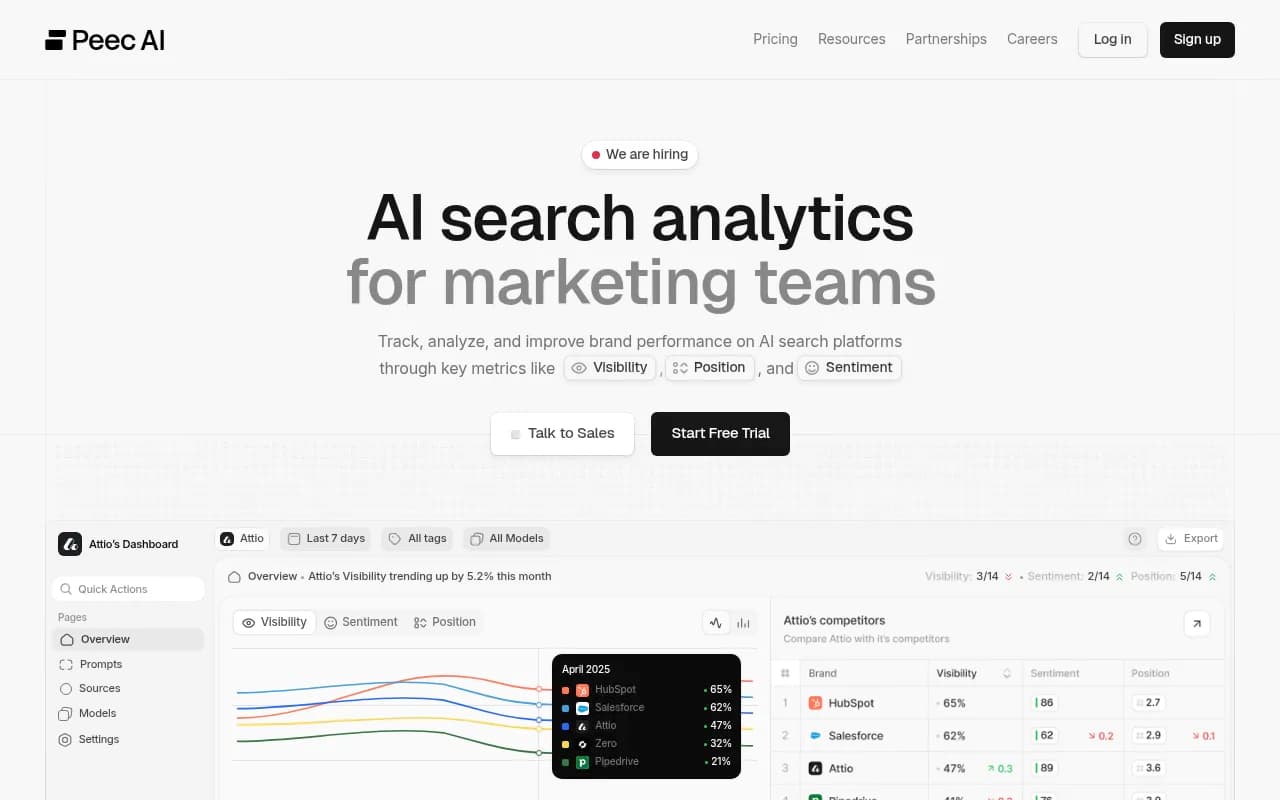
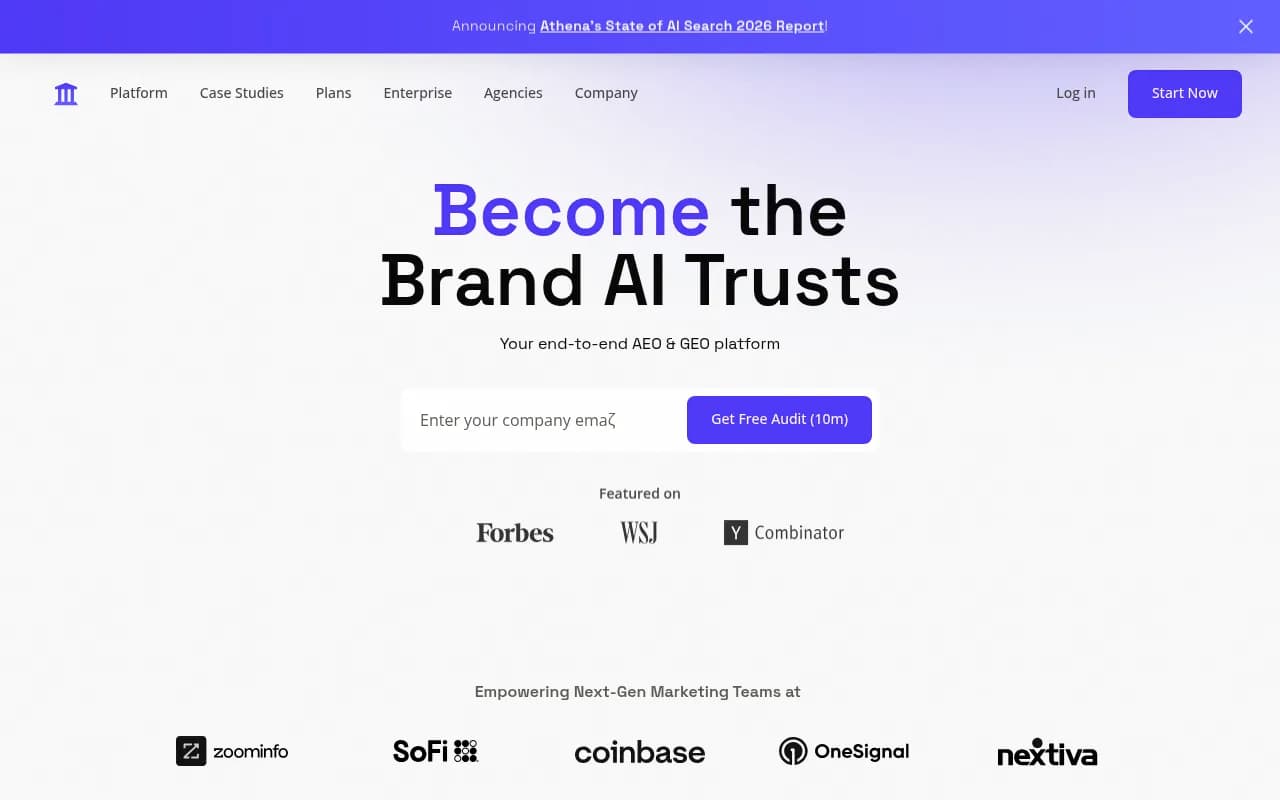
The pattern is clear: most tools in the first two categories are dashboards. They show you data but leave the hard work -- figuring out what to do about it -- entirely on you.
Why Monitoring-Only Tools Exist
Building a monitoring dashboard is straightforward. You query AI models with a set of prompts, parse the responses, count mentions, track citations. It's a technical challenge but a solvable one.
Building an optimization platform is harder. You need:
- Citation data at scale: Not just tracking your brand, but analyzing millions of AI responses to understand what content types get cited and why
- Content intelligence: Identifying gaps requires understanding not just what competitors have but what AI models are looking for and not finding
- Generation capabilities: An AI writing agent that produces content grounded in real citation patterns, not generic templates
- Attribution infrastructure: Code snippets, integrations, or log analysis to connect visibility to traffic
Most platforms stop at step one because it's easier to ship. The result: a market flooded with monitoring tools that all do roughly the same thing.
The Cost of Staying Stuck
Here's what happens when you rely on monitoring-only tools:
Month 1: You see the gaps. Competitors are visible for 200 prompts you're not. You make a list of topics to cover.
Month 2: Your content team is overwhelmed. They don't know how to structure articles for AI citability. They write what they think will work.
Month 3: Visibility scores barely move. You don't know if it's the content, the topics, or something else. No attribution data to guide decisions.
Month 4: Budget review. You're paying for a dashboard that shows you losing but can't prove any ROI from the content you created. The tool gets cut or downgraded.
Meanwhile, competitors using optimization platforms are running the action loop:
- Find gaps: Answer Gap Analysis shows exactly which prompts they're missing and what content would close the gap
- Create content: AI writing agent generates articles grounded in citation data, not guesswork
- Track results: Page-level tracking shows which content is getting cited. Traffic attribution connects visibility to revenue.
They're not guessing. They're iterating based on data. And they're compounding the advantage every month.
What IT Leaders Are Prioritizing in 2026
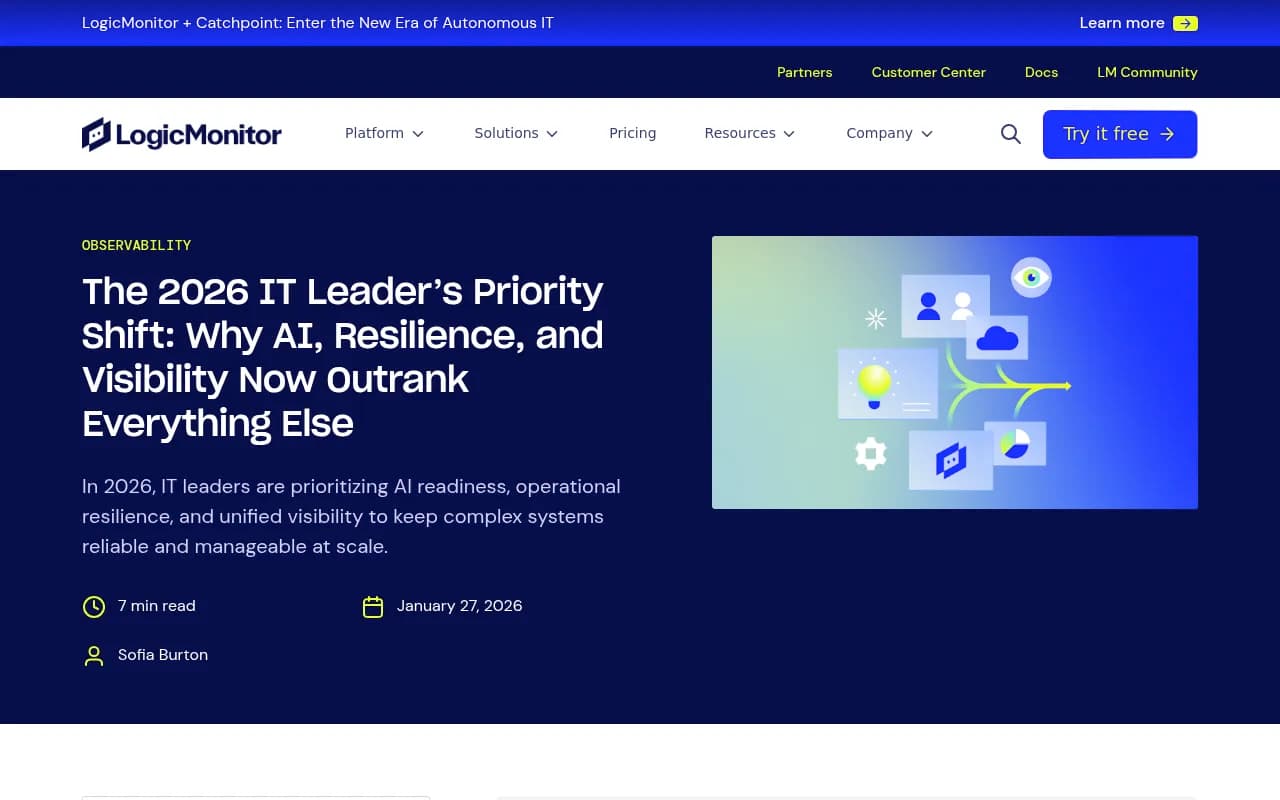
A LogicMonitor report from January 2026 highlighted a broader shift in IT priorities. AI readiness, operational resilience, and unified visibility now outrank everything else. The report noted that "visibility moves from support function to strategic foundation."
The same logic applies to AI search visibility. Monitoring is a support function -- it tells you what's happening. Optimization is strategic -- it helps you change what's happening.
Companies treating AI visibility as a "nice to have" dashboard are falling behind. Those treating it as a strategic initiative -- with dedicated resources, optimization workflows, and clear ROI targets -- are pulling ahead.
The Promptwatch Difference: Built for Action, Not Just Tracking
Most AI visibility platforms are monitoring dashboards. Promptwatch is an optimization platform. The difference is the action loop.
Step 1: Find the Gaps
Answer Gap Analysis shows exactly which prompts competitors are visible for but you're not. More importantly, it surfaces the specific content your site is missing -- the topics, angles, and questions AI models want answers to but can't find.
This isn't vague guidance like "create more comparison content." It's specific: "You're invisible for these 47 high-volume prompts because you lack X content type. Here's what to create."
Step 2: Create Content That Ranks in AI
The built-in AI writing agent generates articles, listicles, and comparisons grounded in 880M+ citations analyzed. It knows what content types get cited, how to structure information for different AI models, and which data points matter most.
You're not starting from a blank page. You're editing a draft built on real citation patterns.
Step 3: Track the Results
Page-level tracking shows exactly which pages are being cited, how often, and by which models. Traffic attribution (via code snippet, GSC integration, or server log analysis) connects visibility improvements to actual revenue.
You close the loop: find gaps → generate content → track results. Then repeat.
Additional Capabilities That Support the Action Loop
- AI Crawler Logs: Real-time logs of ChatGPT, Claude, Perplexity, and other AI crawlers hitting your site. See which pages they read, errors they encounter, how often they return. Fix indexing issues before they cost you visibility.
- Prompt Intelligence: Volume estimates and difficulty scores for each prompt, plus query fan-outs showing how one prompt branches into sub-queries. Prioritize high-value, winnable prompts instead of guessing.
- Citation & Source Analysis: See exactly which pages, Reddit threads, YouTube videos, and domains AI models cite. Know where to publish and what to optimize.
- Reddit & YouTube Insights: Surface discussions that directly influence AI recommendations -- a channel most competitors ignore.
- ChatGPT Shopping Tracking: Monitor when your brand appears in ChatGPT's product recommendations and shopping carousels.
- Competitor Heatmaps: Compare your AI visibility vs competitors across LLMs. See who's winning for each prompt and why.
These aren't monitoring features. They're optimization tools. Each one helps you take action, not just observe.
How to Evaluate AI Visibility Platforms in 2026
If you're choosing a platform, ask these questions:
1. Does it show me what's missing?
Monitoring tools show aggregate scores. Optimization platforms show specific content gaps. Ask: "Can this platform tell me exactly which prompts I'm losing and what content would close the gap?"
2. Does it help me create content?
Dashboards leave content creation entirely on you. Optimization platforms provide AI writing agents or at least detailed briefs. Ask: "If this platform identifies a gap, does it help me fill it or just show me the hole?"
3. Does it connect visibility to revenue?
Visibility scores are vanity metrics without attribution. Ask: "Can this platform track traffic from AI sources and connect it to conversions?"
4. Does it monitor AI crawlers?
AI models can't cite content they can't access. Crawler logs show indexing issues in real time. Ask: "Can I see when ChatGPT or Perplexity crawls my site and what errors they encounter?"
5. Does it track Reddit and YouTube?
AI models cite Reddit threads and YouTube videos heavily. Most monitoring tools ignore these sources entirely. Ask: "Does this platform surface discussions on Reddit and YouTube that influence AI recommendations?"
6. What's the pricing model?
Monitoring-only tools are cheaper upfront but cost more long-term if they don't drive results. Optimization platforms cost more but justify it with ROI. Ask: "What's the total cost of ownership if I factor in the time spent manually closing gaps this platform doesn't address?"
Comparison: Monitoring vs Optimization Platforms
| Feature | Monitoring-Only Tools | Optimization Platforms |
|---|---|---|
| Mention tracking | ✓ | ✓ |
| Competitor analysis | ✓ | ✓ |
| Citation sources | ✓ | ✓ |
| Answer Gap Analysis | ✗ | ✓ |
| AI content generation | ✗ | ✓ |
| Traffic attribution | ✗ | ✓ |
| AI crawler logs | ✗ | ✓ (Promptwatch, some others) |
| Reddit/YouTube tracking | ✗ | ✓ (Promptwatch, limited elsewhere) |
| Prompt volumes & difficulty | Limited | ✓ |
| Page-level tracking | Limited | ✓ |
| Typical pricing | $50-150/mo | $250-600/mo |
| Best for | Awareness, basic tracking | Driving results, proving ROI |
Why Early Movers Are Winning
AI models learn which sources to trust. Every time ChatGPT cites your competitor's comparison article, it reinforces that source as authoritative. Every time it can't find an answer on your site, it learns to look elsewhere.
This creates a compounding advantage. Brands that optimize early -- closing content gaps, fixing crawler issues, building citation momentum -- become the default sources AI models return to. Brands that wait are fighting uphill against competitors who already own the citations.
A 9Sail article from 2026 called ignoring AI search visibility "your firm's most expensive mistake." The logic: traditional search traffic is declining as users shift to AI. If you're not visible in ChatGPT, Perplexity, and Claude, you're invisible to a growing percentage of your audience.
But visibility alone isn't enough. You need optimization -- the ability to identify gaps, create content that closes them, and track whether it's working. Monitoring-only tools leave you stuck at step one.
The 2026 Reality: Monitoring Is Table Stakes, Optimization Is the Game
Every AI visibility platform in 2026 can track mentions. Most can show competitor gaps and citation sources. These are table stakes.
The platforms that matter are the ones that help you take action. They don't just show you the problem -- they give you the tools to fix it.
If your current platform is a monitoring dashboard, you're paying for awareness without enablement. You see the gaps but have no path to close them. Your content team is guessing. Your attribution is nonexistent. And every month, competitors using optimization platforms pull further ahead.
The question isn't whether to track AI visibility. It's whether you're tracking to learn or tracking to win.
What to Do Next
If you're stuck with a monitoring-only tool:
- Audit your current platform: Can it show you specific content gaps? Does it help you create content? Can it attribute traffic to AI sources?
- Calculate the hidden cost: How much time does your team spend manually analyzing gaps, guessing at content strategy, and trying to prove ROI? What's that worth?
- Evaluate optimization platforms: Look at Promptwatch, Profound, Evertune, and others that close the action loop. Compare not just features but workflows -- how do they help you go from insight to action?
- Run a pilot: Most optimization platforms offer free trials. Pick 10-20 high-value prompts, run the gap analysis, generate content, track results for 60 days. Measure the difference.
- Shift the budget: If monitoring isn't driving results, reallocate spend to a platform that does. The cost difference between a $99/mo dashboard and a $249/mo optimization platform is negligible if the latter actually moves the needle.
AI search isn't going away. The brands winning in 2026 are the ones treating visibility as a strategic initiative, not a reporting dashboard. They're closing the gap between seeing the problem and fixing it.
Monitoring shows you where you're stuck. Optimization gets you unstuck.
Which one are you paying for?