Key takeaways
- Perplexity concentrates citations more than any other major AI model -- meaning a smaller pool of sources gets cited repeatedly, making it harder to break in but more valuable when you do.
- Its source selection runs through a multi-layer reranking system that structurally favors Tier-1 earned media and authoritative publications over generic blog content.
- Even with that concentration, roughly two-thirds of Perplexity's sources still come from outside its "core" set -- so there's real opportunity for brands willing to optimize correctly.
- Perplexity behaves more like a search engine than a chatbot, which means technical factors (crawlability, page speed, structured data) matter more here than on ChatGPT or Claude.
- Tracking your Perplexity citations specifically -- not just "AI visibility" in aggregate -- is worth doing, because citation patterns vary significantly across models.
Perplexity is the AI model that most people in SEO underestimate. It doesn't have ChatGPT's brand recognition or Google's market share, but it punches above its weight in citation behavior. And if you're trying to understand why your content gets cited by some AI models but not others, Perplexity is probably the most instructive case to study.
Over the past year, several large-scale analyses have looked at where AI models pull their citations from. Conductor analyzed over 100 million AI citations across ChatGPT, Perplexity, and Google AI Overviews. Promptwatch has processed over 1.1 billion citations, clicks, and prompts. The picture that emerges from all of this is that Perplexity has a genuinely distinct citation logic -- one that rewards different things than its competitors.
Here's what we actually know.
Perplexity
How Perplexity's citation system works
The three-layer reranking model
Perplexity doesn't just grab the top Google results and summarize them. According to research published by AuthorityTech in early 2026, it runs sources through a three-layer machine learning reranking system before deciding what to cite.
The first layer is a standard retrieval pass -- Perplexity pulls candidate sources from its index, which includes real-time web results. The second layer applies relevance scoring based on how well a source answers the specific query. The third layer is where things get interesting: a quality and authority reranker that structurally favors what the research calls "Tier-1 earned media."
What counts as Tier-1 earned media in Perplexity's model? Publications with high domain authority, consistent editorial standards, and a track record of being cited by other authoritative sources. Think major news outlets, established trade publications, academic sources, and well-known industry sites. This isn't just about domain authority scores -- it's about whether a source has been independently validated by other credible sources linking to it.
Why Perplexity concentrates citations more than other models
A March 2026 Reddit thread in r/DigitalMarketing surfaced something worth paying attention to: Perplexity concentrates its citations more than any other major AI model. Where ChatGPT and Claude spread citations across a wider variety of sources, Perplexity returns to the same trusted sources repeatedly.
The practical implication is that Perplexity's citation pool is harder to break into -- but once you're in it, you get cited consistently. It's less of a lottery and more of a club.
That said, the same analysis noted that even with this concentration, about two-thirds of Perplexity's sources still fall outside its "core" set. So the door isn't closed. It just requires a different approach than, say, getting cited by ChatGPT, where Wikipedia, Reddit, and forums dominate (as Conductor's 100M+ citation analysis found).
What Perplexity actually favors
Earned media over owned content
This is the single biggest difference between optimizing for Perplexity versus optimizing for traditional SEO. Your own website content matters less than what others say about you.
If a credible publication has written about your brand, product, or area of expertise, that coverage is more likely to influence Perplexity's responses than your own blog post saying the same thing. This is why PR and digital PR have become genuinely important in AI visibility strategy -- not just for brand awareness, but for citation influence.
Structured, answer-forward content
Perplexity behaves more like a search engine than a conversational AI. It's actively trying to retrieve and synthesize answers, not generate them from training data. This means content that's structured to answer specific questions -- with clear headings, direct answers near the top, and well-organized supporting detail -- performs better than long-form content that buries the key point.
FAQ sections, comparison tables, and "how does X work" explainers tend to get cited more often. Content that requires the reader to read 800 words before getting to the answer tends to get skipped.
Technical accessibility
Because Perplexity crawls the web in real time, technical factors matter more here than on models like Claude or ChatGPT that rely primarily on training data. If Perplexity's crawler can't access your page -- because of aggressive bot blocking, slow load times, or JavaScript rendering issues -- your content won't be considered regardless of its quality.
This is one area where checking your AI crawler logs is genuinely useful. Tools like Promptwatch show you exactly which pages AI crawlers are hitting, how often, and what errors they encounter. If Perplexity's bot is bouncing off your site, that's a fixable problem.

How Perplexity differs from ChatGPT and Claude
Understanding Perplexity's citation logic is more useful when you compare it to the other major models. They're not interchangeable.
| Factor | Perplexity | ChatGPT | Claude |
|---|---|---|---|
| Primary source type | Tier-1 earned media, news | Wikipedia, Reddit, forums | Training data, authoritative sites |
| Citation concentration | High (returns to same sources) | Moderate | Lower |
| Real-time web access | Yes, core to the product | Optional (web browsing mode) | Limited |
| Technical crawl sensitivity | High | Low | Low |
| Reddit/forum influence | Moderate | High | Low |
| Response to owned content | Lower | Moderate | Moderate |
| Response to earned media | High | Moderate | Moderate |
The ChatGPT finding from Conductor's analysis is worth dwelling on: Wikipedia, Reddit, and forums dominate ChatGPT's citations. That's a very different optimization target than Perplexity's preference for earned media from established publications. A strategy that works for one won't necessarily work for the other.
Claude sits somewhere in between -- more reliant on training data than Perplexity, less forum-heavy than ChatGPT, and generally harder to influence through content creation alone because its training data has a cutoff.
What the citation data tells us about source types
News and editorial content
Perplexity's real-time web access means it regularly cites recent news articles and editorial coverage. This is different from ChatGPT, which often cites older, more established sources from its training data. If your brand or industry has been covered in trade publications or news outlets recently, that coverage has a direct path into Perplexity's responses.
This also means that earned media from the past 6-12 months can influence Perplexity citations faster than it would influence ChatGPT. The recency factor is real.
YouTube and video content
Research from Promptwatch's citation dataset (published via LinkedIn in early 2026) found that YouTube matters more in AI citations than most people assume. Perplexity does cite YouTube content, particularly for how-to queries and product explanations. If your brand has video content that directly answers common questions in your category, it's worth optimizing those video titles and descriptions for the same queries you're targeting in text.
Reddit and community discussions
Reddit's influence on Perplexity is more moderate than on ChatGPT, but it's not zero. For certain query types -- product comparisons, "is X worth it" questions, community-validated recommendations -- Reddit threads do appear in Perplexity responses. The key is that Perplexity tends to use Reddit as corroborating evidence rather than a primary source, whereas ChatGPT treats it as a primary source more often.
What this means for your content strategy
Prioritize getting cited, not just ranking
The traditional SEO goal is to rank on page one. The AI visibility goal is to be cited in the response. These require different strategies. For Perplexity specifically, the path to citation runs through:
- Earning coverage in publications Perplexity already trusts
- Creating content that directly answers specific questions (not just covers topics broadly)
- Making sure your site is technically accessible to Perplexity's crawler
- Building a body of content that establishes genuine topical authority
Answer gap analysis matters here
One practical approach is to look at which prompts your competitors are being cited for in Perplexity but you're not. That gap tells you exactly what content you need to create or what earned media you need to pursue. This is the kind of analysis that used to require manual work but is now something platforms can automate.
Don't treat all AI models as one target
This is probably the most common mistake. Brands run a few test queries in ChatGPT, don't see themselves, and conclude they have an "AI visibility problem." But the fix for ChatGPT (get on Reddit, get on Wikipedia, build forum presence) is different from the fix for Perplexity (earn Tier-1 media coverage, structure content for direct answers, fix crawler access).
If you're going to invest in AI visibility, you need model-specific data. Tools like Promptwatch track citations across 10 different AI models separately -- which means you can see whether your Perplexity visibility is improving independently of your ChatGPT visibility.
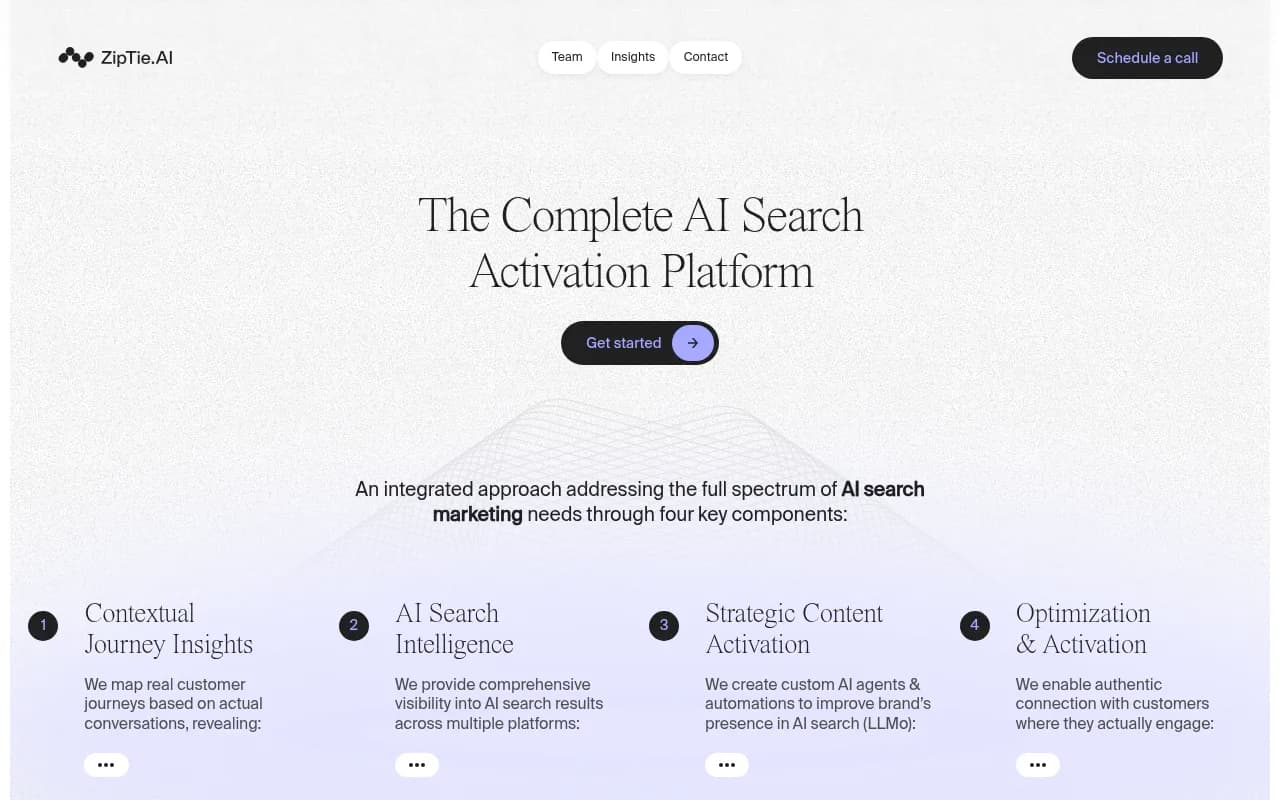
You can also use tools like ZipTie for deep per-model citation analysis:
Or Sight AI for a broader monitoring view:

Practical steps to improve your Perplexity citation rate
1. Audit your earned media footprint
Pull together every piece of coverage your brand has received in the past 12 months. Look at the domain authority of those publications. If most of your coverage is on low-authority sites or your own blog, that's the gap to address first. Perplexity's reranker is going to downweight that content regardless of how good it is.
2. Fix technical crawler access
Check whether Perplexity's crawler (PerplexityBot) is being blocked by your robots.txt or rate-limited by your server. If you're using aggressive bot protection, you may be inadvertently blocking the AI crawlers you want to let in. This is a quick technical fix with potentially significant impact.
3. Create direct-answer content
For every major question in your category, create a page that answers it directly. Not a 2,000-word think piece -- a focused page with the answer in the first paragraph, supporting detail below, and clear structure throughout. Perplexity's retrieval system rewards this format.
4. Monitor your citations, not just your rankings
Traditional rank tracking doesn't tell you whether you're being cited in AI responses. Set up monitoring specifically for Perplexity citations so you can see which pages are getting cited, for which queries, and how that changes over time as you make content updates.
5. Track the right prompts
Not all prompts are equal. Some have high volume and high competition; others are winnable with focused effort. Prompt intelligence tools can show you volume estimates and difficulty scores so you can prioritize the prompts where Perplexity citation is actually achievable.
The bottom line
Perplexity's citation logic is more structured and more predictable than most people assume. It's not random, and it's not purely based on domain authority scores. The three-layer reranking system favors earned media, direct answers, and technically accessible content -- in that order.
The concentration effect means it's harder to break into Perplexity's citation pool than ChatGPT's, but the flip side is that once you're in, you stay in. That makes Perplexity worth investing in specifically, not just as part of a generic "AI visibility" strategy.
The brands that figure this out early -- and build the earned media footprint and content structure that Perplexity rewards -- will have a durable advantage as AI search continues to grow. The ones that treat all AI models as interchangeable will keep wondering why their ChatGPT strategy isn't moving their Perplexity numbers.