Key takeaways
- Neither entry plan holds 100 prompts. Promptwatch Essential and GetMint Starter both cap at 50, so a real test means two accounts or an upgrade. Cheapest legitimate routes: $190/mo (two Promptwatch Essential accounts) or $160/mo (two GetMint Starter accounts, billed yearly).
- The same 100 prompts produce very different amounts of data. Promptwatch runs every prompt across roughly 9 AI models on any paid plan; GetMint Starter covers 2 models, Growth covers 3, and premium models cost extra. Aggregate visibility scores from the two platforms are not directly comparable.
- GetMint's real edge is commercial data: ChatGPT Ads tracking at its entry tier, Amazon SKU-level shopping recommendations including Alexa, unlimited users on Growth, and a finished content item included from Starter.
- Promptwatch's edge is depth and follow-through: crawler logs that show whether AI bots even read your pages, visitor analytics with conversion tracking on every paid plan, Content Agents that publish fixes to your CMS, and API/MCP access from the $95 tier.
- Verdict: shopping-heavy and e-commerce brands get more from GetMint. Most other teams get more usable data per dollar, and more ways to act on it, from Promptwatch.
Why we tested these two
The idea was simple. Load the same 100 prompts into both platforms, let them run for a couple of weeks, and see which one gives you a better picture of your brand in AI search. We got an answer. It just wasn't the answer we expected, because the first thing the test exposed is that these two tools don't measure the same internet.
Both are purpose-built GEO platforms, not SEO suites with an AI module bolted on. Both start under $100 a month, refresh daily, and generate content for you. Promptwatch has around 1,840 customers including Yelp, Duolingo, and Typeform, a 4.7/5 rating on G2, and a dataset built from more than 4.5 billion analyzed citations. GetMint counts L'Oréal among its customers and pitches itself squarely against Semrush and Ahrefs.

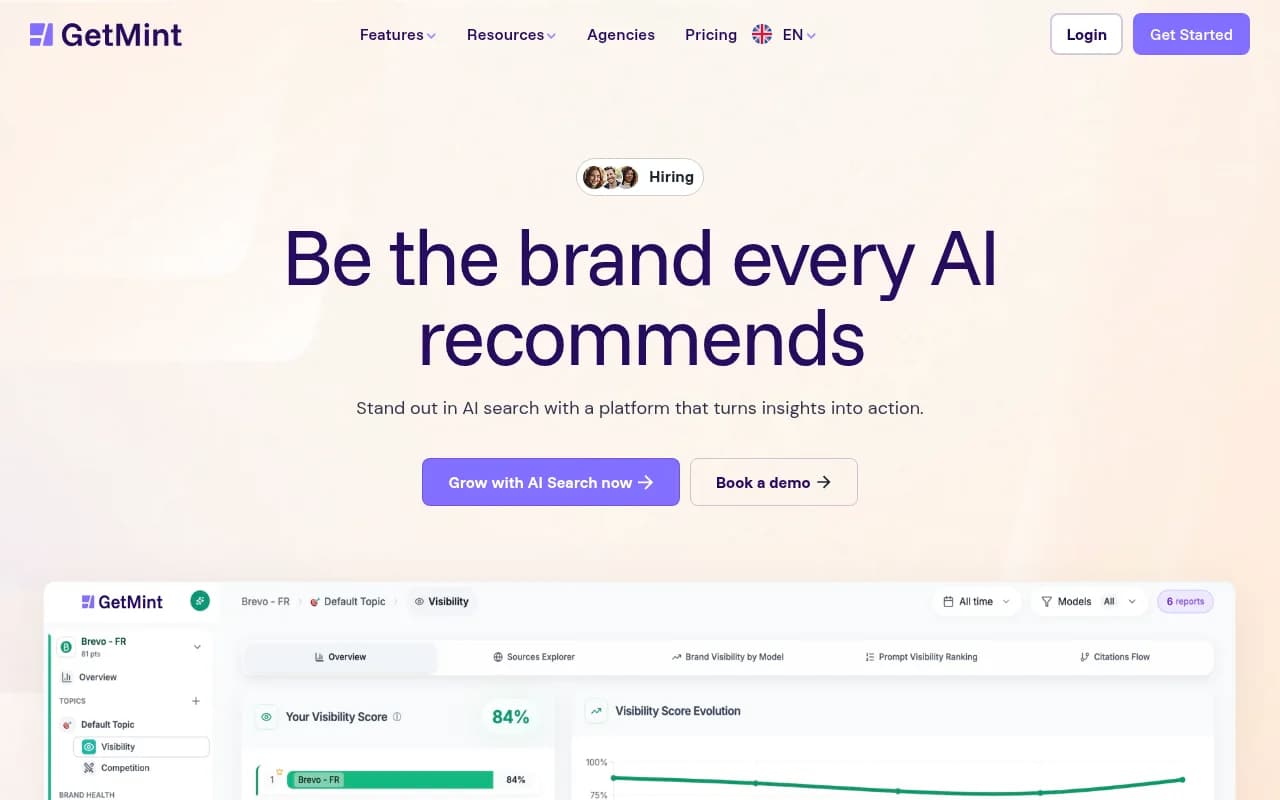
On paper they look like twins. In practice, running identical prompts through both felt less like a photo finish and more like watching two different races.
How we set up the 100-prompt test
The prompt list
We built the list the way a real team would: 40 category and comparison prompts ("best project management software for agencies"), 35 long-tail questions ("is [brand] worth it for small teams"), and 25 competitor-adjacent prompts where our test brand could plausibly appear without being the subject. Same list, same order, same country and language settings on both platforms.
What it costs to run 100 prompts
Here's the first surprise: neither entry plan can hold the list. Promptwatch Essential and GetMint Starter both cap at 50 prompts. That leaves two options on each side, and they cost meaningfully different amounts.
| Approach | Promptwatch | GetMint |
|---|---|---|
| Two entry accounts | 2 × Essential = $190/mo | 2 × Starter = $160/mo billed yearly, $198 monthly |
| One upgraded account | Professional, $245/mo, 150 prompts | Growth, $349/mo, 300 prompts |
We verified these prices on the live pricing pages in August 2026, and you should too before buying. GetMint's own blog still lists an older tier set in euros (Starter €99, Growth €229, Pro €499) that doesn't match its current page, which shows USD pricing with a 17% annual discount. Pricing in this market moves monthly.
The two-account hack has a catch on the Promptwatch side. Crawler log analytics only come with Professional and above, so the $190 route loses the one feature that explains why you're invisible. On GetMint's side, two Starter accounts still only track 2 models each, which brings us to the biggest problem with the whole experiment.
The problem with head-to-head visibility numbers
GetMint Starter tracks 2 AI models. Growth tracks 3. Premium models are a paid add-on on both. Promptwatch runs every prompt across roughly 9 models on every paid plan: ChatGPT, Claude, Gemini, Perplexity, Google AI Overviews, Google AI Mode, Grok, DeepSeek, and Meta's Llama, plus AI coding assistants like Claude Code and OpenCode.
Do the arithmetic. 100 prompts on Promptwatch is up to 900 responses per daily refresh. The same 100 on GetMint Starter is 200. Any aggregate visibility score gets computed over a different denominator, so a "mentioned in 34% of prompts" figure from one platform tells you almost nothing about the other. If your brand is strong in Claude and weak in ChatGPT, GetMint Starter may never see half the picture.
GetMint's product page says it tracks ChatGPT, Gemini, Perplexity, Claude, and Google AI Overviews. The pricing table tells a different story: you get 2 of those on Starter and 3 on Growth unless you pay for the premium model add-on. Read the plan card, not the marketing page.
One more wrinkle. Promptwatch collects its responses from the real interfaces people use, scraping ChatGPT, Gemini, and AI Overviews the way actual users see them, because UI answers and API answers don't always match. If you care what humans read rather than what an endpoint returns, that distinction matters.
So we're not publishing raw mention percentages from this test. They'd be apples to fruit salad. What we can compare honestly is how much data you get per dollar, what each platform does with it, and where each one genuinely beats the other.
What the same 100 prompts showed us
Data volume and cost per response
Promptwatch's own comparison of 21 GEO platforms puts its Essential plan at roughly $0.016 per response ($95 for 6,000 responses) and estimates GetMint Starter at about $0.033 ($99 for roughly 3,000). Treat that math carefully. It's vendor-published, the GetMint response count is an estimate, and the same page ranks Promptwatch first and GetMint twelfth out of 21. The direction is probably right; the decimals are debatable.

Where GetMint was clearly better
- ChatGPT Ads tracking at entry price. If you want to know which competitors are bidding on your prompts in sponsored AI placements, GetMint includes that on Starter. Promptwatch has an Ads Radar, but it arrives at the Business tier, $579 a month.
- Amazon SKU-level shopping data. GetMint tracks product recommendations at the SKU level on Amazon and includes Alexa in its shopping coverage. Promptwatch tracks ChatGPT Shopping recommendations, but if your products live on Amazon, GetMint's data sits closer to where revenue actually happens.
- Content from day one. GetMint Starter includes 1 content item a month (300 credits) through its GEO Agent, and Growth includes 6 (2,000 credits). Promptwatch Essential includes content credits but no finished articles; automated generation starts at Professional.
- Unlimited users on Growth. Promptwatch's brand plans don't advertise unlimited seats. For a five-person team sharing one dashboard, that changes the real cost comparison.
- Multi-country out of the box. Growth includes 3 countries. On Promptwatch, state and city-level granularity waits for the Business tier.
Where Promptwatch pulled away
- Model coverage per dollar. Nine models at $95 against two at $80 to $99 is the single biggest data gap in this test, and it compounds every single day the accounts run.
- Crawler logs. This is the feature GetMint has no answer for. Promptwatch's Agent Analytics logs AI crawlers hitting your site, 400+ bots including ChatGPTBot, ClaudeBot, and PerplexityBot, which pages they read, and which errors they hit, then connects the crawl to the citation. When a prompt goes dark, you can check whether GPTBot even read the page you wanted cited. Visibility scores tell you what happened. Crawler logs tell you why.
- Visitor analytics and conversions. Every paid Promptwatch plan tracks actual visitors and conversions arriving from AI platforms. Mentions are nice; traffic that converts is a budget line. Crisp, a Promptwatch customer, reported 2x higher conversion rates from AI traffic than from traditional channels.
- Closing the loop. Content Agents draft and publish GEO-optimized pages straight to Webflow, Framer, or WordPress, with a review inbox if you want a human approving drafts. Unified Actions turns visibility, citation, and crawler data into a prioritized task list. Most trackers stop at the chart. Promptwatch hands you the fix.
- API and MCP access from the entry plan. GetMint gates its API behind Enterprise. If your reporting stack is automated, that's the difference between $95 and "call us."
Promptwatch vs GetMint at a glance
| Promptwatch | GetMint | |
|---|---|---|
| Entry price | $95/mo Essential | $80/mo Starter yearly, $99 monthly |
| Prompts at entry | 50 | 50 |
| AI models at entry | ~9, every paid plan | 2, premium models extra |
| Top self-serve plan | $579/mo Business | $349/mo Growth |
| Prompts at top tier | 350 | 300 |
| Daily refresh | Yes, all plans | Yes |
| Crawler logs | Yes, Professional and up | No |
| Visitor analytics and conversions | Yes, every paid plan | Not listed |
| Content generation | Content Agents with CMS publishing | GEO Agent, 1 item on Starter, 6 on Growth |
| ChatGPT Ads tracking | Business tier (Ads Radar) | Included on Starter |
| AI shopping data | ChatGPT Shopping, Business tier | ChatGPT plus Amazon SKU-level, incl. Alexa |
| API access | Every paid plan | Enterprise only |
| Multi-market | Country/state/city on Business | 3 countries on Growth |
| Free option | 7-day trial | Free start, no credit card |
| Named customers | Yelp, Duolingo, Typeform, Shutterstock, Rabobank | L'Oréal |
What independent reviewers say
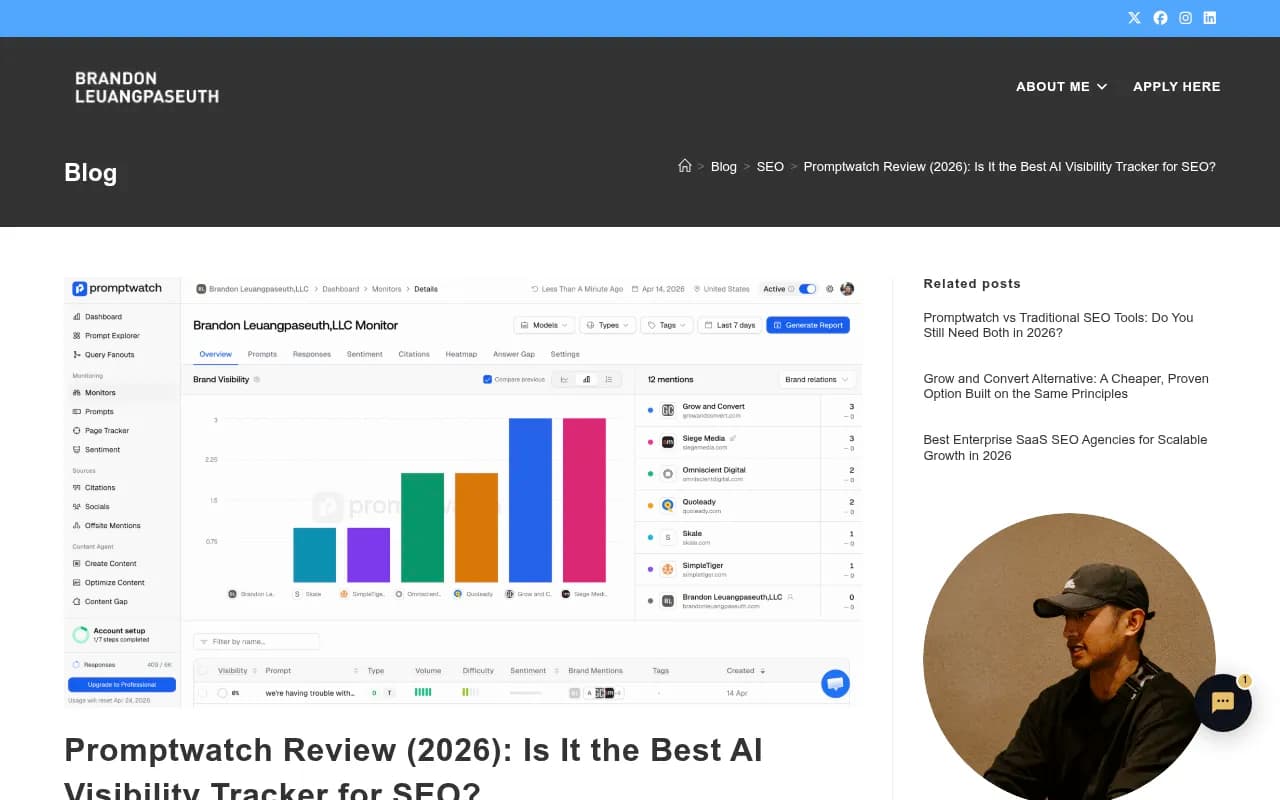
Third-party coverage of GetMint is thin. Most of what ranks in search is GetMint's own content or vendor comparisons like the one above. Promptwatch has more independent material, including a detailed 2026 review from SEO consultant Brandon Leuangpaseuth, who highlighted the Answer Gap report, crawler log analysis, and the daily refresh cycle, and video comparisons from channels like AllAboutAI. Neither platform has been through an independent head-to-head, which is a big part of why we ran this ourselves.
How to run your own fair version of this test
- Lock the model list first. Either restrict Promptwatch to the 2 or 3 models your GetMint plan covers, or accept that the denominators differ and compare per model instead of in aggregate.
- Match country and language settings on both platforms before the first refresh.
- Wait at least two daily refresh cycles before drawing conclusions. Both platforms update daily, and day-one snapshots are noisy.
- Compare cost per response, not cost per prompt. A prompt tracked on 9 models is not the same unit as one tracked on 2.
- Export everything. Both companies change tiers often, and GetMint's stale blog pricing proves their own documentation can lag reality.
The verdict
GetMint wins for shopping-heavy brands. If you sell physical products, especially through Amazon, SKU-level AI shopping data plus ChatGPT Ads intel at entry price is a combination Promptwatch can't match at any tier. It's also the cheaper route to three countries and unlimited users, and L'Oréal's presence in its customer list suggests the shopping focus resonates with real retail budgets.
Promptwatch wins for most other teams, and the gap is mostly about what happens after the data arrives. Nine models on every plan against two or three. Crawler logs that explain a visibility drop instead of just charting it. Conversion tracking that ties AI traffic to revenue. Content Agents that publish the fix to your CMS rather than emailing you a recommendation. For the same 100 prompts you get roughly four times the responses per refresh cycle, and the platform actually does something with them.
If we were signing up today for a SaaS or services brand, it would be Promptwatch Professional at $245, mostly for the crawler logs and automated content. For an e-commerce team watching Amazon recommendations and competitor ad spend in ChatGPT, GetMint Growth earns its $349.
If neither one fits
A few alternatives worth a look depending on your constraints:
- Otterly.AI if budget is the deciding factor and you mainly need affordable prompt tracking across the major chatbots.

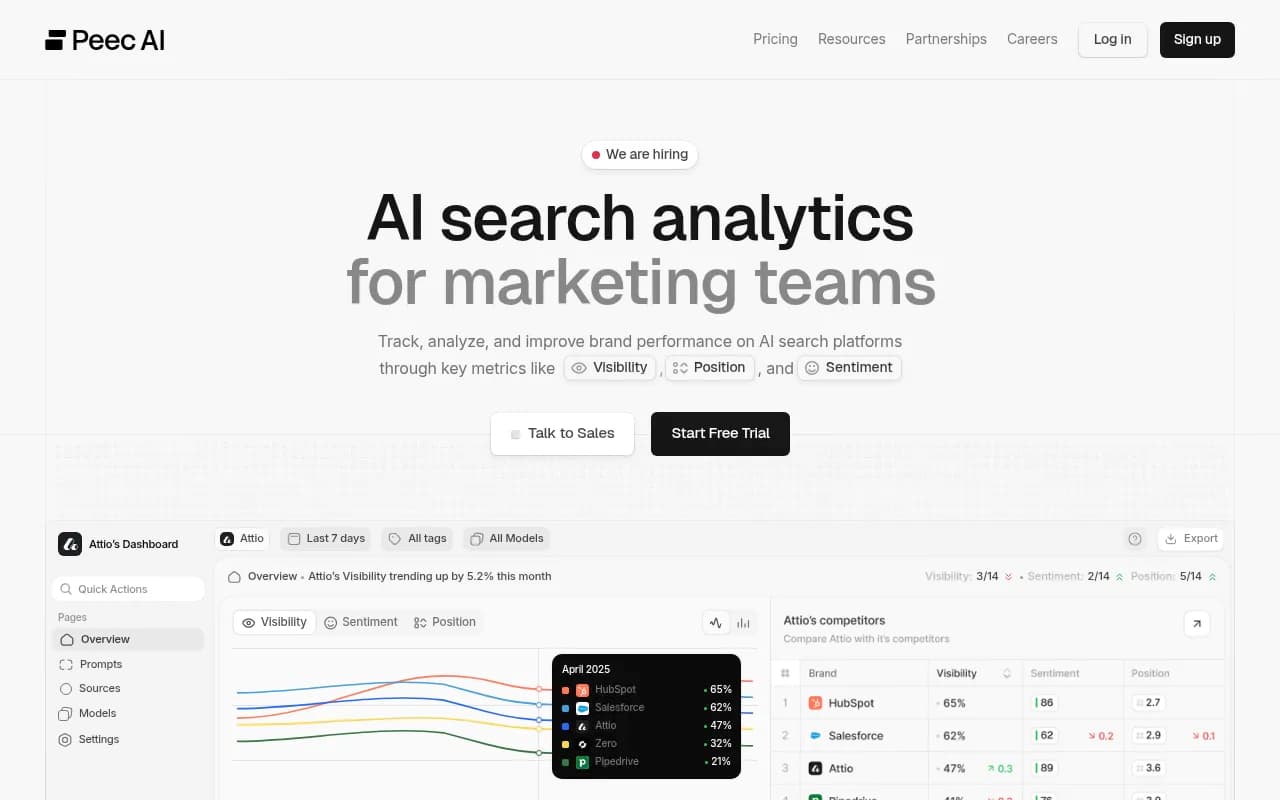
- Peec AI if you want straightforward AI search monitoring without paying for optimization features you won't use.
- Profound if you're an enterprise brand with a real budget and need monitoring depth at scale.
The prompt list turned out to be the easy part of this test. The hard part was discovering that "the same 100 prompts" means four times more data on one platform than the other, and that the tool you pick quietly decides which parts of AI search you're allowed to see.