Key takeaways
- GetMint is a solid monitoring-first tool with clean dashboards and good AI Overview tracking, but it stops short of helping you act on what you find.
- Goodie AI targets enterprise teams and brings strong structured data capabilities, though its pricing and complexity put it out of reach for most mid-market teams.
- Promptwatch is the only platform of the three that closes the full loop: find gaps, generate content, track results -- all in one place.
- If your team needs to show visibility improvements quickly (not just charts), Promptwatch's content generation and answer gap analysis are the clearest path to that.
- All three platforms monitor multiple AI models, but Promptwatch covers the most (10 models) and adds unique data sources like Reddit tracking, AI crawler logs, and ChatGPT Shopping.
The GEO tool market has gotten crowded fast. Eighteen months ago, most marketing teams hadn't heard of "generative engine optimization." Now there are dozens of platforms fighting for the same budget line, and the differences between them are genuinely hard to parse from a landing page.
This comparison focuses on three platforms that come up frequently in buying conversations: GetMint, Goodie AI, and Promptwatch. They're not identical products -- they serve different use cases and have meaningfully different philosophies about what a GEO platform should do. That's actually what makes comparing them useful.
Let's get into it.
What each platform is actually trying to do
Before diving into features, it's worth being clear about the core philosophy of each tool. Because if you pick the wrong one for your situation, you'll end up with a dashboard full of data you can't act on.
GetMint
GetMint is built around monitoring and measurement. It tracks how your brand appears in AI-generated answers across models like ChatGPT, Perplexity, and Google AI Overviews, and it gives you metrics to understand your current visibility. The platform has a clean interface and is reasonably easy to onboard. GetMint's own blog describes a "simple AI Overview tracker" as insufficient for GEO -- and to their credit, they've built something more than that. You get prompt tracking, mention analysis, and some competitor benchmarking.
Where GetMint runs into limits is on the "now what?" side of the equation. It's good at telling you where you stand. It's less equipped to tell you what to do about it.

Goodie AI
Goodie AI positions itself at the enterprise end of the market. It has strong capabilities around structured data optimization and schema markup, which matters for brands trying to influence how AI models parse and cite their content. The platform is used by larger organizations that have dedicated technical SEO resources and can invest time in implementation.
The tradeoff is complexity and cost. Goodie AI isn't a tool you spin up in an afternoon. If you're a mid-market team that needs to show results in a quarter, the onboarding curve can work against you.

Promptwatch
Promptwatch takes a different approach. Rather than positioning as a monitoring dashboard or a technical optimization tool, it's built around an action loop: find the gaps in your AI visibility, generate content to fill them, then track whether that content gets cited. The idea is that monitoring without optimization is just expensive reporting.
Promptwatch covers 10 AI models (ChatGPT, Perplexity, Claude, Gemini, Google AI Overviews, Google AI Mode, Grok, DeepSeek, Meta/Llama, and Copilot) and adds data sources most competitors skip entirely -- Reddit discussions that influence AI recommendations, YouTube content analysis, AI crawler logs showing which pages AI bots actually read, and ChatGPT Shopping tracking.

Feature-by-feature comparison
Here's how the three platforms stack up across the capabilities that matter most for teams trying to move fast.
| Feature | GetMint | Goodie AI | Promptwatch |
|---|---|---|---|
| AI models monitored | 5-7 | 6-8 | 10 |
| Prompt tracking | Yes | Yes | Yes |
| Competitor benchmarking | Yes | Yes | Yes |
| Answer gap analysis | Limited | Limited | Yes (full) |
| AI content generation | No | No | Yes |
| AI crawler logs | No | No | Yes |
| Reddit/YouTube tracking | No | No | Yes |
| ChatGPT Shopping tracking | No | No | Yes |
| Page-level citation tracking | Partial | Yes | Yes |
| Traffic attribution | No | Limited | Yes (GSC, snippet, server logs) |
| Prompt volume/difficulty scoring | No | No | Yes |
| Multi-language/region | Limited | Yes | Yes |
| Pricing (entry) | ~$99/mo | Custom/enterprise | $99/mo |
| Free trial | Yes | No | Yes |
| Content generation built-in | No | No | Yes |
A few things stand out from this table. First, GetMint and Goodie AI are both primarily monitoring tools. They show you data. Promptwatch is the only one of the three that includes a built-in content generation layer -- which matters a lot if your goal is to actually improve your visibility scores rather than just observe them.
Second, the data sources are different. Promptwatch's Reddit and YouTube tracking isn't a gimmick. AI models like ChatGPT and Perplexity pull heavily from Reddit discussions when forming recommendations, especially in consumer categories. If you're not watching what's being said there, you're missing a real lever.
Third, the AI crawler logs feature in Promptwatch is genuinely unusual. Most platforms tell you how often you're cited. Promptwatch also tells you how often AI crawlers visit your site, which pages they read, and whether they're hitting errors. That's the difference between knowing your score and understanding why.
Who each platform is built for
GetMint is best for...
Teams that are new to GEO and want a clean, approachable way to start tracking AI visibility. If you're coming from a traditional SEO background and want to understand your baseline before committing to a more complex platform, GetMint is a reasonable starting point. It's also decent for agencies that need to show clients a simple visibility dashboard without a lot of setup overhead.
The limitation is that you'll hit a ceiling. Once you know your visibility score, GetMint doesn't have much to offer in terms of what to do next.
Goodie AI is best for...
Enterprise brands with technical SEO teams who want to go deep on structured data and schema optimization. If you have a developer who can implement recommendations and a longer timeline for seeing results, Goodie AI's technical depth is genuinely valuable. It's a serious tool for serious implementations.
For most marketing teams -- especially those without dedicated technical resources -- it's probably more platform than you need, and the onboarding investment is real.
Promptwatch is best for...
Marketing and SEO teams that need to show measurable AI visibility improvements, not just track them. The answer gap analysis tells you exactly which prompts competitors are winning that you're not, and the built-in AI writing agent generates content specifically engineered to get cited by AI models -- grounded in citation data from over 880 million citations analyzed. That's a meaningful difference from generic AI writing tools.
It's also the right choice for agencies managing multiple clients. The multi-site plans and white-label reporting options are built for that use case, and the Looker Studio integration makes client reporting straightforward.
The "results fast" question
The guide title promises a comparison for teams that need results fast. So let's be direct about what that means in practice.
"Fast results" in GEO means one of two things: either you want to see data quickly (easy -- all three platforms can do this within days of setup), or you want your actual visibility scores to improve quickly (much harder, and this is where the platforms diverge sharply).
If you want visibility scores to actually move, you need to publish content that AI models want to cite. That means identifying the right topics, writing content that matches how AI models evaluate authority, and tracking whether it's working. GetMint and Goodie AI can tell you what's missing. They can't help you fill the gap.
Promptwatch's content generation workflow is built specifically for this. You identify a prompt where a competitor is visible and you're not, the platform shows you what kind of content is getting cited for that prompt, and the AI writing agent generates a piece grounded in that citation data. It's not a generic blog post -- it's content designed to answer the specific question AI models are asking.
Teams using this workflow report seeing citation improvements within 4-8 weeks of publishing optimized content. That's not instant, but it's faster than the alternative of figuring out what to write on your own.
Pricing reality check
GetMint's entry pricing is around $99/month for basic monitoring. Goodie AI doesn't publish pricing publicly -- it's custom/enterprise, which usually means a sales conversation and a contract. Promptwatch starts at $99/month for the Essential plan (1 site, 50 prompts, 5 articles), with Professional at $249/month (2 sites, 150 prompts, 15 articles, plus crawler logs and city-level tracking) and Business at $579/month (5 sites, 350 prompts, 30 articles).
For most teams, the comparison is really between GetMint and Promptwatch at similar price points. At $99/month, GetMint gives you monitoring. At $99/month, Promptwatch gives you monitoring plus content gap analysis plus article generation. The value equation is pretty clear.
Goodie AI is in a different category -- if you're evaluating it, you're probably already past the point where price is the deciding factor.
What the broader GEO landscape looks like
These three platforms don't exist in a vacuum. The GEO tool market in 2026 includes a lot of options, and it's worth knowing where GetMint, Goodie AI, and Promptwatch sit relative to the rest.
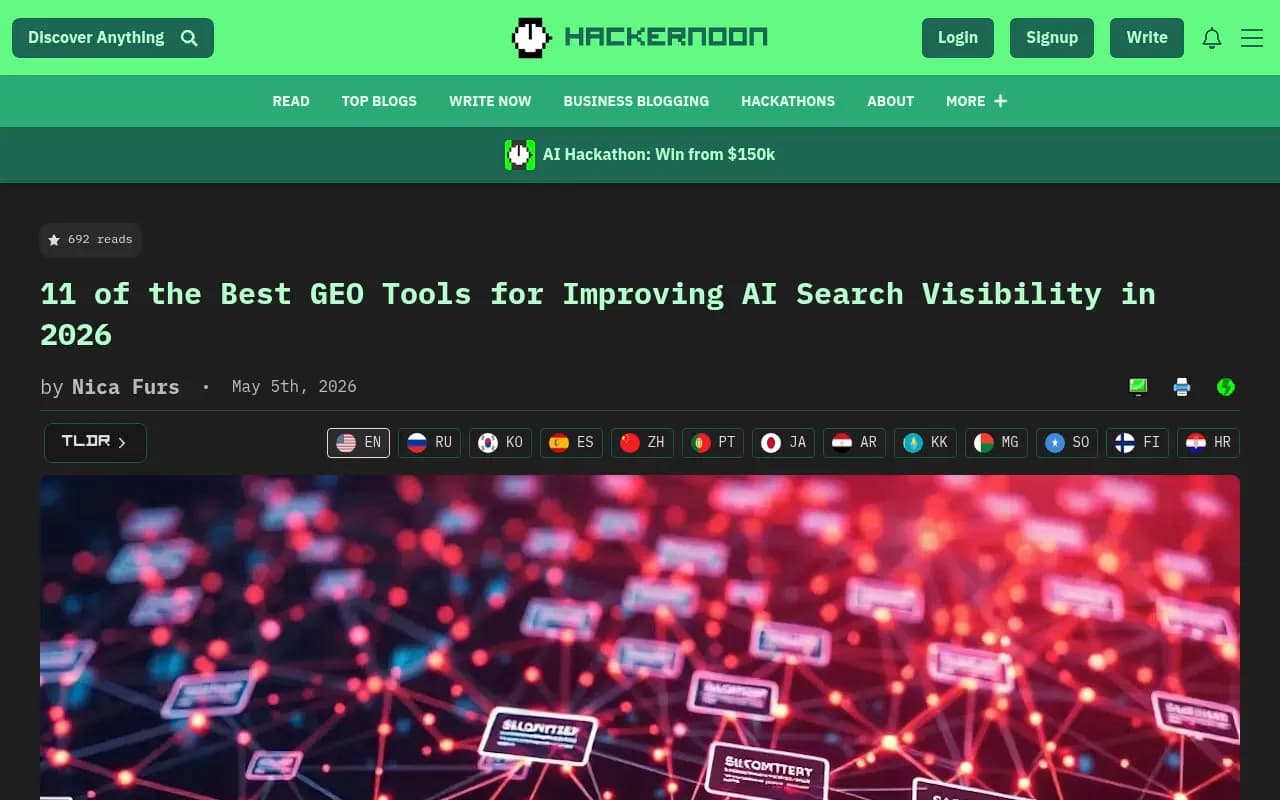
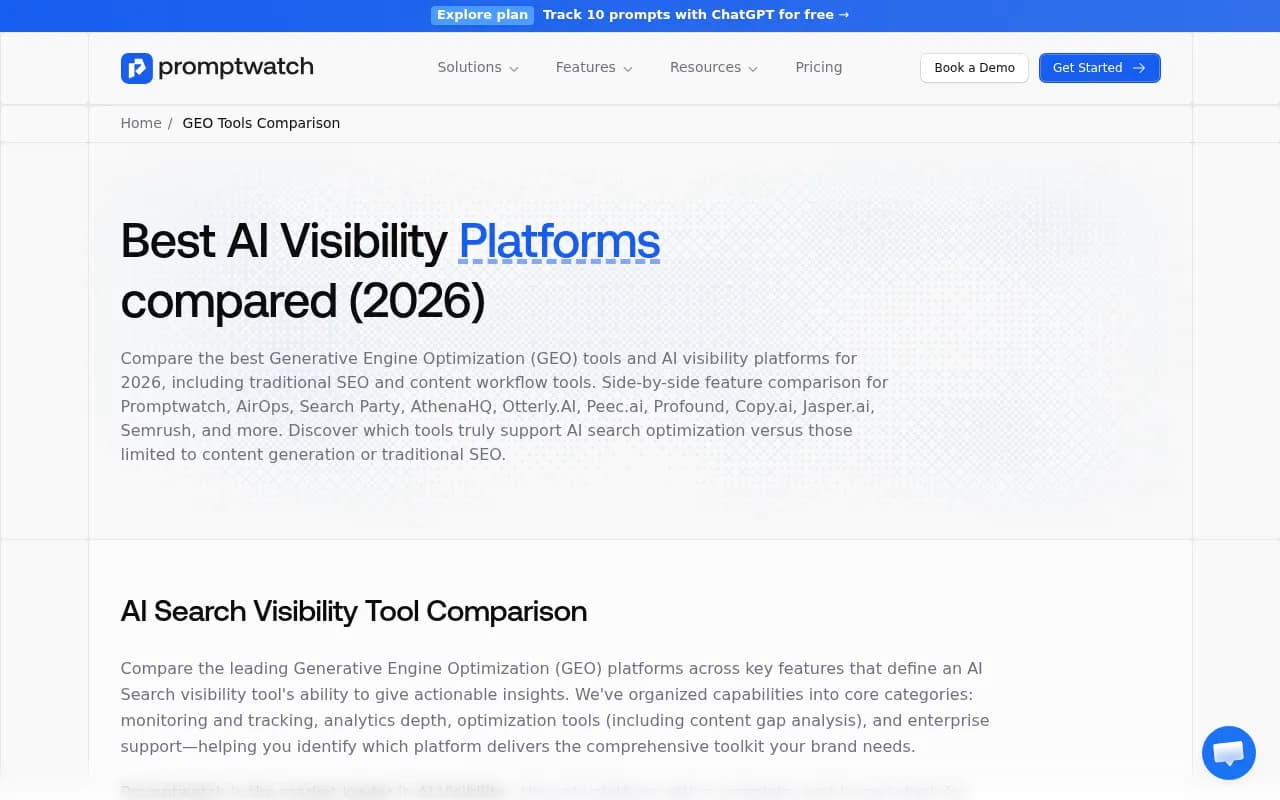
Monitoring-only tools like Otterly.AI and Peec.ai are cheaper but thinner. Enterprise platforms like Profound and Scrunch have strong feature sets but higher price points and no Reddit tracking or ChatGPT Shopping. Traditional SEO tools like Semrush and Ahrefs have added some AI visibility features, but they use fixed prompts and lack traffic attribution -- which makes them useful for awareness but not for optimization.
Promptwatch's positioning in a 2026 comparison of 12 GEO platforms was as the only tool rated "Leader" across all categories. The core reason is the action loop -- most platforms stop at monitoring, and Promptwatch is built to help you do something about what you find.
A few things worth knowing before you decide
Some honest caveats that don't show up in feature tables:
GetMint has a genuinely good user experience. If your team is resistant to new tools, the clean interface reduces friction. That matters more than people admit.
Goodie AI's structured data capabilities are legitimately differentiated. If schema optimization is a priority for your brand (e.g., you're in e-commerce or local services where structured data has outsized impact), it's worth a demo even if the price is high.
Promptwatch's content generation is powerful, but it requires editorial judgment. The AI writing agent produces strong drafts, but you still need someone who can review and publish content. It's not a fully autonomous system -- and that's probably a good thing.
All three platforms are improving fast. The GEO space is moving quickly, and features that are missing today may ship in the next quarter. Check current feature sets before making a final decision.
The bottom line
If you're a team that needs to understand your AI visibility baseline without a lot of complexity, GetMint is a reasonable starting point. If you're an enterprise with technical resources and a longer implementation timeline, Goodie AI's depth is worth considering.
But if your goal is to actually move the needle on AI visibility -- to go from invisible to cited in ChatGPT, Perplexity, and Google AI Overviews -- Promptwatch is the most direct path. It's the only platform of the three that takes you from "here's where you're missing" to "here's the content that will fix it" to "here's proof it worked." That full loop is what makes it worth the investment for teams that need results, not just reports.