Summary
- GEO is the new SEO: As AI search engines answer queries directly, traditional SEO click-through rates are declining. Brands that don't optimize for AI citations risk invisibility.
- Most tools only monitor: The majority of GEO platforms show you data but leave you stuck. Look for tools that help you take action -- content gap analysis, AI writing agents, and optimization workflows.
- Three core capabilities matter: Tracking (which AI models cite you), analysis (why competitors rank and you don't), and creation (generating content that actually gets cited).
- Pricing varies wildly: Entry-level monitoring starts at $99/month. Enterprise platforms with optimization features run $500-2,000+/month. Know what you're paying for.
- Promptwatch leads the action category: It's the only platform rated as a "Leader" across monitoring, analysis, and optimization in a 2026 comparison of 12 GEO tools.

What is Generative Engine Optimization (GEO)?
Generative Engine Optimization is the practice of optimizing content to be cited by AI search engines. When someone asks ChatGPT "What's the best project management tool for remote teams?", the answer includes citations -- links to websites, Reddit threads, YouTube videos. GEO is about making sure your brand shows up in those citations.
Traditional SEO optimized for Google's algorithm. GEO optimizes for how large language models (LLMs) decide what to cite. The rules are different. Google ranked pages based on backlinks, keywords, and technical signals. LLMs cite sources based on semantic relevance, content structure, recency, and authority signals they've learned from training data.
According to a 2026 Digiday report, AI-generated citations now influence up to 32% of sales-qualified leads at some enterprises. That number is climbing fast. Google AI Overviews appear on 15% of search results. ChatGPT has 200 million weekly active users. Perplexity processes 600 million queries per month. These aren't experimental channels anymore.
Why marketing teams need GEO tools now
You can't optimize what you can't measure. GEO tools solve three problems:
Visibility tracking: Which AI models cite your brand? For which prompts? How often? Traditional analytics tools (Google Analytics, SEMrush, Ahrefs) don't track AI citations. You're flying blind without a GEO platform.
Competitive intelligence: Your competitors are already ranking in ChatGPT and Perplexity. GEO tools show you exactly which prompts they own, which content they're getting cited for, and what gaps exist in your own coverage.
Content optimization: Knowing you're invisible is step one. Fixing it is step two. The best GEO tools don't just show you the problem -- they help you generate content that AI models actually want to cite.
A 2026 industry analysis found that most GEO platforms stop at step one. They're monitoring dashboards. You see the data, then you're stuck figuring out what to do about it. The platforms that combine monitoring with action -- content gap analysis, AI writing agents, optimization workflows -- are the ones worth paying for.
The GEO tools landscape: monitoring vs optimization platforms
GEO tools fall into two categories:
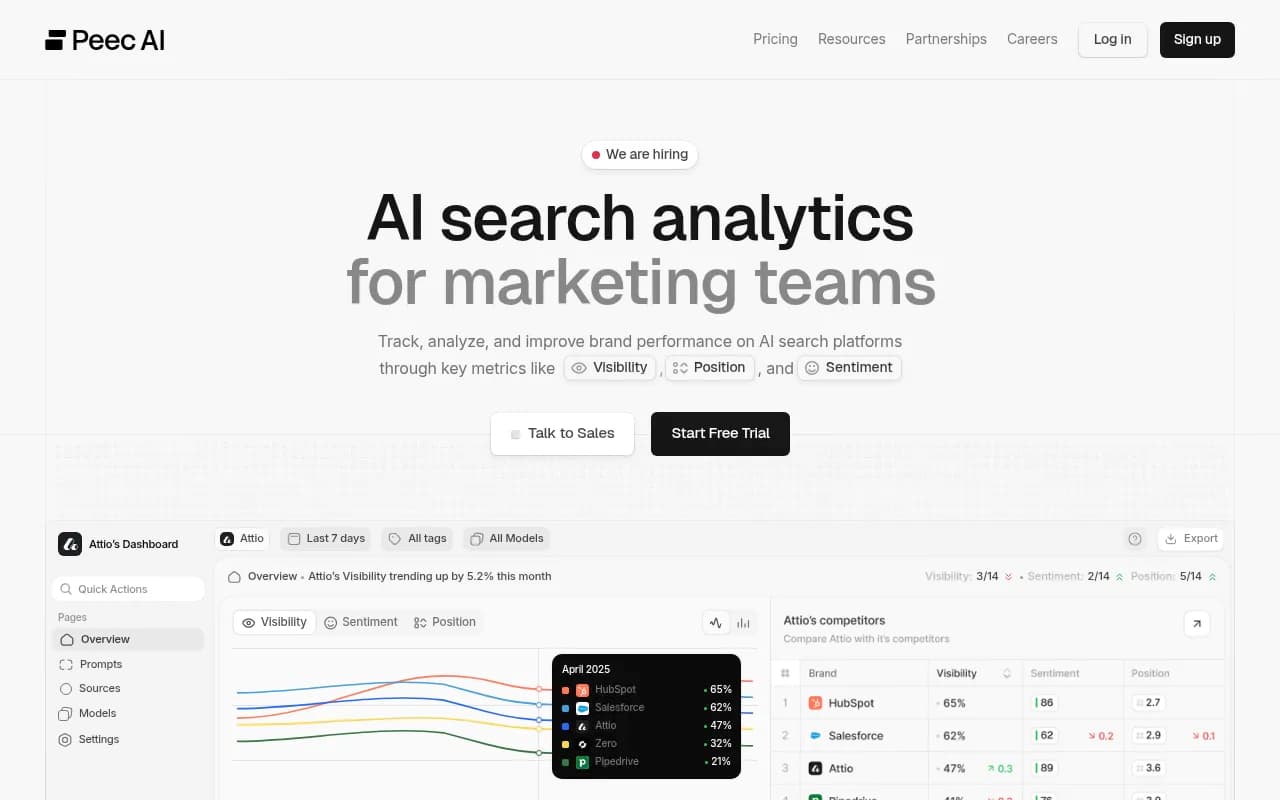
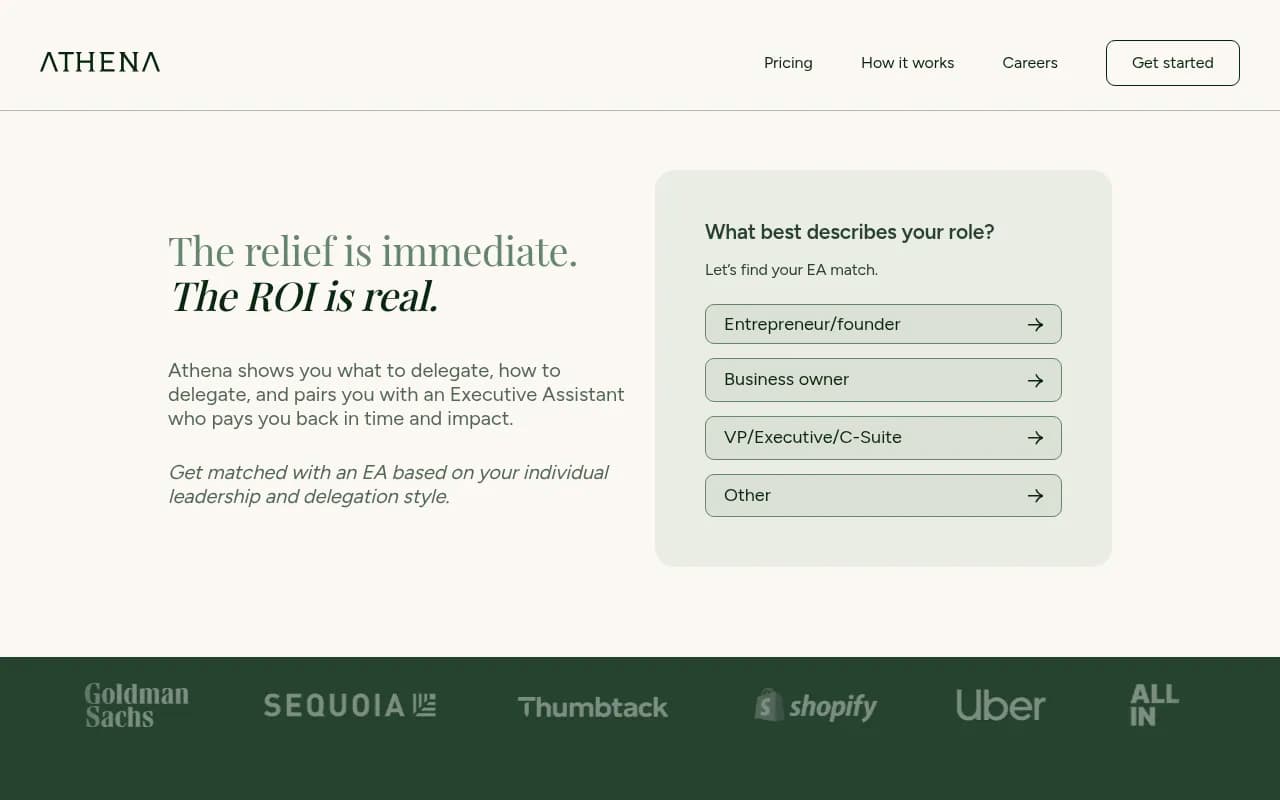
Monitoring-only platforms: These track your brand mentions across AI search engines. You get dashboards showing citation counts, visibility scores, and competitor comparisons. Examples: Otterly.AI, Peec.ai, AthenaHQ, Search Party. Pricing typically ranges from $99-300/month.
Optimization platforms: These do everything monitoring tools do, plus they help you take action. Content gap analysis shows which prompts competitors rank for but you don't. AI writing agents generate articles grounded in citation data. Crawler logs show how AI models discover your content. Examples: Promptwatch, Profound, Scrunch, Evertune. Pricing ranges from $249-2,000+/month depending on features and scale.
The difference matters. A monitoring tool tells you "Your visibility score for 'best CRM software' is 12%." An optimization platform tells you "Your visibility score is 12% because you're missing content on these 8 specific topics. Here's the content you need, generated and ready to publish."
Core features to evaluate
When comparing GEO tools, look for these capabilities:
1. AI model coverage
Which AI search engines does the tool monitor? Minimum viable coverage in 2026:
- ChatGPT (OpenAI)
- Perplexity
- Google AI Overviews
- Claude (Anthropic)
- Gemini (Google)
Advanced platforms also track: Meta AI, Grok (X.AI), DeepSeek, Mistral, Copilot (Microsoft). More coverage means more complete visibility data.
2. Prompt intelligence
Does the tool just track your brand mentions, or does it help you discover new prompts to target? Look for:
- Volume estimates: How many people are asking this prompt?
- Difficulty scores: How hard is it to rank for this prompt?
- Query fan-outs: How does one prompt branch into related sub-queries?
- Persona targeting: Can you filter prompts by buyer persona or intent?
Most monitoring-only tools lack this entirely. You're stuck tracking a fixed list of prompts you manually entered.
3. Content gap analysis
This is the killer feature that separates monitoring from optimization. Answer Gap Analysis shows:
- Which prompts your competitors rank for but you don't
- The specific content angles and topics you're missing
- Exactly what AI models want to see but can't find on your site
Without this, you're guessing what content to create. With it, you have a data-driven roadmap.
4. AI content generation
The best platforms include AI writing agents that generate content grounded in:
- Real citation data (what actually gets cited by AI models)
- Prompt volumes and difficulty scores
- Competitor analysis
- Persona targeting
This isn't generic SEO filler. It's content engineered to get cited by ChatGPT, Claude, and Perplexity.
5. Crawler logs and indexing
AI models crawl your website to discover content. Do you know:
- Which pages ChatGPT, Claude, and Perplexity are reading?
- How often they return?
- What errors they encounter?
- Whether they're indexing your new content?
Crawler logs answer these questions. Most competitors don't offer this feature at all. It's a blind spot.
6. Traffic attribution
Visibility is great. Revenue is better. Can you connect AI citations to actual traffic and conversions? Look for:
- Code snippet or server log integration
- Google Search Console integration
- Page-level tracking (which specific pages are being cited)
- Traffic source attribution (did this visitor come from an AI search result?)
Without attribution, you're optimizing in the dark.
7. Citation and source analysis
When AI models cite sources, where are they pulling from? The best tools surface:
- Which pages on your site get cited most
- Which Reddit threads influence AI recommendations
- Which YouTube videos AI models reference
- Which competitor domains dominate citations
This tells you where to publish and what to optimize.
Top GEO tools compared
Here's how the leading platforms stack up across key capabilities:
| Tool | Monitoring | Content gaps | AI writing | Crawler logs | Pricing |
|---|---|---|---|---|---|
| Promptwatch | 10 AI models | Yes | Yes | Yes | $99-579/mo |
| Profound | 8 AI models | Yes | No | No | $500+/mo |
| Scrunch | 6 AI models | Limited | No | No | $400+/mo |
| Otterly.AI | 5 AI models | No | No | No | $99-249/mo |
| Peec.ai | 4 AI models | No | No | No | $149-299/mo |
| AthenaHQ | 8 AI models | No | No | No | $199-499/mo |
| Search Party | 6 AI models | No | No | No | $300+/mo |
| Semrush | Fixed prompts | No | No | No | $139-499/mo |
| Ahrefs Brand Radar | Fixed prompts | No | No | No | $129-999/mo |
Search Party
Promptwatch: The action-oriented leader
Promptwatch is the only platform rated as a "Leader" across all categories in a 2026 comparison of 12 GEO tools. The core difference: it's built around taking action, not just showing you data.
The action loop works like this:
-
Find the gaps: Answer Gap Analysis shows exactly which prompts competitors are visible for but you're not. You see the specific content your website is missing -- the topics, angles, and questions AI models want answers to but can't find on your site.
-
Create content that ranks in AI: The built-in AI writing agent generates articles, listicles, and comparisons grounded in real citation data (880M+ citations analyzed), prompt volumes, persona targeting, and competitor analysis. This isn't generic SEO filler -- it's content engineered to get cited by ChatGPT, Claude, Perplexity, and other AI models.
-
Track the results: See your visibility scores improve as AI models start citing your new content. Page-level tracking shows exactly which pages are being cited, how often, and by which models. Close the loop with traffic attribution (code snippet, GSC integration, or server log analysis) to connect visibility to actual revenue.
Additional capabilities that support the action loop:
- AI Crawler Logs: Real-time logs of AI crawlers (ChatGPT, Claude, Perplexity, etc.) hitting your website -- which pages they read, errors they encounter, how often they return. Most competitors lack this entirely.
- Prompt Intelligence: Volume estimates and difficulty scores for each prompt, plus query fan-outs that show how one prompt branches into sub-queries.
- Citation & Source Analysis: See exactly which pages, Reddit threads, YouTube videos, and domains AI models cite in their responses.
- Reddit & YouTube Insights: Surface discussions that directly influence AI recommendations -- a channel most competitors ignore.
- ChatGPT Shopping Tracking: Monitor when your brand appears in ChatGPT's product recommendations and shopping carousels.
- Multi-language & Multi-region: Monitor AI responses in any language, from any country, with customizable personas.
Pricing: Essential $99/mo (1 site, 50 prompts, 5 articles), Professional $249/mo (2 sites, 150 prompts, 15 articles, crawler logs), Business $579/mo (5 sites, 350 prompts, 30 articles). Free trial available.
Profound: Enterprise-grade monitoring
Profound offers strong feature coverage with a focus on enterprise teams. You get visibility tracking across 8 AI models, competitor heatmaps, and prompt volume data. The platform excels at monitoring and reporting.
What's missing: content gap analysis, AI writing agents, crawler logs, Reddit tracking, ChatGPT Shopping monitoring. You see the data but you're on your own for optimization.
Pricing starts around $500/month for enterprise plans. Good for large teams that already have content operations in place and just need visibility data.
Scrunch: Strong features, higher price
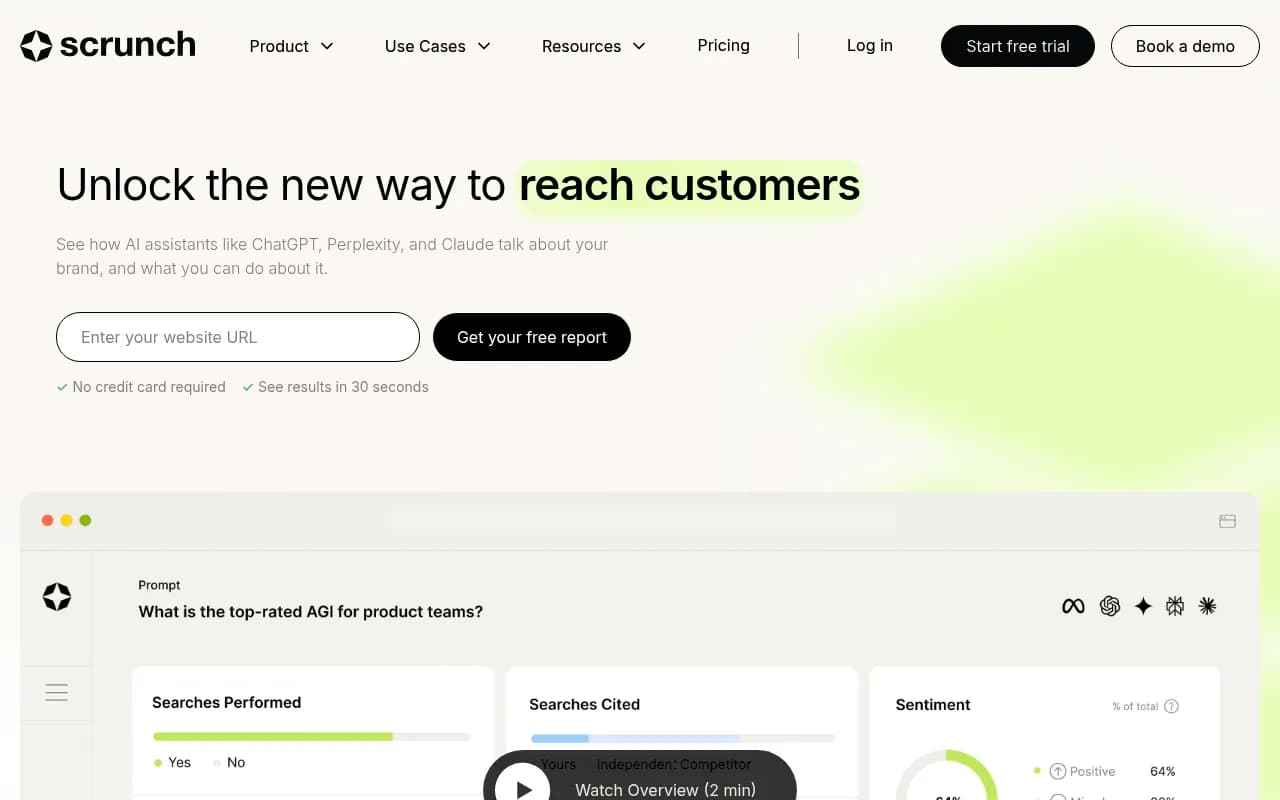
Scrunch monitors 6 AI models and provides solid competitor analysis. The interface is clean and the data is reliable.
Gaps: No content generation, no crawler logs, no Reddit tracking. Like Profound, it's monitoring-focused.
Pricing starts around $400/month. You're paying for polish and reliability, not optimization features.
Otterly.AI and Peec.ai: Budget monitoring
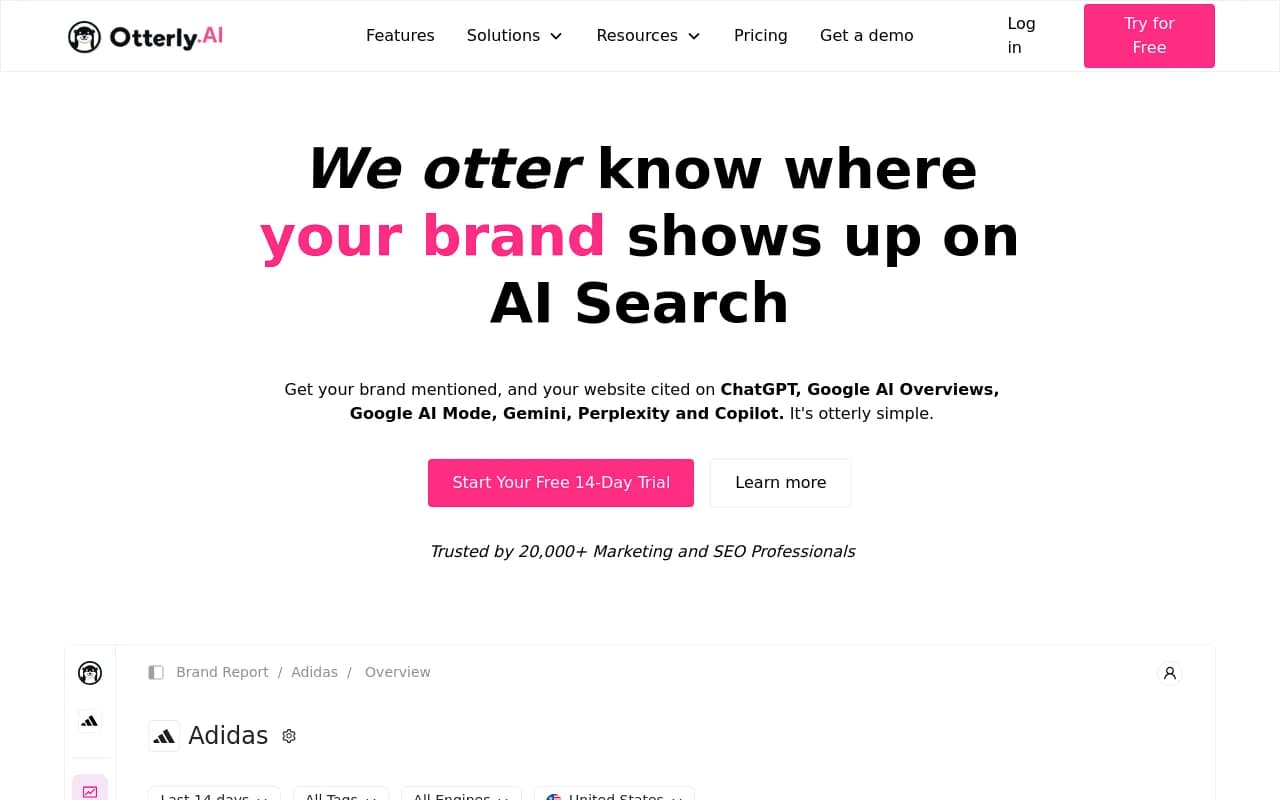
Both platforms offer basic monitoring at lower price points ($99-299/month). You can track your brand across 4-5 AI models and see competitor comparisons.
What you won't get: content gap analysis, AI writing, crawler logs, advanced prompt intelligence, traffic attribution. These are dashboards, not optimization platforms.
Good for: Small teams that want to start tracking AI visibility without a big budget commitment. Not suitable for teams that need to actively improve their rankings.
AthenaHQ: Monitoring with limited optimization
AthenaHQ tracks 8 AI models and provides decent competitor analysis. The platform is monitoring-focused with limited content optimization capabilities.
Missing: AI content generation, crawler logs, Reddit/YouTube insights, ChatGPT Shopping tracking.
Pricing: $199-499/month depending on scale.
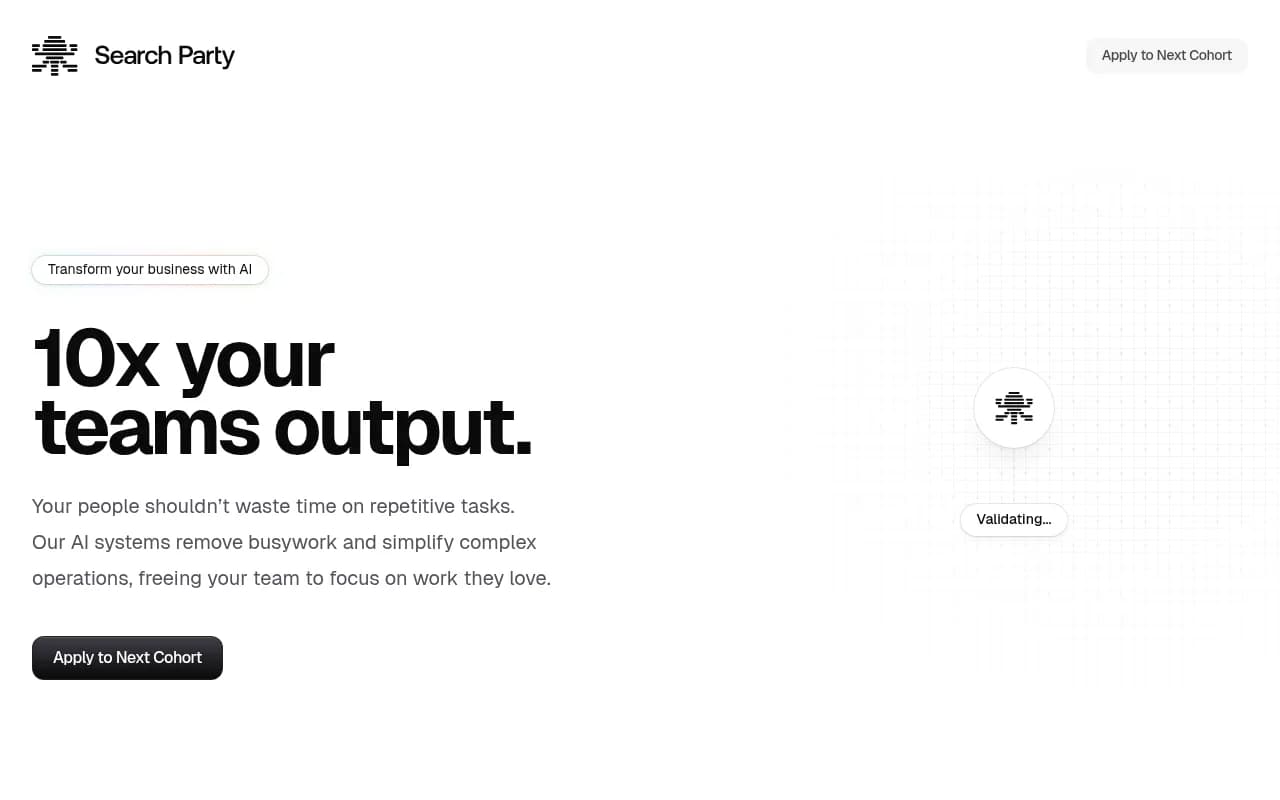
Search Party: Agency-oriented monitoring
Search Party targets agencies managing multiple clients. You get monitoring across 6 AI models with white-label reporting options.
Limitations: No content gap analysis, limited prompt metrics, no AI writing agents. It's built for reporting, not optimization.
Pricing starts around $300/month for agency plans.
Search Party
Semrush and Ahrefs: Traditional SEO tools with limited GEO
Semrush and Ahrefs have added AI search monitoring features, but they're bolted onto traditional SEO platforms. You're stuck with fixed prompt sets (you can't customize what prompts to track). Ahrefs Brand Radar lacks AI traffic attribution entirely.
These tools make sense if you're already paying for Semrush or Ahrefs for SEO and want basic AI visibility data as a bonus feature. They don't make sense as dedicated GEO platforms.
How to choose the right GEO tool for your team
Start by asking three questions:
1. Do you just need visibility data, or do you need help optimizing?
If you have a strong content team and just want to track AI citations, a monitoring-only tool (Otterly.AI, Peec.ai, AthenaHQ) might work.
If you need help figuring out what content to create and want AI assistance generating it, you need an optimization platform (Promptwatch, Profound, Scrunch).
2. How many AI models do you care about?
Minimum viable: ChatGPT, Perplexity, Google AI Overviews, Claude, Gemini. If your audience uses other AI search engines (Meta AI, Grok, DeepSeek), make sure your tool tracks them.
3. What's your budget?
- Under $200/month: Otterly.AI, Peec.ai, or Promptwatch Essential ($99/mo)
- $200-500/month: Promptwatch Professional ($249/mo), AthenaHQ, Search Party
- $500-1,000/month: Promptwatch Business ($579/mo), Profound, Scrunch
- Enterprise ($1,000+/month): Custom pricing from Promptwatch, Profound, Evertune
Red flags to watch for
Avoid tools that:
- Only track fixed prompts: You should be able to add custom prompts and discover new ones based on volume data.
- Don't show competitor data: If you can't see what competitors rank for, you're missing half the picture.
- Lack traffic attribution: Visibility scores are nice. Revenue data is better. Make sure you can connect AI citations to actual traffic.
- Don't offer crawler logs: If you don't know how AI models are discovering your content, you can't fix indexing issues.
- Have no content optimization features: Monitoring-only tools leave you stuck after showing you the problem.
The future of GEO tools
Three trends to watch in 2026 and beyond:
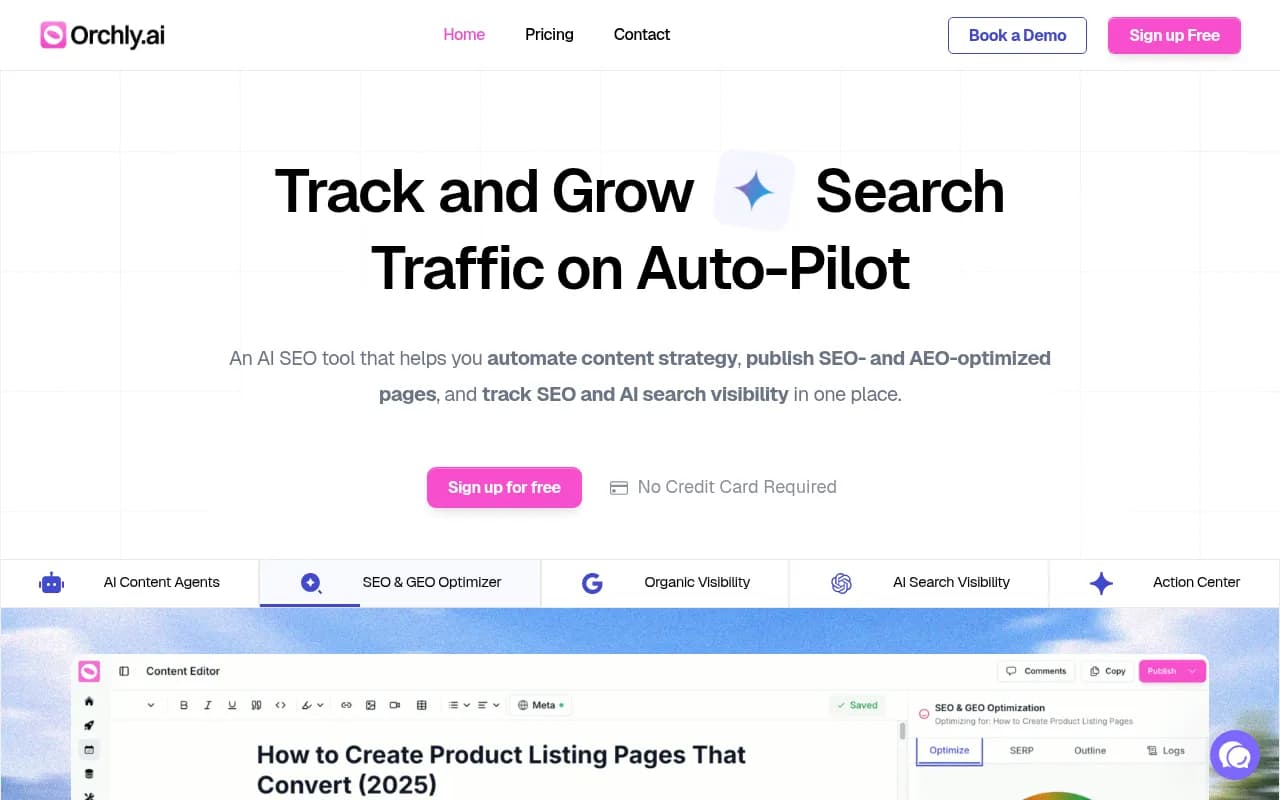
1. AI agent integration: The next generation of GEO tools will integrate directly with AI agents that automatically optimize content, fix technical issues, and generate new pages based on gap analysis. Early examples: Promptwatch's AI writing agent, Orchly.ai's content ops automation.
2. Multi-modal optimization: Text is just the beginning. AI search engines are starting to cite images, videos, and audio. GEO tools will expand to track and optimize these formats.
3. Real-time optimization: Current tools track visibility on a daily or weekly basis. The next wave will offer real-time monitoring and instant optimization recommendations as AI models update their responses.
Getting started with GEO
Here's a practical roadmap:
Week 1: Baseline your current visibility
Sign up for a GEO tool (start with Promptwatch if you want the action loop, or Otterly.AI if you just need basic monitoring). Add 20-30 prompts relevant to your business. Run your first visibility audit.
Week 2: Identify content gaps
Use Answer Gap Analysis (if your tool has it) to see which prompts competitors rank for but you don't. Export the list of missing topics.
Week 3: Create optimized content
Generate 3-5 pieces of content targeting your biggest gaps. Use your tool's AI writing agent if available, or write manually using the gap analysis as a guide. Focus on:
- Clear, structured content (headings, lists, tables)
- Citable statistics and data points
- Specific, actionable information (not vague marketing copy)
- FAQ sections that answer common questions
Week 4: Track results
Publish your content. Monitor how your visibility scores change over the next 2-4 weeks. Check crawler logs to make sure AI models are discovering your new pages. Adjust based on what's working.
Final thoughts
GEO is not optional anymore. AI search engines are answering queries directly, and brands that don't optimize for citations risk invisibility. The good news: the tools exist to track, analyze, and optimize your AI visibility. The bad news: most of them only do one piece of the puzzle.
Look for platforms that close the action loop -- monitoring, gap analysis, content generation, and optimization. Promptwatch is the only tool rated as a "Leader" across all categories in 2026, but your choice depends on your team's needs, budget, and existing content operations.
Start with a free trial. Run a visibility audit. See where you stand. Then decide whether you need a monitoring dashboard or a full optimization platform. The sooner you start, the more market share you'll capture before your competitors figure this out."}