Key Takeaways
- Gauge and Search Party sound like competitors but solve different problems: Gauge is an AI search visibility platform for tracking and optimizing client brands across LLMs, while Search Party is an AI implementation partner that builds custom automation systems to eliminate busywork.
- For agency GEO reporting, Gauge gives you prompt tracking, citation analytics, and client-ready visibility reporting; Search Party gives you operational automation that can reduce the manual work behind those reports.
- Neither tool is a full end-to-end GEO stack on its own. If you want monitoring, crawler logs, content generation, and CMS publishing in one platform, tools like Promptwatch fill the gaps both leave open.
- The right choice depends on your agency model: visibility reporting for retainers points to Gauge; automation-heavy delivery points to Search Party; many agencies will want both capabilities, possibly from different vendors.
What these two tools actually are
Before comparing features, it helps to clear up a naming confusion. "Search Party" sounds like a search visibility tool, and Gauge sounds like a measurement tool — and in 2026 both names sit in a crowded GEO market where dozens of platforms claim to "track and optimize your brand's visibility across AI search." But the overlap is smaller than it looks.
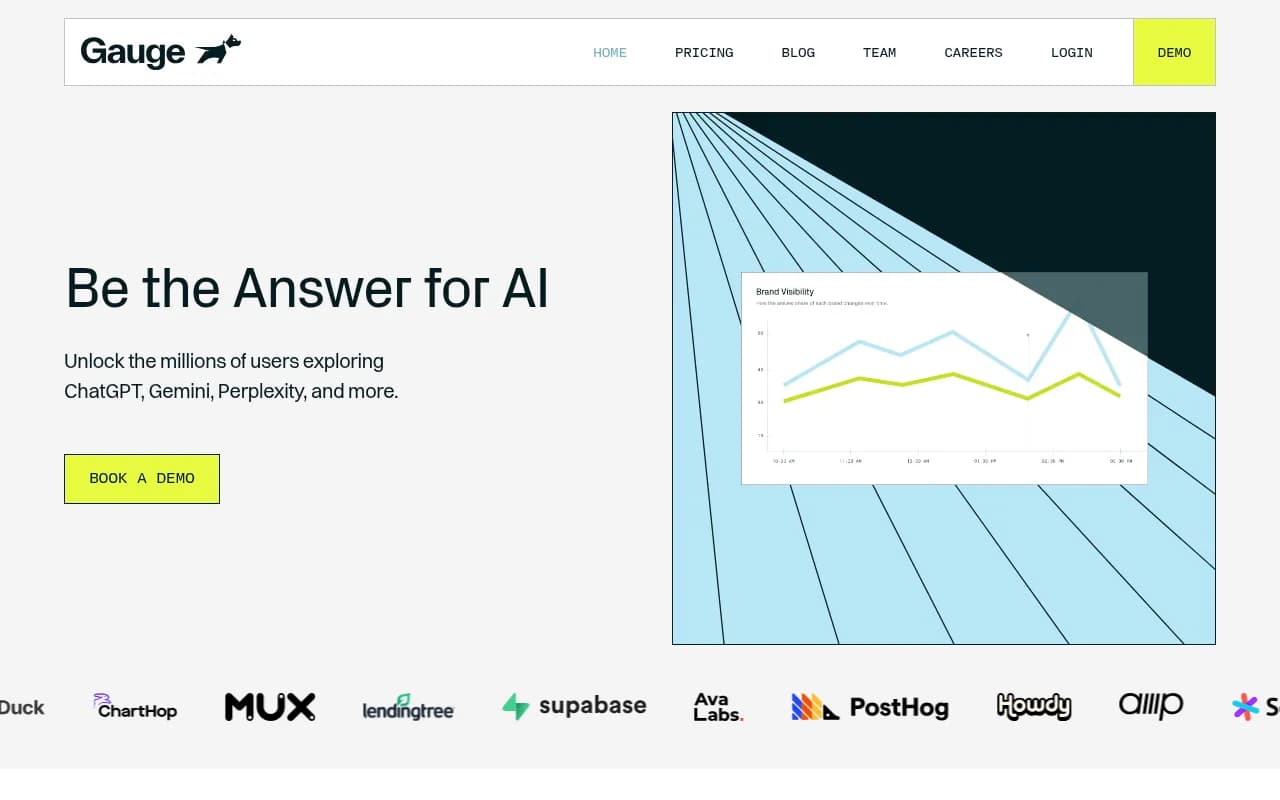
Gauge is an AI search visibility platform. It sits in the same category as tools like Profound, Scrunch, and Otterly.AI: you connect client brands, define the prompts that matter, and Gauge tracks how those brands show up (or don't) across ChatGPT, Claude, Gemini, Perplexity, and other engines. For agencies, that's the core of a GEO retainer — you need to prove visibility moved.
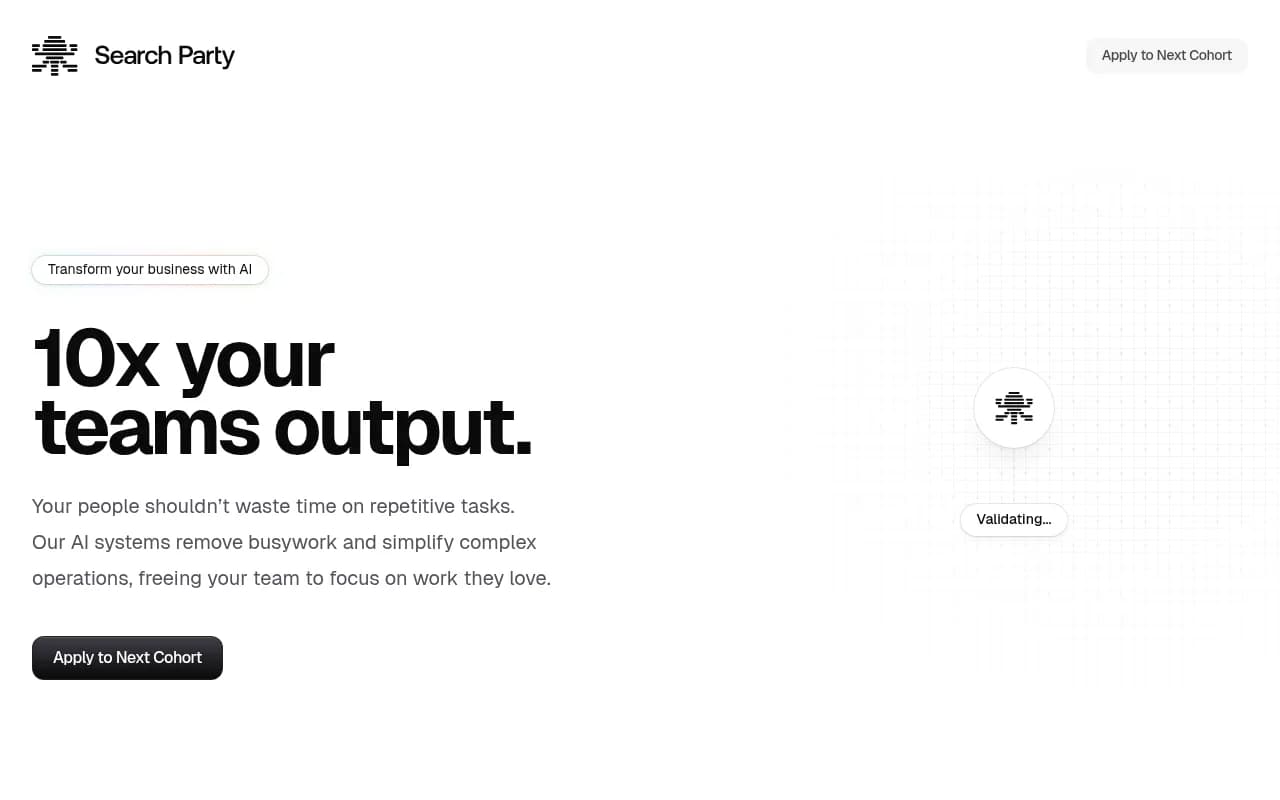
Search Party is something else entirely. It's an AI implementation partner that builds custom automation systems to eliminate busywork and scale operations. Think workflow automation, internal tooling, and operational plumbing — closer to what an agency would use to run its own delivery processes than to report on client visibility.
Search Party
Gauge for agency GEO reporting
What it does well
Gauge's strength is the reporting workflow agencies actually bill against. You define a prompt set per client — "best CRM for nonprofits," "alternatives to Salesforce," whatever the buyer-intent queries are — and Gauge runs them across the major AI engines on a schedule. From there you get visibility scores, citation tracking, and competitor share-of-voice comparisons that translate directly into a monthly client report.
That last part matters more than it sounds. The hardest part of selling GEO as a service isn't tracking; it's explaining tracking to a client who's used to rank reports. A tool that frames visibility as "here's how often you appear when buyers ask about your category, and here's who appears instead" is doing half the account management work for you.
Where it's thin
Like most visibility platforms in its price band, Gauge is primarily a monitoring tool. It tells you where you're visible and where you're not, but closing the gap — content creation, publishing, technical fixes — usually happens outside the platform. Agencies that want one system to diagnose and fix will need to pair it with content tooling.
Search Party for agency operations
Search Party approaches the problem from the opposite direction. Instead of measuring visibility, it builds the automation systems that make delivering GEO (and everything else) less labor-intensive. For an agency running ten client accounts, that could mean automating reporting assembly, data pulls, QA checklists, or client communication workflows.
The honest caveat: if you came here looking for a GEO reporting tool specifically, Search Party isn't that. It's an implementation partner — closer to hiring an automation team than buying software. That can be exactly right for agencies drowning in manual delivery work, and exactly wrong if what you need is a dashboard that shows client visibility trends.
Head-to-head comparison
| Dimension | Gauge | Search Party |
|---|---|---|
| Category | AI search visibility platform | AI implementation / automation partner |
| Core output | Visibility scores, citation tracking, competitor benchmarks | Custom automation systems and workflows |
| Client GEO reporting | Yes — prompt tracking and share-of-voice across LLMs | Not a reporting tool; could automate report assembly |
| Optimization / execution | Limited; mostly monitoring | Yes — builds operational systems, but not GEO-specific content work |
| Best agency fit | Agencies selling GEO visibility retainers | Agencies scaling delivery operations across accounts |
| Pricing model | Subscription (verify current tiers with the vendor) | Project / engagement-based (verify with vendor) |
Where both fall short — and what fills the gap
Here's the thing this comparison exposes: the 2026 GEO tooling market has split into monitoring tools, content tools, and automation tools, and most agencies need all three. Gauge covers monitoring. Search Party covers automation. Neither covers the middle piece — taking visibility data and turning it into published, optimized content.
That middle piece is where the category is heading. The distinction between a prompt tracker and an AI visibility platform is becoming the real buying criterion: a tracker tells you "was my brand mentioned," while a platform tells you why you're invisible, where AI finds your competitors' content, and what to publish to fix it.
Promptwatch is the example of that full-stack approach. It combines prompt tracking with citation analytics, AI crawler logs (so you can see when ChatGPTBot or ClaudeBot actually visited a client's pages and whether they hit errors), visitor analytics that attribute real traffic and conversions from AI platforms, and Content Agents that plan, write, and publish GEO-optimized articles directly to WordPress, Webflow, or Framer. For an agency, that means one system handles the diagnosis and the fix, with white-label dashboards and a client portal for reporting.

It's worth saying this isn't a knock on Gauge — for its price point, it's a solid monitoring layer, and plenty of agencies run happily on a monitor-plus-freelancer model. But if you're rebuilding your GEO stack in 2026, ask whether each tool stops at reporting or closes the loop.
How to decide
Choose Gauge if
You sell visibility reporting retainers and need a straightforward platform for tracking client brands across the major LLMs. It's the right pick when your agency already has content production handled and just needs the measurement layer.
Choose Search Party if
Your bottleneck is operational, not analytical. If your team spends more hours assembling reports, pulling data, and running delivery checklists than optimizing content, an automation implementation partner will pay for itself faster than another dashboard.
Consider a full-stack platform if
You want monitoring, crawler logs, content generation, and publishing in one system — especially if you're an agency managing many clients and white-label reporting matters. The GEO software directory at bestgeosoftware.com has a wider set of options to compare, and agenticseotools.com covers the agentic execution side.
The bottom line
Gauge and Search Party aren't really competitors — they're answers to two different agency problems. Gauge answers "how do I show clients their AI visibility?" Search Party answers "how do I stop drowning in delivery busywork?" The sharper 2026 question is whether either gets you from insight to published, citable content, and that's where full-stack GEO platforms are pulling ahead of monitoring-only tools.