Key takeaways
- The biggest controlled study to date (Ahrefs, 1,885 pages that added JSON-LD, matched against ~4,000 controls) found no meaningful citation lift on Google AI Mode, AI Overviews, or ChatGPT. The apparent +43% AI Mode gain shrank to +2.4% once you account for platform-wide growth.
- When AI systems fetch a page directly, they read visible HTML and ignore JSON-LD. Multiple independent tests (searchVIU, Otterly.ai, and informal experiments covered by Search Engine Roundtable) confirmed this.
- The correlation is real but misleading: AI-cited pages are roughly 3x more likely to carry JSON-LD than non-cited pages, mostly because technically mature sites tend to have both schema and strong SEO.
- Schema still earns its keep for entity resolution (Organization, Person,
sameAs), product and shopping data, and AI Overview eligibility. Google removed FAQ rich results entirely on May 7, 2026, so that era is over. - If you want to know whether schema moves the needle for your site, you need a controlled before/after test with a control group, not a before/after screenshot.
The question everyone is asking the wrong way
Sometime in the last year, "add schema markup" became the default answer to every AI search visibility problem. Brand missing from AI Overviews? Add schema. ChatGPT not citing you? Add schema. It's cheap advice, it sounds technical enough to be credible, and it's almost impossible to prove wrong without a real experiment.
So in 2026, several teams actually ran the experiments. The results are more interesting than either the schema evangelists or the skeptics expected. The short version: schema does not buy you citations. But it does something else that matters, and depending on what your site sells, that something else can be worth a lot.
What the controlled tests actually found
This is where the conversation got real. Four separate tests, four different methodologies, and they mostly agree with each other.
The Ahrefs study: 1,885 pages, barely a flicker
In May 2026, Ahrefs published the largest controlled test I'm aware of: they tracked 1,885 pages that added JSON-LD schema between August 2025 and March 2026, matched against roughly 4,000 control pages, and measured citation changes across Google AI Overviews, Google AI Mode, and ChatGPT.
The results were deflating for the schema-boosts-AI-visibility crowd:
- AI Overviews citations on treated pages fell 4.6% relative to controls. Statistically significant, but tiny in absolute terms, about 12 fewer daily citations on pages already earning hundreds.
- AI Mode looked like +43% before adjustment. Then you notice control pages grew almost as much, because AI Mode usage was exploding across the board. After adjusting for the trend, the schema-specific effect was +2.4%. Noise.
- ChatGPT came in at +2.2%. Also noise.
Four separate statistical tests, including difference-in-differences and an event study, all pointed the same direction. Adding schema to pages that were already getting cited did not meaningfully change how often they got cited.
There's one honest caveat, and it matters: the study only covered pages that already had 100+ AI Overview citations before treatment. Those pages were already in the consideration set. The study says nothing about whether schema helps a page get discovered and indexed in the first place, which is a different question.
The fetch tests: AI reads your page, not your code
searchVIU ran what I consider the cleanest experiment of the bunch. They built a test page with pricing data hidden in different formats: visible HTML, JavaScript-rendered DOM, JSON-LD only, JSON-LD via JS, visible microdata, hidden microdata. Then they asked ChatGPT, Claude, Perplexity, Gemini, and Google AI Mode to fetch the page and report the price.
Every single system extracted only the visible HTML. Price data that existed solely inside schema was invisible to all of them.
Otterly.ai ran a similar test across seven platforms and got the same answer with one embarrassing twist: Google AI Mode returned schema types for their page, including a "Service" schema that was never actually there. The model was generating text that sounded like schema, not reading it. A platform that confidently returns wrong structured data is not reading your structured data. Six of seven platforms failed outright; only Gemini accurately fetched and reported the JSON-LD.

Independent informal tests pointed the same way. Julio C. Guevara built two identical fictional product pages, one with visible text plus schema, one with schema only. He ran hundreds of extraction prompts against Gemini and ChatGPT asking for price, color, and SKU. Only the page with visible text worked. Neither model could extract facts that lived exclusively inside structured data.
The correlation that keeps fooling people
AccuraCast analyzed 9,000 AI-cited sources across roughly 2,000 prompts and found that 81% of cited pages carried some form of schema. Person schema led among cited pages at 58.9%; FAQPage schema showed up on just 1.8% of them. Ahrefs found the same pattern from the other direction: AI-cited pages were about 3x more likely to have JSON-LD than non-cited pages.
This gets quoted constantly as proof schema drives citations. It doesn't. Sites with comprehensive schema tend to be more technically mature, better maintained, better linked, and better ranked. Around 92% of AI Overview citations come from domains already ranking in Google's top 10, per Onely data. Schema is a symptom of the kind of site that gets cited, not the cause. A December 2024 Search Atlas study found no correlation between schema coverage and citation rates once you control for the obvious confounders.
Here's the full picture in one table:
| Study | Method | Headline result | What it actually proves |
|---|---|---|---|
| Ahrefs (May 2026) | 1,885 treated pages vs ~4,000 controls | AI Mode +2.4% after trend adjustment | Adding schema to already-cited pages doesn't move citations |
| searchVIU (Dec 2025) | Direct fetch test, 5 AI systems, hidden price data | All 5 read visible HTML only | Chatbots fetching your page ignore JSON-LD |
| Otterly.ai (Mar 2026) | 7-platform fetch test + single-site rollout | 6 of 7 failed; AI Mode hallucinated schema | AI Mode generates plausible-sounding schema rather than reading it |
| AccuraCast (Sept 2025) | 9,000 cited sources analyzed | 81% of cited pages have schema | Correlation only; technically mature sites get cited |
| Search Atlas (Dec 2024) | Schema coverage vs citation rates | No consistent correlation | Comprehensive schema alone doesn't earn citations |
So is schema dead? No. It changed jobs.
Here's where I land after reading all of this: the tests killed a specific claim, not the practice. The claim was "add schema, get cited more." That claim is dead. What survived is subtler and, for some sites, more valuable.
Google's March 2026 core update (completed March 12) restructured how structured data is used. Rich result eligibility narrowed to pages where the schema describes the page's primary purpose, ending the era of FAQ and HowTo padding. At the same time, AI Mode started using structured data as an input to entity resolution and claim verification during answer synthesis. John Mueller put it best in a January 2026 Reddit comment, answering whether schema helps LLMs understand entities: "yes, no, and it depends." His most useful distinction was that some data, like shopping results with pricing, shipping, and availability, is "basically impossible to read in high fidelity and accurately from a text page." Other markup is, in his words, wishful thinking: "Your 'best geo insurance comparison site' isn't going to rank better by adding insurance markup."
Only two platforms have officially confirmed schema helps their AI systems: Google (April 2025, for search results broadly) and Microsoft Bing's Copilot (Fabrice Canel, March 2025). ChatGPT and Perplexity have confirmed nothing.
Where schema genuinely earns its keep in 2026
Entity disambiguation. Organization and Person schema with sameAs identifiers pointing to Wikidata, Wikipedia, Crunchbase, and LinkedIn is now the highest-leverage implementation. When AI Mode synthesizes an answer, it has to decide which "Acme" you are. Resolved entities get higher trust scores. This is the one area where the post-March 2026 evidence shows a consistent pattern: comprehensive entity schema plus accurate content-type schema produces measurable citation improvement over a 30 to 60 day window.
Product and shopping data. This is where the timing gets interesting. Promptwatch's citation data shows product pages became the single most-cited content format in Google AI Overviews in late July 2026, overtaking listicles for the first time (17.9% vs 16.2% of citations), and product pages led ChatGPT's July citations at roughly a third of the total. Product pages are exactly where schema is most standardized: price, availability, SKU, shipping. Mueller singled out shopping data as the case where structured data is irreplaceable. If you run an e-commerce site, Product and Offer markup is not optional, and the citation-type trend data backs that up.
AI Overview eligibility. Google has stated that AI Overviews are built on the same index and crawler as classic search, so the entry requirement is ordinary SEO. Otterly's rollout data, despite being an uncontrolled single-site test, suggested schema influenced how often AI Overviews triggered for their queries at all. Treat that as suggestive, not proven.
Crawl efficiency. Schema that never triggers a visible SERP feature still helps machines parse what your page is, who wrote it, and what entity published it. That costs you nothing and removes ambiguity, which matters when you consider AI Mode is working with a limited citation budget. Promptwatch's tracking shows Google AI Overviews cite around 10 sources per response while ChatGPT cites about 5, so competition per slot is real.
| Schema type | Does it help in AI Mode? | Evidence strength | Priority |
|---|---|---|---|
| Organization + sameAs | Yes, entity resolution and trust scoring | Strong (post-March 2026 pattern data) | High |
| Person (author attribution) | Likely, appeared on 58.9% of cited pages in AccuraCast data | Correlational | High |
| Product / Offer | Yes, for shopping queries and product citations | Strong (official Google guidance + citation trends) | High for e-commerce |
| Article / BlogPosting | Mild, content-type classification | Moderate | Medium |
| FAQPage | No display benefit since May 7, 2026 removal | Weak | Low |
| Niche "authority" markup | No | Effectively none | Skip it |
How to test this on your own site
If you've read this far, you probably want evidence rather than my synthesis. Good. Here's a protocol that won't lie to you.
1. Build a real control group
The single biggest mistake in schema testing is the uncontrolled before/after. Otterly's own rollout showed +377% SERP features and +1,500% AI Overviews citations, and they were honest enough to flag it as a single-site SaaS test that doesn't generalize. Meanwhile AI Mode citation volume was growing platform-wide, so any before/after comparison flatters whatever you changed.
Pick 30 to 50 template-identical pages. Add schema to half. Leave the other half alone. Track both groups for 60 to 90 days, because the post-March 2026 pattern data suggests entity effects take 30 to 60 days to show up.
2. Track citations, not impressions
You need per-page citation counts across AI Mode, AI Overviews, and ChatGPT, ideally with prompt-level tracking so you know which queries you're competing on. A platform like Promptwatch handles this, tracking citations and visibility across all the major engines with page-level attribution, so you can compare your treated and control groups directly.

3. Validate before and after
Run every page through Google's Rich Results Test for eligibility checking and the Schema Markup Validator at validator.schema.org for broader syntax validation. Keep in mind that both tools check syntax and required fields, not whether your markup honestly describes the page. A page can pass every validator and still be misleading, which is the failure mode Google's March 2026 update targeted.
4. Watch for the JavaScript trap
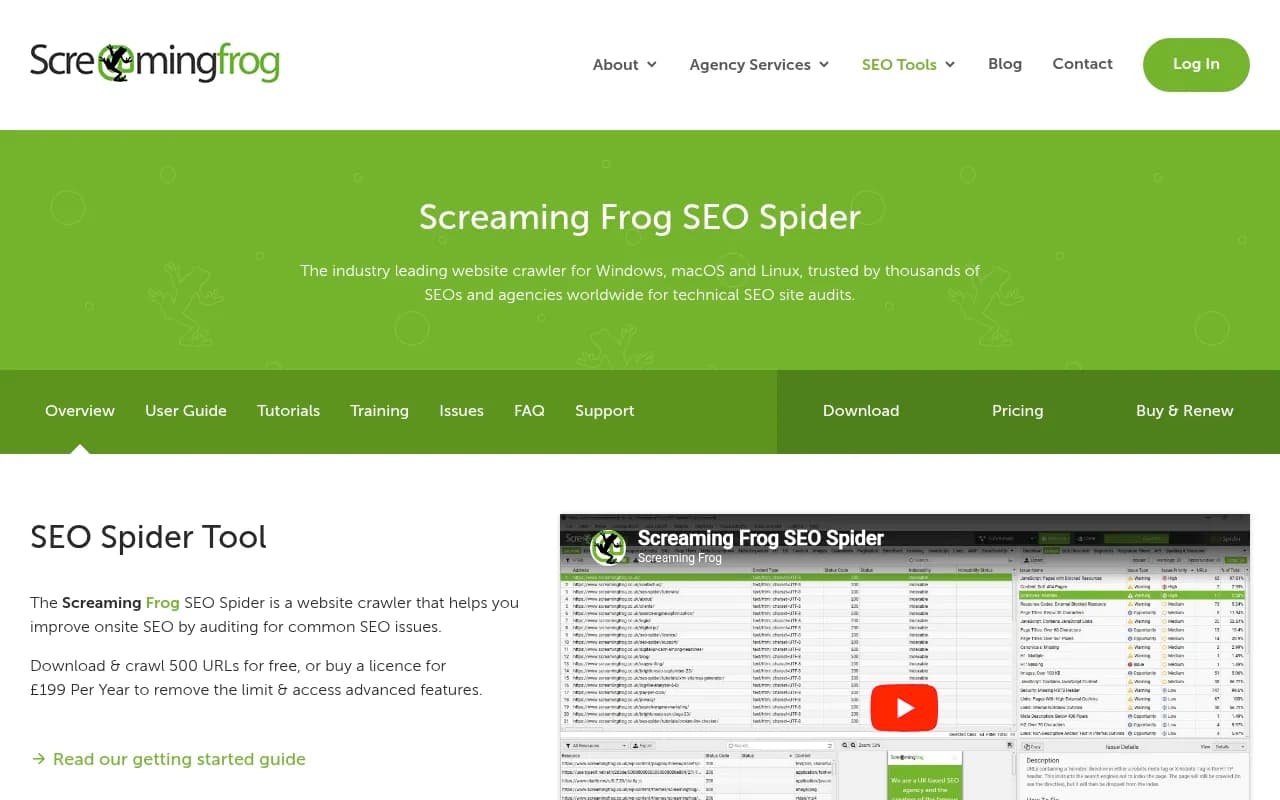
The Ahrefs study explicitly flagged this as untested: schema injected via JavaScript may be treated differently by AI crawlers than schema present in raw HTML. If your schema only exists after hydration, you have no idea what an AI crawler sees. A crawler like Screaming Frog, or a log analyzer, will show you what's actually in the served HTML versus what your browser renders.
5. Check whether AI crawlers even reach your pages
Before any of this matters, confirm AI systems are crawling you at all. If your robots.txt or CDN rules block GPTBot, ClaudeBot, or Google's AI crawlers, your schema debate is academic. Crawler log data settles this in minutes.
The mistakes that actually hurt you
Most schema problems in 2026 aren't missing markup. They're dishonest markup.
- Marking up content that isn't visible to users, which Google classifies as abuse
- Product markup with wrong prices or fake availability, the most serious e-commerce offense
- Applying schema site-wide when it should be limited to pages where it describes the primary content (post-March 2026, supplementary schema on off-topic sections no longer qualifies for rich results)
- Article markup missing publisher and date, which strips out the entity signals AI Mode uses for verification
- Setting schema once and never re-validating. Many sites discover broken markup only when Search Console shows an error spike, weeks after a deploy broke it
The penalty for misuse is loss of rich results, not a ranking drop. But in 2026, the bigger cost is subtler: markup that contradicts your visible content teaches AI systems your entity data can't be trusted.
What I'd actually do
If I were rebuilding a schema strategy from scratch today, it would be small and honest. Organization schema with a full sameAs graph, Person schema on every authored page, Product and Offer markup on commercial pages with accurate live pricing, and Article types on editorial content. Structured with stable @id values and a @graph structure so it reads like a small internal knowledge graph, as Search Engine Land's March 2026 synthesis recommended. No FAQ padding, no wishful-thinking niche markup.
Then I'd spend the time I saved arguing about schema on the things the evidence says actually gate AI citations: ranking in the traditional top 10, publishing the content formats AI is currently citing (product pages and how-tos are carrying AI Overviews right now, per Promptwatch's July 2026 citation-type data), and keeping content fresh enough that AI systems treat it as current.
Schema in 2026 is table stakes, not a lever. It decides whether you're legible to the machines reading your site. It doesn't decide whether they cite you. Confusing those two things is how sites spend a quarter implementing markup while their competitors spend it earning the rankings that actually get cited.
If you want to explore the tooling side further, the GEO software directory at bestgeosoftware.com covers the platforms that track AI visibility, and ai-rank-tools.com lists rank trackers that include AI Mode and AI Overviews data.