Key takeaways
- Otterly.AI is a lightweight, budget-friendly monitoring tool best suited for teams just starting to track AI visibility -- it covers four answer engines and keeps setup simple.
- Brandlight.ai targets brands that want sentiment analysis and reputation-focused monitoring alongside citation tracking, with a slightly broader feature set.
- Neither tool offers content generation, crawler logs, or prompt volume data -- so both are monitoring-only platforms that show you the problem but don't help you fix it.
- For teams that need to actually improve their AI visibility (not just watch it), a platform with built-in optimization capabilities will serve you better in the long run.
- Pricing is a real differentiator: Otterly's premium plans reportedly start around $422/month, while Brandlight targets a similar mid-market audience with different packaging.
Why marketing teams are suddenly shopping for AI monitoring tools
Not long ago, "where do we rank?" meant Google. Now it means something more complicated. A buyer searching for the best project management software for remote teams doesn't necessarily open a browser and scroll through blue links. They ask ChatGPT. They ask Perplexity. They ask Google's AI Overview. And whatever those models say shapes the shortlist.
That shift has created a whole new category of software: AI visibility monitoring. Tools that track what AI engines say about your brand, which competitors they recommend instead, and how often your website gets cited in AI-generated answers.
Brandlight.ai and Otterly.AI are two of the more accessible entrants in this space. Both target growing marketing teams rather than enterprise buyers. Both promise to show you where you stand in AI search. But they take meaningfully different approaches, and the differences matter depending on what you actually need.
This guide breaks down both tools honestly -- what they do, where they fall short, and how to decide which one (if either) belongs in your stack.
What Otterly.AI actually does
Otterly.AI positions itself as a straightforward AI search monitoring platform. The pitch is simple: set up your brand, define your prompts, and track how often you appear in answers from ChatGPT, Perplexity, Google AI Overviews, and a handful of other engines.
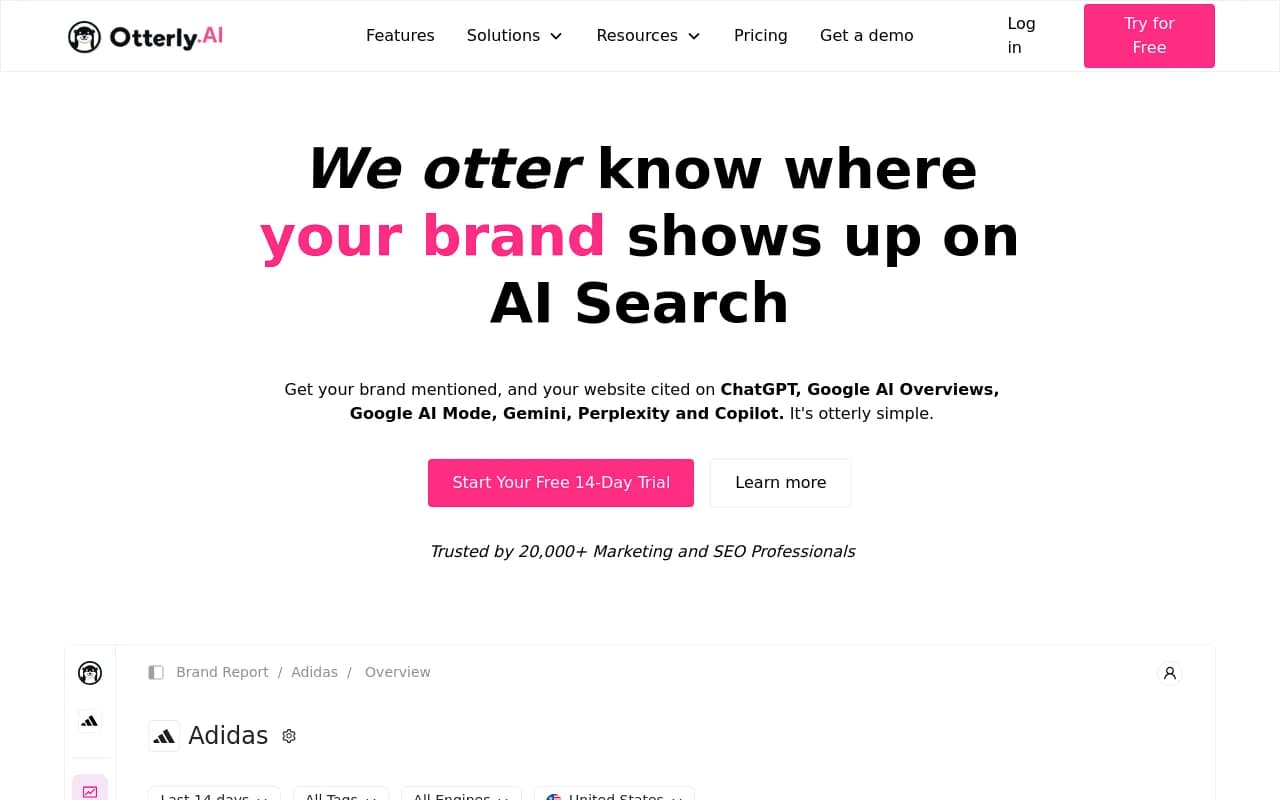
The tool covers four answer engines -- which is on the lower end compared to platforms that monitor eight or more. For teams that primarily care about ChatGPT and Perplexity (the two highest-traffic AI search surfaces right now), that's probably fine. For teams that want visibility into Claude, Gemini, Grok, and DeepSeek simultaneously, it starts to feel limiting.
Where Otterly genuinely earns its reputation is accessibility. The interface is clean, onboarding is fast, and the learning curve is low enough that a marketing manager can get it running without looping in a developer. Multiple third-party reviews in 2026 describe it as "cost-effective" and a good entry point for teams exploring AI visibility tracking without a major budget commitment.
The pricing reality is a bit more nuanced, though. While Otterly markets itself as accessible, premium plans reportedly start around $422/month -- which isn't exactly pocket change for a tool that only monitors and doesn't help you act on what it finds. That said, lower-tier plans exist for teams with fewer prompts to track.
What Otterly does well
- Fast setup with minimal configuration required
- Clean, readable dashboards that non-technical users can navigate
- Solid coverage of the two highest-traffic AI surfaces (ChatGPT and Perplexity)
- Good for teams that want a simple "are we being mentioned?" answer
Where Otterly falls short
- Only four answer engines covered -- no Grok, DeepSeek, Mistral, or Meta AI
- No content generation or optimization features
- No crawler logs or agent analytics
- No prompt volume data to help prioritize which queries matter most
- Monitoring-only: it shows you the gap but doesn't help you close it
What Brandlight.ai actually does
Brandlight.ai comes at AI visibility from a slightly different angle. Where Otterly focuses on citation tracking and mention rate, Brandlight leans into brand sentiment -- how AI models talk about your brand, not just whether they mention you.
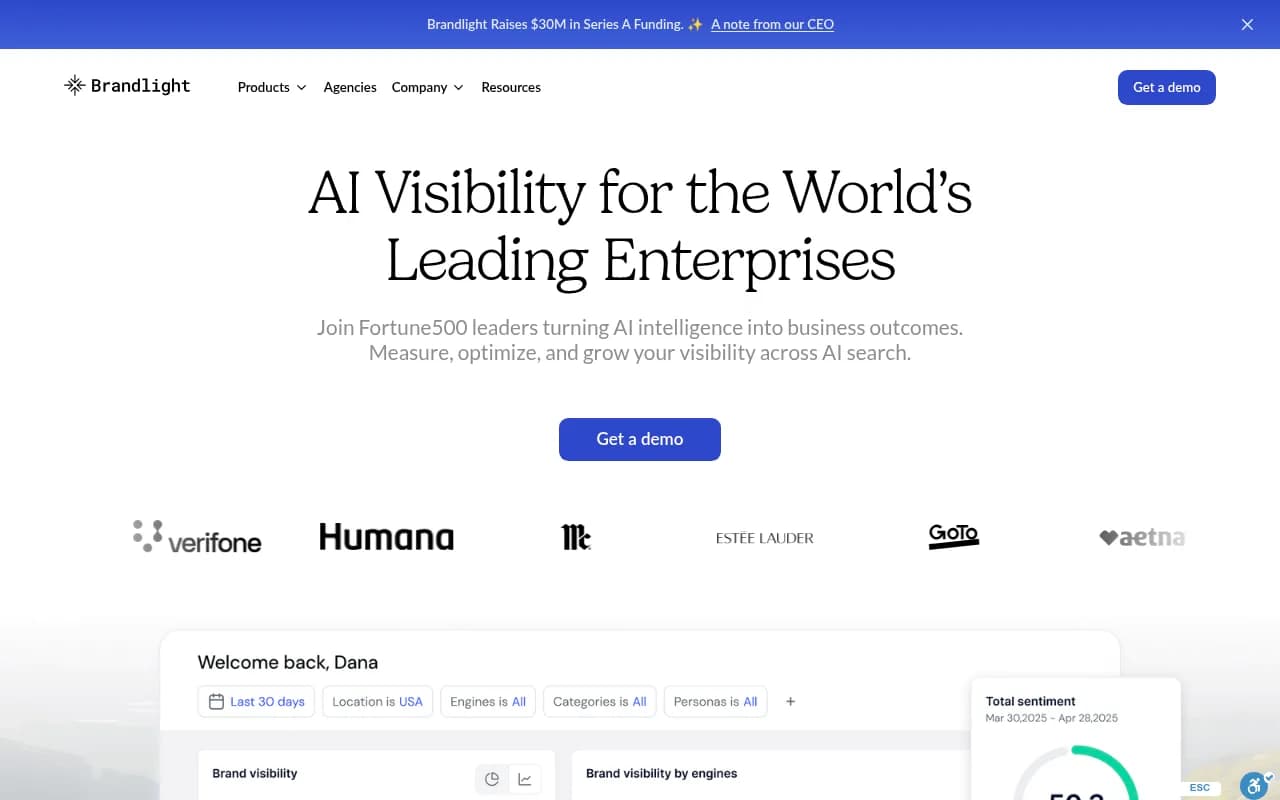
This makes Brandlight a reasonable fit for PR-adjacent teams and brand managers who care about narrative control as much as raw citation counts. If your concern is "ChatGPT is recommending us but describing our product inaccurately," Brandlight's sentiment layer is more useful than a tool that only counts mentions.
The platform also covers more AI engines than Otterly, which matters if your audience is spread across multiple AI surfaces. Coverage of models like Claude and Gemini alongside ChatGPT and Perplexity gives a more complete picture of your AI presence.
That said, Brandlight shares the same fundamental limitation as Otterly: it's a monitoring platform. You can see what's happening, but the tool doesn't generate content to fix gaps, doesn't show you which prompts have the highest search volume, and doesn't provide crawler logs to understand how AI bots are actually interacting with your site.
What Brandlight does well
- Sentiment analysis on top of citation tracking -- useful for brand reputation work
- Broader engine coverage than Otterly
- Good for teams where the "how are we described" question matters as much as "are we cited"
- Reasonably clean reporting for stakeholder presentations
Where Brandlight falls short
- No content generation or gap-filling capabilities
- No prompt volume or difficulty scoring
- No crawler log visibility
- Limited optimization workflow -- you still need to figure out what to do with the data yourself
Head-to-head comparison
Here's a direct feature comparison across the dimensions that matter most for a growing marketing team:
| Feature | Otterly.AI | Brandlight.ai |
|---|---|---|
| AI engines monitored | 4 | More (includes Claude, Gemini) |
| Citation tracking | Yes | Yes |
| Sentiment analysis | Basic | Yes (core feature) |
| Prompt volume data | No | No |
| Content generation | No | No |
| Crawler / agent logs | No | No |
| Competitor heatmaps | Limited | Limited |
| Reddit / YouTube tracking | No | No |
| Multi-language support | Limited | Limited |
| Entry-level pricing | Lower tiers available | Mid-market |
| Premium plan pricing | ~$422/month | Mid-market |
| Best for | Quick setup, basic monitoring | Brand sentiment + citation tracking |
The honest summary: both tools solve the "what is AI saying about us?" question reasonably well. Neither solves the "what do we do about it?" question at all.
The monitoring-only problem
This is worth dwelling on because it affects how you should think about both tools.
Most AI visibility platforms launched in 2024-2025 were built around a single idea: show marketers the data. That was genuinely useful at the time, because most marketing teams had no visibility into AI search at all. Any data was better than no data.
But in 2026, the question has shifted. Teams that have been monitoring for a year now know they have gaps. They know competitors are getting cited more often. What they need is a way to close those gaps -- and monitoring-only tools don't provide that.
Brandlight and Otterly both fall into this category. They're diagnostic tools. They tell you you have a fever; they don't prescribe treatment.
If your team is at the "we need to understand the landscape" stage, either tool can serve that purpose. If you're past that stage and need to actually move the needle on AI citations, you'll outgrow both of them quickly.
Who should use Otterly.AI
Otterly makes the most sense for:
- Small marketing teams with limited budgets who want a low-friction way to start tracking AI visibility
- Teams that primarily care about ChatGPT and Perplexity and don't need broader engine coverage
- Marketers who want to show stakeholders a simple dashboard without a steep learning curve
- Teams in the early stages of building an AI visibility practice who need baseline data before deciding on a bigger investment
It's a reasonable starting point. Just go in knowing it's a starting point, not a destination.
Who should use Brandlight.ai
Brandlight makes more sense for:
- Brand and PR teams where sentiment and narrative accuracy matter as much as citation frequency
- Companies dealing with AI models that mention them but describe them incorrectly
- Teams that need broader engine coverage than Otterly provides
- Marketers who want to track brand perception across AI surfaces, not just presence
If your primary concern is "how is our brand being characterized in AI answers," Brandlight's sentiment layer gives you something Otterly doesn't.
What to consider beyond these two tools
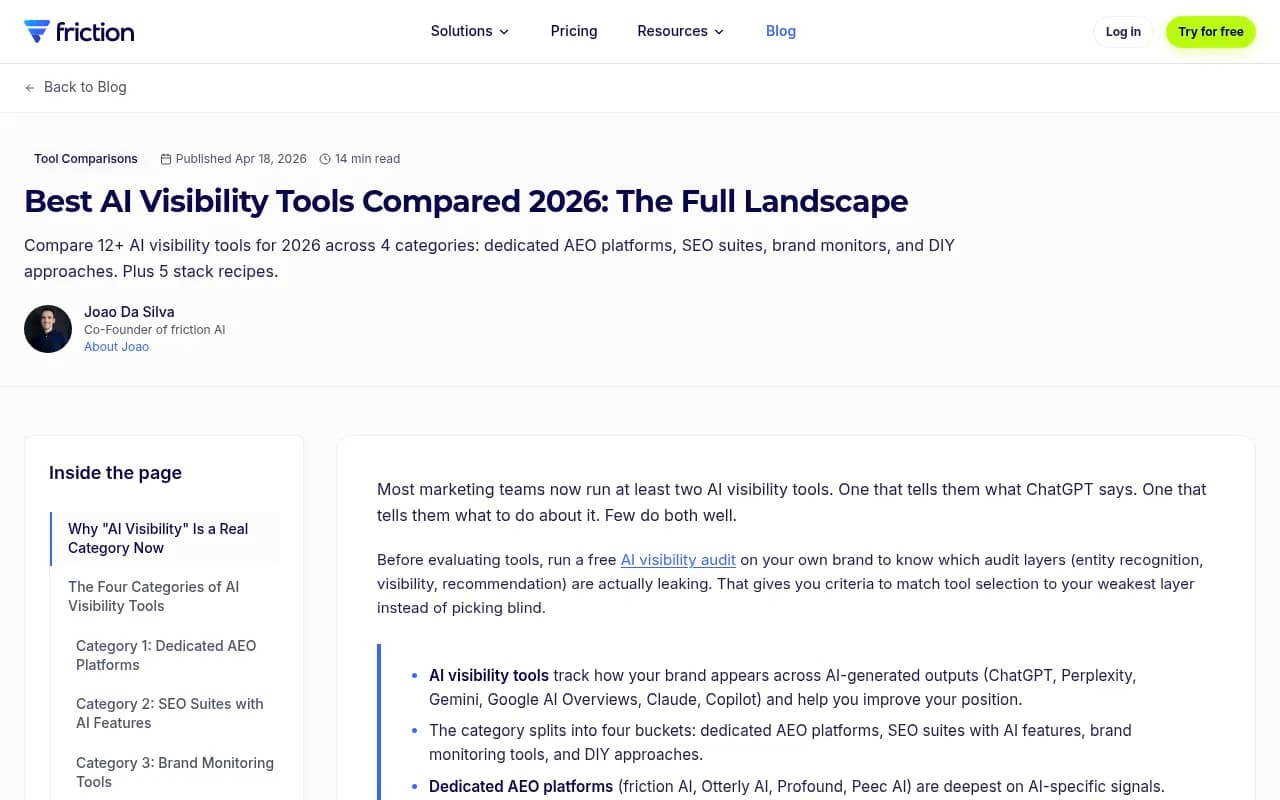
Both Brandlight and Otterly are solid for what they are. But if you're a growing marketing team that needs to actually improve AI visibility -- not just measure it -- it's worth knowing what a more complete platform looks like.
Platforms that go beyond monitoring typically offer:
- Answer gap analysis that shows which prompts competitors rank for but you don't
- Content generation tools that create articles and briefs designed to fill those gaps
- Crawler logs that show which AI bots are visiting your site, which pages they're reading, and when those pages move from crawl to citation
- Prompt volume and difficulty scoring so you can prioritize high-value, winnable queries
- Page-level citation tracking that connects specific content to specific AI citations
Promptwatch is one platform that covers the full loop -- from identifying gaps to generating content to tracking whether that content gets cited. It's worth a look if you find yourself hitting the ceiling of what a monitoring-only tool can tell you.

Other tools worth knowing about in this space:
- Profound AI for enterprise teams with complex multi-brand needs
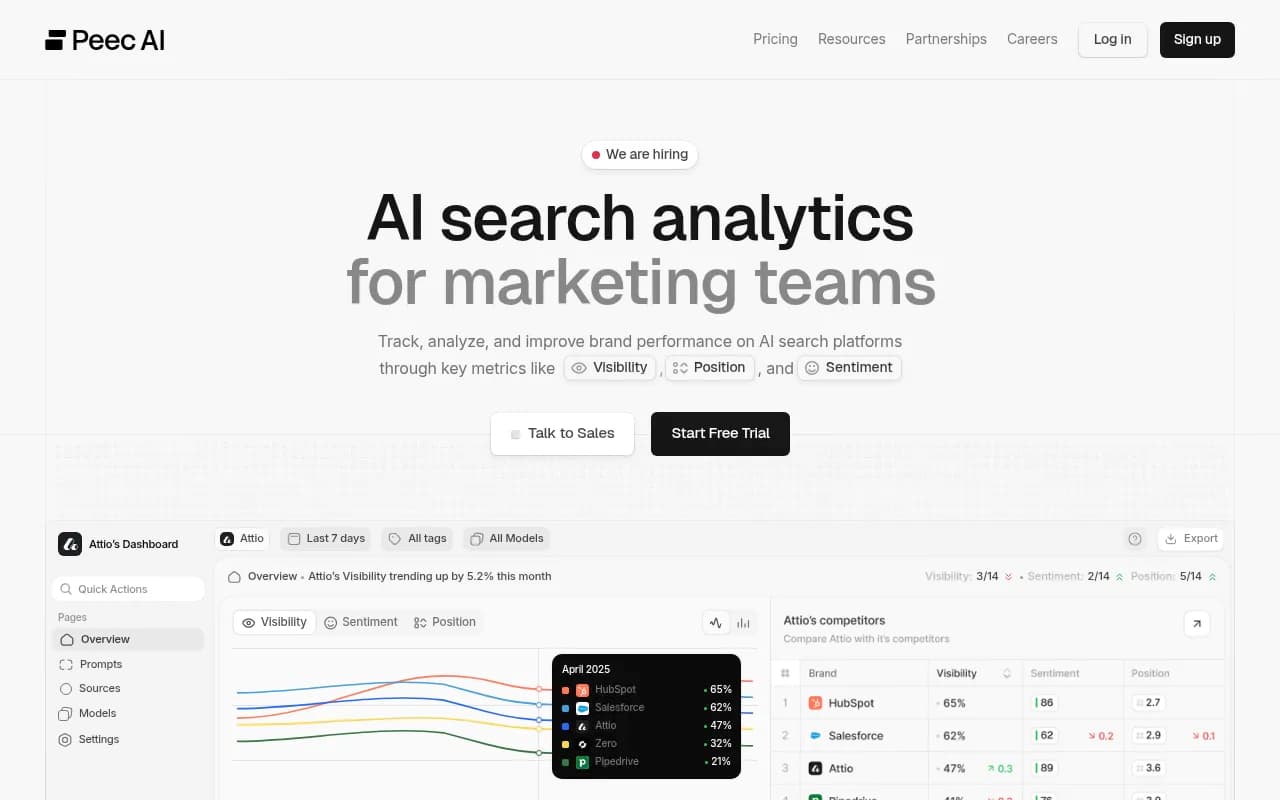
- Peec AI for straightforward monitoring at a lower price point
- Scrunch AI for teams that want monitoring with some optimization guidance
Making the call
If you're choosing between Brandlight.ai and Otterly.AI specifically, here's the short version:
Pick Otterly if you want the fastest path to "we are now tracking AI visibility" with minimal setup and a clean interface. It does the basics well and doesn't overcomplicate things.
Pick Brandlight if sentiment and narrative accuracy are part of your brief -- if you need to know not just that you're being mentioned, but how you're being described.
Don't pick either if what you actually need is to improve your AI visibility. Both tools will give you a clear picture of the problem. Neither will help you solve it. For that, you need a platform with content optimization and generation built in -- and that's a different category of tool entirely.
The good news is that the AI visibility tooling market has matured enough in 2026 that you don't have to settle for monitoring-only. The question is whether your team is ready to move from "tracking the problem" to "fixing it."