Key takeaways
- Local Pack rankings still run on Google Business Profile signals (32% of ranking weight per Whitespark's 2026 survey), but AI search visibility weighs on-page and citation signals far more heavily, so your tool stack needs to cover both.
- A Foxxr study of 50 home service businesses found 18% captured nearly 29% of all AI Overview recommendation points, while 26% scored below 40 (functionally invisible) — AI local visibility is winner-take-most, not evenly distributed.
- Geo-grid rank trackers like Local Falcon now bundle AI engine tracking (ChatGPT, Gemini, Perplexity, Google AI Mode) alongside the Map Pack, so you don't need a separate tool just to see if you're showing up in AI answers.
- Review recency matters more than volume: 74% of consumers want to see reviews from the last three months, so a listings/review platform that automates review requests is non-negotiable, not a nice-to-have.
- For the AI-citation side specifically, a dedicated GEO platform like Promptwatch fills a gap that local SEO tools don't touch: crawler logs, content gap analysis, and automated content generation tied to what AI models actually cite.
Why local SEO and GEO stopped being two separate jobs
A homeowner with a broken water heater used to type "emergency plumber near me" into Google and scroll the Map Pack. A growing number now ask ChatGPT or Google's AI Mode the same question conversationally, and the answer they get back cites a mix of your Google Business Profile, your website, review sites, and sometimes a "best of" roundup you've never heard of. Those are two different ranking systems with overlapping but not identical inputs, and most home services businesses are only optimizing for one of them.
Whitespark's 2026 Local Search Ranking Factors survey, which pulls input from 47 local SEO experts across 187 ranking signals, found a clear split. For the traditional Local Pack and organic local results, GBP signals carry 32% of the weight, more than double on-page signals at 15%. But when the same experts scored factors for AI search visibility specifically, the weighting flips: on-page signals jump to 24%, and citation signals (13%) and link signals (13%) together outweigh GBP signals (12%). Three of the top five AI-visibility factors are tied to citations. That's not a small difference. It means the GBP-first playbook that wins Map Pack rankings is not the same playbook that gets you cited when someone asks an AI assistant for a recommendation.
What's actually driving rankings in 2026
A few specific findings from this year's data are worth building your strategy around rather than just your tool stack:
- Primary GBP category is the single most influential individual factor in the Local Pack, not tied for first with anything else. If you're a "General Contractor" when you should be a "Deck Builder," that's costing you.
- Business hours jumped 64 spots in the 2026 factor rankings, from #85 to #21. Google is increasingly penalizing listings that show as closed at the moment someone searches, which matters a lot for emergency trades like plumbing, HVAC, and electrical where "closed" signals can cost a job on the spot.
- Four additional GBP categories is the sweet spot. BrightLocal data cited in the same research shows businesses with exactly four secondary categories average the best Map Pack position (5.9), with fewer or more categories performing worse.
- Visible addresses outperform hidden ones, even for service-area businesses, ranking as the 7th most influential factor overall. The common advice to hide your address if you're a mobile service may be costing you rank.
- A 56% of GBP profiles remain incomplete according to Digital Applied's 2026 statistics, missing photos, categories, or descriptions, while optimized profiles average 2,700 monthly views with 41% year-over-year growth in actions like calls and direction requests.
AI visibility is its own, more concentrated game
The Foxxr 2026 "Share of AI Voice" study used Local Falcon's geo-grid tracking to audit 50 home service businesses across 12 states and 15 trades for their presence in Google AI Overviews. The results are stark: 86% of businesses appeared somewhere in AI Overviews, but only 74% had enough grid coverage to count as a real recommendation rather than a stray mention. Nine businesses scored a perfect 100 and, between them, captured 28.5% of all points in the study. Seven scored zero for their own core service in their own market. One business with 181 reviews and a 4.8-star average still scored zero, which the report attributes to entity confusion and inconsistent geographic anchoring rather than reputation. Reviews alone don't fix AI visibility if your NAP data and service-area claims are muddled.
Promptwatch's own data on ChatGPT citation behavior backs up why specificity matters. Looking at citations from late September through early October 2026, product and landing pages together account for roughly 39% of all classified citations, and for commercial-intent prompts like "best plumber near me"-style queries, product pages, landing pages, listicles, and comparison pages make up about 70% of what gets cited. That means your individual service pages (by city, by service) need to read like factual, specific landing pages ChatGPT can quote directly, not generic "about us" copy.
The same Promptwatch data shows something useful for prioritization: when someone asks about your business by name, ChatGPT narrows to far fewer sources, 40.7% of branded responses cite five or fewer domains, compared to just 21.3% for generic "best contractor in [city]" queries that typically cite ten or more domains. In other words, once a prospect knows your name, your own site, your reviews, and a couple of directories decide the answer. Before they know your name, you're competing with dozens of other cited sources and need a broader presence across listicles and comparison content you don't control directly.
The tool categories you actually need
Most home services businesses don't need one platform, they need four capabilities that sometimes live in one tool and sometimes don't: listings and citation management, review generation, geo-grid rank and AI visibility tracking, and GEO content optimization.
Listings, citations, and GBP management
BrightLocal positions itself as the only full-service local platform and publishes direct comparisons against Yext, Moz Local, Whitespark, and Birdeye on pricing and feature depth. It handles GBP audits, citation building, and rank tracking across the Map Pack, organic, and mobile.
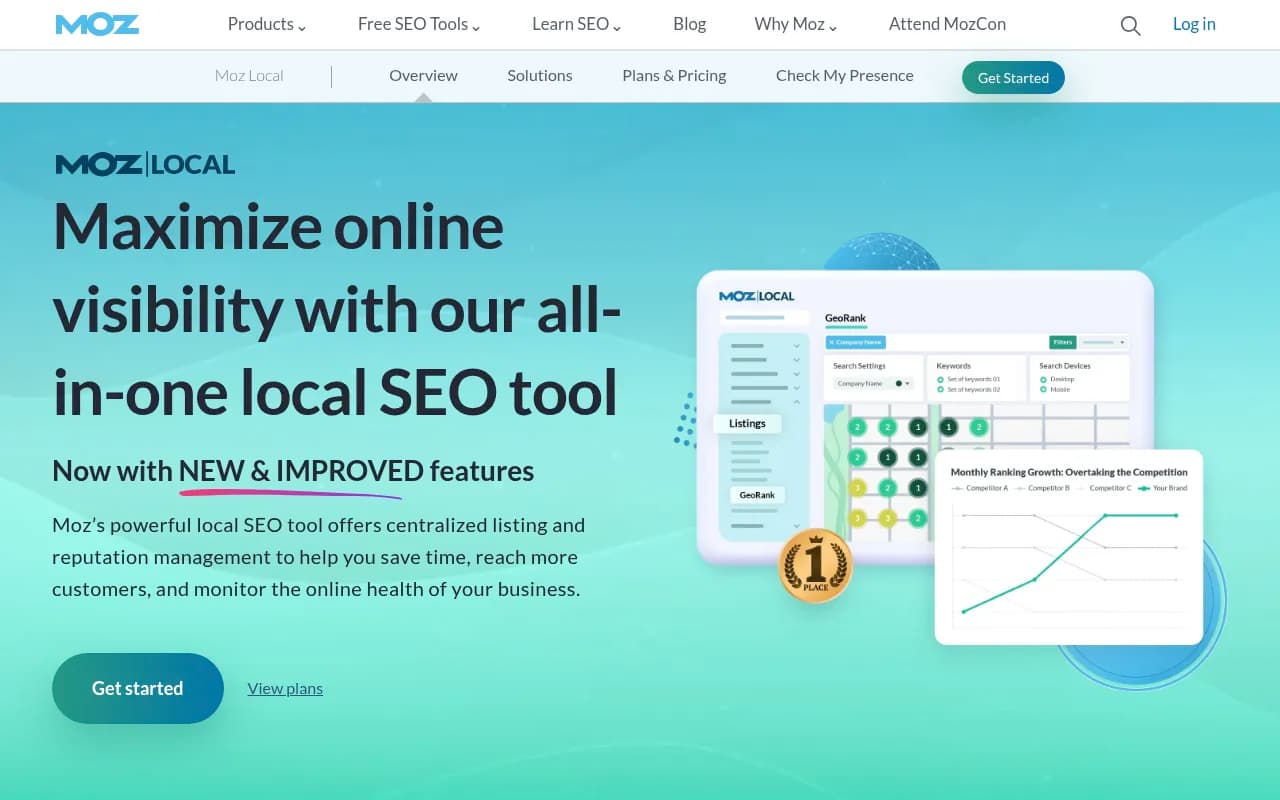
Moz Local is a simpler, cheaper option focused mostly on syncing listings across directories and keeping NAP data consistent, which matters given how many profiles (56% per the Digital Applied stat above) are left incomplete.
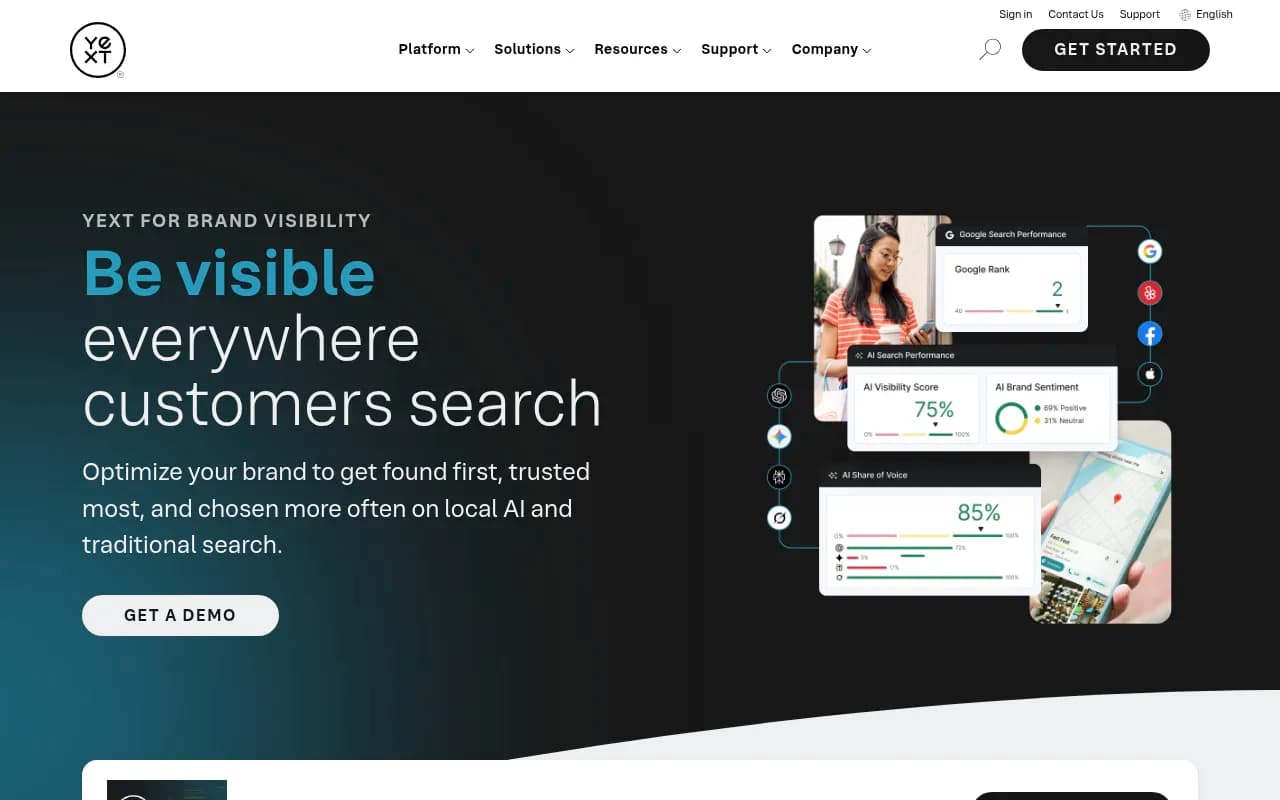
Yext is built more for multi-location brands with listings starting around $499/year per location, which makes sense for a franchise but is overkill for a single-location contractor.
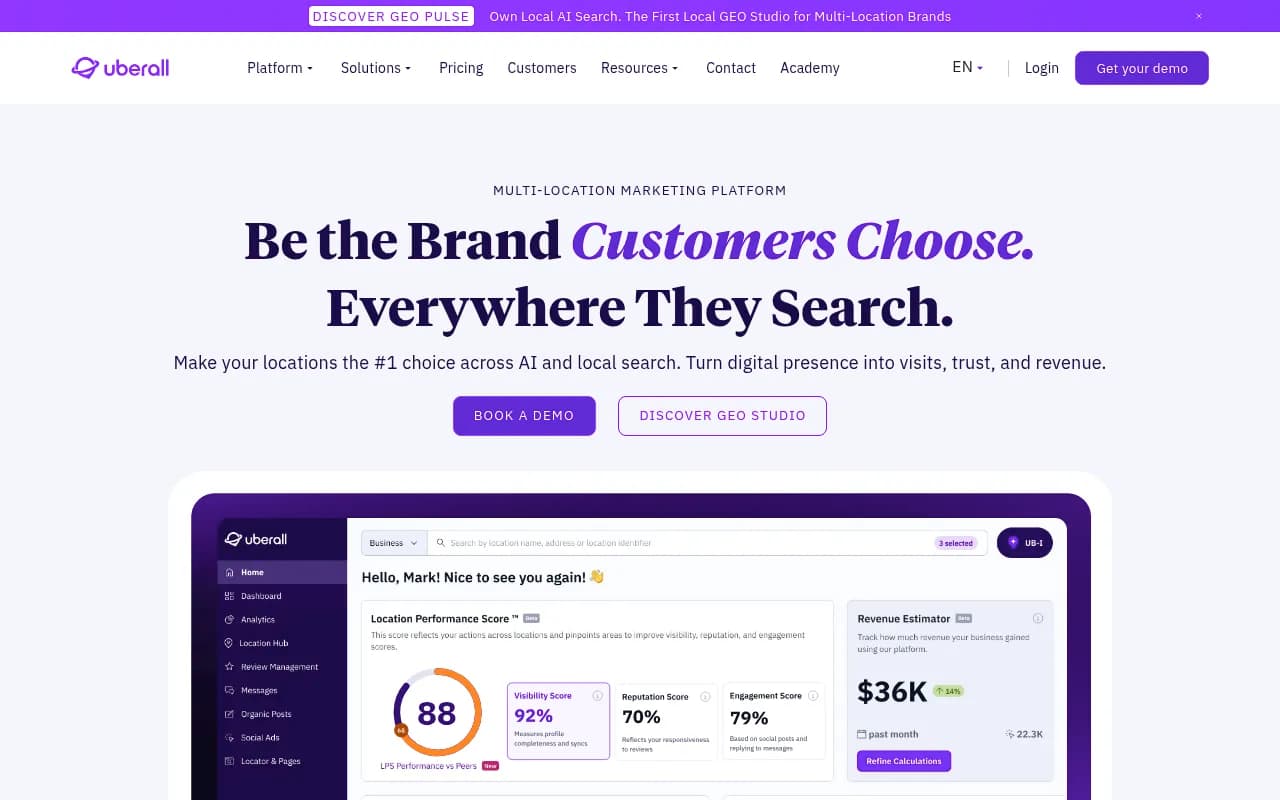
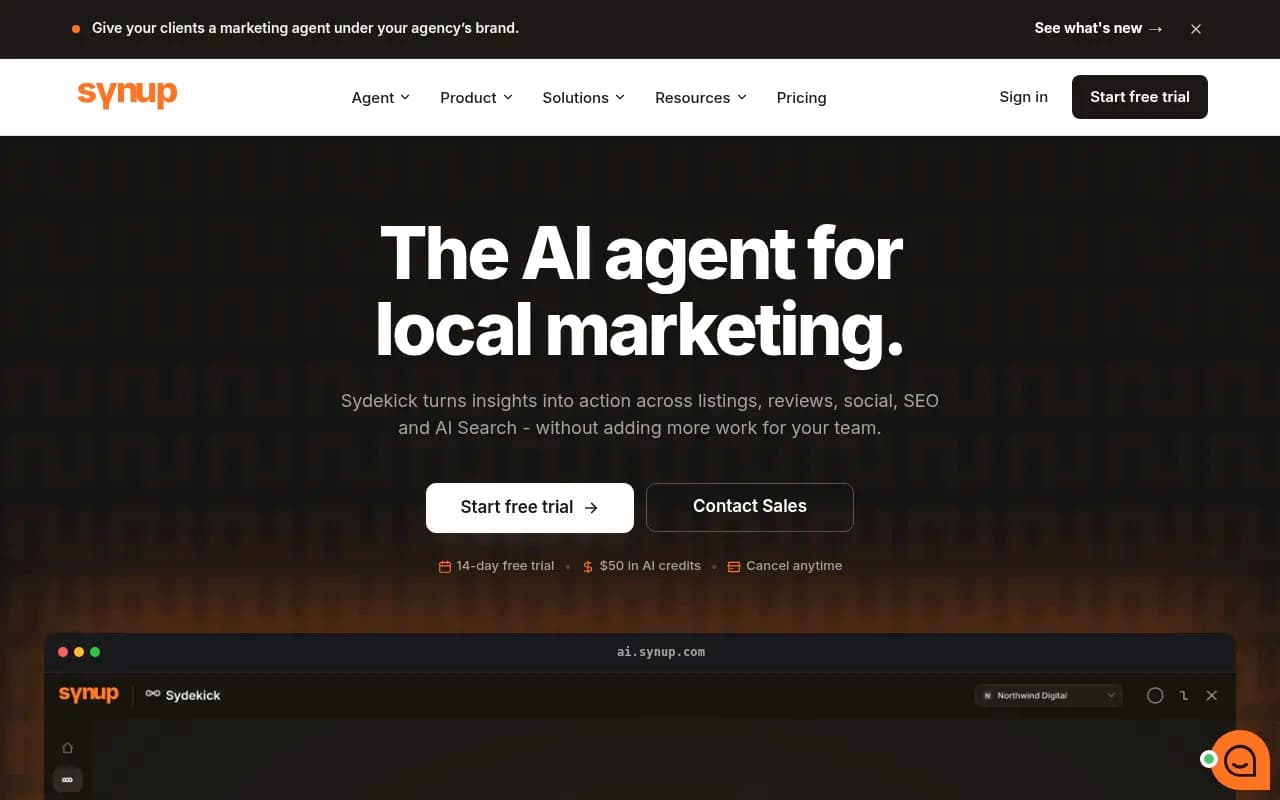
Uberall and Synup both take a more automated, AI-agent approach to running listings and reviews across locations, which is worth a look if you're managing more than a handful of service areas or franchise territories.
Review generation and reputation
Review recency is now a ranking input, not just a trust signal. BrightLocal's own 2026 consumer survey found 74% of people want to see reviews from the last three months, and dominant contractors in competitive markets tend to carry 100 to 300+ reviews. That's hard to do manually.
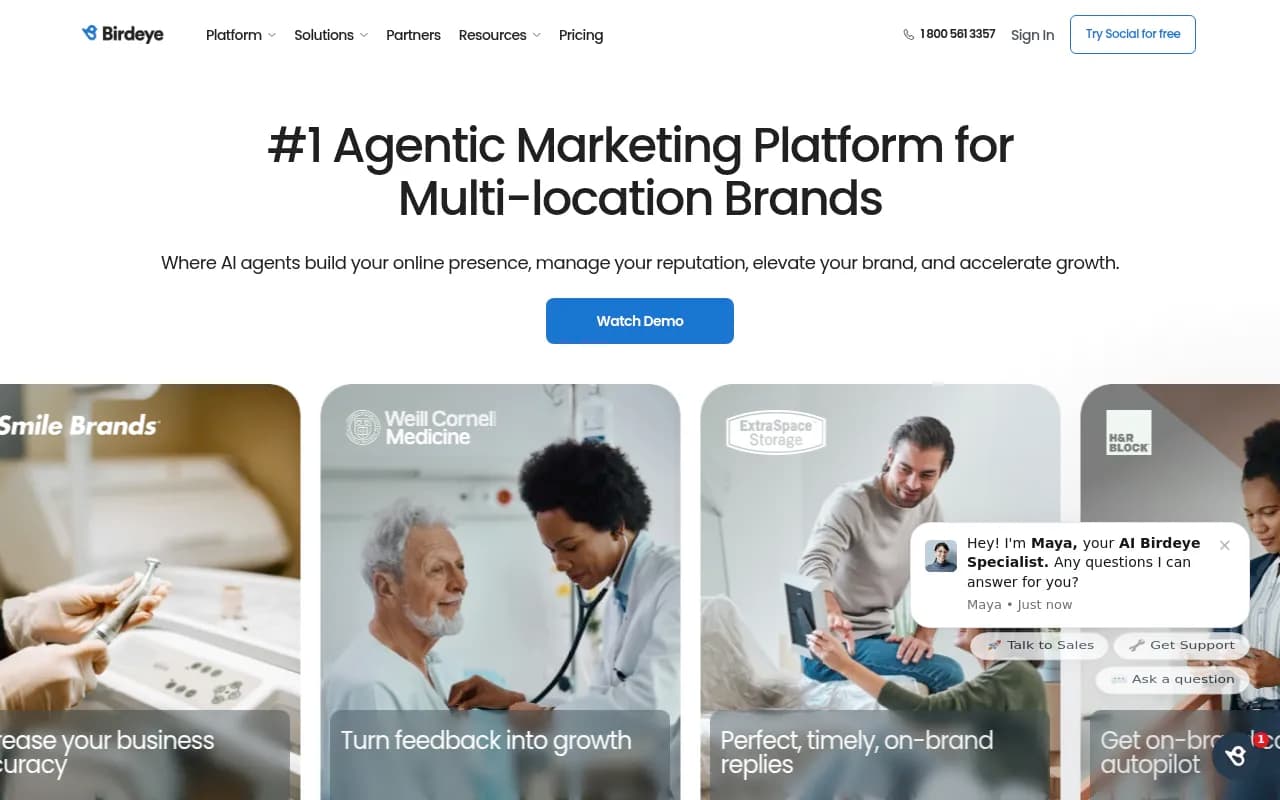
Birdeye and Podium both automate review requests tied to completed jobs, with Birdeye's plans typically running $300 to $400+ per month depending on contract length.
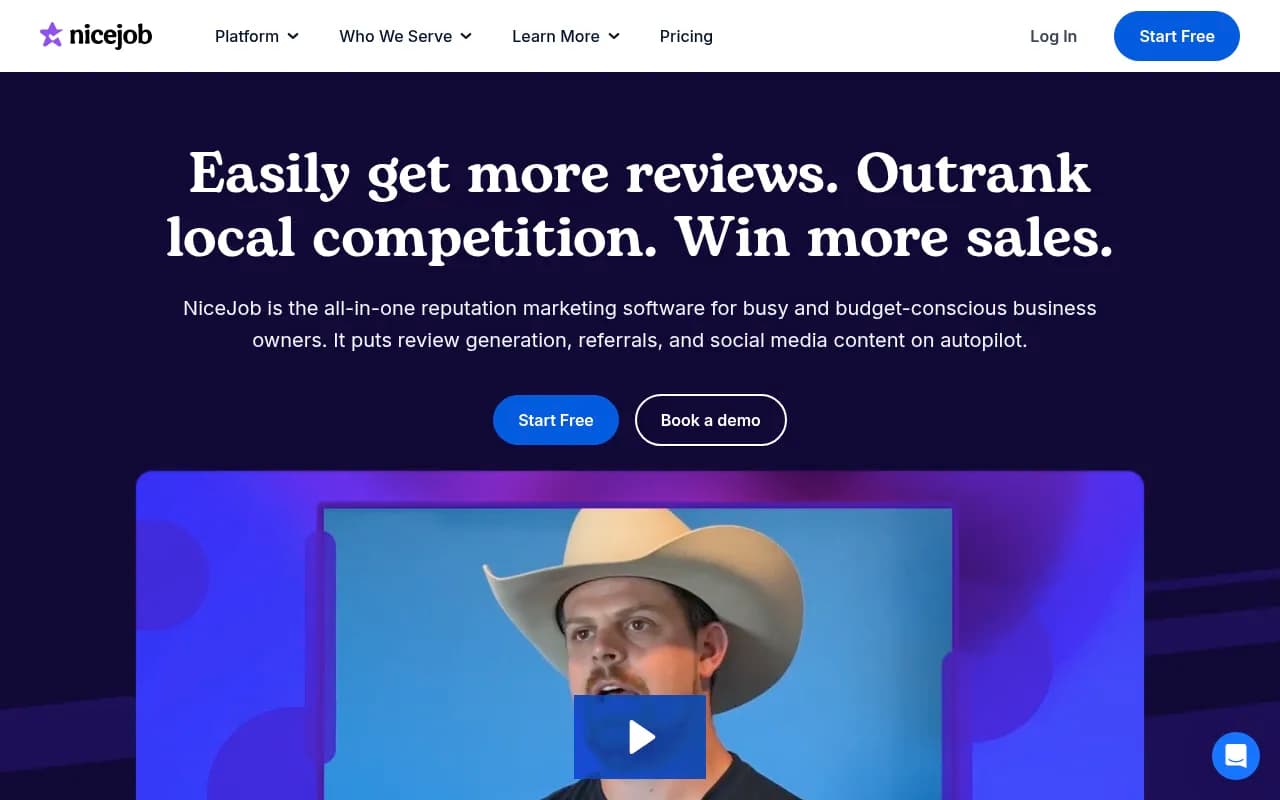
NiceJob is a lighter, cheaper option built specifically for service businesses wanting review and referral automation without the full reputation-management suite.
Geo-grid rank tracking and AI visibility
This is where the category has changed the most. Local Falcon used to be a pure Map Pack geo-grid tracker; it now tracks AI visibility across eight engines, including ChatGPT, Gemini, Perplexity, Grok, Google AI Mode, and Apple Intelligence, on every plan, with no separate add-on fee. Pricing is credit-based, starting at $24.99/month for 7,500 credits up to $199.99/month for 63,150 credits, with annual and pay-as-you-go options too. It also tracks Apple Maps, which almost nothing else in this space does. It won't fix a GBP listing or reply to a review for you though, it's purely measurement.
Dedicated GEO: when you need content, not just a dashboard
Here's the gap. Geo-grid tools tell you whether you're showing up in AI Overviews. They don't tell you why, and they definitely don't write and publish the content that fixes it. That's a different job, and it's the one Promptwatch is built for.

For a home services business, the practical value looks like this: Promptwatch's crawler log tracking shows you when ChatGPTBot, PerplexityBot, or Google's AI crawlers actually visit your service pages and whether they hit errors, which explains the "why" behind a visibility score in a way a geo-grid scan can't. Its content gap analysis compares your service pages against what AI models are actually citing for queries like "best roofing company in [city]" and scores the coverage gap, and its Content Agents can draft and publish the missing comparison or FAQ pages straight to your CMS. Given that Promptwatch's own citation data shows comparison and listicle content account for a meaningful share of commercial-intent AI citations, having a tool that both measures the gap and closes it matters more for a multi-location or franchise home services brand than for a single-truck operation, where a geo-grid tool alone might be enough.
How the categories compare
| Tool | Primary job | AI engine tracking | Starting price | Best fit |
|---|---|---|---|---|
| BrightLocal | Listings, GBP audits, rank tracking | Limited | Tiered, bundle pricing | Agencies managing multiple local clients |
| Local Falcon | Geo-grid Map Pack + AI visibility scans | Yes, 8 engines included | $24.99/mo | Measuring where you rank, city block by city block |
| Moz Local | Listings sync and NAP consistency | No | Low-cost, entry tier | Single-location businesses needing basics covered |
| Birdeye / Podium | Review generation and reputation | No | ~$300-400/mo | Multi-tech teams needing automated review flow |
| NiceJob | Review and referral automation | No | Low-cost | Small contractors wanting simple automation |
| Synup / Uberall | Multi-location listings and review management | Partial | Custom | Franchises and multi-territory service brands |
| Promptwatch | AI visibility monitoring, content gap analysis, automated content | Yes, ChatGPT, Gemini, Claude, Perplexity, AI Overviews, AI Mode, and more | $95/mo | Businesses wanting to close the gap AI visibility tools only measure |
Building a stack that fits your size
A single-truck plumber or electrician probably needs three things: a complete, correctly categorized GBP profile, an automated review flow (NiceJob or Podium), and a quarterly geo-grid check with Local Falcon's entry tier to see where the Map Pack sits. That's it. You don't need enterprise listings management for one location.
A multi-location home services brand, five to twenty locations, is where the stack gets more interesting. Uberall or Synup handle listings and reviews across territories, Local Falcon's Pro or Premium tier gives per-location grid coverage including AI engine checks, and something like Promptwatch becomes worth the monthly cost once you have enough service pages (by city, by service type) that manually auditing each one for AI citation gaps stops being realistic. If you're skeptical of software doing the content work, start with Promptwatch's free AI SEO Audit before committing to a paid tier.
For franchise systems or home services brands running national campaigns, the calculus shifts toward agencies rather than software alone. Thrive Internet Marketing Agency, Blue Corona, and WebFX all show up repeatedly in 2026 rankings for home services SEO specifically because they combine the GBP and citation work with the newer AI-visibility side, something a single software subscription can't replicate without a person driving it. If you'd rather hand the whole AI visibility and content side to a team rather than run the tools yourself, that's the kind of work 1001 SEO Media handles for clients, combining technical SEO with the GEO side so the content work and the measurement aren't disconnected from each other.
A quick gut check before you buy anything
Before signing up for another monthly subscription, run through this:
- Is your primary GBP category exactly right, and do you have four (not two, not ten) secondary categories?
- Are your hours accurate for emergency availability? That single factor jumped 64 spots in this year's ranking factor survey for a reason.
- Are you getting four or more new reviews a month, and are you responding to all of them?
- Does your service-area address situation match what the data says actually ranks (visible, specific, verifiable) rather than what conventional SAB advice suggests?
- When you ask ChatGPT or Google's AI Mode a query a customer might actually type, do you show up at all, and if you do, which page of yours does it cite?
That last question is the one most home services businesses still can't answer, and it's the one that separates a local SEO checklist from an actual GEO strategy. If you want a broader view of what's available in that category beyond what's covered here, the directory at bestgeosoftware.com is a reasonable place to keep browsing.