Key takeaways
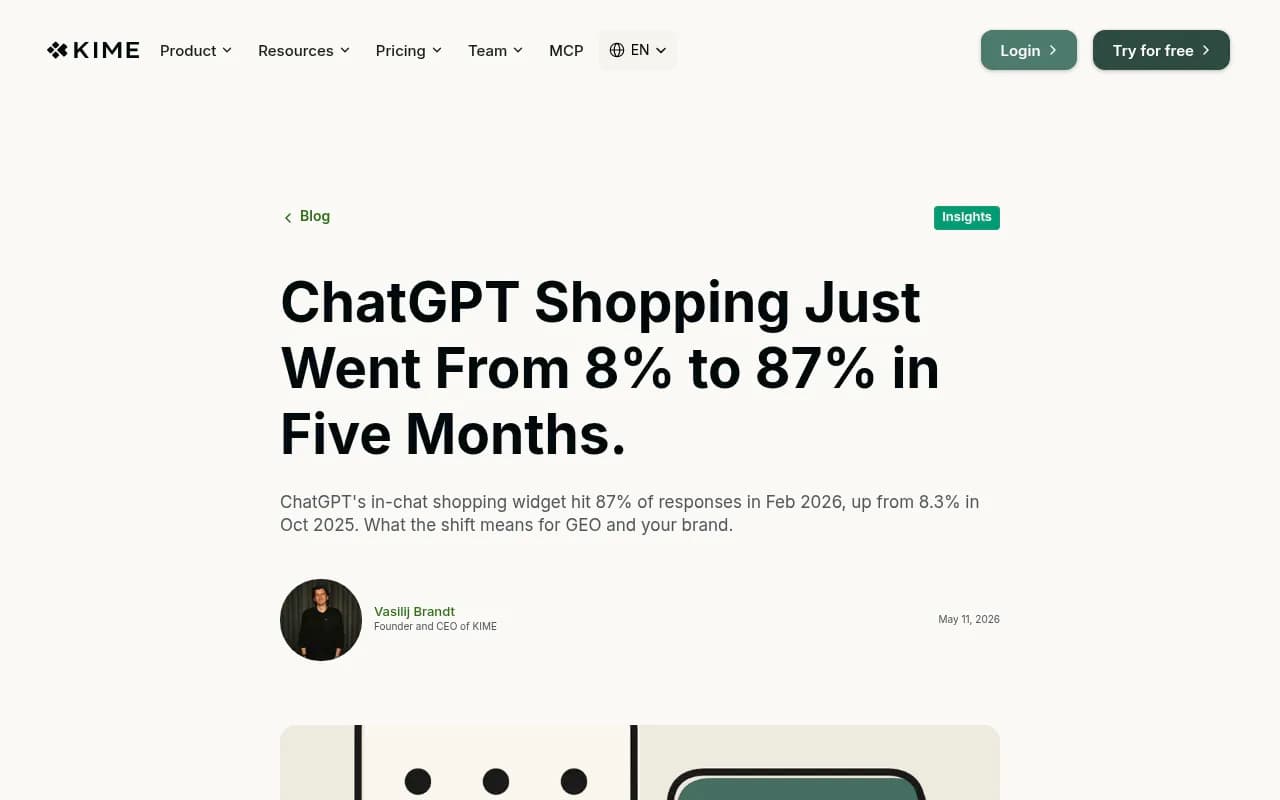
- ChatGPT's in-chat shopping widget jumped from 8.3% of product responses in October 2025 to 87% in February 2026, a roughly 10x increase in five months (Evertune data via KIME).
- Health and fitness is the single most "shoppable" category at 99%, with 8 of 11 tracked categories now above 90%.
- Luxury and lifestyle (48%) and groceries and everyday needs (40%) lag far behind, despite both roughly 10x'ing since October 2025.
- Physical products in general trigger shopping experiences at roughly 56%, but software, SaaS, and financial products are nearly invisible, at 0.1% and effectively zero respectively.
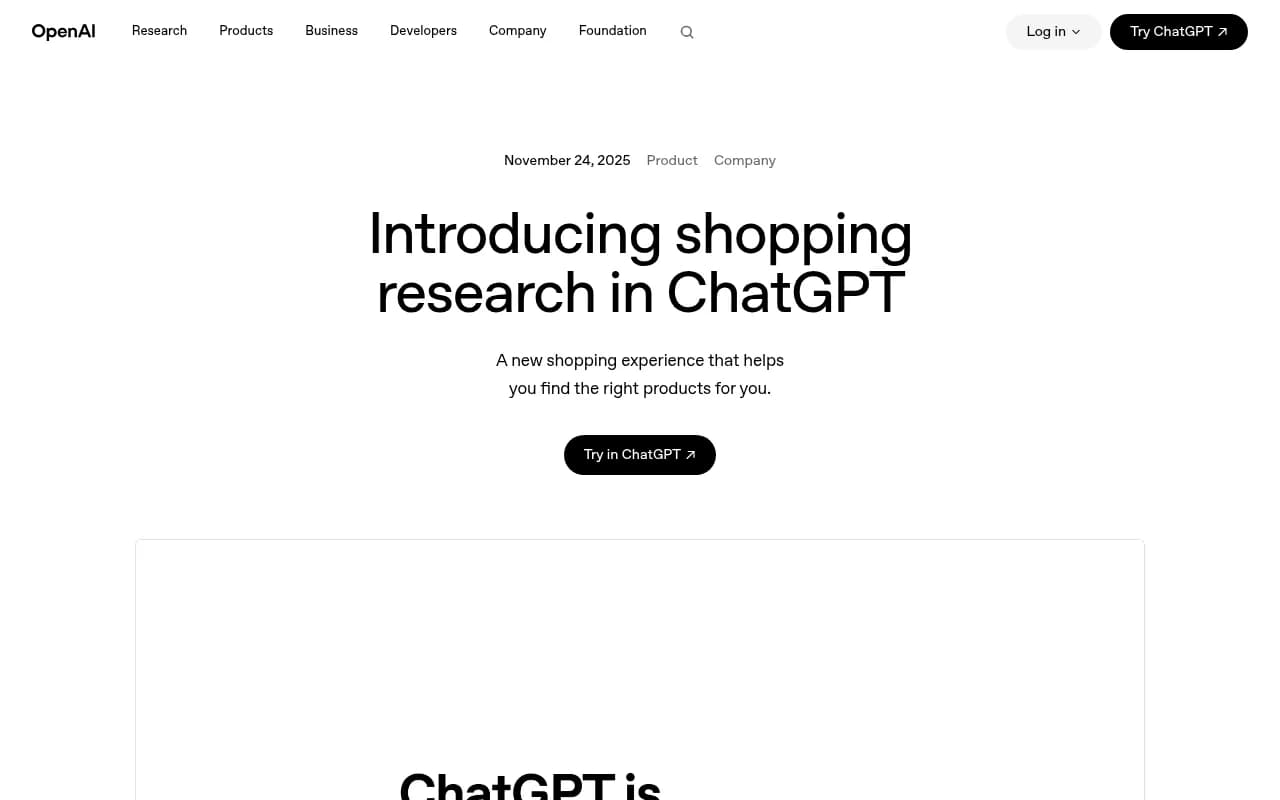
- OpenAI's November 2025 launch of Shopping Research performs especially well in detail-heavy categories: electronics, beauty, home and garden, kitchen and appliances, and sports and outdoor.
Why category matters more than brand right now
If you sell a physical product, ChatGPT has quietly become a storefront. If you sell software, it mostly hasn't, and it might not for a while. That's the single most useful thing to understand about ChatGPT Shopping heading into 2026: this isn't a uniform rollout across every kind of purchase. It's lopsided, and the gap between the top and bottom categories is enormous.
The context here is a genuinely fast shift. OpenAI introduced the in-chat shopping widget in September 2025, a feature that shows product images, prices, and checkout options directly inside a response, so the user never has to leave the conversation. Two months later, in November 2025, OpenAI layered on Shopping Research, a slower, more deliberate mode that asks clarifying questions and builds a comparison guide for purchases that involve tradeoffs, like choosing between three bikes or finding a quiet vacuum for a small apartment.
The growth numbers back up how fast this moved. Evertune's March 2026 research, cited by KIME AI, tracked 200+ identical shopping prompts and found the shopping widget's appearance rate went from 8.3% in October 2025 to 87% in February 2026. That's not a feature rollout, that's a near-total takeover of how ChatGPT answers product questions, in the space of a single holiday season.
The category breakdown: who's winning, who's barely there
Here's where it gets interesting, because "87% of product responses" is an average that hides a lot of variation. Some categories are basically saturated. Others are stuck in single digits.
| Category | Shopping widget trigger rate (Feb 2026) | Trend since Oct 2025 |
|---|---|---|
| Health and fitness | 99% | Top category overall |
| 7 other categories (electronics, beauty, home/garden, kitchen, sports/outdoor, apparel, general physical goods) | 90%+ | Near-saturated |
| Luxury and lifestyle products | 48% | Up roughly 10x from 5% |
| Groceries and everyday needs | 40% | Up roughly 10x from 7% |
| Apparel and fashion (separate study) | 62% trigger rate | Mid-tier, below saturation |
| Software and SaaS | 0.1% | Essentially flat, near zero |
| Financial products | 0% | No shopping experience at all |
A few things jump out. First, health and fitness sitting at 99% isn't a fluke, it lines up with what you'd expect from a category full of concrete, comparable, price-tagged SKUs: supplements, fitness trackers, protein powder, home gym equipment. These are exactly the kinds of queries ChatGPT's shopping widget was built for, because there's a clear "product" to show a card for.
Second, the gap between physical and non-physical goods is close to total. A LinkedIn analysis by Roger Dunn found that physical products overall trigger the shopping experience about 56% of the time, apparel specifically at 62%, while software and SaaS sit at 0.1% and financial products at zero. If you're selling a subscription, a loan, an insurance policy, or enterprise software, ChatGPT is not going to pop up a checkout card for you anytime soon. There's nothing to photograph, nothing with a single price point, and frankly no established e-commerce rail for OpenAI to plug into for those categories yet.
Third, luxury and groceries are the two laggards among physical goods, and for different reasons. Luxury items often involve complex decision-making, brand reputation, and higher price sensitivity that a quick product card doesn't fully capture, you don't buy a watch the same way you buy a protein shaker. Groceries, meanwhile, are low-margin, high-frequency, and usually tied to specific retailers and delivery logistics that ChatGPT hasn't fully integrated yet. Both categories roughly 10x'd their trigger rates in five months, which tells you OpenAI is actively building this out, not ignoring it.
What this means if you sell physical products
If your product sits in one of the saturated categories, the shopping widget is probably already showing up for buyers researching your space, whether your brand is in the card or not. That changes the job. It's no longer just "get mentioned in the text answer," it's "get your product image, price, and checkout link into the actual widget."
A few practical implications worth sitting with:
- Product pages need clean structured data (price, availability, images) because that's what feeds the card.
- Reviews and comparison content still matter a lot for Shopping Research, since OpenAI explicitly says it "reviews quality sources" before building its buyer's guide, especially for detail-heavy categories like electronics, beauty, home and garden, kitchen and appliances, and sports and outdoor.
- Ad placement is becoming part of the picture too. One analysis of ChatGPT's commercial answers found ads appeared in 29% of US product-related responses as of August 2026, versus 18% in Canada and 10% in the UK, so the US market in particular is moving toward a paid layer on top of organic recommendations.
Promptwatch's ChatGPT Shopping Feature Usage data tracks exactly this, how often ChatGPT surfaces shopping cards and product recommendations across response types, which is the kind of ongoing measurement brands in the saturated categories need rather than a one-time snapshot.

If you're in a low-visibility category, don't panic and don't wait either
Groceries, luxury, software, and finance brands are in a different situation. The honest read is that ChatGPT Shopping hasn't built out the infrastructure for your category yet, not that your brand is doing something wrong. Grocery e-commerce needs retailer integrations and delivery logistics that take time to build; Google's January 2026 shopping partnerships with Walmart, Shopify, and Wayfair for Gemini suggest competitors are racing to solve exactly this gap, and OpenAI will likely follow.
For SaaS and financial products, the near-term opportunity isn't the shopping widget at all, it's showing up well in the regular conversational answer, the comparison text, and the citations ChatGPT pulls from when someone asks "what's the best project management tool for a 10-person team" or "which savings account has the best rate right now." That's a GEO and content problem more than a shopping-feature problem.
How retailers are thinking about this for 2026
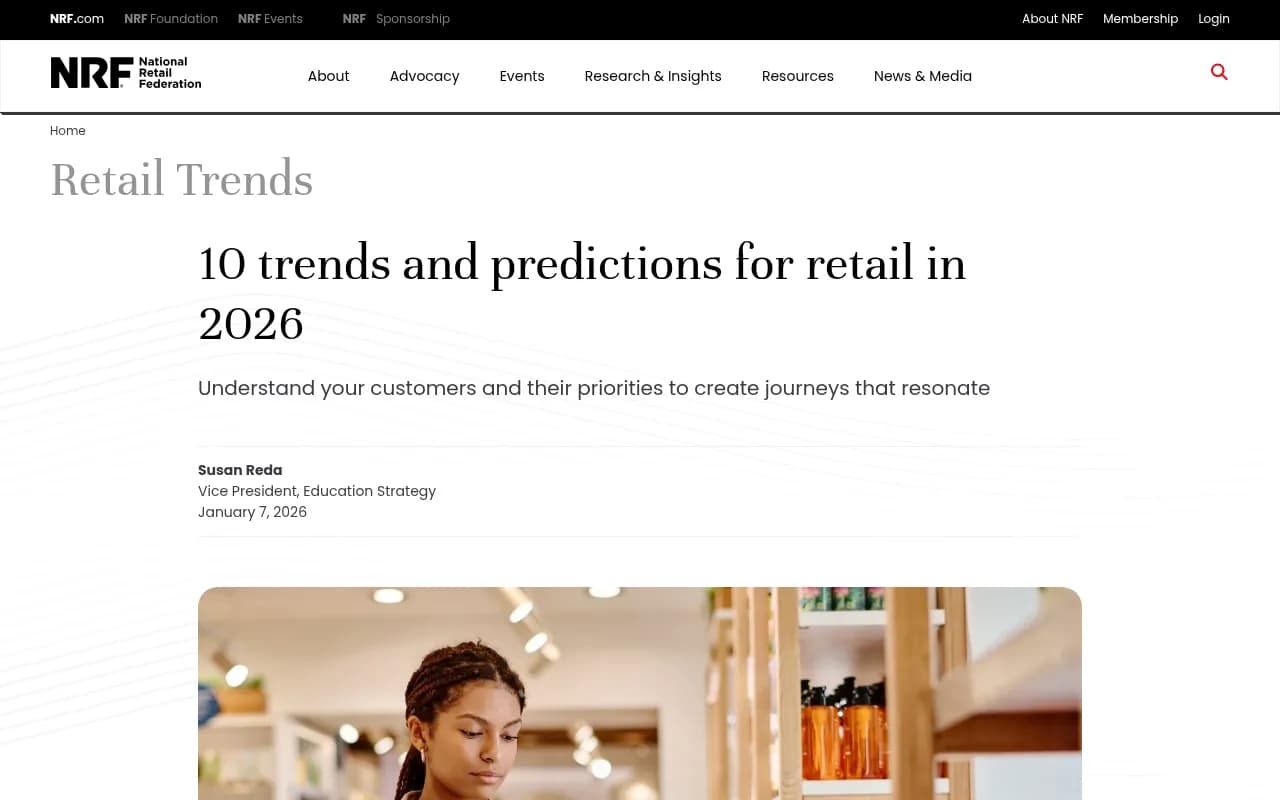
The National Retail Federation's 2026 trends report frames this as AI chatbots becoming an "omnipresent" force in retail, moving beyond simple Q&A into reordering household essentials and suggesting products with links based on what's already in someone's cart or pantry. That matches the health/fitness and everyday-essentials pattern in the category data: these are repeat-purchase, well-defined products that an AI agent can confidently act on without much back-and-forth.
Consumer sentiment backs the shift too. Research cited by Master of Code found 64% of customers are open to buying products an AI chatbot recommends, and nearly half of travelers already use these models somewhere in their purchase journey. That's a meaningful chunk of buyers who are no longer treating the chatbot's product card as a novelty, they're treating it as a legitimate shortlist.
What hasn't changed: durability and reviews still drive the actual decision
It's worth noting that getting into the shopping widget doesn't automatically win the sale. Salsify's 2026 consumer trends research found 54% of shoppers now prioritize durability and longevity, and 47% weight positive reviews and ratings heavily, when deciding between options. A product card inside ChatGPT is an entry point into consideration, not a guarantee of conversion. The brands that win inside these AI-curated shortlists are usually the ones with strong review signals and clear, verifiable product claims, the same fundamentals that mattered before AI shopping existed, just now filtered through a different interface.
Tracking where your category sits
Because these percentages move fast (health and fitness went from a baseline to 99% in under half a year), category-level tracking needs to be ongoing rather than a one-time audit. A few ways to approach this depending on your setup:
| Approach | Good for | Limitation |
|---|---|---|
| Manual prompt testing in ChatGPT | Quick spot checks, no cost | Doesn't scale, no historical trend |
| Third-party research reports (Evertune, KIME, Promptwatch Data) | Benchmarking your category against the market | Aggregate data, not your specific brand |
| Dedicated AI visibility platform like Promptwatch | Ongoing tracking of your prompts, your category, your competitors, plus shopping and ads radar | Requires setup and a subscription |
Promptwatch's ChatGPT Shopping and Ads Radar features specifically track product recommendations and sponsored placements inside AI shopping results, which is useful if your category sits in that 40-99% range and you want to know whether your products are actually the ones showing up in the card, or whether a competitor is quietly eating that spot. For brands and agencies wanting to compare more AI visibility tools across categories, the directory at bestgeosoftware.com is a reasonable place to see how the broader field stacks up.
The takeaway for the rest of 2026
The category split isn't going away soon. Physical, well-defined, repeat-purchase products (health, fitness, electronics, beauty) will keep climbing toward saturation. Complex or non-physical purchases (software, finance, luxury) will stay harder for ChatGPT to turn into a checkout card, at least until OpenAI builds deeper retailer and service integrations the way Google has started doing with Walmart, Shopify, and Wayfair.
If you're selling in a high-visibility category, treat the shopping widget as a new storefront you need to actively manage. If you're in a low-visibility category, the conversational answer and citation quality still matter, probably more than the widget will for a while yet.