Key takeaways
- No GEO tool is built only for drinks brands, so pick on coverage, citation tracking and whether it helps you fix gaps, not just report them.
- Product and landing pages earn 39% of ChatGPT citations (Promptwatch Data, Sep 28 to Oct 4, 2026), so your own product pages matter more than most wine marketers assume.
- Almost half of ChatGPT answers cite 10 or more domains. For "best Napa Cabernet" style prompts, you share every answer with retailers, critics and listicles.
- Social platforms are nearly absent from ChatGPT citations (0.46%) but make up 12.2% of Google AI Overviews citations, so your channel mix should depend on which engine your buyers use.
- Start with a free visibility check, then move to a platform with crawler logs and content tooling once you know where the gaps are.
Why drinks brands need their own GEO plan
A wine lover used to type "Pinot Noir wineries in Sonoma" and scroll a page of links. Now the same person asks something like: "What are the best boutique Sonoma wineries with outdoor tasting, Pinot Noir under $45, and weekend availability?" That example comes from Next Gen Wine Marketing's piece on how wine consumers search now, and it matches what I see in the prompts brands actually track. Long, conversational, packed with price, place and occasion.
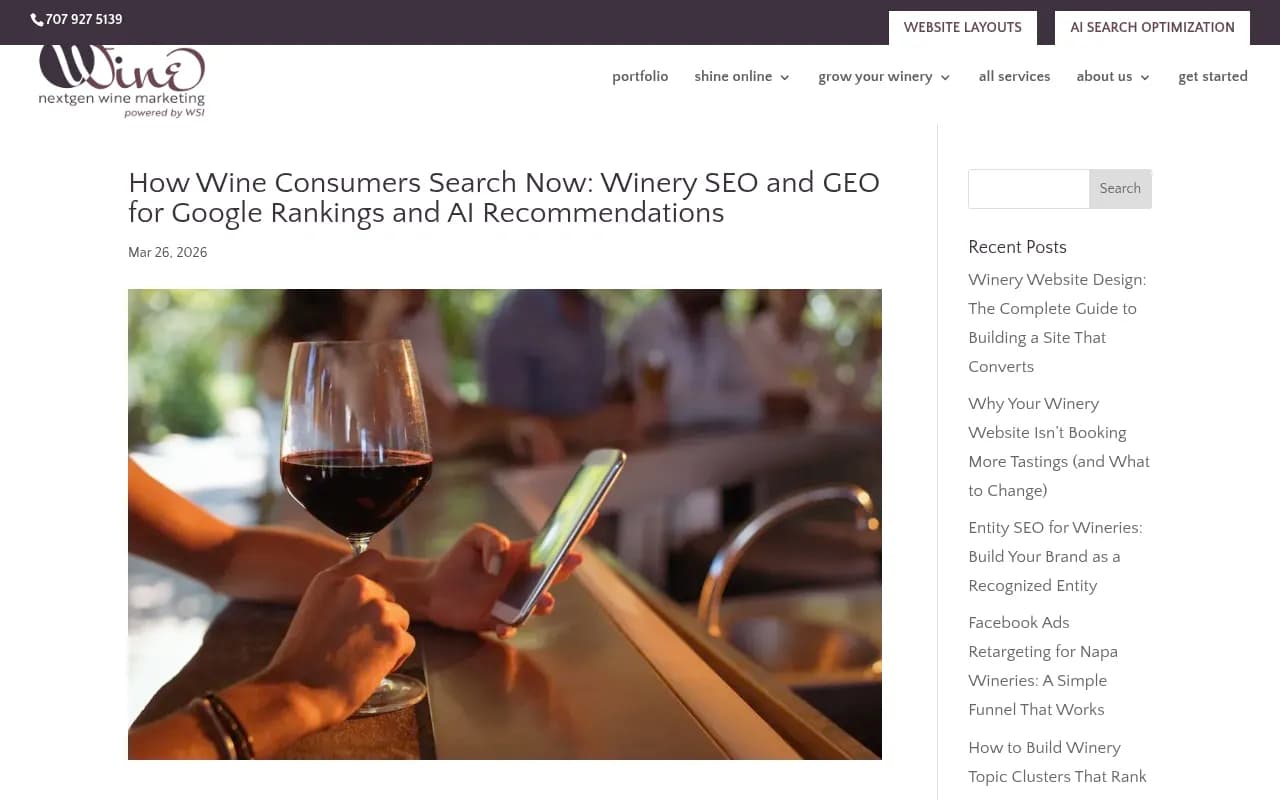
AI engines answer those questions in prose and name a handful of brands. If yours is not one of them, the shopper never sees a results page where you could have competed.
The scale of the shift is hard to ignore. Pew found that about 49% of US adults have used an AI chatbot, and TechCrunch reported AI-referred traffic to US retail sites rose 393% year over year in Q1 2026. Both figures come from the Yotpo GEO guide, and Yotpo sells a competing product, so treat its rankings with care. The underlying numbers still point one direction.
Drinks brands have a few quirks that general GEO advice skips:
- Retailers, marketplaces and critics often outrank the producer. In Promptwatch's automotive data, marketplaces beat every car brand in ChatGPT citations. Expect the same pattern with wine retailers and review apps, though I have not seen a published beverage dataset to confirm it.
- Prompts are heavily regional and occasion-based: grape, appellation, price band, food pairing, gift, cocktail.
- Alcohol is age-gated and regulated, so the claims AI makes about you (alcohol content, awards, health) matter more than usual.
- Many brands sell through distributors, so your own site is not where the purchase happens.
What a GEO tool actually does
The Olostep buyer's guide notes that most "best GEO tools" articles are written by the vendors they rank, and it lists four core jobs: mention tracking, citation tracking, sentiment and share of voice. That is a fair baseline.
For a beverage brand, I would add three more things to the checklist:
- Multi-country and multi-language tracking, because export markets behave differently.
- Source-level citation data, so you can see whether AI leans on Vivino, Wine-Searcher, Decanter, a retailer or your own site.
- Some way to act on the gaps, whether that is content tooling, an action list or an agency.
What the data says about winning citations
These numbers come from Promptwatch Data and are not beverage-specific, but they describe how ChatGPT builds answers in general.
Product and landing pages dominate
In Promptwatch's content type report (Sep 28 to Oct 4, 2026), product pages were 22.4% of ChatGPT citations and landing pages 16.8%. Listicles got 13.6%, how-tos 8.7% and comparisons 5.9%. For commercial prompts like "best X", product pages, landing pages, listicles and comparisons added up to almost 70%.
For a winery, that means a complete product page per wine (varietal, vintage, price, tasting notes, awards, where to buy) is not optional. Thin pages that say "contact us" give an AI nothing to cite.
For branded prompts, reviews rose to 5.6% of citations, more than three times their share overall. So what critics and review sites say about you shapes what AI says about you.
Content age matters too. The content half-life report found news loses half its cited pages in roughly five weeks, while landing pages and docs keep most of theirs for months. A press release about a new release will fade. A solid page about the wine itself will not.
You share every answer with many others
Per the unique domains report, 47.6% of ChatGPT responses with citations cite 10 or more domains. For organic prompts such as "best Napa Cabernet", it is 52.5%. For brand-specific prompts it drops to 21.3%, and the most common count is five domains.
Two takeaways. First, discovery prompts are won through third-party listicles, reviews and retailer pages, not only your site. Second, once someone asks about your brand by name, your own site and a few review sites carry most of the weight, so keep both accurate.
Social channels depend on the engine
The October 2026 social citations report shows ChatGPT drawing only 0.46% of citations from social platforms, with Reddit down to 0.09% after the August collapse. Google AI Overviews gets 12.2% from social: YouTube 4.28%, Facebook 2.38%, Reddit 2.15%, Instagram 1.61%.
My inference, not the report's: brands with strong Instagram and Facebook presence will see the payoff mainly in Google AI Overviews. A vineyard tour video on YouTube is worth more for Google than a Reddit thread is for ChatGPT right now.
Best GEO tools for wine, spirits and beverage brands
Here is how I would shortlist, by situation. Pricing for competitors was not verified for this guide, so check each vendor's site.
| Tool | Type | Best for | Watch out for |
|---|---|---|---|
| Promptwatch | Full platform: tracking, crawler logs, content, publishing | Brands and agencies that want to fix gaps, not just see them | More than a small producer may need on day one |
| Profound | Enterprise monitoring | Large multi-brand groups | Higher price, less execution |
| Otterly.AI | Basic monitoring | Small producers testing the waters | No crawler logs or content tools |
| Peec AI | Monitoring | Teams that only need reporting | Monitoring without optimization |
| Semrush | SEO suite with AI tracking | Teams already living in Semrush | Shallower AI-specific data |
| Ahrefs Brand Radar | SEO suite add-on | Existing Ahrefs users | Same trade-off as above |
| SE Ranking / SE Visible | SEO suite with AI visibility | Budget-conscious SEO teams | Less depth on citations and crawlers |
| Goodie | AI visibility with shopping coverage | Product-led brands | Check coverage for your markets |
Promptwatch for brands that want to act
Promptwatch is the one I would put first for a drinks brand with a real marketing team, mainly because it does not stop at a dashboard. It tracks ChatGPT, Gemini, Perplexity, Claude, Google AI Overviews and AI Mode, Copilot and others from the real interfaces, per country and language. That matters if you sell the same gin in the UK, Germany and the US.

The parts that map well to beverage problems:
- Citation and source tracking shows whether AI cites your site, a retailer, a critic or a directory like Vivino, and Citation Trends classifies them by source type.
- AI crawler logs show whether GPTBot and others can read your product pages. Age-gate pop-ups and JavaScript-heavy sites often block bots, and this is how you find out.
- Brand Narrative pulls out the individual claims AI makes about you, which is useful for spotting wrong awards, wrong ABV or wrong region.
- ChatGPT Shopping tracking (Business plan) shows which products AI recommends and which competitors it picks instead.
- Local targeting at exact coordinates helps tasting rooms and bars win "near me" prompts.
- The Content Agent writes and publishes pages to WordPress, Webflow or Framer, and then checks whether they get crawled and cited.
Pricing is Essential $95/mo, Professional $245/mo and Business $579/mo, with agency plans from $199/mo. Confirm at promptwatch.com/pricing. There is a 7-day free trial on monthly billing, plus a free AI visibility report. For comparisons, see Promptwatch vs Profound and Promptwatch vs Peec.
Profound for large groups
Profound is an enterprise monitoring platform with strong reporting. Big spirits portfolios with dozens of brands and central governance may like it. Compared with Promptwatch it tends to cost more and leans toward measurement rather than producing the content.

Otterly.AI and Peec AI for light monitoring
If you are a small distillery that just wants to know whether ChatGPT mentions you, a basic tracker is enough. Otterly.AI is positioned as the affordable option. Anagram's roundup lists it from $29/mo, though I have not verified current pricing. Peec AI is monitoring without optimization.


The limitation is the usual one: you will see a score drop and have no way inside the tool to find out why.
Semrush, Ahrefs and SE Ranking for SEO-suite teams
If your agency already runs your SEO in one of these, adding AI tracking costs little extra effort. The trade-off is fixed prompt sets and thinner AI-specific data, with no crawler logs or AI traffic attribution.

Free ways to start
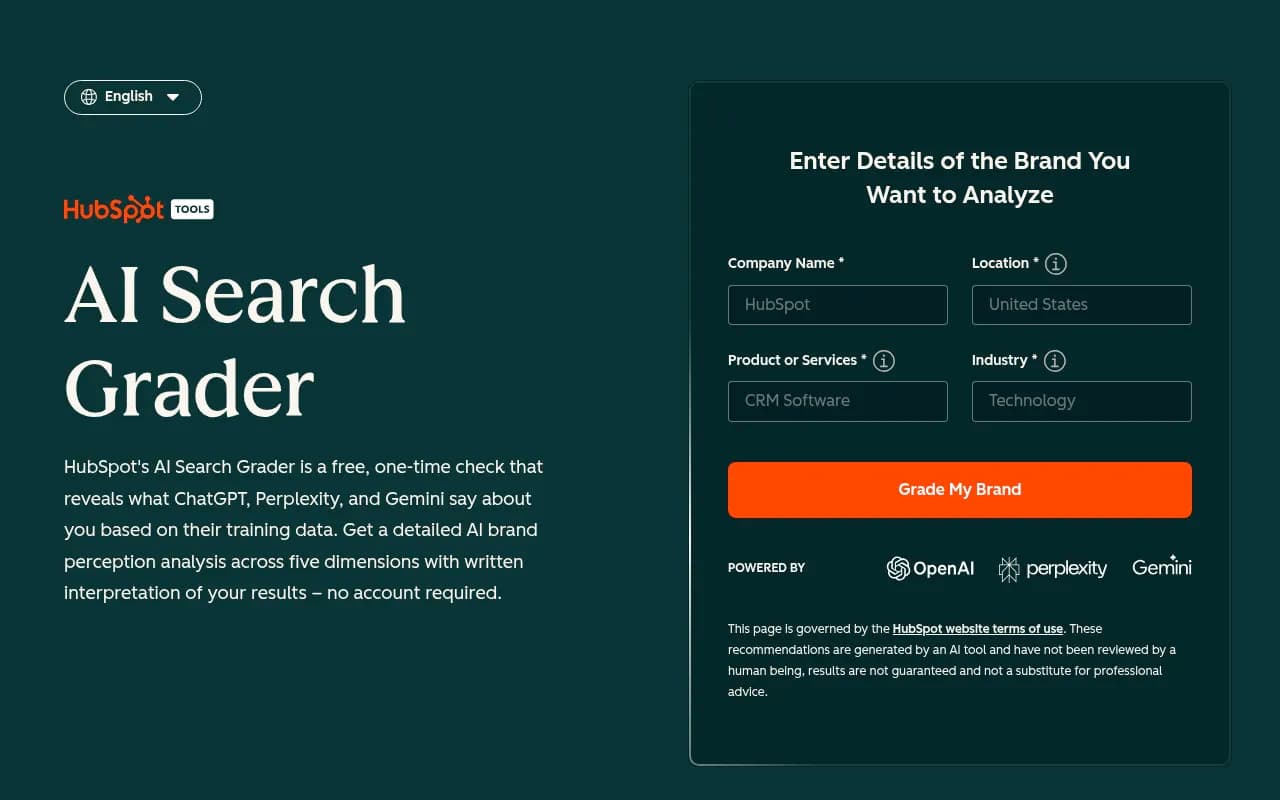
Before paying for anything, run a free check. Promptwatch's free report, Amplitude's AI visibility analysis and HubSpot's AI Search Grader each give a one-off snapshot of how AI talks about your brand.

For more options by category, the GEO software directory at bestgeosoftware.com lists a lot of them.
How to choose by brand type
| Situation | What to prioritize | Reasonable starting point |
|---|---|---|
| Small winery, one site, direct-to-consumer | Product pages, local prompts, cheap monitoring | Free report, then Otterly.AI or Promptwatch Essential |
| Craft brewery or distillery with a tasting room | Local targeting, reviews, Google AI Overviews | Promptwatch Business for local GEO, plus review management |
| Mid-size beverage brand, several markets | Multi-country tracking, citation sources, content at scale | Promptwatch Professional or Business |
| Large spirits group, many brands | Governance, reporting across brands | Profound or Promptwatch Enterprise |
| Agency serving drinks clients | Unlimited projects, white-label reporting | Promptwatch agency plans |
A practical setup for the first 30 days
Week 1: build a prompt set that sounds like buyers
Write 30 to 50 prompts across four types: discovery ("best Willamette Pinot Noir under $40"), occasion ("gin for a summer dinner party"), comparison ("Brand A vs Brand B bourbon") and branded ("is Brand X any good"). Add your key markets. Do not rely on one prompt; the unique-domains data above shows answers vary a lot.
Week 2: find who gets cited instead of you
Look at the source list, not just the mention count. If Vivino, Wine-Searcher, a retailer or a listicle site keeps appearing, those are your targets for reviews, listings and outreach. This is where a tool with citation-level data earns its price.
Week 3: fix your own pages
Check crawler access first. Then complete every product page with specs, price, awards, food pairings and an FAQ. Publish comparison and "how to choose" pages. Landing pages and docs last longest in ChatGPT, so invest in evergreen content rather than announcements.
Week 4: measure and repeat
Track visibility, share of voice and position against competitors, and check AI-referred traffic. One heads-up: ChatGPT stopped sending a referrer on October 8, 2026, so tag links with utm_source=chatgpt.com where you control them.
Compliance and accuracy
AI engines will sometimes state things about alcohol that you would never put in an ad: health claims, wrong strength, wrong awards. You cannot edit an AI answer, but you can correct the source pages it learns from. Tools that extract claims (Promptwatch's Brand Narrative and Fact Check, or LLMClicks' hallucination detection) make that audit manageable. Keep age-gate pages crawlable enough that bots can still read product facts, and ask your legal team where the line sits in your markets.
Do you need an agency?
Some brands do this in-house. Others want a team to handle strategy, content and PR for citations. If that is you, 1001 SEO Media runs GEO and SEO programs using Promptwatch as its AI visibility platform. Either way, own the data: whoever does the work, you should be able to see the visibility, citation and traffic numbers yourself.
Bottom line
Pick a tool by what you will do with the data. A small producer can start with a free snapshot and a cheap monitor. A brand selling across markets, fighting retailers and review apps for the same answer slot, needs source-level citations, crawler visibility and a way to publish fixes. Start with your product pages, because that is where the citations are.