Key takeaways
- ChatGPT leans hard on government and research sources for health prompts. In Promptwatch Data's October 2026 healthcare report, nih.gov alone earned 5.46% of citations, more than the FDA, NHS, CMS and SAMHSA combined. A startup has to earn trust through the sources AI already believes.
- Monitoring alone is not enough. Telehealth startups usually have small content teams, so tools that also help you find gaps and publish fixes matter more than another dashboard.
- Social is a split picture. ChatGPT gets only 0.46% of its citations from social platforms, while Google AI Overviews gets 12.2%. Where you invest depends on where your patients search.
- Budget tools starting around $19 to $99 a month are fine for a pre-seed team that just wants to know if it appears. Once you need crawler data, content production and local targeting, you move into the mid-tier.
- Compliance is yours to own. No GEO tool makes a medical claim safe. Have a clinician review everything before it ships.
Why telehealth startups should care about GEO now
People ask ChatGPT, Gemini and Perplexity things like "best online therapy for anxiety" or "can I get a GLP-1 prescription through telehealth." The answer comes back as a short list of named providers. If you are not in that list, the patient never sees a search results page, never sees your ad, and never clicks.
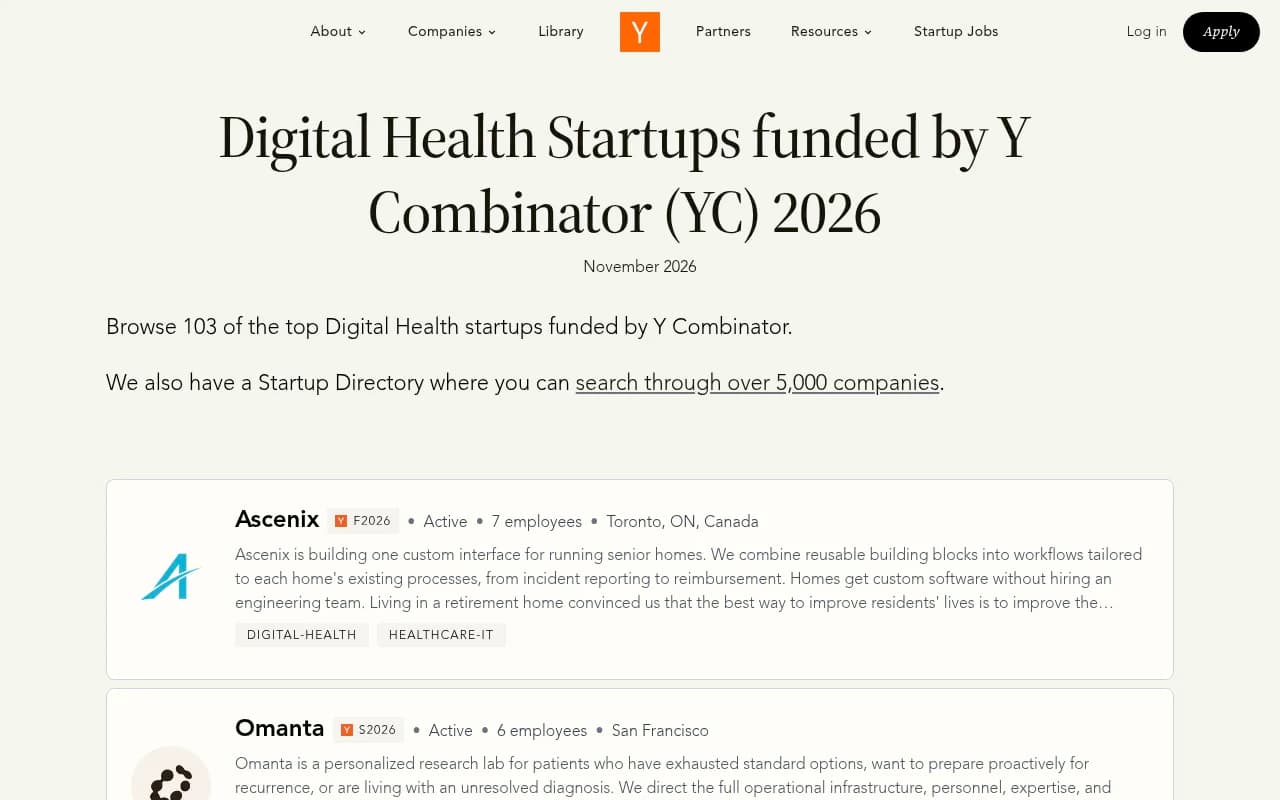
Digital health is crowded. Y Combinator alone lists 103 digital health startups in its directory, and the category keeps growing. Fortune Business Insights projects the global digital health market going from roughly $491.6 billion in 2026 to $2.35 trillion by 2034. More companies are competing for the same handful of AI recommendations.
I think healthcare is the vertical where GEO is the hardest and the most worthwhile. Hardest, because AI models are conservative about medical advice and lean on institutions. Most worthwhile, because a single recommendation to a patient with intent is worth a lot.
What AI cites for healthcare prompts
Before picking a tool, look at what the models are actually citing. Promptwatch Data's October 2026 healthcare report covers organic healthcare prompts in ChatGPT from Sep 9 to Oct 8, 2026. The findings are blunt:
- nih.gov leads at 5.46%, mostly PubMed Central (2.38%) and PubMed (2.33%).
- fda.gov follows at 1.76%, then nhs.uk at 1.1%.
- The top non-government site is the American Society of Plastic Surgeons at 0.64%, with the American Academy of Dermatology at 0.54%.
- Mayo Clinic (0.49%) and Cleveland Clinic (0.4%) are the only hospitals in the top chart.
- Doctify and WebMD doctor profiles earn 0.23% each, the only review and directory sites in the chart.
- The top 20 domains together hold just 15.54% of healthcare citations, so the long tail is wide open.
That last point is the opportunity. Government and research sites dominate the top, but 85% of citations go elsewhere. A startup will not outrank the NIH, but it can be the cited source for a specific condition, workflow or comparison.
The report's own recommendations are worth following: back medical claims with peer-reviewed studies and link them on PubMed, keep pages consistent with FDA, CDC, NHS and NICE guidance, work with medical associations in your specialty, and keep your Doctify and WebMD profiles complete. None of that needs a tool. A tool just tells you whether it is working.
Where social fits
The Promptwatch Data social citations report for October 2026 (Sep 28 to Oct 4) shows how different the engines are. ChatGPT's social share fell to 0.46%, with Reddit down from 5.19% to 0.09%. AI Overviews pulls 12.2% of citations from social, led by YouTube at 4.28%, Facebook at 2.38% and Reddit at 2.15%. Perplexity sits at 2.7%.
For a telehealth brand, that points to YouTube explainers by your clinicians if your patients come from Google, and not much reason to bet on Reddit to get into ChatGPT.
What to look for in a GEO tool as a digital health startup
The generic GEO buyer's checklist applies, but a few items matter more in health.
- Real interface tracking. Answers in the actual ChatGPT or AI Overviews interface can differ from API outputs. For patient-facing queries you want what the patient sees.
- Claim-level visibility. It is not enough to know you were mentioned. You need to know what the AI said about you. Wrong claims about pricing, who can be prescribed what, or whether you accept insurance are a real problem.
- Citation source data. Since AI favors institutions, you need to see which pages it cites in your category, and whether your own pages are among them.
- Crawler visibility. If AI bots cannot read your site, no content work will matter. Many telehealth sites are single-page apps with gated flows that crawlers handle badly.
- Location targeting. If you run state-licensed services or physical clinics, "near me" and per-state answers matter.
- Execution help. A three-person marketing team cannot turn a dashboard of gaps into forty pages by hand.
- Price that fits a seed budget.
The best GEO tools for telehealth and digital health startups
Promptwatch: best for teams that want to fix gaps, not just see them
Promptwatch is an end-to-end AI visibility platform, and the strongest match here for startups that need more than a score. It tracks ChatGPT, Gemini, Claude, Perplexity, Google AI Overviews, AI Mode, Copilot and others from their real interfaces, then traces which of your pages and third-party pages get cited.

Three features matter for health specifically. Brand Narrative pulls out the individual claims AI makes about you, and Fact Check (Business plan and up) lets you mark a claim inaccurate and find the page on your site that teaches the model the wrong thing. AI crawler logs are IP-verified, so you can tell an access problem from a content problem. And the Content Agent writes and publishes pages to WordPress, Webflow or Framer, with a review inbox so a clinician can approve before anything goes live.
Local GEO/SEO targeting pins a monitor to exact coordinates, which helps if you run clinics or want to see how answers change by city. Pricing starts at $95/month for Essential, $245 for Professional and $579 for Business, which is where the Content Agent, Fact Check and local targeting start. Confirm current numbers at promptwatch.com/pricing. There is a 7-day free trial and a free AI visibility report if you want a baseline first.
One caveat: Business is a real step up in price for a pre-seed company. If you only need monitoring today, start on Essential or use a cheaper tracker and upgrade when content volume becomes the bottleneck.
Otterly.AI: cheapest way to start monitoring
Otterly.AI is a basic prompt tracker. It tells you whether you are mentioned and cited, and that is mostly it. The Anagram guide in our research cites $29/month for Otterly, but that is vendor-published and unverified, so check it yourself.

Good for a founder who wants a weekly check on twenty prompts. Not enough if you need to know why you are missing or what to publish.
Profound: enterprise monitoring
Profound is aimed at large brands with deep budgets. Strong monitoring, but pricier, and it does not do the execution side the way a content-agent platform does. Reasonable if you are a Series C digital health company with an enterprise procurement process; overkill otherwise. See Promptwatch vs Profound for a direct comparison.

Peec AI and AthenaHQ: monitoring-focused middle options
Peec AI is a clean, monitoring-only tracker. AthenaHQ tracks across multiple engines with optimization recommendations. Both are fine for visibility reports, but neither gives you crawler logs or AI traffic attribution.

Scrunch: strong monitoring for larger teams
Scrunch monitors and optimizes how assistants describe your brand. It is a legitimate choice for an established digital health brand that cares about narrative consistency, though pricing sits higher than startup tools.

Semrush and Ahrefs Brand Radar: extend the SEO suite you already have
If your team already lives in Semrush or Ahrefs, their AI modules are the lowest-friction way to add some AI tracking. The tradeoff is fixed prompt sets and shallower AI-specific data.

Free options to get a baseline
Before paying anyone, run a free check. AnswerGist, Geotoolbox and the Promptwatch AI visibility report all give you a quick read on how AI sees you.

Comparison table
| Tool | Best for | Execution help | Crawler data | Starting price |
|---|---|---|---|---|
| Promptwatch | Startups that need to fix gaps | Content Agent, Action Board, CMS publishing | IP-verified logs (Professional and up) | $95/mo |
| Otterly.AI | Basic monitoring on a tight budget | No | No | Reported ~$29/mo, verify |
| Profound | Large digital health brands | Limited | No | Higher, quote-based |
| Peec AI | Simple monitoring | No | No | Check vendor |
| AthenaHQ | Multi-engine tracking | Some recommendations | No | Check vendor |
| Scrunch | Narrative and brand consistency | Some | Check vendor | Higher tier |
| Semrush / Ahrefs Brand Radar | Teams already on the suite | No | No | Add-on pricing |
Prices change often. Treat anything not on a vendor's own pricing page as a rough guide.
Matching tools to your stage
Pre-seed and seed
You need to know if you show up and which of your competitors do. Start with a free report, then a low-cost tracker or Promptwatch Essential. Track 30 to 50 prompts that mirror real patient questions, not generic category terms.
Series A and B
Now content is the bottleneck. This is where a platform that finds gaps and drafts pages pays for itself, as long as a clinical reviewer signs off on each page. Crisp, a customer-service software company, scaled to 5 to 10 articles per day with Promptwatch's Content Agent and saw 2x higher conversion rates from AI traffic. Your cadence in health should be lower and more careful, but the workflow model is the same.
Multi-state or multi-clinic operators
Pick a tool with location targeting and state or city tracking. Telehealth is state-regulated, and the answer to "who can prescribe this" differs by where the patient sits.
A practical rollout plan
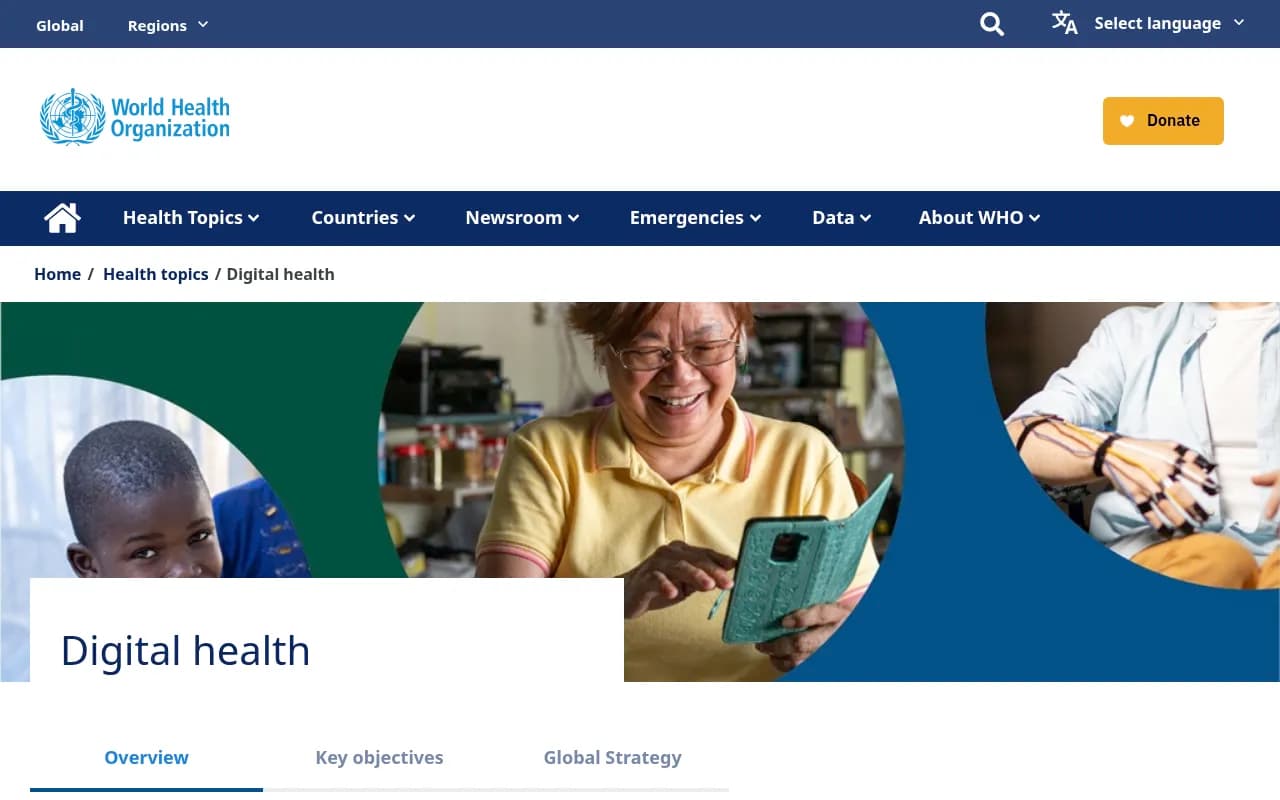
The WHO Global Strategy on Digital Health, adopted in 2020, is the kind of institutional source AI models weigh heavily. Align with that tier of source and not against it.
- Week 1: audit. Run a free visibility report. Check whether AI crawlers can read your site. Telehealth sites with login walls and JavaScript-heavy flows often block everything useful. The Agentic Readiness Check is a free place to start.
- Week 2: build a prompt set. 40 prompts across condition queries, treatment comparisons, "best provider" queries and brand-specific questions. Include your competitors by name.
- Week 3: read the citations. Find which pages the models cite for your category. Expect NIH, FDA and associations. Note which gaps a startup could fill, like pricing transparency, comparison pages or process explainers.
- Weeks 4 to 8: publish with review. Create pages that cite peer-reviewed sources on PubMed, match official guidance, and carry clinician authorship. Keep the review gate manual.
- Ongoing: fix the claims. If AI says you do not accept insurance and you do, find the page it learned that from and fix it.
- Measure traffic. Use visitor analytics to see whether AI sends visitors who convert. One thing to note: ChatGPT stopped sending a referrer on October 8, 2026, so tag links with utm_source=chatgpt.com where you can.
Compliance and quality: the part no tool does for you
Health content is held to a higher standard by Google and by the AI engines. I did not verify specific regulatory requirements for this guide, so have counsel review anything involving HIPAA, FTC health claims, state telehealth advertising rules or testimonial use before you publish at volume. Rules of thumb I would hold to regardless:
- Every medical claim links to a primary source.
- A named clinician reviews and is credited.
- Never let an automated agent publish health content without a human approval step.
- Do not put patient data into any third-party tool, including prompt trackers and content generators.
- Keep pages dated and refreshed. Promptwatch Data found that news content loses half its pages from ChatGPT's citations within 36 days, while landing pages and docs last far longer, so build durable reference pages and not just posts. See the content half-life report.
Common mistakes
- Tracking generic terms like "telehealth" instead of patient-worded questions.
- Treating a high visibility score as success when the AI is saying something wrong about you.
- Ignoring directory profiles. Doctify and WebMD profiles were the only review-style sites in the top citations.
- Betting on Reddit for ChatGPT. Per the October 2026 social report, reddit.com is now at 0.09% of ChatGPT citations.
- Buying an enterprise tool before you have content to optimize.
If you want to browse more options beyond this list, the GEO software directory at bestgeosoftware.com has a wider catalog to compare.
Final recommendation
If you only want to know whether you appear, a cheap tracker is enough. If you want results, pick a platform that connects tracking to crawler data, claim-level analysis and content with approval gates. For most funded telehealth and digital health startups, that points to Promptwatch, started on Essential or Professional and moved to Business once content volume and local targeting justify it. Whatever you choose, the sources AI trusts in health are institutions, journals and associations, so build your pages to sit alongside them and not pretend to replace them.