Key takeaways
- Event organizers live on commercial and branded prompts such as "best conference management software" or "best marketing conferences in Europe". ChatGPT answers those mostly from product pages, landing pages, listicles and comparisons.
- Almost half of ChatGPT responses cite 10 or more unique domains, so you share every answer with many other sites. Third-party roundups and review sites matter as much as your own page.
- Pick a tool by the job: tracking only, tracking plus content fixes, or enterprise reporting. A dashboard that stops at a score leaves the work to you.
- Start with the free checks, then move to a paid platform once you know which prompts and pages matter.
Why event companies need a GEO tool
A conference is a strange product. It happens once a year, the page that sells it gets rebuilt every cycle, and most buyers (attendees, sponsors, speakers) now ask an AI assistant before they ever open a search result. "Which conferences should a B2B SaaS marketer attend in 2027?" is a real prompt. So is "best event registration software for a 2,000-person conference".
If you run events, you probably play on both sides of that question. You want your conference to be named, and if you sell event tech or services, you want your company named too. A generative engine optimization (GEO) tool tells you whether that is happening, which pages get cited, and what to fix.
I should be upfront about one thing: nobody has published an events-specific citation report yet. What follows is my reading of general data, applied to events. Treat it as a reasoned starting point, not gospel.
What the citation data says about events
Promptwatch Data looked at what types of pages ChatGPT cited between Sep 28 and Oct 4, 2026. Product pages took 22.4% of citations and landing pages 16.8%. Listicles were 13.6%. For commercial prompts (the "best X for Y" kind), product pages, landing pages, listicles and comparisons made up almost 70% of citations.
For events, that translates fairly directly:
- Your conference page is a landing page. Dates, venue, ticket prices, speakers and audience need to be complete and plainly written.
- "Top conferences" roundups are listicles. Getting onto them is one of the main routes into organic answers.
- Review and comparison pages matter more for branded prompts. Reviews were 5.6% of citations on branded prompts, more than three times their overall share.
The second finding is about crowding. In Promptwatch's unique domains report, 47.6% of ChatGPT responses cited 10 or more domains, and 52.5% of organic prompts did. Brand-specific prompts were tighter, with about 5 domains being typical. So when someone asks about your event by name, your own site and the review sites cited for it carry real weight. When they ask a category question, you are one of many.
Third, news pages decay. The half-life report found news losing half its cited pages within 36 days, while landing pages and docs held on much longer. A press release announcing your keynote won't keep working. An evergreen page for the annual event will.
Finally, social. In the October 2026 social citations report, ChatGPT drew only 0.46% of citations from social platforms, while Google AI Overviews drew 12.2%, with YouTube at 4.28%. If your audience uses Google, conference session videos on YouTube are worth more than a Reddit thread. Reddit's share in ChatGPT collapsed from roughly 4% to 0.5% in August 2026, so don't build your plan around it.
How I would choose a GEO tool as an event team
Four questions sort most of the market:
- Does it collect data from the real AI interfaces, or only APIs? Answers differ.
- Does it show which of your pages get cited, and which third-party roundups name you instead?
- Does it help you fix gaps, or just report them?
- Can it separate markets? A conference in Berlin and one in Austin ask different prompts in different languages.
Event teams also have a seasonal problem. Visibility matters most in the months before ticket sales and sponsor outreach, so faster tracking during a launch window is useful.
Comparison table
| Tool | Best for | Monitoring | Helps fix gaps | Notes for event teams |
|---|---|---|---|---|
| Promptwatch | Teams that want tracking and action in one place | Yes, real AI interfaces | Yes, content agents and action board | Crawler logs show whether bots read your event pages |
| Profound | Large enterprises | Yes | Limited | Higher price point |
| Scrunch | Enterprise monitoring | Yes | Limited | Strong reporting |
| Otterly.AI | Small budgets | Yes | No | Basic prompt tracking |
| Peec AI | Simple monitoring | Yes | No | No optimization |
| Semrush | Teams already on the suite | Yes | Partly | Fixed prompt sets |
| Ahrefs Brand Radar | Existing Ahrefs users | Yes | No | Brand mention focus |
| Conductor | Enterprise SEO teams | Yes | Partly | Enterprise AEO platform |
The best GEO tools for event companies in 2026
Promptwatch
Promptwatch is the one I would put first for most event teams, because the work for events is not just watching. You need to know that "best AI conferences 2027" names a competitor, see the listicle that put them there, and publish a better page. Promptwatch tracks ChatGPT, Gemini, Perplexity, Google AI Overviews and others from the real interfaces, then traces which pages and third-party sources get cited.

Three features matter for events. First, the content gap analysis maps your pages against prompts AI answers, so you see that you have no comparison or FAQ page for a topic buyers ask about. Second, AI crawler logs show whether bots can actually read your registration and agenda pages, which is a real risk when schedules sit behind JavaScript widgets or ticketing iframes. Third, monitors are pinned to a country and language, so you can track a Paris edition in French separately from a London one in English. Local targeting at exact coordinates helps for venue-specific queries like "conferences near me".
The Content Agent can plan, write and publish to WordPress, Webflow or Framer, and the dashboards then show whether the page got crawled, cited and clicked. Pricing starts at $95/month for Essential, with the Content Agent from the $579/month Business plan. Confirm current numbers on the pricing page. There is a 7-day free trial, and a free AI visibility report if you want a quick look first.
Agencies that run events for several clients should look at the agency plans, which allow unlimited projects.
Profound and Scrunch
Both are strong on monitoring and suit large organizations with big budgets. The trade-off, as I see it, is price and the lack of an execution layer: you get the report, then you do the work. See Promptwatch vs Profound and Promptwatch vs Scrunch for a feature-by-feature breakdown.


Otterly.AI and Peec AI
These are lightweight prompt trackers. If you are a single-conference team that only wants to know whether your event name shows up, they are cheap and quick. You won't get crawler logs, AI traffic attribution or content generation. That is fine until you need to know why you are missing.


Semrush and Ahrefs Brand Radar
If your marketing team already pays for one of these, the AI tracking add-on is the path of least resistance. It is shallower than dedicated platforms, with fixed prompt sets, so you will likely outgrow it if events are your main revenue.

Conductor
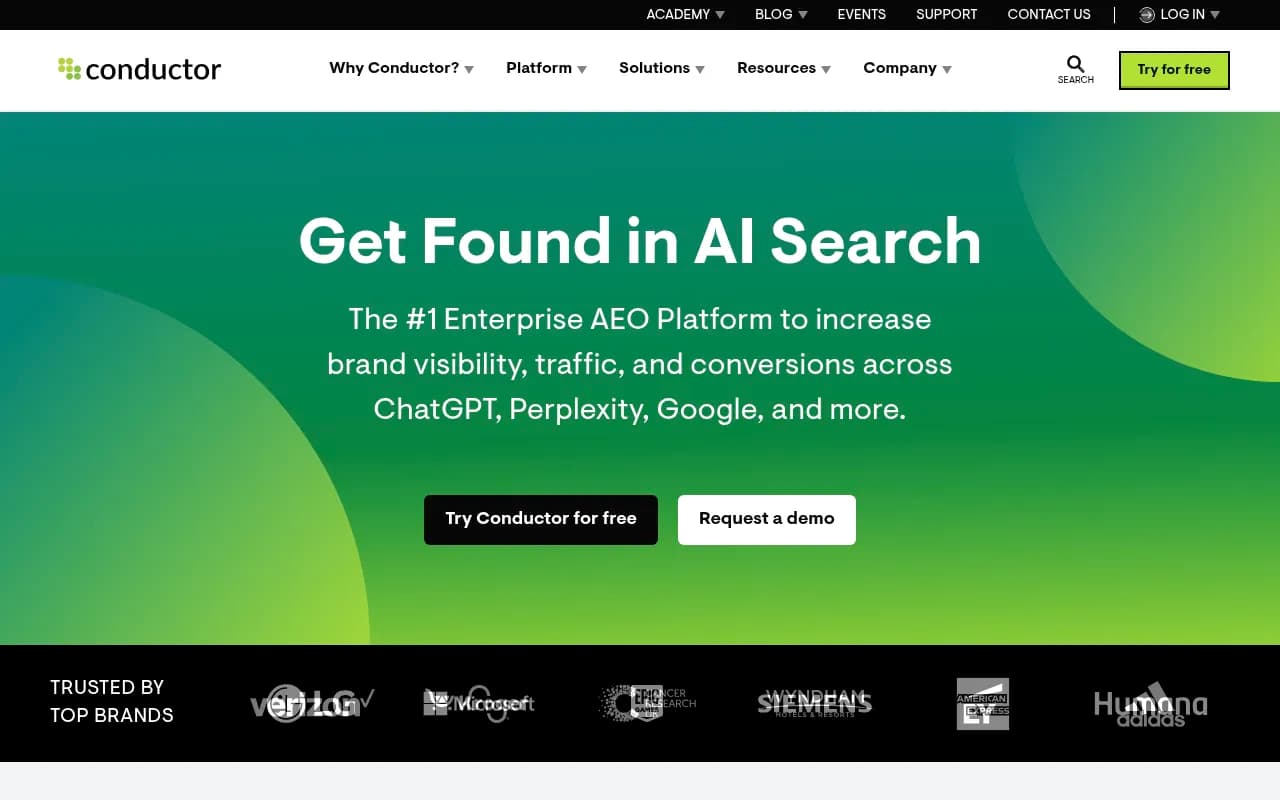
Conductor has an enterprise AEO platform, and it also runs its own conference, C3, which it has repositioned around agentic AEO (per Search Engine Watch). That is a nice bit of dogfooding, though the tool itself is aimed at big SEO teams.
Free tools to start with
Before paying for anything, run a few free checks. They are enough to find the obvious problems.
- Promptwatch's Agentic Readiness Check and AI crawler URL inspector tell you whether AI crawlers can read your event site.
- The robots.txt generator for AI helps if you have blocked bots by accident, which happens a lot with ticketing platforms.
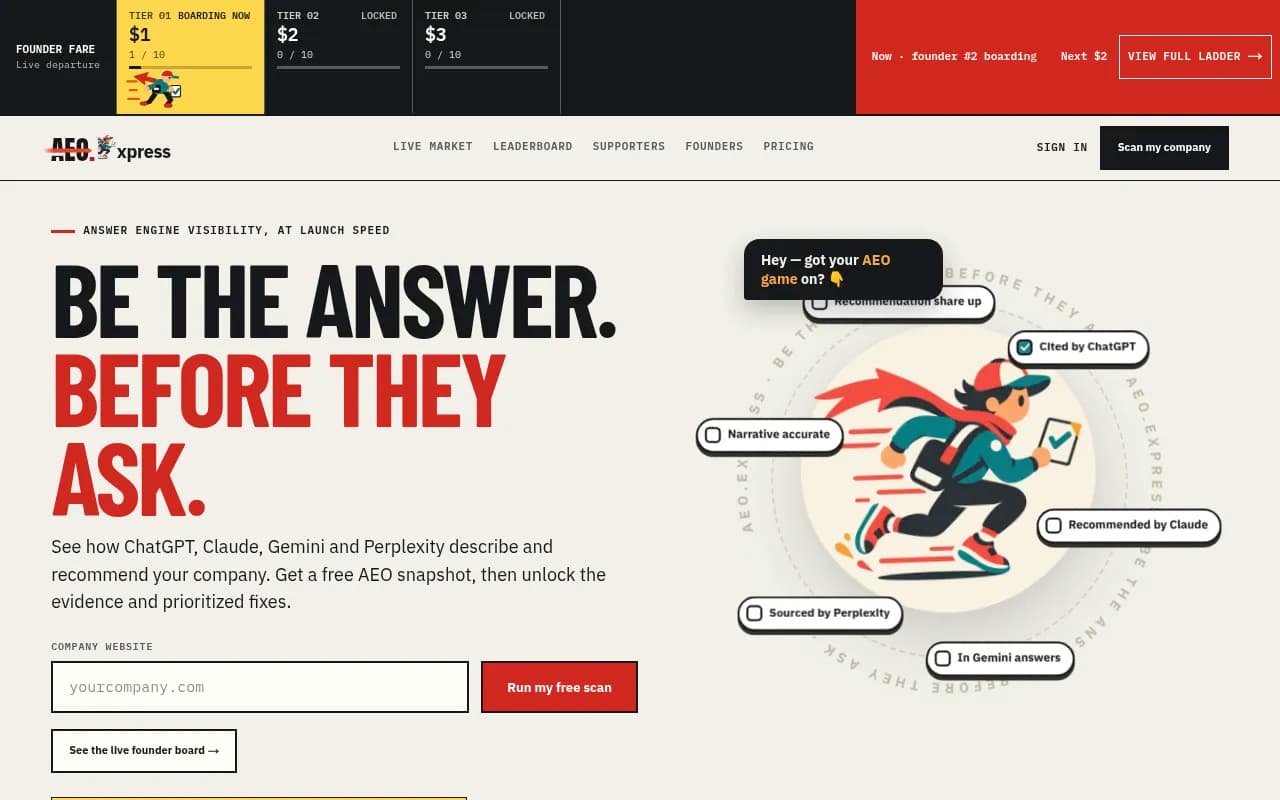
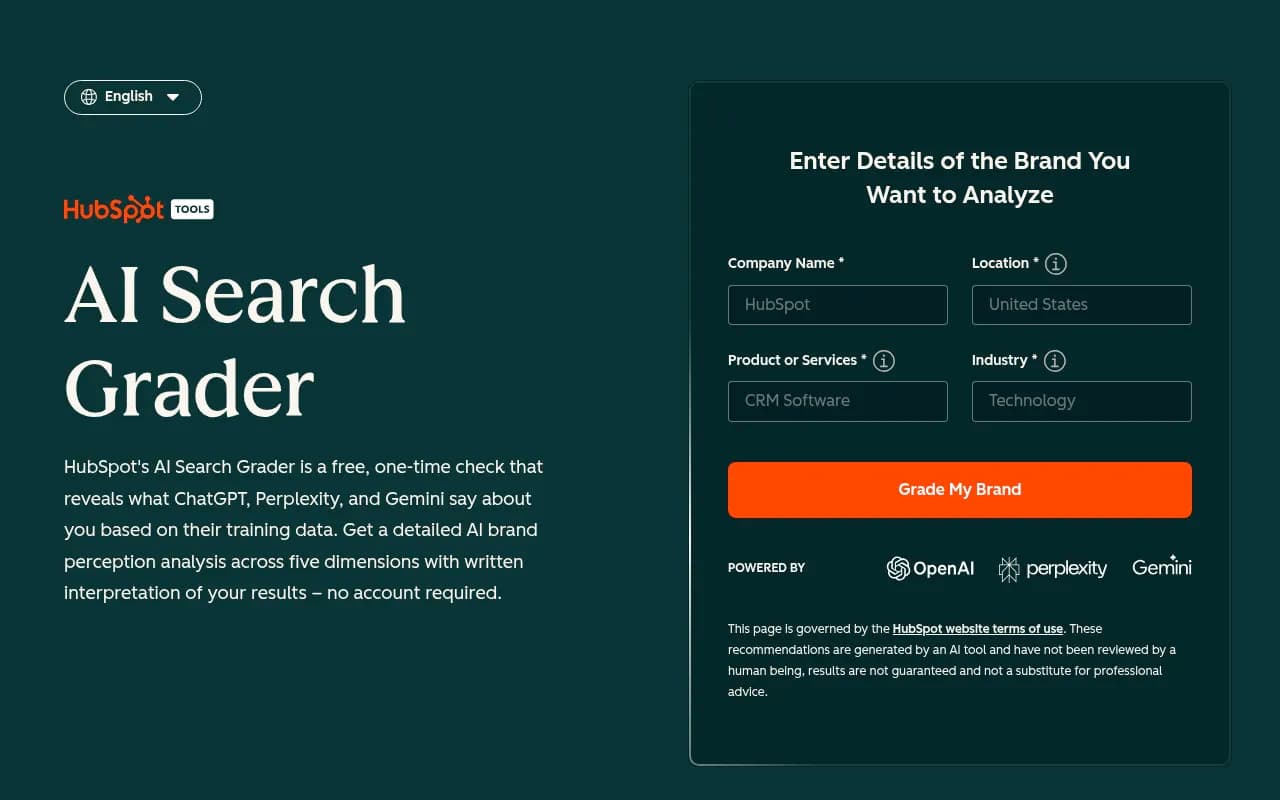
- AEO.express and HubSpot AI Search Grader give a one-off snapshot.
For more options, the GEO software directory lists dozens of trackers by category.
What to publish once you have the data
Tools do not do the thinking for you. Here is what I would actually ship, in order.
One complete landing page per event
Dates, venue, ticket tiers with prices, speaker list, audience profile, past attendee numbers, and a short FAQ. Keep it plain HTML where possible. This is the page that answers branded prompts, and branded prompts pull from few domains, so it has a big share of attention.
Comparison and "who should attend" pages
If you run a marketing conference, publish "X vs Y conference" and "which events are worth attending in 2027". Be honest. A balanced comparison gets cited; a thinly veiled ad usually does not. Comparison pages were 5.9% of ChatGPT citations overall and 7.9% on commercial prompts.
Get into the roundups
Find the listicles that AI already cites for your category and pitch them. A tool that lists cited sources, including Promptwatch's citation and Offsite Mentions reports, makes this a target list rather than a guess. Event directories and review sites carry the same weight for sponsors and exhibitors choosing where to spend.
Video on YouTube
Post session clips with clear titles and descriptions. This feeds Google's AI surfaces far more than ChatGPT.
Refresh instead of reposting
Because news pages fade fast, update your evergreen event page each cycle rather than publishing a new URL every year. Keep one URL and change the content. That way the history of citations stays attached to it.
Measuring whether it worked
Watch four things for 60 to 90 days after changes:
- Visibility and share of voice on a fixed set of prompts. One prompt tells you very little, so track dozens.
- Whether your event page appears in the source lists, and where.
- AI crawler activity on that page.
- AI-referred visits and ticket or sponsor-form conversions.
The attributing AI traffic guide explains how to tie visits back to AI platforms, which matters since ChatGPT stopped sending a referrer on October 8, 2026, and UTM tagging is now the workaround.
Do you need an agency?
Sometimes. If your marketing team is two people running six events, handing GEO to specialists is reasonable. 1001 SEO Media combines technical SEO, content and GEO work for brands that want to be cited in AI answers, and it uses Promptwatch for the tracking side. That is a decision about capacity, not capability. The tools above work fine in-house.
Quick picks
| Situation | Start with |
|---|---|
| One conference, no budget | Free checks above |
| Several events, small team | Promptwatch Essential or Professional |
| Launch season, daily visibility pressure | Promptwatch Business (faster tracking, Content Agent) |
| Event agency with clients | Promptwatch agency plans |
| Already on Semrush or Ahrefs | Their AI add-ons, then reassess |
| Basic mention alerts only | Otterly.AI or Peec AI |
Start with the free report, find the three prompts where you should appear and don't, and fix the pages behind them. That alone beats most dashboards.