Key takeaways
- GEO (Generative Engine Optimization) is the practice of making your brand visible in AI-generated answers from ChatGPT, Perplexity, Claude, Gemini, and similar engines -- not just traditional search rankings.
- Most GEO platforms are monitoring-only dashboards. They tell you where you're invisible but don't help you fix it.
- The best platforms in 2026 combine visibility tracking with content gap analysis and content generation -- closing the loop from insight to action.
- Pricing ranges from free tiers to $500+/month for enterprise plans. The right choice depends on whether you need monitoring, optimization, or both.
- Promptwatch is the only platform rated "Leader" across all categories in a 2026 comparison of 12 GEO tools, largely because it handles the full cycle: find gaps, create content, track results.
What GEO actually means (and why it's different from SEO)
Traditional SEO is about ranking web pages. You pick keywords, build links, optimize on-page elements, and hope Google puts you near the top of the results page. That model still works, but it's no longer the whole picture.
When someone asks ChatGPT "what's the best project management tool for remote teams?" or asks Perplexity "which CRM is best for B2B sales?", they get a direct answer -- not a list of links to click through. Your website ranking doesn't matter if the AI doesn't mention your brand in that answer.
GEO is the discipline of influencing those AI-generated answers. It involves structuring your content so AI models can find it, trust it, and cite it. That means thinking about source authority, content clarity, topical coverage, and how AI crawlers discover your pages -- none of which traditional SEO tools were built to handle.
A few related terms worth knowing:
- AEO (Answer Engine Optimization): Focused on zero-click answers, voice search, and featured snippets. Overlaps with GEO but predates the LLM era.
- AI SEO: Broadly refers to using AI tools to automate traditional SEO tasks. Not the same as optimizing for AI search.
- GEO: Specifically about being cited and recommended by large language models like ChatGPT, Claude, Gemini, Perplexity, and Google AI Overviews.
The distinction matters because the tools built for each are quite different.
The GEO platform landscape in 2026
The market has exploded. Two years ago, there were maybe a handful of tools tracking AI visibility. Now there are dozens, ranging from lightweight mention checkers to full enterprise platforms with content generation, crawler analytics, and traffic attribution.
The problem is that most of them stop at monitoring. They show you a dashboard of where your brand appears (or doesn't) in AI responses, give you a visibility score, and leave you to figure out what to do next. That's useful data, but it's not optimization.
The more interesting platforms are the ones that close the loop -- they show you what's missing, help you create content to fill those gaps, and then track whether that content actually gets cited.
Here's how the main players break down:
Full-cycle GEO platforms (track + optimize + create)
These go beyond dashboards. They identify content gaps, help you produce content engineered for AI citation, and measure the results.
Promptwatch is the clearest example of this category. It runs an Answer Gap Analysis that shows exactly which prompts your competitors are visible for but you're not -- down to the specific topics and questions AI models want answered. Its built-in writing agent then generates articles and comparisons grounded in real citation data (880M+ citations analyzed). After publishing, page-level tracking shows which pages are being cited, by which models, and how often. Traffic attribution via a code snippet, Google Search Console integration, or server log analysis connects visibility to actual revenue.

It also has some features that most competitors don't touch at all: real-time AI crawler logs (so you can see when ChatGPT or Perplexity's crawlers visit your site and what errors they hit), Reddit and YouTube tracking (since discussions on those platforms directly influence what AI models recommend), and ChatGPT Shopping tracking for brands selling products.
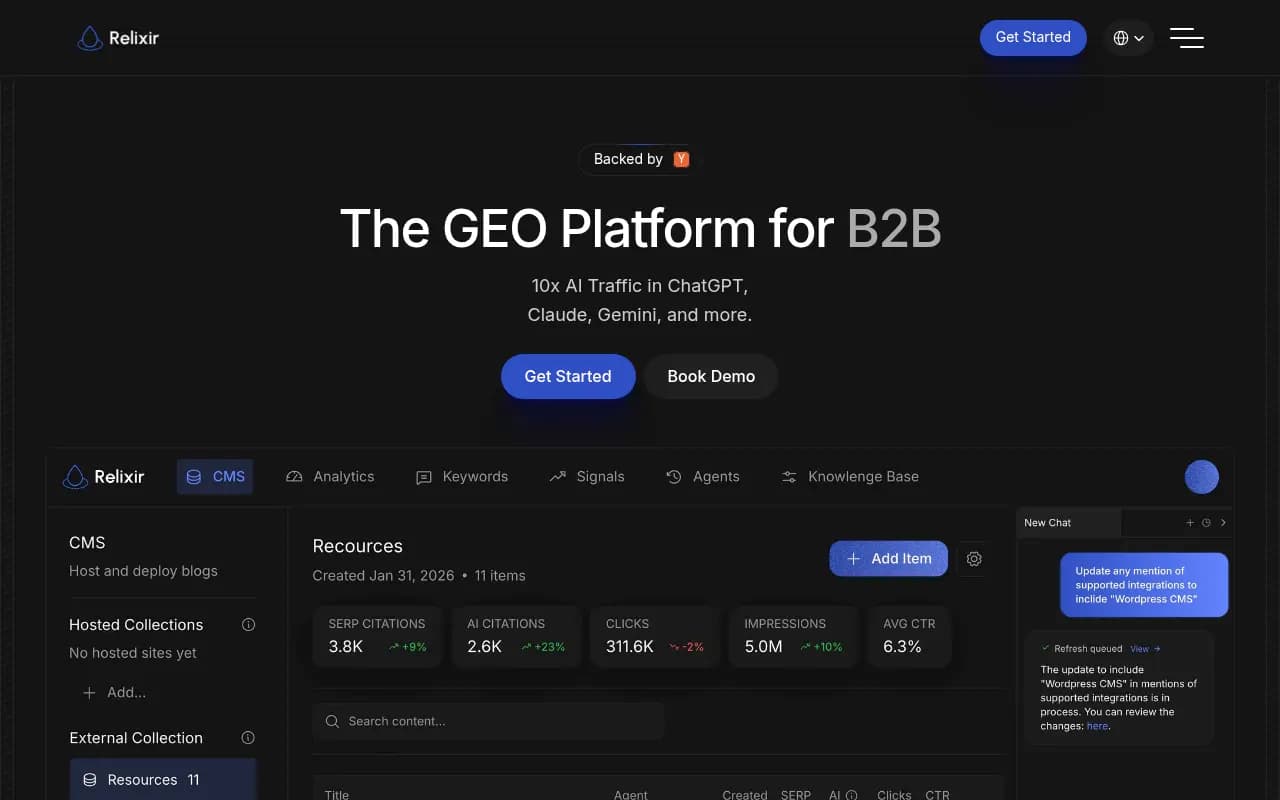
Relixir is another platform in this space, combining AI visibility analytics with content generation.
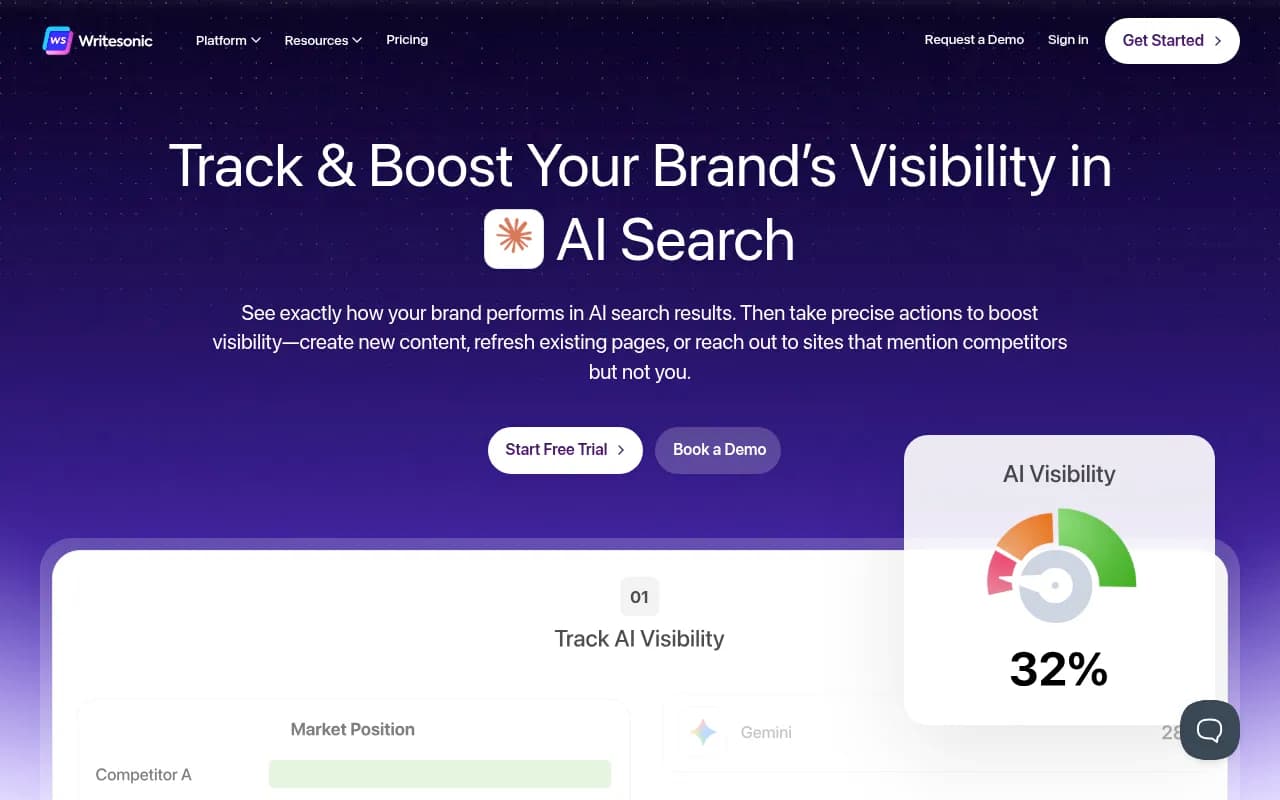
Writesonic has an "Action Center" that surfaces citation gaps and pairs them with content creation tools. It covers both AI and traditional search, which makes it appealing for teams that don't want to run separate workflows.
Monitoring-focused platforms
These are the majority of the market. They're useful for understanding your current AI visibility but don't help you improve it.
Otterly.AI is a lightweight, affordable option for teams that just want to start tracking brand mentions across AI engines without a big investment.

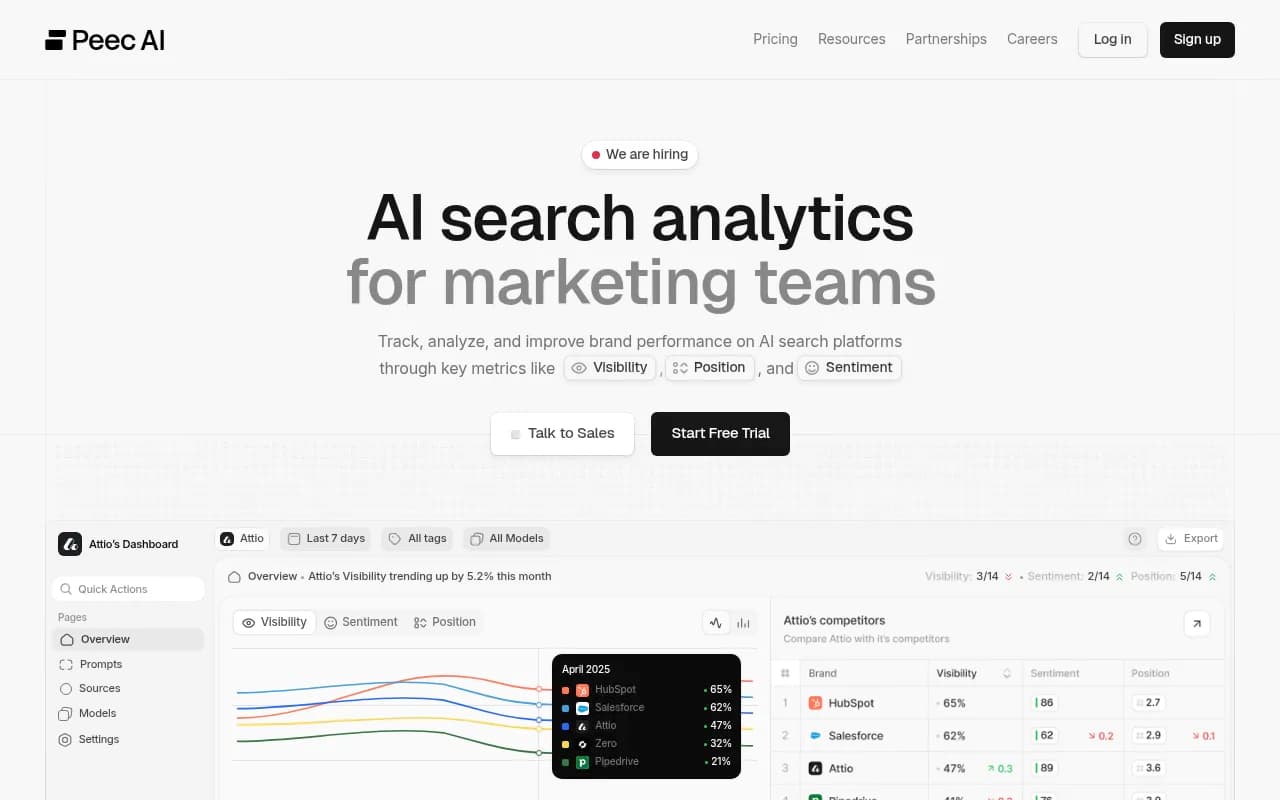
Peec AI offers multi-language tracking, competitor source analysis, and daily monitoring. Good for international brands that need visibility across regions.
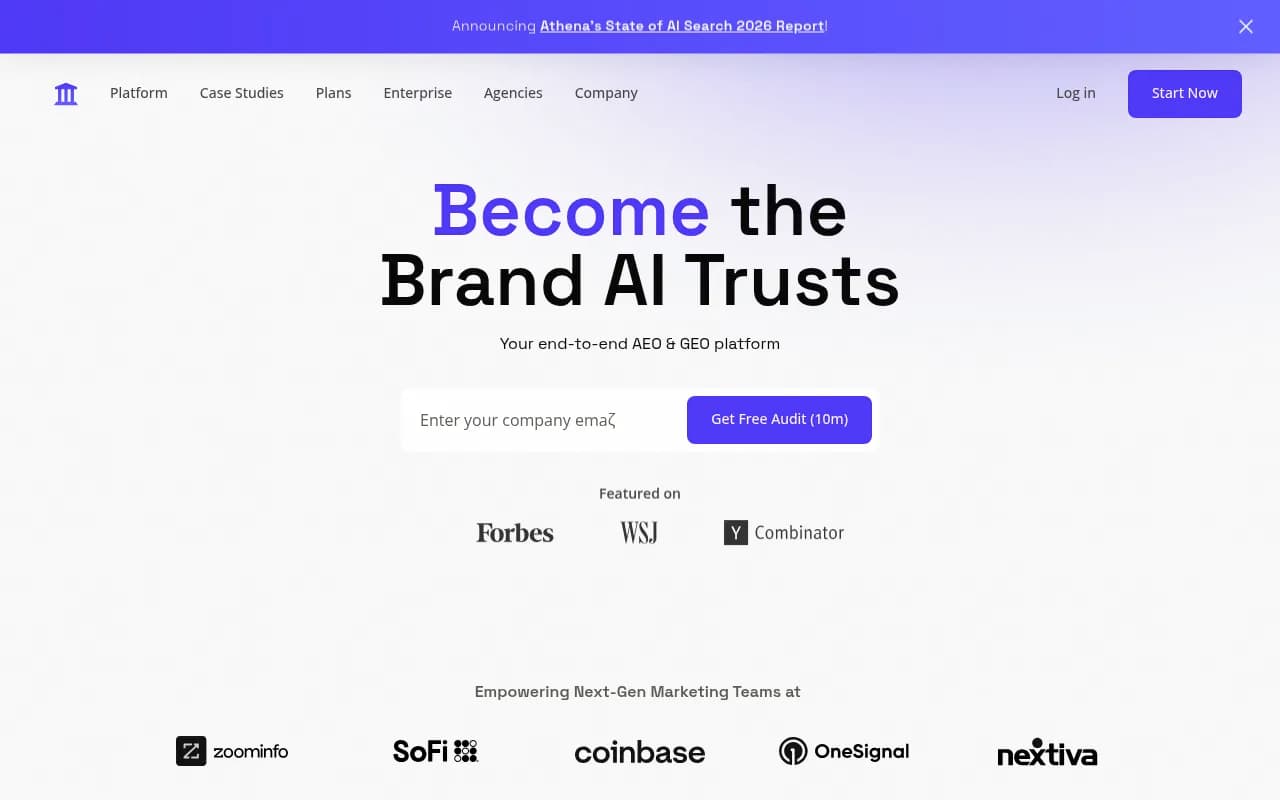
AthenaHQ has strong prompt volume tracking and a GEO score metric. It covers 8+ AI search engines and has Shopify integration for ecommerce teams. The gap is on the content side -- it monitors well but doesn't help you create.
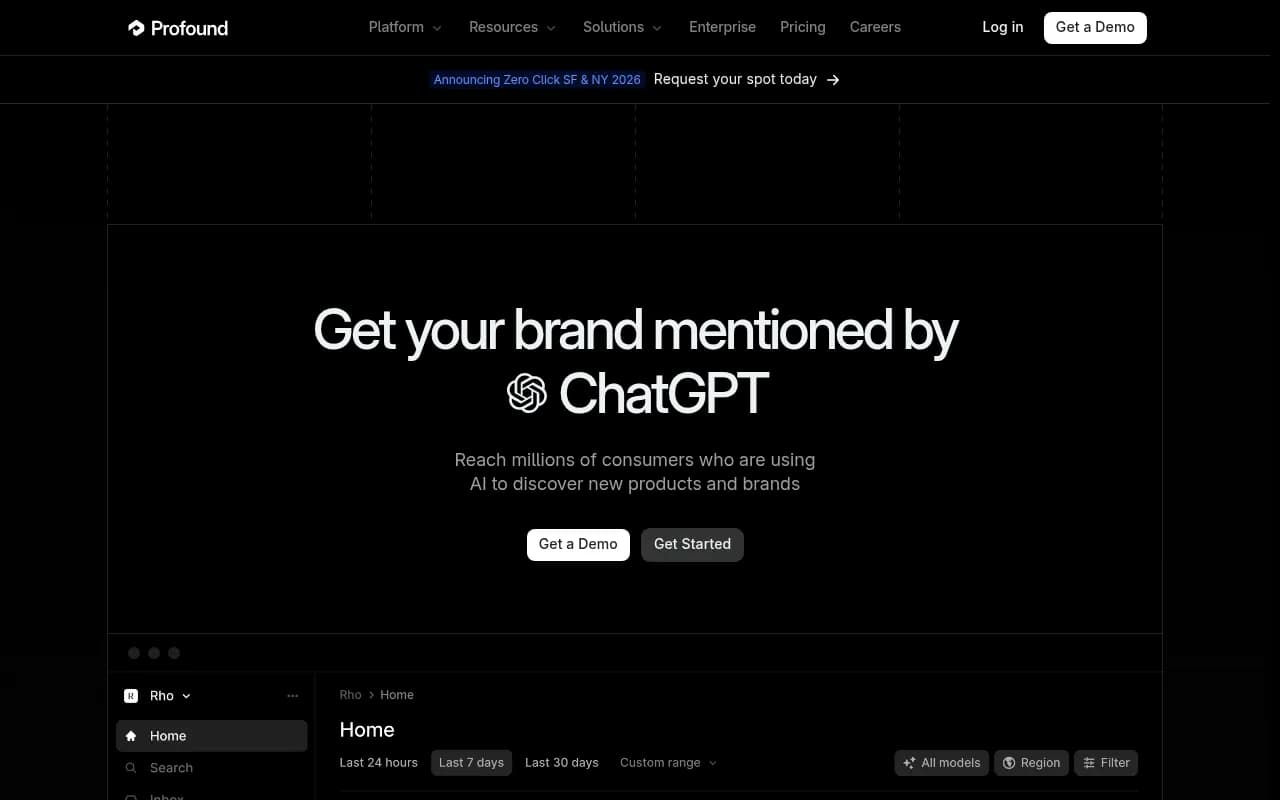
Profound is enterprise-focused with deep analytics and search volume estimates. It tracks ChatGPT Shopping, which is genuinely useful for product brands. The pricing is custom and tends to be cost-prohibitive for smaller teams.
Scrunch monitors how AI assistants describe your brand and competitors. Solid for brand reputation tracking.
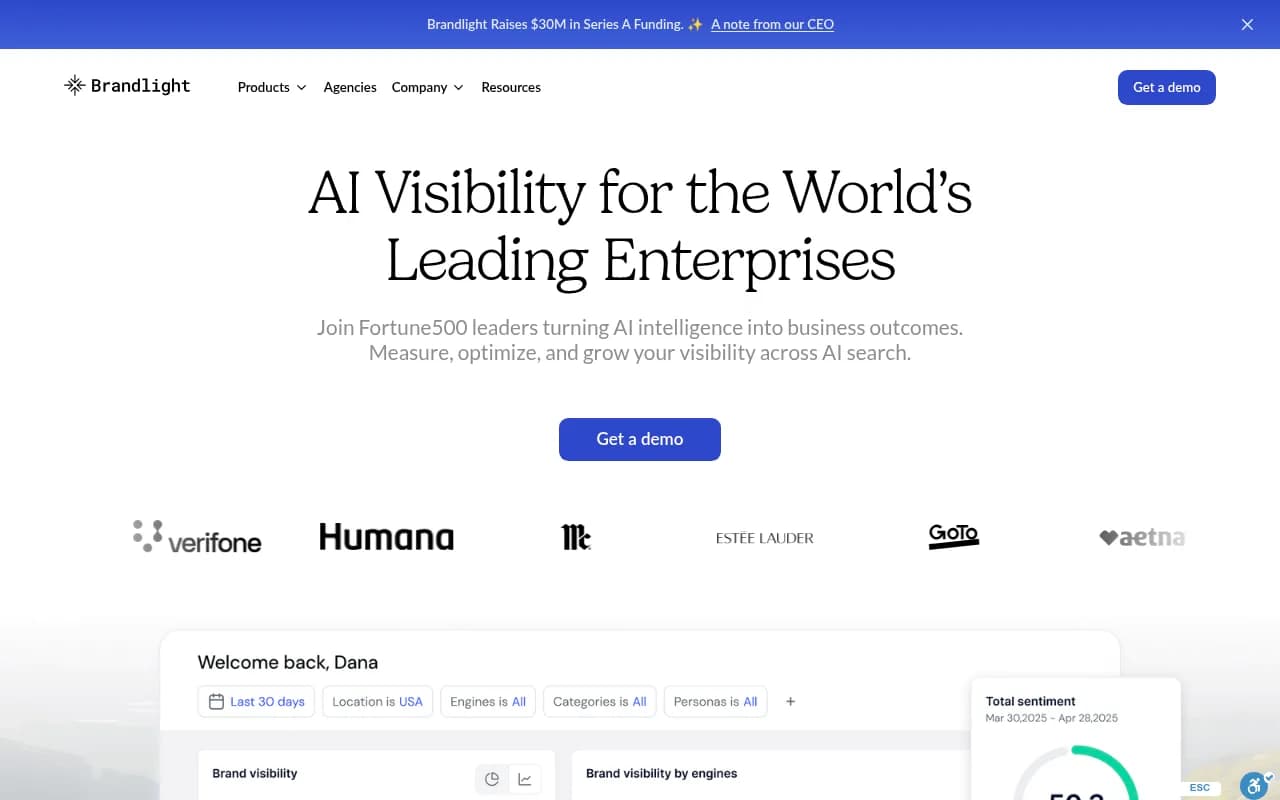
Brandlight.ai focuses on brand monitoring across AI search engines with sentiment analysis.
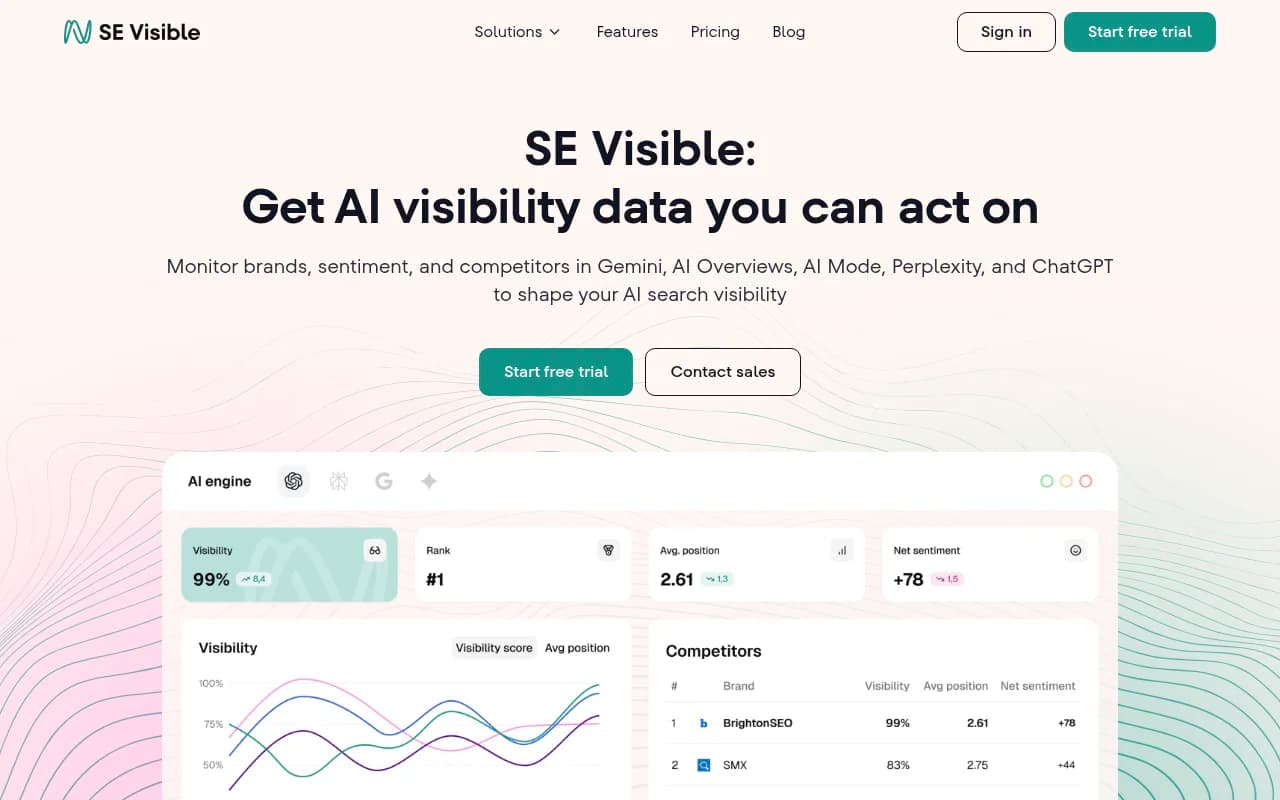
SE Visible (from SE Ranking) combines a visibility score, net sentiment score, and competitor benchmarking. It covers Google AI Overviews, AI Mode, Gemini, ChatGPT, and Perplexity. Starting at $189/month, it's positioned for CMOs and agencies.
Traditional SEO tools with AI add-ons
Some established SEO platforms have bolted AI visibility features onto their existing products. These can work well if you're already paying for the platform, but they're rarely as deep as dedicated GEO tools.
Semrush has an AI Toolkit covering AI Overviews, ChatGPT, Gemini, and Copilot. It's expensive at higher tiers and uses fixed prompts, which limits how precisely you can track your specific competitive landscape.
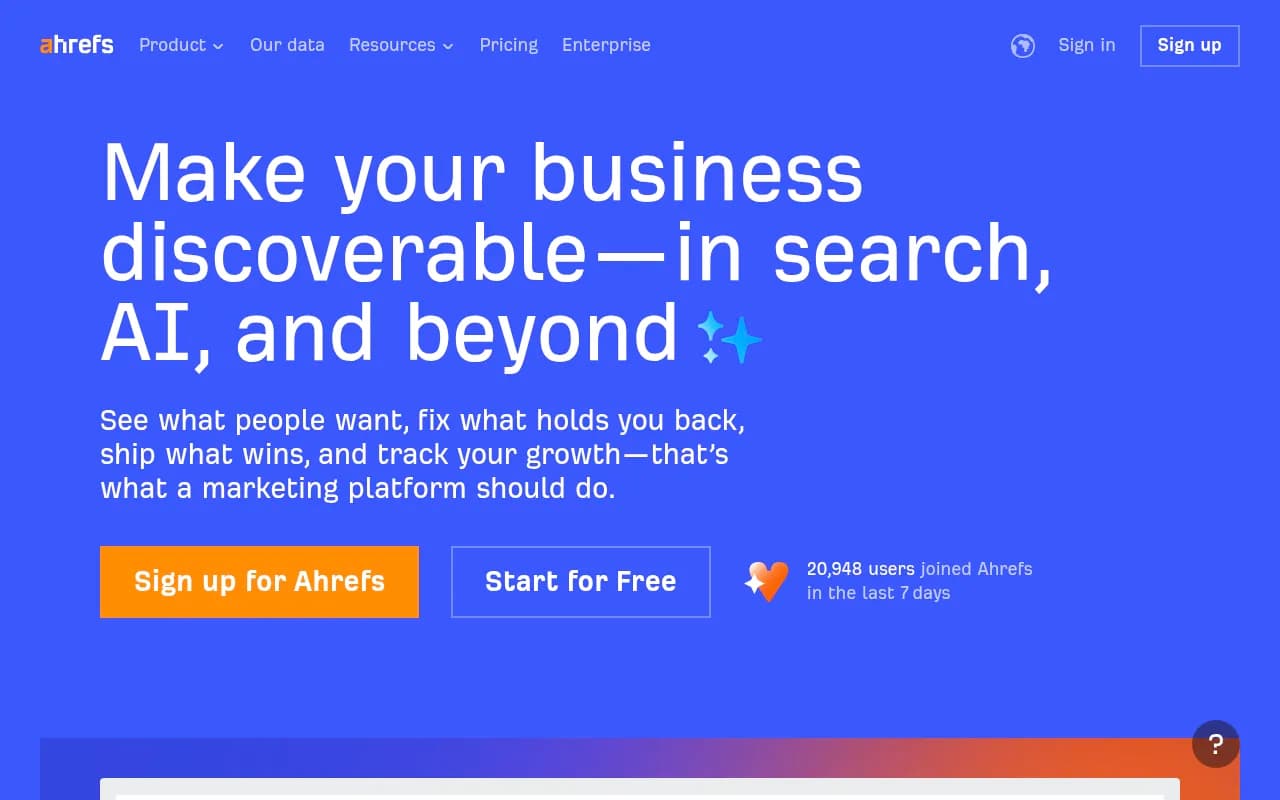
Ahrefs Brand Radar tracks brand mentions in AI search but uses fixed prompts and has no AI traffic attribution -- so you can see mentions but can't connect them to actual site visits or conversions.
SE Ranking offers a hybrid SEO/GEO dashboard with competitor benchmarking. Useful if you want one tool for both traditional and AI search.
Comparison table: top GEO platforms in 2026
| Platform | AI models covered | Content generation | Crawler logs | Traffic attribution | Reddit/YouTube tracking | Starting price |
|---|---|---|---|---|---|---|
| Promptwatch | 10+ (ChatGPT, Claude, Gemini, Perplexity, Grok, DeepSeek, Copilot, Meta AI, Mistral, Google AI Overviews) | Yes (built-in AI writer) | Yes | Yes (snippet, GSC, logs) | Yes | $99/mo |
| Profound | ChatGPT, Perplexity, others | No | No | No | No | Custom |
| AthenaHQ | 8+ LLMs | No | No | No | No | $295/mo |
| Otterly.AI | Selected LLMs | No | No | No | No | Affordable tiers |
| Peec AI | Selected LLMs | No | No | No | No | Varies |
| Scrunch | ChatGPT, Claude, others | No | No | No | No | Varies |
| SE Visible | AIOs, AI Mode, Gemini, ChatGPT, Perplexity | No | No | No | No | $189/mo |
| Writesonic | Multi-engine | Yes (Action Center) | Partial | No | No | $49/mo |
| Semrush AI Toolkit | AI Overviews, ChatGPT, Gemini, Copilot | No | No | No | No | $119.95/mo add-on |
| Ahrefs Brand Radar | Selected | No | No | No | No | Included in Ahrefs |
How to choose the right GEO platform
The right tool depends on what problem you're actually trying to solve.
If you're just starting out and want to understand your AI visibility
Start with a monitoring-focused tool. Otterly.AI or Peec AI give you a baseline without a big commitment. SE Visible is worth considering if you want more structured reporting and competitor benchmarking.
If you're an SEO team that already uses Semrush or Ahrefs
The AI add-ons in those platforms are a reasonable starting point. They're not as deep as dedicated GEO tools, but they reduce the number of subscriptions you're managing. Just know the limitations: fixed prompts, no traffic attribution, no content generation.
If you want to actually improve your AI visibility (not just track it)
This is where monitoring-only tools fall short. You need a platform that shows you the specific gaps in your content and helps you fill them. Promptwatch's Answer Gap Analysis and built-in content generation are built exactly for this. The fact that it also closes the loop with traffic attribution -- connecting AI citations to actual revenue -- makes it the most complete option in the market right now.
If you're an agency managing multiple brands
Look for multi-site support, white-label reporting, and the ability to track different personas and regions. Promptwatch's agency and enterprise tiers support this. Search Party is another option oriented toward agency workflows, though it has more limited prompt metrics.
Search Party
If you're an enterprise brand with complex needs
Profound and Bluefish AI are worth evaluating. Both have deep analytics and enterprise-grade features. Bluefish positions itself as an "enterprise GEO powerhouse" with source influence analysis and audience alignment tracking.
Evertune is another enterprise-focused option trusted by larger brands.
What most GEO platforms get wrong
The monitoring-only problem is real, but there's a second issue worth naming: most platforms track the wrong things.
Showing you a visibility score is fine. But if that score doesn't tell you why you're invisible for certain prompts, or what content you'd need to create to change that, it's just a number. Similarly, tracking brand mentions without understanding which sources AI models are actually citing means you can't take meaningful action.
The platforms that get this right are the ones that surface specific, actionable data: which prompts your competitors rank for that you don't, which domains are being cited as sources, which pages on your own site are getting crawled and cited (and which aren't), and how that translates to actual traffic.
That's a harder product to build, which is why most tools haven't done it. But it's the difference between a dashboard and an optimization platform.
A note on Reddit, YouTube, and non-traditional sources
One thing that surprises a lot of marketers: AI models frequently cite Reddit threads, YouTube videos, and forum discussions in their responses. If you're only optimizing your own website, you're missing a significant part of the picture.
Some platforms have started tracking these sources. Promptwatch surfaces Reddit discussions and YouTube content that directly influence AI recommendations -- which gives you a clearer picture of where to publish and what to optimize beyond your own domain.
This matters especially for product categories where community discussions carry a lot of weight. If Reddit threads are shaping what ChatGPT says about your industry, you need to know that.
Pricing overview
GEO platform pricing varies widely depending on the depth of features and the number of sites, prompts, and AI models covered.
| Tier | What you typically get | Price range |
|---|---|---|
| Entry-level | 1 site, limited prompts, basic tracking | Free to $99/mo |
| Mid-range | 2-5 sites, more prompts, competitor tracking | $99-$299/mo |
| Professional | Full feature set, crawler logs, content generation | $249-$579/mo |
| Enterprise | Custom sites, unlimited prompts, API, white-label | Custom pricing |
Promptwatch's tiers specifically: Essential at $99/mo (1 site, 50 prompts, 5 articles), Professional at $249/mo (2 sites, 150 prompts, 15 articles, crawler logs), Business at $579/mo (5 sites, 350 prompts, 30 articles). Annual billing discounts apply across all tiers.
The bottom line
GEO is not optional anymore. AI search is already capturing a significant share of how people discover brands, products, and services -- and that share is growing. The question isn't whether to invest in AI visibility, but how.
Most platforms will show you a dashboard. The useful ones will show you what to do about it. If you're serious about improving your visibility in ChatGPT, Perplexity, Claude, and the rest -- not just measuring it -- look for a platform that combines monitoring with content gap analysis, content generation, and traffic attribution. That combination is what separates optimization from observation.