Key takeaways
- Most AI visibility tools are monitoring dashboards first -- only a handful expose a proper API for custom reporting or workflow automation
- API access is typically gated behind higher-tier plans, so budget matters when evaluating this feature
- The most useful APIs let you pull citation data, prompt rankings, and visibility scores into your own BI tools, CRMs, or agency dashboards
- A few platforms (notably Promptwatch and Profound) go further by pairing API access with content gap analysis and optimization workflows -- not just raw data exports
- If you're an agency or enterprise team, the ability to connect AI visibility data to existing reporting stacks is quickly becoming a baseline requirement
Why API access matters for AI visibility
Most AI visibility tools were built fast, in response to a fast-moving market. The result: a lot of dashboards that show you interesting data but make it hard to do anything with it outside their own interface.
That's fine if you're a solo marketer checking in once a week. But if you're running a marketing agency with 30 clients, or an in-house SEO team that already has a reporting stack in Looker or Data Studio, you need more. You need to pull AI visibility data into the tools you already use, automate alerts, build custom dashboards, and connect AI search performance to actual revenue metrics.
That's where API access becomes the deciding factor.
The problem is that "has an API" means very different things across platforms. Some offer a full REST API with endpoints for prompts, citations, visibility scores, and competitor data. Others have a basic export or a Looker Studio connector and call it an API. A few have nothing at all.
This guide cuts through that. Below, I've broken down which AI visibility platforms actually offer meaningful API or integration capabilities, what you can build with them, and which ones are worth your time if custom workflows are a priority.
What to look for in an AI visibility API
Before diving into specific tools, it helps to know what separates a useful API from a checkbox feature.
The best AI visibility APIs let you:
- Pull visibility scores and citation counts for specific prompts over time
- Access competitor comparison data programmatically
- Retrieve page-level citation data (which pages are being cited, by which AI models)
- Export prompt lists, volumes, and difficulty scores
- Trigger alerts or webhooks when visibility drops or a competitor gains ground
- Push data into BI tools like Looker Studio, Tableau, or custom dashboards
Beyond raw data access, the most valuable platforms also let you close the loop -- connecting visibility data to content workflows and traffic attribution. An API that only exports monitoring data is useful. An API that feeds into a content generation and optimization workflow is genuinely powerful.
The platforms with real API access in 2026
Promptwatch
Promptwatch is one of the few platforms that explicitly offers both an API and a Looker Studio integration as part of its core product. The API lets you pull prompt-level visibility data, citation counts, and competitor comparisons into whatever reporting environment you're already using.
What makes this more than just a data pipe: Promptwatch is built around an action loop rather than passive monitoring. The API feeds into a broader workflow where you identify content gaps, generate optimized content, and then track whether that content actually gets cited by AI models. For agencies managing multiple clients, this means you can build custom reporting that shows not just where clients stand, but what's been done to improve their position and whether it worked.
The platform also supports Looker Studio natively, which is the path of least resistance for most marketing teams that already live in Google's ecosystem.

Pricing starts at $99/month for the Essential plan, with API access available on higher tiers. The Business plan at $579/month covers 5 sites and 350 prompts, which is where most agency use cases land.
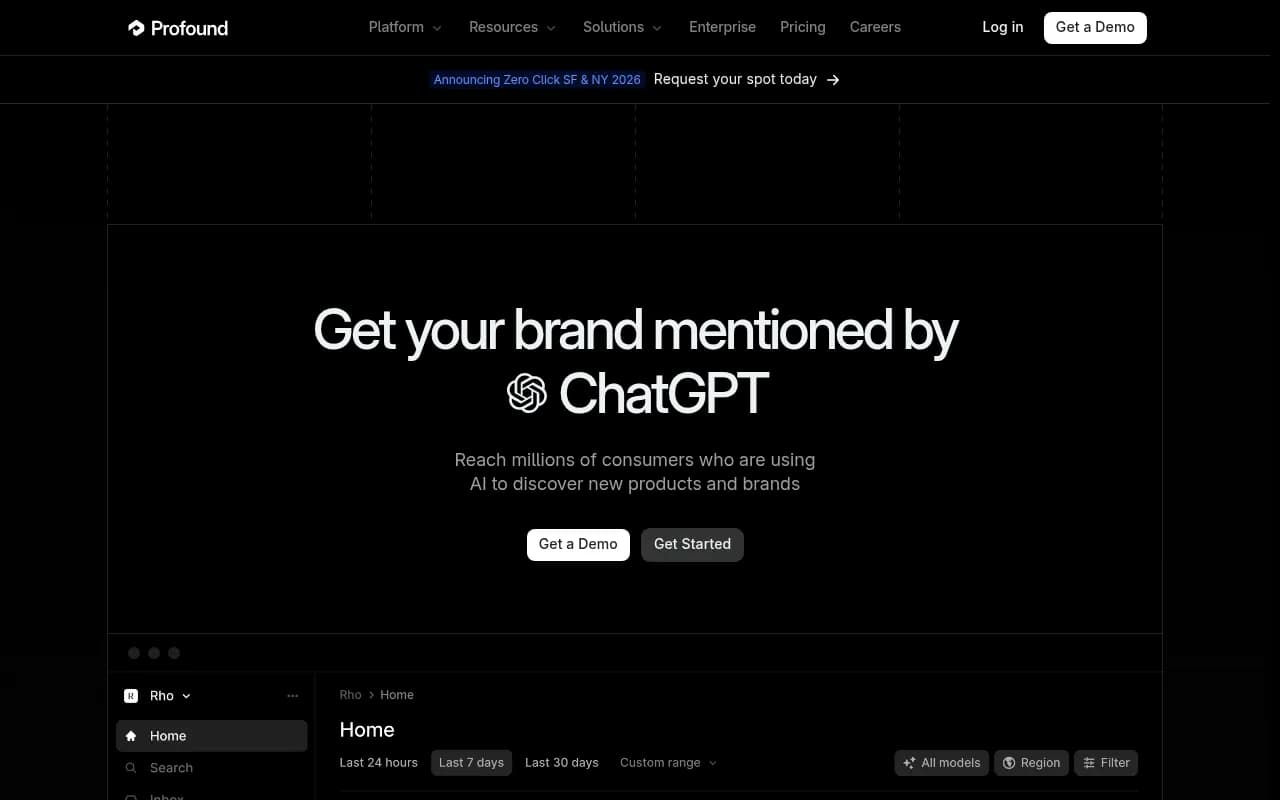
Profound
Profound is the other platform that takes API access seriously. Their developer docs are public, and the API covers answer engine insights, prompt volumes, and agent analytics. For enterprise teams, Profound also has an agency mode with separate brand configurations -- useful if you're managing multiple clients and want to keep data siloed.
The main trade-off with Profound is cost. It's positioned as an enterprise solution, and pricing reflects that. If you're a smaller agency or a startup trying to build a lightweight custom dashboard, the entry cost can be a barrier.
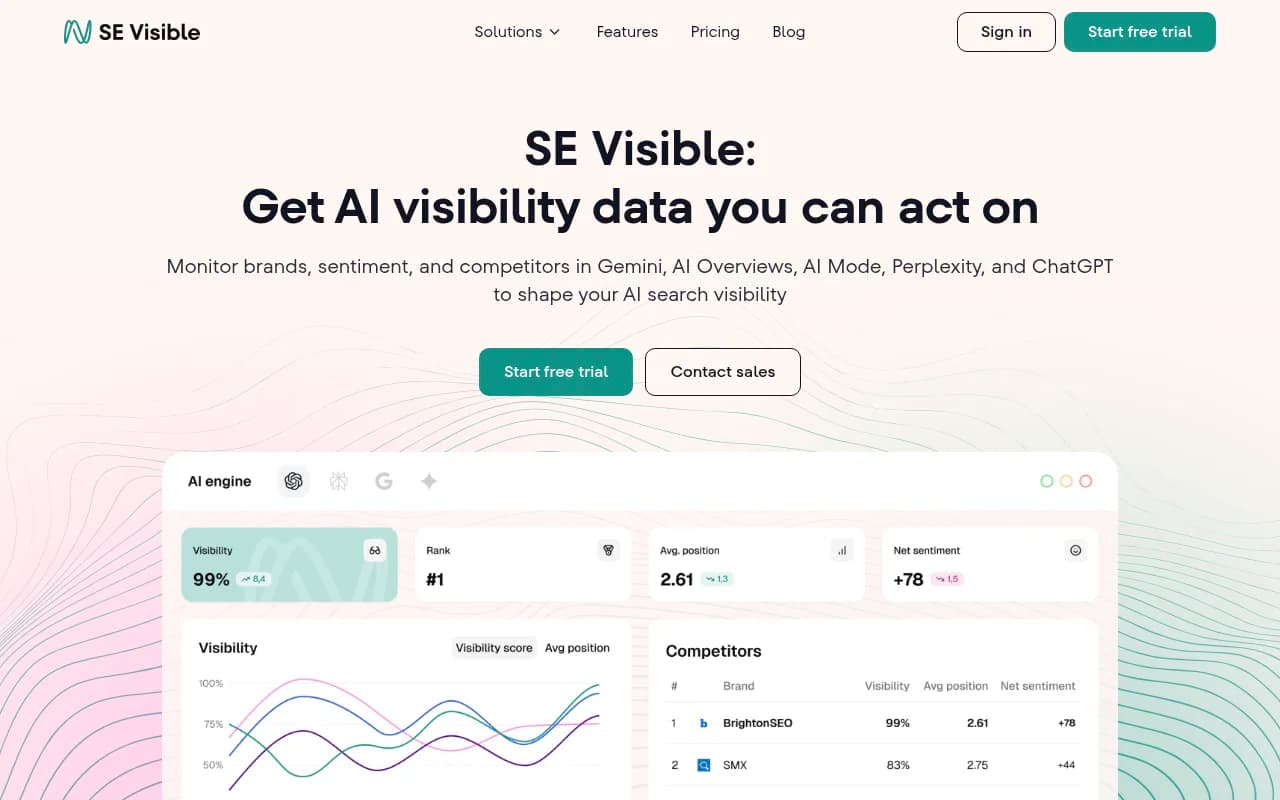
SE Ranking / SE Visible
SE Ranking has been building out its AI visibility features through SE Visible, and the broader SE Ranking platform has API access that covers rank tracking and visibility data. For teams already using SE Ranking for traditional SEO, this is a natural extension -- you can pull AI visibility data through the same API infrastructure you're already using for keyword rankings.
The AI-specific features are less mature than dedicated GEO platforms, but the API is well-documented and the pricing is more accessible.
Semrush
Semrush has an API, and it's one of the most mature in the SEO space. The AI visibility features (via the AI Toolkit) are newer and more limited -- fixed prompt sets, no custom prompt tracking -- but if your team already uses the Semrush API for reporting, you can layer in AI visibility data without adding another vendor.
The limitation worth knowing: Semrush uses fixed prompts rather than letting you define your own, which constrains what you can actually monitor and report on.
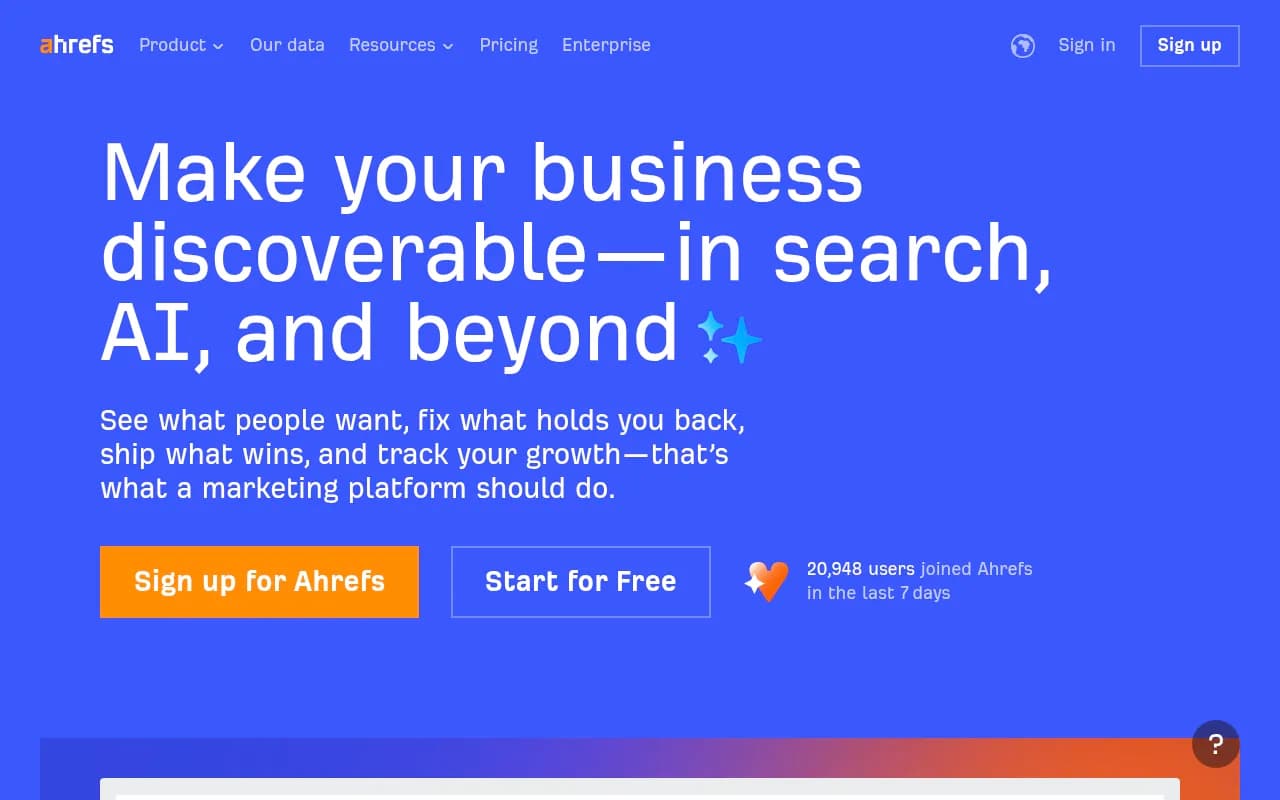
Ahrefs Brand Radar
Ahrefs has added AI brand monitoring through Brand Radar, and there's API access through the broader Ahrefs API. Similar to Semrush, the AI features use fixed prompts and don't support AI traffic attribution. Useful as a supplement if you're already an Ahrefs shop, but not a standalone solution for serious AI visibility work.
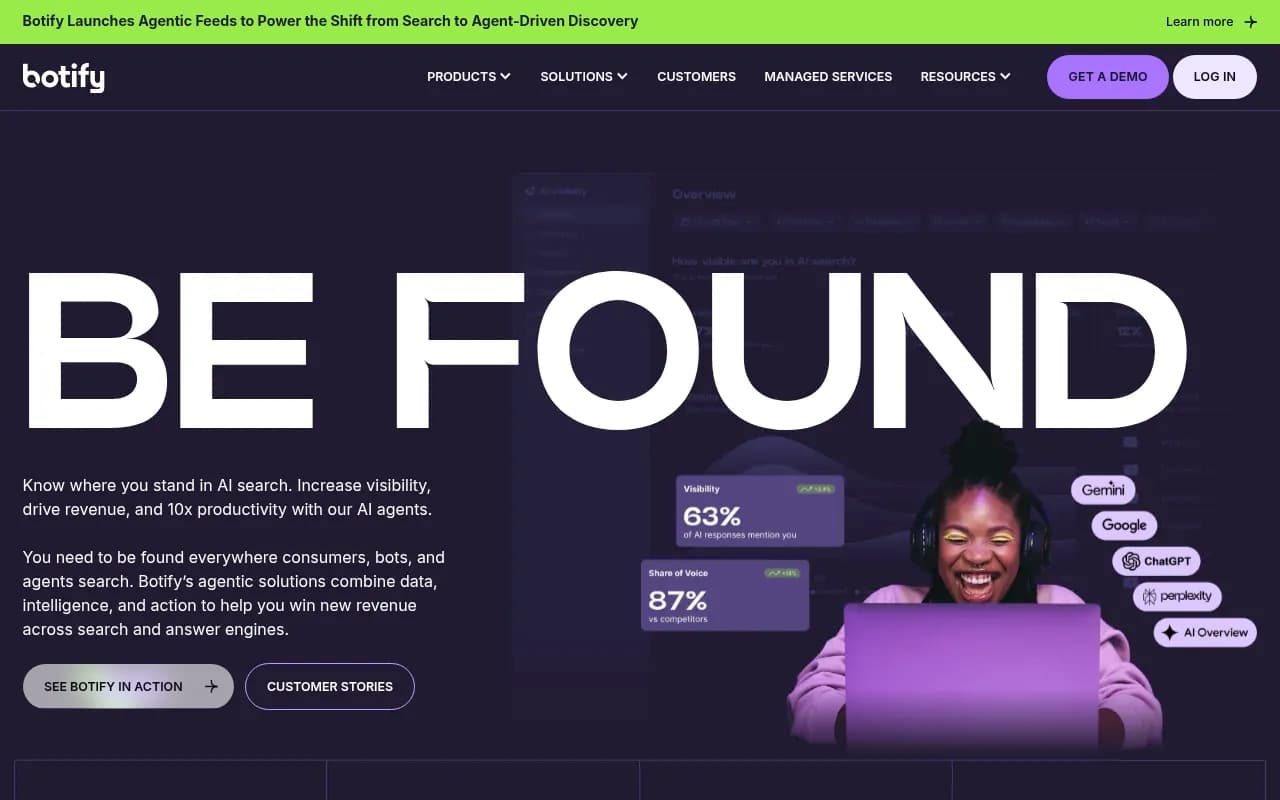
Botify
Botify sits at the intersection of technical SEO and AI search visibility. Their API is enterprise-grade and well-suited to teams that need to monitor how AI crawlers interact with large sites. If your primary concern is technical -- crawler logs, indexing issues, how AI bots are reading your pages -- Botify's API is worth evaluating.
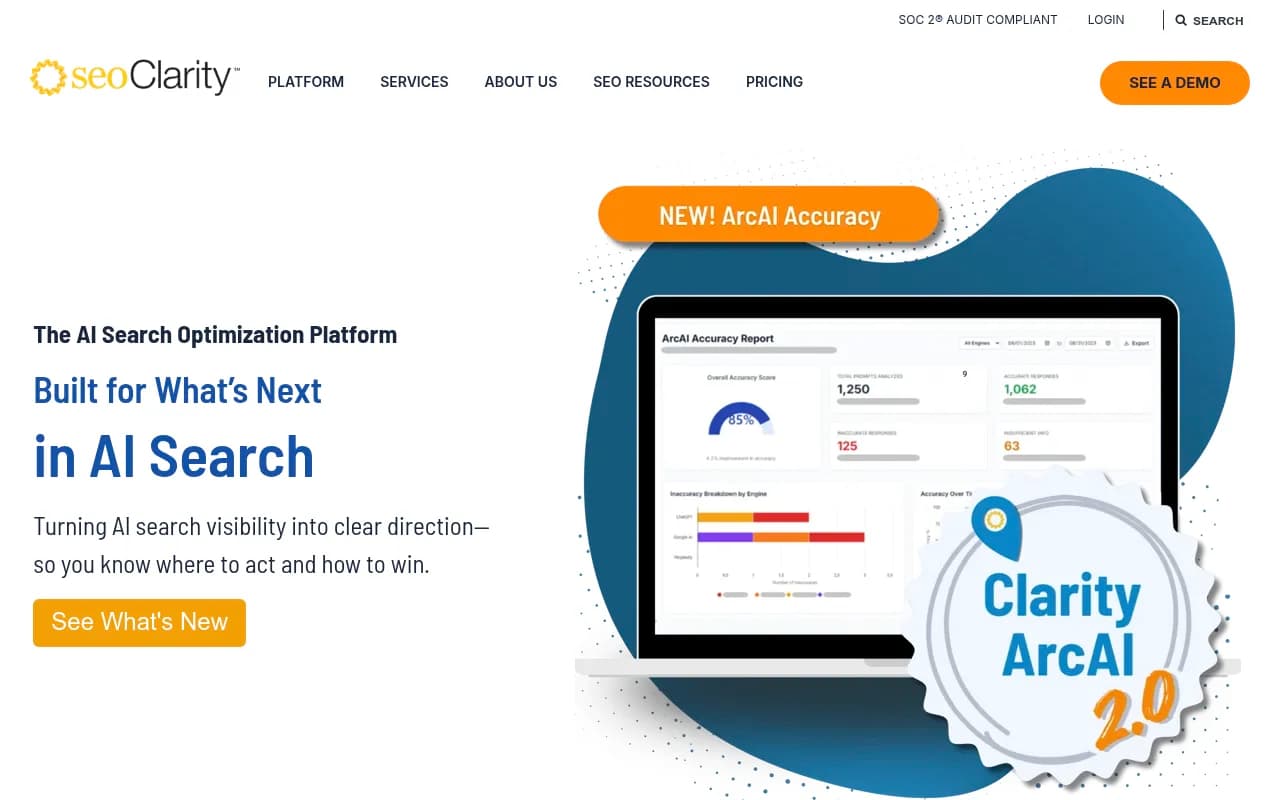
seoClarity
seoClarity is another enterprise SEO platform that has added AI search visibility tracking. The API is robust and designed for large-scale data operations. Like Botify, it's positioned for enterprise teams with complex reporting needs and existing data infrastructure.
Tools without meaningful API access (but worth knowing)
Several popular AI visibility tools don't offer a real API, or only offer it on enterprise plans with custom pricing. Worth flagging:
- Otterly.AI: Good for affordability and basic monitoring, but API access is limited. Fine for teams that just need the dashboard.
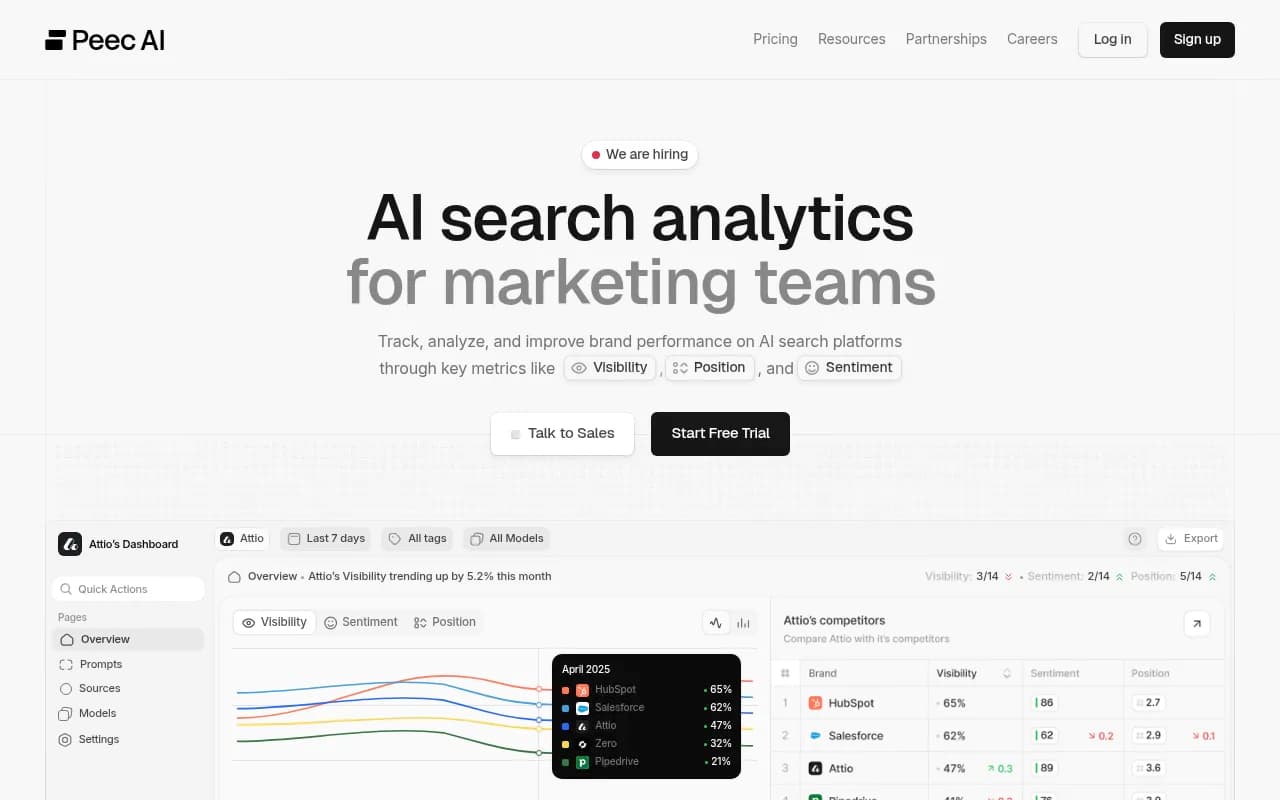
- Peec AI: Strong on smart suggestions and multi-language tracking, but not built for custom integrations.
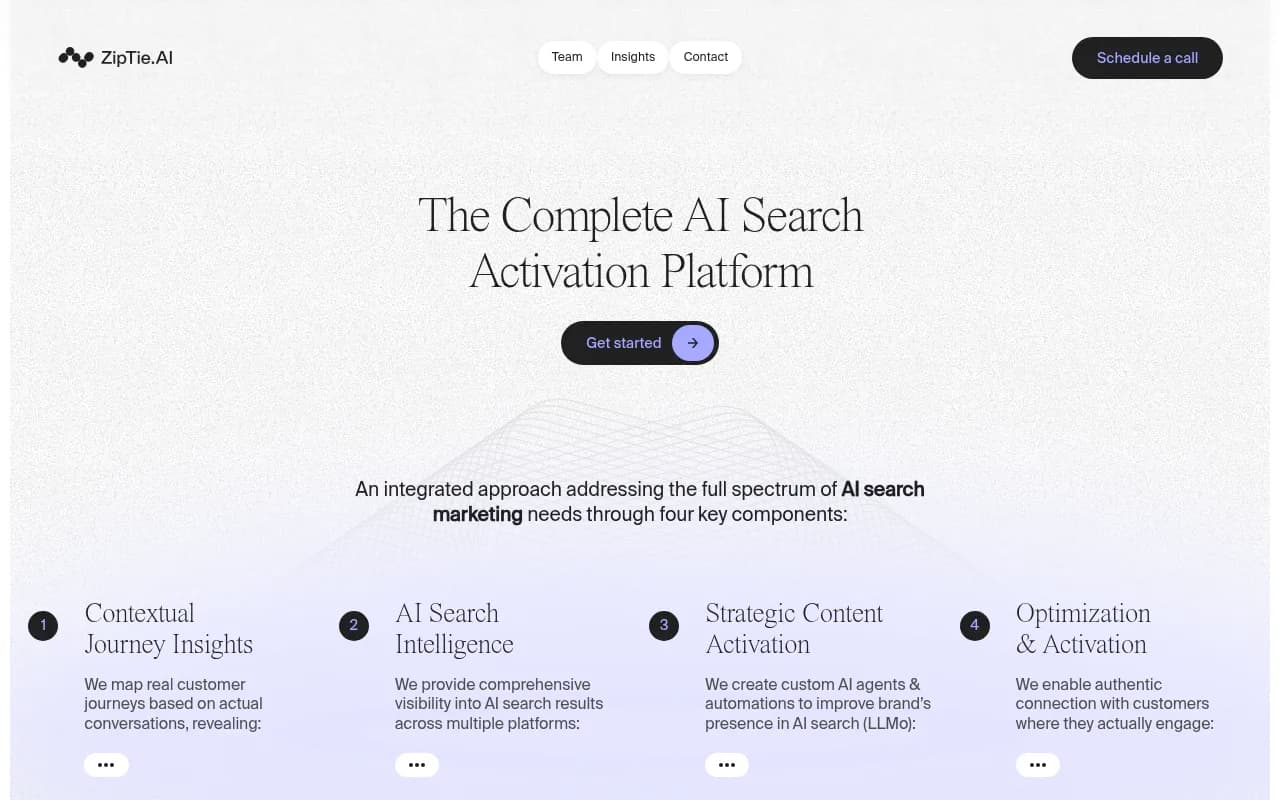
- ZipTie: Deep analysis features, but integration options are constrained compared to the enterprise platforms.
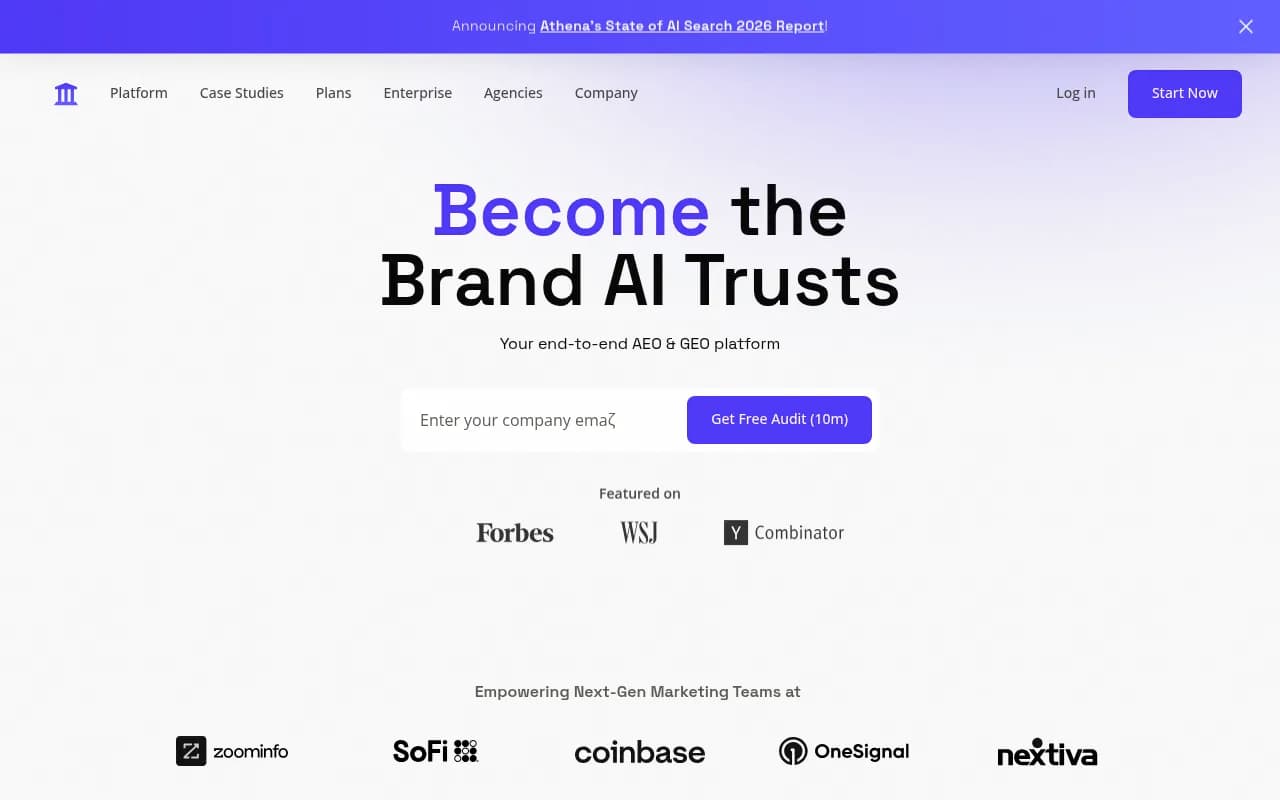
- Athena HQ: Monitoring-focused with no content optimization or API-driven workflows.

Comparison: API and integration capabilities across platforms
| Platform | API available | Looker Studio | Webhooks/alerts | Custom prompts | Content generation | Best for |
|---|---|---|---|---|---|---|
| Promptwatch | Yes (higher tiers) | Yes (native) | Yes | Yes | Yes (built-in AI writer) | Agencies, in-house teams wanting full workflow |
| Profound | Yes | No | Yes | Yes | Limited | Enterprise brands, agencies |
| SE Ranking / SE Visible | Yes | Yes | Yes | Yes | No | Teams already on SE Ranking |
| Semrush | Yes (mature) | Yes | Yes | No (fixed prompts) | No | Existing Semrush users |
| Ahrefs Brand Radar | Yes (limited) | No | No | No (fixed prompts) | No | Existing Ahrefs users |
| Botify | Yes (enterprise) | Yes | Yes | Yes | No | Technical SEO, large sites |
| seoClarity | Yes (enterprise) | Yes | Yes | Yes | No | Enterprise SEO teams |
| Otterly.AI | Limited | No | No | Yes | No | Budget monitoring |
| Peec AI | No | No | No | Yes | No | Multi-language monitoring |
| ZipTie | No | No | No | Yes | No | Deep analysis, no integrations |
What you can actually build with these APIs
The question isn't just "does it have an API?" -- it's "what can I realistically build?"
Agency client dashboards
The most common use case. You pull visibility scores, citation counts, and competitor data for each client into a shared Looker Studio or Tableau dashboard. Clients see their AI visibility trend over time without needing to log into another platform. Promptwatch's native Looker Studio connector makes this straightforward; Profound requires more custom work but the data is richer.
Automated weekly reports
Set up a script that pulls the previous week's visibility data every Monday and formats it into a report. Combine with Google Search Console data (via GSC API) to show both traditional and AI search performance side by side. This is where having a well-documented REST API matters -- you want endpoints that are stable and return consistent data structures.
Slack or email alerts
Webhook support lets you trigger notifications when something changes -- a competitor gains citations for a key prompt, your visibility score drops below a threshold, or a new prompt starts generating volume. Most enterprise platforms support this; most budget tools don't.
Content workflow automation
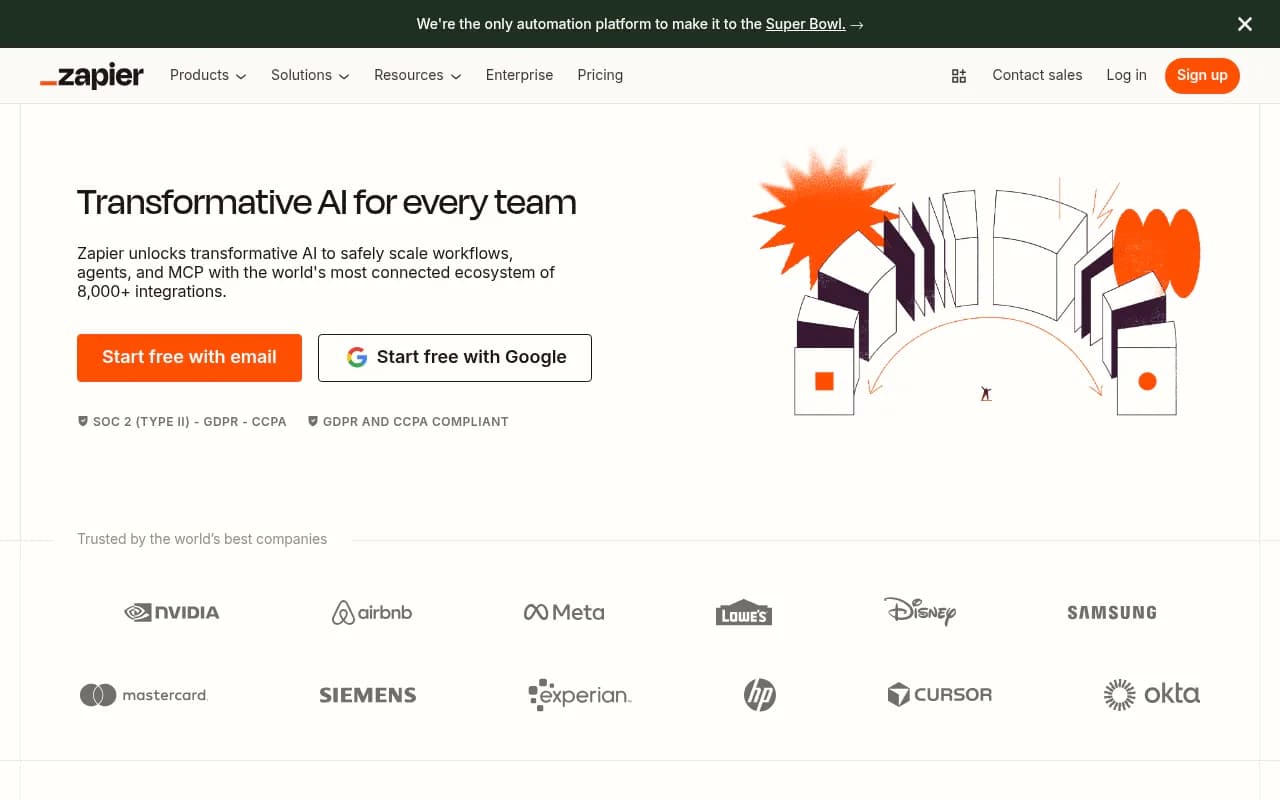
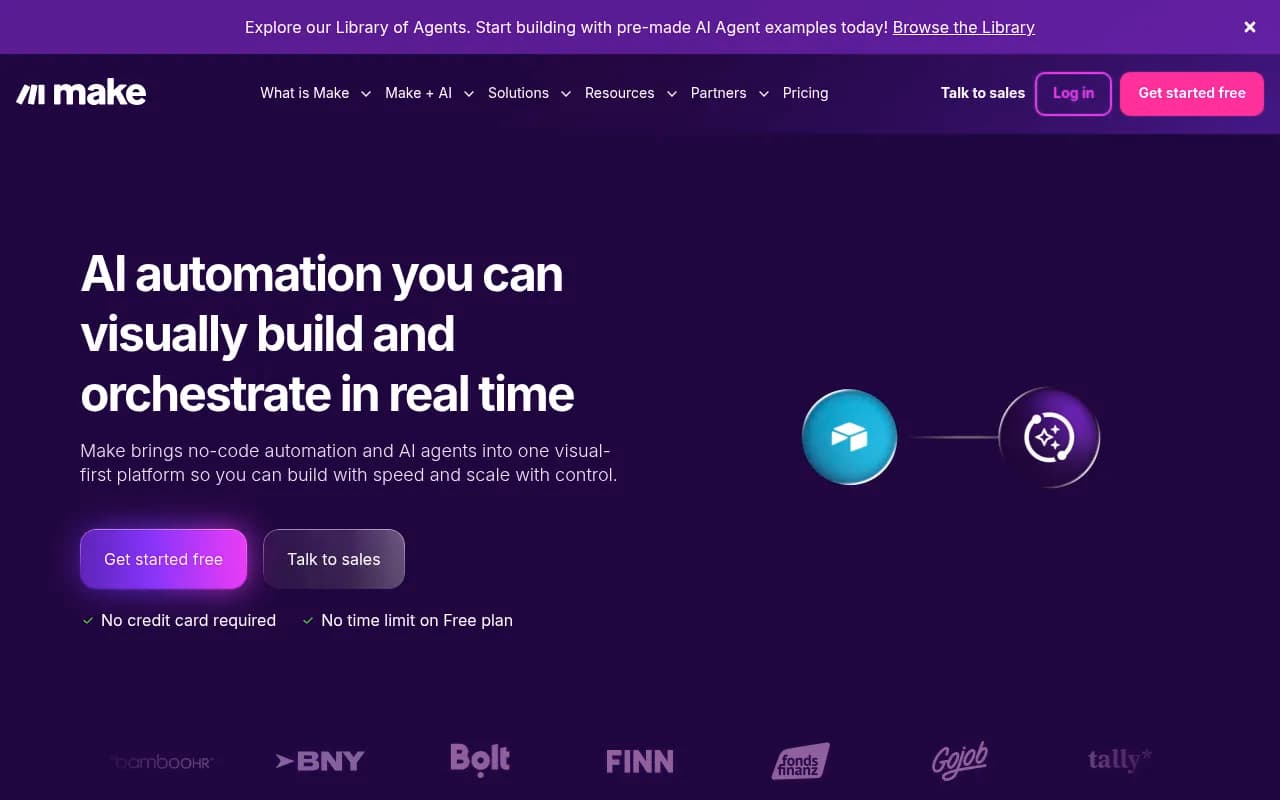
This is the more advanced use case, and it's where most platforms fall short. The idea: when the API surfaces a content gap (a prompt where competitors rank but you don't), it automatically creates a task in your project management tool, or triggers a content brief generation. Promptwatch's built-in AI writing agent handles this within the platform. For other tools, you'd need to wire this together yourself using something like Zapier or Make.
Revenue attribution
The most valuable workflow, and the hardest to build. The goal is connecting AI visibility data to actual traffic and conversions. Promptwatch supports this through a code snippet, GSC integration, or server log analysis. For other platforms, you'd need to build the attribution layer yourself, which requires combining API data with your analytics stack.
How to choose the right platform for your workflow needs
The honest answer depends on what you're trying to build and how much engineering capacity you have.
If you want a platform that handles the full workflow -- monitoring, content gap analysis, content generation, and reporting -- without needing to wire things together yourself, Promptwatch is the most complete option. The API and Looker Studio integration mean you can still pull data into external tools, but you're not forced to.
If you're an enterprise team with existing data infrastructure and engineering resources, Profound or seoClarity give you more raw data to work with and more flexibility in how you use it.
If you're already paying for Semrush or Ahrefs and just want to add AI visibility to your existing reporting, the built-in AI features are a reasonable starting point -- just go in knowing the prompt coverage is limited.
If budget is the primary constraint and you don't need custom integrations, Otterly.AI or Peec AI are fine for basic monitoring. You'll outgrow them if your needs get more complex, but they're a low-risk starting point.
A note on the broader automation stack
AI visibility data doesn't live in isolation. The teams getting the most value from these APIs are the ones connecting visibility data to their broader marketing stack -- CRM, content calendar, analytics, and project management tools.
A few tools worth knowing about if you're building custom workflows around AI visibility data:
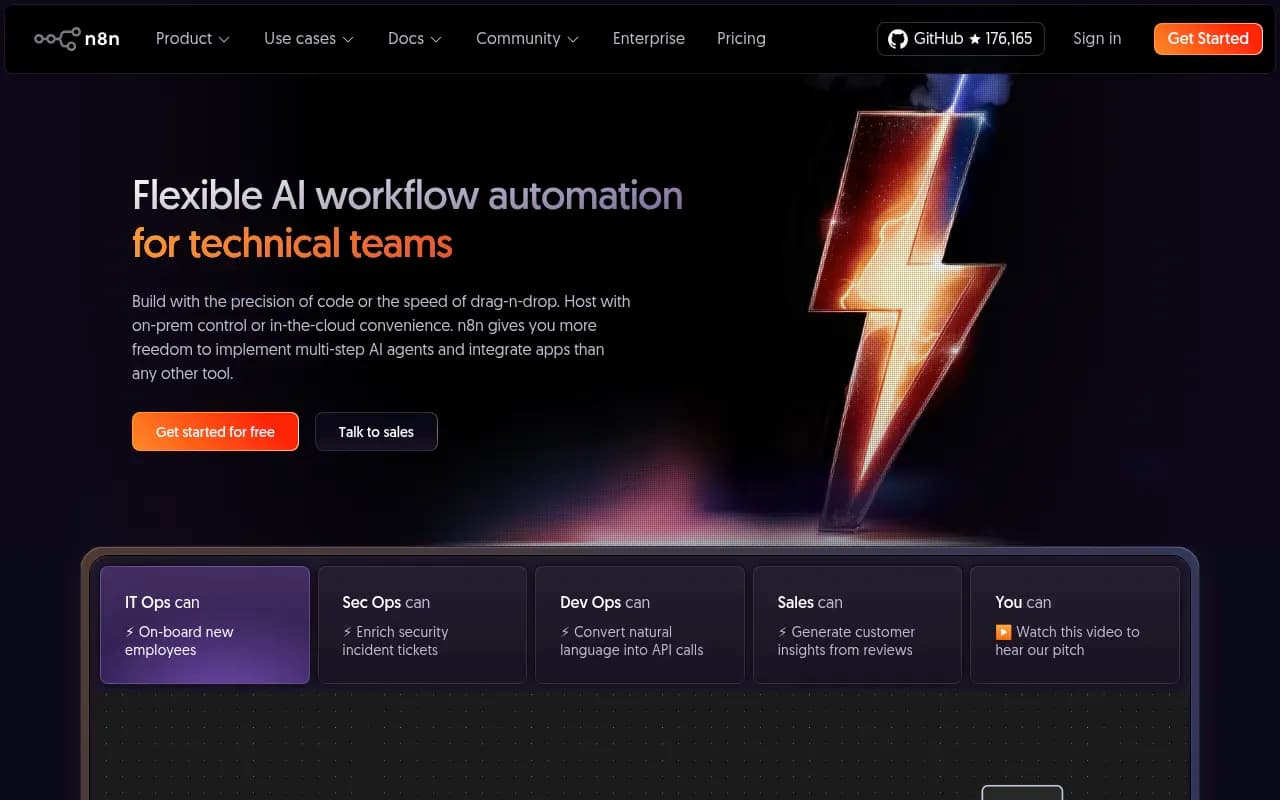
- n8n is an open-source workflow automation tool that's become popular for exactly this kind of custom integration work. If you need to connect an AI visibility API to Notion, Slack, Airtable, and your CMS simultaneously, n8n handles it without the per-task pricing that makes Zapier expensive at scale.
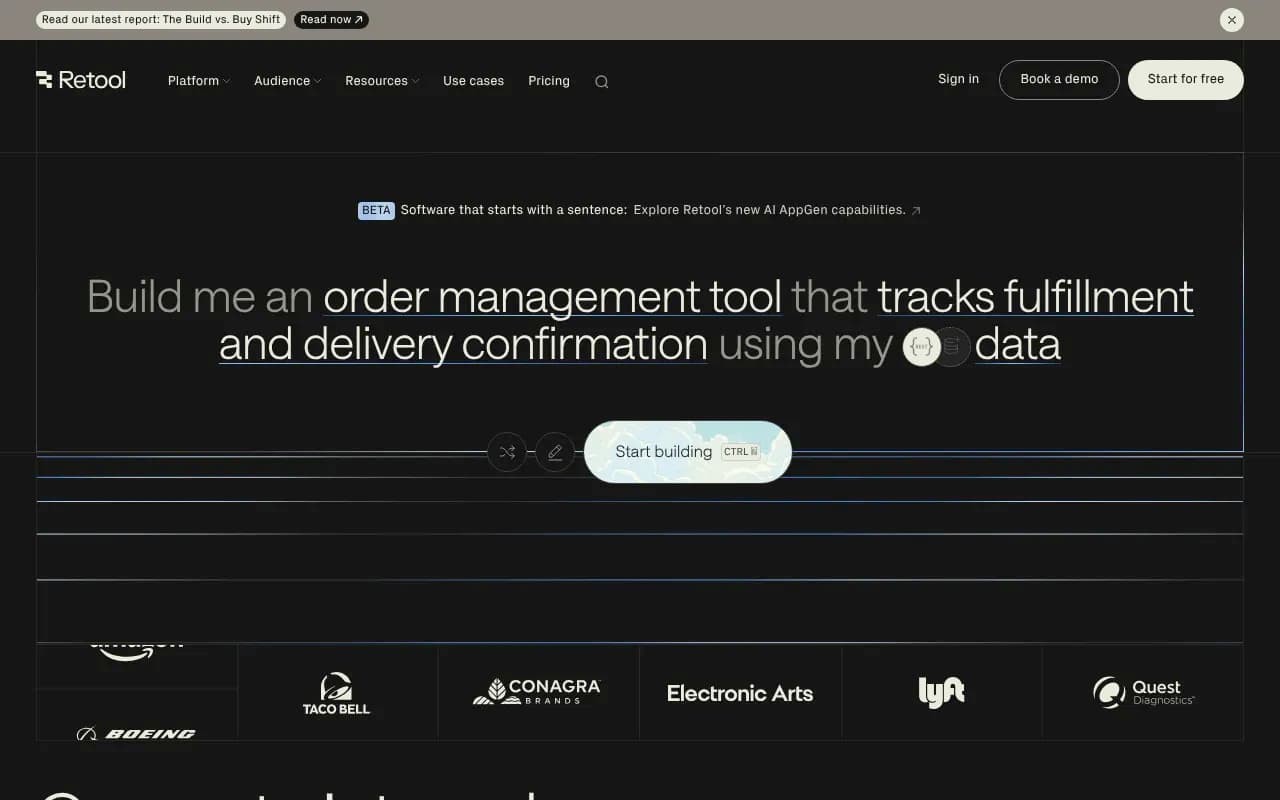
- Retool is worth considering if you want to build an internal dashboard that combines AI visibility data with other data sources. It's low-code but gives you enough flexibility to build something genuinely useful.
The bottom line
API access in AI visibility tools is still maturing. A year ago, most platforms didn't have one at all. Now, the enterprise players have solid APIs, and the mid-market is catching up.
The key distinction to keep in mind: an API that only exports monitoring data is useful for reporting. An API that feeds into a content optimization workflow is useful for actually improving your AI visibility. Most platforms only do the first. If you care about the second, your shortlist gets short quickly.
For most marketing teams and agencies in 2026, Promptwatch hits the right balance -- real API access, native Looker Studio integration, and a built-in workflow that takes you from gap identification to content creation to traffic attribution without requiring a custom engineering project to connect the pieces.
For enterprise teams with dedicated data engineering resources and a need for maximum data flexibility, Profound or seoClarity are worth the higher price point.
Either way, if you're evaluating AI visibility platforms and API access isn't on your checklist yet, it should be. The teams building custom workflows around this data today are going to have a meaningful advantage as AI search continues to grow.