Summary
- Citation tracking is fundamentally different from mention counting -- it shows which sources AI models trust and reference, not just whether your brand name appeared
- Most GEO tools stop at mentions. Only a handful track the actual URLs and domains cited by ChatGPT, Perplexity, Claude, and Google AI Overviews
- Promptwatch leads with 880M+ citations analyzed, Answer Gap Analysis that shows missing content, and an AI writing agent that creates content engineered to get cited
- Budget-conscious teams get strong value from Otterly.AI ($29/month) and Peec AI (€89/month) -- both track citations without enterprise pricing
- Enterprise teams should evaluate Profound for scale, Scrunch for brand-focused visibility, and Promptwatch for the complete action loop (find gaps → generate content → track results)
Your brand got mentioned in a ChatGPT answer yesterday. Great. But which source did ChatGPT cite when it mentioned you? Was it your website, a competitor's comparison page, a Reddit thread, or a random blog post from 2019?
That's the difference between mention tracking and citation tracking. One tells you your brand name appeared. The other tells you who's teaching the AI model what to say about you.
In 2026, the teams winning AI search aren't the ones celebrating every mention. They're the ones tracking citations, analyzing which sources AI models trust, and systematically replacing competitor citations with their own content. This guide breaks down the 7 tools that actually track citations -- not just mentions -- and what makes each one worth your attention.
Why citation tracking matters more than mention counts
When ChatGPT or Perplexity mentions your brand, it's pulling information from somewhere. That somewhere is the citation. The citation is the source the AI model trusts enough to reference in its response.
Mention tracking tells you your brand appeared. Citation tracking tells you:
- Which specific URLs AI models are reading and trusting
- Whether those URLs are yours or your competitors'
- Which domains dominate citations in your category
- What content gaps exist on your site that competitors are filling
- Where to publish (your blog, Reddit, YouTube, third-party sites) to maximize citation probability
Most GEO tools stop at "your brand was mentioned 47 times this month." That's a vanity metric. Citation data is actionable. It shows you exactly what content to create and where to publish it.
What separates citation tracking from basic mention monitoring
A mention is binary: your brand name appeared or it didn't. A citation is structural: the AI model referenced a specific source when constructing its answer.
Perplexity makes this explicit -- every answer includes numbered citations linking to sources. ChatGPT Search and Google AI Overviews cite sources less visibly but still pull from specific URLs. Claude and Gemini synthesize information from training data and real-time retrieval.
Citation tracking tools run prompts across these AI models, capture the responses, and extract:
- The exact URLs cited in each response
- The domain authority and type of each cited source (owned site, Reddit, YouTube, news outlet)
- How often each URL gets cited across different prompts
- Which competitors' pages are being cited instead of yours
This is fundamentally different from scraping AI responses for brand mentions. Citation tracking reverse-engineers what AI models consider authoritative.
The 7 tools that actually track citations (not just mentions)
1. Promptwatch -- citation analysis meets content gap fixing
Promptwatch is the only GEO platform that closes the full loop: find citation gaps, generate content to fill them, track the results.

What makes Promptwatch different: it doesn't just show you citation data. It shows you what's missing from your site, then helps you create the content AI models want to cite.
Citation tracking capabilities:
- 880M+ citations analyzed across ChatGPT, Perplexity, Claude, Gemini, Google AI Overviews, and 5 other models
- Page-level citation tracking -- see exactly which URLs are being cited and how often
- Citation & Source Analysis dashboard showing which domains dominate citations in your category
- Reddit & YouTube citation tracking (most competitors ignore these entirely)
- ChatGPT Shopping citation monitoring for product recommendations
The action loop that sets it apart:
- Answer Gap Analysis shows which prompts competitors are visible for but you're not. You see the specific content your site is missing -- the topics, angles, and questions AI models want answers to but can't find on your pages.
- AI writing agent generates articles, listicles, and comparisons grounded in real citation data, prompt volumes, persona targeting, and competitor analysis. This isn't generic SEO filler -- it's content engineered to get cited.
- Track results with visibility scores, page-level citation tracking, and traffic attribution (code snippet, GSC integration, or server log analysis) that connects visibility to revenue.
Additional capabilities:
- AI Crawler Logs showing real-time logs of ChatGPT, Claude, Perplexity crawlers hitting your site
- Prompt Intelligence with volume estimates and difficulty scores
- Competitor heatmaps comparing your AI visibility vs competitors across LLMs
- Multi-language and multi-region tracking with customizable personas
Pricing: Essential $99/mo (1 site, 50 prompts, 5 articles), Professional $249/mo (2 sites, 150 prompts, 15 articles, crawler logs), Business $579/mo (5 sites, 350 prompts, 30 articles). Free trial available.
Best for: Marketing teams that want to optimize AI visibility, not just monitor it. If you need to find content gaps, create content that ranks in AI, and track the results in one platform, Promptwatch is the clear choice.
2. Profound -- enterprise-scale citation monitoring
Profound is the enterprise standard for teams that need citation tracking at scale across dozens of brands and thousands of prompts.
Citation tracking capabilities:
- Tracks citations across ChatGPT, Perplexity, Google AI Overviews, Claude, Gemini
- Domain-level citation analysis showing which competitors dominate citations
- Source type breakdown (owned sites, Reddit, YouTube, news outlets, third-party reviews)
- Historical citation trends over time
What it does well:
- Handles enterprise complexity -- multiple brands, regions, languages
- Strong competitor citation benchmarking
- Reliable data infrastructure for high-volume monitoring
What it doesn't do:
- No content generation or optimization features
- No AI crawler logs
- No Reddit or YouTube-specific tracking
- Monitoring-focused, not action-oriented
Pricing: Custom enterprise pricing (typically starts around $1,000/month).
Best for: Enterprise brands that need citation monitoring at scale and have separate content/optimization workflows.
3. Otterly.AI -- affordable citation tracking for small teams
Otterly.AI is the budget option that still tracks citations, not just mentions.

Citation tracking capabilities:
- Tracks citations in ChatGPT, Perplexity, Google AI Overviews
- Shows which URLs are being cited in AI responses
- Basic competitor citation comparison
What it does well:
- Affordable entry point ($29/month)
- Simple interface focused on core citation data
- Good for small teams testing GEO for the first time
What it doesn't do:
- Limited to 3 AI models (no Claude, Gemini, Grok, etc.)
- No content gap analysis or optimization features
- No AI crawler logs or prompt intelligence
- Basic reporting compared to enterprise tools
Pricing: Starts at $29/month.
Best for: Small teams or solo marketers who need citation data without enterprise pricing.
4. Peec AI -- multi-language citation tracking
Peec AI is the European answer to AI visibility, with strong multi-language citation tracking.

Citation tracking capabilities:
- Tracks citations across ChatGPT, Perplexity, Google AI Overviews, Claude
- Multi-language citation analysis (strong in European languages)
- Source domain tracking and competitor comparison
What it does well:
- Multi-language support beyond English
- Regional tracking for European markets
- Mid-tier pricing (€89/month)
What it doesn't do:
- No content generation features
- Limited prompt intelligence (no volume estimates or difficulty scores)
- No Reddit or YouTube citation tracking
Pricing: Starts at €89/month.
Best for: European brands tracking AI visibility across multiple languages and regions.
5. Scrunch -- brand-focused citation analysis
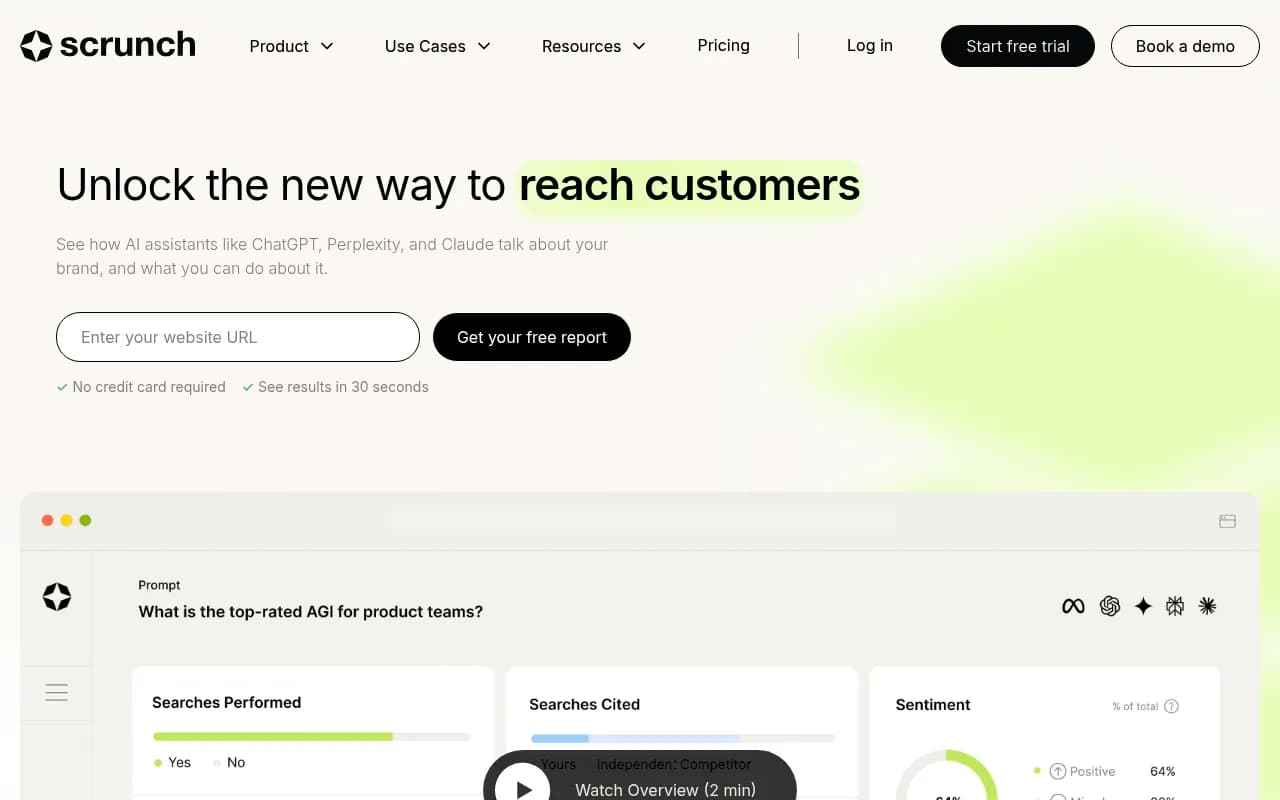
Scrunch positions itself as a brand visibility platform, tracking how AI models cite and describe your brand.
Citation tracking capabilities:
- Tracks citations in ChatGPT, Claude, Perplexity, Google AI Overviews
- Brand sentiment analysis in cited sources
- Competitor citation benchmarking
What it does well:
- Strong brand monitoring angle (not just SEO)
- Citation sentiment analysis (positive/negative/neutral)
- Good for PR and brand teams
What it doesn't do:
- No content gap analysis or generation
- Limited technical SEO features
- No AI crawler logs
Pricing: Custom pricing (typically mid-market range).
Best for: Brand and PR teams focused on how AI models describe and cite their brand.
6. Bluefish AI -- enterprise GEO with citation depth
Bluefish AI is an enterprise platform with deep citation analysis and competitive intelligence.
Citation tracking capabilities:
- Tracks citations across 8+ AI models
- Citation source analysis (domain authority, content type, recency)
- Competitor citation gap analysis
- Historical citation trends
What it does well:
- Deep citation analytics and reporting
- Strong competitor intelligence
- Enterprise-grade data infrastructure
What it doesn't do:
- No content generation or optimization features
- Monitoring-focused, not action-oriented
- Higher price point than mid-market tools
Pricing: Custom enterprise pricing.
Best for: Enterprise teams that need deep citation analytics and competitive intelligence.
7. Search Party -- custom citation tracking for agencies
Search Party is an AI implementation partner that builds custom citation tracking systems for agencies and large brands.
Search Party
Citation tracking capabilities:
- Custom citation tracking tailored to client needs
- API-based citation data extraction
- Custom reporting and dashboards
What it does well:
- Fully customizable citation tracking workflows
- Agency-friendly (white-label, multi-client)
- Can integrate citation data into existing reporting systems
What it doesn't do:
- Not a self-serve platform (requires implementation)
- Higher cost due to custom development
Pricing: Custom project-based pricing.
Best for: Agencies and large brands that need custom citation tracking workflows integrated into existing systems.
Citation tracking comparison table
| Tool | Starting price | AI models tracked | Citation features | Content generation | Best for |
|---|---|---|---|---|---|
| Promptwatch | $99/mo | 10 models | 880M+ citations, Answer Gap Analysis, Reddit/YouTube tracking | Yes (AI writing agent) | Teams that want to optimize, not just monitor |
| Profound | Custom (~$1k/mo) | 5 models | Domain-level citation analysis, competitor benchmarking | No | Enterprise citation monitoring at scale |
| Otterly.AI | $29/mo | 3 models | Basic URL citation tracking | No | Budget-conscious small teams |
| Peec AI | €89/mo | 4 models | Multi-language citation tracking | No | European brands, multi-language markets |
| Scrunch | Custom | 4 models | Brand-focused citation sentiment | No | Brand and PR teams |
| Bluefish AI | Custom | 8+ models | Deep citation analytics, competitor gaps | No | Enterprise teams needing citation depth |
| Search Party | Custom | Variable | Custom citation workflows | No | Agencies needing white-label solutions |
How to choose the right citation tracking tool
If you want the full action loop (find gaps → create content → track results): Promptwatch is the only platform that closes this loop. Most competitors stop at monitoring.
If you need enterprise-scale monitoring only: Profound or Bluefish AI for pure citation tracking at scale.
If you're budget-conscious: Otterly.AI ($29/month) or Peec AI (€89/month) for basic citation tracking without enterprise pricing.
If you're an agency: Search Party for custom, white-label citation tracking workflows.
If you're a brand/PR team: Scrunch for brand-focused citation sentiment analysis.
What to look for in a citation tracking tool
Not all citation tracking is equal. Here's what separates useful tools from vanity dashboards:
1. Page-level citation data, not just domain-level
You need to see which specific URLs are being cited, not just "your domain was cited 12 times." Page-level data shows you which content is working and which gaps exist.
2. Citation source analysis
Know the type of source being cited: your owned site, Reddit, YouTube, competitor blogs, news outlets, third-party reviews. This tells you where to publish.
3. Competitor citation gaps
See which prompts competitors are getting cited for but you're not. This is the Answer Gap -- the content you're missing that AI models want.
4. Reddit and YouTube citation tracking
AI models cite Reddit threads and YouTube videos constantly. Most GEO tools ignore these entirely. Promptwatch tracks both.
5. AI crawler logs
See which AI crawlers (ChatGPT, Claude, Perplexity) are hitting your site, which pages they read, and how often they return. This shows whether AI models are even discovering your content.
6. Prompt intelligence
Volume estimates and difficulty scores for each prompt. Prioritize high-value, winnable prompts instead of guessing.
7. Content generation or optimization features
Monitoring-only tools leave you stuck. Platforms like Promptwatch that help you create content engineered to get cited are worth more.
The citation tracking workflow that actually works
Here's the process teams use to turn citation data into AI visibility:
Step 1: Audit your current citations
Run your core prompts through a citation tracking tool. See which URLs AI models are citing when they mention your brand (or your competitors).
Step 2: Identify citation gaps
Find prompts where competitors are cited but you're not. This is your Answer Gap -- the content your site is missing.
Step 3: Analyze citation patterns
Look at the types of sources being cited: blog posts, comparison pages, Reddit threads, YouTube videos, documentation. Notice patterns in content format, depth, and angle.
Step 4: Create content engineered to get cited
Write the content AI models want to cite. This means:
- Answering the specific question the prompt asks
- Matching the format AI models prefer (listicles, comparisons, how-to guides)
- Including concrete data, examples, and specifics (not generic fluff)
- Structuring content with clear headings and scannable sections
Step 5: Publish strategically
If AI models are citing Reddit threads, publish on Reddit. If they're citing YouTube videos, create videos. If they're citing owned sites, publish on your blog.
Step 6: Track citation changes over time
Monitor whether your new content starts getting cited. Page-level tracking shows exactly which pages AI models are reading and citing.
Step 7: Close the loop with traffic attribution
Connect citation data to actual traffic and revenue. Tools like Promptwatch offer code snippets, GSC integration, or server log analysis to track visitors coming from AI search.
Common citation tracking mistakes to avoid
Mistake 1: Treating mentions and citations as the same thing
A mention is "your brand name appeared." A citation is "AI models referenced this specific source when constructing their answer." Only citations tell you who's teaching the model.
Mistake 2: Ignoring Reddit and YouTube citations
AI models cite Reddit threads and YouTube videos constantly. If your GEO tool doesn't track these, you're missing a huge chunk of citation data.
Mistake 3: Focusing on citation volume instead of citation quality
100 citations from random blog posts matter less than 10 citations from high-authority sources in your category.
Mistake 4: Not connecting citations to traffic
Citation data is useless if you can't connect it to actual visitors and revenue. Use traffic attribution to close the loop.
Mistake 5: Monitoring without optimizing
Most teams get stuck in monitoring mode. They see citation gaps but never create the content to fill them. Monitoring-only tools leave you stuck. Platforms that help you create content (like Promptwatch) are worth more.
Why most GEO tools don't track citations
Citation tracking is technically harder than mention counting. Here's why:
1. Citation data is buried in AI responses
Perplexity shows numbered citations. ChatGPT Search shows sources less prominently. Claude and Gemini synthesize without explicit citations. Extracting this data requires parsing response structures, not just scraping text.
2. Citation attribution is ambiguous
When an AI model synthesizes information from multiple sources, which one gets credit for the citation? This requires semantic analysis, not just URL extraction.
3. Reddit and YouTube citations are hard to track
AI models cite specific Reddit threads and YouTube videos, not just domains. Tracking these requires crawling and indexing millions of posts and videos.
4. Real-time citation tracking is expensive
Running thousands of prompts across 10+ AI models every day, extracting citations, and storing historical data requires serious infrastructure.
That's why most GEO tools stop at mention counting. It's easier to build and cheaper to run. Citation tracking requires real engineering.
The future of citation tracking in 2026
Citation tracking is evolving fast. Here's what's coming:
1. Citation source scoring
Tools will start scoring citation sources by authority, recency, and relevance. Not all citations are equal.
2. Citation velocity tracking
See how quickly new content starts getting cited by AI models. Fast citation velocity = strong content-market fit.
3. Citation chain analysis
Track how citations flow through the web. If AI models cite a Reddit thread that cites your blog post, you get indirect credit.
4. Citation prediction models
AI models that predict which content formats and topics are most likely to get cited based on historical citation data.
5. Real-time citation alerts
Get notified the moment a new source starts getting cited for your core prompts. React fast to citation shifts.
The teams that win AI search in 2026 won't be the ones with the most mentions. They'll be the ones systematically replacing competitor citations with their own content.
Citation tracking is how you do that. Start with one of the 7 tools above, run your core prompts, and see who's teaching AI models what to say about your category. Then create the content that gets cited instead.