Key Takeaways
- Otterly.AI is 32% cheaper for small teams just starting with AI search monitoring -- $29/mo gets you 15 prompts vs Rankscale's €20/mo credit system that runs out faster
- Rankscale offers deeper analysis with content gap identification and optimization recommendations, while Otterly focuses purely on monitoring and auditing
- Both track the same 10 AI engines (ChatGPT, Perplexity, Google AI Overviews, Claude, Gemini, DeepSeek, Mistral, Grok, Copilot, AI Mode) with identical coverage
- Otterly includes a 14-day free trial with no credit card, Rankscale requires upfront payment
- Rankscale's credit-based pricing gets expensive fast -- Professional tier costs significantly more than Otterly's Standard plan for similar prompt volumes
- Neither tool offers content generation -- both stop at showing you the data without helping you create optimized content (tools like Promptwatch fill that gap with built-in AI writing agents)
Overview
Rankscale
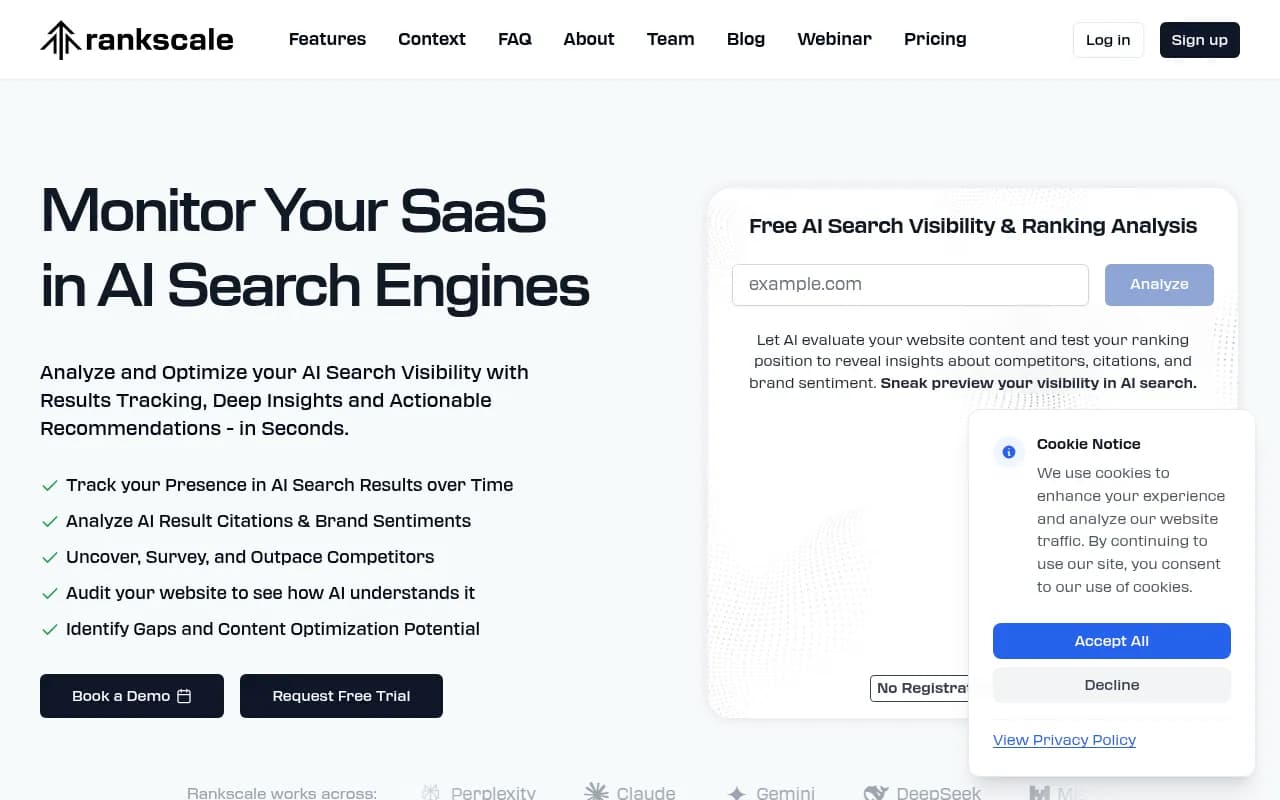
Rankscale positions itself as an "AI visibility scaling platform" with a focus on automated monitoring and optimization. The platform tracks your brand across 10 generative AI engines and promises deep analysis with actionable recommendations. It uses a credit-based pricing model starting at €20/mo, with credits consumed each time you run a query check.
The tool covers ChatGPT, Google AI Overviews, Perplexity, Claude, Gemini, DeepSeek, Mistral, Grok, Copilot, and Google AI Mode. Rankscale emphasizes its ability to identify content gaps and optimization potential, positioning itself as more than just a tracker.
Otterly.AI
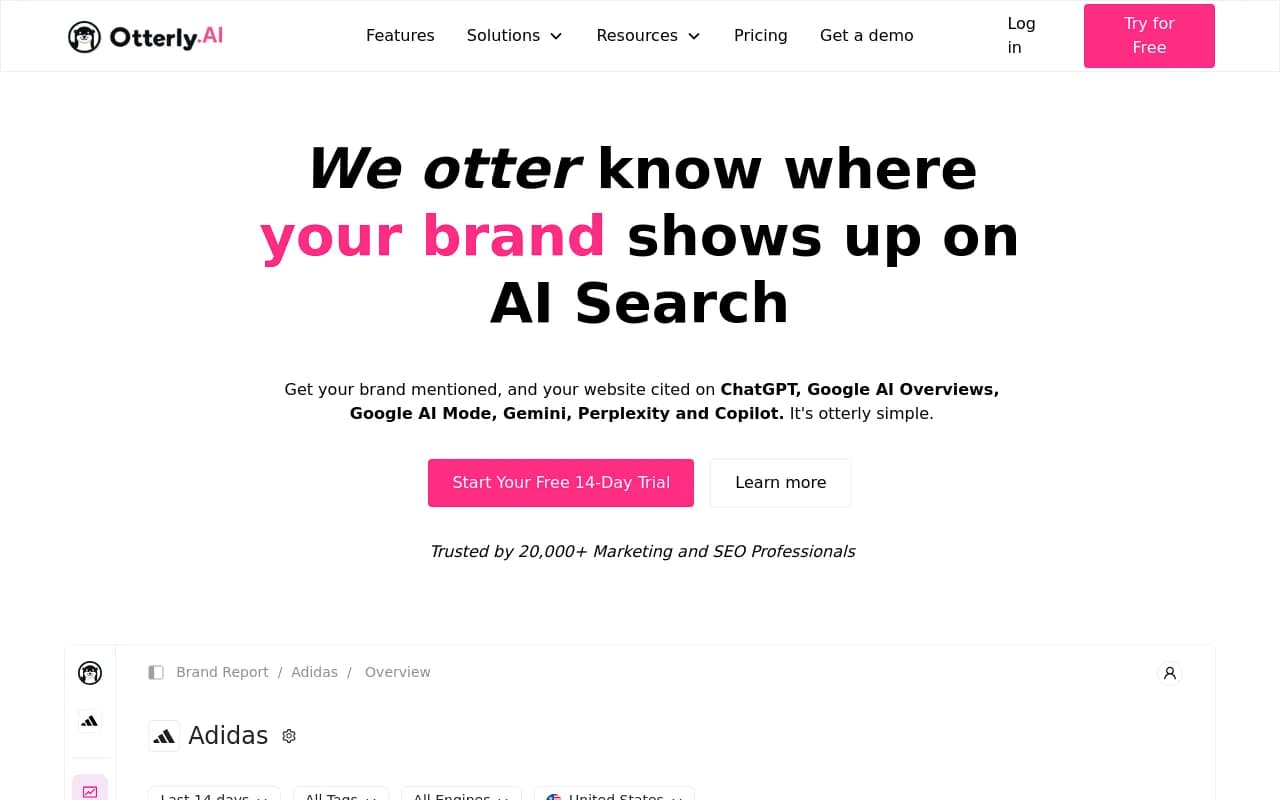
Otterly.AI markets itself as the "#1 rated AI search monitoring platform" with a strong emphasis on affordability and ease of use. The platform tracks the same 10 AI engines as Rankscale but takes a simpler approach -- monitor brand mentions, track website citations, and run GEO audits to understand what's holding you back.
Pricing starts at $29/mo for 15 prompts with a 14-day free trial that doesn't require a credit card. Otterly's messaging is straightforward: see where you show up, what's being said, and which content gets cited. No fluff, just monitoring.
Side-by-side comparison
| Feature | Rankscale | Otterly.AI |
|---|---|---|
| Starting price | €20/mo (credit-based) | $29/mo (15 prompts) |
| Free trial | Request only | 14 days, no credit card |
| AI engines tracked | 10 (ChatGPT, Perplexity, AI Overviews, Claude, Gemini, DeepSeek, Mistral, Grok, Copilot, AI Mode) | 10 (same coverage) |
| Prompt tracking | Credit-based (varies by tier) | 15-100+ prompts depending on plan |
| Brand monitoring | ✓ | ✓ |
| Citation tracking | ✓ | ✓ |
| Competitor analysis | ✓ | ✓ |
| GEO audit | ✓ | ✓ (25+ on-page factors) |
| Content gap analysis | ✓ | ✗ |
| Optimization recommendations | ✓ | Limited (audit-based only) |
| Sentiment analysis | ✓ | ✗ |
| Multi-brand tracking | Varies by tier | Standard plan and up |
| API access | Enterprise only | Not mentioned |
| Pricing model | Credits (confusing) | Fixed prompts (clear) |
Pricing breakdown
This is where things get interesting. Rankscale uses a credit system that's harder to predict, while Otterly uses straightforward prompt limits.
| Plan tier | Rankscale | Otterly.AI |
|---|---|---|
| Entry | €20/mo (Essentials, credit-based) | $29/mo (Lite, 15 prompts) |
| Mid | Professional tier (price varies, credit-based) | $189/mo (Standard, 100 prompts) |
| High | Business tier (credit-based) | Custom (Premium, 100+ prompts) |
| Enterprise | Custom pricing | Custom pricing |
| Free trial | Request demo | 14 days, no credit card |
Otterly's pricing is transparent -- you know exactly how many prompts you get. Rankscale's credit system means you're guessing how long your credits will last based on tracking frequency and number of brands.
For a small team tracking 15-20 prompts monthly, Otterly is cheaper and more predictable. For larger teams tracking 100+ prompts, the math gets murkier -- Rankscale's Professional tier could end up costing more than Otterly's Standard plan depending on credit consumption.
Feature deep-dive
User interface and ease of use
Otterly wins on simplicity. The dashboard is clean, the setup is fast, and the 14-day trial lets you explore without commitment. You add your prompts, select which AI engines to track, and start monitoring. The learning curve is minimal.
Rankscale has a steeper onboarding. The credit system isn't immediately intuitive -- you need to understand how credits are consumed based on tracking frequency and brand count. The interface offers more depth (sentiment analysis, content gap identification), but that depth comes with complexity.
For teams new to AI search monitoring, Otterly is easier to start with. For teams that already know what they're doing and want granular control, Rankscale's complexity might be worth it.
AI engine coverage
Both tools track the same 10 AI engines:
- ChatGPT
- Google AI Overviews
- Perplexity
- Google AI Mode
- Gemini
- Claude
- DeepSeek
- Mistral
- Grok
- Microsoft Copilot
No difference here. Both platforms monitor the major players in AI search. Neither offers Reddit tracking, YouTube insights, or ChatGPT Shopping monitoring -- capabilities you'd find in more comprehensive platforms like Promptwatch.

Brand and citation tracking
Both tools track brand mentions and website citations across AI engines. You can see which brands get recommended, which URLs get cited, and where you rank relative to competitors.
Rankscale adds sentiment analysis on top of basic tracking -- you can see whether mentions are positive, neutral, or negative. Otterly doesn't offer sentiment scoring, just raw mention and citation data.
For reputation management, Rankscale's sentiment layer is useful. For pure visibility tracking, both tools deliver the same core data.
GEO auditing
Otterly's GEO Audit analyzes 25+ on-page factors to identify what's holding your site back from earning citations. You get a report showing strengths and weaknesses with recommendations for improvement.
Rankscale also offers auditing but frames it as part of a broader optimization workflow. The audit identifies gaps, then Rankscale suggests content opportunities to fill those gaps.
Otterly's audit is diagnostic. Rankscale's audit is diagnostic plus prescriptive. The difference: Rankscale tells you what content to create, Otterly tells you what's broken.
Content gap analysis and optimization
This is Rankscale's differentiator. The platform identifies queries where competitors appear but you don't, then suggests content topics to close the gap. It's not content generation (neither tool writes articles for you), but it's more actionable than Otterly's audit-only approach.
Otterly stops at showing you the data. You see where you're invisible, but you're on your own to figure out what to do about it. The platform assumes you'll handle content creation separately.
If you want monitoring plus direction on what to optimize, Rankscale is stronger. If you just want visibility data and you'll figure out the strategy yourself, Otterly is sufficient.
Competitor benchmarking
Both tools let you track competitors and compare share of voice. You can see which brands dominate specific prompts and how your visibility stacks up.
Rankscale surfaces this data in its "Uncover, Survey, and Outpace Competitors" feature. Otterly presents it as part of standard brand monitoring. Functionally, they deliver the same insight -- who's winning and by how much.
Neither tool offers the depth of competitor heatmaps or query fan-outs you'd get from more advanced platforms, but for basic benchmarking, both are adequate.
Tracking frequency and automation
Rankscale's credit system ties tracking frequency to your plan tier. Higher tiers get more frequent checks. Otterly's prompt limits are fixed per month -- you decide how often to re-run queries within your prompt budget.
Otterly's model is more predictable. You know you have 15 or 100 prompts per month, and you allocate them as needed. Rankscale's credit consumption varies based on how aggressively you track, which makes budgeting harder.
Multi-brand and multi-region support
Rankscale supports multiple brands across different tiers (Essentials starts with fewer, Business tier scales up). Otterly's Standard plan and above also support multi-brand tracking.
Neither tool explicitly highlights multi-region or multi-language tracking in their public materials. If you need to monitor AI responses in different countries or languages, you'd need to confirm capabilities directly with each vendor.
Reporting and integrations
Both tools offer dashboards and basic reporting. Neither mentions Looker Studio integration, API access (except Rankscale's Enterprise tier), or advanced export options in their standard plans.
For teams that need to pipe AI visibility data into custom dashboards or BI tools, both platforms fall short unless you're on enterprise pricing.
Pros and cons
Rankscale pros
- Content gap identification helps you know what to optimize
- Sentiment analysis adds context to brand mentions
- Deeper optimization recommendations beyond just auditing
- Covers all major AI engines
Rankscale cons
- Credit-based pricing is confusing and unpredictable
- More expensive than Otterly for similar prompt volumes
- Steeper learning curve
- No free trial without requesting a demo
- Doesn't generate content -- still leaves you to write it yourself
Otterly.AI pros
- Cheapest entry point at $29/mo
- 14-day free trial with no credit card required
- Transparent prompt-based pricing
- Simple, fast onboarding
- GEO audit covers 25+ on-page factors
- Covers all major AI engines
Otterly.AI cons
- No content gap analysis or optimization suggestions
- No sentiment tracking
- Monitoring-only approach -- doesn't help you act on the data
- Limited reporting and integration options
- No content generation capabilities
Who should pick which tool
Pick Otterly.AI if:
- You're new to AI search monitoring and want to start cheap
- You need straightforward visibility tracking without complexity
- You have 15-100 prompts to monitor monthly
- You want a free trial to test before committing
- You're comfortable figuring out optimization strategy on your own
- Budget predictability matters more than advanced features
Pick Rankscale if:
- You want content gap analysis to guide your optimization efforts
- Sentiment tracking is important for reputation management
- You need deeper recommendations beyond basic auditing
- You're willing to pay more for prescriptive insights
- You can navigate a credit-based pricing model
- You're already experienced with AI search monitoring
Consider a different tool entirely if:
- You need content generation built in -- both Rankscale and Otterly stop at showing you what's missing without helping you create it. Platforms like Promptwatch include AI writing agents that generate articles grounded in citation data and prompt volumes.
- You want Reddit or YouTube tracking -- neither tool monitors these channels
- You need ChatGPT Shopping visibility -- not covered by either platform
- You want AI crawler logs to see how AI engines discover your content -- neither offers this
- You need robust API access or Looker Studio integration on standard plans
Final verdict
Otterly.AI wins for teams just starting with AI search monitoring. It's cheaper, simpler, and more transparent. The 14-day free trial removes risk, and the prompt-based pricing is easy to budget. You get solid visibility tracking and GEO auditing without paying for features you might not use yet.
Rankscale is better for teams that already understand AI search and want more strategic direction. The content gap analysis and sentiment tracking add value if you're willing to pay for them. But the credit-based pricing is a headache, and the lack of a no-commitment trial makes it harder to evaluate.
For most teams, start with Otterly. If you outgrow it and need deeper optimization guidance, then consider Rankscale. But honestly, if you're at the point where you need content gap analysis and optimization recommendations, you probably also want content generation and more advanced tracking -- at which point you're looking at platforms like Promptwatch that close the loop from monitoring to action.
Both tools are monitoring dashboards. They show you where you're invisible but leave you to fix it yourself. That's fine if you have the resources to act on the data. If you don't, you're just paying to feel bad about gaps you can't close.