Key takeaways
- For AI search visibility + content optimization: Promptwatch is the strongest pick if you want to track how your brand appears in ChatGPT, Claude, Perplexity, and other AI engines -- and actually fix the gaps with content built to get cited.
- For traditional SEO + AI visibility in one place: Semrush covers the most ground but costs significantly more and uses fixed prompts for AI tracking.
- For content writing + on-page optimization: Surfer SEO and Frase are the go-to choices, with Surfer being stronger for scoring/optimization and Frase better for research-heavy workflows.
- For hands-free autopilot publishing: Outrank is RankYak's closest competitor -- nearly identical positioning, similar price, and a backlink exchange network.
- For content strategy and topic authority: MarketMuse is the most analytical option, best for teams that want data before they write anything.
- For enterprise brand voice and marketing workflows: Jasper targets larger teams that need governance, multi-channel campaigns, and AI agents across departments.
RankYak has a clear pitch: connect your website, let it find keywords, plan content, write articles, publish them, and build backlinks -- all without you touching it. For a solo founder or small agency drowning in SEO tasks, that sounds genuinely appealing.
But there are real reasons people look elsewhere. RankYak's autopilot approach means you're handing over a lot of editorial control. The content quality is only as good as the AI behind it, and the backlink exchange network -- while convenient -- isn't the same as earning editorial links. Some users also find that fully automated publishing creates a homogeneous content library that doesn't reflect their brand voice or expertise.
Others outgrow RankYak's scope. If you want to track how your brand appears in ChatGPT or Perplexity responses, RankYak doesn't do that. If you need deep content research, competitor gap analysis, or topic authority modeling, you'll hit its ceiling fast.
Here's an honest look at the best alternatives, what each one actually does well, and who should pick which.
Promptwatch

Promptwatch is a different category of tool from RankYak -- and that's worth being upfront about. RankYak automates content production for Google SEO. Promptwatch tracks and improves how your brand appears in AI search engines like ChatGPT, Claude, Perplexity, Gemini, and Grok.
If you're only thinking about Google rankings, Promptwatch isn't a direct swap. But if you've noticed that AI engines are increasingly where your customers start their research -- and you want to show up there -- it's the most complete platform for that job.
What makes it different from monitoring-only tools is the action loop. The Answer Gap Analysis shows you exactly which prompts your competitors appear in but you don't. The built-in content agent then generates articles, listicles, and comparison pages grounded in real citation data (over 880 million citations analyzed). Then you track whether those pages start getting cited. It's a closed loop: find the gap, create the content, measure the result.
On top of that, Promptwatch logs real AI crawler activity on your site -- which pages ChatGPT and Perplexity are reading, how often, and whether they're hitting errors. Most competitors don't have this at all. It also tracks Reddit and YouTube discussions that influence AI recommendations, monitors ChatGPT Shopping appearances, and provides prompt volume and difficulty scores so you can prioritize.
Compared to RankYak: RankYak automates Google SEO content. Promptwatch optimizes for AI search visibility. They're solving adjacent but distinct problems. If you want both, you'd likely run them together -- or choose based on where your audience actually searches.
Pricing starts at $99/mo (Essential: 1 site, 50 prompts, 5 articles), $249/mo (Professional), $579/mo (Business). 7-day free trial.
Best for: Marketing and SEO teams that want to be visible in AI search results, not just Google -- and want a platform that helps them fix gaps, not just report on them.
Semrush
Semrush is the closest thing to an all-in-one digital marketing platform that exists. Keyword research, backlink analysis, site audits, competitor intelligence, content tools, social media management, PPC tracking -- it's all there. In 2025 they added an AI Visibility Toolkit that monitors brand presence in AI search results.
Compared to RankYak, Semrush is dramatically more powerful for traditional SEO research. The keyword database is enormous, the backlink data is reliable, and the site audit tool catches technical issues RankYak wouldn't touch. If you're running a serious SEO operation and need data to make decisions, Semrush is the professional standard.
The trade-off is complexity and cost. Semrush isn't an autopilot tool -- it gives you data and expects you to act on it. There's no "connect your site and let it publish content for you" workflow. You'll still need writers or a separate AI writing tool. The AI Visibility features use fixed prompts rather than custom ones, which limits how precisely you can track your specific competitive landscape.
For agencies managing multiple clients, Semrush scales well with team features and white-label reporting. But you're paying for it: plans start at $165/mo and the AI Visibility add-on is an extra $99/mo.
Best for: Established SEO teams and agencies that need comprehensive research data and are comfortable building their own workflows around it. Not a fit if you want hands-free content automation.
SE Ranking
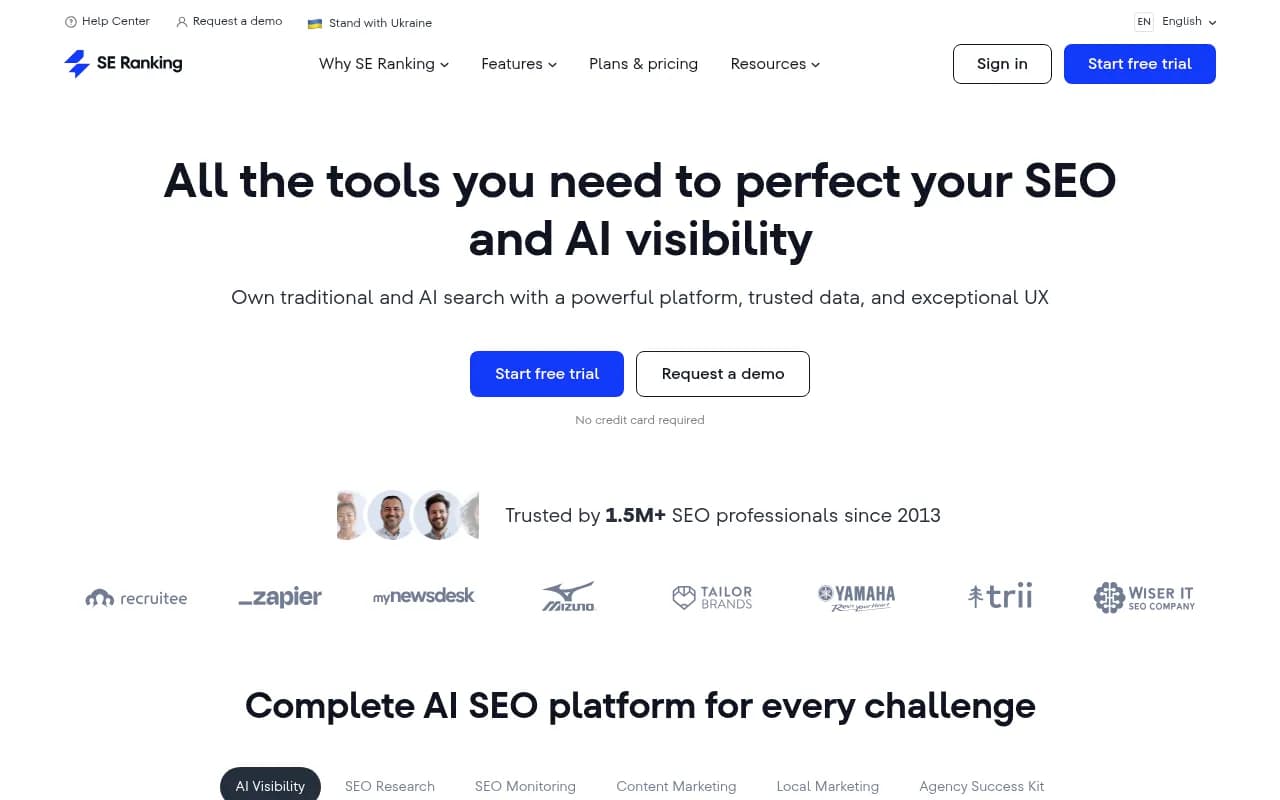
SE Ranking sits in an interesting middle ground. It's a full SEO platform -- rank tracking, site audits, keyword research, backlink monitoring -- but it's priced more accessibly than Semrush and has a cleaner interface that doesn't overwhelm newer users.
The AI search piece is handled by SE Visible, their dedicated AI visibility module. It tracks brand mentions across AI engines and gives you a strategic view of where you stand. It's not as deep as Promptwatch's citation analysis or crawler logs, but it's a solid starting point for teams that want AI visibility data without switching to a dedicated GEO platform.
Compared to RankYak, SE Ranking is much stronger for traditional SEO data and rank tracking. It won't autopublish content to your site, but it gives you the research foundation to make better content decisions. The 14-day free trial with no credit card required is a genuine advantage for evaluation.
Pricing: Core plan from $103.20/mo, Growth plan $223.20/mo. The AI Search add-on is $71.20/mo on top of that.
Best for: Small to mid-size businesses and agencies that want a reliable SEO platform with AI visibility features added on, without paying Semrush prices.
Surfer SEO
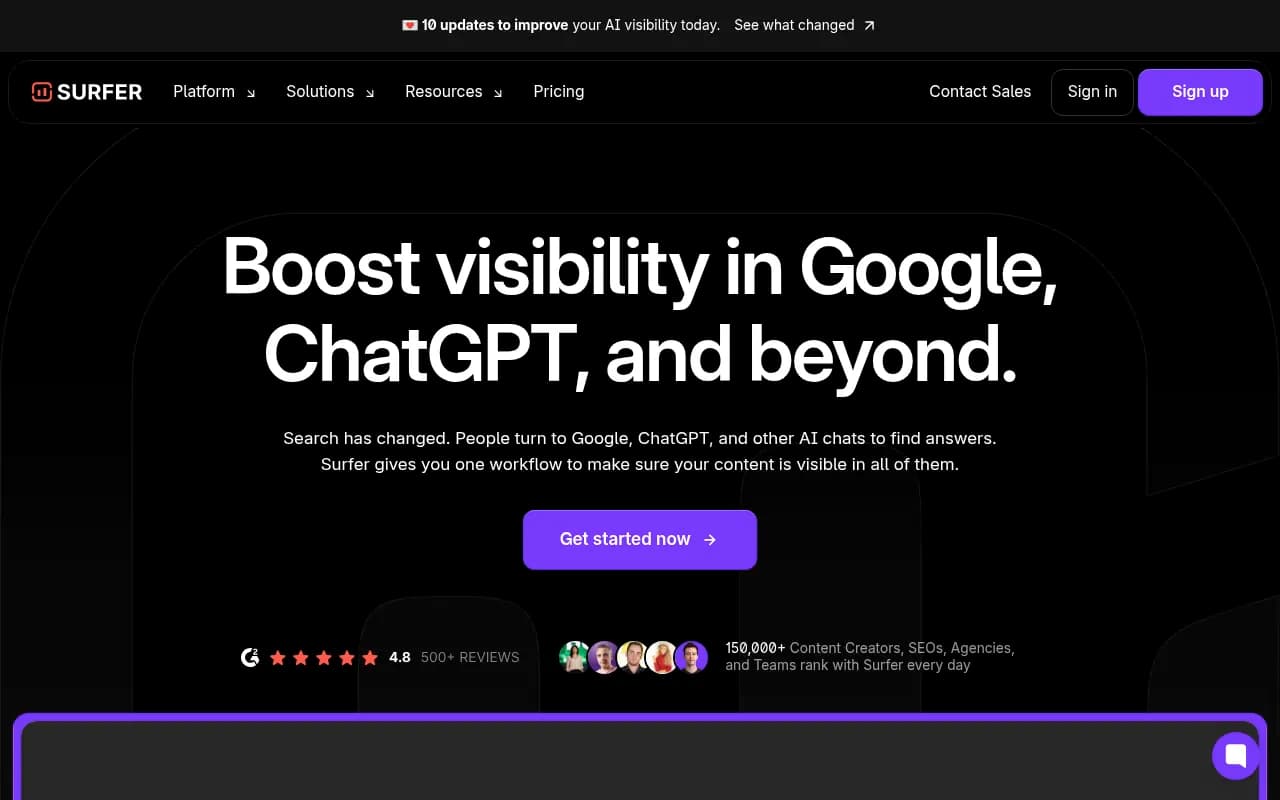
Surfer is the tool most content teams reach for when they want to write something that actually ranks. The core workflow: you pick a keyword, Surfer analyzes the top-ranking pages, and it gives you a content score with specific recommendations -- how many words, which terms to include, how to structure headings. Write in the built-in editor and watch your score improve in real time.
The AI writing features have gotten better. Surfer can now generate full articles with its AI, and it's been adding AI search optimization features to help content perform in ChatGPT and other AI engines, not just Google.
Compared to RankYak, Surfer is more hands-on. You're not getting autopilot publishing -- you're getting a tool that makes your writing process faster and more data-driven. The content quality tends to be higher because a human is still in the loop making editorial decisions. The optimization scoring is genuinely useful and more granular than what RankYak offers.
The downside: Surfer doesn't do keyword discovery or content planning at the same scale as RankYak's automated pipeline. You still need to decide what to write about. And at $399/mo for the Max plan, it gets expensive for high-volume content operations.
Pricing: Essential $99/mo (30 articles), Scale $219/mo (100 articles), Max $399/mo (300 articles). 7-day money-back guarantee.
Best for: Content teams and SEO writers who want to produce fewer, higher-quality articles that are rigorously optimized -- not bulk content on autopilot.
Frase
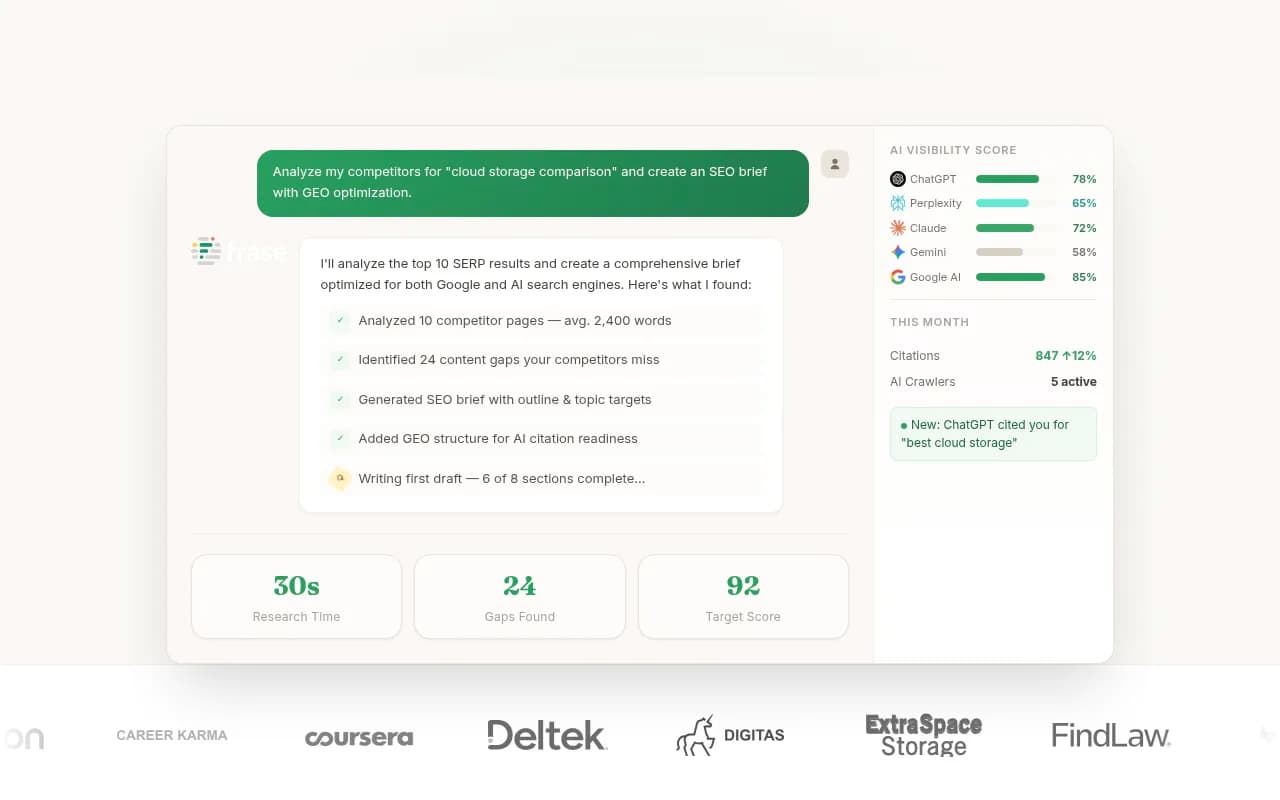
Frase has quietly become one of the more complete tools for the research-to-publish workflow. You start with a topic, Frase scrapes the top SERP results and builds a content brief automatically -- competitor word counts, questions people are asking, topics to cover. Then you write (or let the AI write) against that brief, with an optimization score tracking your progress.
What's interesting about Frase in 2026 is that it's leaned into GEO alongside traditional SEO. The platform now tracks visibility in ChatGPT and Perplexity and positions itself as an "agentic SEO & GEO platform." The AI agent can analyze competitors, identify content gaps, and generate briefs optimized for AI citation readiness -- not just Google rankings.
Compared to RankYak, Frase gives you much more control over the research and writing process. The briefs are genuinely useful for understanding what a piece needs to cover. The trade-off is that it's not autopilot -- you're still making decisions and doing work. But the output quality is typically better because the research foundation is stronger.
Pricing is also more accessible: Solo plan at $39/mo (10 articles), Basic at $114/mo (30 articles), Team at $214/mo (unlimited users, 100 articles). 7-day free trial, no credit card required.
Best for: Content marketers and SEO writers who want research-backed content briefs and optimization guidance, with some AI search visibility tracking built in.
Scalenut
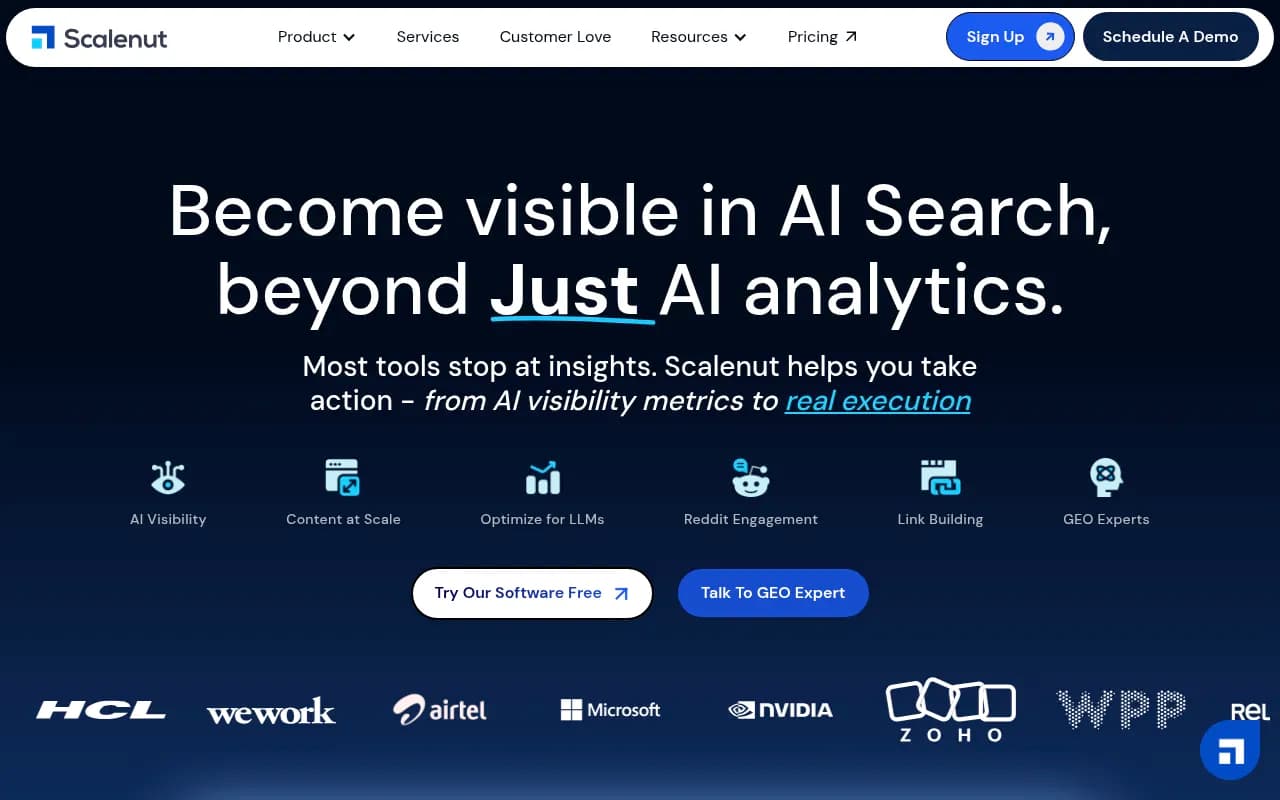
Scalenut has evolved from a pure AI writing tool into something closer to a managed SEO service. The platform combines AI content tools with human strategists -- you get a dedicated strategist who builds your growth plan, and then AI agents execute against it. The pitch is "what a traditional agency delivers in six weeks, our agents handle in days."
This is a meaningfully different model from RankYak's self-serve automation. Scalenut is more expensive and more hands-on from their side, but you're getting human oversight on strategy and quality control before anything publishes. For businesses that want scale without sacrificing brand quality, that's a real differentiator.
The GEO tracking features cover Google, ChatGPT, Perplexity, and AI Overviews. There's also a Reddit agent that monitors discussions relevant to your brand -- a channel that influences AI recommendations more than most people realize.
Compared to RankYak: Scalenut is more expensive and more service-oriented. If you want true autopilot at $99/mo, RankYak is simpler. If you want a team behind the automation making sure it doesn't embarrass your brand, Scalenut is worth the premium.
Pricing: GEO tracking from $30/mo, SEO content tools from $59/mo. Managed service pricing varies.
Best for: Growing businesses and mid-market companies that want AI-powered content at scale but aren't comfortable with fully unsupervised automation.
Jasper
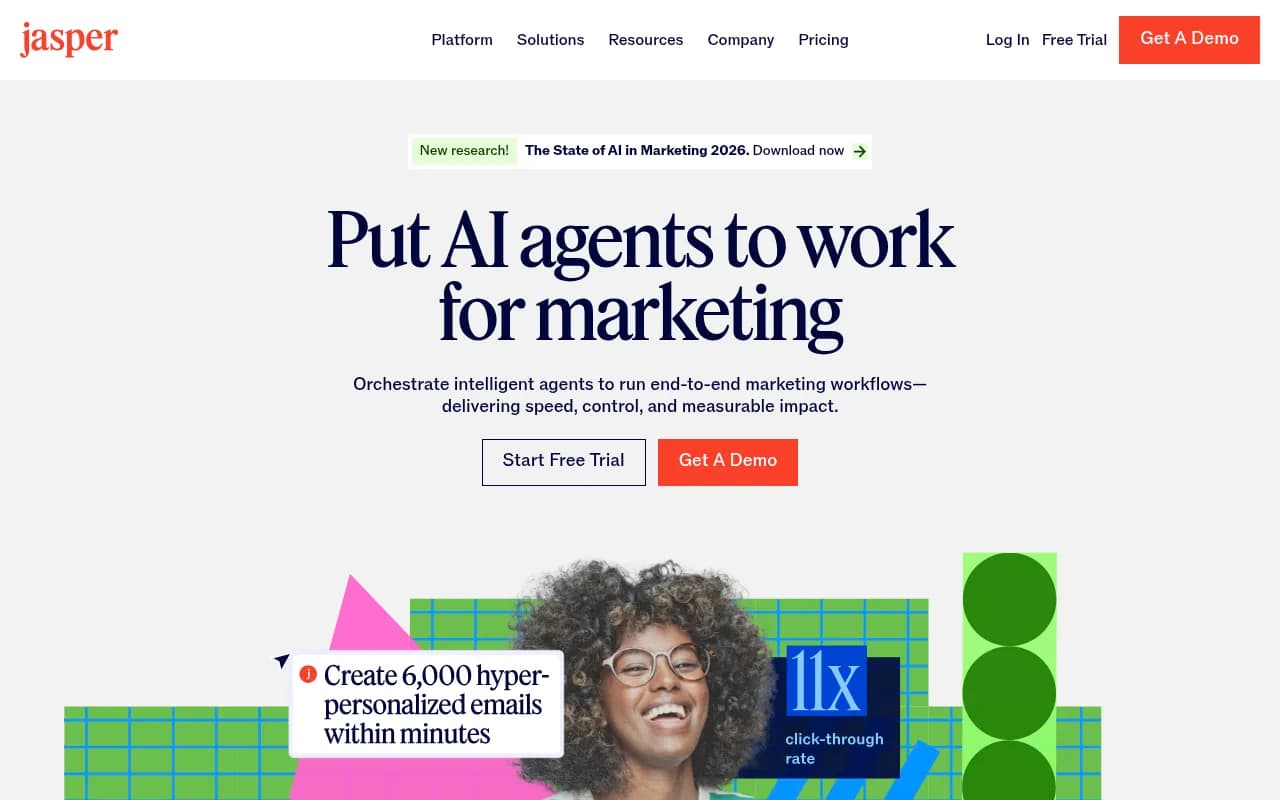
Jasper is the enterprise AI writing platform. It's built around brand governance -- you upload your brand voice, style guide, visual guidelines, and product knowledge, and every piece of content the AI generates stays within those guardrails. For large marketing teams where consistency across dozens of writers and campaigns is a real problem, that's genuinely valuable.
The platform has expanded into marketing workflows with agents that handle SEO, personalization, and campaign content end-to-end. There's a Canvas for collaborative editing, a Grid for bulk content generation, and integrations with major marketing stacks.
Compared to RankYak, Jasper is in a different league in terms of sophistication -- and price. The Creator plan at $49/mo is accessible, but the features that make Jasper worth it (brand governance, multi-user workflows, enterprise integrations) kick in at the Business tier, which starts around $500-1000/mo. For a solo founder or small agency, that's hard to justify.
Jasper also doesn't do keyword research, content planning, or autopublishing the way RankYak does. It's a writing and workflow tool, not an SEO automation platform.
Best for: Enterprise marketing teams that need brand-consistent AI content across multiple channels, campaigns, and team members -- not small businesses looking for SEO automation.
Writesonic
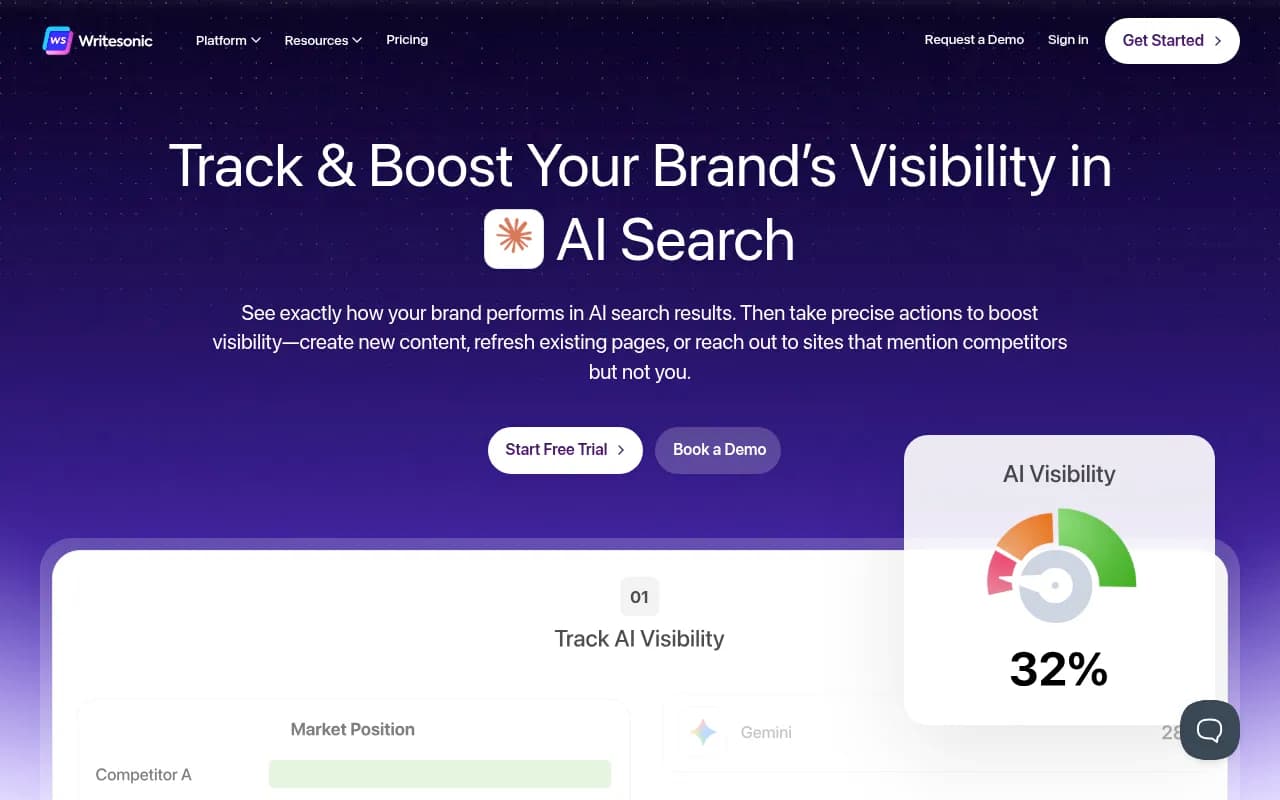
Writesonic has repositioned itself as an AI search visibility platform, which puts it in interesting territory -- part GEO tracker, part content tool. It monitors brand mentions across ChatGPT, Perplexity, Gemini, and other AI engines, identifies citation gaps, and helps you create content to fill them. It also targets Reddit and UGC forums as channels that influence AI recommendations.
The Lite plan at $49/mo makes it one of the more affordable options in this space. The trade-off is that it's newer to the GEO tracking side of things, and the depth of citation analysis and crawler data doesn't yet match what more specialized platforms offer.
Compared to RankYak, Writesonic is more focused on AI search visibility than Google SEO automation. If you want autopilot content publishing to Google, RankYak is more purpose-built for that. If you want to understand and improve your AI search presence, Writesonic is worth evaluating -- though Promptwatch goes deeper on the tracking and optimization side.
Pricing: From $49/mo (Lite). Free trial available.
Best for: Teams on a budget that want to start tracking AI search visibility and have some content creation tools in the same platform.
MarketMuse
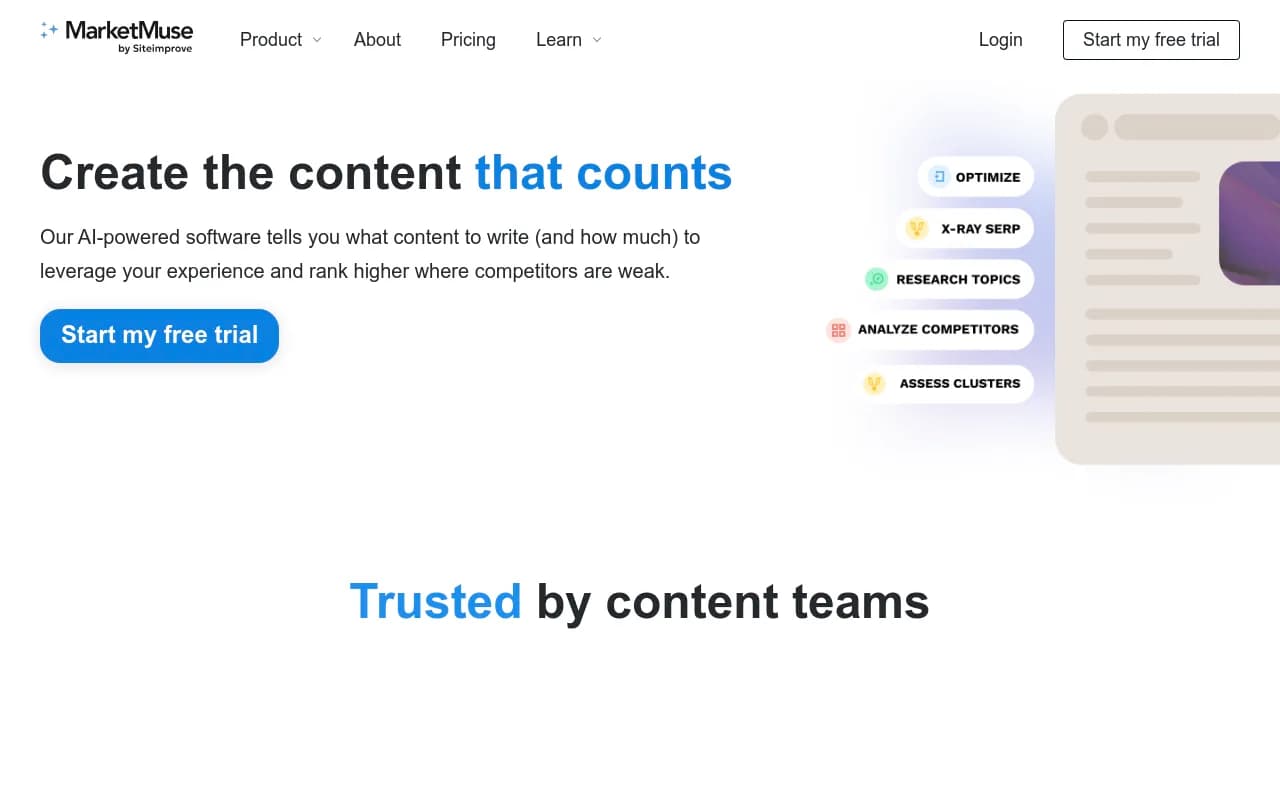
MarketMuse is the most analytical tool on this list. Its patented AI scans your entire content inventory, maps your topical authority, identifies gaps, and tells you exactly which topics are worth creating content for -- and which ones aren't, based on how competitive they are relative to your existing authority.
The output isn't a published article. It's a content plan: here are the topics you can realistically rank for, here's how much content you'd need to create to own them, here's where competitors are weak. For content strategists who want to make data-driven decisions before committing resources, it's genuinely useful.
Compared to RankYak, MarketMuse is slower and more deliberate. RankYak picks keywords and publishes automatically. MarketMuse helps you figure out which keywords are worth targeting in the first place. They solve different parts of the same problem -- ideally you'd use MarketMuse for strategy and something else for execution.
The free tier (10 queries/month) is enough to evaluate whether the approach works for you. Paid plans start at $150/mo.
Best for: SEO strategists and content directors at established sites who want to make smarter decisions about content investment, not just produce more content faster.
Outrank
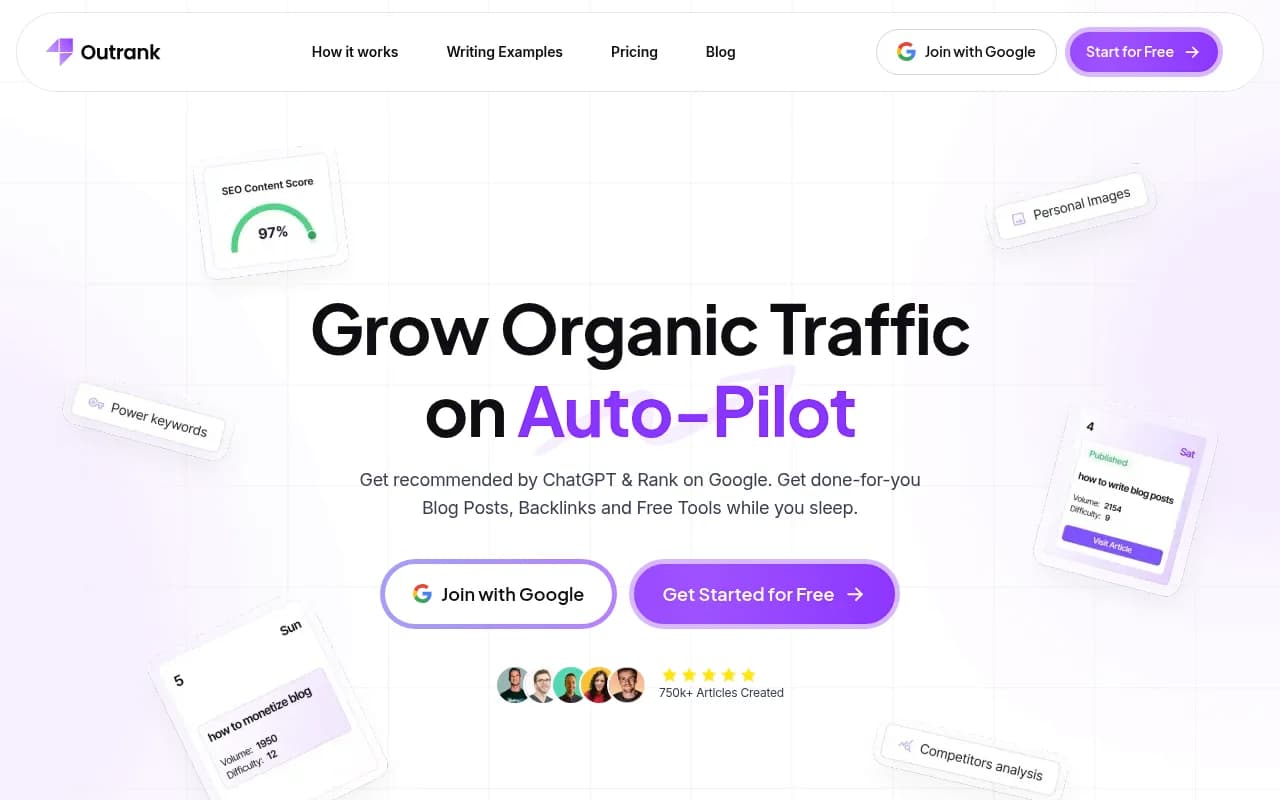
Outrank is probably the closest direct competitor to RankYak. Same core idea: connect your site, it finds keywords, writes articles, publishes them daily, and builds backlinks through a user exchange network. The $99/mo price point is identical (after a $1 trial). Even the homepage messaging is similar -- "grow organic traffic on autopilot."
The differences are subtle. Outrank claims 750,000+ articles created and 25,000+ backlinks added across its network. RankYak claims 10,000+ articles generated. Outrank has been around longer and has more documented success stories. Both have the same fundamental limitation: the backlink exchange is a network of participating users, not editorial links from authoritative sites.
If you're choosing between the two, Outrank's larger user base means a bigger backlink exchange network, which could matter for domain authority building. RankYak's interface and onboarding feel slightly more polished. Honestly, testing both with their trials is the most sensible approach -- the core workflow is similar enough that personal preference and content quality for your specific niche will be the deciding factor.
Pricing: $1 trial, then $99/mo (All in One plan). Freemium tier available.
Best for: Founders and small businesses that want the same autopilot SEO content approach as RankYak and want to compare both before committing.
Which alternative should you pick?
The right choice depends on what's actually missing from RankYak for you.
If you want more control over content quality without giving up AI assistance, Surfer SEO or Frase will serve you better. Both keep a human in the loop while making the writing process faster and more data-driven.
If you want AI search visibility -- understanding and improving how your brand appears in ChatGPT, Claude, Perplexity, and other AI engines -- Promptwatch is the most complete platform for that. It goes beyond monitoring to help you create content that actually gets cited, with crawler logs, citation analysis, and prompt intelligence that most tools don't have.
If you want comprehensive traditional SEO data alongside AI visibility features, Semrush or SE Ranking are the established choices. Semrush for larger teams with bigger budgets, SE Ranking for a more accessible price point.
If you want the same autopilot approach as RankYak but want to compare options, Outrank is the most direct alternative at the same price.
If you're at a larger company that needs brand governance, multi-team workflows, and enterprise integrations, Jasper is built for that -- but it's a different category of investment.
The honest summary: RankYak is a reasonable starting point for hands-free Google SEO content. But if your customers are increasingly finding answers through ChatGPT or Perplexity rather than Google search, the autopilot content approach alone won't get you visible there. That's where tools like Promptwatch fill a gap that RankYak doesn't address at all.