Summary
- AI search is fragmenting: Users now ask ChatGPT, Claude, Perplexity, Google AI, Gemini, and other models for answers—not Google. If you're invisible in these platforms, you're losing customers.
- Model coverage varies wildly: Some GEO tools track 3-4 models. The best track 8-10+. Gaps in coverage mean blind spots in your visibility.
- Promptwatch leads on coverage: Tracks 10 AI models (ChatGPT, Perplexity, Google AI Overviews, Google AI Mode, Claude, Gemini, Meta/Llama, DeepSeek, Grok, Mistral, Copilot) and is the only platform rated as a "Leader" across all categories in 2026 comparisons.
- Most competitors are monitoring-only: Tools like Otterly.AI and Peec AI show you data but don't help you fix visibility gaps. Promptwatch combines tracking with content gap analysis and AI-powered content generation.
- Choose based on your stack: If you already use Semrush or Ahrefs, their AI add-ons (AI Toolkit, Brand Radar) integrate cleanly. If you need a standalone solution, Promptwatch, Profound, or Evertune are purpose-built for GEO.
Why AI model coverage matters in 2026
Traditional search is dead. Your customers aren't clicking through ten blue links anymore—they're asking ChatGPT, Claude, Perplexity, or Google AI for direct answers. Gartner predicts traditional search volume will drop 25% by 2026 because of this shift.
The problem: AI search isn't one platform. It's fragmented across a dozen models, each with different data sources, citation behaviors, and user bases. If your GEO tool only tracks ChatGPT and Perplexity, you're blind to what's happening in Google AI Overviews, Claude, Gemini, and the rest.
Model coverage is the single most important feature when evaluating GEO tools. A platform that tracks 10 models gives you a complete picture. A platform that tracks 3 leaves you guessing.
The AI model landscape: who's using what
Not all AI models have equal reach. Here's what matters in 2026:
ChatGPT (OpenAI): The 800-pound gorilla. 200M+ weekly active users. Dominant in consumer and enterprise use cases. If you're not visible here, you're missing the biggest audience.
Google AI Overviews & AI Mode: Google's AI-generated answers now appear at the top of traditional search results. AI Mode (the conversational interface) is rolling out globally. Combined, these reach billions of users.
Perplexity: The AI search engine that actually cites sources. Growing fast with power users, researchers, and professionals who want transparency.
Claude (Anthropic): Popular with technical users, developers, and teams that prioritize accuracy. Strong in B2B contexts.
Gemini (Google): Integrated across Google Workspace, Android, and Chrome. Massive distribution but still ramping up citation behavior.
Meta AI (Llama): Embedded in Facebook, Instagram, WhatsApp. Reaches 3B+ users but less mature for brand citations.
Copilot (Microsoft): Integrated into Windows, Edge, Office 365. Enterprise-heavy user base.
DeepSeek, Grok, Mistral: Emerging models with niche but growing audiences. DeepSeek is strong in China, Grok in the X/Twitter ecosystem, Mistral in Europe.
If your GEO tool doesn't track the models your customers actually use, you're optimizing blind.
How to evaluate GEO tools for model coverage
When comparing GEO platforms, ask these questions:
1. How many AI models does it track?
The minimum viable number is 5-6 (ChatGPT, Perplexity, Google AI Overviews, Claude, Gemini). The best tools track 8-10+. Anything less than 5 is a red flag.
2. Does it track the models your audience uses?
If you're B2B SaaS, Claude and Perplexity matter more than Meta AI. If you're consumer e-commerce, ChatGPT and Google AI Overviews are critical. Match the tool to your customer behavior.
3. How often does it refresh data?
Some tools query models daily. Others weekly or monthly. Daily tracking catches changes faster and gives you more data points to analyze trends.
4. Does it track citations or just mentions?
A mention is when your brand appears in an AI response. A citation is when the AI links back to your website as a source. Citations drive traffic. Mentions don't. The best tools track both and show you the difference.
5. Can you customize prompts?
Fixed prompt sets ("best project management software") are useful but limiting. Custom prompts let you track the exact questions your customers ask. This is non-negotiable for serious GEO work.
6. Does it show competitor visibility?
If you can't see how competitors rank in AI responses, you can't benchmark your performance or identify gaps. Competitor heatmaps and share-of-voice metrics are essential.
GEO tools with the best AI model coverage in 2026
Here's how the leading platforms stack up on model coverage:
| Tool | Models tracked | Custom prompts | Competitor tracking | Pricing |
|---|---|---|---|---|
| Promptwatch | 10 (ChatGPT, Perplexity, Google AI Overviews, Google AI Mode, Claude, Gemini, Meta/Llama, DeepSeek, Grok, Mistral, Copilot) | Yes | Yes | $99-579/mo |
| Profound | 7 (ChatGPT, Claude, Perplexity, Google AI Overviews, AI Mode, Gemini, Copilot) | Yes | Yes | $99-499/mo |
| Evertune | 8+ (ChatGPT, Claude, Perplexity, Google AI Overviews, Gemini, Copilot, Meta AI, Grok) | Yes | Yes | Custom |
| SE Visible | 5 (Google AI Overviews, AI Mode, Gemini, ChatGPT, Perplexity) | Yes | Yes | $99/mo |
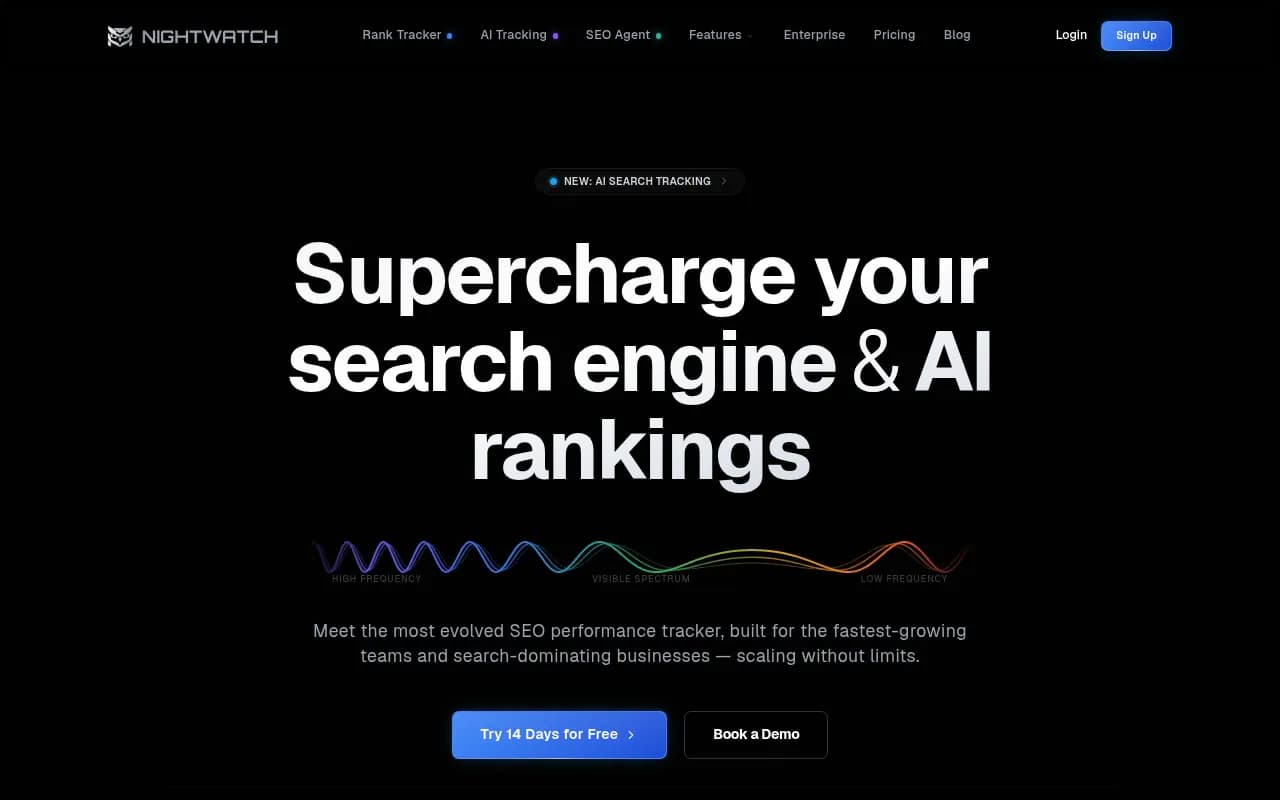
| Nightwatch | 6 (ChatGPT, Google AI Overviews, Copilot, Perplexity, Claude, Gemini) | Yes | Yes | $138/mo |
| Goodie AI | 6 (ChatGPT, Claude, Perplexity, Google AI Overviews, AI Mode, Copilot) | Yes | Yes | $495/mo |
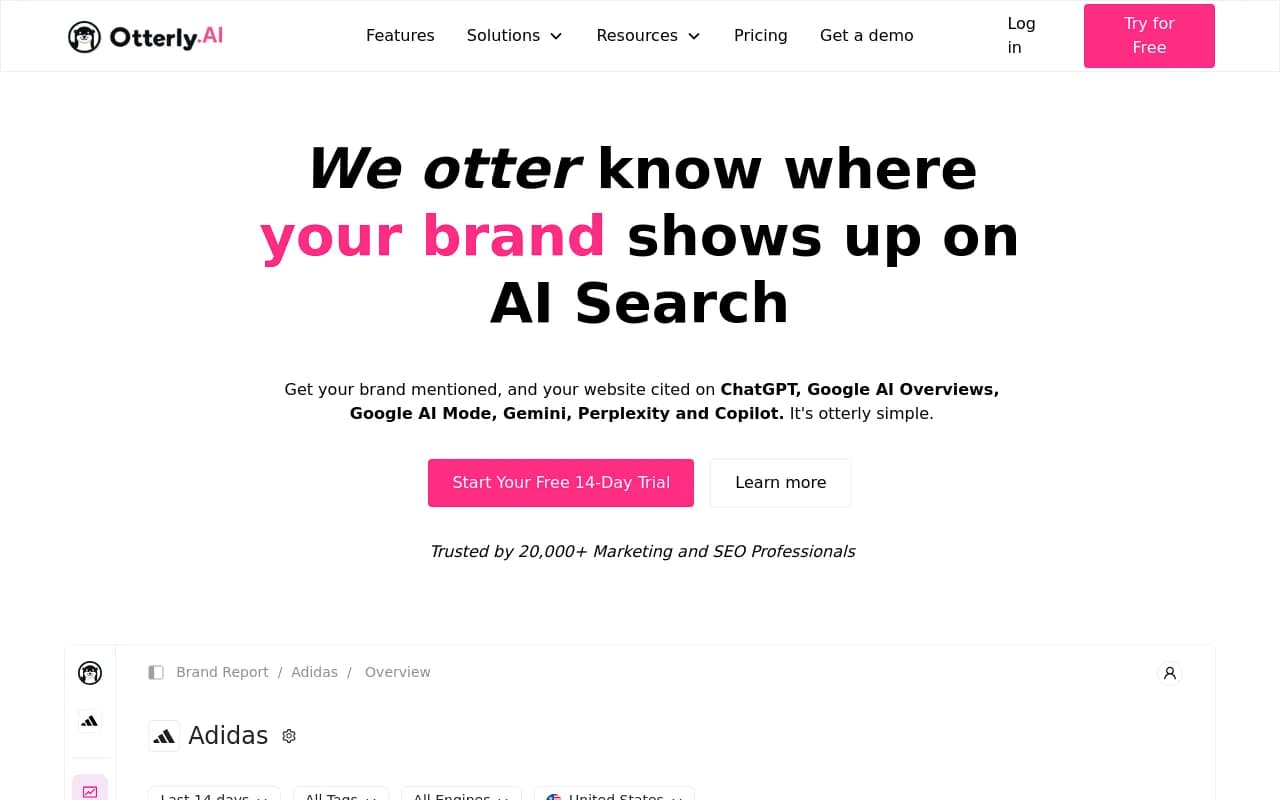
| Otterly.AI | 6 (ChatGPT, Claude, Perplexity, Google AI Overviews, AI Mode, Copilot) | Limited | Yes | $29/mo |
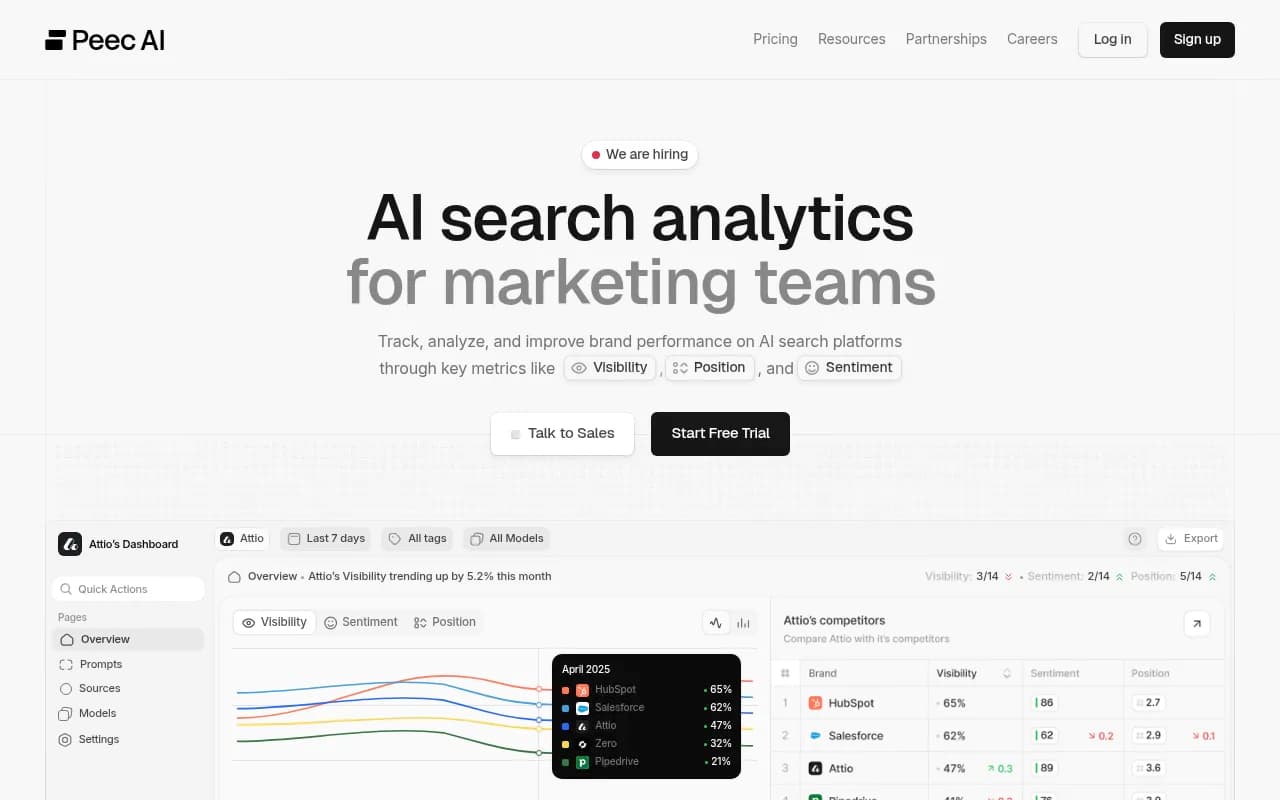
| Peec AI | 5 (ChatGPT, Claude, Perplexity, Google AI Overviews, Gemini) | Yes | Yes | €89/mo |
| Semrush AI Toolkit | 4 (ChatGPT, Perplexity, Google AI Overviews, Copilot) | No (fixed prompts) | Yes | $99/mo |
| Ahrefs Brand Radar | 3 (ChatGPT, Perplexity, Gemini) | No (fixed prompts) | Yes | $129/mo+ |
Promptwatch has the widest coverage at 10 models, including emerging platforms like DeepSeek and Grok that most competitors ignore. It's also the only tool that tracks both Google AI Overviews and Google AI Mode separately—a critical distinction since they serve different user intents.

What makes Promptwatch different
Most GEO tools are monitoring dashboards. They show you where you're invisible but leave you stuck. Promptwatch is built around taking action:
1. Find the gaps: Answer Gap Analysis shows exactly which prompts competitors are visible for but you're not. You see the specific content your website is missing—the topics, angles, and questions AI models want answers to but can't find on your site.
2. Create content that ranks in AI: The built-in AI writing agent generates articles, listicles, and comparisons grounded in real citation data (880M+ citations analyzed), prompt volumes, persona targeting, and competitor analysis. This isn't generic SEO filler—it's content engineered to get cited by ChatGPT, Claude, Perplexity, and other AI models.
3. Track the results: See your visibility scores improve as AI models start citing your new content. Page-level tracking shows exactly which pages are being cited, how often, and by which models. Close the loop with traffic attribution (code snippet, GSC integration, or server log analysis) to connect visibility to actual revenue.
This cycle—find gaps, generate content, track results—is what makes Promptwatch an optimization platform, not just another tracker. Most competitors (Otterly.AI, Peec.ai, AthenaHQ, Search Party) stop at step one.
Additional capabilities that support the action loop
Beyond model coverage, Promptwatch offers features most competitors lack:
AI Crawler Logs: Real-time logs of AI crawlers (ChatGPT, Claude, Perplexity, etc.) hitting your website—which pages they read, errors they encounter, how often they return. Understand how AI engines discover your content and fix indexing issues. Most competitors lack this entirely.
Prompt Intelligence: Volume estimates and difficulty scores for each prompt, plus query fan-outs that show how one prompt branches into sub-queries. Prioritize high-value, winnable prompts instead of guessing.
Citation & Source Analysis: See exactly which pages, Reddit threads, YouTube videos, and domains AI models cite in their responses. Know where to publish and what to optimize.
Reddit & YouTube Insights: Surface discussions that directly influence AI recommendations—a channel most competitors ignore entirely.
ChatGPT Shopping Tracking: Monitor when your brand appears in ChatGPT's product recommendations and shopping carousels.
Multi-language & Multi-region: Monitor AI responses in any language, from any country, with customizable personas that match how your actual customers prompt.
Other strong options for AI model coverage
Profound: Enterprise-grade analytics
Profound tracks 7 models and offers deep analytics for large brands. Strong competitor intelligence and sentiment tracking. Pricing starts at $99/mo but scales to $499/mo for enterprise features.
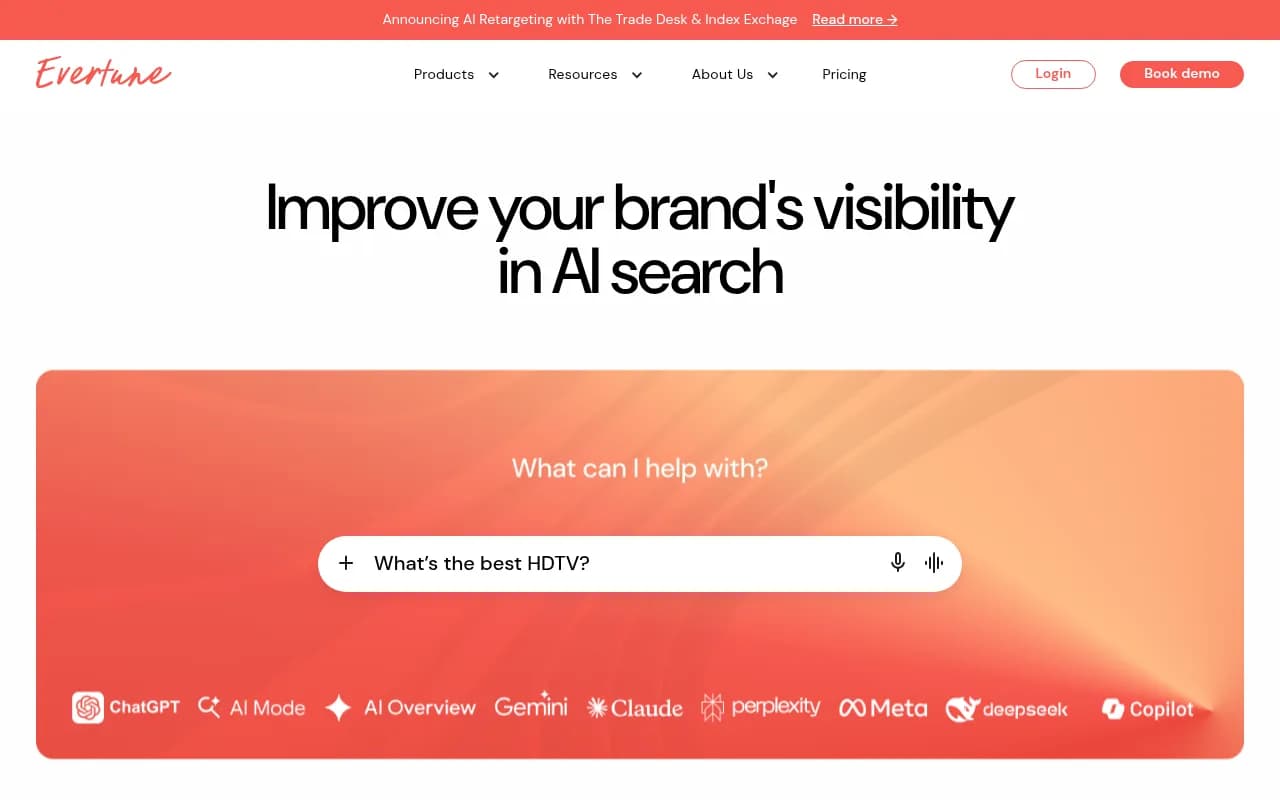
Evertune: Fortune 500 focus
Evertune is built for enterprise teams that need white-glove service and custom reporting. Tracks 8+ models with a focus on brand perception and sentiment. Custom pricing.
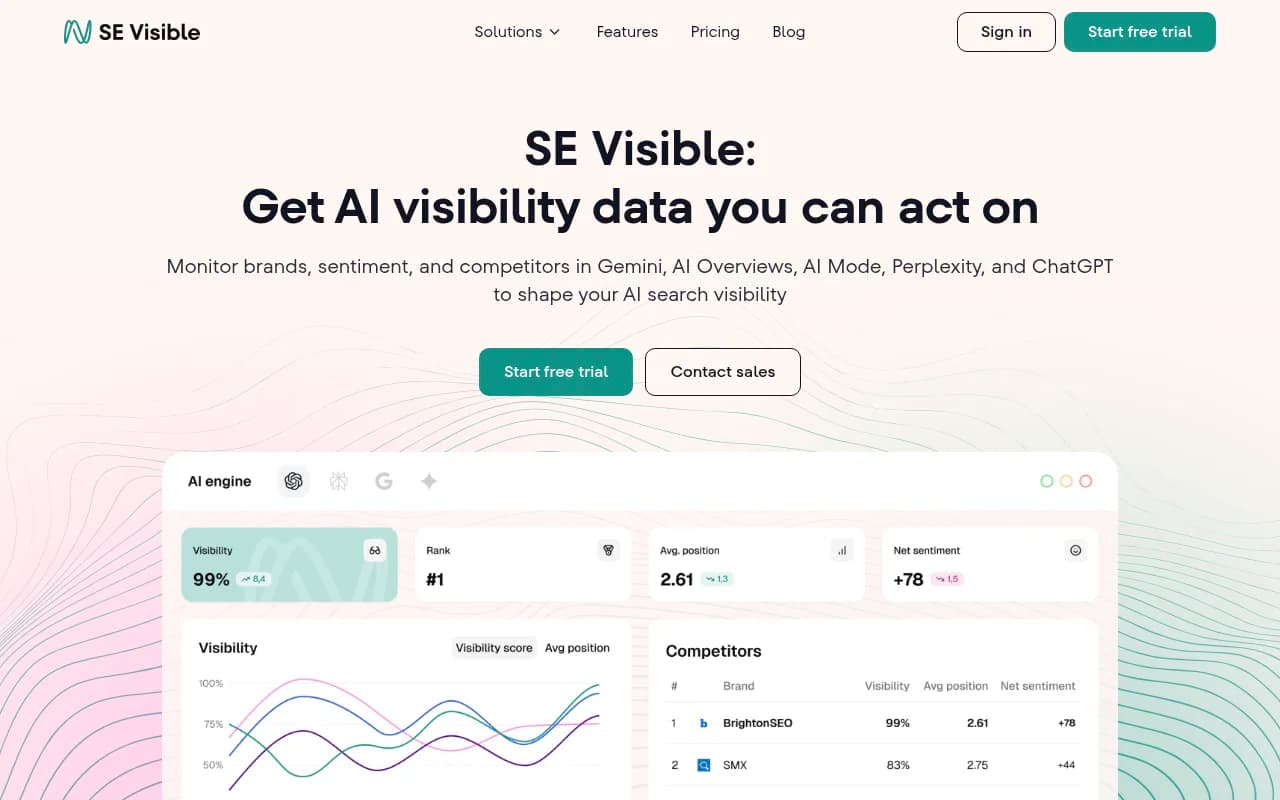
SE Visible: Strategic view for CMOs
SE Ranking's SE Visible tracks 5 models with a focus on strategic insights—sentiment scores, competitor share of voice, and source detection. $99/mo.
Nightwatch: SEO + AI visibility
Nightwatch combines traditional SEO tracking with AI visibility monitoring across 6 models. Good for agencies managing multiple clients. $138/mo (includes AI add-on).
Goodie AI: Actionable optimization hub
Goodie AI tracks 6 models and focuses on actionable insights—what to fix, where to optimize, and how to improve sentiment. $495/mo (annual billing).
Budget options with limited coverage
If you're just starting with GEO and need something affordable, these tools offer basic monitoring:
Otterly.AI: Tracks 6 models but lacks content optimization features. $29/mo. Good for brand monitoring, not optimization.
Peec AI: Tracks 5 models with multi-language support. €89/mo. Monitoring-focused.
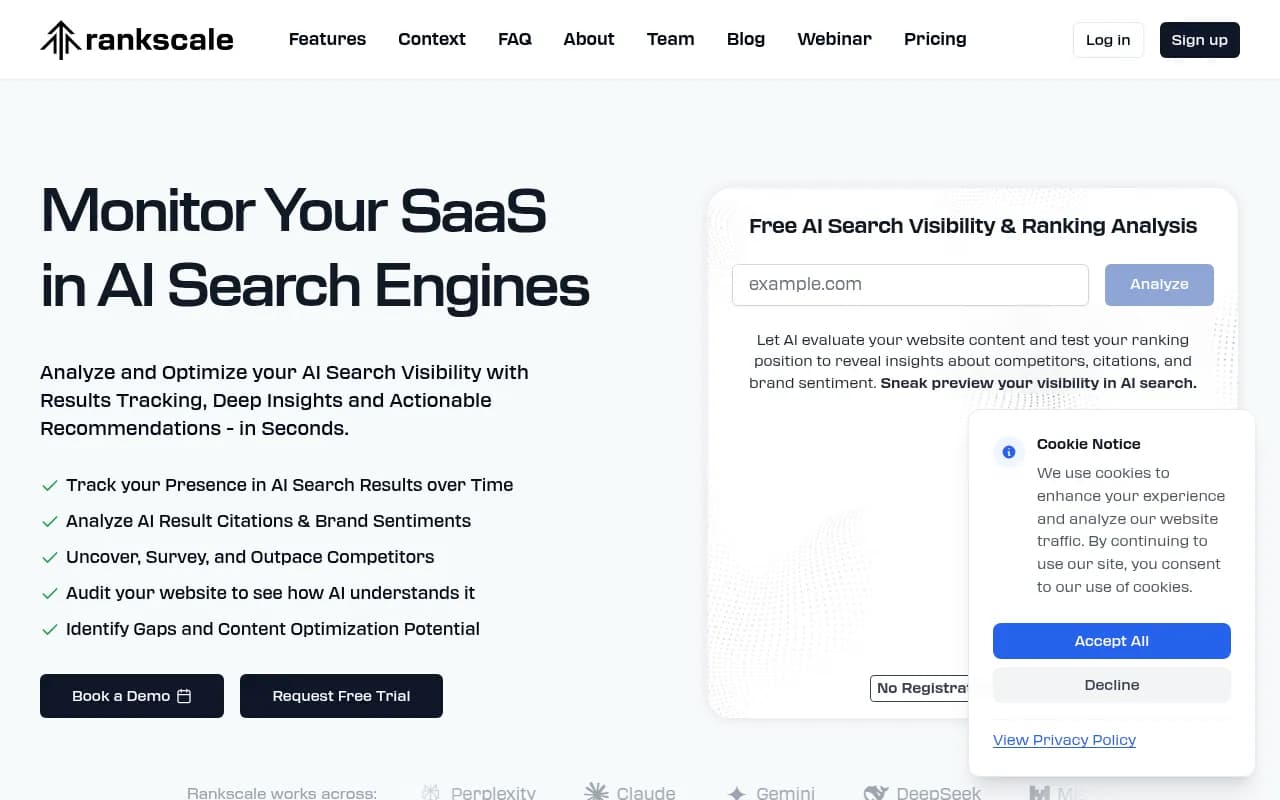
Rankscale: Budget tracking across 4-5 models. $20/mo. Very basic feature set.
These tools are fine for awareness but won't help you improve visibility. If you're serious about GEO, invest in a platform that combines tracking with optimization.
SEO platform add-ons: Semrush and Ahrefs
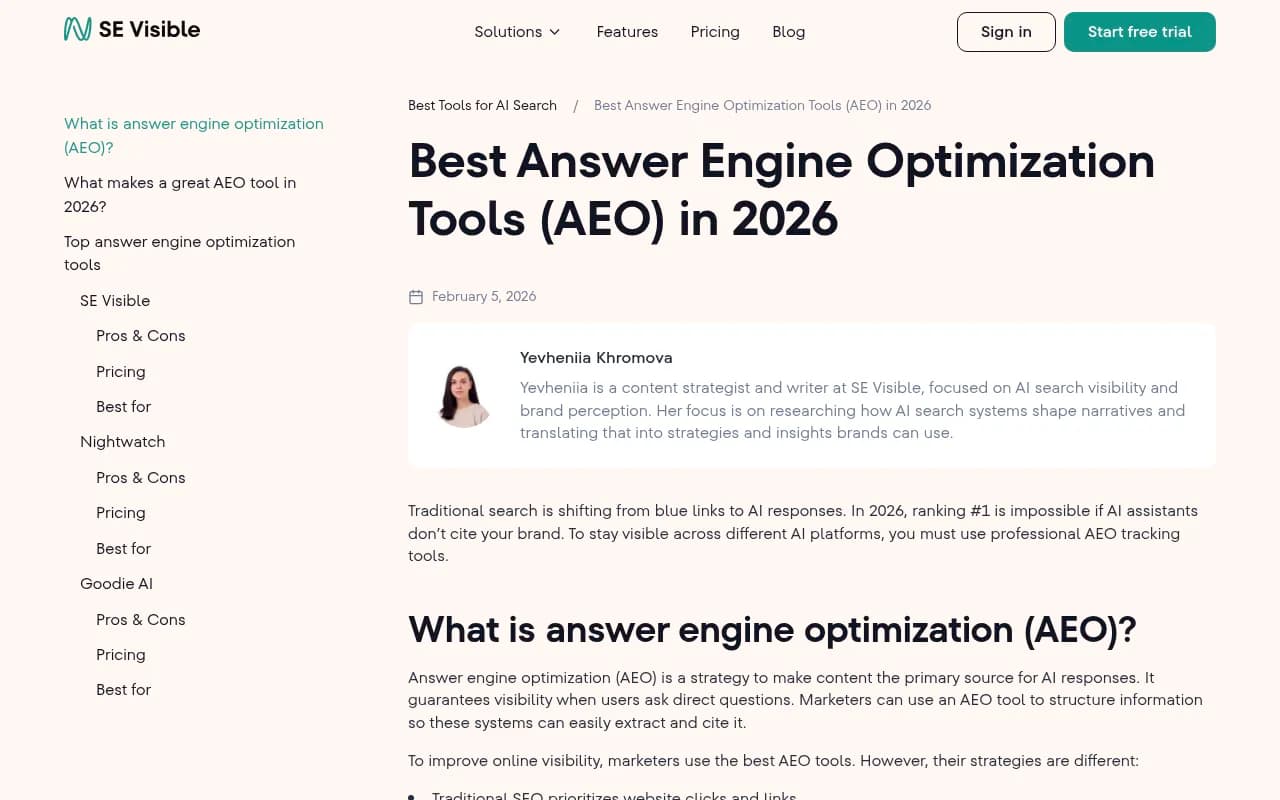
If you already use Semrush or Ahrefs for traditional SEO, their AI visibility add-ons integrate cleanly:
Semrush AI Toolkit: Tracks 4 models (ChatGPT, Perplexity, Google AI Overviews, Copilot). Fixed prompt sets—you can't customize queries. $99/mo add-on to existing Semrush subscription.
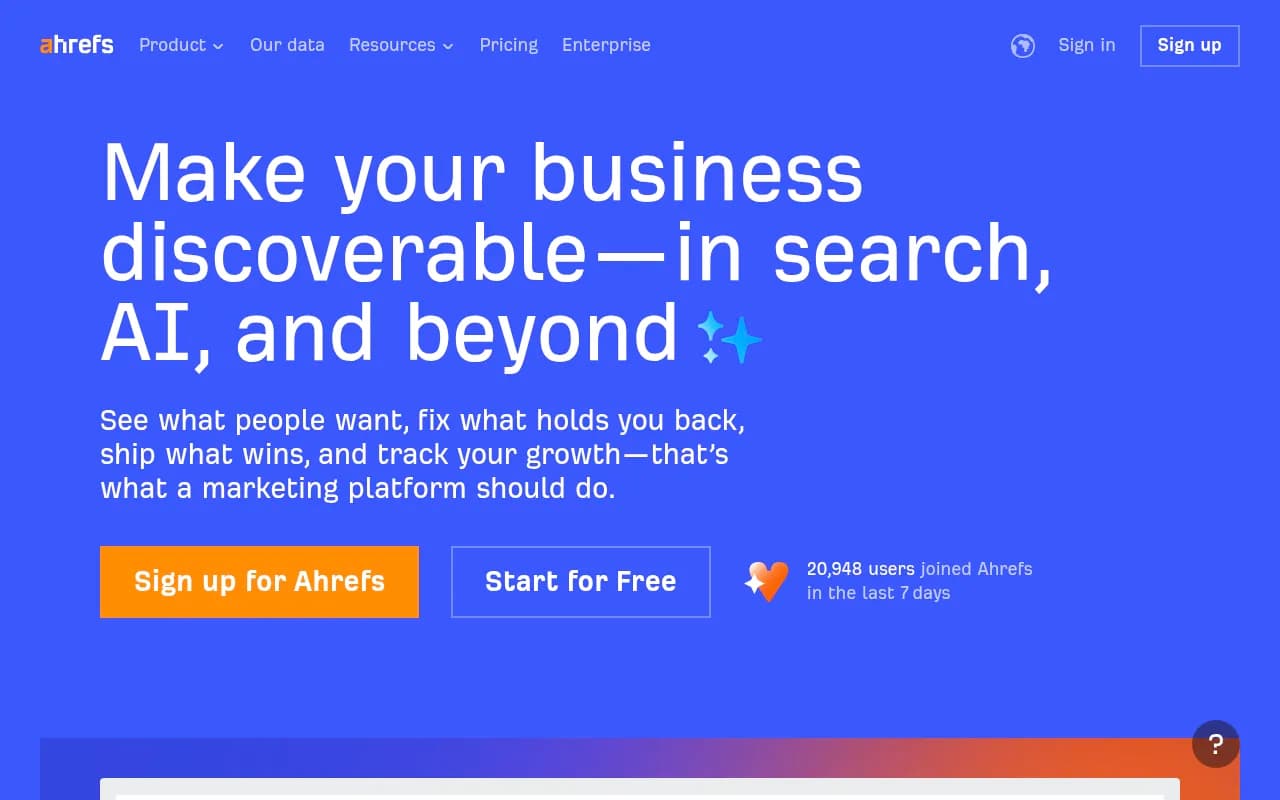
Ahrefs Brand Radar: Tracks 3 models (ChatGPT, Perplexity, Gemini). Fixed prompts, no traffic attribution. Free during beta, pricing TBD.
Both are useful if you want AI visibility data inside your existing SEO workflow. But they're limited compared to purpose-built GEO platforms—fewer models, no custom prompts, no content optimization tools.
How to choose the right GEO tool for your needs
If you need the widest model coverage: Promptwatch tracks 10 models and is the only platform that monitors DeepSeek, Grok, and Mistral alongside the major players.
If you're enterprise and need white-glove service: Evertune or Profound. Both offer custom reporting, dedicated support, and deep analytics.
If you already use Semrush or Ahrefs: Add their AI visibility modules. Limited coverage but convenient integration.
If you're on a tight budget: Otterly.AI or Peec AI for basic monitoring. Just know you won't get optimization features.
If you want to actually improve visibility, not just track it: Promptwatch. The only platform that combines tracking with content gap analysis, AI content generation, and optimization tools.
What to avoid
Don't choose a GEO tool based on price alone. A $29/mo tool that tracks 3 models and offers no optimization features is a waste of money if it doesn't help you improve visibility.
Don't assume "more models = better." If your customers only use ChatGPT and Google AI, a tool that tracks 10 models but lacks depth in those two is worse than a tool that tracks 5 but excels at the ones that matter.
Don't ignore traffic attribution. Visibility metrics are useless if you can't connect them to revenue. Look for tools that offer code snippets, GSC integration, or server log analysis to track actual traffic from AI models.
The bottom line
AI search is fragmenting across a dozen models. The GEO tools with the most comprehensive coverage—Promptwatch (10 models), Evertune (8+), Profound (7)—give you the clearest picture of where you're visible and where you're not.
But coverage alone isn't enough. The best tools combine tracking with optimization—content gap analysis, AI-powered content generation, and actionable insights that help you close visibility gaps.
Promptwatch is the only platform that does all of this while tracking 10 AI models. If you're serious about GEO in 2026, it's the place to start.